
Tag Archives: gentrification

Netflix Film Review: Violence, paternity and love all cook in The Kitchen (2024)

NETFLIX FILM REVIEW: THE KITCHEN (2024)

Directed by Kibwe Tavares and Daniel Kaluuya

Written by Daniel Kaluuya and Joe Murtagh

Produced by Daniel Emmerson and Daniel Kaluuya

Main Cast: Kane Robinson, Jedaiah Bannerman, Hope Ikpoku Jr, Teija Kabs, Demmy Ladipo and Ian Wright

Music by Labrinth and Alex Baranowski

Cinematography by Wyatt Garfield

*** MAY CONTAIN SPOILERS ***
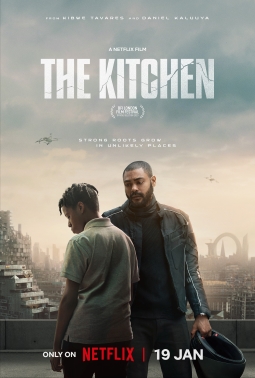


The Kitchen (2023) is a solid addition to the cinematic library of sci-fi dystopian narratives. It also combines thematic elements from rites of passage, action and family drama genres with much success. The story concentrates on Izi (Kane Robinson), who lives in London, 2044) where social housing is gone, except for “The Kitchen,” a community under threat from the wealthy. He works at ‘Life After Life’, a futuristic funeral service that turns unaffordable burials into trees families can visit before planting. After attending a funeral at his work he meets and forms an uneasy relationship with the son of the deceased, Benji (Jedaiah Bannerman). But is there more that connects the two?

Directed with imagination, energy and compelling flair by Kibwe Tavares and Daniel Kaluuya, The Kitchen (2023) focuses on Black culture as it faces relentless attacks from capitalist forces and oppressive law enforcement, painting a vivid portrait of a community fighting for survival. Moreover, the film explores the systematic erasure of cultural and physical spaces, where gentrification and state violence converge to push out the last bastion of working-class solidarity. This struggle becomes a powerful metaphor for resistance and resilience, underscored by music, tradition, community and collective memory.
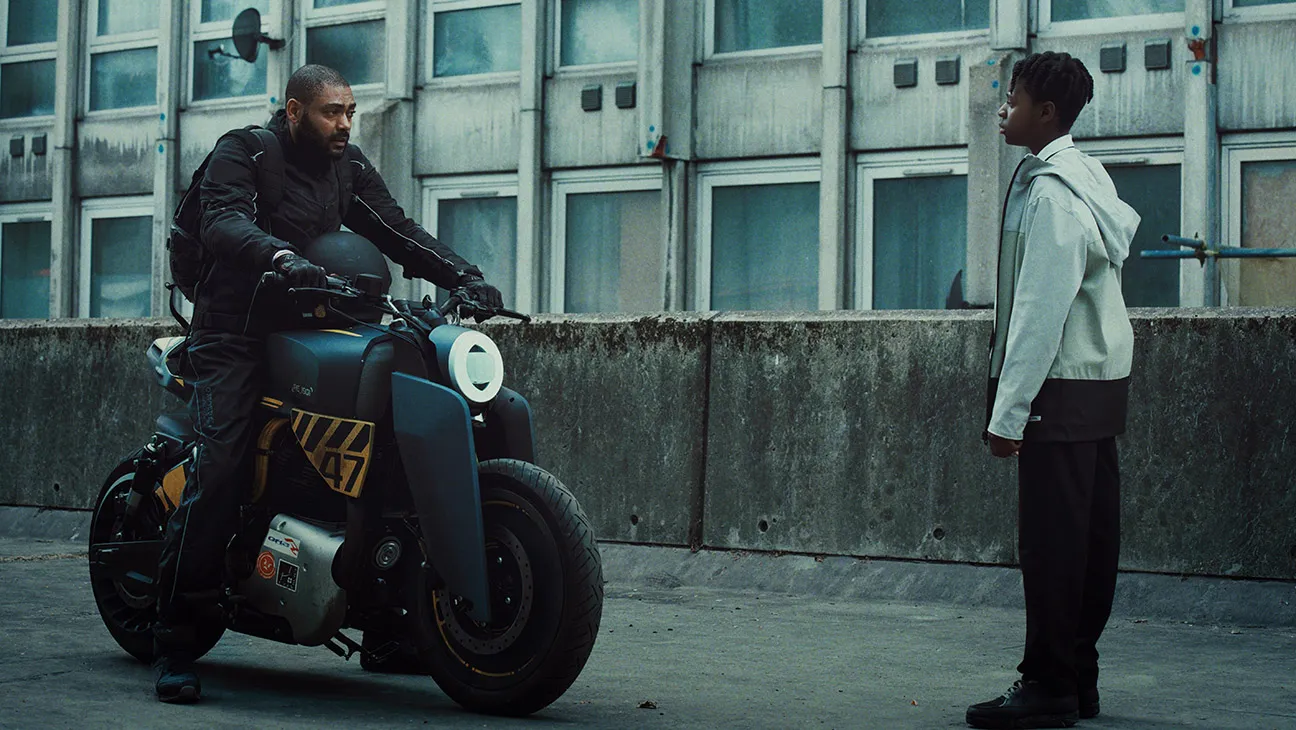


At its heart, the film also delves deeply into paternal relationships, exploring the nature of both surrogate and absent fathers. Despite the futuristic setting, it is the relationships in the film which are most powerful. Benji is at a crossroads as to which direction his life may go, with the drama echoing the emotional intensity of Boys in the Hood (1991), This Is England (2006), Platoon (1986), and A Bronx Tale (1993). These connections explore themes of legacy, masculinity, crime and moral conflict within a fractured world. Through these intimate relationships the film compellingly reflects on generational trauma, grief and love.

Overall, The Kitchen (2023) is a stylish, superbly filmed and thought-provoking drama with a fantastic soundtrack and score. I would have preferred a lead protagonist who was more expressive and verbal. Kane Robinson is a fine actor, but I wanted Izi to explode on the screen rather than keep all that emotion and anger in. This and the over-familiar story beats ultimately do not take away from an excellent feature from the incredibly talented Tavares and Kaluuya.
Mark: 8 out of 11


BFI FILM REVIEW: BAIT (2019)

BFI FILM REVIEW: BAIT (2019)

Directed, written, shot and edited by: Mark Jenkin

Produced by: Kate Byers, Linn Waite

Cast: Edward Rowe, Mary Woodvine, Simon Shepherd, Giles King etc.

Production company: Early Day Films

Distributed by: BFI (UK)


**MAY CONTAIN SPOILERS**


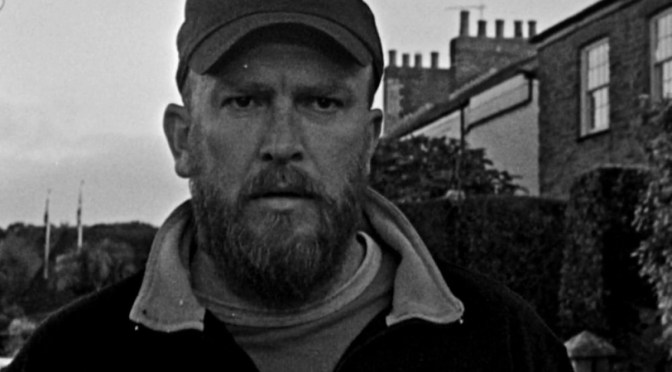
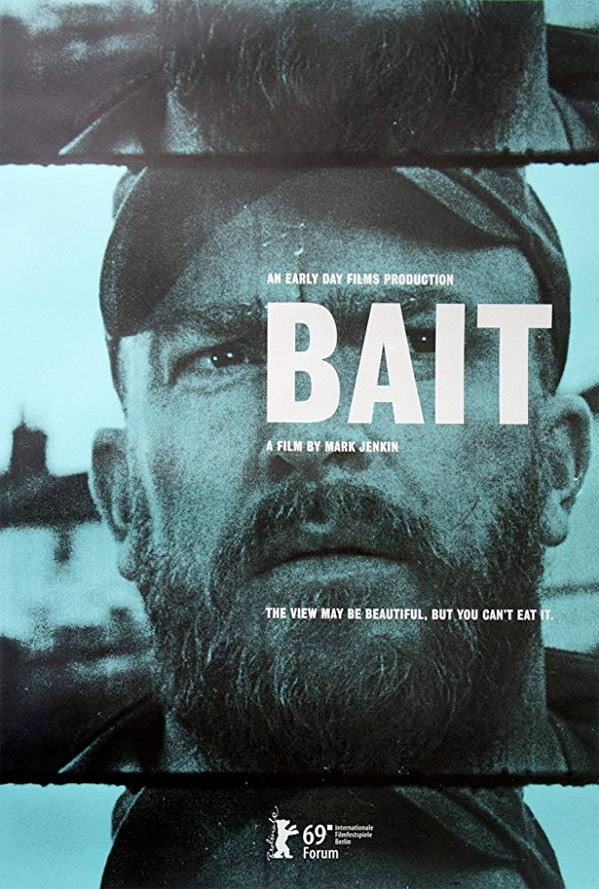
Not to be confused with the B-Movie shark movie, Bait (2015), Mark Jenkin’s tour-de-force arthouse classic, Bait (2019), is a whole together different kettle of fish. The story is set in Cornwall and centres around local fisherman, Martin Ward (Edward Rowe), and his various day-to-day struggles. Having had to sell the family cottage to middle-class city types, the Leigh family, Martin is fiercely determined to save up for a boat. In the meantime, he fishes with nets on the beach, as his brother, Steven (Giles King), uses their deceased father’s vessel for tourist cruises. Martin is resentful toward Steven and clashes with his brother and the Leigh’s throughout the film.

Bait (2019) is a low-budget and independent passion project. Mark Jenkin used a vintage hand-cranked Bolex camera, using 16mm monochrome film that he hand processed. He wrote, directed, lit, filmed and edited the film, but also used an army of local people to assist with the production. The story and themes of gentrification and city versus coastal types are explored very effectively in Bait (2019). Wherever you stand on the point of traditionalism versus upward mobility and financial appropriation, via the character of Martin and Edward Rowe’s bruising and hulking performance there are very powerful emotions of grief, loss and cultural absorption represented. The writing is initially quite simple in that the Leigh family are a negative force within the Cornish village. The son, Hugo, creates a lot of conflict by destroying Martin’s lobster traps and clashing with local hothead youth, Wenna (Chloe Endean). However, the Leigh’s are not mere stereotypes, but rather just shown as a family unit, like the Wards, who are trying to make a living.

Bait (2019) won’t be for everyone though as it is very experimental in nature. While the story and themes are clear, the editing, black-and-white-scratchy photography, dubbed dialogue and sound creates a self-consciously arty experience. Indeed, while some may proclaim the style as original, it is obviously influenced by cinematic formalists including Jean-Luc Godard, Ingmar Bergman and Sergei Eisenstein. The elliptical montage editing style, direct address (actors stare either at or just off camera) and overlapping dialogue will certainly appeal to film students and scholars alike. Overall, Bait (2019) treads a fine line between genius cinema and what could be classed as plain bad filmmaking. Thankfully, we have wonderful film critics, like Mark Kermode, to tell us it is one of the best and most important British films released in the last decade.

Mark: 9.5 out of 11