Category Archives: Nickel Cinema

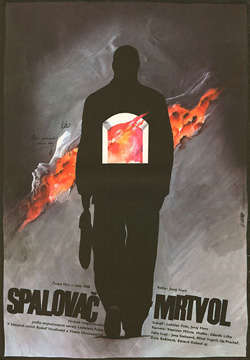
Cult Film Review: The Cremator (1969) – Buddhism, Fascism, and Psychopathy of the Soul!

Cult Film Review: The Cremator (1969)

Directed by Juraj Herz

Written by Ladislav Fuks & Juraj Herz

Produced by Ladislav Hanuš

Main cast: Rudolf Hrušínský, Vlasta Chramostová, Jana Stehnová, Miloš Vognič, etc.

Cinematography by Stanislav Milota

Music by Zdeněk Liška


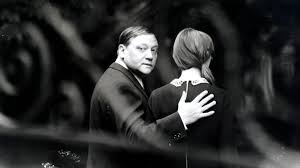
Few films feel as spiritually diseased as The Cremator (1969). Directed by Juraj Herz at the height of the Czech New Wave, the film is not simply a horror story about fascism or madness — it is a suffocating psychological descent into moral annihilation. Released in 1969, shortly after the crushing of the Prague Spring, the film arrived like a nightmare smuggled out of a collapsing world.

At first glance, The Cremator (1969) appears grotesque, even absurd. Its protagonist, Karl Kopfrkingl, is a Prague crematorium worker obsessed with death, cleanliness, Tibetan mysticism, and social respectability. But as the film unfolds, its black comedy slowly curdles into something far more terrifying: an anatomy of how spiritual emptiness and ideological seduction can fuse into psychopathy.

Set during the backdrop of the political radicalization of Europe during the 1930s, and the installation of the Protectorate of Bohemia and Moravia under Hitler’s Germany in 1939, the events become a startling microcosm of the Nazi onslaught against humanity. The film’s power lies not only in its themes, but in the unnerving collision of performance, photography, editing, and tone. It is funny, horrifying, philosophical, and surreal all at once — a cinematic experience unlike almost anything else.


At the centre of the film is the extraordinary performance by Rudolf Hrušínský. His portrayal of Karl Kopfrkingl may be one of the greatest performances in horror cinema, precisely because he never behaves like a conventional villain. Kopfrkingl is soft-spoken, polite, articulate, even charming. He speaks in comforting aphorisms and philosophical musings. He adores his wife. He dotes on his children. He smiles constantly. Yet every sentence he utters feels faintly poisoned.

Hrušínský plays the character with such eerie serenity that the horror emerges not through aggression, but through calmness. He embodies a man who has entirely dissolved the boundary between compassion and cruelty. When Kopfrkingl speaks about cremation “liberating souls from suffering,” he genuinely believes himself to be merciful. That conviction is what makes him terrifying. The performance captures a specific kind of psychopathy rarely depicted on screen: not the explosive violence of rage, but the bureaucratic psychopathy of moral detachment. Kopfrkingl is capable of atrocity because he has transformed murder into an abstraction. He speaks of death with the same pleasant tone one might use to discuss gardening or architecture.

In this sense, the film becomes a chilling study of fascism’s psychological appeal. Fascism in The Cremator (1969) is not introduced through screaming speeches or military spectacle. It arrives through vanity, social aspiration, pseudo-spiritual rhetoric, and the desire to belong to something “pure.”


One of the film’s most unsettling dimensions is its use of Buddhist imagery and philosophy. Kopfrkingl constantly references the Tibetan Book of the Dead, reincarnation, liberation from suffering, and transcendence. Yet the film presents these ideas not as genuine spirituality, but as corrupted fragments filtered through narcissism and delusion. Real Buddhist philosophy emphasizes compassion, ego dissolution, and liberation from suffering through awareness. Kopfrkingl instead weaponizes spiritual language to avoid confronting guilt or empathy. He uses metaphysics to anesthetize morality.

Unlike many anti-fascist films, The Cremator (1969) does not portray Nazism as an external force invading society. Instead, fascism emerges as something already latent within ordinary life. Kopfrkingl is primed for it long before political ideology fully enters the narrative. He is obsessed with order, status, beauty, ritual, and cleanliness. He fears impurity. He wants social advancement. He craves meaning. Nazism merely gives structure to impulses already present within him.

The crematorium itself becomes the perfect metaphor for industrialized fascism. It is clean, efficient, mechanical, and emotionally sterile. Bodies move through the system with ritualistic precision. Death becomes administration. Kopfrkingl thrives in this environment because it allows him to feel spiritually important while remaining emotionally absent.

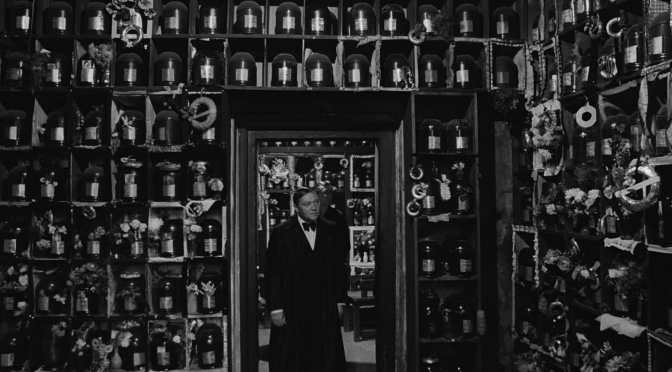
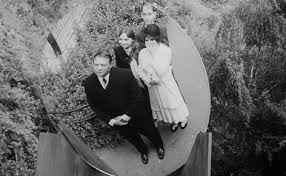
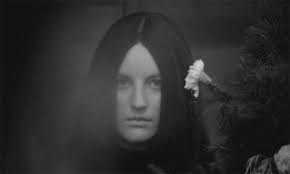
Visually, The Cremator (1969) is astonishing. Its black-and-white cinematography feels simultaneously elegant and diseased, full of warped close-ups, fisheye distortions, drifting shadows, and claustrophobic compositions. Faces loom unnaturally close to the camera. Rooms seem to bend inward. Mirrors fracture identity. The world feels unstable even before the narrative fully collapses into horror.


The editing in The Cremator may be its most radical achievement. The film’s montage structure constantly fractures time, space, and emotional continuity. At times, the film feels like it is edited according to subconscious logic rather than narrative logic. This creates a sensation of spiritual suffocation. The viewer experiences Kopfrkingl’s psychological fragmentation from the inside as he begins his reign of murder. The film itself begins to think like its protagonist. What is remarkable is how modern the editing still feels. The film doesn’t simply tell a story about insanity — it formally reproduces insanity.

Perhaps the film’s greatest achievement is its impossible tonal balance. The Cremator (1969) is genuinely funny. Kopfrkingl’s pompous speeches, obsessive vanity, and bizarre philosophical tangents often border on absurdist comedy. Some scenes play like dark satire, exposing the ridiculousness of authoritarian self-importance. And yet the laughter quickly becomes uncomfortable. This fusion of horror, drama, and comedy is what makes the film feel so original. Most horror films separate terror from satire. The Cremator (1969) understands that the truly grotesque often contains both simultaneously. The result is a film that feels spiritually corrosive in the best possible way — a nightmare that smiles while it strangles you.


Films that Got Away #18 – Star 80 (1983)

Films that Got Away #18 – Star 80 (1983)

Directed by Bob Fosse

Written by Bob Fosse – Based on Village Voice article, “Death of a Playmate” by Teresa Carpenter

Produced by Wolfgang Glattes & Kenneth Utt

Main cast: Mariel Hemingway, Eric Roberts, Cliff Robertson, Carroll Baker, Roger Rees, David Clennon, etc.

Cinematography by Sven Nykvist

*** CONTAINS SPOILERS ***


Bob Fosse remains one of the most singular figures in American entertainment — a director and choreographer whose style fused seduction, cynicism, theatrical precision, and emotional exhaustion into something instantly recognizable. Emerging from Broadway before conquering Hollywood, Fosse developed a visual language built around angular movements, tilted hats, snapping fingers, smoky jazz-club sensuality, and a relentless awareness of performance as both liberation and self-destruction.

Films like Cabaret (1972), Lenny (1974), and especially All That Jazz (1979) transformed the movie musical into something darker and psychologically raw, stripping away optimism in favour of obsession, ego, mortality, and the corrosive cost of show business. His influence can still be felt across modern cinema, music videos, and stage choreography, from contemporary Broadway revivals to filmmakers drawn to stylized performance and fractured antiheroes.

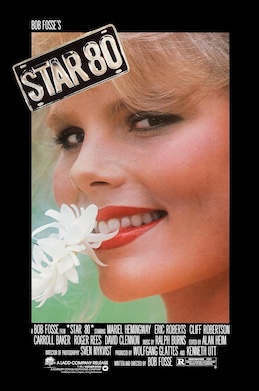
His final film, Star 80 (1983), stands as perhaps the bleakest expression of that worldview. Based on the true-crime murder of Playboy model Dorothy Stratten by her estranged husband Paul Snider, the film abandons glamour almost entirely in favour of a grim examination of exploitation, fame, misogyny, and possessive violence. Despite strong performances and critical admiration over the years, Star 80 remains comparatively difficult to encounter on television or major streaming platforms, partly because of the film’s emotionally punishing tone and its frank, lascivious depiction of the exploitation surrounding Stratten’s rise and death.

Unlike nostalgic Hollywood biographies that soften tragedy into inspiration, Fosse offers no comforting catharsis. The film ends not with redemption, but with the crushing inevitability of a young woman destroyed by the appetites of the men around her. That uncompromising darkness has contributed to the film’s lingering reputation as both a major work and an uncomfortable one — admired more often than it is revisited. So, thanks to the Nickel Cinema in London for screening this dark 1970’s based cult classic.


In Star 80 (1983), Mariel Hemingway gives an emotionally vulnerable performance of as Dorothy Stratten. Hemingway captures Stratten not as a caricature of Playboy fantasy, but as a genuinely sweet, almost painfully open young woman whose natural beauty and modest charm made her seem like the quintessential girl-next-door suddenly thrust into the machinery of adult celebrity. There is an innocence in Hemingway’s performance that never feels naïve or artificial; she understands Dorothy as someone eager to please, hungry for affection, and slowly awakening to her own independence just as the forces around her become more dangerous. Fosse frames her as both radiant and tragically exposed — a woman transformed into an object of desire by an industry that sees glamour as currency and vulnerability as weakness.

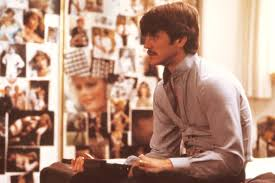
Opposite her, Eric Roberts delivers a frighteningly intense performance as Paul Snider, one that avoids simple imitation in favour of total embodiment. Roberts plays Snider as a man consumed by insecurity, narcissism, and desperate possessiveness, turning toxic masculinity into something sweaty, twitching, and deeply pathetic. He is not charismatic in the conventional movie sense; instead, Roberts makes him volatile and emotionally ravenous, a man whose entire identity depends on controlling the woman he helped “discover.” The performance becomes increasingly difficult to watch because of how recognizable the psychology feels — jealousy mutating into resentment, then humiliation, then violence.

Fosse refuses to sensationalize that descent in Star 80 (1983). The naked glamour of the Playboy world, the pornographic undercurrent of the entertainment industry, and the seductive surfaces of Los Angeles all become drenched in sordid, emotional decay. There is nudity and a sense of exploitative lingering on the feminine form, but there is understandable context. Cliff Robertson’s appearance as Hugh Hefner is not simply a caricature, but rather a caring, avuncular figure, despite building an empire out of, arguably, the exploitation of women. Further, Aram Nicholas (a thinly veiled, Peter Bogdanovich ) is a film director who tries to make Dorothy Stratten a movie star, but begins an affair too, sending Snider over the edge. Thus Stratten’s body and soul pinballs between these dominating men.

Overall, Star 80 (1983) lingers long after it ends. Fosse, Hemingway, Roberts and Sven Nykist’s cinematography contribute memorable work. Beneath its glossy imagery lies an overwhelming feeling of bleakness — the sense that every flashbulb, every photo shoot, and every promise of fame is shadowed by exploitation, stolen innocence, and inevitable tragedy.


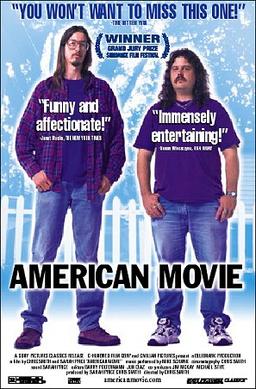
Cult Film Review: American Movie (1999) – a bittersweet documentary profiling the ups and downs of a low-budget filmmaker!

Cult Film Review: American Movie (1999)

Directed by Chris Smith

Produced by Sarah Price & Chris Smith

Main “Cast”: Mark Borchardt and Mike Schank

Cinematography by Chris Smith

Edited by Barry Poltermann & Jun Diaz

Music by Mike Schank

*** MAY CONTAIN SPOILERS ***


Given I am a low-budget filmmaker myself I am amazed I had never seen, American Movie (1999) before. Thankfully The Nickel Cinema in London screened it at the weekend and I really enjoyed it. Filmed between 1995 and 1997, this cult classic documentary American Movie (1999) chronicles Borchardt’s heroic, chaotic, and deeply Midwestern quest to finish his indie horror short Coven (pronounced ‘COH-ven’, and yes, he will correct you). The short is meant to raise money for his real passion project, a feature called Northwestern. But first? He has to survive reality. And reality is brutal.

Mark has not just zero money; zero organization; a rotating cast of confused friends and relatives as crew; functioning alcoholism; mounting debts, but also has the gift of the gab and a never ending passion for filmmaking. What unfolds is less “behind-the-scenes documentary” and more Shakespearean comedy AND tragedy staged in Milwaukee houses, static caravans, cars, junkyards and local woods.

Borchardt is equal parts Ed Wood and tortured auteur — passionately explaining his artistic vision one minute, begging his elderly uncle for production money and picking up his editing assistant from prison the next. His crew ranges from loyal-but-clueless to openly skeptical, yet somehow the production lurches forward. Barely.


The documentary crew shot over 90 hours of 16mm footage, capturing every awkward take, every blown line, and every moment of Mark’s delusional optimism. We watch as Coven repeatedly derails thanks to bad planning, worse luck, and the universal law that says: if something can go wrong on an indie film set, it absolutely will. But here’s the twist — it’s weirdly inspiring. Because underneath the chaos is something pure: a guy who just refuses to stop making movies. No money. No resources. No safety net. Just pure passion and obsession.

What’s most hilarious is the double act comedy exchanges between Mark and his best friend and Mike Schank. Mike, a very capable musician, has a permanent grin and the look of an acid-trip casualty, yet almost-perfect comedy timing. He clearly loves Mark’s passion and helps as best he can. I was sad to read Mike had passed away in 2022 from cancer.

If you stumbled into American Movie (1999) blind, you’d swear it was a proto-sitcom about delusional dreamers armed with a battered 16mm camera, a camcorder and misplaced confidence — a spiritual ancestor to Trailer Park Boys and It’s Always Sunny in Philadelphia. It plays like a painfully funny hangout comedy about a self-proclaimed auteur and his band of well-meaning screw-ups trying — and repeatedly failing — to make something “serious.” The arguments are petty, the ambition is sky-high, and the incompetence is operatic. You laugh, you cringe, and somewhere along the way you realize this isn’t scripted chaos — it’s just raw, unfiltered obsession captured on camera.

Mark: 9 out of 11


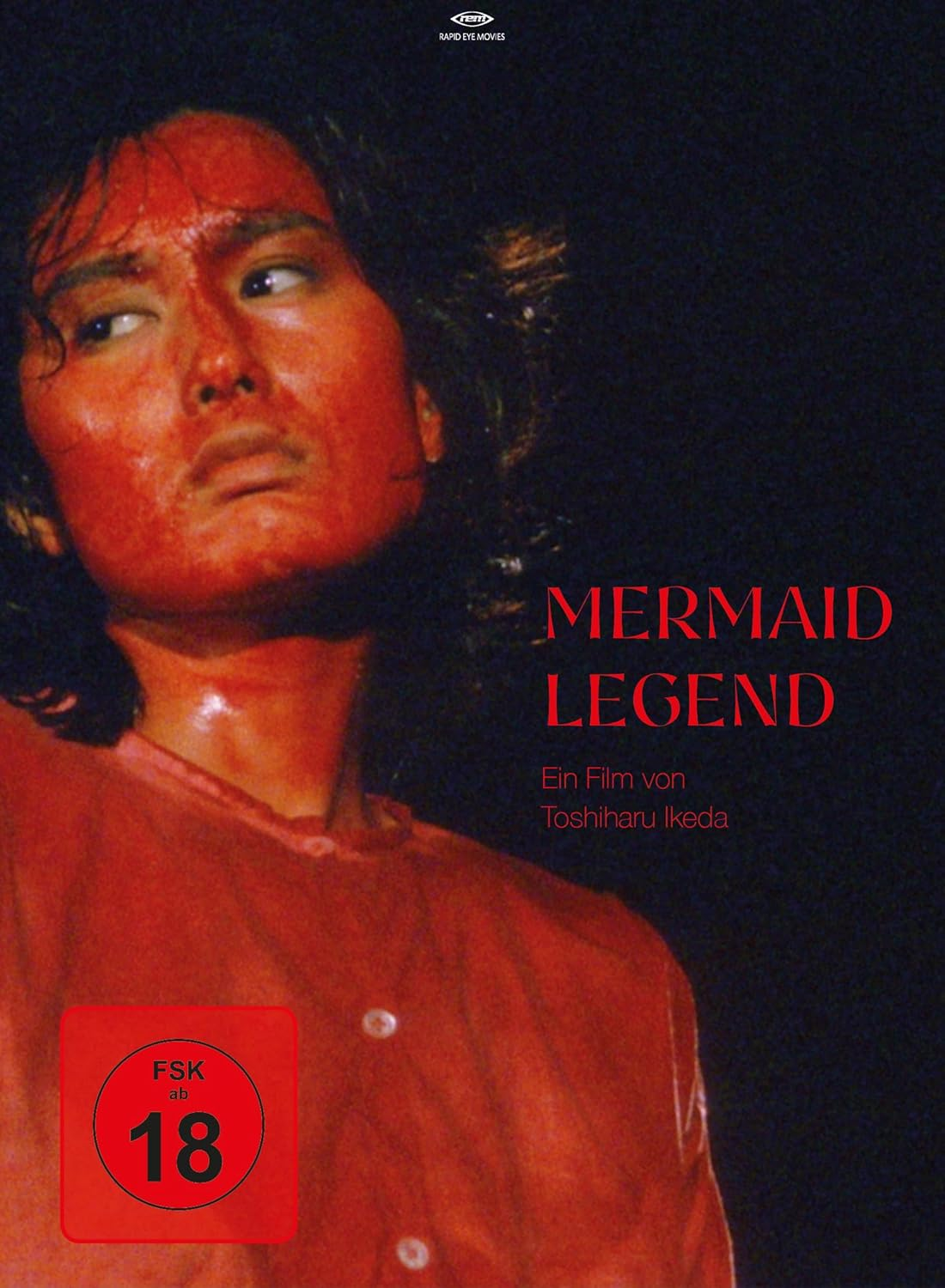
Cult Film Review: Mermaid Legend (1984) – a poetic but brutal hidden Japanese film gem!

Cult Film Review: Mermaid Legend (1984)

Directed by Toshiharu Ikeda

Screenplay by Takuya Nishioka

Main cast: Mari Shirato, Junko Miyashita, Kentarō Shimizu, Jun Etō, etc.

Cinematography by Yonezou Maeda

Music by Toshiyuki Honda

*** MAY CONTAIN SPOILERS ***


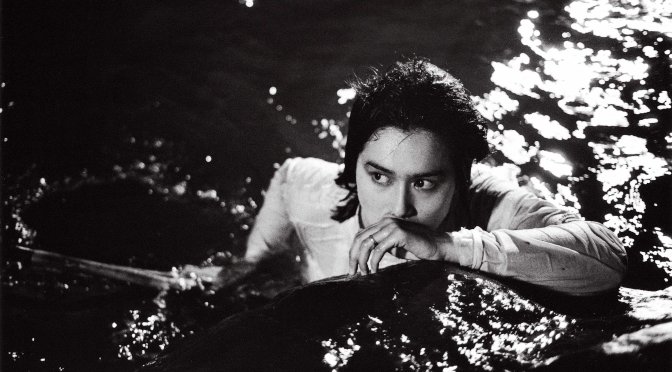
I took a gamble on an unknown Japanese film at the Nickel Cinema and walked out genuinely shaken. Mermaid Legend (1984) isn’t just a cult oddity—it’s a film that mutates before your eyes, seducing you with beauty before drowning you in blood. I was stunned by how something so lyrical could also be so brutally confrontational.

The story begins almost modestly, as a coastal drama about a fisherman and his wife, Migiwa. They bicker constantly, their marriage worn thin by poverty and exhaustion, yet there’s an undeniable bond beneath the arguments. That fragile domesticity is shattered when the fisherman stands in the way of an industrial development scheme. The business developers—faceless, polite, and utterly ruthless—have him murdered, disposing of his life as casually as industrial waste.

From there, Mermaid Legend (1984) transforms again. What starts as marital realism becomes a corporate espionage murder mystery, steeped in anger at nuclear energy, environmental destruction, and the cold machinery of corporate greed. Migiwa, a powerful-lunged pearl diver, initially hides, retreating into grief and the sea itself. But this is not a film about quiet mourning. When she decides to act, she does so with mythic force.


Played by the ethereal and astonishing Mari Shirato, Migiwa becomes something halfway between woman, avenging angel, and sea spirit. Shirato’s performance is magnetic—serene, sensual, and terrifying. As her vengeful pursuit begins, the film plunges headlong into extreme violence and explicit sexuality, reclassifying itself yet again as one of the most shocking exploitation epics I’ve seen from Japan in recent years. These scenes aren’t gratuitous in the lazy sense; they’re confrontational, weaponized, daring you to look away while refusing to let you feel comfortable for a second.

What makes Mermaid Legend (1984) so intoxicating is how its elements collide. Poetic underwater cinematography turns the ocean into a womb, a grave, and a cathedral. Religious, angelic, and environmental imagery blur together, as if Migiwa is both martyr and executioner. The music is heavenly—soaring, mournful, almost sacred—creating a surreal contrast with the carnage on screen. Beauty and brutality coexist in the same frame, each intensifying the other.

And then there’s the ending. The final, elongated pier stabbing rampage is completely off the chart—relentless, bloody, and hypnotic. It plays out like a ritual rather than an action sequence, stretching time until violence becomes abstraction, then meaning, then release. By the time the last body falls, Mermaid Legend (1984) has fully shed realism and entered the realm of legend, justifying its title in blood.

This is a film that shouldn’t work, yet does—furiously, defiantly. A genre-shifting fever dream that moves from domestic drama to political thriller to erotic exploitation to mythic revenge tragedy, Mermaid Legend (1984) is both beautiful and brutal, and I can’t stop thinking about it. Seeing it by chance at the Nickel Cinema felt like discovering a secret too powerful to stay hidden.

Mark: 9.5 out of 11


Cult Film Review: Entertainment (2015) at The Nickel Cinema, London

Cult Film Review: Entertainment (2015) at The Nickel Cinema


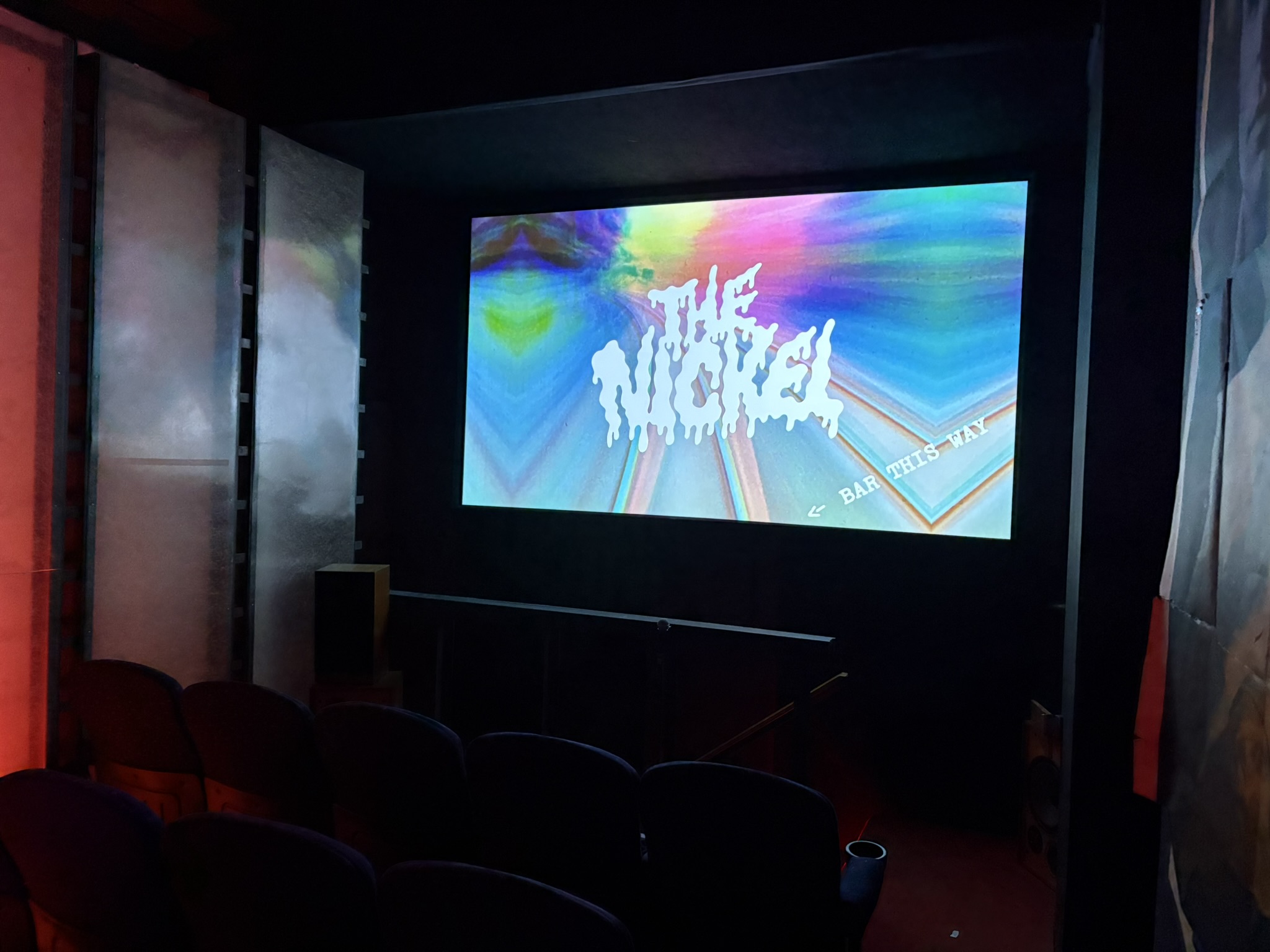
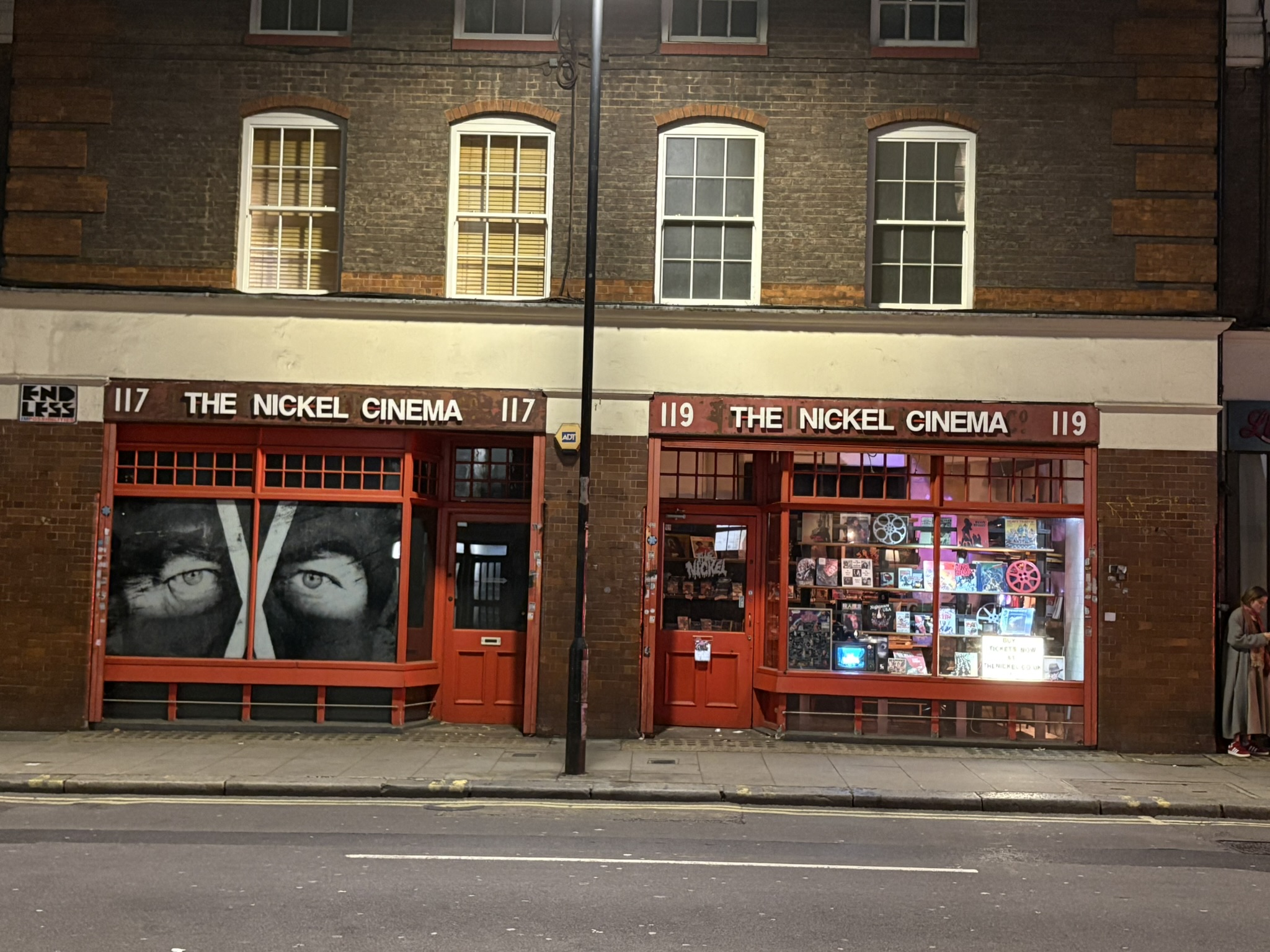
The Nickel Cinema in Clerkenwell feels like a hidden temple for London’s true film obsessives — a grindhouse gem tucked into the city’s polished heart. It’s the kind of place where the air hums with cigarette ghosts and celluloid dreams, where the screen flickers with everything from outlaw art films to midnight slashers and sleazy euro-thrillers. The décor has that lived-in, clandestine vibe — red velvet worn thin, neon bleeding through the dark, and an underground bar serving the kind of cocktails that taste like trouble.

It’s not just a cinema — it’s a refuge for the subversive, the cultish, the weird and the wonderful. You’ll find Anger next to Fassbinder, Fulci, Lynch, Jodorowsky, Korine, Ferrara, Argento, Waters, Kern, Miike, Ferrara, Korine Noe, Cohen, Breillat, Refn and many more bleeding into audiences who actually cheer when the projector rattles. The Nickel doesn’t chase trends; it worships the offbeat, the forgotten, and the dangerous. While feeling still quite new, the place somehow still feels gloriously dirty — and absolutely right up your alley. If not there is a strip club next door if that kind of business takes your fancy.

Check out their website for the latest screenings here: https://thenickel.co.uk/


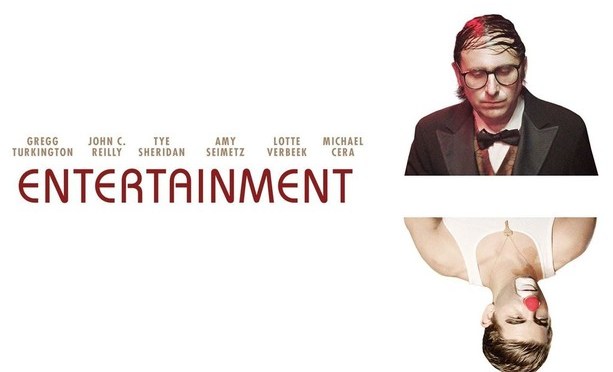
Last month I watched Rick Alverson’s Entertainment (2015) at The Nickel Cinema.

Entertainment is like watching the American dream rot in real time — a hypnotic, desolate odyssey through the dust and despair of the open road. Gregg Turkington is excellent as he plays “The Comedian,” a hollowed-out version of his Neil Hamburger persona, trudging through a series of soul-scorching stand-up gigs in half-empty bars, bowling alleys, and desert motels. Each performance is a small act of self-immolation — jokes that fall flat, laughter that curdles, a man dissolving behind the microphone as his identity blurs into the toxic sludge of showbiz delusion.

Director Rick Alverson shoots it all with a slow, clinical beauty — wide, frozen frames that turn America’s forgotten corners into alien landscapes. “The Comedian” drifts from neon-soaked diners to sulfurous desert plains, to prisons, to dead Western towns. Further, it contains some incredible locations including an unforgettable sequence at an aircraft graveyard — rows of dead machines basking in the sun, like monuments to ambition and decay. While low in budget the film makes use of such stunning locales, plus impactful acting interludes from John C. Reilly, Michael Cera and Tye Sheridan.

The film is not a comedy, not really — more anti-comedy or like an autopsy of one. Entertainment (2015) is a brutal, mesmeric study of loneliness, alienation, and the sick joke at the heart of performance itself. It’s the road movie as existential purgatory — unbearably awkward, strangely poetic, and utterly unforgettable. It doesn’t so much as have a beginning, middle and end, but a series of events which we are dropped into and experience until the credits suddenly roll. I like to ponder “The Comedian” is still out there, living and dying, on and off stage.

Mark: 8 out of 11