Tag Archives: Sandra Hüller

Cinema Review: Project Hail Mary (2026) – the end of the world has rarely been so much fun and bromantic!

Cinema Review: Project Hail Mary (2026)

Directed by Phil Lord & Christopher Miller

Screenplay by Drew Goddard

Based on Project Hail Mary by Andy Weir

Produced by Amy Pascal, Ryan Gosling, Phil Lord, Christopher Miller, Aditya Sood, Rachel O’Connor, Andy Weir, etc.

Main Cast: Ryan Gosling, Sandra Hüller, James Ortiz, Lionel Boyce, Ken Leung, Malachi Kirby, etc.

Cinematography by Greig Fraser

*** MAY CONTAIN SPOILERS ***
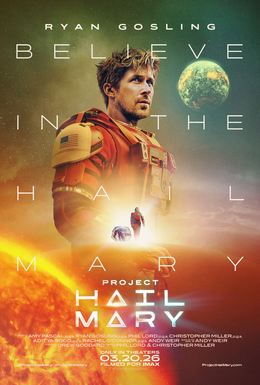


There’s a version of Project Hail Mary (2026) that could have been cold, clinical, and overly procedural—a hard sci-fi puzzle box drifting in the vacuum of its own cleverness. Instead, what Christopher Miller and Phil Lord deliver is something far more disarming: a big-hearted, funny, surprisingly emotional crowd-pleaser that turns the apocalypse into an oddly uplifting experience.

Adapted by Drew Goddard from Andy Weir’s novel, the film follows Ryland Grace (a perfectly cast Ryan Gosling), who awakens alone aboard a spacecraft with no memory of who he is or why he’s there. The early stretches lean into disorientation—Gosling playing confusion with a twitchy, almost comic anxiety—but as Grace pieces together his past, the film cleverly shifts into a dual-track narrative: one part interstellar survival story, one part Earthbound scientific scramble to stop a cosmic catastrophe.

Gosling is the film’s main weapon. He plays Grace not as a conventional hero, but as a reluctant participant—anxious, self-deprecating, and often hilariously out of his depth. His charm keeps the exposition buoyant, especially as the film dives into dense scientific concepts. Where the story could feel heavy, Gosling makes it breezy and Project Hail Mary (2026) is certainly more emotionally stimulating than the dreadful action thriller The Gray Man (2022) and the weak remake, The Fall Guy (2024).
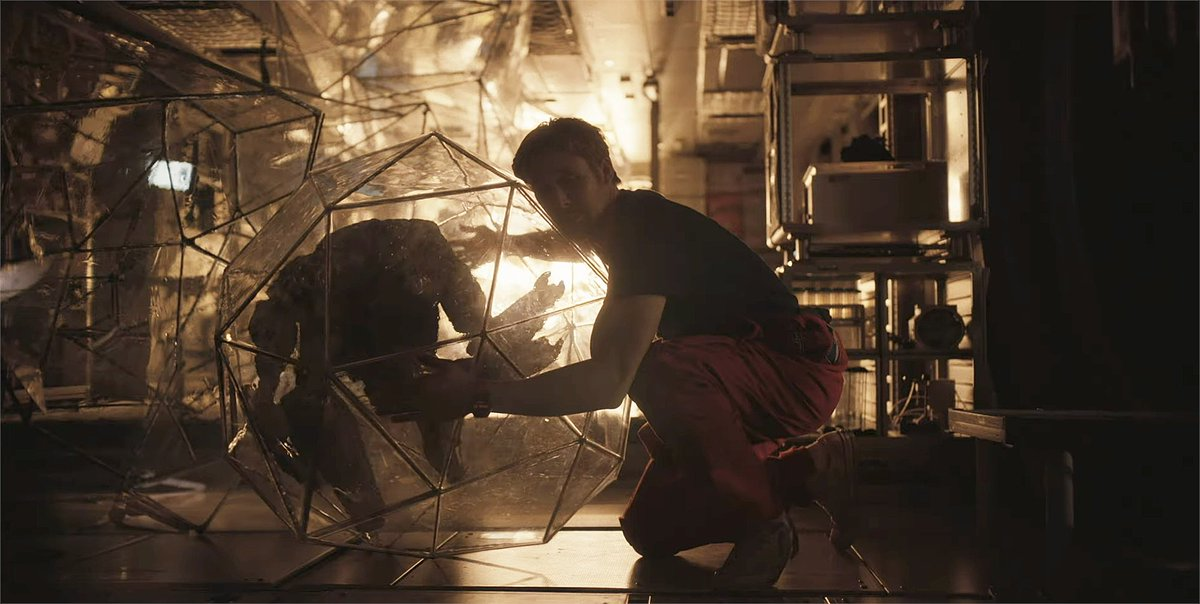


But the film’s most unexpected triumph is its central relationship: a deeply entertaining and genuinely moving “bromance” between Grace and an alien Xeonite – christened Rocky – he encounters in deep space. What begins as cautious interaction evolves into one of the most delightful interspecies friendships in recent sci-fi. Their communication—built from math, sound, and trial-and-error—becomes a source of both comedy and emotional resonance. It’s rare to see a blockbuster hinge so successfully on companionship rather than conflict, and the film is all the better for it.

Visually, Project Hail Mary (2026) is spectacular without being overwhelming. Lord and Miller balance scale with clarity; the vastness of space never drowns the intimacy of the story. The alien design is inventive, the astrophysical phenomena are rendered with awe-inspiring detail, and yet the film always remains grounded in character. It’s science-forward filmmaking that never forgets to entertain. Back on Earth, Sandra Hüller provides the film’s emotional anchor. Her performance carries a quiet intensity, grounding the global stakes in something human and immediate. Where the space sequences soar, her scenes remind us what’s at risk—and why it matters.

Goddard’s script is sharp, witty, and structurally satisfactory. It juggles timelines, scientific jargon, and character development with impressive ease, finding humour in the bleakest situations without undercutting the stakes. There’s a rhythmic confidence to the storytelling that keeps the film propulsive even as it pauses for introspection. What ultimately makes Project Hail Mary (2026) stand out, though, is its tone. This is, unmistakably, a feel-good end-of-the-world movie. It finds optimism not in denying catastrophe, but in confronting it with curiosity, cooperation, and friendship. By the time the credits roll, what lingers isn’t just the spectacle or the science—it’s the warmth. A book and film about extinction becomes, improbably, a story about connection.
Mark: 8.5 out of 11

CINEMA REVIEW: THE ZONE OF INTEREST (2023)

CINEMA REVIEW: THE ZONE OF INTEREST (2023)

Directed by Jonathan Glazer

Written by Jonathan Glazer – based on The Zone of Interest by Martin Amis

Produced by James Wilson, Ewa Puszczyńska

Main cast: Christian Friedel, Sandra Hüller, Imogen Kogge, etc.

Cinematography by Łukasz Żal

Sound Designer: Johnnie Burns

Music by Mica Levi


Jonathan Glazer is not the most prolific of directors, so when he releases a film it provides powerful cinematic coffee to wake up the cultural senses. His last film, the mesmeric Under The Skin (2013), is one of the most original of the century for me and once again with, The Zone of Interest (2023), Glazer has determined to take a provocative approach to cinematic form, style and themes.

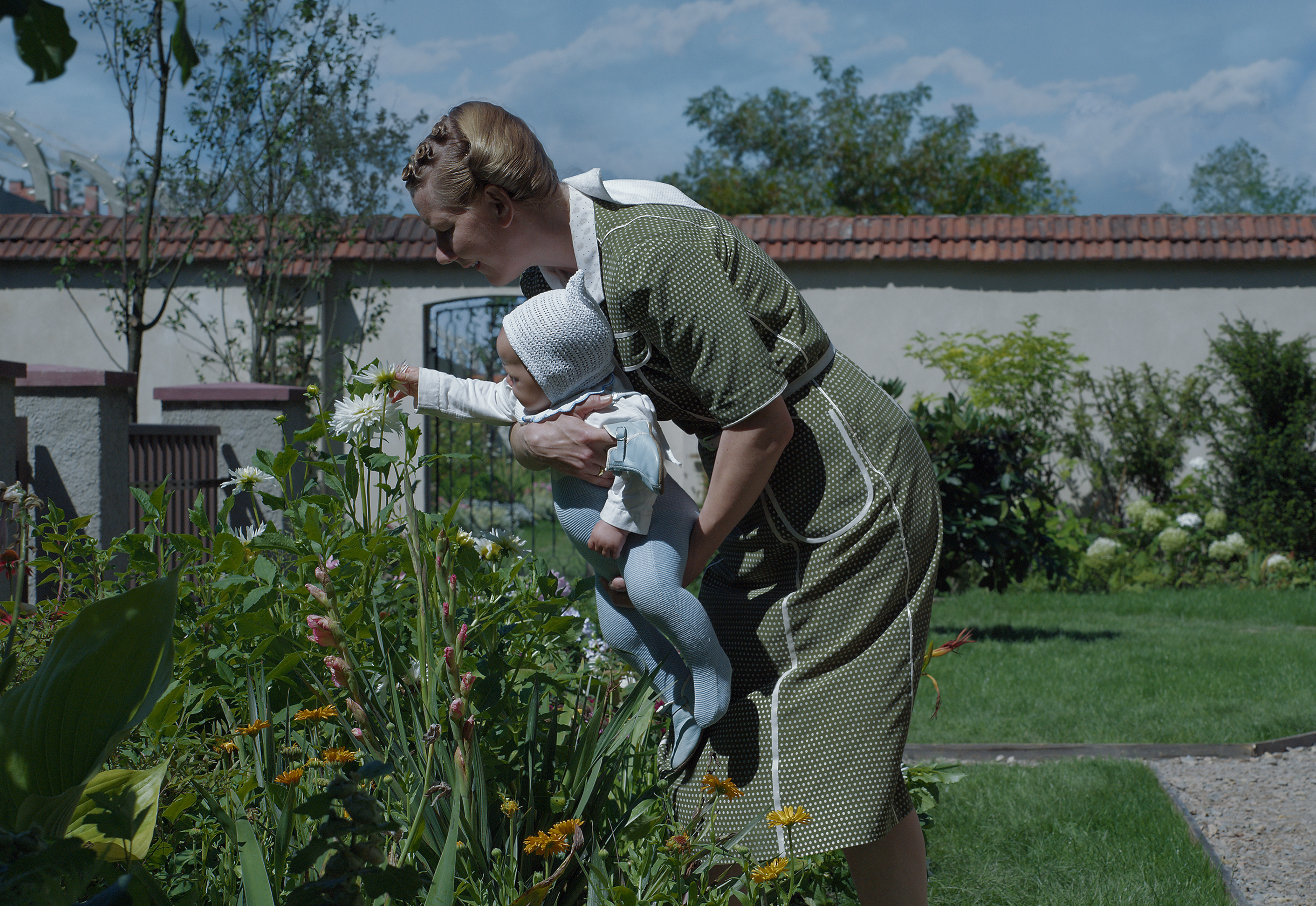
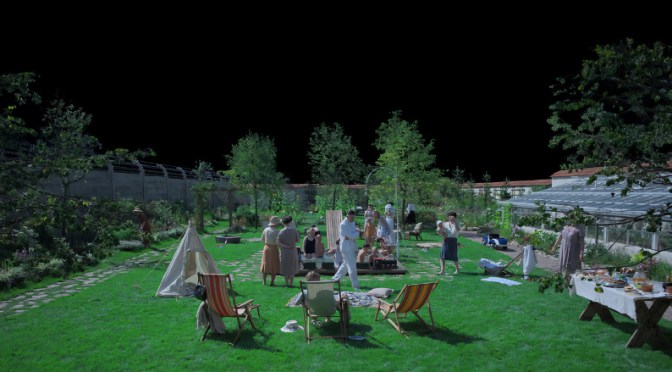
I usually advise near the top of my reviews that the piece may contain spoilers. However, there is so little plot in The Zone of Interest (2023), that is difficult to give anything away. The depth of the story comes from the intellectual approach to cinematic form and the wartime setting, with a narrative based on Martin Amis’ novel about the Holocaust and specifically, the concentration camp, Auschwitz. But Glazer only hints at such Nazi barbarism as the point of view of the film is presented solely from the commandant Rudolf Hoss’ (Christian Friedel) and his family’s perspective. Glazer and his outstanding production team deny us sight of the death and torture from within the Hoss house and garden.


Glazer and his sound designer, Johnnie Burns, employ powerful aural style to incredible effect as screams, tools smashing, gun shots and shouting pierce the screen throughout. Mica Levi’s minimalist score also punches through to startle too. Further, as the Hoss family, notably his spoilt children and privileged wife (Sandra Huller) go about their everyday business puffs of smoke billow over their garden as they remain unimpacted by what is occurring outside. Glazer also uses negative film processing, gliding tracking shots and metronomic editing from multi-camera set-ups to stylistic devices to break the fourth wall and to reinforce the everyday routine where all is not what it seems.

One may argue Glazer’s film is experimental and anti-narrative. I rarely cared about the Hoss family and not enough of the Auschwitz inmates is seen to raise one’s emotions. Thus, The Zone of Interest (2023) is a cold and intellectual film to absorb. Yet, I would argue that it is not experimental because Glazer is so in control of the filmmaking process. His creative choices and results are delivered in an extremely confident way. Certainly I felt that the film was more anti-drama than anti-narrative or experimental. For those looking for a more conventional addition to the war film genre could be disappointed.

Ultimately, The Zone of Interest (2023) is a horror film with the barbarism hidden. As the murder and genocide are occurring, the Hoss family unit remain unmoved by such atrocities. From a safe distance the audience watch them attend parties, tend their vegetables, feed their children, eat their dinner, play games and sunbathe. Is Glazer asking if we as humanity are complicit in our privileged comfortable homes while horrors go on around us in the world? Is this Nazi version of the Garden of Eden a metaphor for the world as a whole now? Does a lack of action or inaction to known crimes make one complicit? There are no easy answers, but it gets you thinking. Just like this highly intellectual and expertly constructed work of cinema.

Mark: 9 out of 11


CINEMA REVIEW: ANATOMY OF A FALL (2023)

CINEMA REVIEW: ANATOMY OF A FALL (2023)

Directed by Justine Triet

Written by Justine Triet and Arthur Harari

Produced by Marie-Ange Luciani and David Thion

Main cast: Sandra Hüller, Swann Arlaud, Milo Machado Graner, Antoine Reinartz, Samuel Theis, Jehnny Beth, Saadia Bentaieb, Camille Rutherford, Anne Rotger, Messi (the Dog), etc.

Cinematography by Simon Beaufils


Acclaimed director Justine Triet defies the old advice of not to work with children and animals to deliver a compelling courtroom, domestic and psychological suspense drama in Anatomy of the Fall (2023). Indeed, the performances of teenage actor, Milo Machado Graner and Messi the dog are of terrific quality. The dog’s acting is only surpassed by a formidable tour-de-force portrayal by Sandra Hüller. She excels as a wife accused of murdering her husband in the French Alps town of Grenoble. Did she? Well, there are no easy answers as the script dissects the crime and the couple’s marriage with forensic intensity.

Triet and her screenwriting partner, Arthur Harari, do not waste any time setting up the mystery element of the drama. The film opens as we follow visually impaired, Daniel Maleski (11 years old) taking his dog for a walk in the snow. At the same time his mother, an author, Sandra, is being interviewed by a research student in the chalet. But we never see the husband, Samuel, who plays thumping music from upstairs. When Daniel returns, the student has left and his father is found dead on the hard white, but blooded, ground. Sandra is upstairs unaware of her husband’s demise. Or is she? Herein begins the did-she-or-didn’t she kill him question? It’s a brilliant opening sequence where Triet and her production team demonstrate impressive filmmaking skill, an adroitness which continues throughout.

Anatomy of the Fall (2023) is an extremely complex film, both intelligent and thematically powerful. The courtroom exchanges between Sandra, her son Daniel, Samuel’s psychotherapist, the prosecution and defense lawyers are brilliantly written and acted. The flashback arguments between Samuel and Sandra are gut-wrenching and all too familiar to anyone who has been in or witnessed the crumbling of a marital or parental relationship. As well as the central mystery, Triet and Harari also skilfully weave in thematic subplots relating to literary plagiarism and mental health. While slightly overlong with mild pacing issues toward the end, Anatomy of the Fall (2023) is overall an absorbing thriller about what happens when the love between two people runs its tragic course and the shock and grief that can follow.

Mark: 8.5 out of 11