Tag Archives: Dick Pope

Cinema Review: Hard Truths (2024) – an unflinching look at a family struggling with depression.

CINEMA REVIEW: HARD TRUTHS (2024)

Directed by Mike Leigh

Written by Mike Leigh

Produced by Georgina Lowe

Main Cast: Marianne Jean-Baptiste, Michele Austin, David Webber, Tuwaine Barrett, Ani Nelson, Sophia Brown, Jonathan Livingstone, etc.

Cinematography by Dick Pope

*** MAY CONTAIN SPOILERS ***
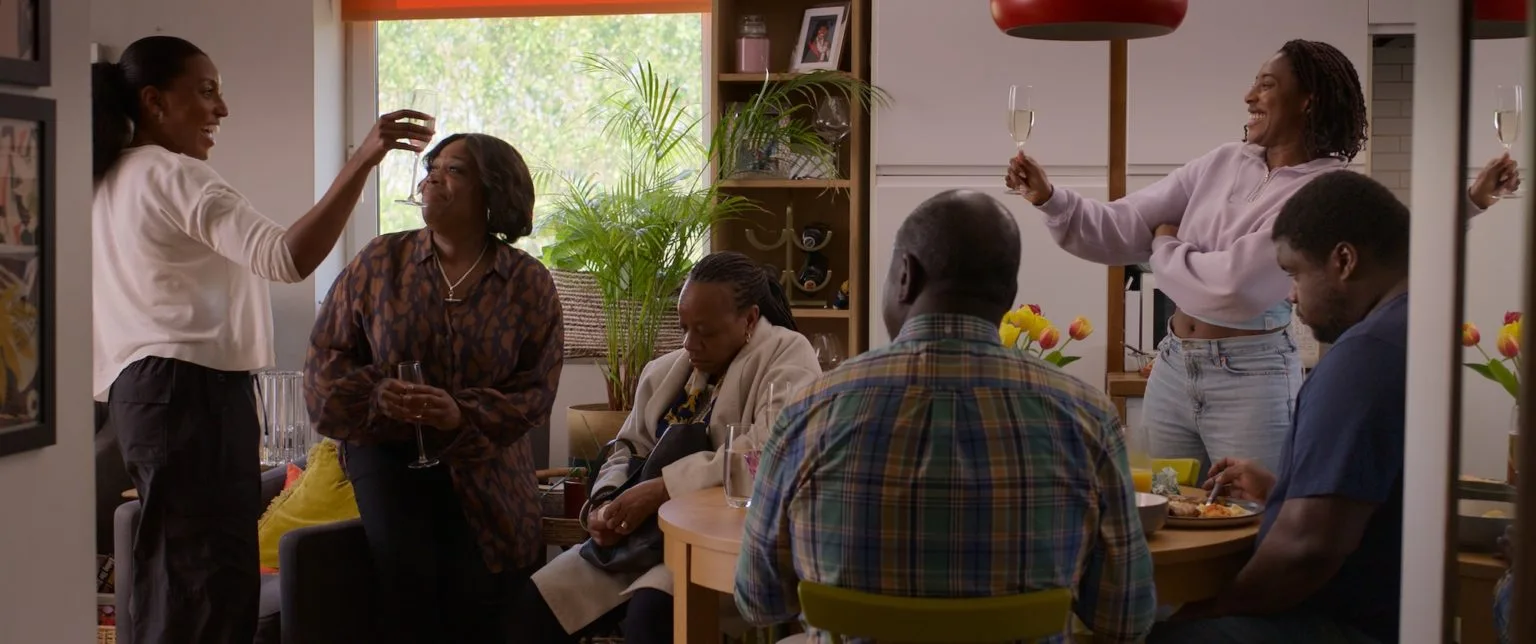


Mike Leigh’s career has been defined by an unflinching exploration of everyday existence, shaped by a commitment to realism and a deep understanding of human behaviour. His films, whether contemporary or period pieces, dissect the nuances of ordinary lives, often capturing the struggles, aspirations, and quiet triumphs of working- and middle-class individuals. His signature improvisational approach—where actors develop their characters through extensive rehearsal—allows for an organic authenticity that makes his work resonate with honesty and emotional depth.

Leigh’s early films, such as Bleak Moments (1971) and Nuts in May (1976), established his interest in the mundanities and disappointments of daily life. His later films, such as High Hopes (1988) and Life is Sweet (1990), continued this trend, portraying ordinary people navigating personal and societal challenges with humour and pathos. Secrets & Lies (1996), one of his most acclaimed works, epitomizes his fascination with human vulnerability, as it dissects family relationships, race, and identity in a way that feels raw yet tender.

Leigh’s career trajectory has also included excursions into period dramas, notably the heart-wrenching, Vera Drake (2004) and arguably his most political film, Peterloo (2018). But rather than abandoning his focus on the intricacies of human experience, he applies the same observational precision to historical subjects. Topsy-Turvy (1999), about the creation of Gilbert and Sullivan’s The Mikado, examines the creative process with the same detail he grants his modern-day working-class protagonists. Mr. Turner (2014), a biopic of the painter J.M.W. Turner, similarly explores the artist’s struggles, eccentricities, and societal context without falling into the clichés of the genre. These films reveal that, for Leigh, the past is not a grand spectacle but an extension of the same human complexities that define his contemporary work.
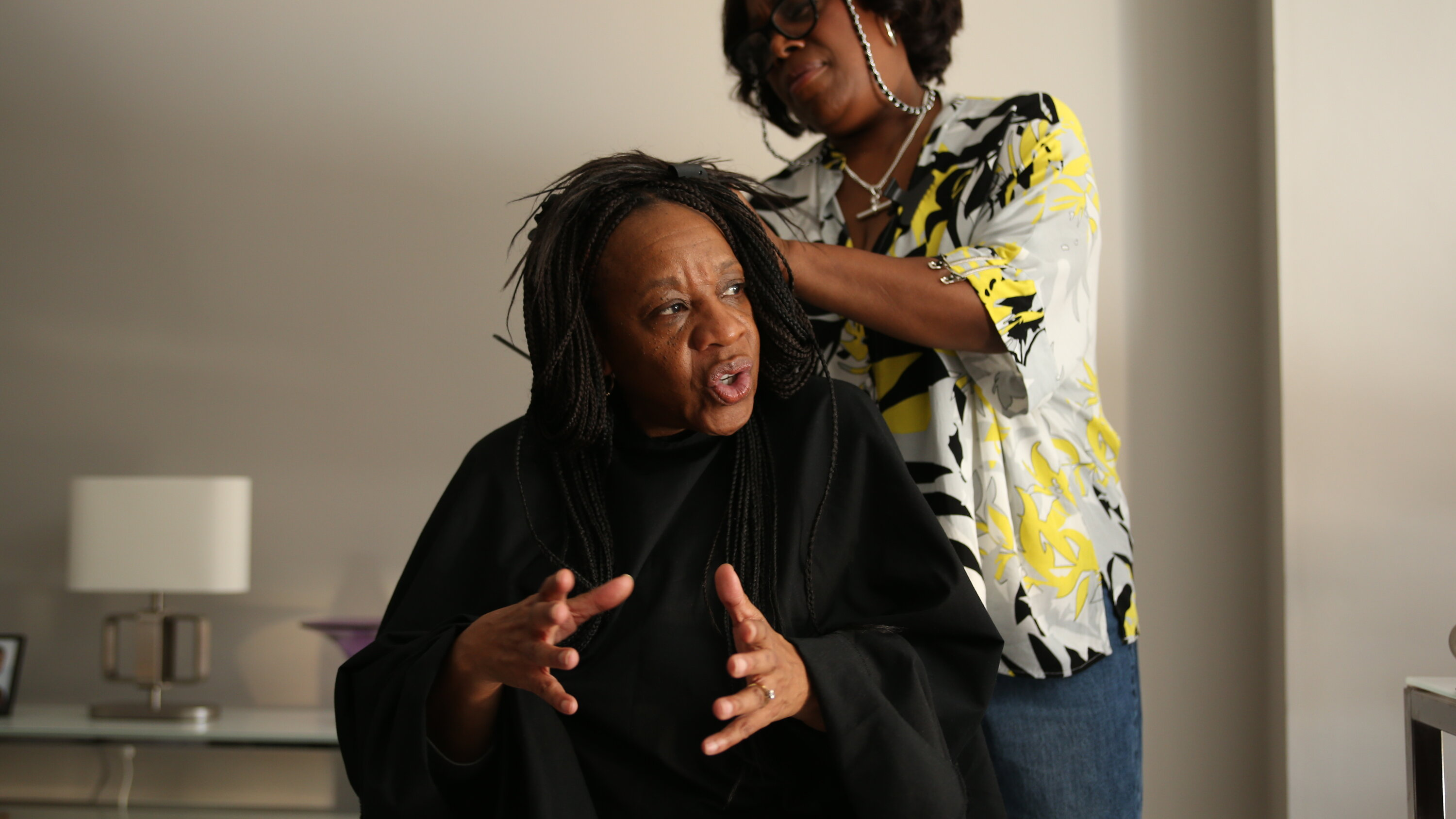


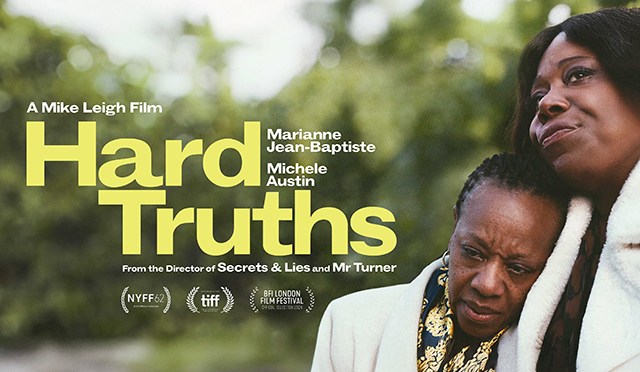
His latest film, Hard Truths (2024), follows in this tradition, delving into the stark realities of its characters with the same empathy and directness. Set in London in the present day, it focuses on the Deacon family unit and extended relations, notably two personality-divergent sisters, Pansy Deacon (Marianne Jean-Baptiste) and sibling, Chantelle (Michele Austin). Pansy is a middle-aged London housewife whose relentless irritability and sharp tongue mask a deep-seated inner turmoil. Her acerbic interactions—whether berating her husband Curtley, chastising her son Moses, or lashing out at unsuspecting strangers—serve as both a source of dark humour and a window into her dissatisfaction with life. Indeed, some of her rants are absolutely laugh-out-loud hilarious.

Leigh’s nuanced direction ensures that while Pansy’s outbursts may elicit laughter, they simultaneously reveal the tragic underpinnings of her character. Her vitriolic remarks, often delivered with biting wit, are symptomatic of her internal struggles, painting a portrait of a woman grappling with unarticulated pain. This duality is evident in scenes where Pansy’s caustic rants thinly veils her profound sense of isolation and despair. The film delves deeper into Pansy’s psyche during interactions with the more upbeat, Chantelle. A pivotal moment occurs during a Mother’s Day visit to their mother’s grave, where Chantelle confronts Pansy about her pervasive anger. Pansy’s anguished admission, “I don’t know!” encapsulates the bewildering nature of her depression, highlighting how her defensive humour serves as a barrier against this insidious mental illness.

Marianne Jean-Baptiste’s absorbing portrayal brings emotional depth to Pansy’s character, capturing the delicate interplay between her abrasive exterior and the fragility it conceals. Similarly, Michele Austin brings light and optimism to the screen, along with her effervescent daughters, somehow striving to combat the all-pervasive cloud of depression. Some of my favourite scenes of the film were with Chantelle in conversation with customers in her hair salon. Thus, in essence, Hard Truths (2024) presents a compelling character study that intertwines humour with the sombre realities of depression. Through Pansy Deacon, Leigh illustrates there are no easy answers to the pain of an affliction that remains silent and invisible but is ever-present within everyone’s lives.
Mark: 8 out of 11


LONDON FILM FESTIVAL REVIEW – PETERLOO (2018)

LONDON FILM FESTIVAL REVIEW – PETERLOO (2018)

Directed by: Mike Leigh

Produced by: Georgina Lowe

Written by: Mike Leigh

Starring: David Bamber, Alastair Mackenzie,  James Dangerfield, Eileen Davies, Liam Gerrard, Bronwyn James, Philip Jackson, Rory Kinnear, Nico Mirallegro, Maxine Peake, Pearce Quigley, Tim McInnerny plus many more.

Music by: Gary Yershon

Cinematography: Dick Pope

Production company: Film4 Productions, British Film Institute, Thin Man Films

**CONTAINS HISTORICAL SPOILERS**

peter

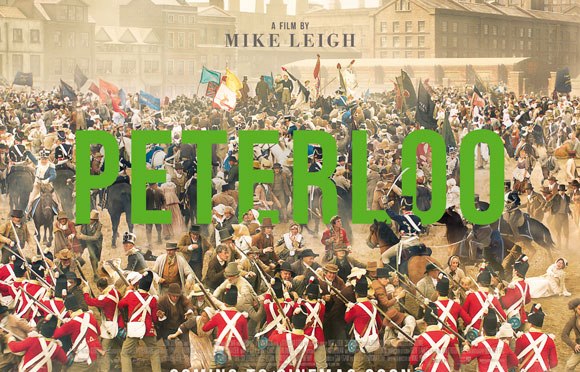
Peterloo (2018) is a film of voices, of speech, of reform and of freedom. It is Mike Leigh’s thirteenth feature film production and clearly a labour of love for him, his production team and the army of actors who put their hearts and souls into this powerful work of cinema. Four years in the making, this historical document, as well as paying tribute to those who campaigned for the vote in the 1800s, is also a passionate love letter to Northern England and the proud working classes of the era.

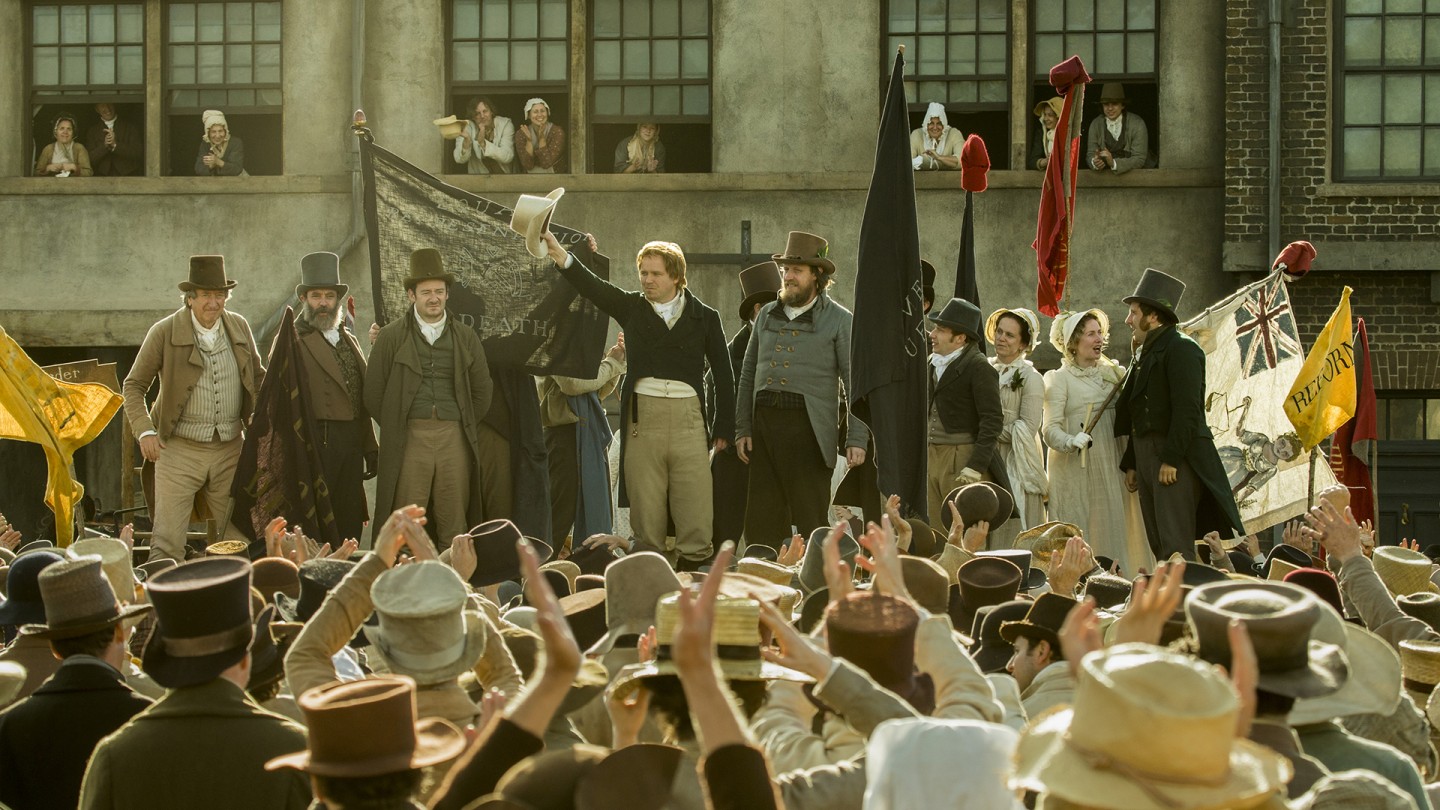
The film begins in 1815 at the battle of Waterloo and then brings us into the factories and streets of Manchester and surrounding Northern areas. As with many Mike Leigh films you can feel the palpable authenticity in the settings, accents and places the characters live. Leigh also cuts to local magistrates who hold up the draconian laws designed to keep the poor in their place; handing out savage justice such as the death penalty to one man for stealing a coat. We also visit London and experience those ruling classes who inhabit the Houses of Parliament and Royal palaces, lording over the oppressed workers.

peterloo_1920x1080

The character strokes are broad at first before Leigh further develops their personalities. The dialogue is delivered formally initially as the characters educate the audience regarding various laws affecting them. This seems jarring but also serves the documentary and historical nature of the piece. As the narrative strands build steadily to the fateful march the editing throughout cross-cuts between the ruling, working and legal classes representing their differing perspectives. The march was intended to be a peaceful demonstration; a plea for Parliamentary reform and the desire to be heard. Surely, that’s the right of everyone in a civilised society?  Well, not in 1819.

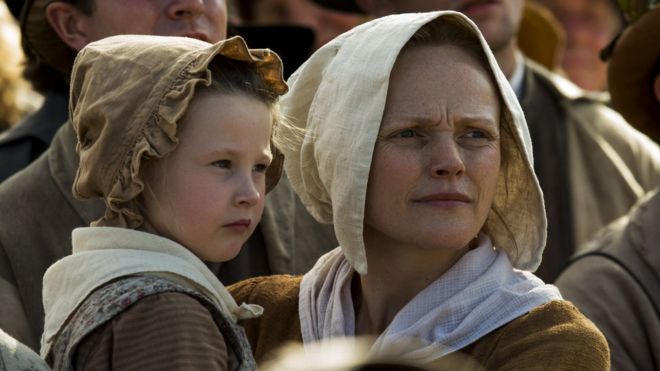
With the film driven by a whole host of wonderfully written speeches, it could be argued, Peterloo, lacks the warmth and humour of Leigh’s other more personal films. However, there are some formidable performances amidst the huge cast. Maxine Peake is earthy and convincing in her representation of a mother struggling to make ends meet. Rory Kinnear brings an intelligence and pride to the confident character of Henry Hunt; a wealthy landowner committed to reform and repeal of the onerous ‘Corn Laws’. As is the case with Leigh’s other films the acting is uniformly impressive because you know months of planning and rehearsal would have been committed to the production.

peterloo

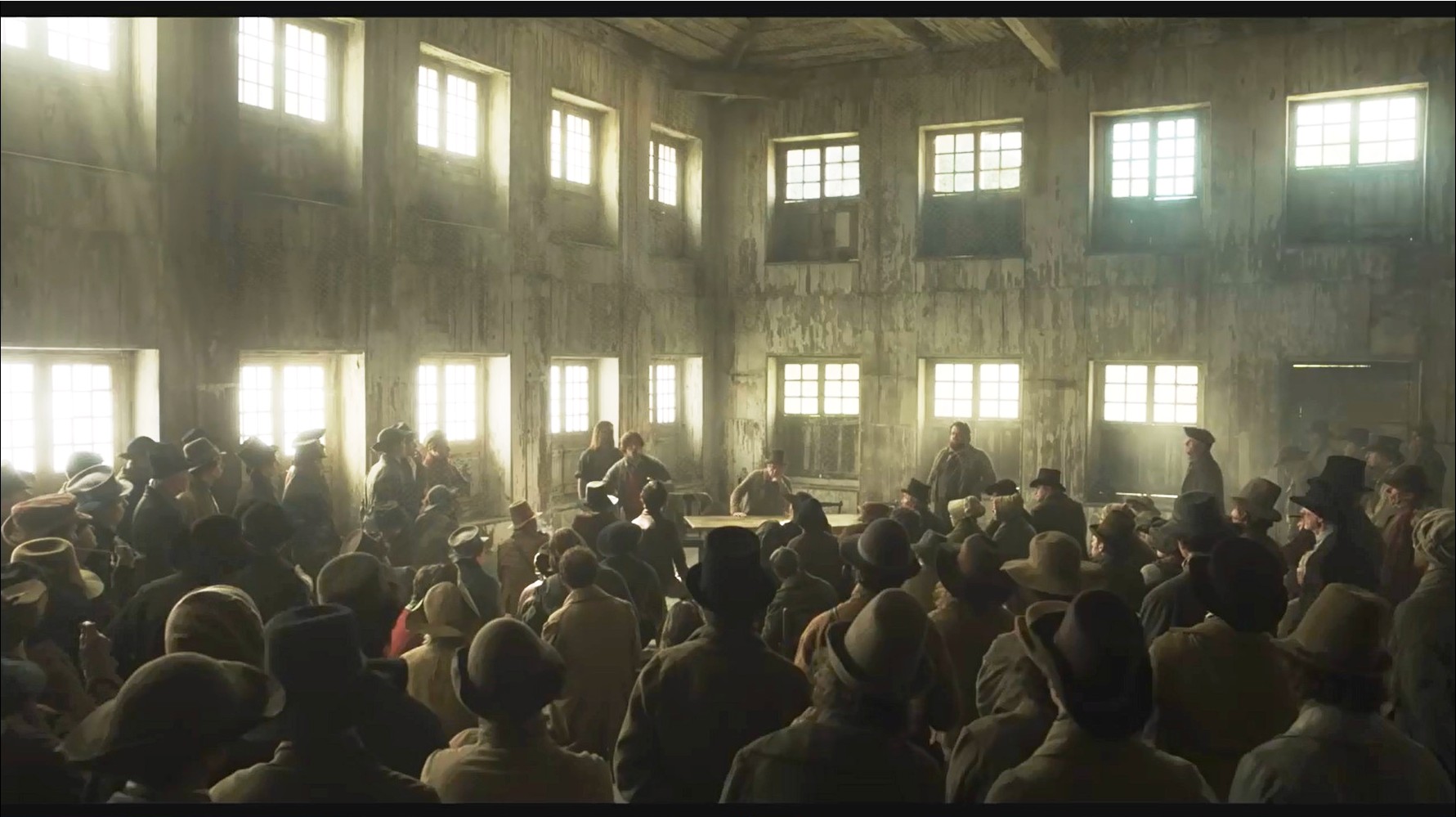
The film is also shot beautifully by cinematographer Dick Pope. There is a strong leaning toward a naturalistic lighting palette. Interiors are often bathed in sunlight shining through windows onto the shadowed faces of the characters. His camera is placed ideally to capture the rural and industrial locations of the era. There’s also some wonderful framing within arches and factories. Lastly, Leigh’s meticulous approach to authenticity reveals the machinery from the time, such as the looms and printing presses. Similarly, you can almost feel the reality of the epoch through the excellent costume design.

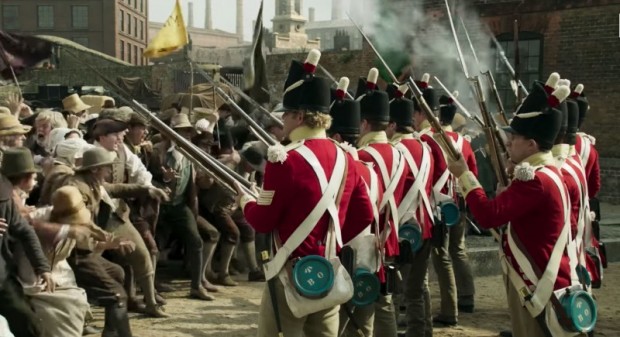
The final act brings us to the fateful day itself. Mike Leigh handles the massive crowd scenes expertly and shows the injustice and barbarism brought about by the cavalry and law enforcements attacking up to 80,000 people who are protesting for change. Having spent a few hours establishing the characters and their relevant causes the emotional impact of the attacks by the ruling classes is palpable. This is ultimately very powerful cinema which resonated with me because it reminded of the historical events down the ages where people have been murdered or injured while trying to make their voices heard.

_103036547_cut

Peterloo may not be for everyone as it is a long epic with a plethora of dialogue heavy scenes. Yet, I was enthralled as the language and passion of such discourse is very eloquent and heartfelt. The sheer scale of the filmmaking itself is also impressive even if the narrative lacks a specific personal focus throughout. Mike Leigh’s approach is very clear as it represents the working class as victims to an oppressive regime which has no regard for human suffering. Indeed, it should be every person’s basic right to have a voice and given past and current social and political events Peterloo contains a message that remains very valid today.

Mark: 9.5 out of 11

PETERLOO (2018) will be released in the UK on 2nd November 2018