Tag Archives: faith

MY CINEMATIC ROMANCE #11 – TOM HARDY

MY CINEMATIC ROMANCE #11 – TOM HARDY

In my latest episode of actor, cinema artist or filmmaker profiles I have picked some favourite roles of Tom Hardy.  This very talented British actor has made a name for himself with a series of intense, moody, muscular and at times psychotic performances. But he has depth too, and demonstrated on occasions, humour, vulnerability and sensitivity beneath the fierce masculine force he brings to the screen. Currently he can be seen lurking in the shadows of the BBC1 drama Taboo (2017), but here are eight other roles which showcase this actor’s depth of talent.

**CONTAINS SPOILERS**

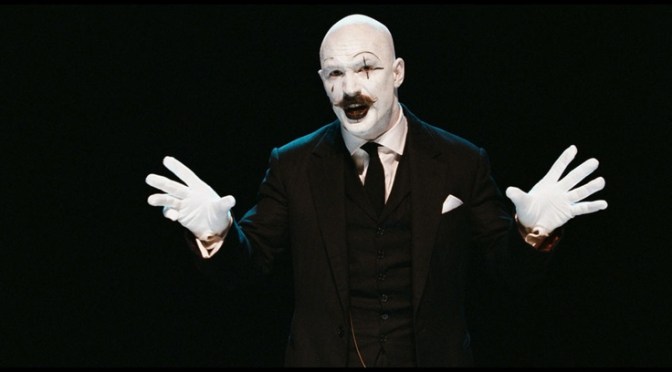
BRONSON (2008)

Arguably, this is Hardy’s proper breakthrough role as he covered himself in shit and acting glory in Nicolas Winding Refn’s unflinching representation of Britain’s most notorious prisoner. Hardy’s in pretty much every scene pulsing with rage and violence; fighting dogs, gypsies and the system like a bald, working class Bane.

THE DARK KNIGHT RISES (2012)

Talk of the devil and he shall appear! Hardy brought his bulking mass and searing eyes to Gotham to wreak havoc on its citizens as arch villain Bane.  The film has some narratives issues but I thought Nolan and cast presented some great set-pieces and action in a pulsating end to the trilogy. With the mask and chilling voice plus hulking physical presence Hardy made a memorable foe for Batman and co.

THE DROP (2014)

Hardy offers another brilliant piece of character work as Bob Saginowski, a Boston barman, who works in a mob-owned pub. He finds himself threatened by local scumbag Matthias Schoenaerts over the disputed ownership of a dog. It’s a subtle performance in which he swallows and bottles his rage with a quiet, yet menacing confidence.

INCEPTION (2010)

Christopher Nolan’s exquisite, mind-bending heist thriller has an fantastic ensemble cast with Hardy popping up as the forger Eames. Unburdened by masks or grunts or over-aggression, Eames is an urbane and sophisticated character who remains calm under fire; while in perfect ‘Received Pronunciation’ delivers some witty one-liners. Here Hardy demonstrates what an ideal James Bond he would make.

LOCKE (2014)

So, the story is about a bloke on his phone driving up the motorway?  Not a pitch that would grab Hollywood in-a-hurry, but a film that is delivered with such hypnotic power it feels epic. Hardy’s Locke is portrayed as a determined man whose life decisions, family and work-life have triangulated simultaneously to crisis point. It is a performance of restraint and brooding anxiety making the one location-movie compelling throughout.

MAD MAX: FURY ROAD (2015)

George Miller’s bruising, muscular and jaw-dropping spectacular is an orgy of car-bombing action and deathly stunts with little dialogue. So, who better to take on a virtually mute yet physical role than Tom Hardy in this smash-and-burn epic.  Max Rockantansky remains one of the iconic existential anti-heroes, with Hardy taking over the baton from Mel Gibson superbly.

THE REVENANT (2015)

Hardy was rightly Oscar nominated for his portrayal of greasy mercenary John Fitzgerald.  While Hardy’s mumbling Fitzgerald certainly has my empathy early doors his decision to leave Glass for dead after killing his son is the act of a scumbag. Once again, Hardy commits to the role of the murderous trapper with dirty aplomb as he more than matches DiCaprio’s compelling performance.

STUART: A LIFE BACKWARDS (2007)

This is an excellent BBC film starring Tom Hardy as Stuart Shorter, a homeless alcoholic and petty criminal who was also a social justice activist. Shorter meets Benedict Cumberbatch’s writer and the two form an unlikely friendship. Hardy’s performance is full of heart-breaking pathos and physical distress because Stuart suffered from muscular dystrophy. Abused as a child and lost as an adult, Stuart’s is a tragic life and one where Hardy further demonstrates his excellent acting range.

WAR AS HEAVEN AND HELL! HACKSAW RIDGE (2016) REVIEW

WAR AS HEAVEN AND HELL! HACKSAW RIDGE (2016) REVIEW

**CONTAINS SPOILERS**

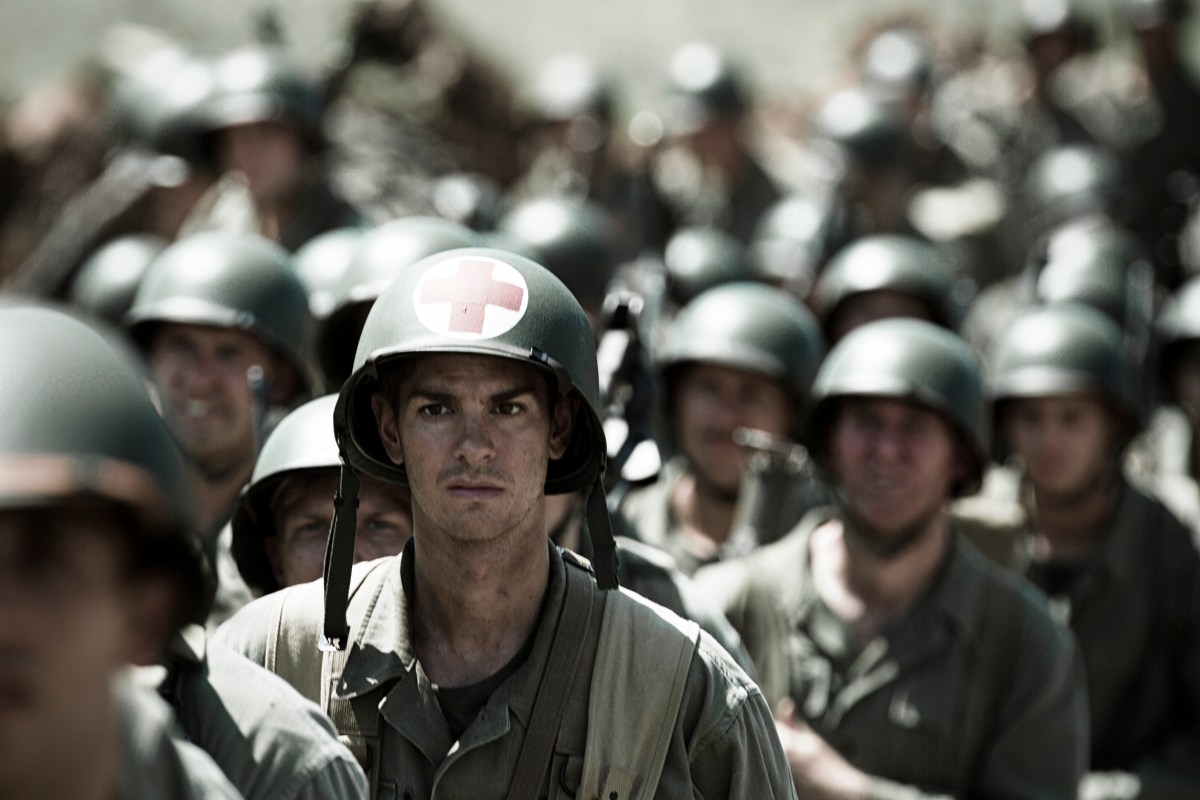
What is it with Andrew Garfield and his battles with the Japanese, armed only with his faith?  In a thematic replica of the compelling drama, Silence (2016), Garfield leads the cast of Hacksaw Ridge (2016) by portraying 7th Day Adventist, Desmond Doss, who while compelled to serve his country during World War II, declines, on principle to pick up a rifle and kill. He wants to save lives not end them. Now, I, as a screenwriter feel this is a fantastic base for drama and suspense; and so it turns out to be, in a rip-roaring, inspirational, bloody and heroic war film.

hacksaw_bible

Hacksaw Ridge is classic Hollywood filmmaking par excellence. Andrew Garfield’s Doss is a humble everyman we can all root for as he contends with a drunken father, and then with army training as colleagues and superiors fail to recognise his religious stance. In the final lengthy battle scenes he then faces the Japanese, along with his unit, as they clamber the eponymous Hacksaw Ridge in an attempt to gain control of Okinawa. This is where the action really takes off as the gruesome war scenes create an astounding flurry of bombs, shots, bullets-on-tin-and-bone and whooshing flame-throwers searing the skin of men. All produced by both sides apart from Doss who, incredibly without a rifle, saves many, many lives.

hacksaw-ridge1-photo-credit-mark-rogers.jpg

Mel Gibson the storyteller doesn’t do grey areas in his narratives. Black is black; white is white; good is good and the Japanese are just plain bad. Indeed, this film reminded me of the good old-fashioned war epics of yesteryear such as Howard Hawks’ Sergeant York (1941) starring Gary Cooper. Moreover, the brilliant constructed action sequences echoed the kinetic majesty and orgiastic bloodbaths of Saving Private Ryan (1998); as well as the director’s own work in Braveheart (1995).

mel-gibson-hacksaw-ridge

Andrew Garfield inhabits the character of Doss perfectly exuding a homespun goodness and religious core which at no time feels sappy. He is ably supported by an excellent cast including: Hugo Weaving, Sam Worthington, Rachel Griffiths, Luke Bracey and scene-stealer Vince Vaughan. While the characters are essentially binary archetypes, the film stands ultimately as a formidable war film with suspense elements. Because we care so much about Doss, the tension is incredible during many nerve-jangling moments; and especially when he’s in the rat-infested Japanese tunnels.

hacksaw1

Given Mel Gibson’s controversial history especially when it comes to alcohol-related domestic fights, rants and convictions, he is no doubt looked at suspiciously by the public and filmmaking community. Thus, it meant he would have to produce something special to redeem his reputation in Hollywood; so a Best Oscar Director nomination aids his comeback. Yet, while this film does not represent total redemption for Gibson personally, he once again proves his value as a worthy movie-maker. Overall, via Doss’ heroics, Gibson, his writers, cast and crew demonstrate that war is hell but with such acts of compassion for humanity, Doss showed, it can represent a fragment of heaven too.

HOW’S YOUR CATHOLIC GUILT? THE YOUNG POPE REVIEW (2016)

HOW’S YOUR CATHOLIC GUILT? REVIEWING THE YOUNG POPE (2016)

**CONTAINS SPOILERS**

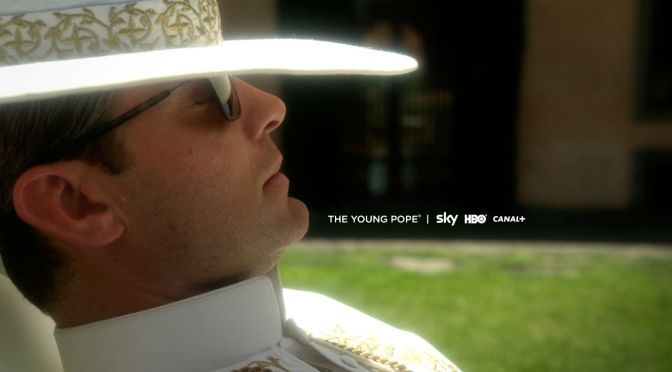
Having recently reviewed Martin Scorcese’s Silence (2016) I thought it apt to follow it up by looking at a more contemporary vision of religion and faith with a review of Paulo Sorrentino’s HBO produced The Young Pope. Created, co-written and directed by uber-Italian-auteur Sorrentino it stars the impressive Jude Law as the eponymous lead protagonist. Law’s Lenny Belardo, rather than the crusty-almost-dead-looking-Popes we’re used to seeing behind bulletproof glass or delivering sermons from the Vatican, is in fact a younger, muscular and even sexy Pope.

the-young-pope_1438869558

Now, while I respect an individual’s right to believe what they want to, be it the teachings of Christ or Mohammed or Obi Wan Kenobi for that matter, I’m not a great fan of ‘Organized Religion.’ Indeed, ‘Organized Religion’ must be up there, along with global governments, Hitler, Spanish flu, and bubonic plague, as the main cause of wars, death and the suffering of millions.  More specifically, Catholicism and its representatives have been at the forefront of negative events down the years including the Medieval Witch Hunts; Spanish Inquisitions; the tragedy of the ‘Fallen Women’ in 1920s-1950s Ireland; general acquiring of huge wealth while followers live in poverty; anti-gay and Pro-life ideologies; and as most recently seen in the film Spotlight (2015), a worldwide cover-up of paedophilia by Catholic priests. So how does Sorrentino approach such issues?

typ_judelaw_creditgiannifiorito-2

Well, his creative team’s approach to the material is not one of demonization but rather playful satire, wistful respect and a formidable testing of the Vatican as an institution. His desire it not to bring down the Catholic Church but rather purge the old and modernize its way of thinking and how it represents itself. It’s a testament to the strength of the writing that it held my interest throughout and this was essentially down to the incredible characterisation and performances from Jude Law, Diane Keaton, James Cromwell and incomparable Sivio Orlando as the devious but ultimately soft-hearted-Napoli-fan Cardinal Voiello.

12-young-pope-kangaroo-w529-h352

Over ten episodes of high quality dramatic analysis Sorrentino presents many of the issues facing the Catholic church now including: the paedophilia cases charged; the sexual behaviour, addictions and sins of Priests; the financial and political machinations of the Vatican; the importance of public relations and marketing the Vatican; and of course the very nature of faith and what it means to be a Catholic.  These are indeed heavy subjects yet while serious like Scorcese’s Silence, The Young Pope contains some wry and delicate humour too. I mean ten episodes of a Vatican-based comedy it isn’t, but Paulo Sorrentino’s skewed look shows the priests and nuns, not as higher beings but rather flawed humans like the rest of us.

the-young-pope-1

None are presented as more human than the lead character Lenny Belardo.  Jude Law’s character is a surly, sarcastic and snappy dude from the start. He smokes and shows little respect for the elder priests, led by Cardinal Voiello and his prior mentor, Cardinal Spencer (James Cromwell) who are as surprised as him that he somehow won the Papacy due to an advantageous split in the votes. Belardo vows to break the “old boys” network and spends much of the season locking heads with Voiello and Spencer in a bitter series of power plays. This young Pope does not suffer fools and refuses to be seen in public and reneges on his public relations duties. He even at times “jokes” about not believing in God; while his first speech delivered in silhouette is an unmitigated PR disaster.

youngpopeprocession

Yet, at Belardo’s heart is a dark sadness due to his abandonment by his hippy parents, who while a young boy, dumped him at an orphanage run by Sister Mary (Keaton).  Keaton portrays the surrogate Mother to Lenny and his best pal, Cardinal Dussolier (Scott Shepherd) as she supports him admirably during his papal duties. We see Belardo battle his elders, his faith, his anger, loneliness and sexual temptations which are put before him; all as he finds his voice as the Pope. It is a fascinating journey which really pulls you into the Pope’s internal and external strife.

Overall, this was a heavy yet rewarding series to watch. The scenery and imagery on show dazzle as Sorrentino and his cinematographer conjure some startling holy visions and beautiful architectural compositions. The writing is also of the highest quality with some magnificently lofty, pious and poetic speeches throughout. Being very clever Sorrentino both pokes a teasing stick at the Vatican but also praises the Lord in his own inimitable way, creating several fascinating characters in the process. Jude Law has never ever been better in a show which while initially testing rewards those who keep the faith.

SILENCE (2016): REVIEWED BY A RELIGIOUS OUTSIDER

SILENCE (2016): REVIEWED BY PAUL LAIGHT

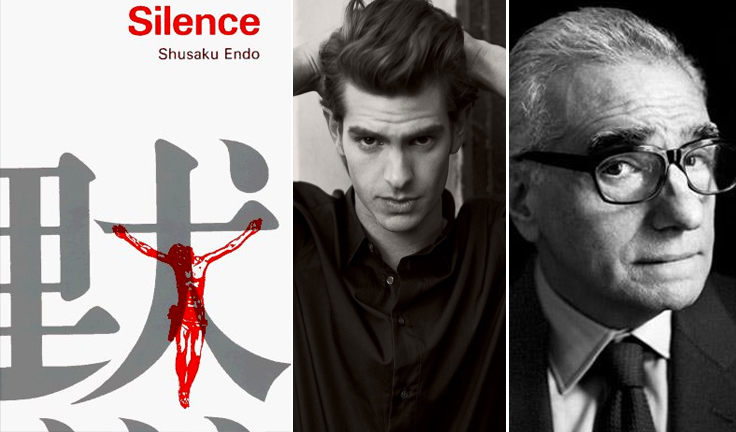
Rather than review every single thing I have seen in one monthly instalment I have decided to theme my reviews concentrating on quality rather than quantity in 2017. So, here I go with a light essay on the nature of the existence of God, the relevance of religion in today’s world and at the same time give my humble opinions on Martin Scorcese’s passion project Silence (2016).

martin-silence1

In my mind I do not believe in God. I do not believe in a higher-power that created Earth and oversees our everyday lives. I believe Jesus, Buddha and Mohammed existed in some form or another in the past and their philosophies and teachings laid the groundwork for Christianity, Islam and Buddhism; plus many of the other religions that are followed today. Personally, I believe in all that I see and hear and experience in life and while I respect other people’s faith, commitment to an all-powerful being is not for me. Each to their own I reckon.

liam-neeson

A belief in Heaven and God certainly explains many things such as why are we here? And what happens when we die? Because let’s face it the threat of a never-ending abyss of no consciousness is a terrifying thought after all. I mean, I lived and studied in Stoke-on-Trent for three years so have seen the void and it is frightening. So, I get that people need some comfort and answers to difficult questions. It’s just a shame that religion, organized or otherwise, has been used historically for not only good but also something that has caused: torture, war, murder, inquisitions, control, heartache and division etc. But, hey, that’s more of a critique of humanity rather than faith.

Thus, while I respect individual’s choice of faith or politics or ideology, religion and prayers are not for me. Having said that, I’m not a fundamental atheist looking to attack those believers and when reputed filmmakers such as Martin Scorcese embark on personal journeys into their own faith it certainly makes one have a look and reconsider your own perspectives. Indeed, Silence features a lead character which clearly acts as Scorcese’s personal conduit as Rodrigues journeys into the heart of darkness and faces a horrific test of faith.

silence-00432.jpg

Like The Last Temptation of Christ (1988) and Kundun (1997), Martin Scorcese is no stranger to broaching heavy and powerful subjects relating to religion. Of course, it’s easy to say I prefer his stylised, violent and darkly humorous gangster films as they are eminently watchable with kinetic camerawork, great soundtracks and brutal men taking each other out in all manner of bloody ways. Having said that these films still ring true to Scorcese as he grew up in a tough Italian neighbourhood where more often than not the choice was to become a gangster or a priest. What a choice!

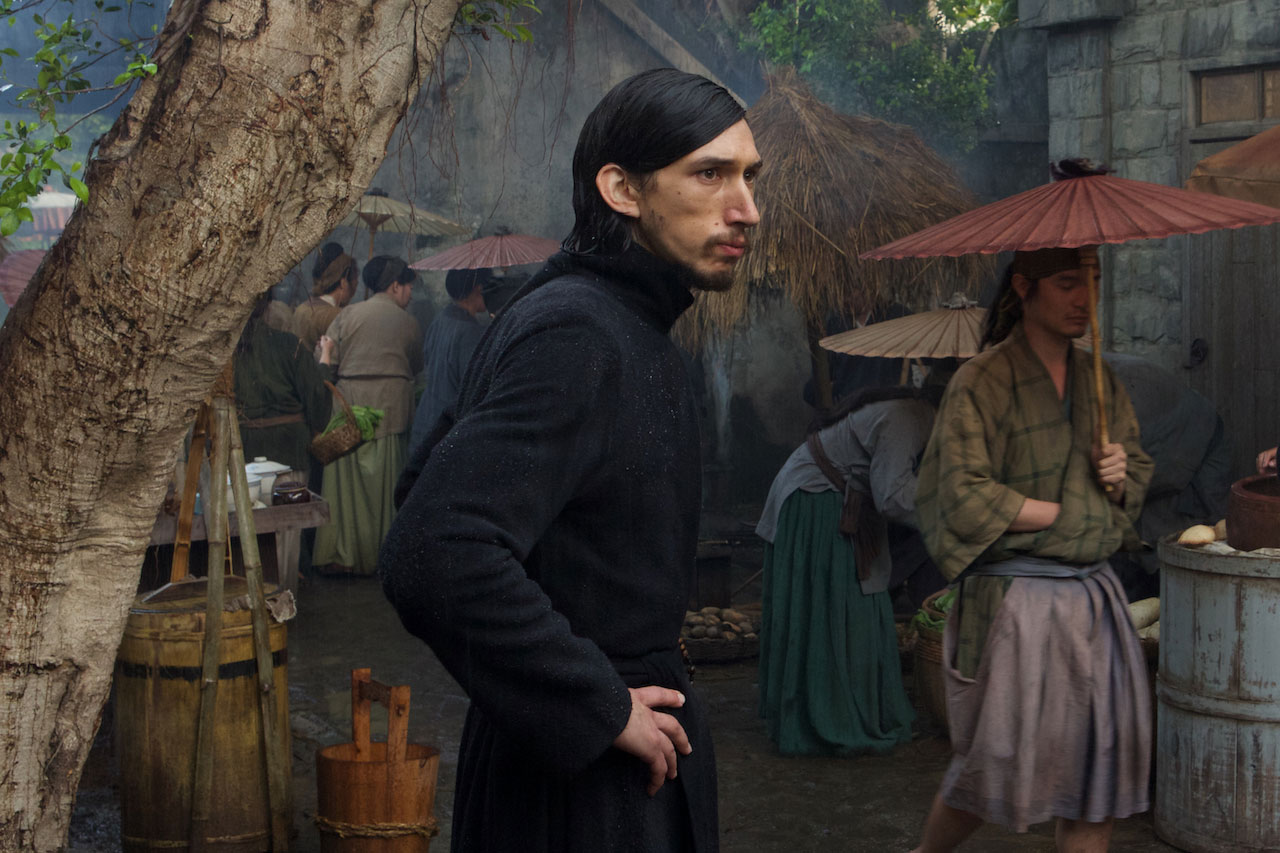
Silence is set as far away from New York as you could get: in 17th century feudal Japan. It concerns two priests Rodrigues and Garupe (brilliant portrayed by Andrew Garfield and Adam Driver) who venture into the heart of darkness to attempt to find their mentor, Father Ferreira (Liam Neeson). It is a long film which requires much stamina in both heart and mind and at times certainly tested my faith in the director. However, after it had ended it left me with so much to think about I knew it was worth the journey. It’s a story that you absorb through your psyche and physicality. It does not strike any easy notes as it discordantly pulls at your cerebral sinews.

silence

The first act quickly establishes the drama but I felt that the second thirty minutes was arguably too slow as I was very keen for the quest to find Ferreira gain some pace. Yet, when the film focusses on Andrew Garfield’s character and the testing of his faith Scorcese really got to the heart of the narrative. Moreover, there was much in the film which reflected today. The priests are captured, humiliated and tortured in a Japanese equivalent of Guantanamo Bay. But the Japanese were not stereotypical or evil for evil’s sake. Their motivations of protecting their culture and own religion were well argued. In fact, it’s an important theme in the film where, in testing Rodrigues’ faith, are they not perhaps right to protect their way of life? Especially given they may have some knowledge of the violence committed by Westerners and Christians in the name of God.

silence3

Overall, Silence is a reflective and personal film about faith and culture clashes. Over the running time Scorcese, through the characters, questions his beliefs and how he should best go about praising the Lord. Scorcese’s soul is in many characters notably Rodrigues but also Neeson’s Ferreira. Most importantly he is also present in a fascinating sin-confess-repent-Judas character called Kichijiro (Yōsuke Kubozuka). While moving at a meditative pace Silence possesses some wonderful cinematography, sterling performances and a brooding score. Ultimately, faith is a personal choice and whether you believe in God or not an individual must choose their own path of faith even if it is silence.