Tag Archives: Movies

Cinema Review: The Drama (2026) – a superbly constructed postmodern farce predicated on a mesmeric moral dilemma!

Cinema Review: The Drama (2026)

Directed by Kristoffer Borgli

Written by Kristoffer Borgli

Produced by Ari Aster, Lars Knudsen, Tyler Campellone

Main cast: Zendaya, Robert Pattinson, Alana Haim, Mamoudou Athie, Hailey Gates, Zoe Winters etc.

Cinematography by Arseni Khachaturan

Edited by Joshua Raymond Lee & Kristoffer Borgli

*** MAY CONTAIN SPOILERS ***


I haven’t seen Kristofer Borgli’s prior film, Dream Scenario (2023), but have added it to the watchlist. I did see his hilarious black comedy Sick of Myself (2022) and found it to be a sharply executed and engaging piece of dark satire. Borgli expertly delivered a thought-provoking and unsettling reflection of modern attention culture, mental health and narcissism. With The Drama (2026) he has delivered an even more impressive and darkly awkward comedic farce! Yet, this is no traditional rom-com, but rather a panic attack inducing series of set-pieces predicated on a compelling moral dilemma at its heart.

The Drama (2026), contains magnetic performances from Zendaya and Robert Pattinson, and the couple have seriously good on-screen chemistry. Structured around their initial meet-cute the narrative builds comedic and emotional momentum as they fast approach their wedding day. Films built around weddings often use the impending ceremony as a pressure cooker, where personal insecurities and social expectations are forced to the surface. As such Four Weddings and a Funeral (1994) or My Best Friend’s Wedding (1997), find marital ceremonies representing both an ideal and a threat—exploring themes of timing, missed chances, and emotional honesty. Darker visions of wedding themes can be found in Melancholia (2011), but The Drama (2026) occupies a similar chaotic take like Rachel Getting Married (2008), but is arguably a more heightened exploration of love, identity, anxiety, and the uneasy gap between societal ideals and personal truth.


The Drama (2026) is a sharp, unnervingly perceptive piece of writing, elevated by a screenplay that constantly balances wit, discomfort, and emotional truth. Borgli has a remarkable ability to construct scenes that feel both grounded and quietly volatile, allowing tension to simmer beneath even the most mundane interactions. The film’s central premise hinges on a brilliantly executed moral and social dilemma—one that I won’t spoil—but it functions as an irresistible hook, drawing the audience into a spiral of increasingly complicated behaviour. What makes it so effective is how Borgli subtly turns the lens back on us, inviting us to question how we might respond under similar circumstances, and whether our own instincts would be any less flawed.

The casting is pitch-perfect across the board. Robert Pattinson delivers some of his most finely tuned reactive work as Charlie. His attempts to process Emma’s bombshell revelation are nothing short of priceless—awkward, hilarious, and painfully real all at once. Zendaya is just spotless, carrying much of the dramatic weight effortlessly. Alongside her, Alana Haim brings a compelling mix of confidence and fierce unpredictability, while Mamoudou Athie proves immensely likeable, grounding the film with a warmth that makes the emotional stakes land even harder. The supporting cast, too, feel carefully chosen, each performance adding texture to Borgli’s tightly controlled world.

Despite the undercurrent of anxiety that runs through many scenes, the film never alienates. Instead, it draws you closer. The characters are flawed but recognisable, and I found myself genuinely rooting for them to make it work, even as their decisions became more questionable. Borgli’s direction complements the script beautifully—never overstated, always precise—allowing the performances and writing to take centre stage. The result is a film that is as entertaining as it is thought-provoking: a brilliantly acted, sharply written, and quietly devastating exploration of modern relationships.

Mark: 9.5 out of 11


Films That Got Away #17 – Punishment Park (1971)

Films That Got Away #17 – Punishment Park (1971)

Directed by Peter Watkins

Written by Peter Watkins

Produced by Susan Martin

Main ensemble: Carmen Argenziano, Harold Beaulieu, Jim Bohan, Stan Armsted, Paul Alelyanes etc.

Cinematography by Joan Churchill & Peter Smokler

** MAY CONTAIN SPOILERS **


Although Punishment Park (1971) itself is fictional, the documentary style is so raw and realistic you can almost smell the fear, blood, lead alloy and bullet-smoke on the screen. The film also highlights many of the elements found within parallel social and political events of the time, such as police brutality, counterculture rebellion, the trial of the Chicago Seven, the Kent State shootings, and political polarisation bordering on civil war. With the United States governments continually driving a “world police” agenda, perhaps they should look closer to home before starting external conflicts.

For years, Punishment Park (1971) sat just out of reach for me — one of those films you hear about in whispers, invoked in conversations about “the most confrontational cinema ever made,” but never quite encountered at the right moment. Now, having finally caught up with Peter Watkins’ 1971 film, I can’t shake the feeling that I’ve been missing something essential. Not just a film, but an experience — raw, furious, and uncomfortably alive in a way that few works of cinema ever achieve.

What strikes first is its sheer lack of polish — and how vital that is to its power. Watkins doesn’t present a narrative so much as he detonates one. Shot in a pseudo-documentary style, with handheld cameras and overlapping dialogue, the film feels less like something constructed and more like something captured in real time. The performances — many from non-actors — are jagged, unpredictable, and often feel on the verge of spilling out of the frame. There’s no safety net here, no aesthetic distance to retreat into. It’s messy, chaotic, and utterly convincing.


That rawness feeds directly into the film’s political force. Punishment Park (1971) isn’t subtle, and it has no interest in being so. It’s angry — openly, unapologetically angry — at systems of power that disguise brutality behind procedure and patriotism. The tribunal sequences are particularly harrowing, not because they’re exaggerated, but because they feel so plausible. The language of authority, the casual dismissal of dissent, the bureaucratic calm in the face of injustice — it all lands with a chilling familiarity. Watkins doesn’t ask you to interpret; he demands that you confront.

And yet, what lingers most is how contemporary it feels. Despite being rooted in the tensions of its time, the film plays less like a historical artifact and more like a warning that never stopped being relevant. Its vision of a state turning on its own citizens, of media observing rather than intervening, of truth becoming something contested and fragile — all of it resonates with unsettling clarity today. It’s the kind of film that doesn’t age so much as it waits.

I’m grateful, genuinely, to have finally seen it. Some films entertain, some impress, but very few burn a hole in your mind. Punishment Park (1971) is one of those rare works that burns with purpose — a film that refuses comfort, refuses neutrality, and refuses to be forgotten. It makes one sad that, to be honest, the world hasn’t changed for the better since it was made. While there are many who strive for peace, there are so many who choose aggression, violence and war to control and destroy.

Punishment Park (1971) can currently be seen on YouTube.


Cinema Review: Project Hail Mary (2026) – the end of the world has rarely been so much fun and bromantic!

Cinema Review: Project Hail Mary (2026)

Directed by Phil Lord & Christopher Miller

Screenplay by Drew Goddard

Based on Project Hail Mary by Andy Weir

Produced by Amy Pascal, Ryan Gosling, Phil Lord, Christopher Miller, Aditya Sood, Rachel O’Connor, Andy Weir, etc.

Main Cast: Ryan Gosling, Sandra Hüller, James Ortiz, Lionel Boyce, Ken Leung, Malachi Kirby, etc.

Cinematography by Greig Fraser

*** MAY CONTAIN SPOILERS ***


There’s a version of Project Hail Mary (2026) that could have been cold, clinical, and overly procedural—a hard sci-fi puzzle box drifting in the vacuum of its own cleverness. Instead, what Christopher Miller and Phil Lord deliver is something far more disarming: a big-hearted, funny, surprisingly emotional crowd-pleaser that turns the apocalypse into an oddly uplifting experience.

Adapted by Drew Goddard from Andy Weir’s novel, the film follows Ryland Grace (a perfectly cast Ryan Gosling), who awakens alone aboard a spacecraft with no memory of who he is or why he’s there. The early stretches lean into disorientation—Gosling playing confusion with a twitchy, almost comic anxiety—but as Grace pieces together his past, the film cleverly shifts into a dual-track narrative: one part interstellar survival story, one part Earthbound scientific scramble to stop a cosmic catastrophe.

Gosling is the film’s main weapon. He plays Grace not as a conventional hero, but as a reluctant participant—anxious, self-deprecating, and often hilariously out of his depth. His charm keeps the exposition buoyant, especially as the film dives into dense scientific concepts. Where the story could feel heavy, Gosling makes it breezy and Project Hail Mary (2026) is certainly more emotionally stimulating than the dreadful action thriller The Gray Man (2022) and the weak remake, The Fall Guy (2024).


But the film’s most unexpected triumph is its central relationship: a deeply entertaining and genuinely moving “bromance” between Grace and an alien Xeonite – christened Rocky – he encounters in deep space. What begins as cautious interaction evolves into one of the most delightful interspecies friendships in recent sci-fi. Their communication—built from math, sound, and trial-and-error—becomes a source of both comedy and emotional resonance. It’s rare to see a blockbuster hinge so successfully on companionship rather than conflict, and the film is all the better for it.

Visually, Project Hail Mary (2026) is spectacular without being overwhelming. Lord and Miller balance scale with clarity; the vastness of space never drowns the intimacy of the story. The alien design is inventive, the astrophysical phenomena are rendered with awe-inspiring detail, and yet the film always remains grounded in character. It’s science-forward filmmaking that never forgets to entertain. Back on Earth, Sandra Hüller provides the film’s emotional anchor. Her performance carries a quiet intensity, grounding the global stakes in something human and immediate. Where the space sequences soar, her scenes remind us what’s at risk—and why it matters.

Goddard’s script is sharp, witty, and structurally satisfactory. It juggles timelines, scientific jargon, and character development with impressive ease, finding humour in the bleakest situations without undercutting the stakes. There’s a rhythmic confidence to the storytelling that keeps the film propulsive even as it pauses for introspection. What ultimately makes Project Hail Mary (2026) stand out, though, is its tone. This is, unmistakably, a feel-good end-of-the-world movie. It finds optimism not in denying catastrophe, but in confronting it with curiosity, cooperation, and friendship. By the time the credits roll, what lingers isn’t just the spectacle or the science—it’s the warmth. A book and film about extinction becomes, improbably, a story about connection.

Mark: 8.5 out of 11

Cinema Review: The Secret Agent (2025) – a powerful political thriller with flashes of surrealist caprice.

Cinema Review: The Secret Agent (2025)

Directed by Kleber Mendonça Filho

Written by Kleber Mendonça Filho

Produced by Emilie Lesclaux

Main cast: Wagner Moura, Carlos Francisco, Tânia Maria, Robério Diógenes, Alice Carvalho, Gabriel Leone, Maria Fernanda Cândido,
& Udo Kier, etc.

Cinematography by Evgenia Alexandrova

** MAY CONTAIN SPOILERS **


I watch a lot of films and am often bemused by the critically acclaimed films and award winners which have my head scratching. I watch them thinking the critics or judges must be on another planet, drunk or high in regards to their brain waves and word farts. I am aware many reviews decisions are made based on taste, subjectivity, politics, nepotism, cronyism and also commercial reasons, such as getting pay-offs from studios, allegedly.

Of course I have my own thought patterns and we cannot all agree, but there are genuinely some films that are horrible to watch but somehow get critics purring and win loads of awards. The most recent high profile examples of this are The Souvenir (2019), Titane (2021), Anora (2024) and Kleber Mendonça Filho’s virtually unwatchable surreal Western, Bacurau (2019). Thus, I was reluctant to believe the praise heaped on his next film The Secret Agent (2025); a period thriller set in the corrupt and deadly political landscape of 1970s Brazil.


Wagner Moura portrays an enigmatic Armando (Wagner Moura) travelling across his native land keen to keep a low profile from gangsters, government officials and police. Although given the rabid criminality on show there it is difficult to tell the difference between such characters. Once he reaches his destination in Northern Brazil, the idea is to reconcile with his in-laws and young son, find out more about his mother’s past and also stay one step ahead from the criminals pursuing him.

The Secret Agent (2025) unfolds at a deliberately unhurried pace, the kind that might test impatient viewers but ultimately proves hypnotic in its control and precision. Kleber Mendonça Filho directs with a quiet confidence, allowing tension to simmer beneath the surface rather than erupt in obvious bursts. Every frame feels meticulously composed, contributing to an atmosphere that is as absorbing as it is suffocating. That said, there is one notably capricious sequence that momentarily veers off course—its tonal shift is jarring, almost indulgent—but it carries an unexpected sting that lingers, suggesting it may be more intentional than it first appears.

What truly elevates the film, however, is its astonishing attention to period detail and a towering central performance from Wagner Moura. The production design and costuming are nothing short of immaculate, immersing the audience in a world that feels textured, lived-in, and entirely authentic. Moura anchors it all with a performance of remarkable subtlety and depth, conveying inner turmoil through the smallest gestures and glances. It’s the kind of nuanced, deeply felt work that lingers long after the credits roll—and in any fair awards landscape, it would have been more than worthy of an Academy Award for Best Actor. Here’s a film I actually agree with the critics and award panellists about.

Mark: 8.5 out of 11


Cinema Review: The Testament of Ann Lee (2026) – a transcendental Amanda Seyfried performance illuminates the screen.

Cinema Review: The Testament of Ann Lee (2026)

Directed by Mona Fastvold

Written by Mona Fastvold & Brady Corbet

Produced by: Andrew Morrison, Joshua Horsfield, Viktória Petrányi, Mona Fastvold, Brady Corbet, Gregory Jankilevitsch, Klaudia Śmieja-Rostworowska, Lillian LaSalle, Mark Lampert, etc.

Main cast: Amanda Seyfried, Thomasin McKenzie, Lewis Pullman, Stacy Martin, Tim Blake Nelson, Christopher Abbott, etc.

Cinematography by William Rexer

** MAY CONTAIN SPOILERS **


The Testament of Ann Lee (2025), directed by Mona Fastvold and co-written with Brady Corbet, is an ambitious historical musical drama that explores the life of Ann Lee, the charismatic 18th-century founder of the Shaker religious movement. With Amanda Seyfried at its centre, the film approaches Lee less as a traditional saintly figure and more as a woman shaped by trauma, conviction, and spiritual fervour. Fastvold’s direction leans heavily into atmosphere, presenting Lee’s rise to spiritual leadership as something both mystical and deeply human. The result is a film that feels reverent yet curious, as if studying a figure whose faith borders on mania.

Amanda Seyfried delivers an extraordinary performance that anchors the entire film. She plays Ann Lee with an intense interiority—equal parts fragile and formidable—capturing the fervent certainty of a woman who believes she has been chosen for a divine purpose. Seyfried’s physicality, particularly in the film’s musical and ritual sequences, gives Lee a magnetic presence that makes it easy to understand why followers might be drawn to her. It’s the kind of performance that lingers long after the film ends, and it stands as one of Seyfried’s most committed and transformative roles.


Visually, The Testament of Ann Lee (2025), is stunning. The film’s cinematography and production design immerse viewers in the harsh textures of 18th-century religious life, favouring natural light, muted palettes, and a palpable sense of dirt, wood, and candle smoke. The musical sequences—staged as ecstatic communal expressions of faith—are beautifully choreographed and filmed, capturing the hypnotic rhythms of Shaker worship. Yet while these moments are striking, they begin to feel somewhat repetitive as the film progresses, emphasizing mood over narrative momentum.

For viewers fascinated by charismatic religious figures or the psychology of belief, the film offers a compelling entry point. As someone not particularly religious but drawn to stories of spiritual zeal and cult-like devotion, I found the story initially captivating. Still, Ann Lee’s narrative arc ultimately feels less dramatically satisfying than the film’s aesthetic ambitions might suggest. Rather than a searing drama or a definitive testament to a heroic religious figure, The Testament of Ann Lee (2025), settles into something quieter: a haunting, beautifully crafted piece of moving art that observes its subject with reverence but stops just short of fully interrogating her legacy.

Mark: 7 out of 11


Cult Film Review: American Movie (1999) – a bittersweet documentary profiling the ups and downs of a low-budget filmmaker!

Cult Film Review: American Movie (1999)

Directed by Chris Smith

Produced by Sarah Price & Chris Smith

Main “Cast”: Mark Borchardt and Mike Schank

Cinematography by Chris Smith

Edited by Barry Poltermann & Jun Diaz

Music by Mike Schank

*** MAY CONTAIN SPOILERS ***


Given I am a low-budget filmmaker myself I am amazed I had never seen, American Movie (1999) before. Thankfully The Nickel Cinema in London screened it at the weekend and I really enjoyed it. Filmed between 1995 and 1997, this cult classic documentary American Movie (1999) chronicles Borchardt’s heroic, chaotic, and deeply Midwestern quest to finish his indie horror short Coven (pronounced ‘COH-ven’, and yes, he will correct you). The short is meant to raise money for his real passion project, a feature called Northwestern. But first? He has to survive reality. And reality is brutal.

Mark has not just zero money; zero organization; a rotating cast of confused friends and relatives as crew; functioning alcoholism; mounting debts, but also has the gift of the gab and a never ending passion for filmmaking. What unfolds is less “behind-the-scenes documentary” and more Shakespearean comedy AND tragedy staged in Milwaukee houses, static caravans, cars, junkyards and local woods.

Borchardt is equal parts Ed Wood and tortured auteur — passionately explaining his artistic vision one minute, begging his elderly uncle for production money and picking up his editing assistant from prison the next. His crew ranges from loyal-but-clueless to openly skeptical, yet somehow the production lurches forward. Barely.


The documentary crew shot over 90 hours of 16mm footage, capturing every awkward take, every blown line, and every moment of Mark’s delusional optimism. We watch as Coven repeatedly derails thanks to bad planning, worse luck, and the universal law that says: if something can go wrong on an indie film set, it absolutely will. But here’s the twist — it’s weirdly inspiring. Because underneath the chaos is something pure: a guy who just refuses to stop making movies. No money. No resources. No safety net. Just pure passion and obsession.

What’s most hilarious is the double act comedy exchanges between Mark and his best friend and Mike Schank. Mike, a very capable musician, has a permanent grin and the look of an acid-trip casualty, yet almost-perfect comedy timing. He clearly loves Mark’s passion and helps as best he can. I was sad to read Mike had passed away in 2022 from cancer.

If you stumbled into American Movie (1999) blind, you’d swear it was a proto-sitcom about delusional dreamers armed with a battered 16mm camera, a camcorder and misplaced confidence — a spiritual ancestor to Trailer Park Boys and It’s Always Sunny in Philadelphia. It plays like a painfully funny hangout comedy about a self-proclaimed auteur and his band of well-meaning screw-ups trying — and repeatedly failing — to make something “serious.” The arguments are petty, the ambition is sky-high, and the incompetence is operatic. You laugh, you cringe, and somewhere along the way you realize this isn’t scripted chaos — it’s just raw, unfiltered obsession captured on camera.

Mark: 9 out of 11


Romford Horror Film Festival 2026 & The Cannibal Man (1972) reviews!

Romford Horror Film Festival & The Cannibal Man (1972) review

From 19th–22nd February 2026, Romford, Essex emerged not just as a venue, but as a creative crucible for genre storytelling as the Romford Horror International Film Festival — affectionately dubbed HorRHIFFic — returned to the Lumiere Cinema with its most ambitious programme yet – details can be found here: https://www.romfordhorrorfestival.com

This four-day celebration of horror cinema is rooted in the independent filmmaking spirit: championing works from emerging voices around the world, blending them alongside classic cult favourites, and generating an atmosphere of passion, community, and shared reverence for the genre. What makes this festival truly special isn’t just the size of its programme — though over 130 films certainly made for a thrilling schedule — but its wholehearted dedication to independent filmmakers who bring new ideas, daring vision, and personal passion to every frame.


Across its programme, the festival showcased a thrilling mix of guests and films that honour horror’s breadth including: Classic Retro Treats, Special Guests and Actors from Horror, New Independent Features & Shorts from countries such as South Korea, Canada, Spain, USA, and Italy, plus Creative Diversity — with screenings that embraced psychological depth, gory slashers, ghost stories, off-beat genre hybrids, and boundary-pushing work from both early-career filmmakers and seasoned indie pros.

Romford Horror Festival is also renowned for the community it builds. Horror fans come together not just to watch films, but to share experiences, meet creators, and feel at home in an environment that values innovation over commercialism. The Lumiere Cinema, itself a community-saved venue, became a home for filmmakers and fans alike — proving that in Romford, horror isn’t just screened… it’s commemorated. I for one am so grateful they screened my short horror film The Suicide Shift (2026).


As well as the short film showcases I watched a few retro classics including The Cannibal Man (1972) – (original title: La semana del asesino), directed by Eloy de la Iglesia. It is less a horror film than a slow, suffocating moral collapse. What begins as an unfortunate act of violence spirals into a weeklong descent into hell for Marcos, played with haunted fragility by Vicente Parra. Each subsequent killing feels less like cruelty and more like inevitability — the grinding machinery of fate closing in on a man already spiritually trapped.

Set against the decaying outskirts of Madrid in the final years of the Franco regime, The Cannibal Man (1972) doubles as a bleak portrait of a society rotting from repression. The slaughterhouse where Marcos works becomes an unsubtle but potent metaphor: under Francoism, bodies are processed, identities erased, dissent quietly carved up and discarded.


What makes the film especially daring is its undercurrent of homoerotic tension. Marcos’ wealthy, enigmatic neighbour Néstor hovers at the edges of the carnage, offering protection and silent understanding. Their charged glances and coded conversations suggest a longing that cannot safely speak its name under Franco’s moral authoritarianism. In this reading, Marcos’ spiral is not only about guilt but about internalized repression — desire twisted inward until it manifests as self-destruction. The horror is as much psychological as physical.

And yes, the gore is blunt and ugly. Bodies are dismembered with the same cold pragmatism as livestock. But de la Iglesia never lets the blood eclipse the tragedy. Marcos is not a monster in the conventional sense; he is a man cornered by circumstance, class stagnation, and a society that offers no mercy to the weak. By the end, his descent feels preordained — less a fall from grace than a revelation that grace was never available to him.

So, if you love horror films do check out indie film festivals such as – HorRHIFFic – whether it’s the electrifying surprises in the indie showcases or the nostalgic thrill of classic screenings, the Romford Horror Film Festival 2026 made it clear: independent horror cinema is alive, vibrant, and boldly inventive. This festival is a testament to the creativity and ingenuity of filmmakers who refuse to be confined by convention — and to the audiences who cheer them on.


Cult Film Review: Thriller – A Cruel Picture (1974) – a shocking blend of X-rated exploitation and arthouse filmmaking!

Cult Film Review: Thriller – A Cruel Picture (1974)

Directed by Alex Fridolinski

Screenplay by Alex Fridolinski

Produced by Bo Arne Vibenius

Main cast: Christina Lindberg, Heinz Hopf, Despina Tomazani, etc.

Cinematography by Andreas Bellis

Edited by Brian Wikström

**Viewer discretion is advised – this film contains scenes that many will find disturbing**


Thriller – A Cruel Picture (1973) (Swedish: Thriller – en grym film) is a 1973 Swedish exploitation film from writer-director Bo Arne Vibenius, working under the pseudonym Alex Fridolinski, starring Christina Lindberg and Heinz Hopf. Infamous for its unflinching depictions of sexual violence, drug abuse, and degradation, the film charts the ordeal of a mute young woman who is coerced into heroin addiction and forced into prostitution before embarking on a brutal campaign of revenge against her tormentors.

Released in the United States in a heavily cut version by American International Pictures—under lurid alternate titles such as They Call Her One Eye, Hooker’s Revenge, and The Swedish Vice-Girl—the film has earned a reputation as a deeply disturbing and confrontational work. Its graphic content and relentless tone make it a challenging and potentially distressing viewing experience, best avoided by those sensitive to extreme subject matter.

Unsurprisingly, due to the violent scenes, on-screen drug use, nudity and also inclusion of hardcore pornography, Thriller – A Cruel Picture (1973) was either banned outright or heavily censored on release. I had heard so much about this film on various YouTube videos expounding the shocking nature of the themes and scenes. Allied to this, Quentin Tarantino has also “championed” the movie and it’s star, Christina Lindberg. With this in mind the film I got tempted and purchased the recent Blu Ray version released in the UK. This version DOES NOT, thankfully, include the pornographic scenes which were filmed by the director with a Swedish couple who did live sex shows.

So, is Thriller – A Cruel Picture (1973) actually any good? Well, it is safe to say that it is a relentlessly harsh watch. That said, it would be unfair to dismiss the film outright as mere grindhouse provocation. Vibenius employs striking stylistic flourishes that elevate certain sequences into something oddly hypnotic. Most famously, the extended slow-motion shotgun reprisals—henchmen blasted backwards in balletic, almost operatic fashion—are staged with a visual patience that borders on the surreal. These, as well as the lengthy final act car pursuit sequence, are technically memorable, even as their brutality remains confronting.


Where the film becomes almost nightmarish is in its internal logic. Once Madeline (Christina Lindberg) is captured and brutalized by the sadistic drug dealer Tony (Heinz Hopf), the narrative takes on a dreamlike, disjointed quality. Despite being forcibly addicted to heroin, she somehow manages to train herself in hand-to-hand combat, driving, and sharpshooting—preparing an elaborate revenge while still under the grip of addiction. The plotting feels less realistic than hallucinatory, as though the film operates on the logic of trauma and fantasy rather than grounded cause and effect.

A great deal of the film’s lasting impact rests on the striking screen presence of Christina Lindberg, as well as her character’s grim journey. Already known internationally in the late 1960s and early 1970s for her work as an erotic actress and glamour model, Lindberg brings an arresting, almost statuesque quality to the role. Her icy stare—especially once framed by the now-iconic eyepatch—gives the character a mythic, comic-book intensity. At the same time, the creative decision to render her character mute inevitably shapes how that performance is perceived. Silence becomes a stylistic device, amplifying the film’s cold and detached tone. The director’s choice to sidestep the demands of more dialogue-heavy dramatic scenes actually works in the film’s favour.

Overall, Thriller – A Cruel Picture (1973) is a film that oscillates between exploitation rawness and stark, almost avant-garde stylization. For hardened genre enthusiasts, it may be a grim curiosity with undeniable visual audacity. For many others, however, its graphic content and relentless tone will make it a deeply uncomfortable, even distressing experience. Proceed carefully.


Cinema Review: Pillion (2025) – a fantastically acted and directed erotic rom-dom-com!

Cinema Review: Pillion (2025)

Directed by Harry Lighton

Written by Harry Lighton – Based on Box Hill by Adam Mars-Jones


Produced by Emma Norton, Lee Groombridge, Ed Guiney &
Andrew Lowe

Main cast: Harry Melling, Alexander Skarsgård, Douglas Hodge, Lesley Sharp, Jake Shears, etc.

Cinematography by Nick Morris

Edited by Gareth C. Scales


There’s a tender audacity to Pillion (2025), an erotic rom-dom-com that sneaks up on you with the gentleness of a confession. What begins as an off-kilter meet-cute blooms into something far more vulnerable: a rites-of-passage story about sexual awakening, self-recognition, and the courage it takes to accept pleasure without apology.

At its heart is Colin, played with exquisite restraint by Harry Melling. Melling has always been an actor of intelligence, but here he finds a new register—soft-spoken, watchful, quietly aching. His performance never reaches for easy beats; instead, it accumulates detail. A look held a fraction too long. A smile that arrives late. Colin’s desire isn’t announced; it’s discovered, moment by moment, and the effect is deeply empathetic.

Opposite him, Alexander Skarsgård’s Ray is all smoulder and swagger on first impression—an insouciant masculinity that seems effortless, almost cocky. But Skarsgård is doing something more interesting beneath the surface. The sexuality is undeniable, yes, but it’s armoured. Pain leaks through the cracks, giving Ray a bruised romanticism that complicates the dominant energy he projects. The push and pull between the two men becomes the film’s most potent charge.


Director Harry Lighton deserves enormous credit for navigating this tonal tightrope. His direction is fantastically nuanced, allowing intimacy and humour to coexist without deflating either. The film understands that eroticism can be funny, awkward, even faintly ridiculous—especially when it’s new—while still honouring its emotional stakes. The explicit moments are handled with confidence rather than coyness, lacing the heartfelt beats with risqué shocks that provoke gasps, laughter, and the occasional wince. The physical opposites of Harry’s mild-mannered traffic warden versus Ray’s macho biker also add characterful humour to the mix.

The contemporary setting, rooted in the London suburb of Bromley, is another inspired choice. This is not a glossy, aspirational London; it’s resolutely unglamorous, familiar, and quietly stifling. That ordinariness makes Colin’s awakening feel all the more radical, a private revolution unfolding in plain sight. Furthermore, strong support comes from Lesley Sharp and Douglas Hodge as Colin’s parents, whose love is real but imperfect, shaped by generational discomfort and unspoken fears. Their scenes add texture rather than judgment, grounding the film in a recognisable family dynamic.

Be warned: Pillion (2025) doesn’t shy away from explicit sex scenes or moments of leather-adorned domination (including BDSM), and those elements may provoke strong reactions. But they’re not there for provocation alone. Lighton uses them as part of the emotional grammar of the film, insisting that tenderness and risk, humour and heat, can occupy the same frame. Ultimately, Pillion (2025) reveals itself as something quietly radical—a deeply touching romantic comedy that treats sexual self-discovery with empathy, intelligence, and a disarming lack of shame. It lingers not because of what it shows, but because of how carefully it listens to its characters while they learn who they are.

Mark: 8.5 out of 11


Classic Movie Scenes #16- They Live (1988) – the really long fight scene!

Classic Movie Scenes #16- They Live (1988) – the really long fight scene!

Directed by John Carpenter

Screenplay by John Carpenter

Based on: “Eight O’Clock in the Morning” by Ray Nelson

Produced by Larry Franco

Main cast: Roddy Piper, Keith David, Meg Foster, etc.

Cinematography by Gary B. Kibbe

Music by John Carpenter & Alan Howarth

** CONTAINS SPOILERS **


They Live (1988) is the kind of action sci-fi film that only John Carpenter could turn into a cult classic. On paper, it’s gloriously bizarre: a nameless drifter called Nada—Spanish for nothing—wanders into Los Angeles looking for work and instead stumbles into a hidden alien occupation. The key to the whole rotten system? A pair of hacked sunglasses that reveal the truth behind billboards, TV, and smiling authority figures. OBEY. CONSUME. CONFORM. No metaphor required.

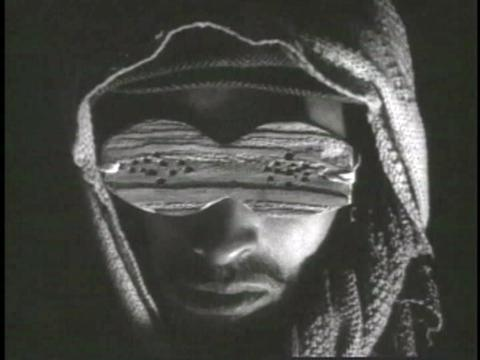
Nada is played by professional wrestler Roddy Piper, whose performance is all flint-eyed suspicion and working-class fury. He’s not a chosen one or a scientist or a cop—he’s a guy at the bottom of the ladder who starts noticing the ladder itself is rigged. When Nada puts on the glasses, the world drains of colour and illusion, revealing a bleak black-and-white nightmare of propaganda and skull-faced elites hiding in plain sight. It’s one of Carpenter’s smartest tricks: truth isn’t glamorous, it’s ugly and exhausting.

The film’s low budget sometimes shows—rubber masks, stripped-down sets, and a finale that feels like Carpenter had to sprint to the finish line before the money ran out. But that rawness is also part of They Live’s (1988) charm. It plays like a B-movie manifesto, a midnight scream against a world quietly selling your soul back to you at retail prices. And yes, the legendary alleyway fistfight is absurdly long, but it also feels like the point: waking someone up hurts, takes effort, and nobody thanks you for it.


Carpenter has been clear that They Live (1988) is a critique of consumerism, Reagan-era greed, and the way capitalism anesthetizes resistance. But watching it today, the film has mutated—like all good cult cinema—into something more unstable and more dangerous. In the age of culture wars, algorithmic outrage, and weaponized paranoia, They Live (1988) can be read in a dozen conflicting ways. Is it anti-corporate? Anti-elite? A warning about media manipulation? A Rorschach test for conspiracy culture itself? That ambiguity is why it endures.

They Live (1988) doesn’t tell you what to think—it hands you the glasses and dares you to look. And once you do, it’s hard not to feel a little like Nada: broke, angry, awake, and deeply suspicious of anyone telling you everything is just fine. As someone who has recently been researching a lot about conspiracy theories or apparent truther activists, I have my feet dangling above the rabbit hole while simultaneously holding a red pill in my hand. Yet, I am hesitant to jump in. How do I know the so-called “truthers” are not lying or serving their own agenda or career too? Which is why the fight scene is so good. Because, it shows the struggle one can have as to what to believe and who to trust. In this case, Nada is telling the truth and he is prepared to fight to reveal it.

According to IMDb “the big fight sequence was designed, rehearsed and choreographed in the back-yard of director John Carpenter’s production office. The fight between Nada (Roddy Piper) and Frank (Keith David) was only supposed to last twenty seconds, but Piper and David decided to fight it out for real, only faking the hits to the face and groin. They rehearsed the fight for three weeks. Carpenter was so impressed he kept the scene intact, which runs five minutes, twenty seconds. David recounted the event, smiling giddily as he said, “It was good fun! I never felt safer in any fight,” as Piper, a professional wrestler, coached David on how to sell the look of the punches and savage moves in exaggerated form, making it appear more brutal than it actually was.”