
Tag Archives: Hard Truths (2024)

Classic Film Review: Bleak Moments (1971) plus Mike Leigh Q & A (Prince Charles Cinema, London.)

Classic Film Review: Bleak Moments (1971)

Directed by Mike Leigh

Written by Mike Leigh – Based on 1970 stage play by Mike Leigh

Produced by Leslie Blair

Cast: Anne Raitt, Sarah Stephenson, Eric Allan, Joolia Cappleman, Mike Bradwell, Donald Sumpter etc.

Cinematography by Bahram Manocheri

Camera Assistant: Roger Pratt

Edited by Leslie Blair


One of the quiet yet profound joys of cultural life is finding a creative or sporting figure—or team—whose journey you follow from an early age, growing alongside their work as it evolves. Whether it’s the cinematic brilliance of the Coen Brothers or Mike Leigh, the ever-shifting energy of Primal Scream, or the lifelong, often agonising commitment to Tottenham Hotspur FC, these long-term relationships offer a deep sense of continuity. They become personal landmarks in our emotional and cultural landscapes, threading through decades of change and grounding us with shared history, joy, and—especially in Spurs’ case—a touch of heartache.

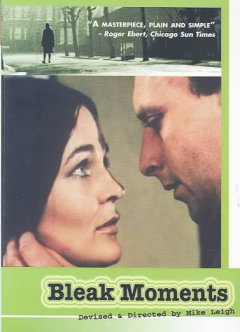
I was born just a year before Mike Leigh’s Bleak Moments debuted in 1971, and it became a defining cultural touchstone for me. First encountering it in the early 1980’s, I was captivated by its raw honesty and quiet power—a film I returned to again and again on that solid-format VHS tape over the years. It marked the beginning of a lifelong relationship with Leigh’s work, a body of cinema that has shaped and shadowed my own personal and cultural journey. That connection endures to this day, most recently renewed with his 2025 release, Hard Truths—a testament to a career and vision that continue to evolve with undiminished integrity.
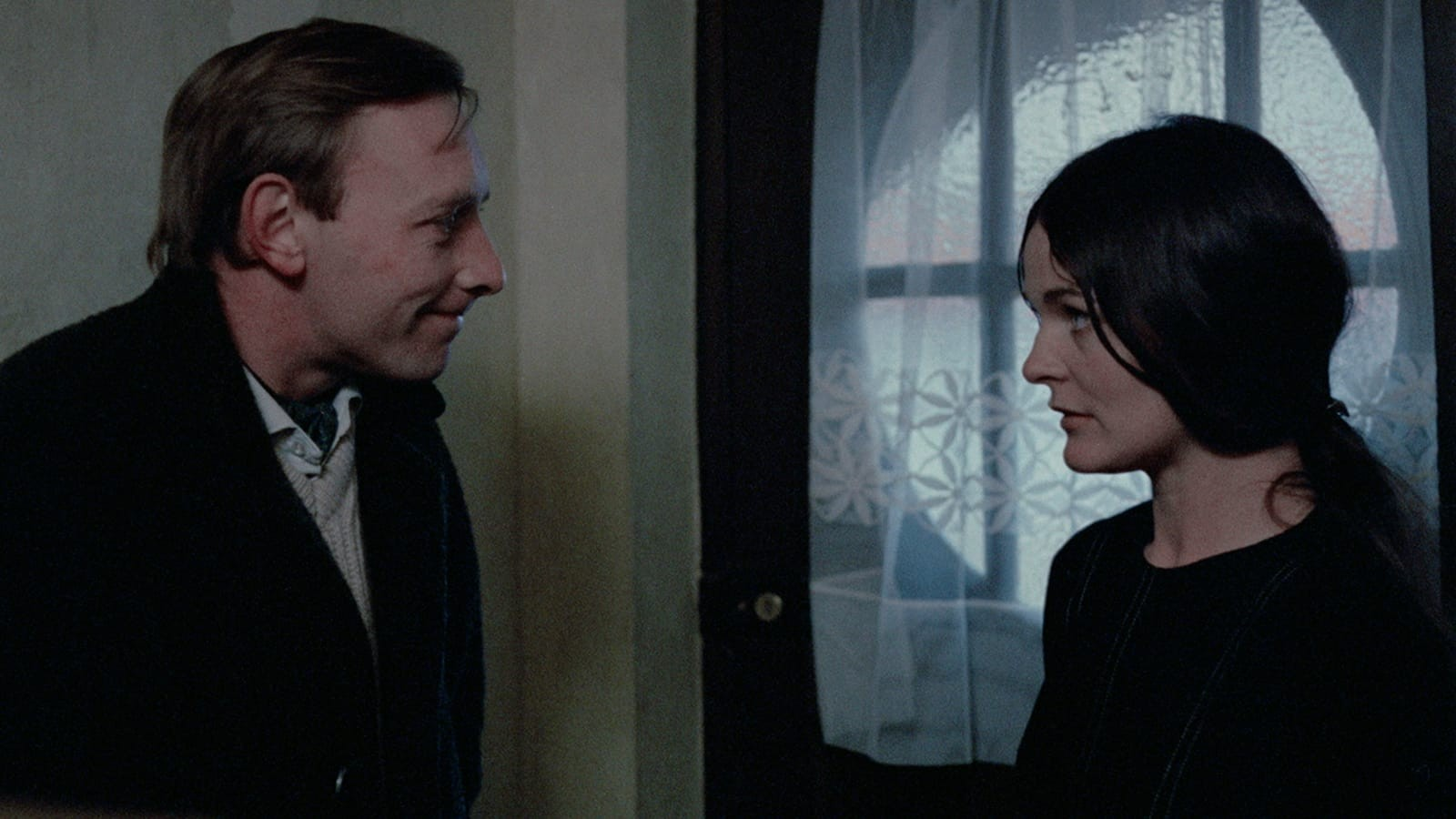


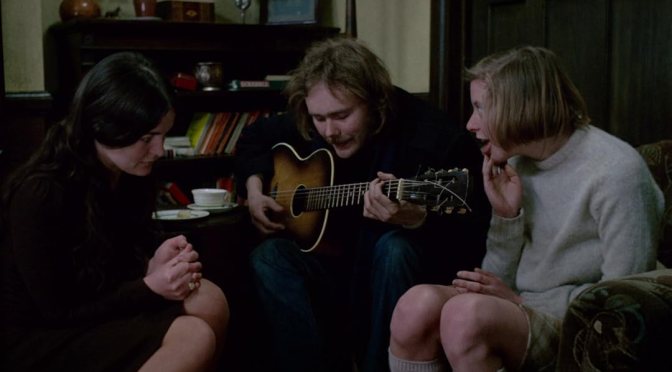
Bleak Moments centres on Sylvia (Anne Raitt), a lonely, introspective young woman navigating the quiet desolation of her suburban life while caring for her mentally challenged sister, Hilda (Sarah Stephenson). Trapped between duty and desire, Sylvia reaches tentatively toward human connection—most notably with a shy schoolteacher—yet every encounter is marked by awkward silences and emotional hesitations. Mike Leigh crafts a delicate, unflinching portrait of isolation and unmet longing, where the most powerful moments are found in what remains unsaid. Indeed, I would say it would have a powerful influence on awkward cinema or television such as Gervais and Merchant’s, seminal show The Office.

I hadn’t seen the film for twenty years and in a packed Prince Charles Cinema, what struck me was how Bleak Moments, while raw and unvarnished in style, unfolds with a beautifully episodic structure that gently accumulates emotional weight. Each scene offers a quiet vignette—moments of everyday awkwardness, tentative exchanges, and domestic stillness—that together create a deeply human portrait of loneliness and restraint. Despite its sombre tone, the film is laced with dry, observational humour and a deep sense of pathos, revealing the absurdity and ache of unspoken lives.

Mike Bradwell’s Norman and his dryly hilarious songs, and the most awkward of “romantic” dinner scenes in the Chinese restaurant just stood out to me as deeply funny. Raitt’s performance too is a masterclass of comedic understatement. Overall, these qualities—emotional nuance, character-driven storytelling, and a commitment to realism—would become defining hallmarks of Mike Leigh’s oeuvre, already fully formed in this striking debut. Finally, it was great to see and hear from Leigh, now in his eighties, answering some great questions with sharp wit and batting away some stupid ones too with his usual intelligence and droll honesty. Leigh remains a hero in my life’s cultural journey.
Cinema Review: Hard Truths (2024) – an unflinching look at a family struggling with depression.

CINEMA REVIEW: HARD TRUTHS (2024)

Directed by Mike Leigh

Written by Mike Leigh

Produced by Georgina Lowe

Main Cast: Marianne Jean-Baptiste, Michele Austin, David Webber, Tuwaine Barrett, Ani Nelson, Sophia Brown, Jonathan Livingstone, etc.

Cinematography by Dick Pope

*** MAY CONTAIN SPOILERS ***


Mike Leigh’s career has been defined by an unflinching exploration of everyday existence, shaped by a commitment to realism and a deep understanding of human behaviour. His films, whether contemporary or period pieces, dissect the nuances of ordinary lives, often capturing the struggles, aspirations, and quiet triumphs of working- and middle-class individuals. His signature improvisational approach—where actors develop their characters through extensive rehearsal—allows for an organic authenticity that makes his work resonate with honesty and emotional depth.

Leigh’s early films, such as Bleak Moments (1971) and Nuts in May (1976), established his interest in the mundanities and disappointments of daily life. His later films, such as High Hopes (1988) and Life is Sweet (1990), continued this trend, portraying ordinary people navigating personal and societal challenges with humour and pathos. Secrets & Lies (1996), one of his most acclaimed works, epitomizes his fascination with human vulnerability, as it dissects family relationships, race, and identity in a way that feels raw yet tender.

Leigh’s career trajectory has also included excursions into period dramas, notably the heart-wrenching, Vera Drake (2004) and arguably his most political film, Peterloo (2018). But rather than abandoning his focus on the intricacies of human experience, he applies the same observational precision to historical subjects. Topsy-Turvy (1999), about the creation of Gilbert and Sullivan’s The Mikado, examines the creative process with the same detail he grants his modern-day working-class protagonists. Mr. Turner (2014), a biopic of the painter J.M.W. Turner, similarly explores the artist’s struggles, eccentricities, and societal context without falling into the clichés of the genre. These films reveal that, for Leigh, the past is not a grand spectacle but an extension of the same human complexities that define his contemporary work.


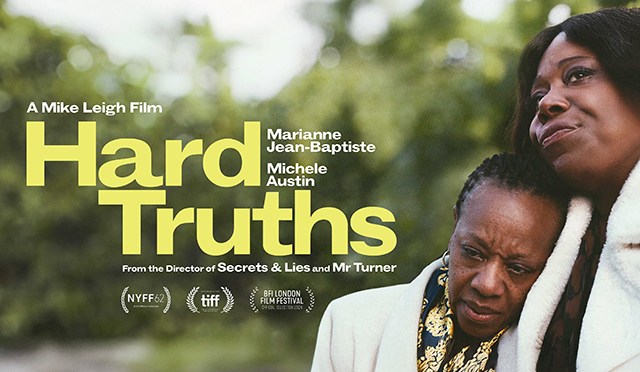
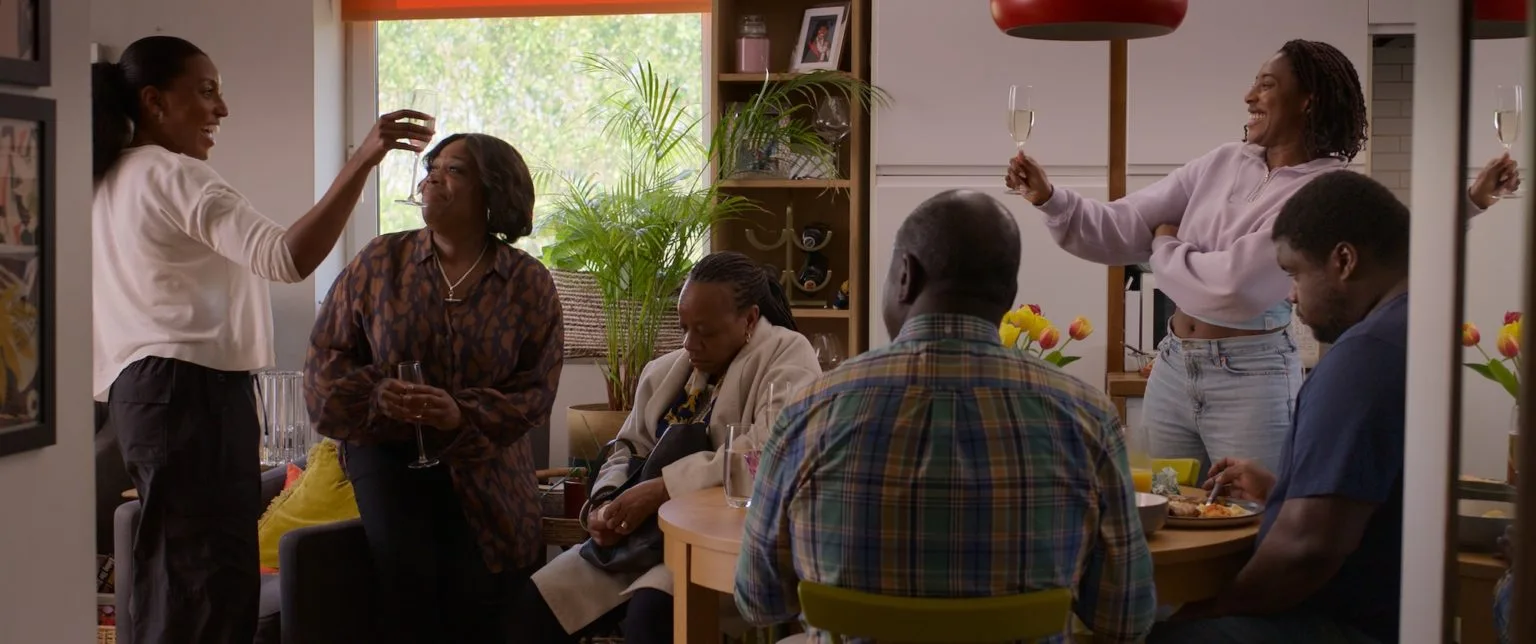
His latest film, Hard Truths (2024), follows in this tradition, delving into the stark realities of its characters with the same empathy and directness. Set in London in the present day, it focuses on the Deacon family unit and extended relations, notably two personality-divergent sisters, Pansy Deacon (Marianne Jean-Baptiste) and sibling, Chantelle (Michele Austin). Pansy is a middle-aged London housewife whose relentless irritability and sharp tongue mask a deep-seated inner turmoil. Her acerbic interactions—whether berating her husband Curtley, chastising her son Moses, or lashing out at unsuspecting strangers—serve as both a source of dark humour and a window into her dissatisfaction with life. Indeed, some of her rants are absolutely laugh-out-loud hilarious.

Leigh’s nuanced direction ensures that while Pansy’s outbursts may elicit laughter, they simultaneously reveal the tragic underpinnings of her character. Her vitriolic remarks, often delivered with biting wit, are symptomatic of her internal struggles, painting a portrait of a woman grappling with unarticulated pain. This duality is evident in scenes where Pansy’s caustic rants thinly veils her profound sense of isolation and despair. The film delves deeper into Pansy’s psyche during interactions with the more upbeat, Chantelle. A pivotal moment occurs during a Mother’s Day visit to their mother’s grave, where Chantelle confronts Pansy about her pervasive anger. Pansy’s anguished admission, “I don’t know!” encapsulates the bewildering nature of her depression, highlighting how her defensive humour serves as a barrier against this insidious mental illness.

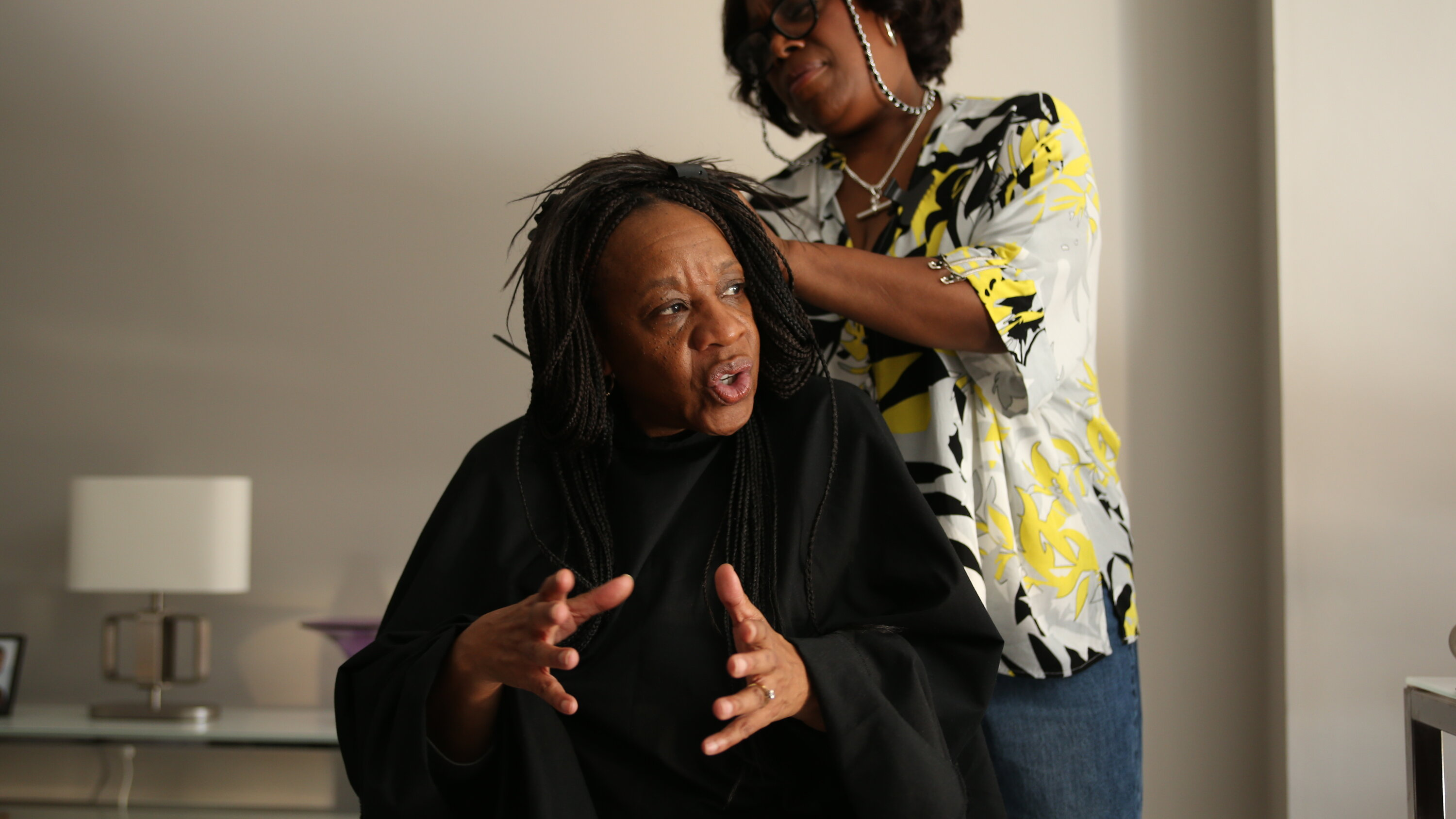
Marianne Jean-Baptiste’s absorbing portrayal brings emotional depth to Pansy’s character, capturing the delicate interplay between her abrasive exterior and the fragility it conceals. Similarly, Michele Austin brings light and optimism to the screen, along with her effervescent daughters, somehow striving to combat the all-pervasive cloud of depression. Some of my favourite scenes of the film were with Chantelle in conversation with customers in her hair salon. Thus, in essence, Hard Truths (2024) presents a compelling character study that intertwines humour with the sombre realities of depression. Through Pansy Deacon, Leigh illustrates there are no easy answers to the pain of an affliction that remains silent and invisible but is ever-present within everyone’s lives.

Mark: 8 out of 11