Tag Archives: resistance

Amazon Prime Film Review: Kneecap (2024) – Irish rap rebels substitute words-for-bombs in riotous youth-in-revolt triumph!

Amazon Prime Film Review: Kneecap (2024)

Directed by Rich Peppiatt

Screenplay by Rich Peppiatt

Story by Rich Peppiatt, Liam Óg Ó hAnnaidh, Naoise Ó Cairealláin, JJ Ó Dochartaigh

Produced by Jack Tarling and Trevor Birney

Main cast: Naoise Ó Cairealláin, Liam Óg Ó hAnnaidh, JJ Ó Dochartaigh, Josie Walker, Fionnuala Flaherty, Jessica Reynolds, Adam Best, Simone Kirby, Michael Fassbender, etc.

Cinematography by Ryan Kernaghan

*** MAY CONTAIN SPOILERS ***



The 2024 film Kneecap is a riotous, politically charged portrait of youth in revolt, channeling the raw energy of punk and hip-hop into a uniquely Irish-language rebellion. Starring the real-life Belfast rap trio—Mo Chara, Móglaí Bap, and DJ Próvaí—as fictionalized versions of themselves, the film blends anarchic humour, biting satire, rites of passage, and cultural defiance to tell the story of how a group of working-class misfits wove their frustrations into musical gold.

Set in post-Troubles West Belfast, the film captures the lingering scars of British occupation and the generational trauma it left behind. Liam (Mo Chara) and Naoise (Móglaí Bap) are introduced as small-time drug dealers navigating poverty, police harassment, and fractured families. Their lives take a turn when JJ Ó Dochartaigh, a disillusioned Irish-language teacher, discovers their lyrical talents and joins them as DJ Próvaí. Together, they form the eponymous group, an Irish-language rap group that weaponizes music as a form of cultural resistance.

The film is unapologetically rebellious, using the Irish language not just as a means of communication but as a symbol of defiance. Arlo (Michael Fassbender), Naoise’s father and a former republican paramilitary, encapsulates this sentiment when he declares, “Every word of Irish spoken is a bullet fired for Irish freedom” . This philosophy permeates the group’s music, which tackles issues like British colonialism, drug culture, and the complexities of identity in a divided society.



Kneecap (2024), while a bold and electric celebration of youth rebellion arguably overstretches itself emotionally by attempting to cover too many themes at once. In its ambition to be both a political statement and a coming-of-age tale, a musical odyssey and a generational cry for recognition, the film occasionally dilutes its emotional impact. As the film juggles a multitude of weighty themes: the trauma of post-Troubles Northern Ireland, the fight for Irish-language preservation, the drug culture plaguing working-class communities, the fractured nature of family life, absent fathers and mothers, and the burden of political legacy. Add to this the rise of a rap group in an unexpected cultural context, and the film becomes a whirlwind of ideas competing for attention. The result is a film that sometimes feels like it’s racing to say everything at once, rather than letting its most resonant emotional threads breathe.

Nonetheless, director and co-writer, Rich Peppiatt, displays strong visual flair evoking the urban vibrancy of Trainspotting (1996) and underdog musical joy of The Commitments (1991). It helps that the film is often fucking hilarious. Plus, I realise it’s a raw reflection of their life choices, I could take or leave the perpetual scenes of gratuitous drug-taking. At the same time, the film doesn’t shy away from the gritty realities of its setting. It portrays the trio’s clashes with radical republican groups, their run-ins with the police, and the family and romantic struggles that come with their newfound fame.

Amidst the chaos, Kneecap (2024) maintains a sense of humour and humanity, offering a nuanced look at the power of art to challenge the status quo and inspire change. In essence, Kneecap is a ballsy and risk-taking celebration of rebellion, a testament to the enduring power of language and music as tools of resistance, and a vivid portrayal of youth challenging the remnants of a colonial past and a country attempting to find peace and identity after centuries of conflict.


Mark: 8.5 out of 11


Cinema Review: I’m Still Here (2024) – A searing portrait of resistance in the face of military tyranny!

Cinema Review: I’m Still Here (2024)

Directed by Walter Salles

Screenplay by Murilo Hauser and Heitor Loreg

Based on I’m Still Here by Marcelo Rubens Paiva

Produced by Maria Carlota Bruno, Rodrigo Teixeira and Martine de Clermont-Tonnerre

Main cast: Fernanda Torres, Selton Mello, Fernanda Montenegro, Valentina Herszage, Luiza Kosovski, Barbara Luz, etc.

Cinematography by Adrian Teijido

*** MAY CONTAIN SPOILERS ***


On March 31, 1964, the Brazilian military, with support from the United States and segments of the civilian population, overthrew the government of President João Goulart in a coup d’état. Goulart, a left-wing president who had been in power since 1961, faced rising opposition due to his policies that included land reforms and more progressive labour laws. These policies alarmed conservative sectors of society, including the military, business elites, and parts of the middle class, who for many feared the spread of communism in the context of the Cold War. From reports I have read, the military’s move was framed as a necessity to prevent Brazil from descending into a left-wing revolution, but the coup marked the beginning of a brutal 21-year period of military dictatorship. Be careful what you wish for.

Under the military regime (1964–1985), Brazil saw widespread censorship, repression of political dissidents, the establishment of a climate of fear, and the use of torture against suspected leftist militants and activists. The military government justified its actions as necessary to combat communist insurgency, but its reign was characterised by systematic violations of human rights. The regime implemented institutional acts that curtailed democratic freedoms, silenced political opposition, and controlled the media, all while claiming to defend the country from Marxism. The dictatorship lasted until 1985, ending when the military handed power back to a civilian government, but the effects of this period are still deeply felt in Brazilian society, as many families continue to search for the truth about the victims of torture and forced disappearances during the dictatorship.


Yet, while the film may not explicitly focus on the 1964 coup or the military dictatorship. I’m Still Here (2024) addresses the aftermath and themes of identity, resistance, and survival in the face of oppressive systems. Director, Walter Salles, uses the personal as a lens through which broader social and political issues are explored. One could consider how the legacy of fear, control, and the impact of a regime still reverberates in contemporary Brazil.

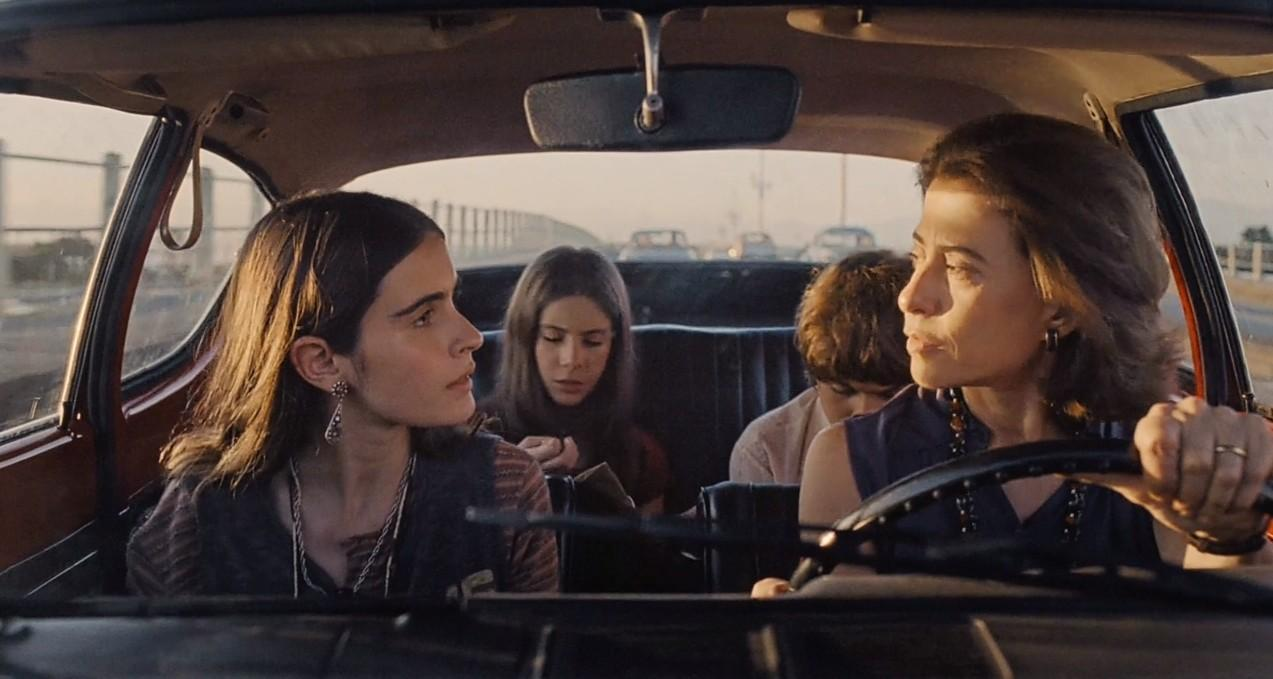
In I’m Still Here (2024), the filmmakers take a distinctive approach to the thriller genre by moving away from the typical tropes associated with suspense-driven narratives. Instead of focusing primarily on action or a series of dramatic plot twists, the film shifts its attention toward a more intimate, personal, and familial story. There is suspense and tension, but it is more under-stated and subtle. This departure from overt political thriller conventions allows the film to delve into the emotional and psychological terrain of its characters, with a particular focus on the matriarch, Eunice Paiva, played by the powerhouse Fernanda Torres.

Rather than relying on external action or traditional thrills, I’m Still Here (2024), centres around Eunice’s emotional journey and the impact of her environment on her family when her husband, Rubens Paiva (Selton Mello) is taken away by what may-or-not-be the military. The film positions Eunice as the central figure whose personal evolution drives the narrative, illustrating the profound effects of her choices and relationships on her family. Salles skilfully weaves family celebrations, events, and home movie footage to create a swell of warmth amidst the fear and paranoia created when Rubens disappears.


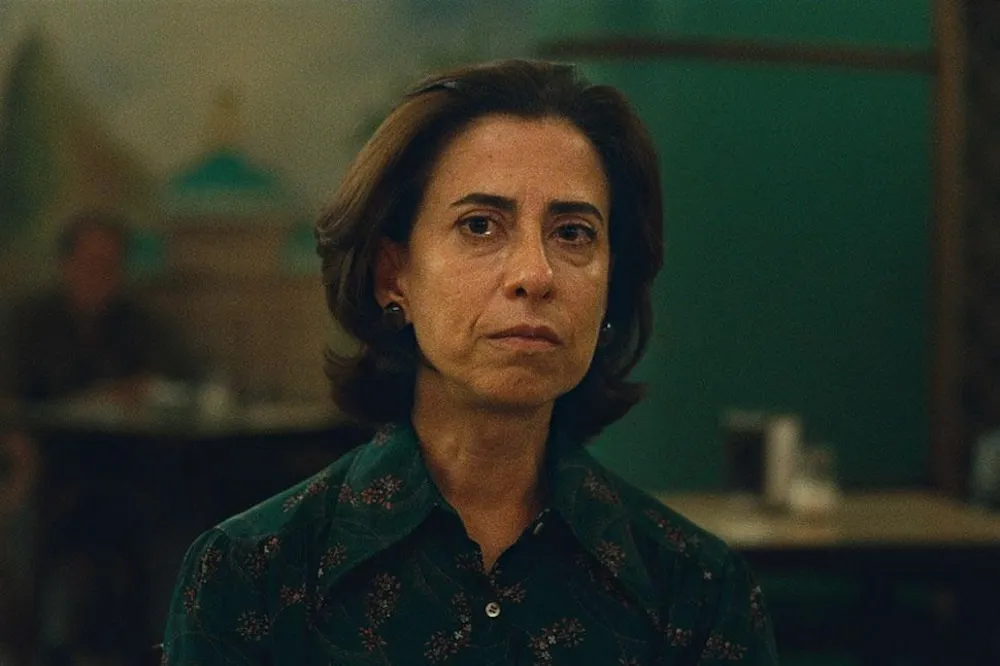
Eunice Paiva’s character is given a powerful depth in I’m Still Here (2024), with Fernanda Torres delivering a standout performance. Rather than positioning Eunice as a victim or a purely heroic figure, the film complicates her character, showing her as a multifaceted individual. Eunice’s actions are driven not by external thrills or pressures, but by the emotional and psychological burdens she carries as a matriarch, dealing with familial responsibility and navigating the complexities of her relationships with her children, spouse, and extended family.

Torres’s portrayal emphasises Eunice’s inner conflict—her desire to protect her loved ones, while also grappling with personal loss, regret, and the external societal forces that shape her world. Constantly denied answers and closure by the authorities, Eunice refuses to give in and continues to fight for decades, even when the military rule is over. The emotional intensity of Eunice’s character arc is one of the most compelling aspects of the film, as Torres’s performance brings a deep authenticity to the role, grounding the story in real, human struggles rather than sensationalised action.

By moving away from traditional thriller tropes, I’m Still Here (2024) creates a more reflective and intimate cinematic experience. Rather than simply delivering suspense through external action, the film explores the internal tensions of its characters and their relationships, magnifying the quiet, profound impact that such personal struggles can have on a family. Having lived through such adversity the Paiva family would stand proud in the face of this evil regime, overcoming all that is thrown at it. I mean, there is so much evil in this world and throughout history, that Eunice Paiva and similar quiet heroes are to be cherished. In short: why can’t such admirable individuals run the often horrible world we live in.

Mark: 8.5 out of 11