Tag Archives: Rodrigo Teixeira

Cinema Review: I’m Still Here (2024) – A searing portrait of resistance in the face of military tyranny!

Cinema Review: I’m Still Here (2024)

Directed by Walter Salles

Screenplay by Murilo Hauser and Heitor Loreg

Based on I’m Still Here by Marcelo Rubens Paiva

Produced by Maria Carlota Bruno, Rodrigo Teixeira and Martine de Clermont-Tonnerre

Main cast: Fernanda Torres, Selton Mello, Fernanda Montenegro, Valentina Herszage, Luiza Kosovski, Barbara Luz, etc.

Cinematography by Adrian Teijido

*** MAY CONTAIN SPOILERS ***



On March 31, 1964, the Brazilian military, with support from the United States and segments of the civilian population, overthrew the government of President João Goulart in a coup d’état. Goulart, a left-wing president who had been in power since 1961, faced rising opposition due to his policies that included land reforms and more progressive labour laws. These policies alarmed conservative sectors of society, including the military, business elites, and parts of the middle class, who for many feared the spread of communism in the context of the Cold War. From reports I have read, the military’s move was framed as a necessity to prevent Brazil from descending into a left-wing revolution, but the coup marked the beginning of a brutal 21-year period of military dictatorship. Be careful what you wish for.

Under the military regime (1964–1985), Brazil saw widespread censorship, repression of political dissidents, the establishment of a climate of fear, and the use of torture against suspected leftist militants and activists. The military government justified its actions as necessary to combat communist insurgency, but its reign was characterised by systematic violations of human rights. The regime implemented institutional acts that curtailed democratic freedoms, silenced political opposition, and controlled the media, all while claiming to defend the country from Marxism. The dictatorship lasted until 1985, ending when the military handed power back to a civilian government, but the effects of this period are still deeply felt in Brazilian society, as many families continue to search for the truth about the victims of torture and forced disappearances during the dictatorship.
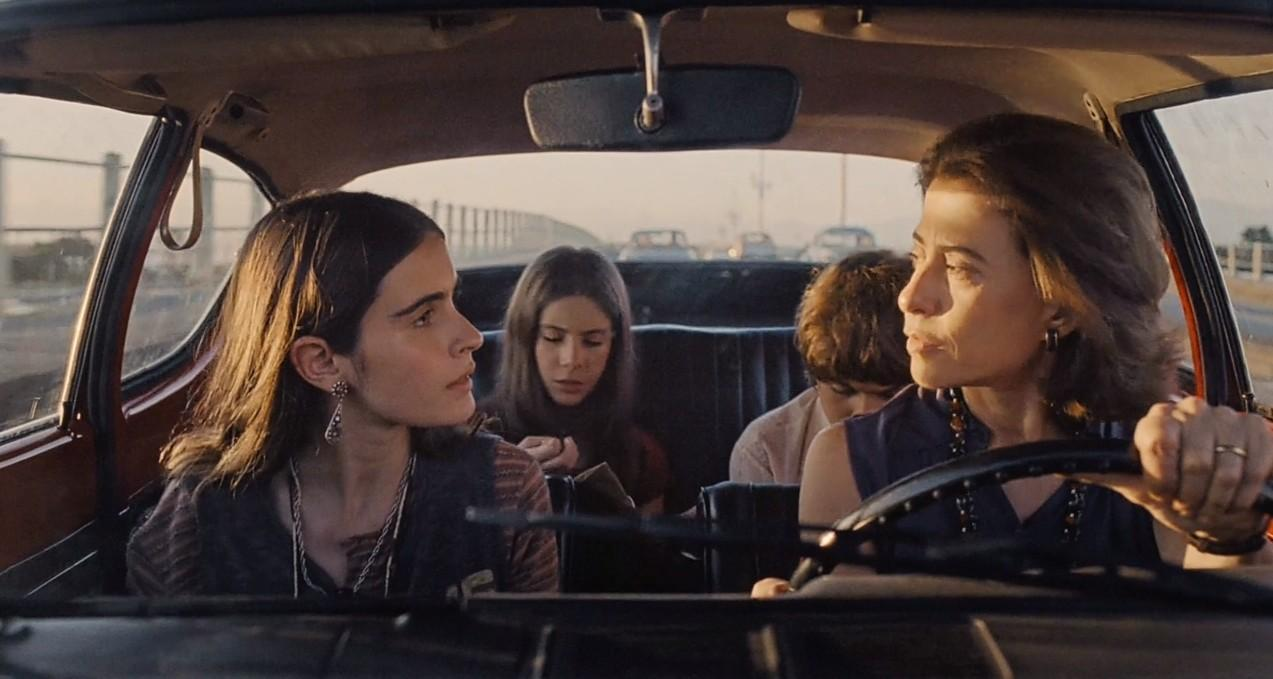


Yet, while the film may not explicitly focus on the 1964 coup or the military dictatorship. I’m Still Here (2024) addresses the aftermath and themes of identity, resistance, and survival in the face of oppressive systems. Director, Walter Salles, uses the personal as a lens through which broader social and political issues are explored. One could consider how the legacy of fear, control, and the impact of a regime still reverberates in contemporary Brazil.

In I’m Still Here (2024), the filmmakers take a distinctive approach to the thriller genre by moving away from the typical tropes associated with suspense-driven narratives. Instead of focusing primarily on action or a series of dramatic plot twists, the film shifts its attention toward a more intimate, personal, and familial story. There is suspense and tension, but it is more under-stated and subtle. This departure from overt political thriller conventions allows the film to delve into the emotional and psychological terrain of its characters, with a particular focus on the matriarch, Eunice Paiva, played by the powerhouse Fernanda Torres.

Rather than relying on external action or traditional thrills, I’m Still Here (2024), centres around Eunice’s emotional journey and the impact of her environment on her family when her husband, Rubens Paiva (Selton Mello) is taken away by what may-or-not-be the military. The film positions Eunice as the central figure whose personal evolution drives the narrative, illustrating the profound effects of her choices and relationships on her family. Salles skilfully weaves family celebrations, events, and home movie footage to create a swell of warmth amidst the fear and paranoia created when Rubens disappears.
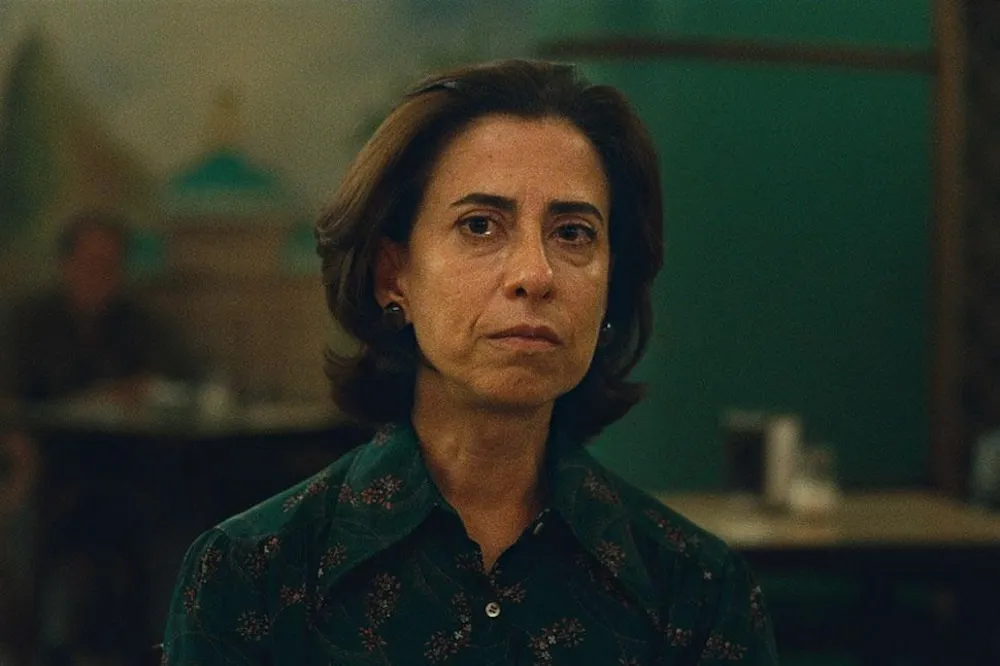


Eunice Paiva’s character is given a powerful depth in I’m Still Here (2024), with Fernanda Torres delivering a standout performance. Rather than positioning Eunice as a victim or a purely heroic figure, the film complicates her character, showing her as a multifaceted individual. Eunice’s actions are driven not by external thrills or pressures, but by the emotional and psychological burdens she carries as a matriarch, dealing with familial responsibility and navigating the complexities of her relationships with her children, spouse, and extended family.

Torres’s portrayal emphasises Eunice’s inner conflict—her desire to protect her loved ones, while also grappling with personal loss, regret, and the external societal forces that shape her world. Constantly denied answers and closure by the authorities, Eunice refuses to give in and continues to fight for decades, even when the military rule is over. The emotional intensity of Eunice’s character arc is one of the most compelling aspects of the film, as Torres’s performance brings a deep authenticity to the role, grounding the story in real, human struggles rather than sensationalised action.

By moving away from traditional thriller tropes, I’m Still Here (2024) creates a more reflective and intimate cinematic experience. Rather than simply delivering suspense through external action, the film explores the internal tensions of its characters and their relationships, magnifying the quiet, profound impact that such personal struggles can have on a family. Having lived through such adversity the Paiva family would stand proud in the face of this evil regime, overcoming all that is thrown at it. I mean, there is so much evil in this world and throughout history, that Eunice Paiva and similar quiet heroes are to be cherished. In short: why can’t such admirable individuals run the often horrible world we live in.

Mark: 8.5 out of 11


AD ASTRA (2019) – CINEMA REVIEW

AD ASTRA (2019) – CINEMA REVIEW

Directed by: James Gray

Produced by: Brad Pitt, Dede Gardner, Jeremy Kleiner, James Gray, Anthony Katagas, Rodrigo Teixeira, Arnon Milchan

Written by: James Gray, Ethan Gross

Cast: Brad Pitt, Tommy Lee Jones, Ruth Negga, Donald Sutherland, Liv Tyler etc.

Music: Max Richter

Cinematography: Hoyte Van Hoytema

**MAY CONTAIN SPOILERS**


There’s a moment toward the end when Brad Pitt’s intrepid astronaut, Roy McBride, is floating in space, and he asks himself (via a voice-over), should I carry on? Is there any point? In the vastness of space, nearing the endgame of an epic mission full of danger, he asks himself if it is worth, existentially speaking, continuing. It’s a central theme to the whole film and perfectly encapsulates McBride’s character. Externally he is heroic, however, internally he is perpetually questioning whether life is worth living. I often find myself doing this, but not in space. It’s usually when my alarm goes off in the morning and I have to go to work.

But McBride is not pathetic like me. I cannot even get on a plane for fear of crashing. He is on a mission to save Earth. Because, in the near future, catastrophic destruction is threatening us. Thus, he is given the task of venturing to Neptune, via Mars and experience all manner of space obstacles in order to track down the person or persons who may have caused the beginning of the end. This individual is alleged to be his father, portrayed by Tommy Lee Jones. So begins McBride’s very personal journey to the stars; to the heart of the darkest space.


A while ago I wrote an article about Hollywood making unofficial “remakes” as part of their film output – you can read the article here. Essentially, I proposed that in amidst their sequel, prequels, adaptations and superhero movie releases, you will get original screenplays and content too. However, sometimes these original ideas are thinly veiled carbon copies of ideas and structures from other films or literary sources.

For example, Star Wars (1977) used The Hidden Fortress (1958) structure and characters as an original starting point. Likewise, James Gray’s stunningly crafted science-fiction drama. Ad Astra (2019) is clearly using Joseph Conrad’s Heart of Darkness and Francis Ford Coppola’s Apocalypse Now (1979), as, not just influences, but total structural replication.

This in no way effected my enjoyment of this enthralling epic. What did happen though is that the story structure felt very familiar. The narrative unfolds in a staccato style with elegantly shot space transportation sequences and McBride’s psyche testing stops, spiked with bursts of action, fighting and surprising twists. When Clifford finally reaches Kurtz, I mean his father, his character and the audience have experienced some truly thrilling and visually spectacular moments. We also experience the psychological and philosophical musings of McBride. But, arguably these are nowhere near as poetic as Martin Sheen’s voice-over from the Coppola war classic.


In most scenes the visuals steal the show. The cinematography by Hoyte Van Hoytema and production design creates a hive of imagery which, amidst the darkness, bursts with colour and light. I genuinely, especially on Mars, felt like I was in a moving art installation. Having said that, Brad Pitt’s subtle but emotional performance and Max Richter’s sumptuous score also enhance the emotional pull of the story. Pitt, I expect to win a Best Supporting Oscar as Cliff Booth in Once Upon A Time in Hollywood (2019), but he could also get a Best Actor nomination here.

James Gray directs with a deft and “less is more” hand throughout. While the production itself looks epic, the psychology of the film is one of introspection. His themes of obsession, journey and existentialism drew me in the way they did in his last film, The Lost City of Z (2016). Ultimately, although the film’s screenplay could have ironed out some thin characterisations and plot inconsistencies, Gray demonstrates that the very existence of his films certainly make life worth living.

Mark: 9 out of 11


5 REASONS THIS COULD BE GOOD: AD ASTRA (2019)

AD ASTRA (2019) – FILM PREVIEW

Directed by: James Gray

Producer(s): Brad Pitt, Dede Gardner, Jeremy Kleiner, James Gray, Anthony Katagas, Rodrigo Teixeira, Arnon Milchan

Written by: James Gray, Ethan Gross

Cast: Brad Pitt, Tommy Lee Jones, Ruth Negga, Liv Tyler, Donald Sutherland, Jamie Kennedy and more.

UK Release: 20th September 2019


5 REASONS AD ASTRA (2019) COULD BE GOOD

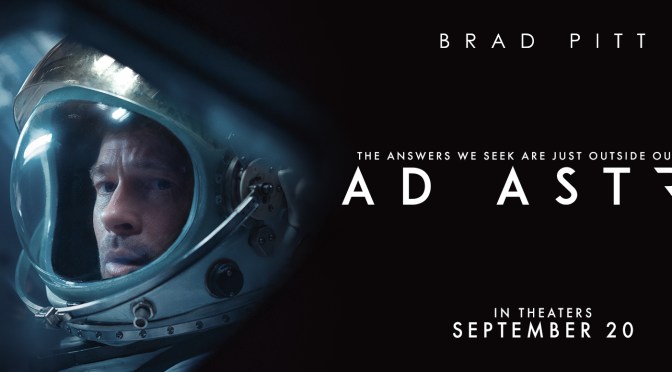
I haven’t done one of these for a while so thought I’d reignite my movie preview section. The main reason is the trailer for science-fiction epic, Ad Astra (2019) looked absolutely brilliant, so I’m very excited to see it at the cinema when released. Here are five reasons it could be good.

1) THE STORY

I love the science fiction genre and space especially is a great place to create mystery and drama. The narrative to Ad Astra (2019) finds Roy McBride (Brad Pitt) travelling to the depths of the galaxy to find his missing father (Tommy Lee Jones). While it appears to be an original script, the story owes much to Joseph Conrad’s Heart of Darkness. Thus, if we get anywhere near as incredible as Apocalypse Now (1979), but set in space, this could be really great.


2) THE DIRECTOR

Director James Gray has steadily built up a very impressive film C.V. of character and crime dramas. His last film, The Lost City of Z (2016). a jungle epic was a box office loser, but a really compelling drama about exploration and obsession in the Victorian era. Ad Astra (2019) is his biggest budgeted film so far, but given his filmmaking skills and experience, it could be his best yet.


3) THE STAR

Flying high from starring in Tarantino’s twisted movie fairytale, Once Upon A Time In Hollywood (2019), Brad Pitt is proving his star quality still burns brightly. Pitt is always a commanding lead actor and he has played: Nazi Hunters, bare-knuckled fighters, disaffected thirty-something alter-egos, baseball coaches, infamous cowboys, romantic heroes, stoners, vampires, cops, psychopathic drifters, hit-men and many more characters. Here he plays an astronaut and I think it is only his second sci-fi film after the superb Twelve Monkeys (1995). Thus, Brad Pitt’s appearance is another reason to get excited.


4) SPECIAL EFFECTS

While I’m a screenwriter myself and more drawn to story rather than effects driven films, The Moving Picture Company are leading special effects experts. They have worked with Method Studios, Mr X, Weta, Brainstorm Digital etc. on this film and so the work on this space opera looks like it could be incredible. Indeed, The Moving Picture Company alone have provided effects for: Blade Runner 2049 (2018), The Jungle Book (2017), Sully (2017), The Martian (2016), The Guardians of the Galaxy (2015) and many more!


5) THE TRAILER

Because I am so experienced and probably jaded where trailers are concerned, it takes a lot to get my attention when at the cinema. But, the trailer for Ad Astra (2019) absolutely rocked. It did not give ALL the story away and made me want to watch the film. Don’t take my word for it – here it is: