Written by Na Hong-jin Produced by: Na Hong-jin, Kim Sae-mi, Kim Sae-rom
Main cast: Hwang Jung-min, Zo In-sung, Jung Ho-yeon, Taylor Russell, Cameron Britton, Alicia Vikander, Michael Fassbender, etc.
Cinematography Hong Kyung-pyo
*** CONTAINS SPOILERS ***
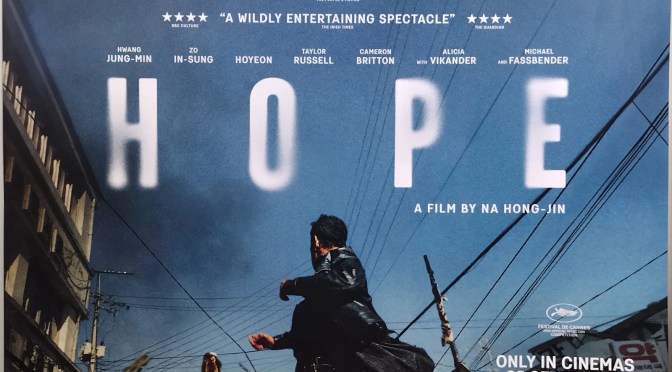
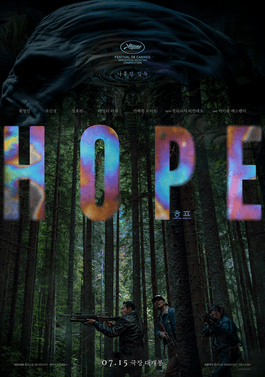
I haven’t seen Na Hong-jin’s film The Yellow Sea (2010). But I saw the critically acclaimed horror film, The Wailing (2016) twice. While I did not connect narratively with this gruesome horror as much as the critics, it is a film, that while overlong, really makes your skin crawl. Hong-Jin’s first film The Chaser (2008) is equally gruesome as a pimp pursues a killer who has stolen one of “his” sex workers. Part police procedural and part urban horror film, it is an uneven, but exhilarating thriller full of twists and turns and flawed characters. Which brings us Na Hong-jin’s latest film release, Hope (2026). It’s also a chase film, full of action and suspense, containing an altogether different set of monsters.
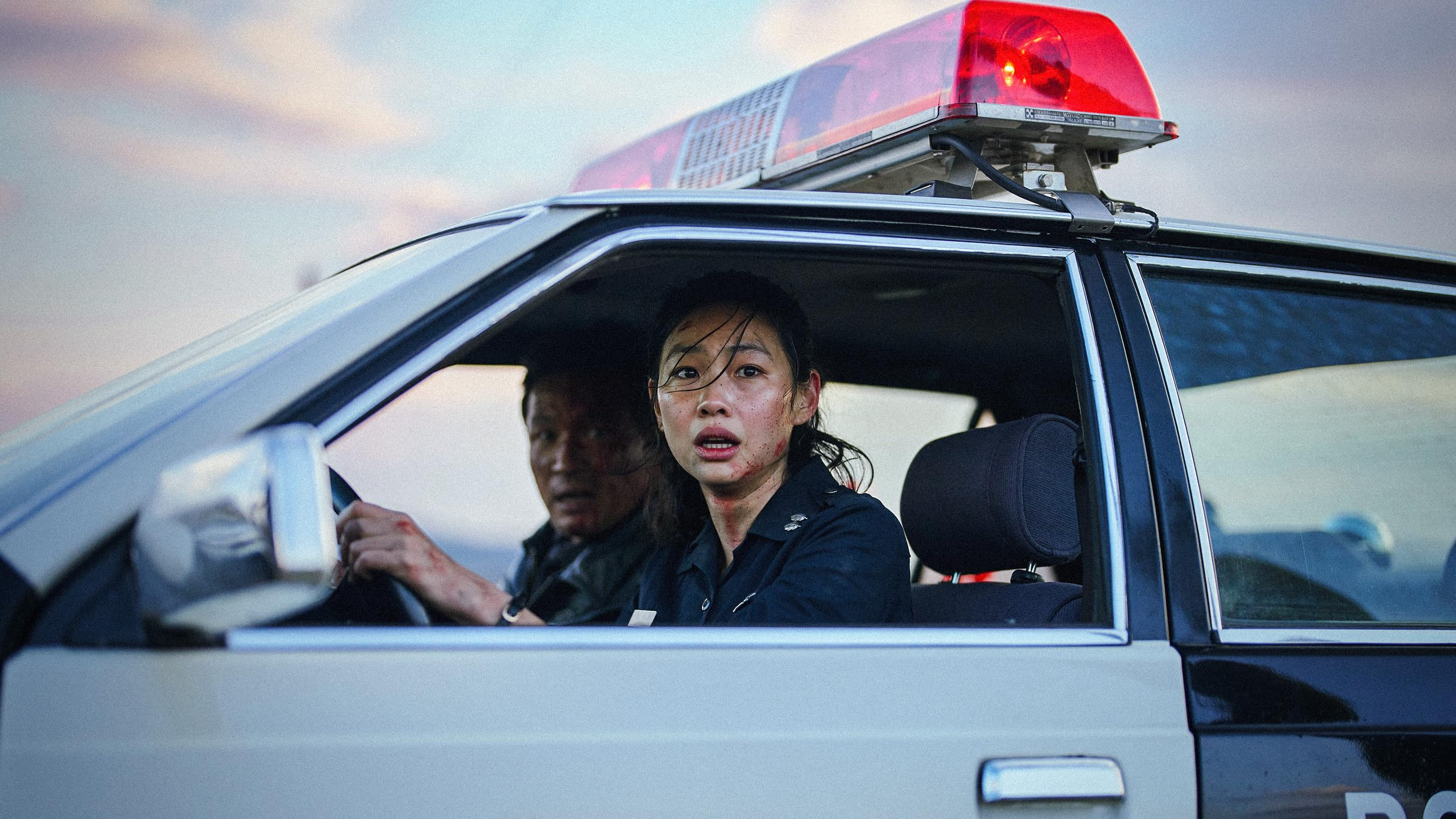
Set in the remote fishing community of Hope Harbour, close to North Korea’s demilitarised northern border, Na Hong-jin’s Hope (2026) follows the local police chief (Hwang Jung-min), his deputy (Jung Ho-yeon) and a ragtag assortment of hunters and townspeople as their isolated community comes under threat from something decidedly alien to Earth. What follows is a propulsive, exhilarating action film that hurtles along at breakneck pace, with spectacular car and horseback pursuits as the locals battle terrifying off-world creatures using little more than analogue weapons, ingenuity and sheer bloody determination.
Arguably overlong and in need of some pruning, the film also feels rushed its introduction of characters and setting, particularly for those unfamiliar with small-town Korean culture. However, given the whole film is in effect a first-parter with a sequel to follow another watch would iron out such an initial reaction. Further, I only discovered afterwards that it was set in the 1980s, which perhaps reflects its occasionally muddled sense of time and place.
Much of the huge budget not only produces effective CGI creatures – although slightly videogame-ish in look – but also considerable carnage and destruction. In terms of the human cast Kang Sae-byeok’s character stands out. Following her breakthrough performance in Squid Game (2021–2025), Jung Ho-yeon confirms herself as a sparkling screen presence, effortlessly combining nuanced characterisation with an extraordinary flair for physical action. Her magnetic charisma, expressive physicality and natural screen confidence make her a compelling performer, equally convincing in moments of quiet vulnerability and full-throttle action.
Overall, Na Hong-jin’s chaotic tendencies towards structure and narrative are certainly evident, but there’s something wonderfully audacious about the sheer scale, energy and ambition of his filmmaking. Hope (2026) is a film that will undoubtedly benefit from a second viewing, not least to absorb its extraordinary detail and relentless invention. The relentless action and alien worldbuilding are impressive, although for science fiction fans certain elements will feel over-familiar. Yet, despite its flaws, this could well be one of the most thrilling films I’ve seen in 2026. A gloriously unhinged, ferociously entertaining piece of cinema that somehow manages to turn a small Korean town into the unlikely battleground for an interplanetary nightmare, with more chaos to come.
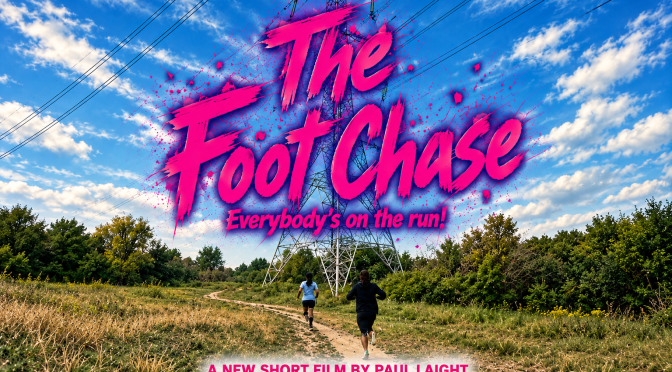
With my latest short film The Suicide Shift (2026) being released online at Halloween, I am now in the process of completing the edit on a new low-budget film called, The Foot Chase (2026).
It’s a very different film and we had a great time filming it on one of the hottest days of the year in June 2026. Here are the production details and a behind the scenes video I made.
The Foot Chase(2026) – A Short Film Production
Tagline
“Everybody’s on the run!”
Pitch
A fast-paced foot chase ensues between two men through the Wimbledon area, ending with a suspenseful confrontation.
Synopsis
Friedkin tracks Jason through Wimbledon after he has used a cash machine. When Jason spots Friedkin while crossing a railway bridge, he bolts. A foot chase ensues across the industrial, park and wasteland parts of the area, culminating in a tense confrontation.
Production
The Foot Chase (2026) is a short film involving action, pursuit and a twist at the end. Inspired by the chase sequences of William Friedkin’s films such as The French Connection (1971) and To Live and Die in LA(1985) it is intended to be an both exciting and fun film to watch.
It was filmed on a low budget on location in Wimbledon with a small, but dedicated cast and crew. It was filmed on the iPhone 16 and DJI Osmo Pocket 4 cameras, respectively.
Cast
Jason – KAY ABEL
Friedkin – SHAUN RIVERS
Crew
Producer, Writer, Director & Camera #1 – PAUL LAIGHT
I often plan my reviews and retrospective pieces around thematically linked film subjects and on other occasions it can become a random or serendipitous process. Of late, the cultural gods have nudged me towards watching and rewatching works by Harold Pinter, including the Joseph Losey directed films, The Servant (1963) and Accident (1967). I then recalled that several of Pinter’s plays had been adapted for film and were readily available on YouTube to watch for “free.”
Moreover, as I have also been on a mild William Friedkin retrospective rewatch, I saw his adaptation of The Birthday Party (1968) which led me to an earlier Pinter adaptation called The Caretaker (1963) directed by Clive Donner. Both are oblique, ambiguous renditions of human nature with dark existential absurdity and an almost impenetrable subtext. Pinter’s works are highly acclaimed, attracting a litany of incredibly talented actors and directors. One such is Robert Shaw. His haunting and magnetic performances in Pinter’s work reminded of what an incredible talent he was.
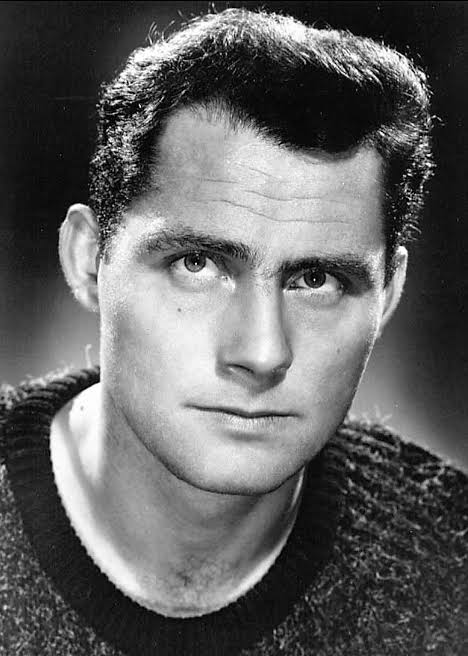
Sadly passing away aged fifty-two of a heart attack, Shaw had a tremendously varied career on stage and screen. If you were not aware he was also a successful author and playwright. Indeed, his 1968 play, The Man in the Glass Booth ran in London and Broadway to critical acclaim, later being adapted for a film in 1975. It’s reported that Pinter assisted with the adaptation of Shaw’s novel for the stage, although Shaw retains the writing credit. Therefore their collaborative connection remained resolute.
This piece highlights five of Robert Shaw’s best performances. Shaw was famously known to favour the stage and his writing over the commercial grind of Hollywood. While big-budget films brought him money, international fame and financial security, he openly disliked celebrity culture and many of his co-stars. In interviews he is often stated he viewed genre movie paydays as a way to provide for his family and fund his true passion: writing novels and plays. So, apologies to Robert Shaw’s legacy for choosing some of those Hollywood roles he’s known for. Safe to say though he is a true artist who passed away way too soon.
The Birthday Party (1968)
I was going to choose Shaw’s memorable tough guy gangster performance in The Sting (1973), but it’s too easy. Instead, I have selected his intensely complex role as Stanley in The Birthday Party. His character is one of the most tortured souls out there, full of sweat, guilt, regret and paranoia. We do not know what he may or may not of done, but I drew parallels with characters such as Josef K from The Trial and No. 6 from The Prisoner. Arguably, these works are more accessible than Pinter’s “comedy of menace,” but Shaw’s Stanley is painfully mesmerising. The two men who come for him possibly represent death. At the same time his bizarre exchanges with Dandy Nichols’ landlady, Meg, add sex to the mix, making the whole thing a painfully uncomfortable watch.
The Caretaker (1963)
A quietly strange and devastating film adaptation containing three fantastic performances from Alan Bates, Donald Pleasance and Robert Shaw. It’s mostly a character study of mental illness, loneliness, bullying and hiearchal-driven power dynamics. Pleasance is a vagrant, Mac, taken in by Shaw’s quiet soul, Aston, as an act of apparent kindness. However, Alan Bates mischievous and verbose brother, Mick, enters the fray and spies and torments. Mac. The quietly spoken, Aston, seems unaware of his brothers’ negative behaviour. Like much of Pinter’s work, a lot is left unexplained, yet the monologue Shaw delivers describing his treatment in a mental institution is one of the most subtle and powerful speeches I have witnessed on the screen.
From Russia with Love (1963)
While Shaw was known for his intelligent mind, his appearance as the nemesis, Red Grant in the second Bond film, requires him to demonstrate his considerable muscle too. From Russia with Love (1963) is one of my favourite Bond films as it retains that gritty Cold War spy style and Sean Connery is in prime form too. One could argue the villains are often more interesting than Bond, and Shaw’s steely assassin certainly matches Bond for physicality and charisma. Indeed, they are effectively mirrored characters on opposing teams. The fight-to-the-death on the train remains one of the most iconic battles in all of the Bond franchise.
Jaws (1975)
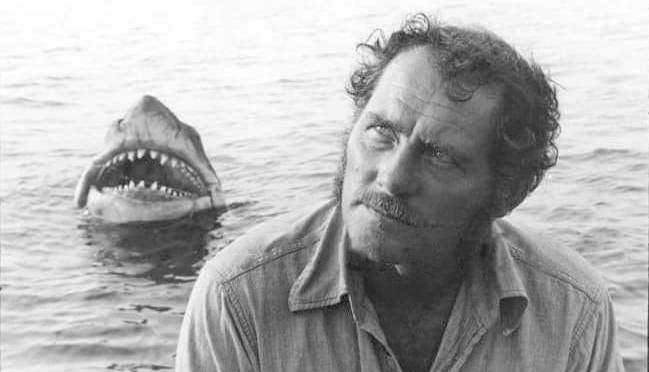
One of the greatest characters in one of the greatest films of all time. Not only that, Quint, has one of the greatest character introductions and greatest monologues in film ever too. How Shaw wasn’t nominated for best supporting actor at the Academy Awards I will never know. It’s a big performance and you could say, over-the-top, but to me it is so authentic in physical and verbal delivery, even Shaw’s sweat could have been given an award on its own.
The monologue itself comes as Quint and Hooper share “war stories” from their past experiences at sea. The men share a laugh before Brody asks Quint about a particularly nasty scar. Then the mood darkens and the old sea dog recounts a story about the U.S.S Indianapolis on which he was aboard when it sank in 1945. The chilling tale of a sinking ship and over one thousand men at the mercy of the sea, hunger, dehydration and shark attacks, is eerily recounted by Quint; loss and bitterness in his eyes. Shaw is incredible during this classic monologue as he not only establishes why Quint hates sharks, but also builds palpable suspense prior to the frenzied final shark attack on the doomed Orca.
The Taking of Pelham 123 (1974)
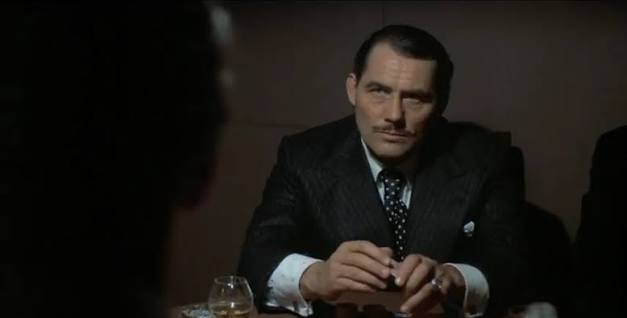
Another 1970s classic and again, Shaw, plays another memorable antagonist. His ‘Mr Blue’ is military, battle-hardened with a disciplined plan of action. His fierce precision and icy delivery finds a perfect counterpart in Walter Matthau’s more congenial and witty transit cop, Zachary Garber. Their exchanges are tense but laced with hard-boiled, sardonic humour, which add a hint of colour to the grim and grey New York underground sequences. While the well-constructed plot and rapid action raises the pulse, the film’s quality is critically raised by Matthau’s and Shaw’s committed performances.
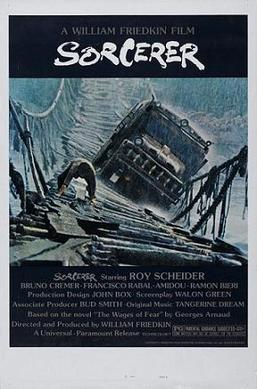
Screenplay by Walon Green – Based on The Wages of Fear (1950 novel) by Georges Arnaud
Produced by William Friedkin
Main cast: Roy Scheider, Bruno Cremer, Francisco Rabal, Amidou, Ramon Bieri, etc. Cinematography by John M. Stephens & Dick Bush
Music by Tangerine Dream
*** MAY CONTAIN SPOILERS ***
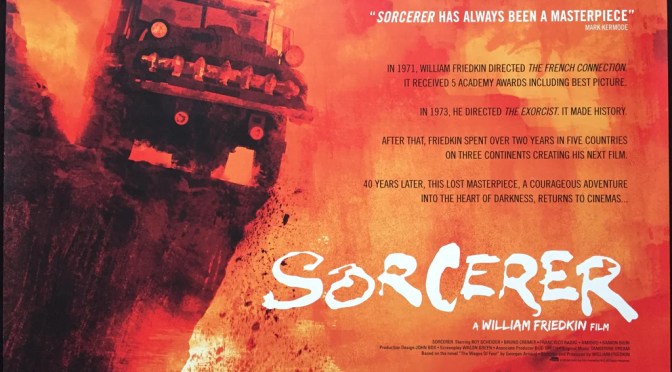
I love The Wages of Fear (1953). It is one of my favourite films of all time. I have reviewed it here. Yet, for years I had never seen William Friedkin’s adaptation of the same 1950 novel, titled, Sorcerer (1977), but thankfully it was screened on Film Four a few years ago, so finally caught up with it. Even better, during the first May Bank Holiday this year it was screened at the Prince Charles Cinema in central London. Amidst a packed crowd I marvelled in the crazed and majestic vision of Friedkin’s filmic adaptation.
Sorcerer (1977) represents one of the clearest examples of how a major studio film can become both a catastrophic commercial failure and, decades later, a revered cult masterpiece. Friedkin, who was at the height of his directorial power, unfortunately did not receive the deserved commercial or critical response during its release and the film disappeared from public view for years. A major reason for the film bombing is it ran directly into the release of Star Wars (1977).
Audiences suddenly wanted escapist fantasy, optimism, and spectacle. Sorcerer (1977) offered the exact opposite: bleak existentialism, sweaty paranoia, moral ambiguity, long stretches of tension and despair and no traditional heroes. Further, audiences were confused by the title, which sounded supernatural even though the film has nothing to do with magic. Many viewers assumed it was a horror or fantasy film and mixed initial reviews, a slow, demanding pace and the film’s nihilistic tone did not help.
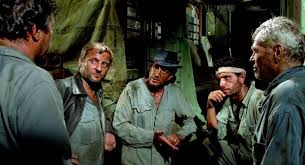
The narrative is tension personified. Four desperate fugitives are handed what is essentially a suicide mission: drive two battered, barely functioning trucks 218 miles through a brutal Latin American jungle, carrying crates of decaying dynamite so unstable that every pothole, every jolt, every wrong move could ignite the sweating nitroglycerin inside and annihilate them instantly. The road is collapsing beneath them, the jungle is unforgiving, and death is riding in the back seat with every mile. This premise gave rise a series of double-crossing plot events and incredible action set-pieces, notably the crumbling bridge scene where you can virtually feel the stormy weather on your face while watching.
As such — the trucks crossing a collapsing rope bridge during a storm — became one of the hardest sequences ever filmed at the time. Friedkin refused miniatures or obvious effects work. The crew built a full suspension bridge over a real river in the Dominican Republic. Then the river dried up. They had to abandon the location, search for another river, rebuild portions of the bridge, and engineer artificial rain systems powerful enough to create a storm effect. Due to this and crew members falling ill in the tropical conditions, the production went over schedule and over budget.
The drama after release did not end. Sorcerer (1977) became trapped in rights issues and studio neglect where quality prints were difficult to find and television broadcasts were rare. Friedkin himself even left a comment on a DVD copy on sale on Amazon saying “DO NOT BUY THIS!” Thankfully a fully restored Blu Ray version was released in 2014 and The Criterion Collection released Sorcerer (1977) on Blu-ray and Ultra HD Blu-ray in June 2025. Thus, the story behind the film mirrors the narrative itself with obsessive men undertaking an impossible task, pushing beyond reasonable limits, suffering incredible stress and barely surviving the journey.
At the time, Hollywood treated Sorcerer (1977) as evidence that the auteur era had gone too far. In retrospect, many see it as one of the last uncompromising masterpieces before blockbuster logic transformed the industry permanently. Lastly, while the characters are all anti-heroic and difficult to root for in Sorcerer (1977), the sheer brilliance of the practical effects, epic Tangerine Dream soundtrack, nerve-shredding editing, stunning cinematography and insane effort make this one of the most suspenseful and incredible action films of all time.
Revenge is one of the oldest narrative engines in storytelling. Long before cinema, it powered myths and literature—from the blood-soaked cycles of Greek tragedy to the meticulous retribution of The Count of Monte Cristo. These stories hinge on a simple but potent question: what happens when justice fails, and an individual takes it upon themselves to restore balance? Cinema inherited this question and, over time, fractured it into multiple forms—some cathartic, others corrosive, and many deeply ambiguous.
A Brief History of Revenge on Screen
Early revenge narratives in cinema often mirrored their literary roots: structured, morally legible, and driven by transformation. A Woman Branded (1931) is sometimes cited as an early precursor of a woman seeking revenge. Films like Kind Hearts and Coronets (1949) or adaptations of The Count of Monte Cristo framed revenge as an almost intellectual exercise—precise, controlled, and, in the case of the Ealing classic, even darkly humorous.
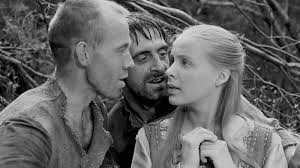
While revenge is a foundational narrative theme dating back to early cinema, Ingmar Bergman’s The Virgin Spring (1960) is widely considered the earliest major film establishing the “rape-revenge” subgenre. It follows a father seeking brutal vengeance for his daughter’s murder, influenced by a 13th-century Swedish ballad and Japanese cinema.
During the late 1960s and 1970s, something shifted. Disillusionment seeped into cinema, and revenge stories grew harsher, more grounded. Neo-noir works like Point Blank (1967), Get Carter (1971), and the classic Western, Once Upon a Time in the West (1968), reframed revenge as something mythic yet emotionally compelling. Sergio Leone’s film in particular bridges classical and modern revenge—turning personal vengeance into operatic inevitability while still rooted in grief and loss. Further, the 1960 / 1970s “Spaghetti” and Clint Eastwood westerns were also heavily driven by vengeful characters, as well as brutal bounty hunters and mercenaries. Overall, the 1970s marked a surge in mainstream vigilante revenge films, with Last House on the Left (1972) and Death Wish (1974), to name a couple, are widely seen as cementing the genre’s popularity.
At the same time, exploitation cinema erupted with raw, confrontational narratives—I Spit on Your Grave (1978), Coffy (1973), Ms. 45 (1981), and Thriller: A Cruel Picture (1973)—often centring female vengeance in ways that were both provocative and controversial. Japanese cinema contributed key films like Lady Snowblood (1973), which would later echo through global cinema. Asian cinema embraced the brutality of the subgenre with revenge films like Vengeance is Mine (1979), Park Chan Wook’s The Vengeance Trilogy and the visceral I Saw the Devil (2010) which interrogated obsession and extreme violence in equal measures.
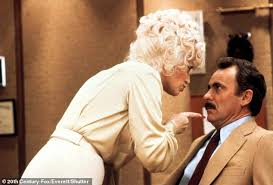
Thus, there are many faces to the revenge including: stage plays, classic literature, gangster, Western, arthouse, war, horror and even comedic ones such as 9 to 5 (1980). Each mode reflects a different cultural anxiety. Some seek catharsis; others deny it entirely. Some empower; others dismantle the very idea of empowerment. What remains is that revenge is a primal drive and offers clear motivation as to a characters’ wants. Above all else a good vengeance narrative offers high stakes satisfaction and entertainment when done right. Here are six filmic examples of this.
Six of the Best Revenge films
What unites the six chosen films is not just quality, but how distinctly each approaches revenge. The six films selected here demonstrate the breadth of what revenge can mean on screen: spectacle, despair, inevitability, and even self-annihilation.
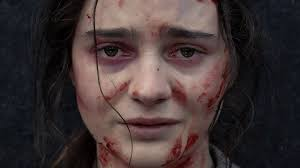
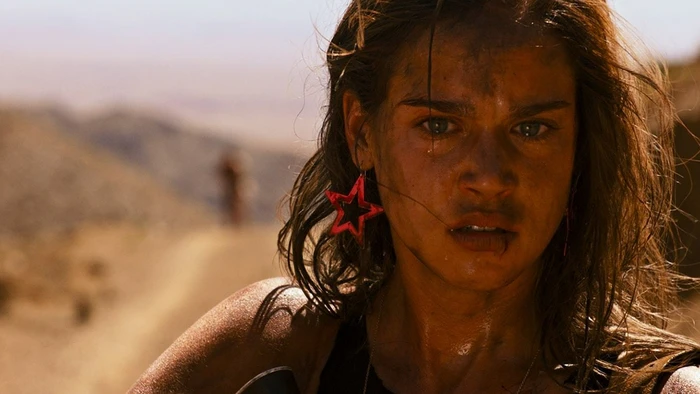
I really wanted to include Revenge (2017), a film which revisits the roots of exploitation film but reclaims them with precision. Coralie Fargeat transforms the genre’s historically exploitative gaze into something confrontational, self-aware and sexual. Violence is stylised and glamorous, but never empty—it becomes a language through which the protagonist reasserts control over her own narrative. Alas, it does not make the list.
*** MAY CONTAIN SPOILERS ***
Dead Man’s Shoes (2004)
I’ve written about Dead Man’s Shoes (2004) before but for me it is one of the best British films ever. Shane Meadows classic low-budget revenger evolves a brother’s vengeance into something more intimate and tragic. Meadows reframes revenge as grief and guilt, culminating in a devastating reversal that questions whether vengeance can ever truly be directed outward. It is revenge turned inward, a psychological reckoning masquerading as retribution. Paddy Considine delivers one of the rawest and most angry performances ever put on screen.
Get Carter (1971)
Get Carter (1971) is cold, methodical, and stripped of glamour, like a Northern neo-noir. Michael Caine’s Jack Carter moves through a decaying Newcastle like an agent of inevitability. There is no triumph here—only the suggestion that violence begets nothing but itself. Caine’s performance delivers the dialogue with razor-sharp timing and dark wit. A violent gangster but relentless detective hunting down the thugs who killed his brother. The clever screenplay (based on a novel) ensures those Carter is after are even worse than him as ultimately Northern decay meets moral collapse.
Kill Bill: The Whole Bloody Affair (2025)
As revenge epics and Asian cinema homages go,Kill Bill: The Whole Bloody Affair (2025) is a staggering piece of synthesis from Quentin Tarantino. Beatrice Kiddo’s (Uma Thurman) quest isn’t just a trail of vengeance—it’s ritualised, almost sacred, each confrontation unfolding like a chapter in a blood-soaked myth. Tarantino fuses global influences—from Anime, samurai cinema like Lady Snowblood (1973) to grindhouse exploitation—into something heightened and unmistakably his own: a world of colour, blood, incredible choreography, and cutting precision. Violence here isn’t merely destructive; it becomes a form of expression, even purification. In this universe, revenge is not corrosive or self-defeating but clarifying, elevating Beatrice’s journey from victim to legend.
Mermaid Legend (1984)
Mermaid Legend (1984) stands as a startlingly powerful vengeance film, elevated by Mari Shirato’s ethereal, magnetic performance as Migiwa—at once woman, avenging angel, and elemental force. Her transformation drives the film into increasingly confrontational territory, where extreme violence and explicit sexuality feel less gratuitous than weaponised, forcing the viewer into a state of unease. What makes the revenge so compelling is its inevitability: this is not a quest but a metamorphosis, as Migiwa becomes something beyond human, guided as much by the sea and spirit as by rage. The film’s brilliance lies in how it fuses beauty and brutality into a singular vision. Lyrical underwater imagery and sacred, mournful music elevate the violence into something ritualistic, culminating in a final pier rampage that feels less like action than ceremony—hypnotic, relentless, and mythic. By the end, revenge is no longer just an act but a form of transcendence, pushing the film beyond exploitation into legend.
Old Boy (2003)
Oldboy (2003) is a film I can watch over and over and it still shocks me. The narrative feels like a perverse inversion of The Count of Monte Cristo. But, where Dumas offers revenge as a calculated, almost righteous act, Park Chan-wook and the source material it is based on presents it as something recursive and inescapable. The brilliance of Oldboy (2003) lies in its dual revenge structure: what begins as Oh Dae-su’s pursuit of answers gradually reveals itself to be the final movement in someone else’s long-orchestrated vengeance. Both protagonist and antagonist are locked into mirrored roles, each defined—and ultimately destroyed—by the same impulse. The film’s infamous twists don’t just shock; they reframe the entire narrative as a closed system of suffering, where revenge ceases to be cathartic and instead becomes a mechanism of obscene chaos. The antagonist’s revenge is meticulous, psychological, and total, while Dae-su’s reactive violence only tightens the trap. Both men are ultimately consumed, their identities hollowed out by the nihilistic revenge that defines them.
Once Upon a Time in the West (1968)
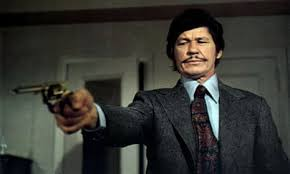
Once Upon a Time in the West (1968) is a great revenge film and classic Western. It precisely because it strips vengeance down to something elemental, patient, and almost mythic. Charles Bronson’s ‘Harmonica’ is not a conventional protagonist but a force moving through the landscape with quiet, relentless purpose. He speaks little, explains nothing, and yet every gesture feels loaded with intent. His pursuit of Henry Fonda’s Frank—a brutal mercenary introduced through shocking, child-murdering violence—is not driven by impulse but by memory, by something buried so deep it can only be expressed through action. What elevates the film is its methodical pacing and Leone’s operatic control. Violence is withheld, stretched out across long silences, close-ups, and Ennio Morricone’s mournful score, turning each encounter into ritual. When ‘Harmonica’ finally unleashes havoc, it is not chaotic but precise—measured, almost ceremonial. The eventual revelation of his motive reframes everything: this is not just revenge, but the completion of a trauma that has defined his entire existence.
Conclusion
To distil revenge cinema into six films is, inevitably, an incomplete task. The genre is too vast, too varied spanning everything from canonical works to obscure, difficult films that remain unseen or underexplored. There are countless other entries, including many lesser-known or unseen works, that could reshape or challenge this selection.
And yet, that is precisely why revenge endures. It is a universal impulse, endlessly adaptable to tone, culture, and form. Whether stylised, brutal, philosophical, or deeply personal, revenge remains one of cinema’s most powerful motivations—for characters and filmmakers alike.
Produced by Amy Pascal, Ryan Gosling, Phil Lord, Christopher Miller, Aditya Sood, Rachel O’Connor, Andy Weir, etc.
Main Cast: Ryan Gosling, Sandra Hüller, James Ortiz, Lionel Boyce, Ken Leung, Malachi Kirby, etc.
Cinematography by Greig Fraser
*** MAY CONTAIN SPOILERS ***
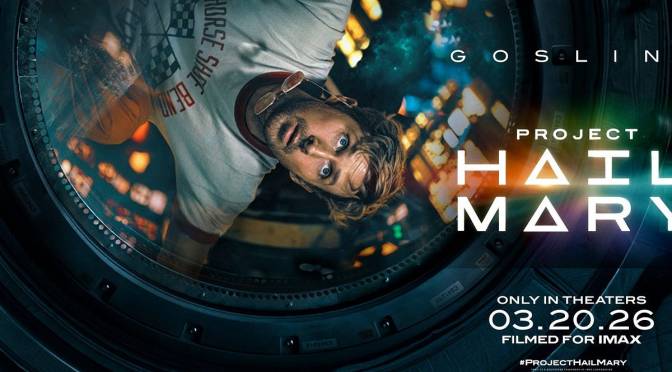
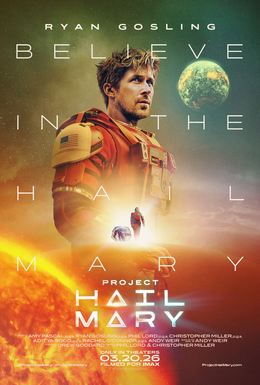
There’s a version of Project Hail Mary (2026) that could have been cold, clinical, and overly procedural—a hard sci-fi puzzle box drifting in the vacuum of its own cleverness. Instead, what Christopher Miller and Phil Lord deliver is something far more disarming: a big-hearted, funny, surprisingly emotional crowd-pleaser that turns the apocalypse into an oddly uplifting experience.
Adapted by Drew Goddard from Andy Weir’s novel, the film follows Ryland Grace (a perfectly cast Ryan Gosling), who awakens alone aboard a spacecraft with no memory of who he is or why he’s there. The early stretches lean into disorientation—Gosling playing confusion with a twitchy, almost comic anxiety—but as Grace pieces together his past, the film cleverly shifts into a dual-track narrative: one part interstellar survival story, one part Earthbound scientific scramble to stop a cosmic catastrophe.
Gosling is the film’s main weapon. He plays Grace not as a conventional hero, but as a reluctant participant—anxious, self-deprecating, and often hilariously out of his depth. His charm keeps the exposition buoyant, especially as the film dives into dense scientific concepts. Where the story could feel heavy, Gosling makes it breezy and Project Hail Mary (2026) is certainly more emotionally stimulating than the dreadful action thriller The Gray Man (2022) and the weak remake, The Fall Guy (2024).
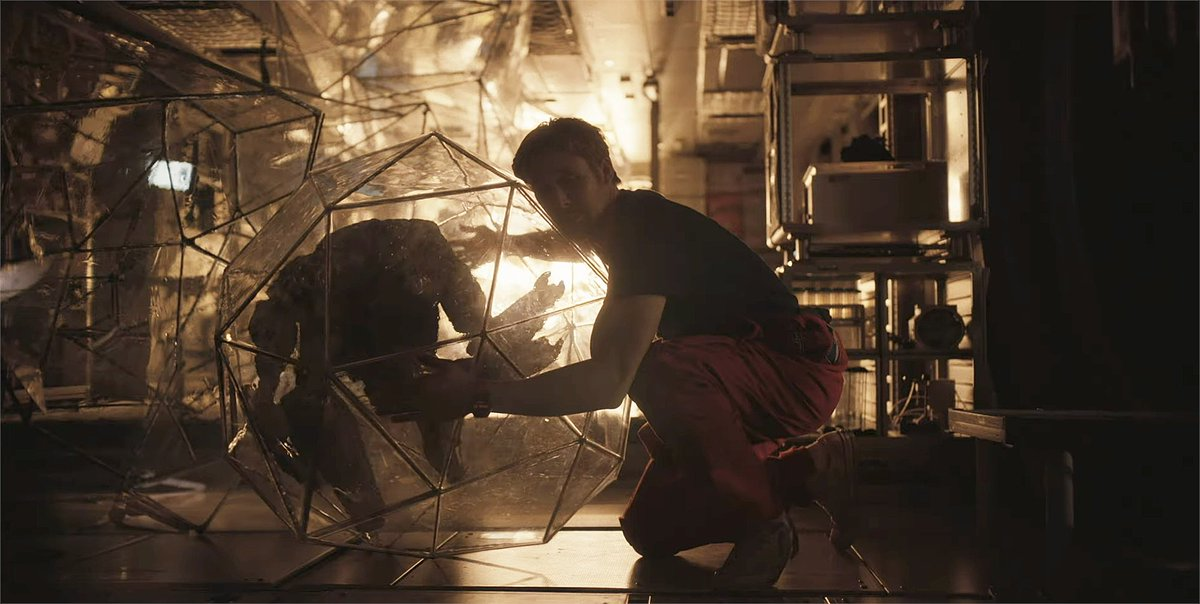
But the film’s most unexpected triumph is its central relationship: a deeply entertaining and genuinely moving “bromance” between Grace and an alien Xeonite – christened Rocky – he encounters in deep space. What begins as cautious interaction evolves into one of the most delightful interspecies friendships in recent sci-fi. Their communication—built from math, sound, and trial-and-error—becomes a source of both comedy and emotional resonance. It’s rare to see a blockbuster hinge so successfully on companionship rather than conflict, and the film is all the better for it.
Visually, Project Hail Mary (2026) is spectacular without being overwhelming. Lord and Miller balance scale with clarity; the vastness of space never drowns the intimacy of the story. The alien design is inventive, the astrophysical phenomena are rendered with awe-inspiring detail, and yet the film always remains grounded in character. It’s science-forward filmmaking that never forgets to entertain. Back on Earth, Sandra Hüller provides the film’s emotional anchor. Her performance carries a quiet intensity, grounding the global stakes in something human and immediate. Where the space sequences soar, her scenes remind us what’s at risk—and why it matters.
Goddard’s script is sharp, witty, and structurally satisfactory. It juggles timelines, scientific jargon, and character development with impressive ease, finding humour in the bleakest situations without undercutting the stakes. There’s a rhythmic confidence to the storytelling that keeps the film propulsive even as it pauses for introspection. What ultimately makes Project Hail Mary (2026) stand out, though, is its tone. This is, unmistakably, a feel-good end-of-the-world movie. It finds optimism not in denying catastrophe, but in confronting it with curiosity, cooperation, and friendship. By the time the credits roll, what lingers isn’t just the spectacle or the science—it’s the warmth. A book and film about extinction becomes, improbably, a story about connection.
Based on Frankenstein; or, The Modern Prometheus by Mary Shelley
Produced by: Maggie Gyllenhaal, Emma Tillinger Koskoff, Talia Kleinhendler, Osnat Handelsman-Keren, etc.
Main cast: Jessie Buckley, Christian Bale, Peter Sarsgaard, Annette Bening, Penelope Cruz, Jake Gyllenhaal, etc.
Cinematography by Lawrence Sher
** May Contain Spoilers **
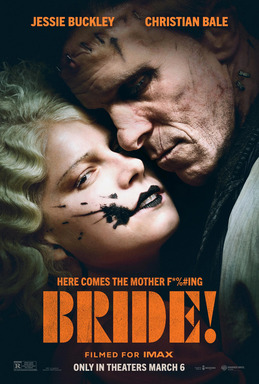
Maggie Gyllenhaal’s THE BRIDE! (2026) is a film bursting with ideas—sometimes thrillingly so, sometimes to its own detriment. Drawing inspiration from Bride of Frankenstein (1935) and ultimately Mary Shelley’s seminal novel, Frankenstein, Gyllenhaal transplants the myth into a Gothic vision of 1930s Depression-era America, filtered through the anarchic spirit of outlaw cinema like Bonnie and Clyde (1967) and Natural Born Killers (1994). The result is frequently intoxicating. The film opens with an inspired flourish—Mary Shelley herself narrating from beyond the grave—immediately signalling the director’s playful ambition. Visually, the film is extraordinary: lavish period design, smoky Gothic textures, and a lurid romanticism that feels both classic Hollywood and defiantly post-modern.
At the centre of the mayhem is Jessie Buckley, delivering yet another unforgettable performance. Her ‘Bride’ is feral, seductive, and volatile—an electrifying feminist creature of impulses and contradictions. Buckley plays her with a kind of joyous unpredictability, veering between danger, sexuality, and sudden jolts of manic dialogue that feel almost Tourette-like in their intensity. Opposite her, Christian Bale lends gravitas as her monstrous partner, and together they rampage across a mythicised America in a lovers-on-the-run narrative that often feels gleefully unhinged.
Yet for all its invention, THE BRIDE! (2026) often collapses under the sheer weight of its ambitions. Gyllenhaal’s screenplay seems determined to juggle too many ideas at once—meta-narration, Gothic tragedy, outlaw romance, and genre pastiche—without giving any one of them the structural discipline they require. The direction follows suit, veering between tones so abruptly that the film begins to feel atonal rather than daring. Key twists arrive with little groundwork, leaving major emotional beats feeling strangely hollow.
By the final act, the film’s wild energy begins to resemble narrative confusion. Plot holes emerge, character motivations blur, and revelations arrive as pure payoff without the careful setup that might have made them land. It leaves an odd lingering question: was this an $80 million piece of audacious cinematic art, or an extravagant misfire? Perhaps it is a little of both—a fascinating, chaotic vision whose brilliance flashes intermittently through the fog of its own excess.
Produced by Sophia Gibber, Myles Payne, Philip Barantini & Samantha Beddoe
Main cast: David Jonsson, Tom Blyth, Corin Silva, Alex Hassell, Paul Hilton, etc.
Cinematography by Lorenzo Levrini
Edited by James A. Demetriou
*** MAY CONTAIN SPOILERS ***
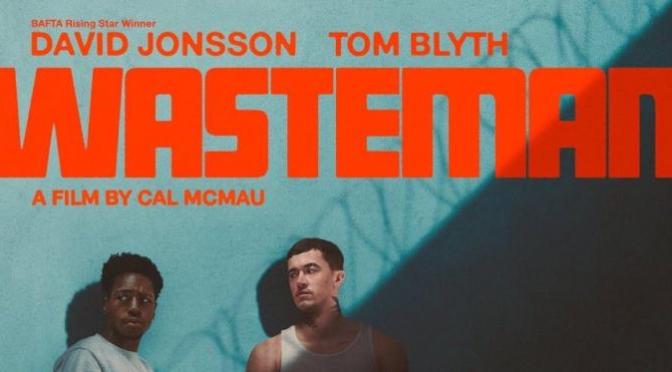
Wasteman (2026) presents another opportunity for David Jonsson to showcase his ample acting abilities. He first stole hearts with under-stated charm in low-budget rom-com,Rye Lane (2023), then proved he could spar at a higher-budgeted level in, Alien: Romulus (2024). He then delivered another strong performance in, The Long Walk (2025), further cementing his instinct for emotionally grounded genre work. Across romance, horror, drama and dystopian thriller, Jonsson doesn’t just adapt — he deepens.
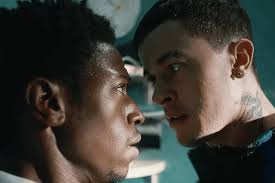
In Wasteman (2026) his character. Taylor, is an inmate close to getting out having served a lengthy sentence. He must keep out of trouble in order to get a successful release. However, that proves difficult when a new cellmate, Dee (Tom Blyth) muscles his way into his four-walled existence. The narrative conflict and tension is built on a stark clash of personalities. Taylor is quiet, cautious, and emotionally guarded — a man who keeps his head down in prison, desperate to survive. He avoids confrontation and moves through the system almost invisibly, shaped by drug addiction, guilt and the need for redemption.
Dee, on the other hand, is the complete opposite: loud, aggressive, and unmistakably alpha. He walks into the prison with dominance in his bones, quickly asserting control through intimidation, charisma, and violence. Where Taylor retreats, Dee advances desiring to take over the prison wing. Where Taylor stays silent, Dee provokes the other drug dealers on their floor stealing their trade. Their dynamic becomes the film’s central pressure point — a volatile relationship between a man trying to disappear and another who refuses to be anything but the most powerful person in the room.
Prison dramas are always enthralling as the characters are trapped like caged animals. Further, where there is masculinity, ego and mental fragility, violence is likely to follow. There are a number of fearful scenes and harsh encounters that raise the heart rate, especially between Dee and his prison rivals. Taylor tries to navigate the war but unfortunately gets dragged into a series of highly brutal battles. Dee also strives to manipulate Taylor too with a carrot and stick approach. How Taylor extricates himself from this dangerous situation proves very suspenseful.
Overall, Wasteman (2026) is not for the faint-hearted. Director, Cal McMau and his cinematographer, Lorenzo Levrini, make the most of the crammed jails, using big-close-ups to get in the face of the characters and audience with searing intensity. Moreover, the interspersing of vertical phone 9:16 aspect ratio shots also heightens the verisimilitude, giving it a raw documentary style. Finally, the end pivot of Taylor and Dee’s power struggle provides a subtle narrative conclusion rewarding David Jonsson and Tom Blyth tour-de-force performances with a cathartic and memorable denouement.
Romford Horror Film Festival & The Cannibal Man (1972) review
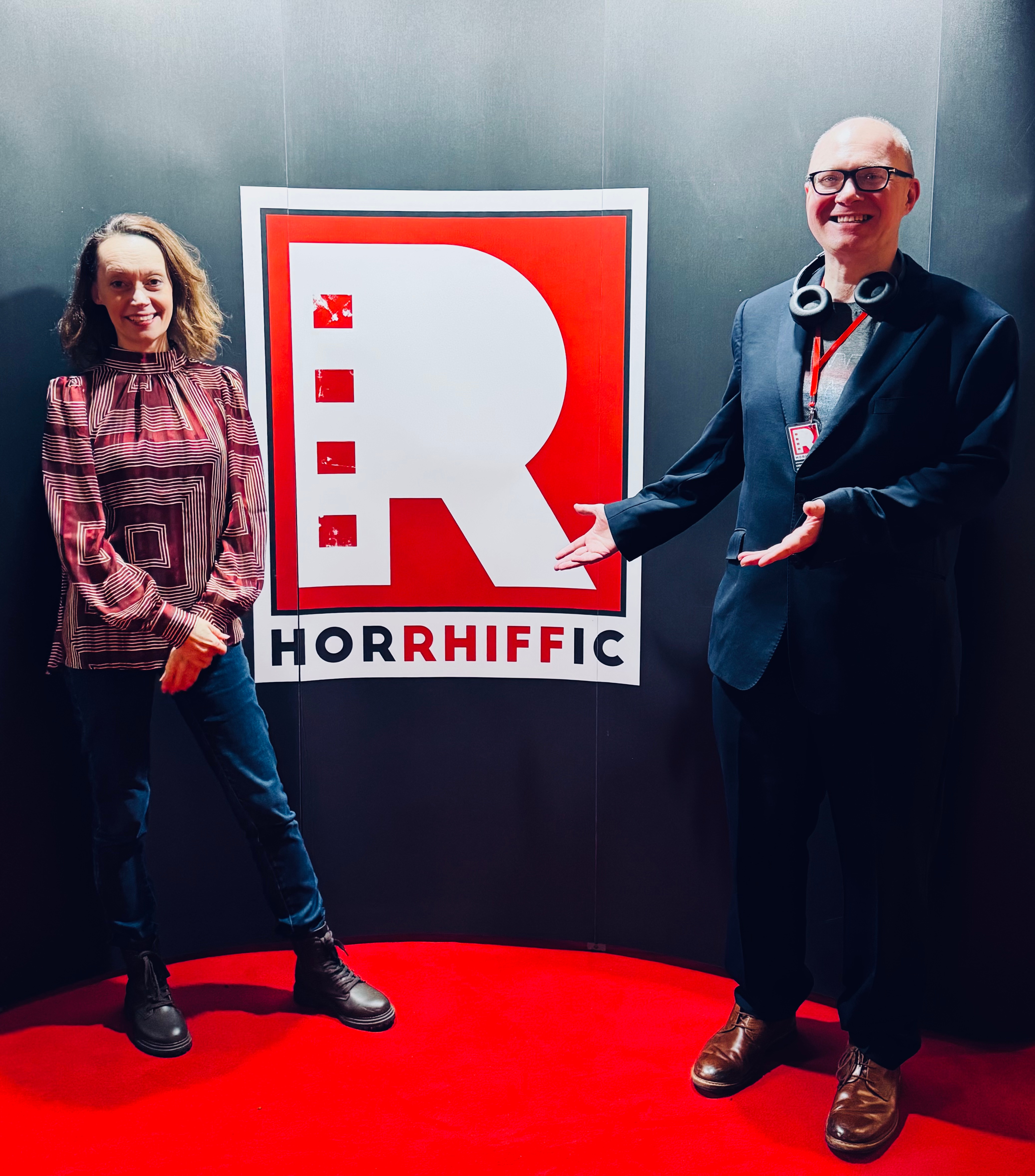
From 19th–22nd February 2026, Romford, Essex emerged not just as a venue, but as a creative crucible for genre storytelling as the Romford Horror International Film Festival — affectionately dubbed HorRHIFFic — returned to the Lumiere Cinema with its most ambitious programme yet – details can be found here: https://www.romfordhorrorfestival.com
This four-day celebration of horror cinema is rooted in the independent filmmaking spirit: championing works from emerging voices around the world, blending them alongside classic cult favourites, and generating an atmosphere of passion, community, and shared reverence for the genre. What makes this festival truly special isn’t just the size of its programme — though over 130 films certainly made for a thrilling schedule — but its wholehearted dedication to independent filmmakers who bring new ideas, daring vision, and personal passion to every frame.
Across its programme, the festival showcased a thrilling mix of guests and films that honour horror’s breadth including: Classic Retro Treats, Special Guests and Actors from Horror, New Independent Features & Shorts from countries such as South Korea, Canada, Spain, USA, and Italy, plus Creative Diversity — with screenings that embraced psychological depth, gory slashers, ghost stories, off-beat genre hybrids, and boundary-pushing work from both early-career filmmakers and seasoned indie pros.
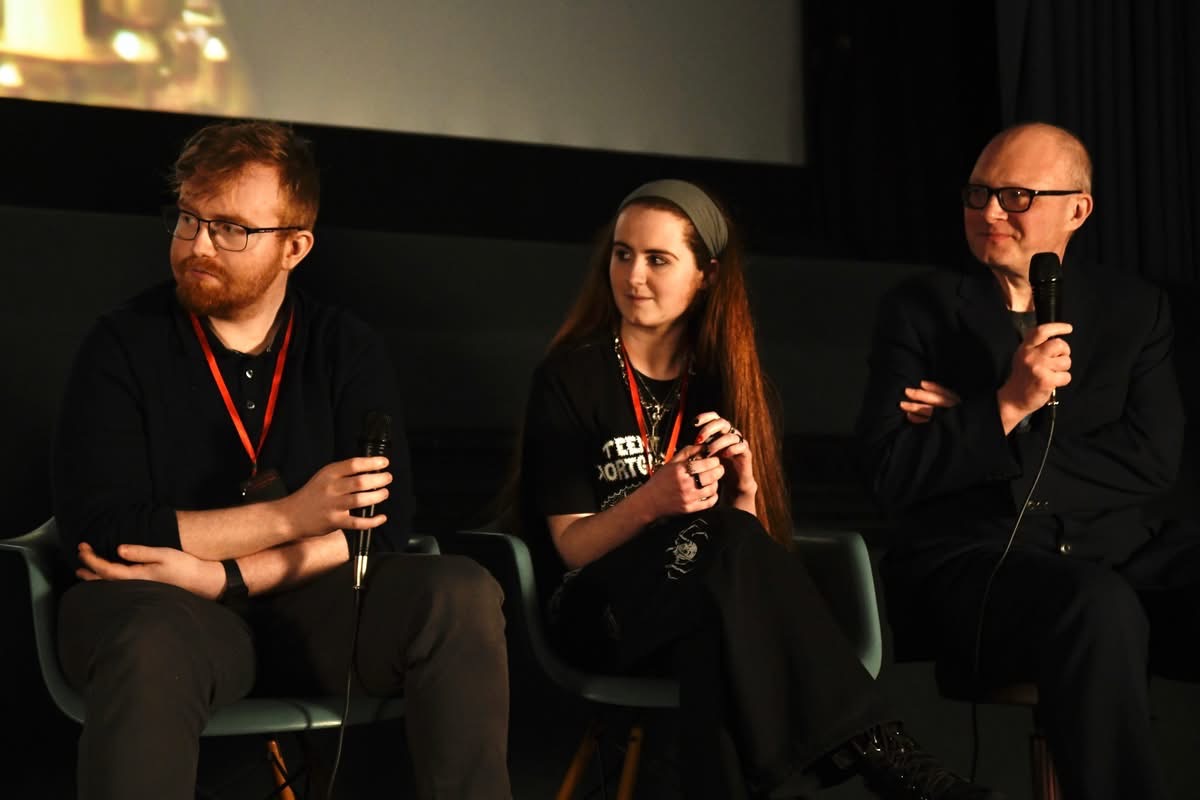
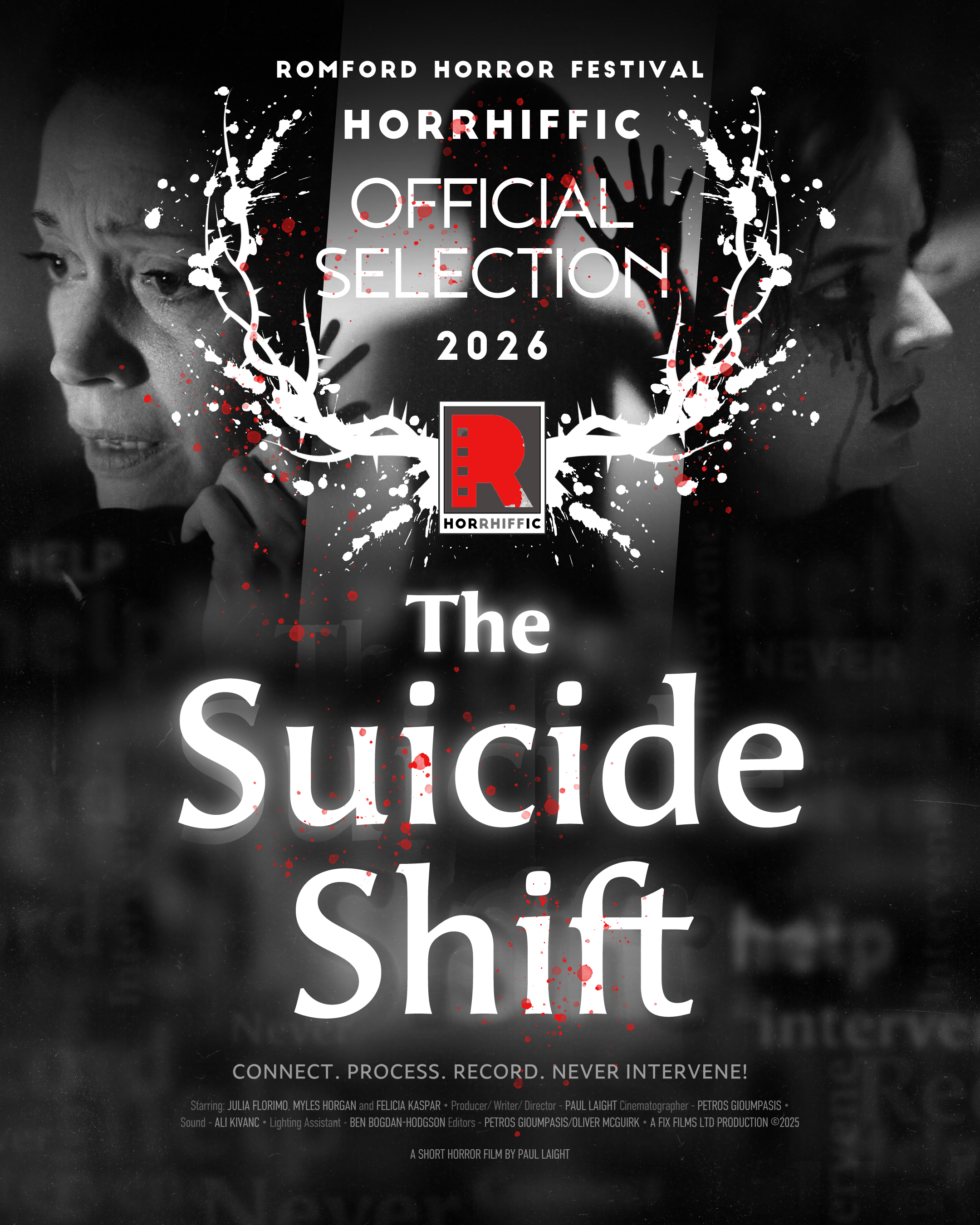
Romford Horror Festival is also renowned for the community it builds. Horror fans come together not just to watch films, but to share experiences, meet creators, and feel at home in an environment that values innovation over commercialism. The Lumiere Cinema, itself a community-saved venue, became a home for filmmakers and fans alike — proving that in Romford, horror isn’t just screened… it’s commemorated. I for one am so grateful they screened my short horror film The Suicide Shift (2026).
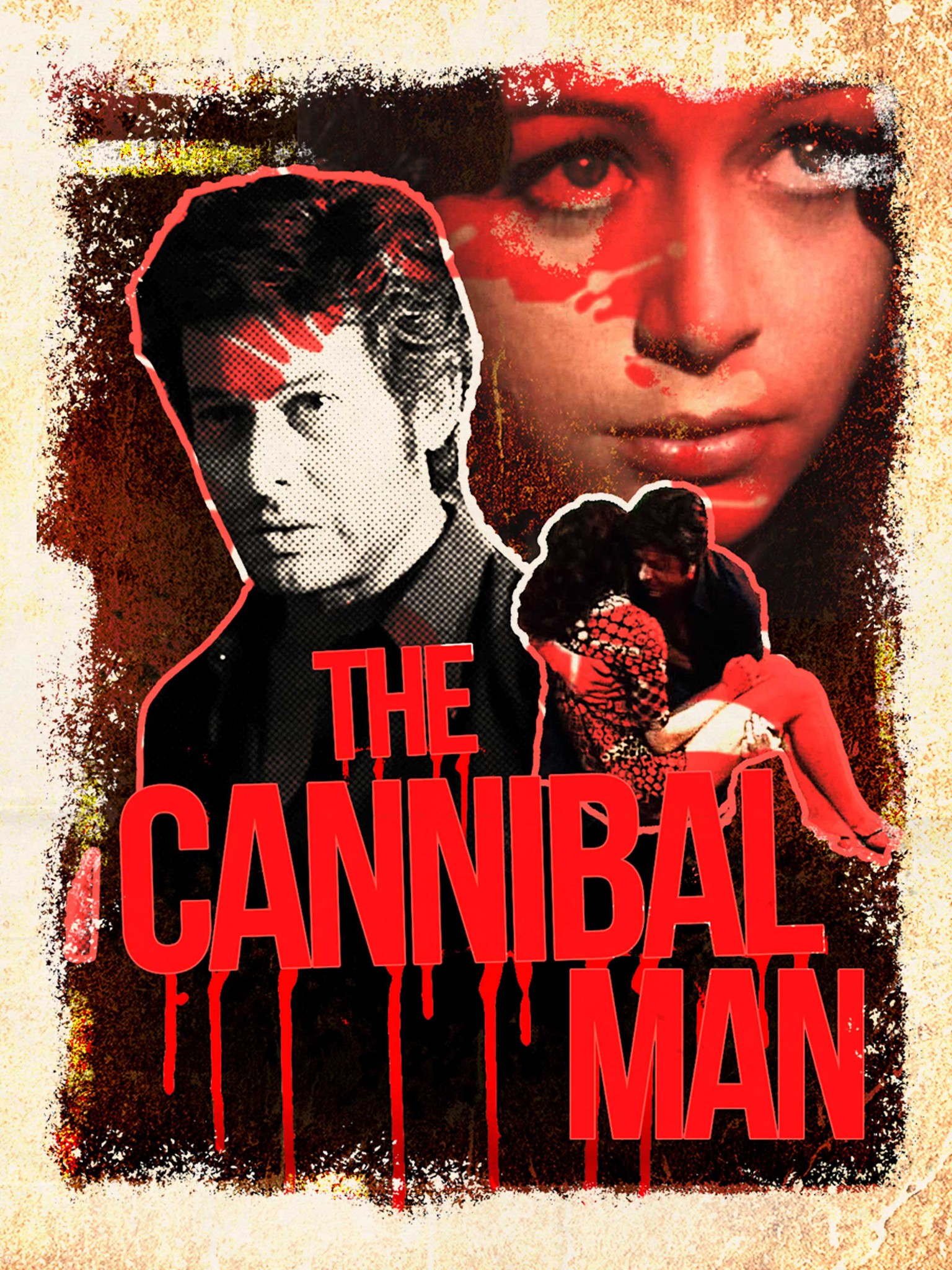
As well as the short film showcases I watched a few retro classics including The Cannibal Man (1972) – (original title: La semana del asesino), directed by Eloy de la Iglesia. It is less a horror film than a slow, suffocating moral collapse. What begins as an unfortunate act of violence spirals into a weeklong descent into hell for Marcos, played with haunted fragility by Vicente Parra. Each subsequent killing feels less like cruelty and more like inevitability — the grinding machinery of fate closing in on a man already spiritually trapped.
Set against the decaying outskirts of Madrid in the final years of the Franco regime, The Cannibal Man (1972) doubles as a bleak portrait of a society rotting from repression. The slaughterhouse where Marcos works becomes an unsubtle but potent metaphor: under Francoism, bodies are processed, identities erased, dissent quietly carved up and discarded.
What makes the film especially daring is its undercurrent of homoerotic tension. Marcos’ wealthy, enigmatic neighbour Néstor hovers at the edges of the carnage, offering protection and silent understanding. Their charged glances and coded conversations suggest a longing that cannot safely speak its name under Franco’s moral authoritarianism. In this reading, Marcos’ spiral is not only about guilt but about internalized repression — desire twisted inward until it manifests as self-destruction. The horror is as much psychological as physical.
And yes, the gore is blunt and ugly. Bodies are dismembered with the same cold pragmatism as livestock. But de la Iglesia never lets the blood eclipse the tragedy. Marcos is not a monster in the conventional sense; he is a man cornered by circumstance, class stagnation, and a society that offers no mercy to the weak. By the end, his descent feels preordained — less a fall from grace than a revelation that grace was never available to him.
So, if you love horror films do check out indie film festivals such as – HorRHIFFic– whether it’s the electrifying surprises in the indie showcases or the nostalgic thrill of classic screenings, the Romford Horror Film Festival 2026 made it clear: independent horror cinema is alive, vibrant, and boldly inventive. This festival is a testament to the creativity and ingenuity of filmmakers who refuse to be confined by convention — and to the audiences who cheer them on.
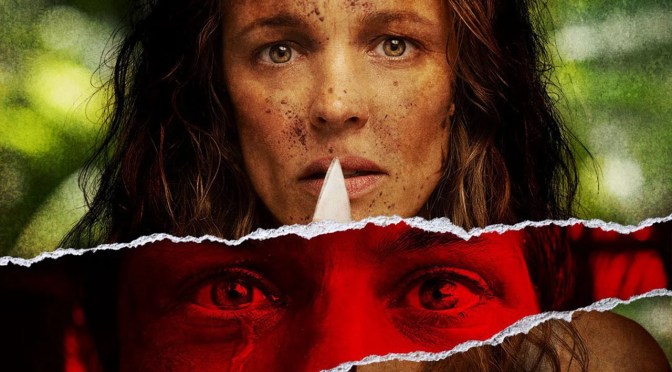
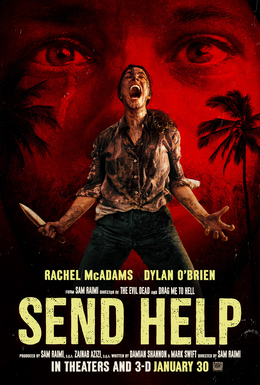
Main cast: Rachel McAdams, Dylan O’Brien, Edyll Ismail, Xavier Samuel, Chris Pang, Dennis Haysbert, etc.
Cinematography by Bill Pope
** MAY CONTAIN SPOILERS **
Having watched the trailer for survivalist horror-comedy, Send Help (2025), starring Rachel McAdams and Dylan O’Brien, I thought the blend of bloody chaos and desert island class warfare was right up my street, well, beach. But when I knew one of my favourite directors, Sam Raimi, and film composers, Danny Elfman, were involved, I realized it was not just a recommendation but a personal summons to the cinema.
Send Help (2025), takes inspiration and feels spiritually indebted to the extended final act island meltdown of Triangle of Sadness (2022). But this is an all the more riotous, funny and gory battle of survival. Overlooked for promotion by new-CEO-son-of-deceased-boss, Bradley Preston (O’Brien), Linda Liddle – a fantastic McAdams – is full of downtrodden and bubbling rage. Preston, an arrogant, apparent-alpha wants to sack her, but the business needs her prodigious work ethic for an upcoming business summit to Bangkok. Following an exhilarating plane crash set-piece, that Raimi rinses brilliantly for suspense and surprises, the two become the only survivors. With Linda armed with survival knowledge, and Preston’s leg smashed, the tables, in terms of power, are turned, resulting in all manner of twisted, mental and bodily torture.
What starts as survival thriller territory quickly mutates into full-blown horror farce, complete with makeshift weapons, crustacean poison, tropical storms, shifting power dynamics, and the kind of escalating insanity that feels one chainsaw away from Evil Dead 2 (1987) territory. Not only do the horror beats land, but the tit-for-tat power struggle and verbal sparring between Linda and Preston also heighten the the conflict and dramatic stakes. Indeed, Linda inhabits the alpha-hunter role on the island, culminating in a bloodening and sacrificial slaying of a wild boar. Preston, once he is on his feet, is keen to even up the power balance and challenges Linda’s authority in a desperate attempt to get off the island.
McAdams and O’Brien’s combative chemistry on-screen adds to the enjoyment and at one point I even wondered if Raimi and the screenwriters were going to redeem their battle with a potential romance. Instead they double and triple down on the twisted violence in the final act to much eye-gouging hilarity. Lastly, like Triangle of Sadness (2022), the film weaponizes the underdog’s survival against privilege, flips hierarchies and skewers toxic masculinity in the process. The final act becomes particularly frantic, pushing the horror genre framework, and the class satire into a brilliant pay-off of Linda’s ascendant arc. This ensures Send Help (2026) launches a flare into the sky as an early contender for one of my favourite films of the year.