Tag Archives: The Go-Between (1971)

SKY CINEMA REVIEW: MAY DECEMBER (2023)

SKY CINEMA REVIEW: MAY DECEMBER (2023)

Directed by Todd Haynes

Screenplay by Samy Burch (Story by Samy Burch and Alex Mechanik)

Produced by Natalie Portman, Sophie Mas, Christine Vachon, Pamela Koffler, Grant S. Johnson, Tyler W. Konney, Jessica Elbaum and Will Ferrell.

Main Cast: Natalie Portman, Julianne Moore, Charles Melton, Cory Michael Smith, Elizabeth Yu, etc.

Cinematography by Christopher Blauvelt

*** MAY CONTAIN SPOILERS ***
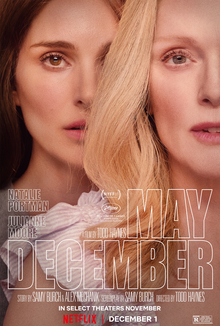


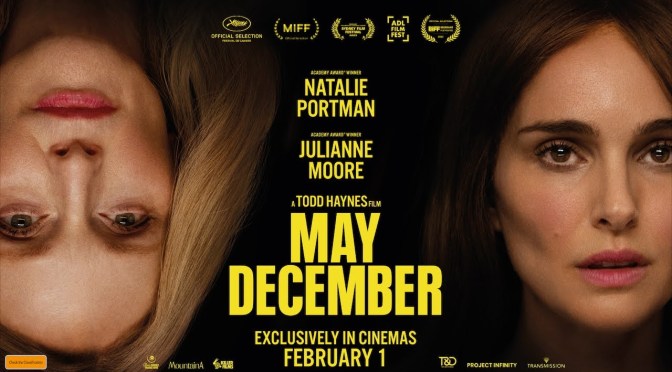
The story of May December (2023) is set in 2015 against the sunny backdrop of Savannah, Georgia. Loosely inspired by the real-life Mary Kay Letourneau scandal, Natalie Portman is Elizabeth Berry, an actress who desires to study the lives of Julianne Moore’s Gracie Atherton-Yoo and her partner Joe Yoo (Charles Melton). Elizabeth is set to play Gracie in an indie film, with latter being infamous for her twenty-three-year-long relationship with Joe, which started when he was thirteen. With a hook like that I was intrigued as to where the story would go with such a controversial subject matter dealing with a convicted sex offender and illicit romance. Here lies a major thematic thumbprint of the filmmakers.

What unfolds is a superbly acted and understated drama which really gets under the skin and into the mind. While watching the ever-shifting points-of-view and identification with the characters May December (2023) became so compelling to me. Gracie is a convicted sex-offender, but she married Joe for love and they had children together after she left jail. But should she have acted on her desires and rejected Joe as a thirteen year old? The simple answer is yes, but it is more complex than that as presented here. Because the couple felt so much emotion for each other that Gracie was prepared to go to jail. This is what attracts Berry and she homes in on Gracie and Joe like the proverbial moth to a flickering bulb.
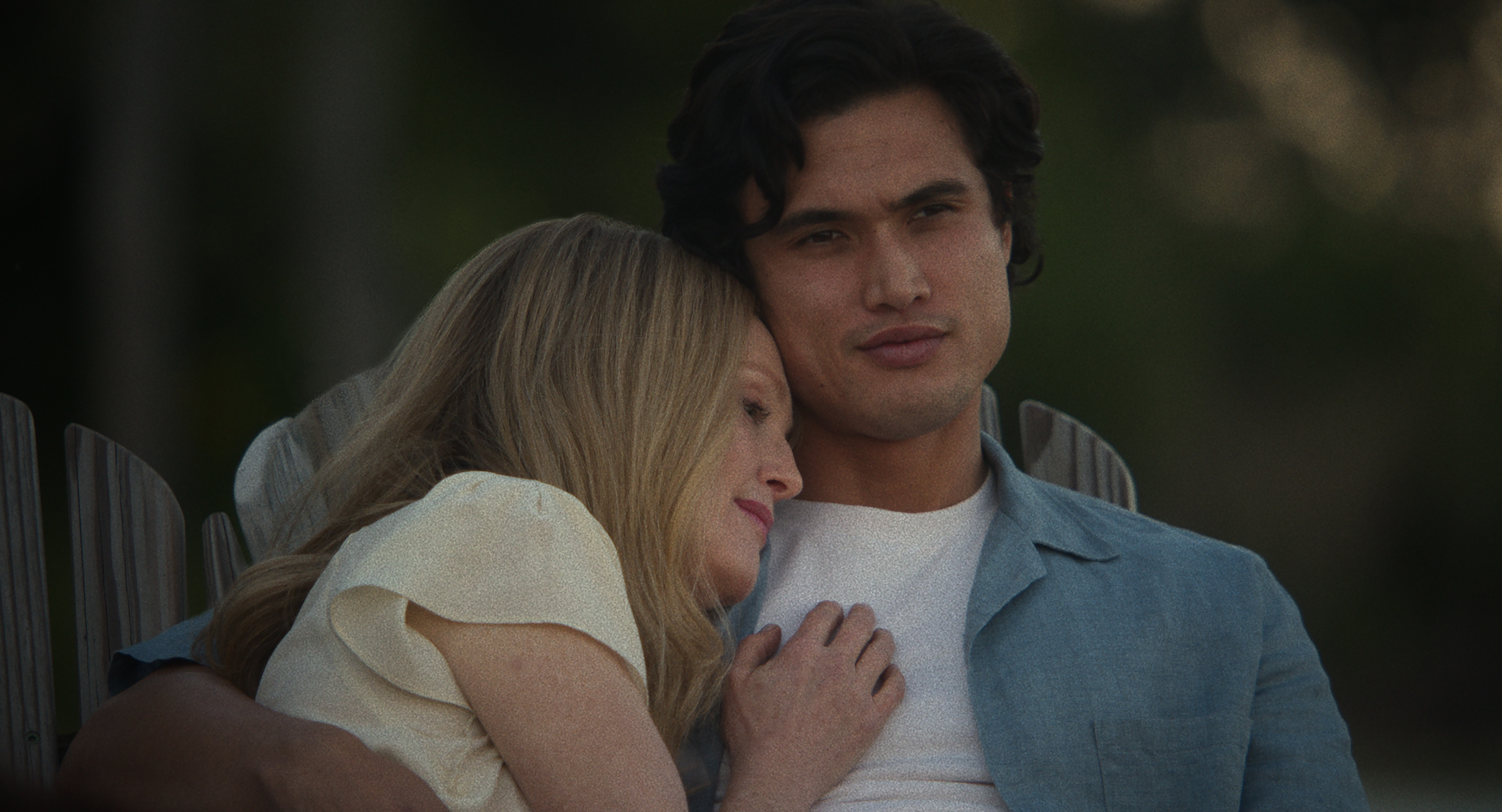


Structured around Berry’s methodical probing into the past events and Gracie and Joe, she quizzes them, their children, family, friends, work colleagues and legal team. As Berry researches further it becomes apparent she is getting obsessive and almost predatory herself. There are several very awkward scenes involving Berry, notably when she visits the pet store where Gracie and Joe used to work together. As Berry revisits the past she begins to loosen the stitches of old wounds, as both Gracie, and Joe especially, reflect and question the moral validity of their relationship.

I am sure when Natalie Portman and Julianne Moore read the script for May December (2023) they must have been doing back flips with creative excitement. Because it is clearly is a layered screenplay of the highest intelligence, ambiguity, dark humour and intensity by Samy Burch. Along with Melton they deliver on the script with three tremendous performances too. Moreover, acclaimed director Todd Haynes directs this tonally awkward story with a deft touch drawing on the constant grey areas of drama so expertly. May December (2023) may not be for everyone because the film is a slow burn without much in the way of dramatic closure. Conversely, so much of the drama occurs in the acting and script’s subtext, yet it remains a fine example of ambiguous cinema. Finally, the re-orchestration and use of Michel Legrand’s music for The Go-Between (1971) is a masterstroke.

Mark: 9 out 11


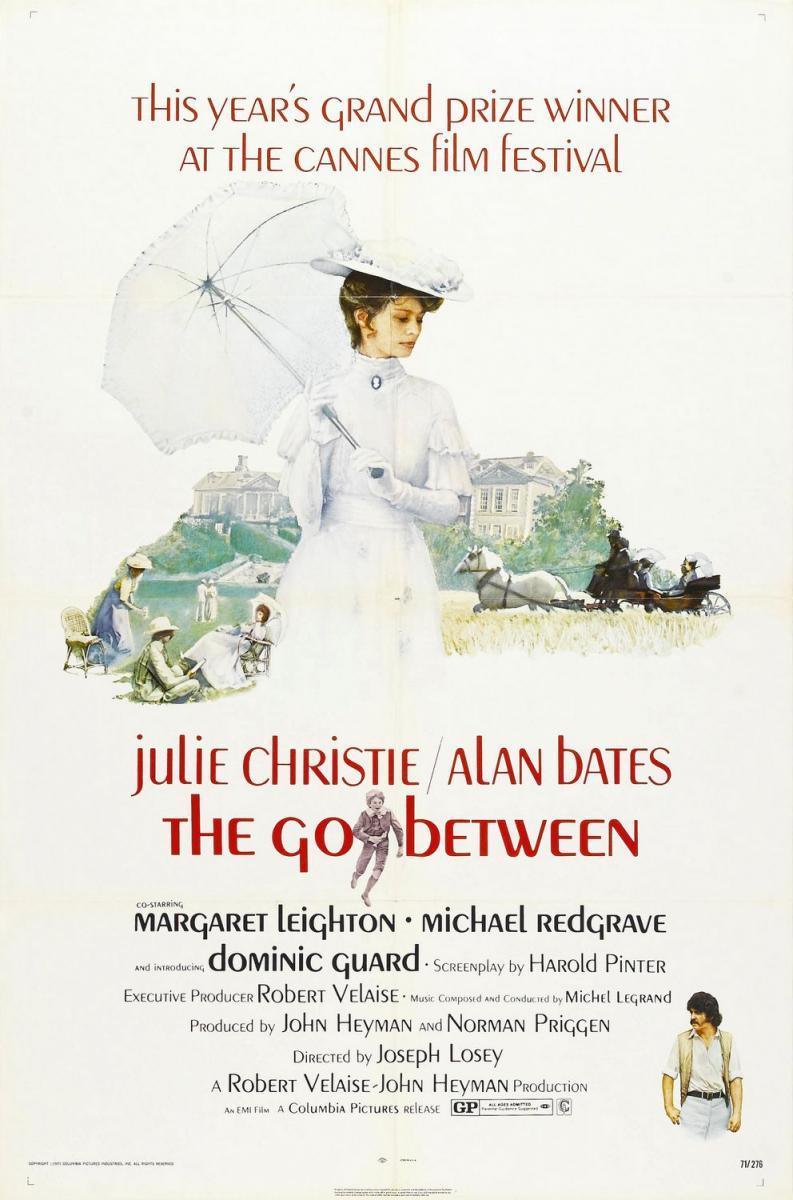
CLASSIC FILM REVIEW – THE GO-BETWEEN (1971)

CLASSIC FILM REVIEW – THE GO-BETWEEN (1971)

Directed by: Joseph Losey

Produced by: John Heyman, Denis Johnson, Norman Priggen

Screenplay by: Harold Pinter

Based on: The Go-Between by L. P. Hartley

Cast: Julie Christie, Alan Bates, Margaret Leighton, Edward Fox, Dominic Guard, Michael Redgrave, etc.

Music by: Michel Legrand


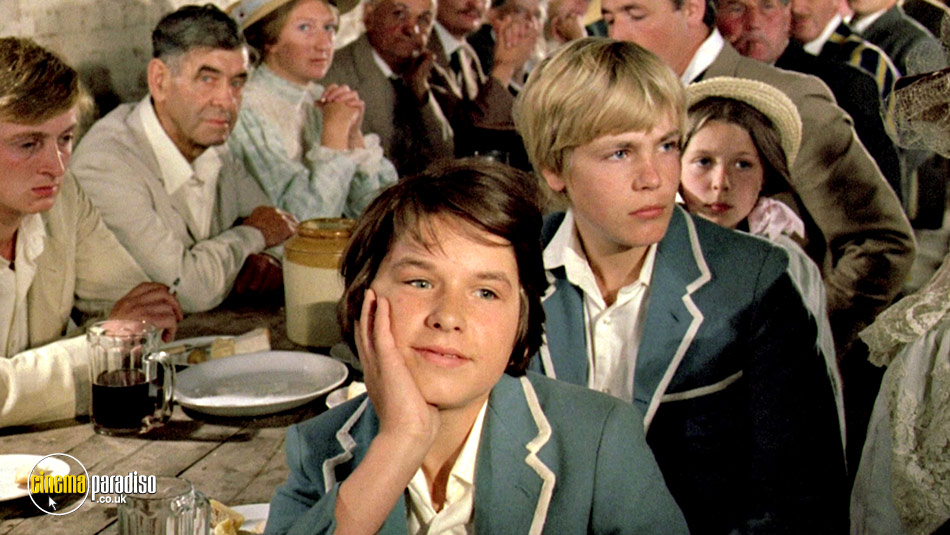
The Go-Between (1971) is one of those expert works of understated cinema which I was sure I had seen before. Yet, I would come to discover I had never seen it when I caught it on the rather marvellous digital channel, Talking Pictures. But then I love that when you find a period classic and watch it for the first time. It’s like unearthing gold in your living room. Because the film is a heartfelt rites-of-passage drama which subtly pulls at the loose end of the knitted cardigan that is the British class system. Nevertheless, while the romance, lies and regret unfold under the surface, The Go-Between (1971) certainly retains much dramatic power.

Adapted by acclaimed playwright, Harold Pinter, from the esteemed novel by L.P. Hartley, The Go-Between (1971) stars Julie Christie and Alan Bates as secret lovers separated by the chasm of class and tradition. Bates’ Ted Burgess is a charismatic and muscular farmer with a reputation as a ladies man. Christie is the beautiful and slyly rebellious daughter of the Lord of the Manor, Marian, promised in marriage to Edward Fox’s Viscount Hugh Trimingham. With peering eyes and suspicion coming from Marian’s mother, the lustful affair requires stealth, thus they enlist the help of Dominic Guard’s intelligent but less-privileged, Leo Colston. He is there as guest of Marian’s young brother as both attend the same boarding school; Leo there on a scholarship. The narrative develops very much through Leo’s sweet innocent eyes. The outsider’s point-of-view is expertly presented as it is both objective and allows the audience to make up their own mind about the characters.


Leo is pure of heart and believes he is helping by running notes back and forth between Burgess and Marian. He also makes friends with the cuckolded Viscount, as Fox gives a fine performance of a man who may or may not know whether his potential wife is being unfaithful. I think that is one of the strengths of the book and film, in that it explores the theme of duty versus passion. Burgess and Marian represent freedom, lust and nature, which are opposite to the “doing your duty” arrangements of the upper classes. Of course, dramatically speaking something has to give where the love affair is concerned. Sadly, tragedy intervenes, resulting in the loss of Leo’s innocence, and adding a layer of guilt which gravely haunts him in his later years.

Everything about The Go-Between (1971) reeks of quality. From the production design, locations, costumes, score by Michel Legrand and Gerry Fisher’s exquisite cinematography. Unsurprisingly, Harold Pinter would receive an Academy Award for his confident adaptation. Further, Joseph Losey is not a filmmaker whose work I am not particularly well acquainted with, but the performances from Fox, Bates, Christie and young Dominic Guard are assured testament to his stellar ability to convey meaning and emotion between the lines. Indeed, while some films smash you over the head with emotional melodrama, something I love too, The Go-Between (1971) instead slowly squeezes at your heart and mind. Lastly, this is not simply a damning indictment of the class system, but a lament for loss of innocence, illustrating how monolithic tradition dictates love, fate and tragedy are inextricably entwined.