
SHUDDER HORROR FILM REVIEWS (2024)
Looking for something horrifying to watch during Halloween. Well you could do far worse than getting a Shudder subscription.
A few months a year I sign up and binge bloody disgusting and scary films as my previous reviews testify. Check them out here!
This year I have done the same and watched some really good, terribly bad and hideously ugly horror films via Shudder. Peruse my short reviews below. In alphabetical order with marks out of eleven.
Host (2020)
A terrific low-budget British indie film that explores the dangers of angering ghosts during a Zoom call. While the mildly irritating characters don’t realize they can simply end the online séance, it’s still a spooky, suspenseful, and fast-paced horror flick. I’m not usually a fan of the found footage genre, but this was very well made and highly creepy. Mark: 8 out of 11
In A Violent Nature (2024)
This director will probably have an amazing career. But this film was, despite some wonderful practical-effect driven gore, SO slow and boring. The film satirizes classic horror tropes, mocking their clichés with a heavy hand. The director’s pretentious style and inflated sense of artistic ego drain the audience of any real suspense or tension. The attempt at highbrow genre obfuscation creates a hollow spectacle. Shot from behind, the killer stalks twenty-somethings in the woods in the style of Son of Saul (2015) meets every slasher film ever. Ultimately, suffering from atrocious dialogue, bad plotting and weak characterization, the visual flair fails to save a film which feels more like an exercise in intellectual vanity than a gripping thriller. Mark: 5 out of 11
Late Night With The Devil (2023)
With echoes of the recent Inside No. 9 (3×3 quiz show episode) and BBC show Ghostwatch (1992), and of course The Exorcist (1973), Late Night With the Devil (2023) is one of the most enjoyable and imaginative horror films I have seen in sometime. One of the best horror films of the decade. Check out my longer review here. Mark: 9 out of 11
Pyewacket (2017)
Nicole Munoz’ isolated teenager summons a witch via a ritual and unleashes something not particularly scary or even present. All set-up and no catharsis! A waste of everyone’s time. Mark: 4 out of 11
Revealer (2022)
One of the best pitches I have read in a while – “A stripper and religious protester are trapped together in a peep show booth and must come together to survive the apocalypse in 1980’s Chicago!” does not unfortunately live up to expectations. However, there’s a decent female buddy dynamic and some imaginative gore which channels early Raimi, Jackson and Carpenter. Mark: 6 out of 11
Room 237 (2012)
For Stanley Kubrick completists, this fascinating documentary is divided into nine sections, with each one exploring a different aspect of The Shining (1980). Hidden theories buried under the surface relate to faked moon landings, Native American genocide and the holocaust are some of the ideas chucked at the wall. While some may stick and some don’t, it’s lovingly made and always fascinating. Mark: 8 out of 11
Skinamarink (2022)
Skinamarink was a major letdown for me, especially given the high expectations after its impressive financial success. With a $15,000 budget, it garnered over $2.1 million at the box office, creating a buzz around its unconventional style and promise of fresh horror. But despite its atmospheric tension and experimental approach, I felt the film didn’t live up to the hype. The slow pacing, abstract narrative, and reliance on ambient sounds and shadows left me unmoved. It’s an original, art-house horror so surprised it crossed over. Filmmaker, Kyle Edward Ball, clearly has a distinctive voice though. Mark: 6 out of 11
Stop Motion (2023)
The animation in Stopmotion (2023) showcases Robert Morgan’s genius, with his signature blend of hauntingly detailed stop-motion work that creates an eerie, tactile atmosphere. His craftsmanship brings a nightmarish quality to life, adding unsettling textures and depth that pull the audience into a world of psychological horror. However, while the animation excels, the plot—reminiscent of Repulsion—struggles to connect on a human level. The surreal visuals overshadow the character’s psychological journey, making it hard for viewers to engage with the protagonist’s inner turmoil, leaving the story feeling more distant and abstract than compelling. Mark: 6.5 out of 11
Superdeep (2020)
The Russian horror film Superdeep feels like a patchwork of borrowed elements from better-known sci-fi and horror movies, but without their finesse or originality. It mimics the claustrophobic tension of The Thing, the body horror of Alien, and the descent into madness of Event Horizon, yet fails to capture the essence that made those films effective. Derivative and ineffective, it at least has some ridiculously bad monster effects at the end that had me laughing. Mark: 4 out of 11
The Coffee Table (2022)
The Coffee Table is a twisted and darkly humorous horror film that pushes the boundaries of discomfort while delivering a sharp, satirical take on the horrors of parenthood. The film’s sick sense of humor blends with its unsettling premise, as it uses a seemingly mundane object—a coffee table—as the catalyst for an absurd but terrifying chain of events. Its pitch-black comedy amplifies the tension, making the film both deeply disturbing and strangely cathartic for those who understand the pressures of raising children. It’s a fearless examination of the darker side of family life, where humor and horror collide to expose the anxieties and struggles that often go unspoken. Mark: 8 out of 11
We All Went to the World’s Fair (2021)
We All Went to the World’s Fair (2021) falls short both as a horror film and as a rites of passage story. Its eerie, slow-burn approach creates an unsettling atmosphere, but the lack of a clear, escalating threat leaves it feeling aimless. Switching protagonists at the end does not work, and despite an excellent performance from Anna Cobb, the film spoils an intriguing premise. Mark: 5.5 out of 11
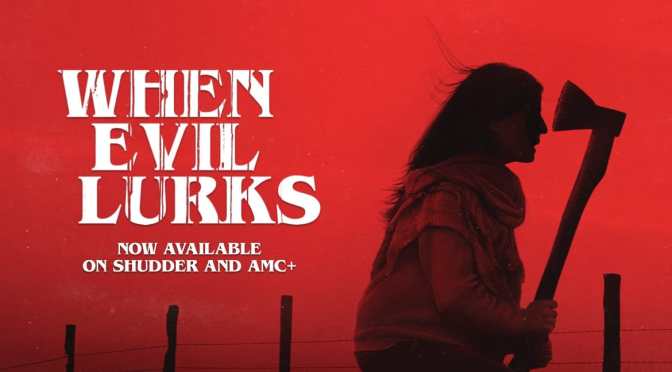
Where Evil Lurks (2023)
Where Evil Lurks (2023) skillfully employs well-known horror tropes—such as viral infection and monstrous transformations of humans—to deliver a fresh and intense experience. The film taps into the fear of contagion, using the idea of a mysterious, spreading evil that corrupts and distorts its victims. This viral-like menace is combined with disturbing body horror, as infected humans gradually turn into something grotesque and monstrous, making the familiar threat feel visceral and terrifying. The gradual, creeping transformation of people into monstrous figures is done with chilling precision, playing on the fear of losing control of one’s body and mind. By grounding these tropes in a strong narrative and unsettling atmosphere, the film elevates the horror elements, using them to amplify its emotional and psychological impact. Mark: 8.5 out of 11


 The Cinema Fix presents