
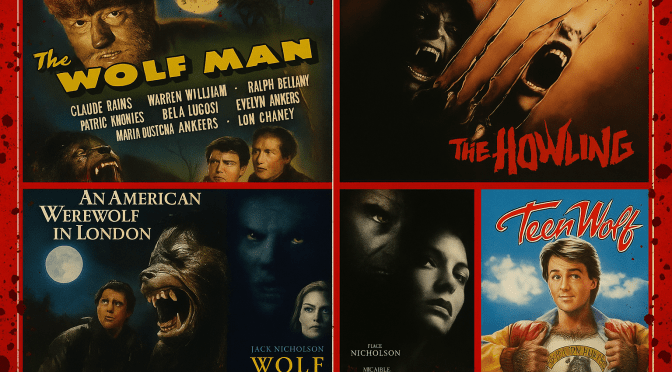
Halloween Review Special: Werewolf Films – Part #1
Happy Halloween! As loyal readers of this blog will know I am a massive horror film fan. Therefore I have focused August’s viewing on the Werewolf sub-genre and present some short reviews of some of my favourites and some not so good. As usual all marked out of 11!
Werewolf films have long captivated both filmmakers and audiences because they tap into primal fears and psychological complexities that transcend genre. At their core, these stories explore the theme of transformation—both physical and psychological—which resonates deeply with viewers. The metamorphosis from human to beast is not just a spectacle of horror; it’s a metaphor for the loss of control, the unleashing of suppressed desires, and the tension between civilization and instinct. This duality offers rich narrative terrain for directors and screenwriters to explore identity, morality, and the boundaries of human nature.
Psychologically, the werewolf embodies the Freudian concept of the id—the raw, instinctual part of the psyche driven by aggression and desire. The human persona represents the ego, trying to mediate between the id and the constraints of society, or the superego. When the transformation occurs, the id overwhelms the ego, resulting in violent, animalistic behavior that defies social norms. This internal conflict is dramatized through the werewolf’s struggle to reconcile their human conscience with their monstrous impulses, making the character both terrifying and tragically relatable.
The tension between animal and human also reflects broader cultural anxieties. Werewolf films often surface during times of social upheaval, when questions about identity, repression, and conformity are especially potent. The creature’s split identity—man or woman by day, beast by night—mirrors the psychological fragmentation many experience in modern life. For filmmakers, this duality offers a visual and thematic playground: the grotesque transformation scenes, the haunting aftermath, and the moral ambiguity of the protagonist all contribute to a compelling cinematic experience. For audiences, the werewolf is not just a monster—it’s a mirror, reflecting the parts of ourselves we fear, repress, and sometimes secretly crave to unleash.
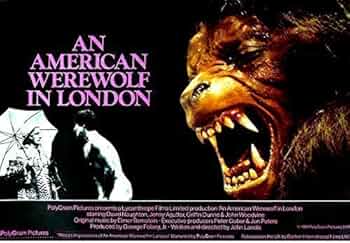
American Werewolf in London (1981)
One of the greatest lycanthrope films of all time. Full of iconic scenes, scares, gore, jokes, sex and an incredible lunar-inspired soundtrack. John Landis, in a directorial purple patch at the time, managed to combine horror, comedy, mystery and a moving love story to memorable impact. Rick Baker’s make-up effects literally transformed further the art and craft of practical special effects going forward. Mark: 10 out of 11
Bad Moon (1996)
Truly dreadful film with a script that fails on most levels, notably logic. The beast is not only the werewolf in the guise of Michael Paré’s Uncle Ted, but also toxic masculinity. Single mum, Mariel Hemingway and her son spend most of the film failing to guess who the big bad wolf is until it is nearly too late. Mark: 3 out of 11
The Beast Must Die (1974)
So bad it’s almost good! The British studio, Amicus Productions, wolf-dunnit, even has the audience take a “werewolf break” where they get 30-seconds to work out who the monster is. Calvin Lockhart, Michael Gambon, and Tom Chadbon et al chew up the scenery, washing it down with bloody terrible effects. The budget was so low they had to use German Shepherd’s with mock fur as the werewolves. Mark 6 out of 11.
The Company of Wolves (1984)
Neil Jordan’s artful adaptation of Angela Carter’s short stories is a richly atmospheric triumph of mood. Though the film’s episodic structure and bookending narrative can feel a touch uneven, Jordan’s poetic direction and Carter’s dreamlike sensibility merge into something intoxicatingly strange. An excellent ensemble of character actors brings the fable-like vignettes to life, with Angela Lansbury delivering a particularly commanding and memorable turn. Mark 8 out of 11
Cursed (2005)
Wes Craven’s 2005 film The Cursed is a case where the behind-the-scenes turmoil proves far more frightening than the movie itself. A troubled production that saw Craven effectively abandon ship midway through, and it bears the scars of hasty reshoots and studio meddling. What emerges is a patchy, uneven werewolf tale with flashes of potential buried beneath the chaos. Still, a young Jesse Eisenberg lends surprising depth to the material, offering a glimpse of quality amid the hairy dross. Mark: 4 out of 11
The Cursed (2021)
Sean Ellis’s The Cursed (2021) delivers a potent blend of gothic grandeur and visceral horror, transforming familiar werewolf and Gypsy tropes into something deeply atmospheric and unsettling. With its striking visuals, meticulous period detail, and haunting score, the film conjures an eerie, painterly world where the sins of the past literally come back to bite. Beneath the blood and fog lies a thoughtful allegory about greed and the gentry’s theft of land, lending the stylish horror a surprising moral weight and emotional resonance. Mark: 8 out of 11
The Curse of the Werewolf (1961)
Hammer’s The Curse of the Werewolf (1961), is anchored by a powerful, brooding performance from Oliver Reed in his breakout role. A staple of my childhood viewing, it’s a film that surprises with its thoughtful set-up—using its Spanish setting to critique class divisions while evoking real empathy for Reed’s tragic, cursed Wolfman. The gothic atmosphere and emotional depth elevate it above typical monster fare, and Warren Mitchell’s turn as a Spanish watchman adds an unexpected and delightful touch of humour amid the savage murders. Mark: 7.5 out of 11
Dog Soldiers (2002)
Neil Marshall’s Dog Soldiers (2002) is an absolute gem of British horror and easily one of my favourites of the genre. Set in the misty isolation of the Scottish Highlands, it combines gritty military camaraderie with ferocious werewolf mayhem to brilliant effect. Kevin McKidd, Sean Pertwee, and Liam Cunningham are all superb, grounding the film with sharp performances that balance humour, heart, and genuine terror. Funny, moving, bloody, and properly scary, Dog Soldiers is a masterclass in doing a lot with a little—its creature effects and atmosphere are astonishing given the budget. A true modern classic that respects the genre with intelligently terrifying monsters and the film still howls with lunar power. Mark: 10 out of 11
 The Cinema Fix presents