
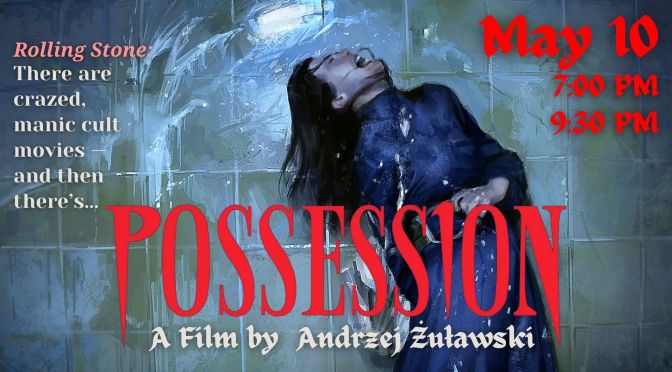
CULT FILM REVIEW: POSSESSION (1981)
Directed by Andrzej Żuławski
Screenplay by Andrzej Żuławski
Adaptation and dialogue by Andrzej Żuławski & Frederic Tute
Produced by Marie-Laure Reyre
Main cast: Isabelle Adjani, Sam Neill & Heinz Bennent
Cinematography by Bruno Nuytten
Edited by Marie-Sophi Dubus & Suzanne Lang-Willar
Music by Andrzej Korzyński
*** MAY CONTAIN SPOILERS ***
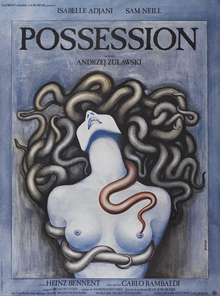
Andrzej Żuławski’s Possession (1981) is a film that doesn’t just defy genre—it annihilates the very idea of categorization. Part spy thriller, part domestic psychodrama, part Lovecraftian horror, and part apocalyptic hallucination, the film barrels forward with such manic intensity that it becomes less a movie and more an exorcism of the soul. It resists structural and emotional compartmentalizing at every turn, choosing instead to implode in a flurry of shrieks, flailing bodies, and gooey, pulsing monstrosities.
Set in a divided Berlin, the film ostensibly begins as a break-up story: Mark (Sam Neill), a shell-shocked spy, returns home to discover that his wife Anna (Isabelle Adjani, in a performance of pure, unrelenting hysteria) wants a divorce. But from there, the film spirals rapidly out of the realm of conventional melodrama and into something far more surreal and terrifying. Mark’s confusion curdles into obsession, Anna’s descent becomes biblical, and reality itself begins to warp and splinter.
Is it a Cold War spy film? Yes, but only in fragments, and those are quickly consumed by the escalating emotional chaos. Is it a break-up film? Certainly—but filtered through an expressionist nightmare where the grief and rage of separation erupt as literal body horror. Horror film? Undoubtedly, though the fear is less about monsters and more about the abyss that opens when love dies. And as the narrative crumbles into bloody symbolism and metaphysical dread, Possession (1981) begins to feel like an apocalyptic drama—one where the apocalypse is internal, intimate, and unstoppable.
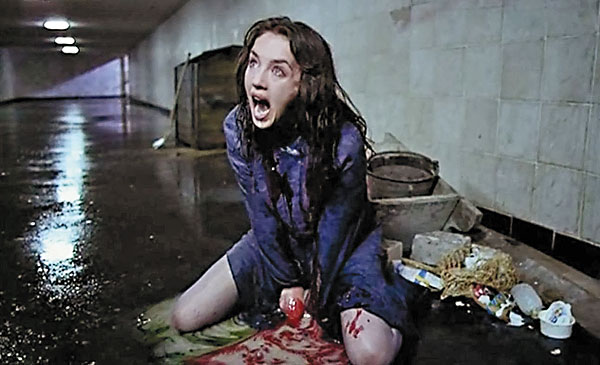
Żuławski directs like a man possessed, matching his characters’ unhinged energy with a restless camera and wild tonal shifts. The result is a fever dream of shrieking confrontations, doppelgängers, collapsing identities, and one of the most infamous subway scenes in cinema history. Possession (1981) is not an easy film—it’s messy, abrasive, and frequently overwhelming—but it’s precisely in its refusal to conform that its power lies. Indeed, much of the dialogue is obtuse non-sequitur in delivery as the actors deliver prose-like philosophical statements that have clearly influenced the writing of Yorgos Lanthimos and Efthymis Filippou.
To watch Possession (1981) is to witness cinema used as a weapon against coherence, comfort, and calm. I almost had a panic attack watching it. Neill, usually a calm on-screen presence looks as though he is lost in a nightmare he cannot escape. Heinz Bennent, as the lover, fully embraces Zulawski’s insane vision, while Adjani literally has a mental breakdown on screen. It is an unbelievably fearless embodiment of psychotic sexuality, arguably only matched in a commercial release by Eva Green’s Vanessa Ives from the majestic gothic TV series, Penny Dreadful (2014-2016). Ultimately, Possession (1981), is as much about the disintegration of self as it is about the end of a marriage, the failure of ideology, or the horror of being alive. One doesn’t simply watch Possession (1981)—one survives it.
 The Cinema Fix presents