Tag Archives: Australian film

CINEMA REVIEW: FURIOSA – A MAD MAX SAGA (2024)

CINEMA REVIEW: FURIOSA – A MAD MAX SAGA (2024)

Directed by George Miller

Written by George Miller & Nico Lathouris

Based on characters by George Miller & Byron Kennedy

Produced by: Doug Mitchell & George Miller

Main Cast: Anya Taylor-Joy, Chris Hemsworth, Tom Burke, Alyla Browne, Lachy Hulme, Angus Sampson, etc.

Cinematography by Simon Duggan

*** CONTAINS SPOILERS ***


George Miller’s fifth entry of the Mad Max series is Furiosa: A Mad Max Saga (2024). Given the meaning of the word ‘saga’ is defined as, “a long story of heroic achievement, especially a medieval prose narrative in Old Norse,” it’s an attempt by Miller to connect the Mad Max films to mythical storytelling and folk lore, yet paradoxically set such ye olde yarns in the future. Conversely, while being part of the post-apocalyptic sci-fi sub-genre, there is certainly more than a suggestion of marauding and pillaging Vikings within the freakish characters of the radioactive Aussie wasteland.

Of course, the hi-tech and vehicular monsters smashing up and down the ‘Fury Road’ render the action far from the medieval, replacing long boats for super-charged two, three and four-and-more-wheel souped-up demons driven by mutated future humans. The gigantic rock, bullet, fuel, and scrap metal designed bases of ‘The Citadel,’ ‘Bullet Farm’ and ‘Gas Town’ inhabited by these tattooed ravagers, while rough in exterior represent humanity’s industrial survival and base-building instincts par excellence. So much for the imperious nature of Miller’s world-building, what of the narrative?

If one is honest, the screenplays for all four of the previous Mad Max films are the exercises in economy, with hard-cut structures, granite-boiled dialogue often spat out via twisted one-liners, and poetically yelled slang-speak. Introduced as a maverick cop, but loving family man in Mad Max (1979), Max Rockatansky (Mel Gibson) is essentially a cops-versus-gangs-meets-revenge exploitation thriller. By the time gangs have killed his family and nuclear war has destroyed the world, Max has become the Road Warrior (1981), in what is one of the greatest action films and sequels of all time. However well regarded the mayhem of Fury Road (2015), and it is incredible, The Road Warrior remains one of my favourite films ever.


Beyond Thunderdome (1985) was the slicker third film, and while the action was terrific, there was too much money and sheen in there, reminiscent of what they did with the glamoured cast in the last season of Game of Thrones. Plus, the script was broken in half, with an amazing first section set in Bartertown with Tina and crew, before giving way to a more philosophical, but less exciting kids-in-a-commune driven story. In comparison Furiosa: A Mad Max Saga (2024) is certainly the most ambitious of all the narratives. It is set over several years, from the moment Furiosa (Alya Browne) witnesses her mother killed by Dementus (Chris Hemsworth) and his nasty marauders, to her rites of passage ascent toward gaining a vicious revenge.

Keeping the literary theme, the film is set over five chapters replete with headings to let the audience know what is about to occur. Easily the most impressive is – Chapter III – The Stowaway – where Furiosa comes of age in action during a brutal and mind-blowing action set-piece as the Octoboss, goes rogue and launches an air assault on the “War Rig” as it races along the ‘Fury Road.’ Here Furiosa also bonds with Praetorian Jack (Tom Burke) and the two become partners, with George Miller throwing in an under-cooked romance amidst the petrol, dust, blood and fire.

It is great that Miller and his co-writer Nico Lathouris have strived for more emotional depth and epic storytelling within Furiosa: A Mad Max Saga (2024). However, I felt that at times the rapid pacing and ramped-up action crushed any feelings I may have had about the characters of Furiosa and Jack. Plus, the film suffers a serious case of “prequelitis” where one is joining the dots of Furiosa’s backstory to connect with Charlize Theron’s characterisation in Fury Road. Yes, of course, we find out how she had her arm torn from her body, her drives and motivations, plus how she became a kick-ass future road warrior.  

Taylor-Joy is striking in the all-action role of Furiosa, but a little anorexic on screen to really dominate. Gibson and Hardy are a hard act to follow! Tom Burke stands out amidst the support ensemble, while Chris Hemsworth treats us to another revved-up messianic lunatic. With the character of Mad Max on hiatus, the true stars of this show are Miller and his impressive production, camera, editing, driving, effects and stunt teams. They have once again produced cinematic carnage of the highest order.

Mark: 8.5 out of 11


“CINEMA” REVIEW: THE NIGHTINGALE (2019)

“CINEMA” REVIEW: THE NIGHTINGALE (2019)

Directed by: Jennifer Kent

Produced by: Kristina Ceyton, Steve Hutensky, Jennifer Kent, Bruna Papandrea

Written by: Jennifer Kent

Cast: Aisling Franciosi, Sam Claflin, Baykali Ganambarr, Damon Herriman, Harry Greenwood, Ewen Leslie, Charlie Shotwell, Michael Sheasby, etc.

Music by: Jed Kurzel

Cinematography: Radek Ladczuk

***MAY CONTAIN SPOILERS***


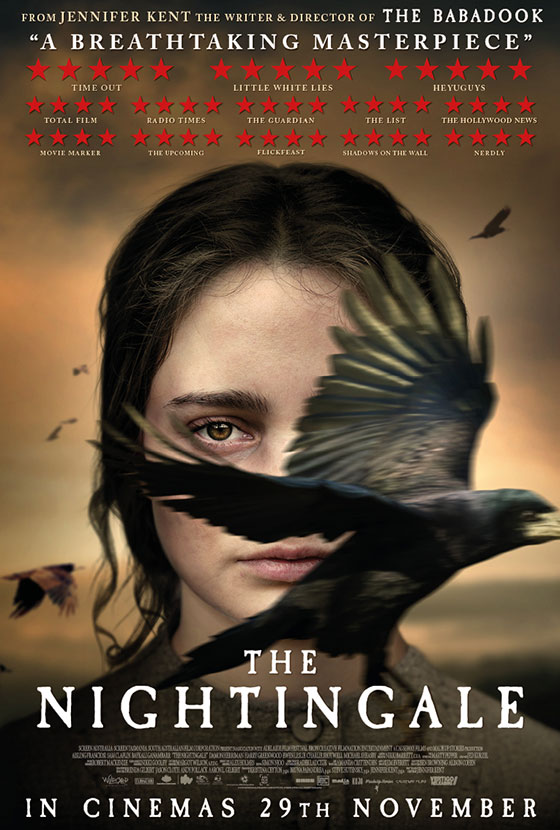
THE NIGHTINGALE (2019) is a brutal film about rape and murder. It’s about the rape of an individual. The rape of a nation. The murders of youth, race, nature, humanity and life itself. It is an extremely powerful and impactful viewing experience, but not for those of a faint heart or sensitive disposition. When released it caused much controversy with some audience members walking out during festival screenings. This is no doubt due to several scenes displaying sickening moments of violence against men, women and children. However, the director Jennifer Kent, has not written and helmed a mere exploitation revenge film here. Instead, she has fashioned a beautiful and ugly tragedy, which prevails damning indictment against masculine savagery, colonialism and British rule.

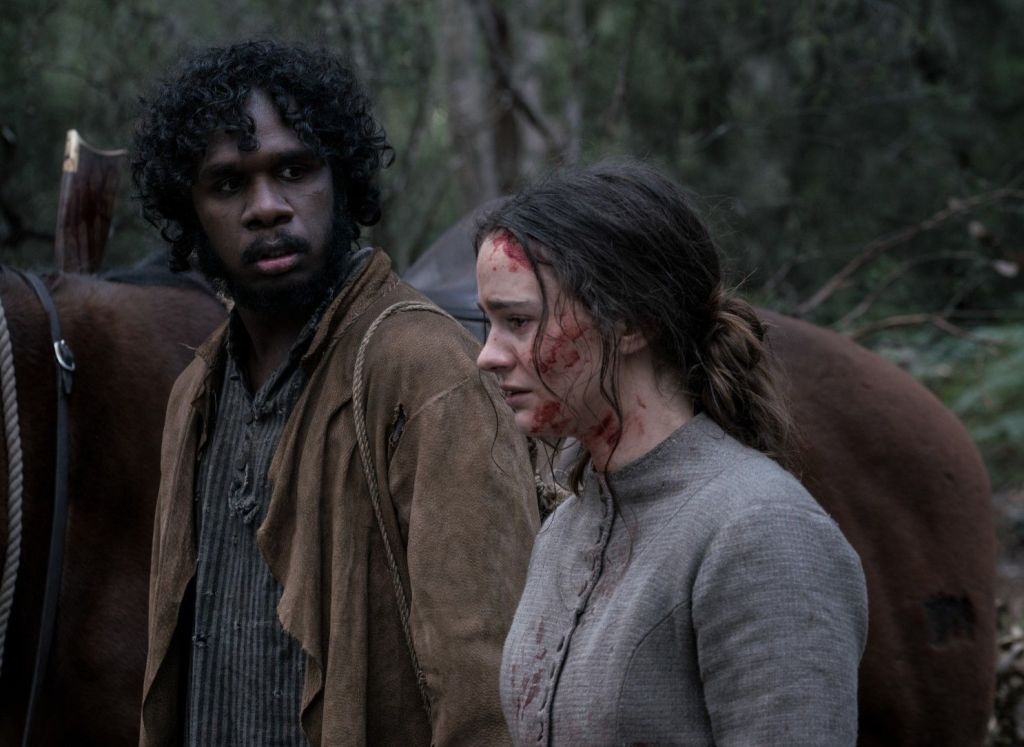
Set in 1825 in the penal colony of Van Diemen’s Land (presently Tasmania), THE NIGHTINGALE (2019), follows a young female convict seeking revenge for an unspeakable act of violence committed against her family. Clare Carroll, nicknamed “Nightingale” due to her lovely singing voice, is a young mother and wife looking to be given her freedom. It is held by Sam Claflin’s abusive British officer, Hawkins. Rather than free her he decides to thrust himself upon her sexually. Yet, when she rebuffs his drunken and lurid behaviour, he goes mob-handed to take her. Then when her husband intervenes, Hawkins and his soldiers act without honour or courage, leaving a family wrecked in their wake.


Hawkins and his men venture through the bush to Launceston the next day, to gain a promotion from the top brass he believes he deserves. Claire rallies and pursues them with bloody revenge in mind. She is assisted in her search by Aboriginal guide, “Billy” Mangana (Baykali Ganambarr). Billy is initially reluctant to chase British soldiers. Not surprising as the British have ravaged his people, land and culture, leaving the indigenous people outcasts in their own country. While Claire and Billy initially conflict they soon realise they have a common foe. Thus, while revenge supplies the bones for the narrative, the screenplay fleshes out their chase with intriguing cultural clashes and reconciliation. Indeed, the unlikely pair will eventually come to respect each other’s differences and find common ground over the course of the story.

Having received much critical acclaim with the low-budget horror film THE BABADOOK (2014), Jennifer Kent has moved from inner demonic possession to a more epic and external approach to horror. Because amidst the bucolic wonder of the Australian wilderness, the British brought death and chaos to the area. While one understands the need to have a place to house its prisoners (the barbarous treatment of the working classes is a whole different story), the rapacious desolation of the indigenous culture is a vital message within the film. Claire Carroll and Billy Mangana are symbols of a lost and damaged generation. They are emblems of people who deserve justice and reparation. Moreover, the message remains valid today, especially with the rise of the alternative-right and the continued sexual abuse faced by women everyday. Lastly, with a moving and tough leading portrayal by Aisling Franciosi, Baykali Ganambarr providing a spiritual heart, and Sam Claflin giving a fearlessly repugnant representation of British aggression, THE NIGHTINGALE (2019), tells a horrific, disturbing, but righteously relevant tale.

Mark: 9 out of 11


FILMS THAT GOT AWAY #11 – HOUNDS OF LOVE (2016)

FILMS THAT GOT AWAY #11 – HOUNDS OF LOVE (2016)

Written and Directed by: Ben Young

Produced by: Melissa Kelly

Cast: Emma Booth, Ashleigh Cummings, Stephen Curry, Harris Gilbertson, Susie Porter, Damian De Montemas, etc.

Music by: Dan Luscombe

Cinematography: Michael McDermott

Edited by: Merlin Eden

*** MAY CONTAIN SPOILERS ***


Where narratives relating to rape, abduction, and serial killers are concerned, a filmmaker can tread a fine line between lurid exploitation and absorbing suspense and drama. Low budget B-movies are replete with stories of death, sexual assault and crazed murderers. Some overstep the mark becoming notorious beacons of bad taste. Many horror fans love the exploitational nature of “video nasties”, seeking out films like: Cannibal Holocaust (1980), A Serbian Film (2010), I Spit on Your Grave (1978), Driller Killer (1979), Texas Chainsaw Massacre (1974) and The Last House on the Left (1972), to name but a few. The latter two films directed by horror maestros Tobe Hooper and Wes Craven are arguably exceptional visions of terror which transcend their horror genre subject matter. Similarly, Ben Young’s The Hounds of Love (2016), in my view, represents the evil of human beings without exploiting the actors or audience.

While it may not be as gory on-screen as the films mentioned above, The Hounds of Love (2016), does offer a shattering and sickening set of images and sounds within these savage set of events. Set in Perth, Australia during 1987, this is a disturbing and all too realistic horror story. It opens with a majestic set of slow-motion shots from the point-of-view of suburban couple, Evelyn White (Emma Booth) and John White (Stephen Curry). They sit in their vehicle as the sun hazes and watch teenage girls playing netball in the school yard. They are stalking their next victim; patiently waiting to lure another unsuspecting soul into their nefariously sadistic crimes. Stylistically impressive, but at the same time incredibly unnerving, Ben Young skilfully establishes the canvas on which he will paint further horrors.


Having fed their violent and sexual lust with the opening victim, we are then introduced to their next. Vicki Moloney (Ashleigh Cummings) is a rebellious teenager who is smarting from her parents recent split. Acting with both charisma and defiance, Vicki is slightly annoying, yet empathetic. Obviously, she does not deserve the ordeal she is about to experience at the hands of the Whites. The sequence which finds them cajoling her into their clutches is so tense and had me screaming at the screen, “No!!!! Get out!!!” What follows then, as Vicki becomes a prisoner, is a series of heart-pounding and distressing scenes which raise the stakes to unbearable tension. Ashleigh Cummings performance is absolutely compelling as “final girl”, Vicki. She takes a potentially one-dimensional casualty and imbues her with fight, guile, pain, distress, intelligence and determination. No surprise therefore that she won a Best acting debut award at the Venice Film Festival.

Cummings performance is not the only one which impacts the story greatly. Emma Booth’s complex portrayal of Evelyn is quite startling. This is a character who is permanently on-the-edge and desperate to please her evil partner, John. Systematically controlled and bullied, there is no excuse for Evelyn’s part in the kidnappings and torture of these young girls. But, it is clear to see that toxic masculinity has, over the years contributed to her mental and emotional collapse. Booth’s persistently fraught acting is all bag-of-bones and shredded nerves. It is via Evelyn’s imploding emotional state that Vicki is able to attempt to turn her against John’s venal influence.

Ultimately, one could say this is an exploitation film in terms of theme and story. However, it feels different than the many B-movie serial killer films I have seen. I felt like I was in the hands of a filmmaker who was determined to explore the nature of sadistic relationships in a risky, but intelligent manner. The acting, cinematography, direction and haunting soundtrack all contribute to make this a highly effective psychological thriller. Of course, there are many which may feel differently and that the film has its cake and eats it in term of violence and sexual perversion. Yet, we never actually see much of the cake. Unlike many of the films I mention in the opening paragraph, the audience only see the build-up and aftermath of the crimes. Indeed, what we don’t see on screen is more frightening than what we do. That, overall, is what sets The Hounds of Love (2016) apart from many other films dealing with these unpalatable themes and subjects.

Mark: 9 out of 11


JUDY AND PUNCH (2019) – CINEMA REVIEW

JUDY AND PUNCH (2019) – CINEMA REVIEW

Written and Directed by Mirrah Foulkes

Produced by: Michele Bennett, nash Edgerton, Danny Gabai

Cast: Mia Wasikowska, Damon Herriman, Benedict Hardie, Gillian Jones, Virginia Gay etc.

**MAY CONTAIN SPOILERS**


If you’re not aware of the good, old-fashioned Punch and Judy puppet show, then it was basically a seaside attraction that has its origins in 16th century Italian commedia dell’arte. Over the decades it thrived and would move from marionette stylings to a mobile glove puppet show. Punch would batter various characters including his wife, Judy, a crocodile, a police officer, a dog, a blind man and the Devil. He would be a very bad parent; often drunk and violent in charge of his own baby. Incredibly, this rather unsavoury character would become very popular with children, appearing at carnivals, fairs and coastal shows.

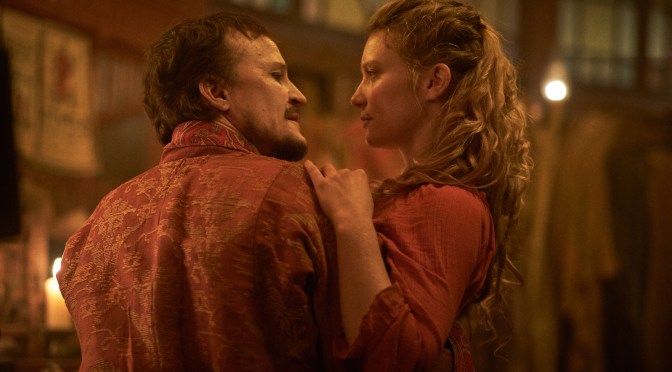
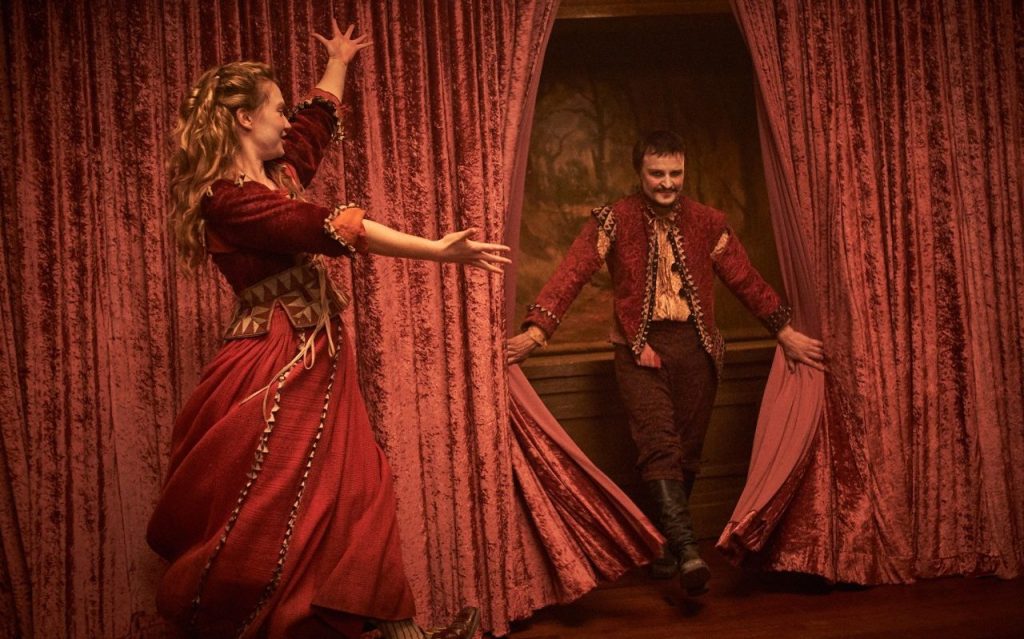
With Disney cornering the market adapting myths, fairy tales and Theme Park rides over the years, I’m surprised they did not have a go at Punch and Judy. How they would reconcile this brightly coloured, but despicable character would have been fascinating. Yet, it is Australian filmmaker Mirrah Foulkes, who has written and directed this arthouse drama starring Mia Wasikowska as the harassed Judy, and Damon Herriman as the drunken puppeteer. Set during the Dark Ages in the town of Seaside, the plot follows the traditional narrative of the original puppet show. Except, this time Judy is very pissed off and about to go medieval on Punch’s arse!


Part revenge thriller, part-black comedy and part mythical origins drama, Judy and Punch (2019) is full of fantastic and gritty detail. The reconstruction of the theatrical puppet shows are brilliant, and evocation of the era is very realistic. The film performs well as a savage denouncement of toxic masculinity in the #MeToo era. But, despite the excellent performances from Wasikowska and Herriman, the characters were a bit too one-dimensional to really grip me. Yet, Wasikowska is especially memorable as Judy, eliciting an inner strength to overcome the cruelty of her husband and the town she lives in.

Lastly, the story also felt a little flat and lacked surprise in places, but that may be because the trailer gave a lot of the narrative away. It’s also because I am very familiar with the original Punch and Judy show, as I watched loads of them as a kid. Having said that, Mirrah Foulkes has delivered a stylish film curiosity which is destined for cult status. Moreover, she deserves much praise for attempting to give a children’s puppet show story depth. The visual iconography is powerful, as is the exploration of themes relating to domestic violence, child neglect, witch hunts; and the exclusion of the outsider or other by petty townsfolk mentality.

Mark: 8 out of 11