Tag Archives: Black Panthers

Cinema Review: One Battle After Another (2025) – an exhilarating revolutionary romp that lacks the depth of those films it attempts to emulate!

Cinema Review: One Battle After Another (2025)

Directed by Paul Thomas Anderson

Written by Paul Thomas Anderson

Inspired by Vineland by Thomas Pynchon

Produced by Adam Somner, Sara Murphy, Paul Thomas Anderson

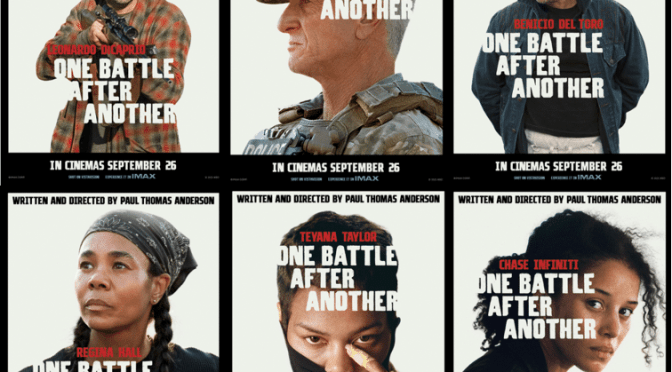
Main Cast: Leonardo DiCaprio, Sean Penn, Benicio del Toro, Regina Hall, Teyana Taylor, Chase Infiniti, Wood Harris, Tony Goldwyn, Kevin Tighe, Shayna McHayle, etc.

Cinematography by Michael Bauman

Music by Jonny Greenwood

*** CONTAINS SPOILERS ***
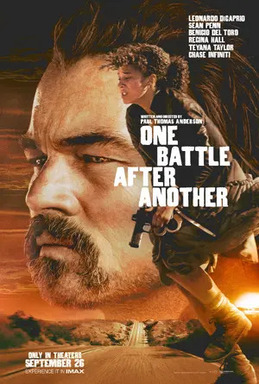


It’s a brave filmmaker that quotes one of the greatest revolutionary films of all time during it’s runtime, namely Battle of Algiers (1966). But Paul Thomas Anderson’s formidable cinematic career more than earns him the right to quote a film as towering as The Battle of Algiers (1966) in his latest release One Battle After Another (2025).

Across works like Boogie Nights (1997) and Magnolia (1999), he has demonstrated a mastery of ensemble storytelling and emotional crescendo; with Punch-Drunk Love (2002) he revealed a gift for intimate, offbeat romance; and in There Will Be Blood (2007) and Phantom Thread (2017) he proved himself one of the most rigorous visual stylists and psychological dramatists of his generation. Such a body of work grants him the authority to converse with cinema’s political masterpieces, even if his more recent Licorice Pizza (2021) felt comparatively diffuse and lacking in urgency. His filmography, at its strongest, stands as evidence of a filmmaker deeply attuned to the legacies and possibilities of the medium.

Having said that, Gillo Pontecorvo’s The Battle of Algiers (1966) wields revolutionary power through its raw immediacy, embedding viewers in the lived experience of anti-colonial struggle with a documentary-like realism that blurs the line between record and re-creation. By contrast, Anderson’s One Battle After Another (2025) approaches revolution less as lived history than as a cinematic genre to be emulated, drawing on the tropes and textures of upheaval without grounding itself in the direct urgency of political struggle. Where Pontecorvo conjures revolution as something happening before our eyes, Anderson refracts it through the prism of style, making revolution as much a matter of aesthetic construction as lived reality. It is during its lengthy running time extremely entertaining though.
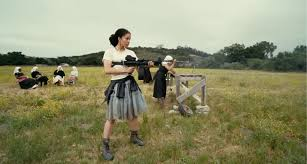


The opening hour is fast-paced and crams in a lot of action and personality. It establishes a fine ensemble cast, strong characters, striking palette and compelling themes which bring to life Anderson’s sharply written and fantastically filmed screenplay. The narrative focuses on “Ghetto” Pat Calhoun (Leonardo DiCaprio) and Perfidia Beverly Hills (Teyana Taylor), lovers and leaders of the far-left French 75, who storm detention centres, bomb banks, and sabotage power grids, while their soon-to-become nemesis—Officer Steven Lockjaw (Sean Penn)—becomes erotically obsessed with Perfidia, sparing her life when he catches her planting a bomb in exchange for a sexually masochistic tryst. Thus, begins a warped love/hate triangle and rivalry which provides the backbone for the action.

The second hour pivots sharply after establishing Perfidia as a commanding revolutionary presence. The focus pulls to her daughter, Willa (Chase Infiniti), some sixteen years later, now living off the grid and avoiding all but the most basic technology out of fear of surveillance. ‘Pothead’ Pat, has withered into a paranoid and barely functioning stoner-alcoholic, leaving Willa to emerge as the steadier, more mentally resilient figure in their fractured household. The film undeniably suffers from the absence of Perfidia’s charisma and drive, yet it regains momentum when the now Colonel Lockjaw revives his obsessive pursuit, setting the stage for a tense reconfiguration of the story’s revolutionary stakes.

The acting in One Battle After Another (2025) crackles with intensity, led by standout turns from Taylor, Penn, and crafty scene-stealer, Benicio Del Toro. Further, Anderson’s casting team find some amazing supporting military personnel who deliver with uncanny authenticity. Sean Penn’s performance as a swaggering officer radiates brute masculinity—his very walk and gait dripping with testosterone and worthy of awards consideration on their own. Leonardo DiCaprio, meanwhile, folds another eccentric, messy, and deeply contradictory figure into his already remarkable CV, a creation that resonates with the layered complexity of his recent work in Scorsese’s Killers of the Flower Moon (2023). He is actually far more hilarious here, as demonstrated in his desperate attempts to overcome the revolutionary helpline he calls for instructions.

Overall, One Battle After Another (2025) works best as a searing, darkly funny revolutionary black comedy, blending sexual, military, conspiracy, and social politics into a heady mix of action, crime, road movie, and romance tropes. The result is a wildly entertaining visual and musical feast, even if it stops short of delivering true socio-political depth. While the film’s closing stretch leans into deliberate plot ambiguities that complicate its resolution, Anderson ultimately serves up a combative cinematic blast—stylish, sharp, and exhilarating—if just shy of a bona fide classic.
Mark: 8.5 out of 11


NETFLIX FILM REVIEW: THE TRIAL OF THE CHICAGO SEVEN (2020)

NETFLIX FILM REVIEW: THE TRIAL OF THE CHICAGO SEVEN (2020)

Directed by: Aaron Sorkin

Produced by: Stuart M. Besser, Matt Jackson, Marc Platt, Tyler Thompson

Written by: Aaron Sorkin

Cast: Yahya Abdul-Mateen II, Sacha Baron Cohen, Daniel Flaherty, Joseph Gordon-Levitt, Michael Keaton, Frank Langella, John Carroll Lynch, Eddie Redmayne, Noah Robbins, Mark Rylance, Alex Sharp, Jeremy Strong, etc.

Music by: Daniel Pemberton

Cinematography: Phedon Papamichael

***CONTAINS HISTORICAL SPOILERS***


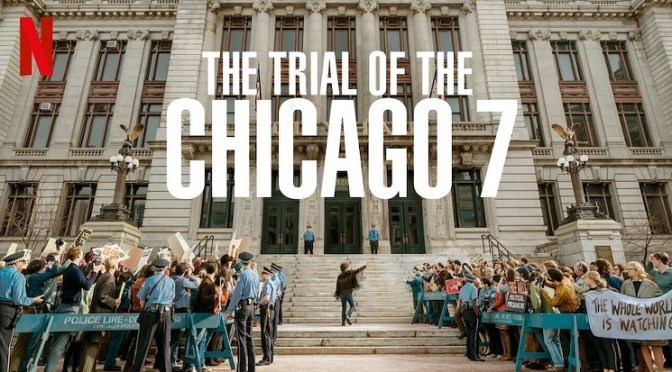
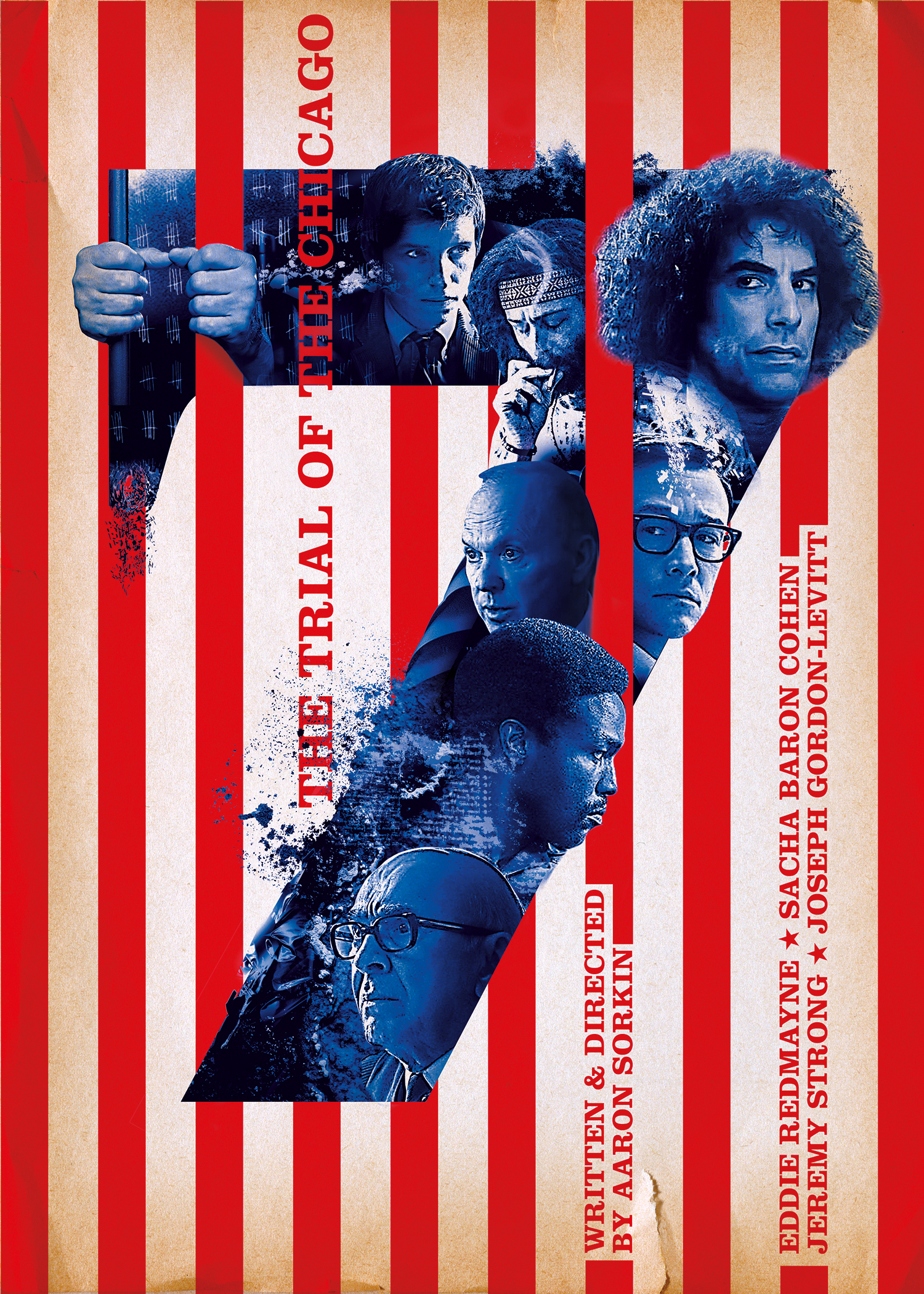
In 2006, screenwriter Aaron Sorkin met Steven Spielberg met to discuss a film project which would focus on the 1968 riots at the Democratic National Convention, which occurred in Chicago. After the meeting Sorkin has admitted he had no knowledge of said riots or the infamous trial which took place afterwards. Sorkin would remedy this with much research and complete his screenplay in 2007. Having been in development for some time eventually Sorkin himself has directed, The Trial of the Chicago 7 (2020). Part-historical drama, part courtroom-thriller and part political satire, the film illustrates skilfully the shocking attempt by the U.S. Government to convict, initially eight, then latterly seven individuals believed to have conspired to cross state lines with the desire to incite violence and mayhem in Chicago.

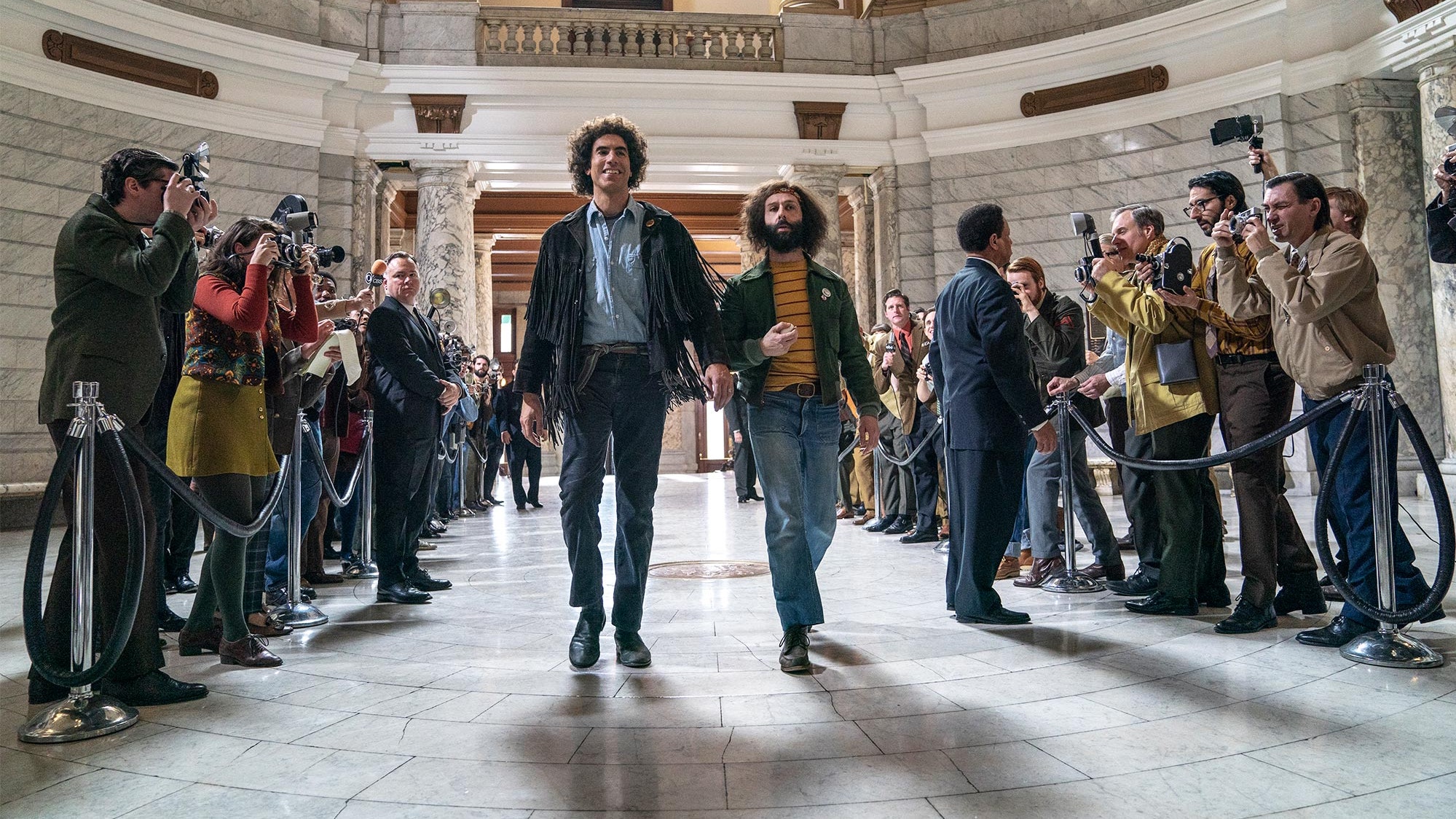
I, like Sorkin back in 2006, knew nothing of this huge legal and political event from the late 1960’s. But, The Trial of the Chicago 7 (2020), while obviously taking narrative liberties with the temporal order and specificity of certain events, provides an entertaining and insightful flavour of the before, during and aftermath of the incendiary trial. Opening stylishly and rapidly, Sorkin establishes the major characters who will be charged with causing violence on the streets of Chicago. Notable amongst these are civil rights and counter-culture figures such as: Abbie Hoffman ( Sacha Baron Cohen), Jerry Rubin (Jeremy Strong), Tom Hayden (Eddie Redmayne), Bobby Seale (Yahya Abdul-Mateen II), David Dellinger (John Carroll Lynch et al. Swiftly, Sorkin then takes us into the trial itself, which took place in 1969, and structures the narrative around flashbacks from witnesses on the stand to events leading up to conflict between police and demonstrators.


Given the gravity of the socio-political importance of this trial, I was surprised how much I was laughing during, The Trial of the Chicago 7 (2020). The humour, and later pathos, comes from both the absurdity of certain events and behaviour of the characters on trial. Indeed, in a trial which lasted an incredible five months, there was clearly an abundance of rich material for Sorkin to mine. Thus, we get a greatest “hits” summation of this politically driven farce, explained as being influenced by, U.S. Attorney General John Mitchell’s ire, at being snubbed by his predecessor. Moreover, the trial itself escalates into further absurdity as Judge Hoffman (Frank Langella) takes exception with the majority of the defendants and their lawyers, bringing most of them up on charges of contempt, notably the attention-seeking Hoffman and Rubin. It was not surprising as there were often mocking and zinging one-liners from them and even more vociferous protests from Bobby Seale. Nonetheless, that does not excuse what Judge Hoffman did to Bobby Seale in court. That remains a low in the history of the American justice system.

As The Trial of the Chicago 7 (2020) progresses, the comedic elements transition to a more serious tone and many heartfelt speches are given. The demonstrations and violent scenes from the riots bleed through to the fore also. My understanding is that in the United States there is such a thing as freedom of speech and the demonstrators were attempting to have their say on the war in Vietnam. They wanted their voices heard against what they considered to be an unjust war. Of course, I cannot possibly know what occurred that day as I was not there, however, given the U.S. Government’s fear of opposing views, as demonstrated by their handling of race issues and the McCarthy-led investigation into the Communist threat, one must surmise they were scared of anyone protesting a different perspective from theirs. From such fear comes a desire to wield power and suppress such voices; something which the Chicago Police Department appeared to do during the fateful Democratic National Convention.

Aaron Sorkin and his incredibly adept ensemble cast deserve much praise for taking such a complex case and distilling it into such an enlightening work of cinema. Sacha Baron Cohen and Jeremy Strong stand out as a fine double act, while Mark Rylance attends his usual intelligence and class to the role of defence lawyer, William Kunstler. In fact, all the cast are exceptional in bringing to life Sorkin’s witty and storming screenplay. Ultimately, one could argue though that The Trial of the Chicago 7 (2020), is simplistic fodder, designed to spoon-feed the liberal left and preach to the millennial choir. In all honesty, it is that and arguably full of caricatures and one-dimensional storytelling. However, given the United States, and the world, have suffered recent and extreme political dumbing down from one of the worst U.S. Presidents of all time, Sorkin’s one-dimension is still more nuanced and deep than those in power could ever be.

Mark: 9 out of 11