Tag Archives: assassinations

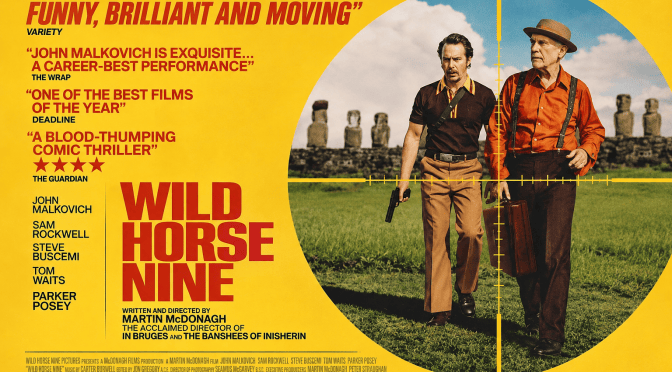
Cinema Review: Wild Horse Nine (2026) | John Malkovich and Sam Rockwell shine in Martin McDonagh’s hilarious but uneven existential political thriller.

Cinema Review: Wild Horse Nine (2026)

Directed by Martin McDonagh

Written by Martin McDonagh

Produced by: Graham Broadbent, Pete Czernin, Martin McDonagh & Anita Overland

Main Cast: John Malkovich, Sam Rockwell, Steve Buscemi, Tom Waits & Parker Posey

Cinematography by Ben Davis

Music by Carter Burwell

*** MAY CONTAIN SPOILERS ***
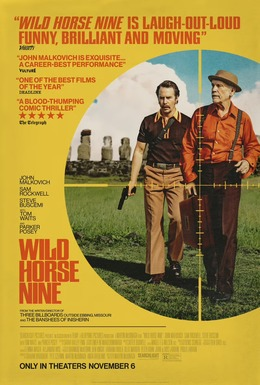


Martin McDonagh returns with Wild Horse Nine (2026), an ambitious, frequently hilarious but ultimately uneven concoction of conspiracy thriller, existential drama, political satire and pitch-black comedy. Set in 1973, against the backdrop of political upheaval in Chile, the film follows two CIA operatives, portrayed by John Malkovich and Sam Rockwell, who are dispatched to the remote Easter Island on a mysterious assignment, where their troubled pasts, professional loyalties and increasingly fragile grip on reality begin to unravel.

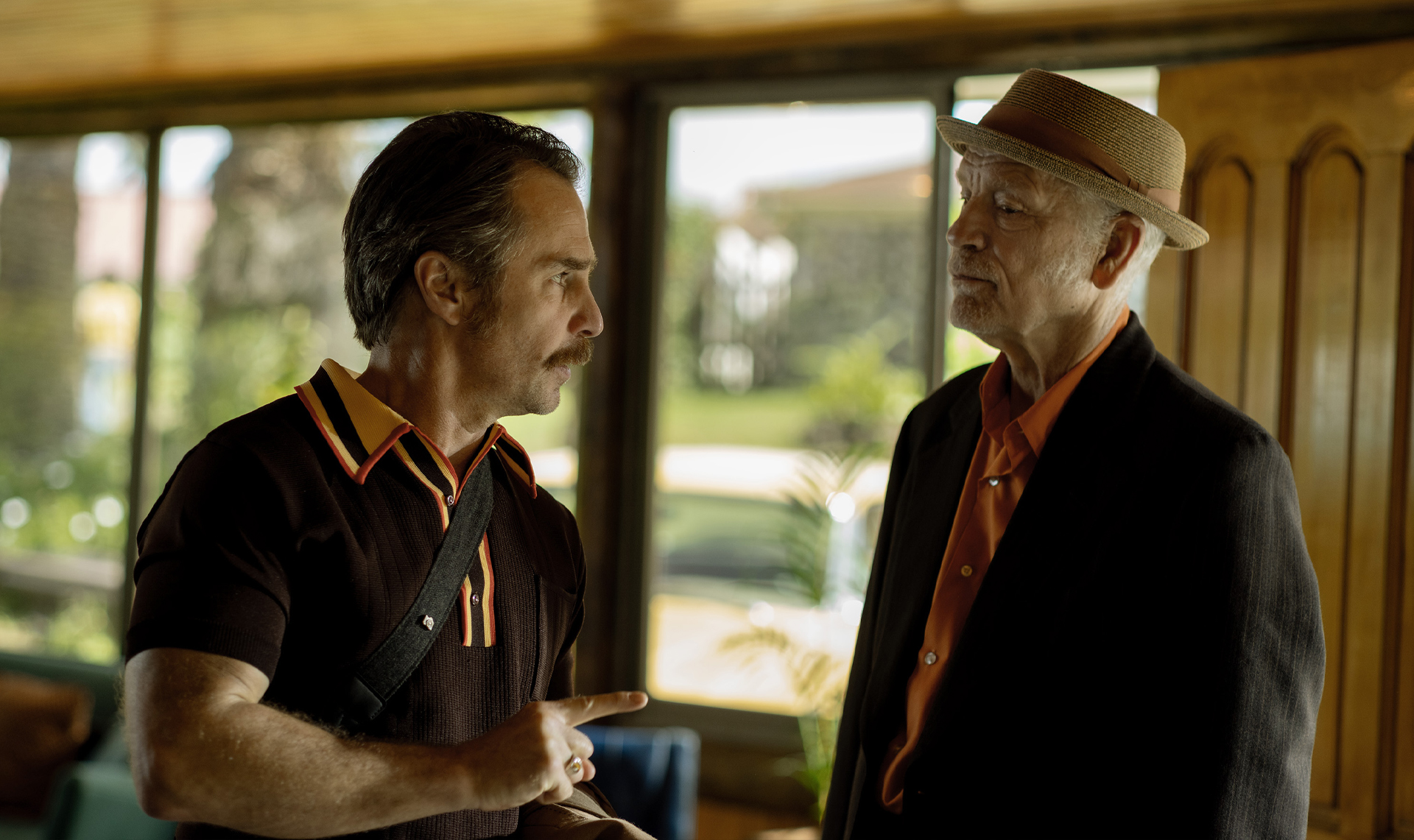
John Malkovich and Sam Rockwell are quite wonderful as the two bickering agents, delivering McDonagh’s acerbic dialogue with impeccable comic timing while revealing the regret, guilt and emotional damage lurking beneath their cynical exteriors. Their verbal sparring is frequently the film’s greatest pleasure, with both actors effortlessly navigating the absurdity and melancholy that have become hallmarks of McDonagh’s work. Malkovich, in particular, is a delight, while Rockwell once again demonstrates why he is such a natural interpreter of the filmmaker’s distinctive dialogue.

The other undeniable star is Easter Island itself. Its extraordinary landscapes, dramatic coastline and fascinating wildlife provide a magnificent setting, offering a striking contrast between the natural world’s timeless beauty and the petty, destructive machinations of government bureaucracy. There is something wonderfully absurd about watching two morally compromised representatives of American imperialism squabble over their assignments against a landscape that makes their entire existence seem utterly insignificant.

And therein lies Wild Horse Nine‘s most interesting thematic territory. McDonagh explores existentialism, regret, addiction, conspiracy theories and the absurdity of human existence, asking whether men who have spent their lives carrying out morally questionable orders can ever escape the consequences of their actions. The contrast between nature’s indifference and mankind’s obsession with power and control is particularly compelling. Unfortunately, these fascinating ingredients never quite combine into a satisfying whole. The film continually shifts between conspiracy thriller, political commentary, existential meditation and knockabout comedy without finding a convincing balance. Individual scenes are frequently brilliant, the dialogue often hilarious and unexpectedly poignant, but the overall narrative feels less assured than McDonagh’s finest work.


The political backdrop is particularly disappointing. The 1973 Chilean coup, with all its historical significance and American involvement, should provide considerable dramatic and moral weight. Instead, despite some occasional acerbic commentary, it often feels like window dressing. Moreover, Parker Posey’s character also feels frustratingly underdeveloped, particularly given the actress’s considerable talents. There is also the rather fundamental question of why we should care about these two men? However entertaining Malkovich and Rockwell may be, their characters are ultimately assassins serving a corrupt American government.

McDonagh has always demonstrated an extraordinary ability to find humanity in deeply flawed individuals, but here the emotional connection is considerably weaker. These anti-heroes are simply not as empathetic, tragic or compelling as the characters inhabiting In Bruges (2008) or The Banshees of Inisherin (2022). Both those films, with their almost Pinteresque exchanges and echoes of The Dumb Waiter, transformed seemingly inconsequential conversations into profound explorations of guilt, friendship, mortality and the human condition. I consider The Banshees of Inisherin (2022) a masterpiece, a beautifully constructed tragicomedy in which every absurd exchange seemed to carry emotional and philosophical significance. Wild Horse Nine (2026), by comparison, feels closer to Seven Psychopaths (2012), although thankfully more grounded in a recognisable reality than that film’s self-conscious exercise in meta-screenwriting.

There are also several plot holes, some awkward tonal transitions and a frustrating reliance on the murky interior cinematography that seems increasingly fashionable in contemporary filmmaking. The breath-taking day-time exterior photography makes the occasionally impenetrable darkness of the interior scenes all the more irritating. Yet, for all these reservations, there is still an enormous amount to enjoy as McDonagh remains one of cinema’s most distinctive voices.

Ultimately, Wild Horse Nine (2026) is a film of wonderful moments rather than a completely satisfying whole. Its philosophical ambitions, political intrigue and absurdist humour occasionally collide rather than complement one another, but even when McDonagh misses the target, the results remain more interesting than most filmmakers’ direct hits. A lesser Martin McDonagh film, perhaps, but still better than many other filmmakers’ finest achievements.
Mark: 8 out 11


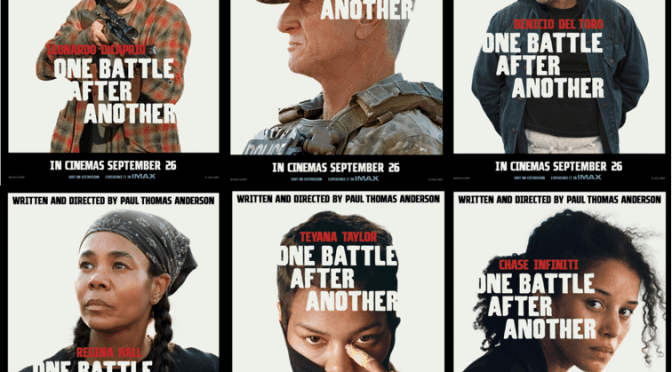
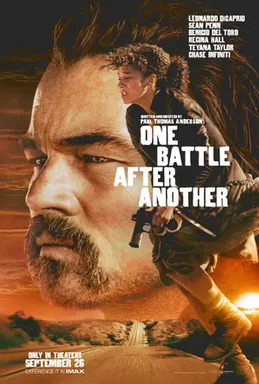
Cinema Review: One Battle After Another (2025) – an exhilarating revolutionary romp that lacks the depth of those films it attempts to emulate!

Cinema Review: One Battle After Another (2025)

Directed by Paul Thomas Anderson

Written by Paul Thomas Anderson

Inspired by Vineland by Thomas Pynchon

Produced by Adam Somner, Sara Murphy, Paul Thomas Anderson

Main Cast: Leonardo DiCaprio, Sean Penn, Benicio del Toro, Regina Hall, Teyana Taylor, Chase Infiniti, Wood Harris, Tony Goldwyn, Kevin Tighe, Shayna McHayle, etc.

Cinematography by Michael Bauman

Music by Jonny Greenwood

*** CONTAINS SPOILERS ***


It’s a brave filmmaker that quotes one of the greatest revolutionary films of all time during it’s runtime, namely Battle of Algiers (1966). But Paul Thomas Anderson’s formidable cinematic career more than earns him the right to quote a film as towering as The Battle of Algiers (1966) in his latest release One Battle After Another (2025).

Across works like Boogie Nights (1997) and Magnolia (1999), he has demonstrated a mastery of ensemble storytelling and emotional crescendo; with Punch-Drunk Love (2002) he revealed a gift for intimate, offbeat romance; and in There Will Be Blood (2007) and Phantom Thread (2017) he proved himself one of the most rigorous visual stylists and psychological dramatists of his generation. Such a body of work grants him the authority to converse with cinema’s political masterpieces, even if his more recent Licorice Pizza (2021) felt comparatively diffuse and lacking in urgency. His filmography, at its strongest, stands as evidence of a filmmaker deeply attuned to the legacies and possibilities of the medium.

Having said that, Gillo Pontecorvo’s The Battle of Algiers (1966) wields revolutionary power through its raw immediacy, embedding viewers in the lived experience of anti-colonial struggle with a documentary-like realism that blurs the line between record and re-creation. By contrast, Anderson’s One Battle After Another (2025) approaches revolution less as lived history than as a cinematic genre to be emulated, drawing on the tropes and textures of upheaval without grounding itself in the direct urgency of political struggle. Where Pontecorvo conjures revolution as something happening before our eyes, Anderson refracts it through the prism of style, making revolution as much a matter of aesthetic construction as lived reality. It is during its lengthy running time extremely entertaining though.


The opening hour is fast-paced and crams in a lot of action and personality. It establishes a fine ensemble cast, strong characters, striking palette and compelling themes which bring to life Anderson’s sharply written and fantastically filmed screenplay. The narrative focuses on “Ghetto” Pat Calhoun (Leonardo DiCaprio) and Perfidia Beverly Hills (Teyana Taylor), lovers and leaders of the far-left French 75, who storm detention centres, bomb banks, and sabotage power grids, while their soon-to-become nemesis—Officer Steven Lockjaw (Sean Penn)—becomes erotically obsessed with Perfidia, sparing her life when he catches her planting a bomb in exchange for a sexually masochistic tryst. Thus, begins a warped love/hate triangle and rivalry which provides the backbone for the action.

The second hour pivots sharply after establishing Perfidia as a commanding revolutionary presence. The focus pulls to her daughter, Willa (Chase Infiniti), some sixteen years later, now living off the grid and avoiding all but the most basic technology out of fear of surveillance. ‘Pothead’ Pat, has withered into a paranoid and barely functioning stoner-alcoholic, leaving Willa to emerge as the steadier, more mentally resilient figure in their fractured household. The film undeniably suffers from the absence of Perfidia’s charisma and drive, yet it regains momentum when the now Colonel Lockjaw revives his obsessive pursuit, setting the stage for a tense reconfiguration of the story’s revolutionary stakes.

The acting in One Battle After Another (2025) crackles with intensity, led by standout turns from Taylor, Penn, and crafty scene-stealer, Benicio Del Toro. Further, Anderson’s casting team find some amazing supporting military personnel who deliver with uncanny authenticity. Sean Penn’s performance as a swaggering officer radiates brute masculinity—his very walk and gait dripping with testosterone and worthy of awards consideration on their own. Leonardo DiCaprio, meanwhile, folds another eccentric, messy, and deeply contradictory figure into his already remarkable CV, a creation that resonates with the layered complexity of his recent work in Scorsese’s Killers of the Flower Moon (2023). He is actually far more hilarious here, as demonstrated in his desperate attempts to overcome the revolutionary helpline he calls for instructions.

Overall, One Battle After Another (2025) works best as a searing, darkly funny revolutionary black comedy, blending sexual, military, conspiracy, and social politics into a heady mix of action, crime, road movie, and romance tropes. The result is a wildly entertaining visual and musical feast, even if it stops short of delivering true socio-political depth. While the film’s closing stretch leans into deliberate plot ambiguities that complicate its resolution, Anderson ultimately serves up a combative cinematic blast—stylish, sharp, and exhilarating—if just shy of a bona fide classic.

Mark: 8.5 out of 11