Produced by Roy Lee, Steven Schneider, Francis Lawrence, Cameron MacConomy
Main Cast: Cooper Hoffman, David Jonsson, Garrett Wareing, Tut Nyuot, Charlie Plummer, Ben Wang, Roman Griffin Davis, Joshua Odjick, Judy Greer, Mark Hamill etc.
Cinematography by Jo Willems
*** MAY CONTAIN SPOILERS ***
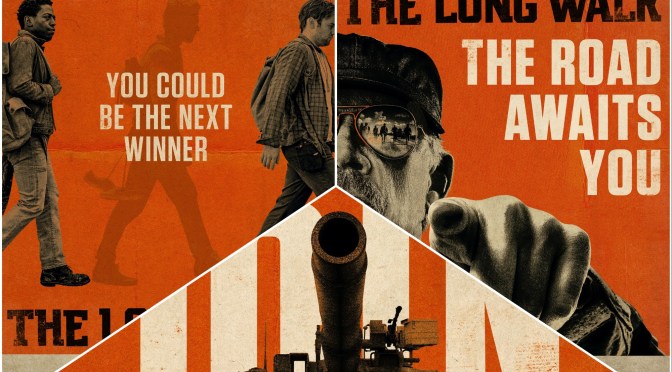
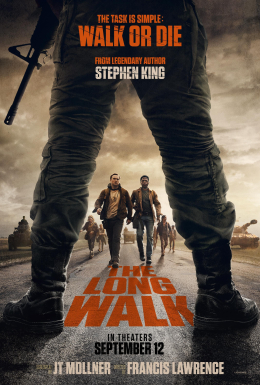
This compelling and moving anti-war film was adapted from the Stephen King novel, The Long Walk (1979), originally published under his pseudonym, Richard Bachman. The story is set in a dystopian alternative version of the United States ruled by a totalitarian regime; a new military-driven world order. The plot follows the fifty young male contestants of a gruelling annual walking contest, who must follow a set of rules or face the grim consequences. Ultimately, most of their fates are doomed as only the last boy standing gains the prize.
As an aside, I often wondered why King published under a pseudonym and after a quick net search I found that the author was limited to publishing one book per year, since publishing more would be “unacceptable” to the public. King therefore wanted to write under another name in order to increase his publication without saturating the market for the King “brand”. So, there you go. But what of The Long Walk (2025)? How does it compare to the plethora of other King film adaptations?
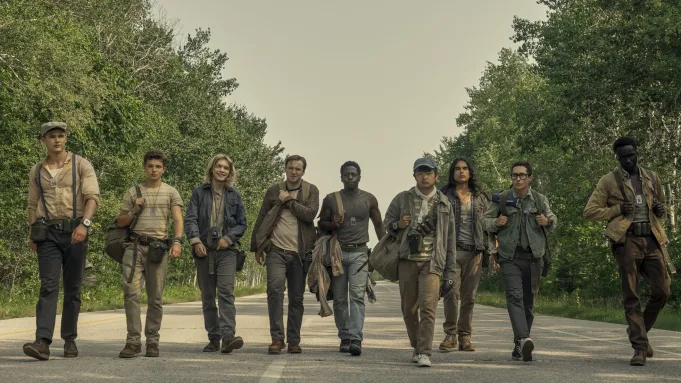
Grim, unrelenting, and devastatingly poignant, The Long Walk (2025) transforms a brutal endurance contest into an unmistakable anti-war allegory. Fifty young men, each plucked from a different state, march forward under the banner of national pride and promised glory — but what unfolds is the slow annihilation of their bodies and spirits. The premise, simple on the surface, becomes a searing critique of how nations sacrifice youth for power, money, and hollow ideals.
The film thrives on the camaraderie and conflict between the boys: fleeting alliances form, bitter rivalries crack open, and in moments of exhaustion or terror, we glimpse the fragile humanity beneath their forced bravado. Echoes of The Hunger Games franchise, also directed by Francis Lawrence, are impossible to miss. However, this story clearly influenced The Hunger Games and other examples of survivalist literature. Yet, The Long Walk (2025) is way more rawer, more intimate, and ultimately more scathing in its indictment of systemic cruelty.
Among the excellent ensemble cast, Cooper Hoffman as Ray and David Jonsson as Peter emerge with standout performances. Their characters, drawn together in unlikely connection, add emotional depth to the carnage, grounding the relentless attrition in genuine feeling. As their bond develops, the horror of the “Walk” feels sharper, the futility more unbearable. Overall, aside from slight repetition of action and an ending I’d have preferred to have gone a different way, The Long Walk (2025) carries hypnotic and bloody power. It is both a war story without a battlefield and a coming-of-age tale without the promise of adulthood — a haunting testament to how societies can destroy their own sons in pursuit of an impossible prize.
The last month or so I have been out and about doing bits and pieces from a cultural perspective and jolly good fun was had by all. Here are some of the highlights.
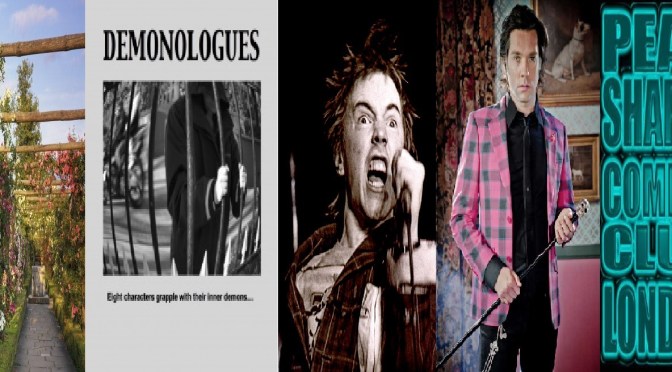
DEMONOLOGUES – COURTYARD THEATRE
Having tasted the greasepaint of such theatrical productions, Oppenheimer and View From The Bridge earlier this year I took in a lower-budget- off-off-Fringe production written and directed by Wendy Metcalf. It was performed by a talented cast of the Boxroom Theatre Company including such thespians as: Rosie Angeni, Tyrone Atkins, Asif Channa, Enid Gayle, Kim White, Mike Stewart and Rob Widdicombe.
Structured within seven magnificent monologues the piece was delivered with palpable conviction by each performer as they embodied the various characters with impressive commitment. One hears of horror stories of indulgent plays which go on for what seems like days but this theatre production rattled by with energy, humour and pathos in equal measure. I would have loved each monologue to somehow be linked in a narrative sense; however, thematically it was very powerful as a series of outsiders contend with matters relating to: death, obsession, performance, existential crisis, age, abuse, homelessness and rather peculiarly boxes. Overall, the writer conjures up some memorable dialogue and characters as the piece delivers moments of humanity which stay with you long after the stage lights have dimmed.
ROTTEN: NO IRISH, NO BLACKS, NO DOGS (1994) – JOHN LYDON (with KEITH & KENT ZIMMERMAN)
John Lydon AKA Johnny Rotten WAS and still IS one of my heroes. The working class lad from the deepest darkest London would emerge from the crumbling council houses of Finsbury Park and wreak havoc on the “Establishment” and sacred cows of Western Capitalism; firing a rocket into the cultural vacuum of the late 70s music industry. This book charts — in his own and other individuals’ words — Lydon’s progress from sick young child to enfant terrible as he became the face and guts of the movement that would become known as PUNK! No Irish, No Blacks, No Dogs is structured in linear fashion via a set of interview transcripts as Lydon and the likes of Paul Cook, Steve Jones, Billy Idol, Chrissie Hynde, Richard Branson and many more give their perspectives of the lies and times of the era.
Lydon doesn’t mince his words in attacking those — notably The Sex Pistols manager Malcolm Mclaren — who he feels done him wrong and that anger propels the book. What struck me was the fragmented set of events and shattered points-of-view which spat and crackled at the time; making one realise that punk rock was not a movement of harmony. Instead it was a splintered faction of ideas, styles, influences that exploded from the depressing financial and social climate of the United Kingdom. There was no fixed plan or collective movement or love or heroes but a detonation of unrest and youth in revolt and above all else a spark; and the chief spark being Lydon. You may not agree or even like the warts-and-all personality he presents in the book but one must respect Lydon for his vicious honesty. He’s forever the angry iconoclast and one of the great heroes/anti-heroes of British culture; at times infuriating but above-all-else bloody entertaining.
This comedy night mixing pros, semi-pros, newcomers and general nutters has been going for donkey’s years and proclaims itself to be the “London’s 2nd worst comedy club”! Despite this P-S has always been one of my favourite and dreaded places to perform comedy. I have been funny there and also died a few comedy deaths as well but that was part of the fun too. Run by the legendary comedy duo Brian & Krystal, Antony Miller and a whole host of comedians down the years it came to an end at its current home: The Fitzroy Tavern in Charlotte Street. I went along to say goodbye and thank the club for supporting my comedy ramblings over the years. Safe to say it was all done it the best possible taste and it was a brilliant send-off. There have been some desperately empty times in that room but this was not one of them as hosts, performers and audience (yes – it had an audience!) all joined together for a fantastic last hurrah. Well, until it starts up again in another room (here’s hoping!)
This gem of a place has all the desires of a lovely afternoon out: beautiful grounds; pretty gardens; impressive stately home; and over-priced gift and coffee shop. It’s also got some leg-stretching walks where you can almost taste the serenity. What’s great too is it’s not that far from London either. So you can drive a reasonable distance from the fuel-spluttering-gaseous-urban-corporate-city-poisoned-capital and find yourself in a place of relaxation and historical value. My teenage son said it was “gay” so clearly not a place aimed at kids of his age but younger children, adults, ramblers and history buffs will find something pleasant in this beautiful space lovingly maintained by the National Trust.
RUFUS WAINWRIGHT – ROYAL HOSPITAL CHELSEA
I knew very little about Rufus Wainwright when my American girlfriend suggested we go to his live concert. I had heard of his musician-father Loudon Wainwright III and became aware that he was a young musical protégée and in a way a member of American musical royalty, so to speak. Thus, having brushed up with a “Best-of” album bought on ITunes we headed to the impressively staged outdoor venue set-up at the home of the Chelsea Pensioners: Royal Hospital Chelsea.
Despite the heavens opening and rain bleeding onto a sea of plastic-covered bodies Mr Wainwright delivered a sterling set of beautifully constructed songs from his current and back catalogue. He’s a nervy, neurotic character with a wicked laugh, eager to please and a divine twang in his voice which would suggest he could probably be a great musical comedian too. While containing humour, lyrically, his songs bare his soul while wrapped in a mournful voice which quivers with emotional depth. Safe to say his piano sings a haunting melody although Mr Wainwright certainly picks up the pace with his faithful guitar in hand.
It was a fantastic and memorable performance in the London rain which had scattered by the time he sang the trusty classic Hallelujah. I have since found out Mr Wainwright’s life had it’s fair share of troublesome situations including drug addiction and while I didn’t not know this at the time, the way this soulful troubadour sang his heart out you knew. You just knew.


 The Cinema Fix presents