Tag Archives: Chaos

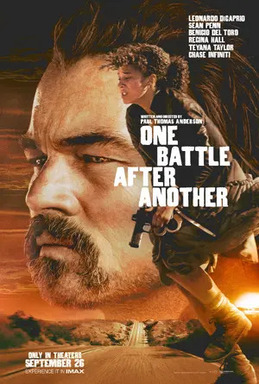
Cinema Review: One Battle After Another (2025) – an exhilarating revolutionary romp that lacks the depth of those films it attempts to emulate!

Cinema Review: One Battle After Another (2025)

Directed by Paul Thomas Anderson

Written by Paul Thomas Anderson

Inspired by Vineland by Thomas Pynchon

Produced by Adam Somner, Sara Murphy, Paul Thomas Anderson

Main Cast: Leonardo DiCaprio, Sean Penn, Benicio del Toro, Regina Hall, Teyana Taylor, Chase Infiniti, Wood Harris, Tony Goldwyn, Kevin Tighe, Shayna McHayle, etc.

Cinematography by Michael Bauman

Music by Jonny Greenwood

*** CONTAINS SPOILERS ***


It’s a brave filmmaker that quotes one of the greatest revolutionary films of all time during it’s runtime, namely Battle of Algiers (1966). But Paul Thomas Anderson’s formidable cinematic career more than earns him the right to quote a film as towering as The Battle of Algiers (1966) in his latest release One Battle After Another (2025).

Across works like Boogie Nights (1997) and Magnolia (1999), he has demonstrated a mastery of ensemble storytelling and emotional crescendo; with Punch-Drunk Love (2002) he revealed a gift for intimate, offbeat romance; and in There Will Be Blood (2007) and Phantom Thread (2017) he proved himself one of the most rigorous visual stylists and psychological dramatists of his generation. Such a body of work grants him the authority to converse with cinema’s political masterpieces, even if his more recent Licorice Pizza (2021) felt comparatively diffuse and lacking in urgency. His filmography, at its strongest, stands as evidence of a filmmaker deeply attuned to the legacies and possibilities of the medium.

Having said that, Gillo Pontecorvo’s The Battle of Algiers (1966) wields revolutionary power through its raw immediacy, embedding viewers in the lived experience of anti-colonial struggle with a documentary-like realism that blurs the line between record and re-creation. By contrast, Anderson’s One Battle After Another (2025) approaches revolution less as lived history than as a cinematic genre to be emulated, drawing on the tropes and textures of upheaval without grounding itself in the direct urgency of political struggle. Where Pontecorvo conjures revolution as something happening before our eyes, Anderson refracts it through the prism of style, making revolution as much a matter of aesthetic construction as lived reality. It is during its lengthy running time extremely entertaining though.


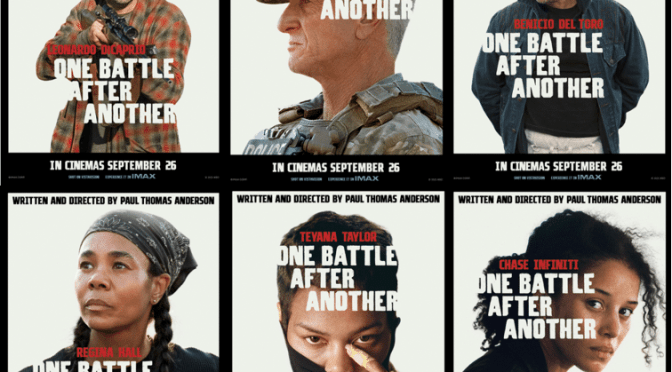
The opening hour is fast-paced and crams in a lot of action and personality. It establishes a fine ensemble cast, strong characters, striking palette and compelling themes which bring to life Anderson’s sharply written and fantastically filmed screenplay. The narrative focuses on “Ghetto” Pat Calhoun (Leonardo DiCaprio) and Perfidia Beverly Hills (Teyana Taylor), lovers and leaders of the far-left French 75, who storm detention centres, bomb banks, and sabotage power grids, while their soon-to-become nemesis—Officer Steven Lockjaw (Sean Penn)—becomes erotically obsessed with Perfidia, sparing her life when he catches her planting a bomb in exchange for a sexually masochistic tryst. Thus, begins a warped love/hate triangle and rivalry which provides the backbone for the action.

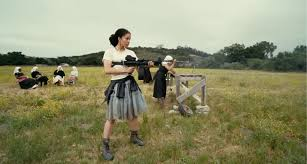
The second hour pivots sharply after establishing Perfidia as a commanding revolutionary presence. The focus pulls to her daughter, Willa (Chase Infiniti), some sixteen years later, now living off the grid and avoiding all but the most basic technology out of fear of surveillance. ‘Pothead’ Pat, has withered into a paranoid and barely functioning stoner-alcoholic, leaving Willa to emerge as the steadier, more mentally resilient figure in their fractured household. The film undeniably suffers from the absence of Perfidia’s charisma and drive, yet it regains momentum when the now Colonel Lockjaw revives his obsessive pursuit, setting the stage for a tense reconfiguration of the story’s revolutionary stakes.

The acting in One Battle After Another (2025) crackles with intensity, led by standout turns from Taylor, Penn, and crafty scene-stealer, Benicio Del Toro. Further, Anderson’s casting team find some amazing supporting military personnel who deliver with uncanny authenticity. Sean Penn’s performance as a swaggering officer radiates brute masculinity—his very walk and gait dripping with testosterone and worthy of awards consideration on their own. Leonardo DiCaprio, meanwhile, folds another eccentric, messy, and deeply contradictory figure into his already remarkable CV, a creation that resonates with the layered complexity of his recent work in Scorsese’s Killers of the Flower Moon (2023). He is actually far more hilarious here, as demonstrated in his desperate attempts to overcome the revolutionary helpline he calls for instructions.

Overall, One Battle After Another (2025) works best as a searing, darkly funny revolutionary black comedy, blending sexual, military, conspiracy, and social politics into a heady mix of action, crime, road movie, and romance tropes. The result is a wildly entertaining visual and musical feast, even if it stops short of delivering true socio-political depth. While the film’s closing stretch leans into deliberate plot ambiguities that complicate its resolution, Anderson ultimately serves up a combative cinematic blast—stylish, sharp, and exhilarating—if just shy of a bona fide classic.

Mark: 8.5 out of 11


کفرناحوم‎ / CAPERNAUM / CHAOS (2018) – CINEMA REVIEW – One of the most heart-breaking films you will ever see!

کفرناحوم‎ / CAPERNAUM / CHAOS (2018) – CINEMA REVIEW

Directed by: Nadine Labaki

Produced by: Michel Merkt, Khaled Mouzanar

Screenplay by: Madine Labaki, Jihad Hojaily, Michelle Keserwany

Cast: Zain Al Rafeea, Yordanos Shiferaw, Boluwatife Bankole, Kawthar Al Haddad, Fadi Kamel Youssef, Nour El Husseini etc.

Cinematography: Christopher Aoun

Editing: Konstantin Bock

**MAY CONTAIN SPOILERS**

The recent Oscars brought up more than its’ fair share of ceremonial, broadcast and social media celebration and moaning from the film creatives, public, critics and privileged millionaires alike. But hey everyone’s entitled to their opinion and has the freedom of speech to express said opinions about what should and shouldn’t win such frivolous industry trinkets. It’s a bit of fun and gets everyone talking about movies, society and life, which is always a good thing.

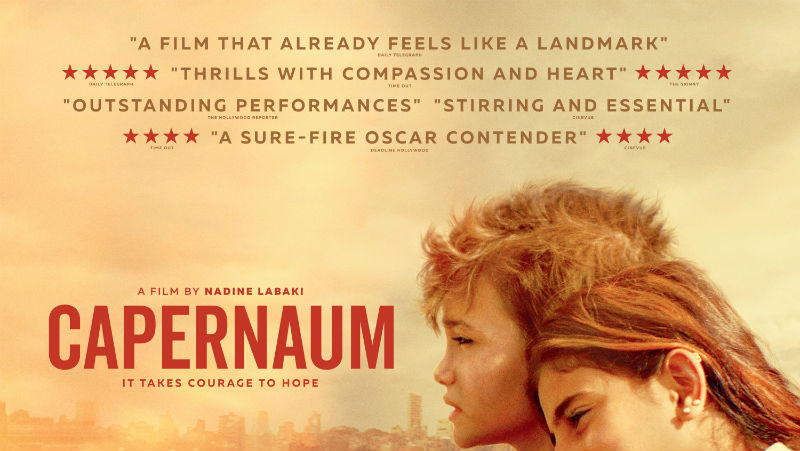
Yet, every now and then a film comes along which, while nominated for an award, does not win the prize it deserves. That film is the heart-ripping, social drama Capernaum (2018). This Lebanese film is one of the most emotonally impactful films I have ever seen and should not just have won ‘Best film in a Foreign Language’ at the Academy Awards, but should have won ‘Best Film’, in my humble view. While Roma (2018) was an expertly crafted love letter to Cuaron’s childhood and the women he grew up with, its’ characters are very passive and the slow moving style left me feeling tepid. Capernaum, on the other hand, is anything but tepid, as its’ hero is a dynamic firebrand who you cannot help but root for.

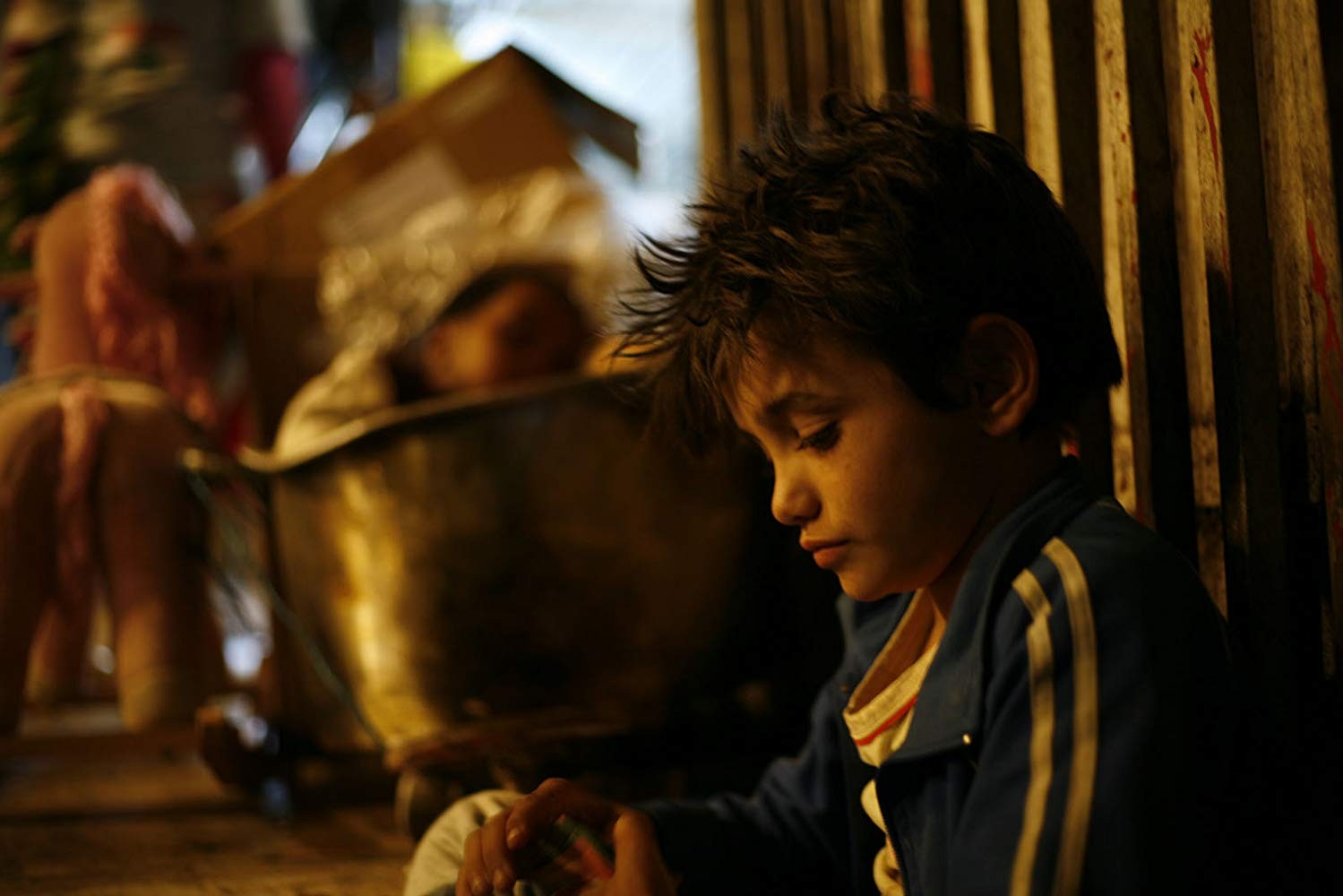
Set in contemporary Lebanon, the story is structured around a court-case where lead protagonist, Zain, a twelve or thirteen year old boy, is seeking to divorce his parents. Extensive flashbacks then reveal why Zain feels this strongly about his life and the hell he has to endure to survive and protect those he loves. Zain’s existence, like many street kids, refugees and families in Beirut, struggle daily under threat of death, disease and exploitation. When his younger sister is sold by his parents to their landlord to prevent eviction, Zain goes crazy. Following a violent row he is thrown onto the streets and is left to fend in the dirt and shadows. He find kindred friendship with Rahil, an undocumented Ethiopian woman, and Zain helps mind her young son, Yonas. Here the narrative screw is really turned as their lives spin further out of control.

With incredible scenes of documentary realism the director Nadine Labaki has delivered such a powerful in your face and frantic style. The streets of Beirut become a legal, social and religious prison for the characters, as forgers, paedophiles and traffickers threaten to rob the souls and bodies of Zain and his like. Moreover, the narrative makes incredible points regarding existence, posing whether people should be brought into the world to such suffering. Indeed, not all characters are as tough as Zain, who’s caring, resourceful, cheeky, tough, entrepreneurial and a born fighter.

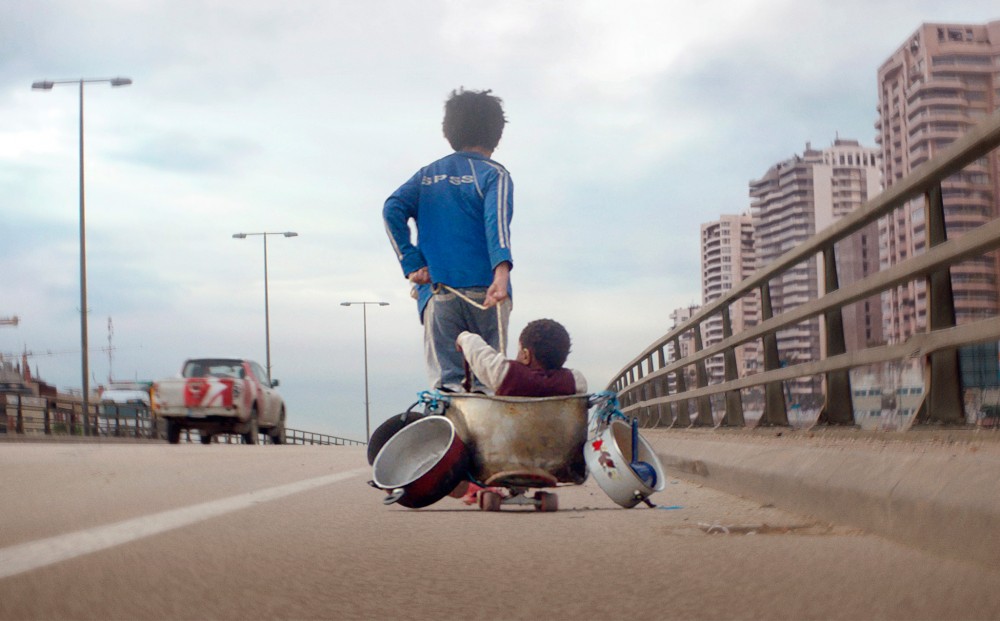
I cannot speak highly enough of this film. If I ever feel down about my over-privileged life, then I just need to think of these characters and I will be humbled. For sure it is over-the-top in its’ melodramatic depiction and there are some unlikely narrative elements toward the end, but I did not care about those. It moved me immensely and the director and filmmaking team deserve so much credit turning twelve hours of shooting footage into such a coherently moving portrayal of existence. They even find time for some humour amidst the tragedy. Further, the actor who gave us Zain is himself a refugee and had never acted before, so to capture such energy on screen is amazing. Lastly, next time I selfishly think “my life sucks”, I will picture Zain pulling Yonas around the dusty streets of Beirut in an aluminium pot and be completely humbled.

Mark: 10 out of 11