Tag Archives: Colman Domingo

Amazon Prime Film Review: Sing Sing (2023) – displays the redemptive power of art and performance!

Amazon Prime Film Review: Sing Sing (2023)

Directed by Greg Kwedar

Screenplay by Clint Bentley & Greg Kwedar

Story by Clint Bentley, Greg Kwedar, Clarence Maclin & John “Divine G” Whitfield

Based on “The Sing Sing Follies” by John H. Richardson and Breakin’ the Mummy’s Code by Brent Buell

Produced by Clint Bentley, Greg Kwedar & Monique Walton

Main cast: Colman Domingo, Clarence Maclin, Sean San José,
Paul Raci, Sharon Washington, Jon-Adrian “JJ” Velazquez, Patrick “Preme” Griffin, Sean “Dino” Johnson, Miguel Valentin and more.


Cinematography by Pat Scola
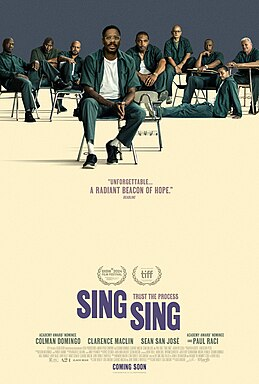


Sing Sing (2023) is a powerful prison drama directed by Greg Kwedar, based on the real-life Rehabilitation Through the Arts (RTA) program at New York’s Sing Sing Correctional Facility. The film follows John “Divine G” Whitfield (portrayed by Colman Domingo), a wrongfully convicted man who finds purpose and transformation through participation in a prison theatre group. As the group prepares to stage an original comedy, tensions arise, particularly between Divine G and a new, skeptical member, Clarence “Divine Eye” Maclin (played by himself).

The reported $2 million budget for the prison-based theatrical drama Sing Sing (2023) underscores a powerful truth in filmmaking: emotional impact and narrative power are not dictated by the size of a production’s budget. In an industry often dominated by multi-million dollar spectacles and high-concept visual effects, Sing Sing (2023) stands out as a reminder that authenticity, performance, and purposeful storytelling can achieve more than sheer spending ever could. In this way, the film charts a path forward for filmmakers: it shows that profound emotional connection comes not from lavish resources but from the courage to tell deeply human stories with clarity, care, and conviction.

By investing modestly but wisely—prioritizing casting choices, intimate direction, and a grounded script—the filmmakers harness the emotional gravity of the story itself. Featuring real formerly incarcerated individuals alongside professional actors, the film creates a resonance that can’t be manufactured with money alone. The restraint in budget mirrors the thematic focus of the film: confinement, transformation, and human dignity. There’s a raw, stripped-down sincerity in Sing Sing (2023) that aligns with its financial humility, allowing viewers to focus not on spectacle but on spirit.
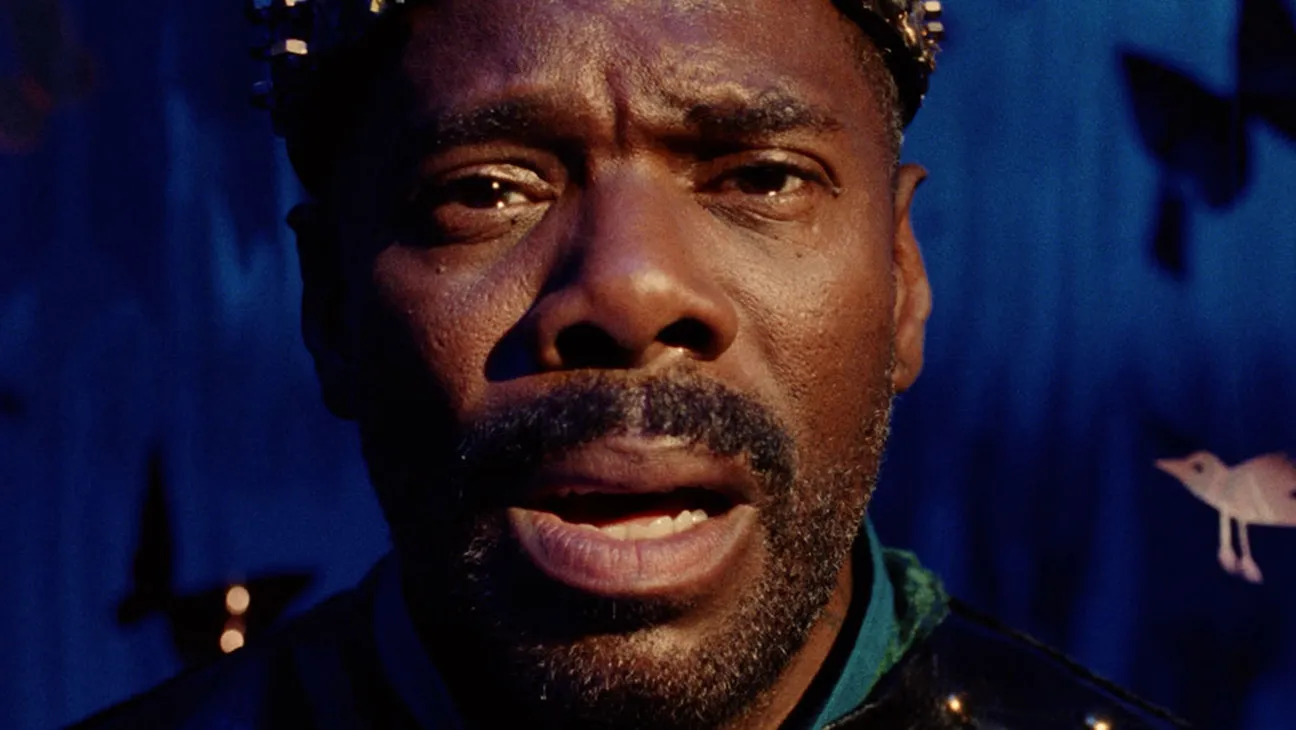


At the heart of the film is Colman Domingo majestic performance. Without question he is one of the most enthralling actors working today. With a presence that radiates both gravitas and vulnerability, he has the rare ability to inhabit characters so fully that they feel less like performances and more like revelations. In Sing Sing, his work is restrained, generous, and deeply moving—serving not just as a lead, but as a quiet conduit for the emotional power of those around him. It’s the kind of performance that reminds you what acting is for.

There’s a grounded nobility to Domingo’s recent choices—films that matter, that uplift overlooked voices, and that seek to transform rather than simply entertain. In an era where so many talented actors get absorbed into the ever-expanding Disneyverse or other IP-driven machines, one can only hope that Domingo continues on this path. His gifts are too profound, too precise, to be flattened into quips and CGI battles. He belongs in films like Sing Sing (2023) where the stakes are human and the impact is lasting.

Directed with subtle power by Greg Kwedar he delivers a drama of transcendent creative expression as the inmates forge deep bonds, confront personal demons and change societal perceptions. Featuring performances by both professional actors and real-life formerly incarcerated individuals, Sing Sing (2023) offers an authentic and moving exploration of redemption, resilience, and the transformative power of art. Of course not all of them are innocent and are guilty. The film does not apologise for their crimes or glamourise them, but allows these men to find light amidst the darkness; a spiritual and cultural escape from the walls and bars which surround them.

Mark: 9 out of 11


NETFLIX FILM REVIEW – MA RAINEY’S BLACK BOTTOM (2020)

NETFLIX FILM REVIEW – MA RAINEY’S BLACK BOTTOM (2020)

Directed by: George C. Wolfe

Produced by: Denzel Washington, Todd Black, Dany Wolf

Screenplay by: Ruben Santiago-Hudson

Based on: Ma Rainey’s Black Bottom by August Wilson

Cast: Viola Davis, Chadwick Boseman, Glynn Turman, Colman Domingo, Michael Potts etc.

Music by: Branford Marsalis

Cinematography: Tobias A. Schliessler

*** MAY CONTAIN SPOILERS ***


The spectre of death hangs over us all as time effortlessly drains the life from us. It is an unstoppable force that will quicken on occasion to take a human being way before they deserve. What if said individual has knowledge of their end? Aside from the fear they must be feeling, there is clearly a moment of clarity and strong focus. Something that makes their work gather an altogether unique power. Both player and audience feel such power palpably. This is most certainly the case where Chadwick Boseman’s acting performance is concerned in the screen adaptation of August Wilson’s powerful play, Ma Rainey’s Black Bottom (2020). As talented, hustling and arrogant musician and songwriter, Levee Green, Boseman is a charismatic vision of drive, confidence, energy and naivety, ready to take on the world, not quite knowing the odds are stacked against him.

Boseman steals the film from under the lungs of the formidable Viola Davis as the titular blues legend, Ma Rainey. Her laconic singer with a voice that stops the clocks is being paid to record a series of songs at a Chicago recording studio in the year 1927. Much conflict is derived from Levee Green’s desire to spice up Ma Rainey’s more traditional blues arrangements. Ma Rainey will not give in to what she perceives as ideas of populism and selling out to white producers who want to water down the blues for a white audience. As Ma Rainey, Viola Davis, excels as this irascible and world-weary diva, fighting off her exploitative manager and record producer. Rainey and the other band members try to dampen Levee Green’s enthusiastic ardour, however, the younger trumpeter will not listen to the advice of more experienced musicians. This eventually comes at a grave cost to those within the play.


Events of Ma Rainey’s Black Bottom (2020) are set mainly within a day and in the confines of the recording studio. The mix of a hot day, tempestuous characters and colliding personalities all combine in the enclosed space to create much dramatic tension. Given the screenplay is based on August Wilson’s acclaimed play, what the film loses in cinematic visuals, it more than makes up with sensational dialogue and stellar acting performances. Indeed, the supporting cast including: Colman Domingo as Cutler, Glynn Thurman as Toledo and Michael Potts as Slow Drag provide sterling contributions as Ma Rainey’s band. They banter and battle and spar, especially with the argumentative Levee, desiring to simply play the music and get paid. Safe to say therefore the wonderful blues songs performed are beautifully played. They fill the screen with humour and pathos, puncturing the fizzing dialogue of Wilson’s many fine soliloquys with poignant joy.

Amidst the conflict and music, August Wilson’s original text also contains great thematic power within the words. At the heart of the drama and eventual tragedy there is the underlying critique of the black musicians’ songs and style being stripped away from them by unscrupulous record producers. Ma Rainey stands strong rejecting attempts to assimilate her work and personality and voice into the mainstream. Those songs are her lifeblood, and she refuses to entirely sell her soul. Levee Green does not see the bigger picture and is sucked in by the promise of money, women and fame. He is blinded by the bright city lights and the closer he gets to them the easier it is for the record producers to pick his pocket. In such a tragic character August Wilson has created a memorably complex persona, perfectly rendered by the acting genius, Chadwick Boseman.

Mark 9 out of 11


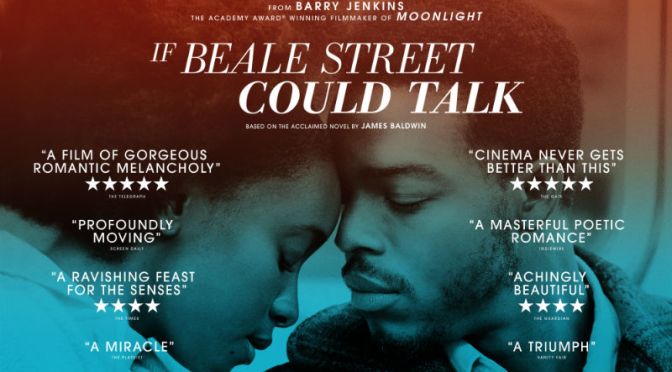
IF BEALE STREET COULD TALK (2018) – CINEMA REVIEW

IF BEALE STREET COULD TALK (2018) – CINEMA REVIEW

Directed by: Barry Jenkins

Produced by: Megan Ellison, Dede Gardner, Jeremy Kleiner, Adele Romanski, Sara Murphy, Barry Jenkins

Based on: If Beale Street Could Talk by James Baldwin

Starring: Kiki Layne, Stephan James, Colman Domingo, Regina King, Teyonah Parris, Michael Beach, Pedro Pascal etc.

Cinematography: James Laxton

Music: Nicholas Britell

**MAY CONTAIN SPOILERS** 

Barry Jenkins is clearly a talented filmmaker who is striving to transcend the boundaries between art and craft where cinema is concerned. His second feature film Moonlight (2016), was a critical smash and a sleeper box office hit, subsequently going on the win the Best Film nod at the Academy Awards. Whether it was worthy of such as award is another matter, but it was certainly a tremendous work of cinema. The rites of passage story was delivered by Jenkins with imaginative choices in casting, structure, look, music and all-round filmic endeavour.

His latest film, If Beale Street Could Talk, is equally stylish and artfully rendered, but not as emotionally impactful as Moonlight. Indeed, while this is in fact his third feature, Beale Street seems to suffer from classic “2nd album syndrome”, inasmuch as Moonlight set the bar so high, it was going to be a difficult act to follow. Moonlight felt like years of heart and passion thrusted upon the screen, as Beale Street struggles to maintain that said peak. That isn’t to say that the film is not without its virtues as Jenkins once again proves himself a brilliant director.

Barry Jenkins’ IF BEALE STREET COULD TALK, an Annapurna Pictures release.

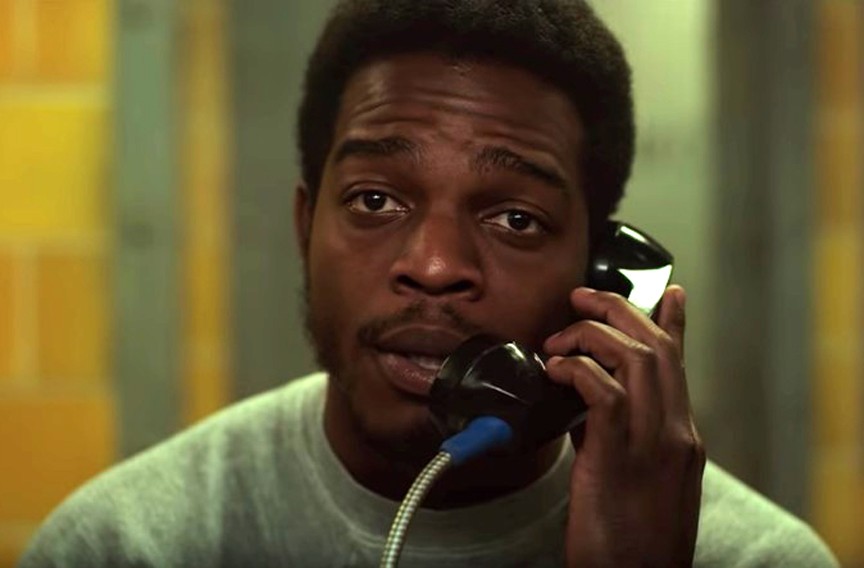
Set in 1970s, Harlem, New York and based on James Baldwin’s novel, the main protagonists are young working class couple Tish (Kiki Layne) and Fonny (Stephen James). Very much in love we open with Tish’s poignant voiceover and a wonderfully lush score supporting the urban and industrial, yet beautifully shot, imagery. Immediately, we realise Jenkins, while basing his story in realism, is presenting his film poetically. Further, Tish’s voiceover lilts and glues the elliptical, non-linear narrative together.

As with Moonlight, Jenkins uses direct address, the characters looking straight back at us drawing us into their emotional core. One may argue the device is over-used and at times distances us from the pace of the story. As Tish recounts events of her and Fonny’s relationship from childhood friends to their currently plight, you really feel a palpable sense of love, but sometimes it moves so painfully slow. Furthermore, the non-linear structure and stylistic devices also undermined the drama of the piece. Indeed, the best scene of the film in my opinion is near the beginning when Tish and Fonny’s family clash over her pregnancy. In this scene the insults spark and spit off the screen; but alas this conflict is sadly under-developed and not revisited later in the film.

Overall, there is a great story here involving: love, romance, social unrest, police brutality, unlawful arrest and injustice, racism, family strife, hope and loyalty; however, Jenkins artistic desires build the narrative in a way that diverts emotion into the cinema style, more so than the characters. Having said that, he is a filmmaker of some brilliance and he gets fantastic performances from the fine ensemble cast, notably the magnetic Regina King. Ultimately, while the story is told slightly pretentiously for my liking,
If Beale Street Could Talk, is a finely tuned work of poetic realism. 

Mark: 8 out of 11