31st RAINDANCE FILM FESTIVAL PREVIEW – ACTORS-TURNED-DIRECTORS!
As the Office Manager for the Raindance Film School, it is always exciting when the Raindance Film Festival is about to start. This year it runs from Wednesday 25 October 2023 to Saturday 4th November 2023 in Central London. All the amazing details can be found here: https://raindance.org/festival/
There are so many brilliant films to choose from, so it can be an impossibly difficult decision to narrow down one’s choice. If you have the time I recommend you buy a Festival Pass and go and watch everything. If you’re not fortunate enough to be able to do this you could thematically link your cinema choices.
I am always interested in following the careers of actors who become directors. The well-respected director, Dan Attias once said that, “. . . the best training he had for directing was being an actor.” Indeed, there are many great actors who have become fine film directors, including: Clint Eastwood, Jordan Peele, Jodie Foster, George Clooney, Greta Gerwig, Denzel Washington and Ben Affleck. So, here are four brilliant actors-turned-directors who have films screening at the 31st Raindance Film Festival.
DAY OF THE FIGHT (2023)
The opening gala film is written directed by Jack Huston and promises to be an incendiary drama of power and redemption.
Okay, the ultra-talented Adam Ethan Crow was not specifically an actor. Yet, he was certainly a prominent presence on the stand-up comedy scene, before turning his abundant skills to filmmaking. His latest film, Warhol, is a multi-stranded drama that connects various characters to powerful effect.
Paul Laight is a screenwriter, filmmaker, and blogger. In 2005, he formed Fix Films and has written and produced many shorts and other promos. Many of his films have been screened all over the world at various film festivals. Paul is currently working on feature and short film scripts for future productions. His work can be found here:
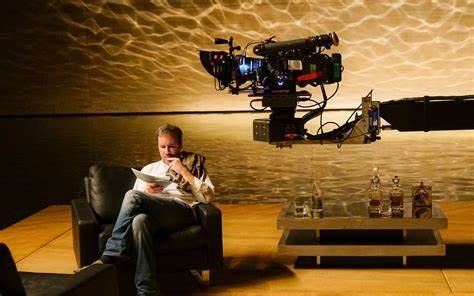
With the release of Dune: Part Two (2023) on the horizon for November 2023, I thought it may be worth appraising some of Canadian filmmaker, Denis Villeneuve’s amazing directorial work in this occasional strand, My Cinematic Romance. Note, I discipline my choices to only five films.
If you’re interested, I really wanted to like Dune (2021) more. One won’t see a more attractive and technically perfect rendition of a sci-fi world in the cinema in years. But, I could not connect with the narrative or lead protagonist. Seeing the big worms which made me want to watch Tremors (1990); a far superior and shorter version of a hero’s journey.
Nonetheless, award-winning Villeneuve is one of cinema’s surest hands when it comes to intelligent and compelling genre cinema. He has the touch of a film artist and takes certain risks, but not without resorting to indulgences which alienate the audience (take note Ari Aster!) Thus, I consider and list five of his great works, which I recommend wholly if you have not seen them.
*** MAY CONTAIN SPOILERS ***
POLYTECHNIQUE (2009)
This is a harsh watch. Any film about mass shootings is never going to be an easy experience to stomach. Still, it’s nothing compared to the sadness of those whose lives were struck from existence. The 1989 École Polytechnique massacre (also known as the “Montreal Massacre”) is re-enacted here in stark black and white film stock. The wintry setting and the cold-blooded murder of the events combine to create a heightened vision of anxiety cinema. Villeneuve objectively documents the massacre with a distance that paradoxically raises the emotions as opposed to lessening them. A film which you makes us confront the horror of humanity.
NEXT FLOOR (2010) – short film
Created by producer Phoebe Greenberg and directed by Villeneuve during a break from making feature film Polytechnique (2009), this devastating short film with its commentary on the horror of greed, is most likely an influence on grisly Spanish prison film The Platform (2019). One wishes Villeneuve would make a horror feature. I’d prefer to see how that might turn out than Dune.
INCENDIES (2010)
Incendies (2010) is the probably the best film you haven’t seen. If you have seen it then tell more people to see it. Spread the word on this incredible film. Villeneuve directs in an intelligent way, retaining empathy and emotion for both protagonists and antagonists devoured by war. Nawal Marwan’s story is especially heart-breaking and she is given a moving portrayal by Lubna Azabal. Nawal’s story is one of astounding power as the character experiences the hell of loss, war, torture and death. One which will shake you to the core for days and weeks and maybe even years!
PRISONERS (2013)
A superlative crime script written by Aaron Guzilowski has one of the best ensemble casts seen on screen in years, notably: Hugh Jackman, Jake Gyllenhaal, Viola Davis, Maria Bello, Terrence Howard, Melissa Leo, and Paul Dano. The story is absolutely compelling with a plot so tightly wound, you’re almost throttled throughout by the mystery and suspense. Jackman is especially truthful, playing a flawed everyman who obsessively, quite understandably, searches for his missing child. Dano plays another convincing outsider as the main suspect, while Gyllenhaal is, as always, brilliant as dogged cop, Detective Loki. Villeneuve proves once again he is one of the best directors of actors working today. Prisoners (2013) is a masterpiece of crime genre cinema.
ARRIVAL (2016)
The intriguing premise, brilliant script, ambient score, stylish effects, subtle cinematography and purposeful direction make this one of the best science fiction films of recent years. It is an intelligent and emotional science-fiction drama with a beautifully constructed narrative which constantly surprised and moved me. It also asks big questions on the nature of time, existence and love; informing us that not all extra-terrestrial life in movies has to be monstrous and deadly. Above all else Villeneuve, Amy Adams and screenwriter Eric Heisserer gain sheer kudos for creating a beautiful and moving love story.
SIX OF THE BEST #34 – AMAZING FILMS I DO NOT LIKE!
Are there box office hits, cinematic phenomena and damned fine films loved by critics which you DO NOT like? That isn’t to say they aren’t great films, but subjectively you just don’t enjoy them? I mean some people dislike much of Christopher Nolan’s work! What!? Okay, Interstellar (2014), was not his best, but hey that’s just my opinion. It’s all just opinions.
Now, I like to be positive on this blog and have critical balance when writing my reviews. In fact, some films I choose not to review because I don’t want to slag something off which is just not for me. I also generally avoid reviewing films I consider terrible because I prefer to avoid negativity.
Thus, this article is not about having a pop at classic films or saying they are over-rated for attention. The truth is – I AM IN THE WRONG HERE! But I think it’s interesting to examine why I don’t like these six excellent films. After all, many talented people have worked passionately on them, so in no way do I want to disrespect their craft. Which is why, I repeat, I am wrong!
*** CONTAINS SPOILERS ***
AVATAR (2009)
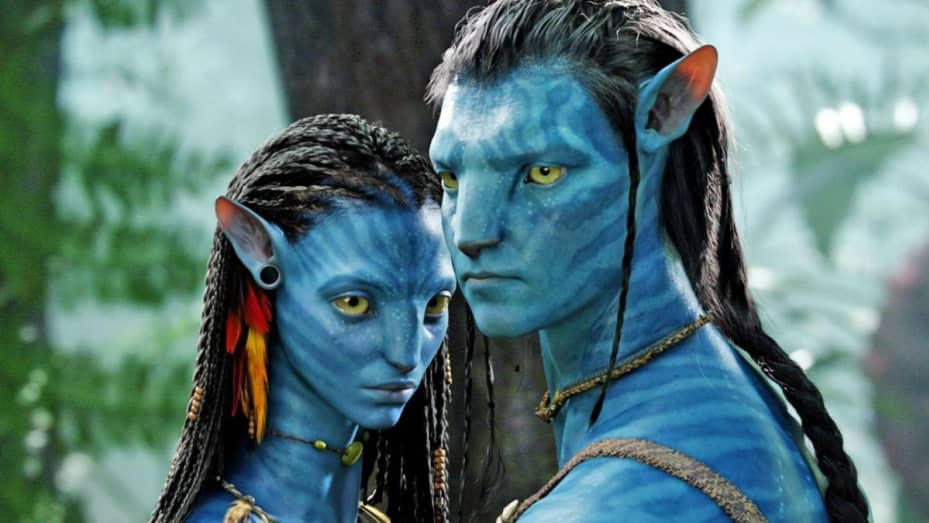
James Cameron is one of the greatest genre filmmakers of all time. He is also a technological innovator and genius. In Avatar (2009), he truly topped himself in regard to creating not only the beautiful world and inhabitants of Pandora, but by using never-seen-before motion-capture cinematic techniques. Moreover, the film would go on to make over $2 billion at the box office, so I’m not worthy enough to criticise Avatar (2009). But the script is incredibly flat and derivative. The lead characters are mostly unlikable and I genuinely found the amount of blue on show irritating to the eye. Worst of all is the hypocrisy that a film this expensive, and with a carbon footprint this big, is critiquing capitalist corporations who destroy the natural world.
THE BLAIR WITCH PROJECT (1999)
Yes, this horror film had one of the smartest and ingenious marketing campaigns of all time. Yes, I should be praising it because I love horror films and also get excited when indie filmmakers hit the big time with low budget films. But, The Blair Witch Project (1999) has no real story as it just a clever series of jump scare set-ups. More importantly, it has no characters you can root for as they are so stupid and obnoxious. Worst of all it wasn’t scary or suspenseful. That’s because I wanted the bickering trio to die. I mean, who throws away a map. They were morons! Plus, this expertly crafted movie committed the worst crime of all – bringing back the found footage film! Now, don’t get me started on THAT cinematically moribund subgenre!
CLOSE ENCOUNTERS OF THE THIRD KIND (1977)
What’s not to like about an award winning, box office smash directed by arguably the most brilliant director of a generation? Furthermore, Close Encounters of the Third Kind (1977) also contains some of the most breath-taking and ground-breaking special effects. So, with the Oscar winning cinematography and majestic score, why don’t I enjoy this Steven Spielberg sci-fi masterpiece? In short, I cannot stand the choices Richard Dreyfus’ character makes. I did not believe his journey. Why would you want to go to space and connect with aliens? Why would you abandon your family and head off on some frantic search for something from the sky? Eat the mash potato! Don’t make mini-mountains out of it. I get that there is pseudo-religious metaphors going on, but why were we meant to care? Amazing spectacle, but devoid of emotional connection and an ending that didn’t make much logical sense to me.
THE MASTER (2012)
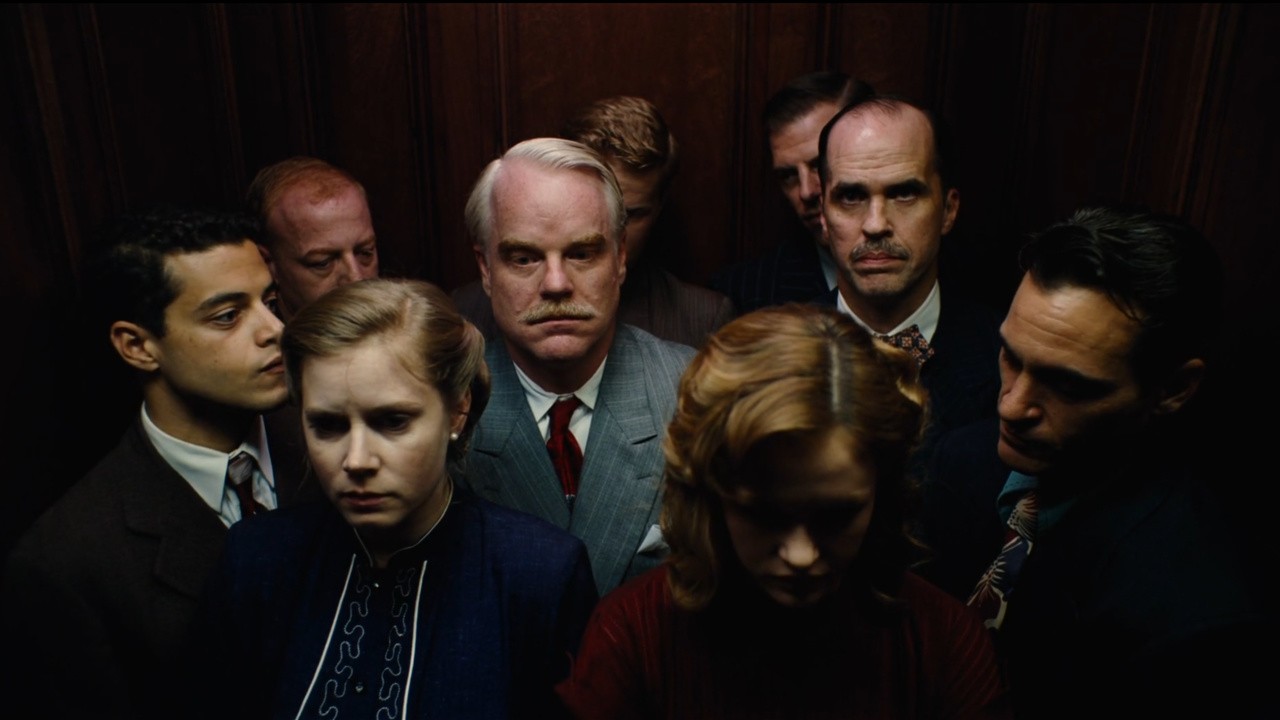
I really love films and documentaries about cults. Especially where religion is used to control human beings and make them do crazy things. What possesses another person to want to control others? They are often extremely charismatic and talented people too, so always fascinating to explore. In Paul Thomas Anderson’s The Master (2012), and while this has been denied, he studies the relationship between a lost soul drawn to a movement that may or may not be a reflection of Scientology. Freddie Quell (Joaquin Phoenix), a World War II veteran is pulled toward Lancaster Dodd (Hoffman), a leader of a cult known as “The Cause”. But not much happens other than Quell having a series of breakdowns amidst post-traumatic stress and alcoholism. Anderson is one of the great humanist and existential filmmakers working today, but The Master (2012) was too impenetrable and alienating for me.
MULHOLLAND DRIVE (2001)
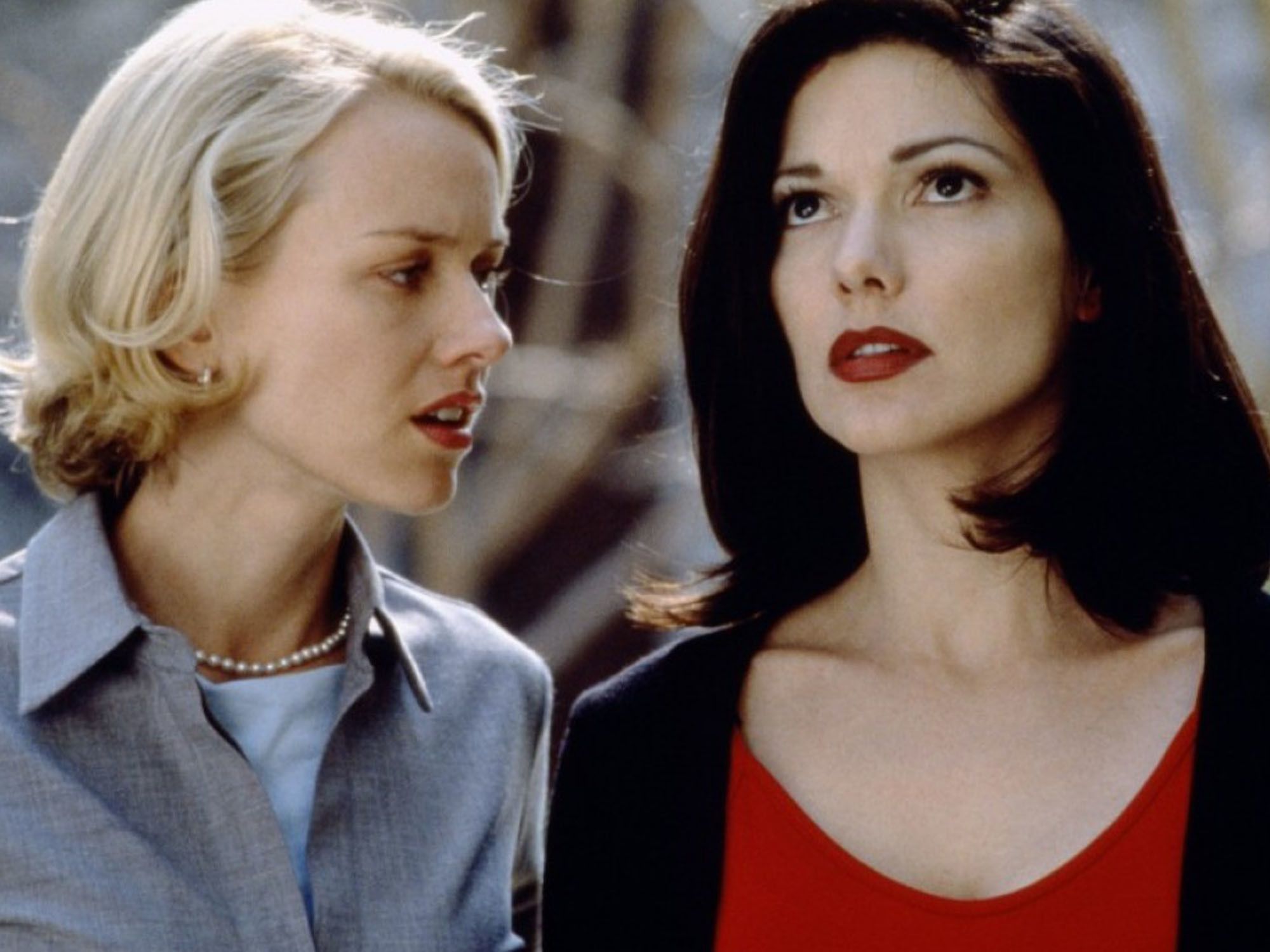
I am a massive fan of David Lynch’s oeuvre. He is one of the most incredibly idiosyncratic and original voices is cinema. Lynch is visually, aurally and cinematically able to deliver both coherent and surreal narratives that blow your mind and heart out. After bamboozling audiences with Lost Highway (1997) he delivered an emotionally moving road movie in The Straight Story (1999). After that I’m not sure what was in his damn fine coffee when Mulholland Drive (2001) was devised. My understanding was it was a rejected filmed pilot which transmuted into a feature film. Crossing many genres including thriller, detective, horror and romance, the narrative splinters via many characters in Hollywood, notably Naomi Watts portraying an actress experiencing a career and identity crisis. That’s just the tip of an extremely enigmatic iceberg and the bottom line was I just didn’t care. Critics love Mulholland Drive (2001) and it often tops best film lists. I have absolutely no idea why.
THE WITCH (2015)
My filmmaking and screenwriting career is more a hobbling hobby these days. Other than not getting on the right career train, or getting lost in the smoke of an overcrowded creative platform, one main reason I may not have succeeded is because I arguably don’t have an original vision. Maybe I am just too generic. One cannot say that about Robert Eggers. This is one truly talented filmmaker. His debut film The Witch (2015) was a low budget folk horror masterpiece which became a sleeper hit at the box office. Set in 1630s New England, it is an authentically designed and brilliantly acted period drama with Anya Taylor Joy standing out. But aside from the historical accuracy of the language, locations and costumes the story was SO slow. I realise The Witch (2015) is an arthouse classic, but I just did not connect with the characters and was bored all the way through. There are some occasional scares, but it’s more a film which draws horror from underlying dread and enigma rather than the classic horror style I prefer.
Getting on stage and making a room full of strangers laugh spontaneously through a joke, impression, improvisation, song etc. is arguably one of the mightiest challenges facing a performer. But for many successful stand-up comedians the thrill of reducing a room to shakes of laughter is not enough; hence why so many have attempted to transfer their undoubted comic and acting artistry to the silver screen. Plus there’s more dough involved in making movies. As a massive fan of both cinema and stand-up comedy I thought it interesting to look at some of the best dramatic performances committed to celluloid by stand-up comics.
Eddie Murphy – 48 Hours (1982)
Before Eddie Murphy single-handedly set about making his very own list of the worst movies ever made he took his raw, rap, crack and pop stand-up persona and committed to screen great performances in Trading Places (1983) Beverley Hills Cop (1984) and Walter Hill’s rock hard-boiled 48Hours (1982). Buddied-up with Nick Nolte’s life-frazzled cop, Murphy was perfectly cast as cool convict Reggie Hammond. Murphy is tough, uncompromising and funny: spitting out classic dialogue such as “I’ve been in prison for three years. My dick gets hard if the wind blows” – with a verve that is sorely missing from virtually all his film output of the last 15 years.
Woody Allen – Crimes and Misdemeanours (1989)
Arguably, Allen’s recent movies have not been up to the quality of his earlier “funnier” films but I like them nonetheless as he has consistently produced work rich with great lines, ideas and characters. In the 1980’s Allen’s films matured and more often than not centred around familial, human and sexual relationships. As well as writing and directing Allen also acted in most of his films using his Jewish, neurotic, angsty persona to comic and dramatic effect. In Crimes and Misdemeanours (1989) he delivers another fine performance drawing out pathos, empathy and pain as a documentary filmmaker who is trying to make sense of life and why we are on this planet. The film is multi-stranded with a wonderful ensemble cast including Alan Alda and Martin Landau on particularly great form.
Whoopi Goldberg – The Color Purple (1985)
Multi-talented Emmy, Oscar, Tony winner Goldberg is one of the most versatile comedian/actors to grace the stage and screen. She developed her abilities at the Blake Street Hawkeyes Comedy troupe where her work and would then be cast in Spielberg’s adaptation of Pulitzer Prize winning The Color Purple (1985). While Goldberg would earn an Oscar for her over-the-top turn in potter’s-wheel-ten-hankie-weepie Ghost (1990), but it is her first ever screen appearance which will stay in the memory. Goldberg’s Celie Johnson is a character battered and beaten by life but whom amidst the misery and abuse retains a strength and desire to not let life destroy her. Goldberg brings a tremendous innocence, fortitude and compassion to the part; and considering it is her first ever movie role it is an amazing achievement.
Will Ferrell – Stranger Than Fiction (2006)
Ferrell cut his comedy fangs in The Groundlings, an LA improv group, and would later take his comic creations onto Saturday Night Live. Hilarious turns as hick racing driver Ricky Bobby in Talledega Nights (2006) and more famously as Ron Burgundy – the king of unreconstructed male chauvinist stupidity – in Anchorman (2004) would cement Ferrell’s success as a movie actor. Famous for stupid haircuts, overcharged yelling and screen-mugging Ferrell toned it down as tax inspector Harold Crick in Marc Forster’s moving dramedy, Stranger Than Fiction (2006). Ferrell’s Crick is a lonely individual, a man of routine and commonplace whose life is turned topside down when he hears his every move being narrated by Emma Thompson’s meta-omnipotent author. As he struggles to find ‘the voice’ Crick begins to question his whole existence and this gives Ferrell the opportunity to live a character with depth and emotion hitherto unseen in his previous screen caricatures.
Jamie Foxx – Ray (2004)
While Chris Rock arguably takes the stand-up comic kudos between these two graduates of influential American sketch show, In Living Color, Foxx’s film career has flourished with a series of fantastic movie performances. But it was playing Ray Charles in Ray (2004) that Foxx left Rock’s movie career, in comparison, eating the proverbial dust sandwich. Of course it won him the Oscar but it was more than just an impression of Charles as Foxx gave this musical genius a flawed humanity and pain that moved both the audience and the Academy. Foxx threw himself into the role with abandon musically and dramatically, showing Charles’ darker addictive side as well as his magnetism, humour and incredible drive. Unsurprisingly, the same year, Foxx was also nominated for his sterling work in Mann’s urban noir Collateral losing out in that category to the king-of-expositional-voiceover Morgan Freeman.
Robin Williams – One Hour Photo (2002)
A running trope in this list finds many of the acts turning their manic comedic persona on its’ head and internalizing the mania or psychosis with understated performances. Indeed, I have read articles which link certain mental states with the comedic mind and in Robin Williams you could not get a more manic, fevered, out-of-this-world performer. After a slow start cinematic success would arrive eventually and I could have chosen Good Will Hunting (1997) or Good Morning Vietnam (1987) or Dead Poet’s Society (1989)as these were great roles for Williams. But in 2002 he took a couple of darker turns in Nolan’s pre-Batman thriller Insomnia and a lower-budget thriller called One Hour Photo. The latter found Williams playing a solitary Photo Technician who takes an unhealthy interest in one particular family. Yet Williams’ character is no ordinary psycho but rather a pained individual longing to be part of a family unit. The actor terrifies the audience with his obsessive nature but at the end the performance humanizes the character rather than making him a one-dimensional lunatic he could so easily of been.
Jim Carrey – Man On The Moon (1998)
Carrey is an absolute force of nature as a stage and sketch performer and brought that dynamic physicality, silly voices and zany gurning to great effect in films such as: Dumb and Dumber (1994) and Ace Ventura: Pet Detective (1994). As he gained further success he would stretch his acting muscles with more dramatic and riskier roles. He was ideally cast as Intergender Wrestling Champion of the world Andy Kaufmann and (best known for his role in U.S. sitcom Taxi) and also doubled-up by playing Kaufmann’s alter-ego Tony Clifton (with Paul Giamatti.) Kaufmann was arguably the very first anti-comedian; gaining laughs or at the very least trying to get laughs from being deliberately unfunny and antagonistic. Carrey takes on all the incarnations with much skill and humour and rather than be just a very good impression he zones his usual mania, creating a complex character whose life was tragically cut short by cancer. The film was criticized by some for taking liberties with Kaufmann’s life and it was a relative failure at the box office, but Carrey deservedly won many awards and nominations for his diverse performance.
Billy Connolly – The Debt Collector (1997)
Connolly’s performance in Mrs Brown would be the most obvious choice for Scotland’s imperious stand-up comedy legend, however, I’m not a fan of films about the Royal Family and the brutal Debt Collector is more to my taste. The Big Yin is compelling in this grim, gritty thriller inspired by career criminal turned artist/novelist, Jimmy Boyle. Connolly’s working class and artistic background also resonates in the Nicky Dryden character trying to go straight; only to be pursued relentlessly by Ken Stott’s obsessive cop. Connolly’s raconteurial, larger-than-life stand-up style is in complete contrast to the serious character of Dryden who having escaped the mean streets of snooker halls of Glasgow is now a feted figure on the art scene. Stott’s vindictive cop cannot abide Dryden’s success and sets about bringing Dryden down. The scenes between Connolly and Stott are the stand-out in this dark, violent tale which is unflinching in tone and certainly darker than anything Connolly has been in before or since.
Richard Pryor – Blue Collar (1980)
Paul Schrader wrote existential urban Western Taxi Driver (1976) but also directed some compelling dramas. Blue Collar is probably his best film and it is my favourite Richard Pryor performance. Pryor had reinvented himself as a stand-up comedian shifting his persona from likeable TV friendly gag-man to a snarling, coked-up, angry social satirist. He would roughen out the edges of this act to become the slick, effervescent and honest performer who turned the dramas and stories of his life into comedy gold. Pryor would be a natural comic force on silver screen and formed a fine double act with Gene Wilder. However, Blue Collar is the best film I saw him in as it combines the humour, drama and social commentary that Pryor himself included in his act. Set in Detroit it highlights the hypocritical machinations of Union practices at a car plant. Pryor provided some humour but his character shows an anger and energy throughout which may or may not have been fuelled by his Olympic coke-taking. Egos clashed among cast (including Yaphet Kotto and Harvey Keitel) and crew and it shows on screen in a fiery examination of the working class man and his lot.
Jerry Lewis – The King Of Comedy (1983)
To be able to steal the acting honours from Robert DeNiro at the height of his golden acting period takes some beating. But that is what old-school-crazed-slapstick-movie-mad-man Jerry Lewis did in Scorcese’s dramedy about obsessives. DeNiro is funny, embarrassing and tragic as the bottom-runged comedian but Lewis’ performance as hangdog, lonely and jaded chat-show host Jerry Langford stole the show. Langford, a successful TV presenter, remains at the height of his career but lives a seemingly lonely life with just his work for company. On the surface a decent guy but underneath he’s a jaded workaholic. DeNiro’s Pupkin enthusiastic, aspirational, hero-worshipping comic stalks him and becomes Langford’s own worst nightmare. There are so many painful scenes of toe-curling embarrassment in this movie notably when deluded Pupkin invites himself to Langford’s country retreat. When Langford is left at the mercy of Sandra Bernhard’s unhinged harpy Lewis’ performance is one of raging deadpan as he simmers with rage until he bursts like a pustule on escape and leaps down the road with tape around his ankles like bicycle clips. A truly under-rated gem of a performance and film.
Eric Bana – Chopper (2000)
Australian actor Bana started off in stand-up and TV sketch shows and was a novice dramatically speaking when cast as violent-criminal-turned-best-selling-novelist Marc Brandon Read. Given his comedic background Bana’s rendition is very funny but ultimately there is a dark drama and bloody violence too in the representations of this powerhouse of the Melbourne underworld. His creation is a paranoid, angsty, neurotic monster capable of terrific rage one moment then over-powering guilt the next. It’s a rounded version of a split-personality both interested in robbing drug dealers but also with his own myth, persona and media representation. There’s some terrific dialogue and Aussie banter between Chopper and the various low-lifes he encounters; and some visceral violence, notably when Chopper gets his ears cut off to navigate a route out of jail. The film holds a mirror up to a twisted society which creates celebrities out of killers and those who act outside of the law and it is to Bana’s credit that he makes this monster funny and likeable despite his actions deserving the contrary.
Mo’Nique – Precious (2009)
I wasn’t aware of Mo’Nique’s background as a stand-up comedian when I first saw this heartwrenching drama, but after witnessing her incredible performance I did some research and found she worked her way up from the open-mic circuit of Baltimore to the lofty heights of Best Supporting Actress. Her character Mary Lee Johnson is an emotionally-damaged-dysfunctional-car-crash-human-bully who puts her daughter Precious (equally brilliant Gabourey Sidibe) through all manner of abuse and neglect. As horror after horror befalls the story’s heroine her mother sits on the sofa barking, castigating, demanding; making her life a living hell. It’s a monstrous creation but one which is not without compassion as shown in one of the final scenes in the film where Mary Lee Johnson, in tears, asks, “Who was gonna love me?” And the strength of the performance is that we almost feel bad for this woman. Almost.
Steve Martin – The Spanish Prisoner (1997)
Steve Martin’s film career is quite similar to Eddie Murphy’s inasmuch as his early films matched the brilliance and energy of his stand-up career only to find him moving later to more sub-par-Hollywood-generic-remakes like Bilko. But you can’t blame a performer wanting to make a living and Martin is one of the great Renaissance Men. He also wrote of one of the greatest books I’ve read about comedy: Born Standing Up. As an actor he’s always really funny playing downtrodden man-children or idiots happy to send himself up gaining laughs from crazed anger while remaining totally unthreatening; e.g. Planes, Trains and Automobiles (1987). In David Mamet’s The Spanish Prisoner he played against type with a sinister turn in this cold, twisting thriller. Martin underplays throughout with intelligence and handles Mamet’s crisp dialogue with aplomb. It’s a fine film and performance utilising his linguistic skills expertly and I have no Clouseau why he didn’t go darker more often.







 The Cinema Fix presents