Tag Archives: Harry Melling

Cinema Review: Pillion (2025) – a fantastically acted and directed erotic rom-dom-com!

Cinema Review: Pillion (2025)

Directed by Harry Lighton

Written by Harry Lighton – Based on Box Hill by Adam Mars-Jones


Produced by Emma Norton, Lee Groombridge, Ed Guiney &
Andrew Lowe

Main cast: Harry Melling, Alexander Skarsgård, Douglas Hodge, Lesley Sharp, Jake Shears, etc.

Cinematography by Nick Morris

Edited by Gareth C. Scales
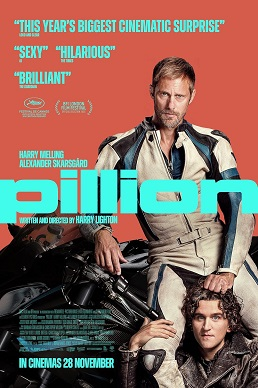


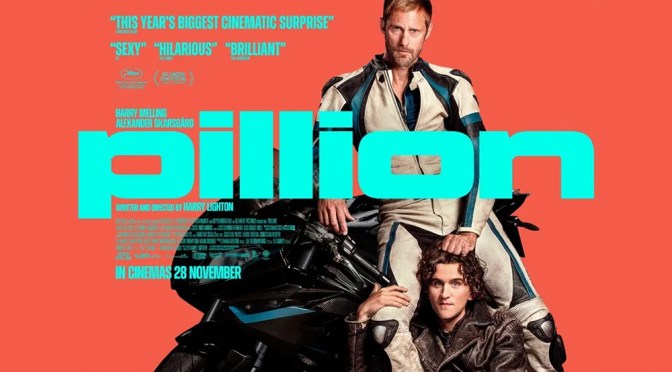
There’s a tender audacity to Pillion (2025), an erotic rom-dom-com that sneaks up on you with the gentleness of a confession. What begins as an off-kilter meet-cute blooms into something far more vulnerable: a rites-of-passage story about sexual awakening, self-recognition, and the courage it takes to accept pleasure without apology.

At its heart is Colin, played with exquisite restraint by Harry Melling. Melling has always been an actor of intelligence, but here he finds a new register—soft-spoken, watchful, quietly aching. His performance never reaches for easy beats; instead, it accumulates detail. A look held a fraction too long. A smile that arrives late. Colin’s desire isn’t announced; it’s discovered, moment by moment, and the effect is deeply empathetic.

Opposite him, Alexander Skarsgård’s Ray is all smoulder and swagger on first impression—an insouciant masculinity that seems effortless, almost cocky. But Skarsgård is doing something more interesting beneath the surface. The sexuality is undeniable, yes, but it’s armoured. Pain leaks through the cracks, giving Ray a bruised romanticism that complicates the dominant energy he projects. The push and pull between the two men becomes the film’s most potent charge.



Director Harry Lighton deserves enormous credit for navigating this tonal tightrope. His direction is fantastically nuanced, allowing intimacy and humour to coexist without deflating either. The film understands that eroticism can be funny, awkward, even faintly ridiculous—especially when it’s new—while still honouring its emotional stakes. The explicit moments are handled with confidence rather than coyness, lacing the heartfelt beats with risqué shocks that provoke gasps, laughter, and the occasional wince. The physical opposites of Harry’s mild-mannered traffic warden versus Ray’s macho biker also add characterful humour to the mix.

The contemporary setting, rooted in the London suburb of Bromley, is another inspired choice. This is not a glossy, aspirational London; it’s resolutely unglamorous, familiar, and quietly stifling. That ordinariness makes Colin’s awakening feel all the more radical, a private revolution unfolding in plain sight. Furthermore, strong support comes from Lesley Sharp and Douglas Hodge as Colin’s parents, whose love is real but imperfect, shaped by generational discomfort and unspoken fears. Their scenes add texture rather than judgment, grounding the film in a recognisable family dynamic.

Be warned: Pillion (2025) doesn’t shy away from explicit sex scenes or moments of leather-adorned domination (including BDSM), and those elements may provoke strong reactions. But they’re not there for provocation alone. Lighton uses them as part of the emotional grammar of the film, insisting that tenderness and risk, humour and heat, can occupy the same frame. Ultimately, Pillion (2025) reveals itself as something quietly radical—a deeply touching romantic comedy that treats sexual self-discovery with empathy, intelligence, and a disarming lack of shame. It lingers not because of what it shows, but because of how carefully it listens to its characters while they learn who they are.
Mark: 8.5 out of 11


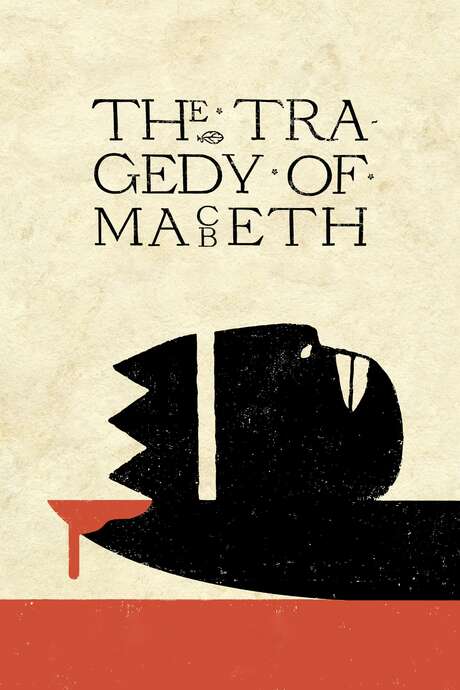
APPLE TV FILM REVIEW: THE TRAGEDY OF MACBETH (2021)

APPLE TV FILM REVIEW: THE TRAGEDY OF MACBETH (2021)

Directed by Joel Coen

Screenplay by Joel Coen (Based on Macbeth by William Shakespeare)

Produced by: Joel Coen, Frances McDormand, Robert Graf

Cast: Denzel Washington, Frances McDormand, Bertie Carvel, Alex Hassell, Corey Hawkins, Harry Melling, Brendan Gleeson etc.

Cinematography: Bruno Delbonnel

*** SPOILERS ALERT ***


The Coen Brothers – Ethan and Joel Coen – are, as a filmmaking duo, one of the most original, imaginative, daring, and brilliant artists of my generation. I have watched all of their films many times at the cinema and at home, having completely connected with their distinct style and cinematic voice from their very first film, Blood Simple (1984) to their most recent release anthology Western The Ballad of Buster Scruggs (2018). As they’ve developed as filmmakers my admiration has grown exponentially over the years. They have worked within the studio system while maintaining their cinematic individuality and independent spirit.

Thus, it was a surprise when it was announced that Ethan Coen was taking a break from filmmaking, leaving his brother to venture out solo. Joel’s first production as a singular director is an adaptation of William Shakespeare’s famous Scottish play, The Tragedy of Macbeth (2021). With Denzel Washington cast in the lead and Frances McDormand portraying Lady Macbeth, Joel Coen certainly brought major talent to this prestige Apple production. Yet, given how familiar the play is to the world and the number of film, stage, radio and TV adaptations there have been, could the sole Coen breathe fresh life into this ancient tome?


If you haven’t seen or read Macbeth it is a tragedy first believed to have been performed in 1606. It deals with Macbeth’s journey from heroic warrior to murderous King to paranoiac and haunted mad person. Shakespeare’s themes are so absorbing in relation to the nature of ambition, fate and how a greedy lust for power will destroy a man’s soul and future. The play’s language is pure bewitching poetry and the gothic spirit which pervades the story clutches and squeezes at one’s organs tightly. Macbeth’s fate is sealed as soon as he believes the three witches prophecy on the battlefield. He is damned by his own hubris as well as his wife’s subtle manipulations. But how well does Joel Coen and his stellar cast capture such themes and character intricacies?

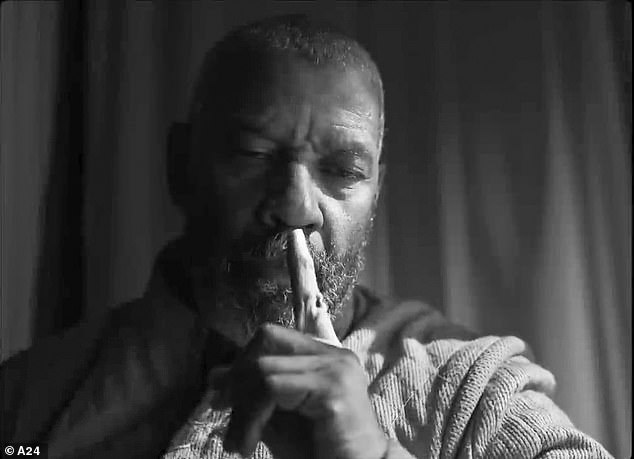
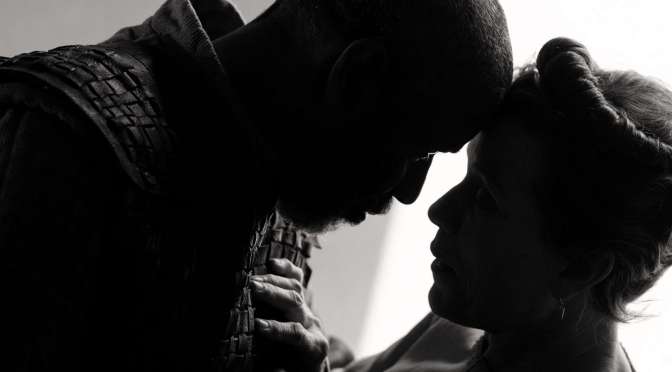
Firstly, the look of The Tragedy of Macbeth (2021) is astounding. Shot in brooding monochrome, shadows loom ominously creeping closer via Bruno Delbonnel’s striking cinematography. Moreover, the large sets dwarf the players given them a trapped feel. As though the walls are closing in on their souls as each fateful decision is made. The cast are uniformly superb too. Indeed, Coen makes a fascinating decision regarding the witches, having them portrayed in tremendously twisted fashion by one actor, Kathryn Hunter. Washington and McDormand are of course excellent. However, having such iconic actors in the leads did cause some disconnect with their respective characters. Plus, and I realise it is sacrilege to say this, but I always felt that Macbeth and his wife’s fall into insanity seemed to come too quickly in the latter acts. Lady Macbeth’s suicide in this adaptation felt particularly rushed.

My main tragedy of The Tragedy of Macbeth (2021) is that I did not enjoy it as much as many of the critics have. It is an incredibly wondrous film to look at. The sound also crackles and pops with howling wind, squawking birds, metal swords clashing and THAT sensational dialogue being delivered with majestic power by the cast. Yet somehow, despite the prodigious talent and excellent work presented by all I did not quite gel with it. I think it is probably my over-familiarity with the narrative, plus it was a very respectful adaptation. I would have liked to have seen more gore and action, rather than the restrained vision Joel Coen so expertly delivers here. Nonetheless, it remains another impressive addition to his amazing filmic curriculum vitae.

Mark: 8 out of 11