Tag Archives: prison drama

Amazon Prime Film Review: Sing Sing (2023) – displays the redemptive power of art and performance!

Amazon Prime Film Review: Sing Sing (2023)

Directed by Greg Kwedar

Screenplay by Clint Bentley & Greg Kwedar

Story by Clint Bentley, Greg Kwedar, Clarence Maclin & John “Divine G” Whitfield

Based on “The Sing Sing Follies” by John H. Richardson and Breakin’ the Mummy’s Code by Brent Buell

Produced by Clint Bentley, Greg Kwedar & Monique Walton

Main cast: Colman Domingo, Clarence Maclin, Sean San José,
Paul Raci, Sharon Washington, Jon-Adrian “JJ” Velazquez, Patrick “Preme” Griffin, Sean “Dino” Johnson, Miguel Valentin and more.


Cinematography by Pat Scola
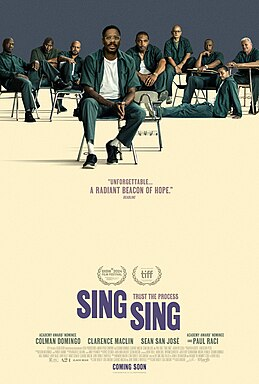


Sing Sing (2023) is a powerful prison drama directed by Greg Kwedar, based on the real-life Rehabilitation Through the Arts (RTA) program at New York’s Sing Sing Correctional Facility. The film follows John “Divine G” Whitfield (portrayed by Colman Domingo), a wrongfully convicted man who finds purpose and transformation through participation in a prison theatre group. As the group prepares to stage an original comedy, tensions arise, particularly between Divine G and a new, skeptical member, Clarence “Divine Eye” Maclin (played by himself).

The reported $2 million budget for the prison-based theatrical drama Sing Sing (2023) underscores a powerful truth in filmmaking: emotional impact and narrative power are not dictated by the size of a production’s budget. In an industry often dominated by multi-million dollar spectacles and high-concept visual effects, Sing Sing (2023) stands out as a reminder that authenticity, performance, and purposeful storytelling can achieve more than sheer spending ever could. In this way, the film charts a path forward for filmmakers: it shows that profound emotional connection comes not from lavish resources but from the courage to tell deeply human stories with clarity, care, and conviction.

By investing modestly but wisely—prioritizing casting choices, intimate direction, and a grounded script—the filmmakers harness the emotional gravity of the story itself. Featuring real formerly incarcerated individuals alongside professional actors, the film creates a resonance that can’t be manufactured with money alone. The restraint in budget mirrors the thematic focus of the film: confinement, transformation, and human dignity. There’s a raw, stripped-down sincerity in Sing Sing (2023) that aligns with its financial humility, allowing viewers to focus not on spectacle but on spirit.
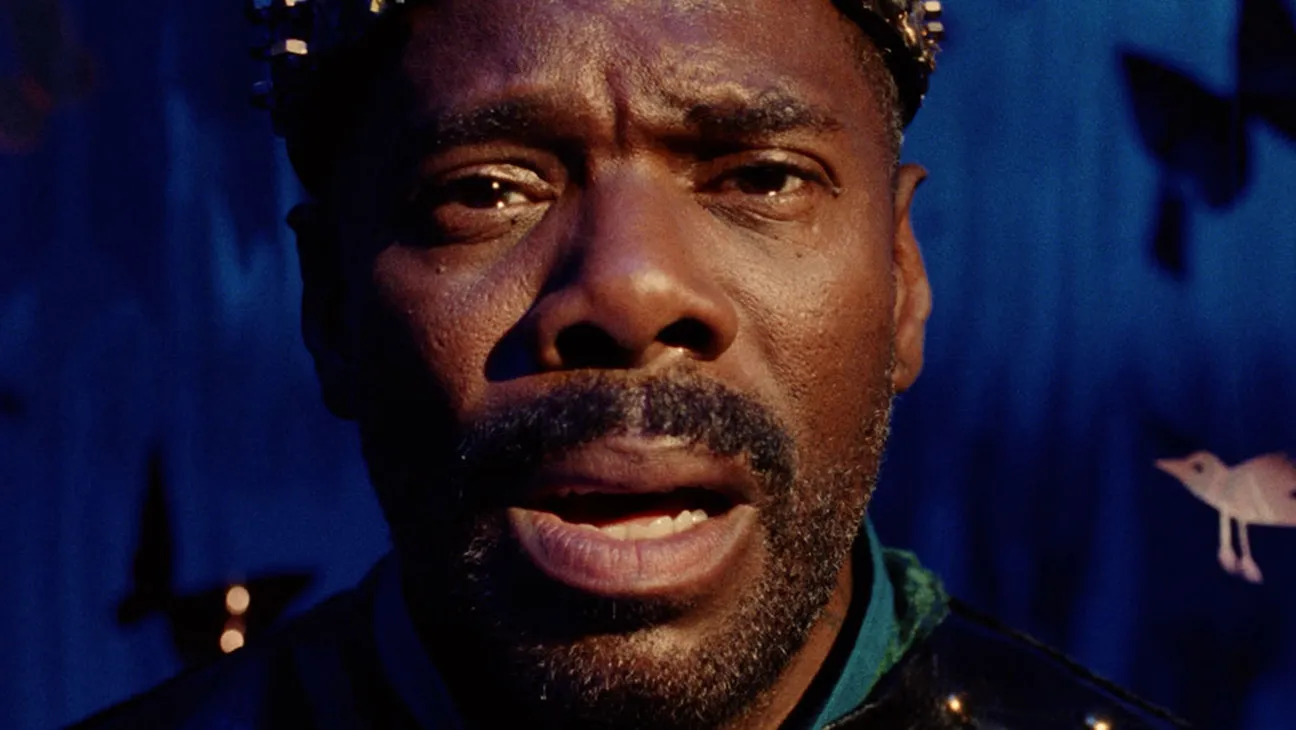


At the heart of the film is Colman Domingo majestic performance. Without question he is one of the most enthralling actors working today. With a presence that radiates both gravitas and vulnerability, he has the rare ability to inhabit characters so fully that they feel less like performances and more like revelations. In Sing Sing, his work is restrained, generous, and deeply moving—serving not just as a lead, but as a quiet conduit for the emotional power of those around him. It’s the kind of performance that reminds you what acting is for.

There’s a grounded nobility to Domingo’s recent choices—films that matter, that uplift overlooked voices, and that seek to transform rather than simply entertain. In an era where so many talented actors get absorbed into the ever-expanding Disneyverse or other IP-driven machines, one can only hope that Domingo continues on this path. His gifts are too profound, too precise, to be flattened into quips and CGI battles. He belongs in films like Sing Sing (2023) where the stakes are human and the impact is lasting.

Directed with subtle power by Greg Kwedar he delivers a drama of transcendent creative expression as the inmates forge deep bonds, confront personal demons and change societal perceptions. Featuring performances by both professional actors and real-life formerly incarcerated individuals, Sing Sing (2023) offers an authentic and moving exploration of redemption, resilience, and the transformative power of art. Of course not all of them are innocent and are guilty. The film does not apologise for their crimes or glamourise them, but allows these men to find light amidst the darkness; a spiritual and cultural escape from the walls and bars which surround them.

Mark: 9 out of 11


ESCAPE AT DANNEMORA (2018) – SHOWTIME REVIEW – Cinematic TV drama of the highest quality!

ESCAPE AT DANNEMORA (2018) – SHOWTIME TV REVIEW

Created by: Brett Johnson, Michael Tolkin

Directed by: Ben Stiller

Writers: Brett Johnson, Jerry Stahl, Michael Tolkin

Starring: Patrica Arquette, Benicio del Toro, Paul Dano, Bonnie Hunt, Eric Lange, David Morse etc.

Episodes: 8

**MAY CONTAIN SPOILERS**

Patricia Arquette as Tilly in Escape at Dannemora (Episode 1)

“Based on a true story” is a sentence we often find before many television dramas and feature films. It goes without saying that some are truer to their source events than others. The recent Oscar winner Green Book (2018), is a case in point, with the family of Dr Shirley quite rightly up in arms about the incorrect representations of family history on screen. Having said that, and despite the rather simplistic political rendition of race relations in said film, if I enjoy something I’m not bothered too much about historical accuracy. What one is after is a flavour and authenticity of truth. I accept that the truth should not get in the way of good drama and lets be honest Hollywood has never been frightened of downright fabrication to tell its tall tales. Obviously, one refutes ridiculous or incredible lies but ultimately, if you don’t like the bending of reality then stop watching films and television.

Based on the “true story” of a prison escape from the Clinton Correctional Facility, New York, during 2015, this superior genre serial is gritty and authentic and feels so real in the direction and performances it hurts. Whether it’s the truth is another story, yet what the writers and director Ben Stiller have delivered are eight episodes of cinematic television of the highest order. It begins and moves at a very slow pace establishing the aftermath of the main events, before flashing back and setting the scenes month-by-month of the personalities and their respective actions.

The first character we meet is Patricia Arquette’s brassy machine room supervisor, Tilly Mitchell. She’s bold and ballsy and dominates her relationship with husband, Lyle. Lyle himself, is portrayed effectively by Eric Lange as a tragic and loyal simpleton. Both of them are bad hair, big teeth and strangled accents, trapped by their class, work and lack of finance. While Lyle simply accepts his lot, Tilly is drawn to the prisoners she is meant to be supervising and ventures into illegal and inappropriate behaviour with the inmates. Arquette absolutely nails the humanity of a character who, in her fifties stuck in a dead-end job, desperately seeks attention and excitement. This makes her a hard target in such a masculine and testosteronic environment. However, she is more than happy to encourage and collude with said prisoners.

Prison dramas have always presented a fascinating way of analysing human nature and behaviour. The individuals are trapped in enclosed spaces and given many inmates’ proclivity to violence, they soon become a powder keg of fizzing egos and surging tension. Casting superb actors such as Benicio Del Toro and Paul Dano in the leads was a masterstroke. Both are expert at playing complex human beings and one of the challenges for a writer can be to get empathy for characters that are imprisoned for violent crimes. Yet, the actors, writers and director all manage to balance the tension between representing antagonistic characters in a sympathetic light. Indeed, even though we know Del Toro’s Richard Matt and Dano’s David Sweat are dangerous criminals, the story really drags us into their painstakingly patient escape work. Each episode builds obstacles they must overcome, almost until the suspense becomes unbearable. Lastly, while Dano’s tunnel-vision determination moves them toward the light, Del Toro’s manipulative hard man controls both Tilly and David Morse’s prison guard, Gene Palmer.

Overall, this is a superior prison genre serial; virtually cinematic in its casting, direction, locations, setting and performance. It takes a familiar narrative of a prison escape but transcends the genre with Arquette’s, Del Toro’s and Dano’s incredibly human and believable performances. These are not likable characters and they are not even anti-heroes to root for. Undoubtedly, though the Showtime production delivers as compelling a character drama as you’re likely to see all year. Director Ben Stiller deserves credit too for delivering a consistently balanced body of work here. Known more for his comedic film output there’s a maturity to Escape at Dannemara which offers authenticity in character and setting. If Stiller and his writers have bent the truth in any way then it does not offend my sensibilities; in fact I openly welcome it when the outcome is as absorbing as this.

Mark: 9.5 out of 11