Tag Archives: Rupert Friend

Cinema review: The Phoenician Scheme (2025) – plus Wes Anderson’s Top 11 films ranked in order of favourite!

Cinema review: The Phoenician Scheme (2025)

Directed by Wes Anderson

Screenplay by Wes Anderson

Story by Wes Anderson and Roman Coppola

Produced by Wes Anderson, Steven Rales, Jeremy Dawson, John Peet

Cinematography by Bruno Delbonnel

Main cast: Benicio del Toro, Mia Threapleton, Michael Cera, Riz Ahmed, Tom Hanks, Bryan Cranston, Mathieu Amalric, Richard Ayoade, Jeffrey Wright, Scarlett Johansson, Benedict Cumberbatch, Rupert Friend, Hope Davis, etc.
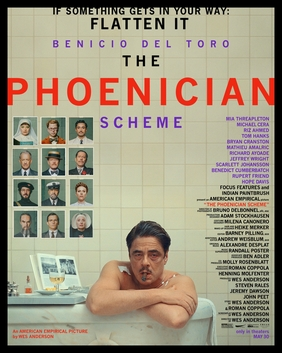


Reviewing films for me is a form of study—a way to sharpen one’s eye, expand one’s perspective, and gain insight into the craft of filmmaking. It’s a dialogue between the film and the viewer, where curiosity, analysis, and empathy fuel a deeper appreciation for the storytelling process. Yet, Wes Anderson’s films often feel unreviewable in the traditional sense because they exist entirely within their own meticulously crafted universe—one governed by its own visual grammar, emotional tone, and narrative rhythm. His work defies conventional cinematic benchmarks not because it fails to meet them, but because it invents new ones.

His films are stylized to the point of abstraction: symmetrical compositions, pastel palettes, theatrical performances, deadpan dialogue, and storybook framing devices. These are not aesthetic flourishes added to conventional storytelling—they are the storytelling. Every element is calibrated to serve a singular artistic vision that prioritizes mood, irony, and emotional restraint in a way that often bypasses mainstream emotional cues. As a result, trying to evaluate Anderson’s films on the basis of relatability or realism can feel like trying to critique a painting for not being a photograph. You either enter his world and accept its rules, or you don’t.
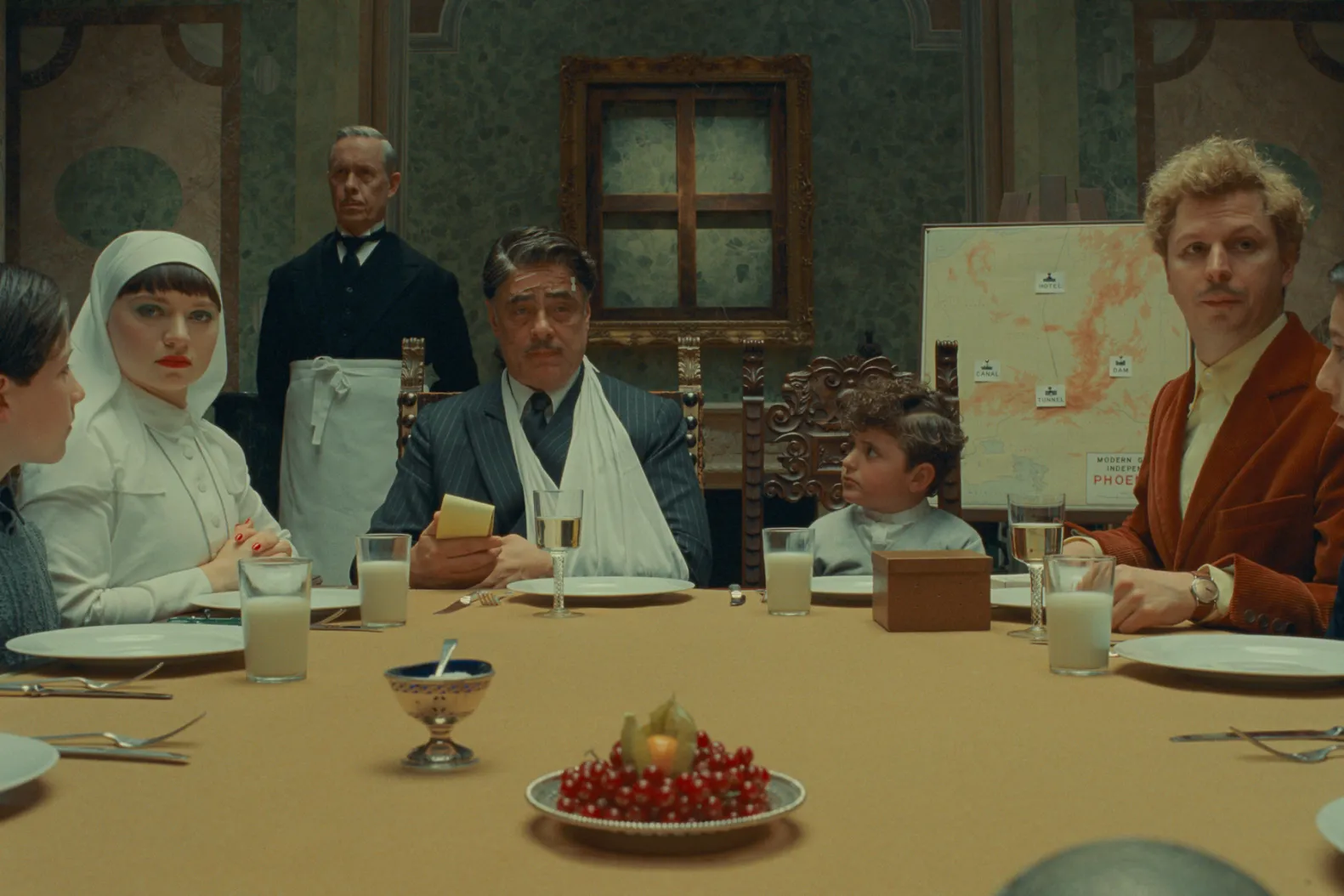


The Phoenician Scheme (2025) is a whimsically convoluted tale of betrayal, bureaucracy, and buried emotion, anchored by a surprisingly tender pairing: Benicio Del Toro and Mia Threapleton as an estranged father and daughter navigating a pastel-hued world of espionage, assassination attempts and eccentricity. Del Toro brings his signature quiet intensity—filtered through Anderson’s signature deadpan—as Anatole “Zsa-Zsa” Korda, a controversial businessman seeking backing from an array of peculiar business types. Threapleton, in a breakout performance, plays Sister Liesl, a guarded young nun.

As always, Anderson’s aesthetic is immaculately controlled—every frame a still life, every line delivered with just-so detachment. But where the plot sometimes meanders through its own labyrinth of quirk, the film’s emotional core remains grounded in Del Toro and Threapleton’s quiet push-and-pull: a relationship built on misread intentions, half-kept promises, and a strange kind of inherited stoicism. Michael Cera is on splendid form too as Bjørn Lund, a Norwegian entomologist, tutor, and Korda’s administrative assistant.

Overall, The Phoenician Scheme (2025) is best enjoyed as a moving art installation and while thematically strong in terms of the father-daughter-reconciliation theme, doesn’t reach the narrative heights of Anderson’s best work. It’s a visually charming and emotionally sincere entry—proof that even in a world of plane crashes, quirky business deals, weird relatives, religious fervour, eccentric guerrillas, the arc of connection between a father and daughter can still feel radical.

Mark: 7.5 out of 11


Wes Anderson’s Top 11 films ranked in order of MY favourites!

1. Rushmore (1998)

2. The Grand Budapest Hotel (2014)

3. The Royal Tenenbaums (2001)

4. Bottle Rocket (1996)

5. Asteroid City (2023)

6. Isle of Dogs (2018)

7. Moonrise Kingdom (2012)

8. The Darjeeling Limited (2007)

9. The Phoenician Scheme (2025)

10. The Life Aquatic with Steve Zissou (2004)

11. The French Dispatch (2021)


CINEMA REVIEW: ASTEROID CITY (2023)

CINEMA REVIEW: ASTEROID CITY (2023)

Directed by Wes Anderson

Screenplay by Wes Anderson

Story by: Wes Anderson and Roman Coppola

Produced by: Wes Anderson, Steven Rales, Jeremy Dawson

Ensemble Cast: Jason Schwartzman, Scarlett Johansson, Tom Hanks, Jeffrey Wright, Tilda Swinton, Bryan Cranston, Edward Norton, Adrien Brody, Liev Schreiber, Hope Davis, Stephen Park, Rupert Friend, Maya Hawke, Steve Carell, Matt Dillon, Hong Chau, Willem Dafoe etc.

Cinematography Robert Yeoman

*** MAY CONTAIN SPOILERS ***


Wes Anderson is a phenomenal filmmaker with an imaginative set of style and narrative conceits. Everyone one of his releases is a rich tapestry containing memorable ensemble casts, adjacent framing, effervescent use of colour, geographical pertinence, intellectual humour and subjects situated in the far-left field of genre cinema. Yet, I do not enjoy ALL his films. Often, they veer too far into eccentric pretentiousness. Indeed, I found The French Dispatch (2021), frustrating and, other than the tremendous story set in the asylum with the mad artist (Benicio Del Toro), disconnected with it overall. While it was another admirable work of cinema, I did not enjoy it as a paying punter.

Asteroid City (2023), however, is a film I enjoyed greatly. The famous actors immersed within the ensemble, the cinematic artifice, the clever meta-narrative structure, symmetrical shot composition, beautiful use of colour, offbeat characters, specific era and geographical setting, imaginative props and costume design, and witty humour are all present as per Anderson’s impressive body of work. But Asteroid City (2023) had a larger emotional heart than his recent films, and is my favourite since the superb, The Grand Budapest Hotel (2014).


A heady combination of genres, one could describe, Asteroid City (2023), as a hyper-sci-fi-Western-retro-romantic-futuristic-comedy and study of grief set in 1950s, America. Despite filming taking place in Spain. Anyway, Anderson establishes the characters through the structure of a film within a play. Bryan Cranston’s narrator introduces us to the various middle-class, working class, military and scientific personalities who become trapped in the town of Asteroid City by a series of unlikely but hilarious misfortunes. Throughout the chapter inter-titles the scenes return us to our narrator as Anderson cleverly comments on the process of creating a story while delivering the narrative events.

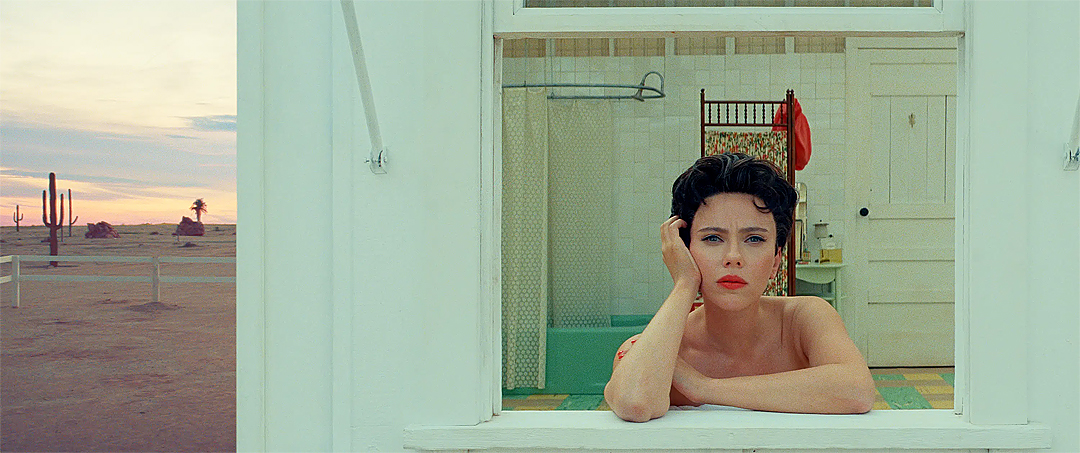
Anderson delves into familiar themes of grief via the story of war photographer, Augie Steenbeck (Jason Schwartzmann) and his four kids, one of whom is a genius, Woodrow (Jake Ryan). He is there for a Junior Stargazer competition amidst the setting of the gigantic meteorite bunker. Again, the theme of prodigious children is mined for great humour and intellectual wit by Anderson. The futuristic inventions created by the children are especially fantastic. The plot strand of the science geniuses being exploited by the military and corporate sharks is deftly done. Yet, the main emotional heft is delivered within Augie and Hollywood actress, Midge Palmer’s (Scarlett Johansson) budding relationship. Johansson is especially compelling in the role, anchoring the film in welcome pathos, amidst the flurry of idiosyncratic absurdities Anderson throws at us. His framing of Augie and Midge between the their chalets is aesthetically memorable, visually augmenting their growing human connection.

Asteroid City (2023) proves once again Wes Anderson is one of the most original filmmakers of this generation. Will he gain some more converts to his particular set of cinematic bag of tricks? Who knows. What I do know is that I was completely immersed in the colour, movement, pace, humour, aesthetics, performances and themes with the film. I must say though, while it was necessary, the “Area 51” style — and I don’t want to give it away — absurd plot-turn halfway through was not my favourite aspect of the piece. But I realise it was narratively integral to the story. The meta-framing also seemed to get in the way at times of the main action effecting the occupants of Asteroid City. But these are minor gripes at a thoroughly artistic, beautifully immersive, and technically impressive cinematic achievement.

Mark: 9 out of 11