
Autumn Horror Film Reviews
In the languid drift of autumn, when Halloween’s shadow lengthens and winter begins its slow, expectant inhale, the world seems to slip into a more suggestive register—one where every rustling leaf feels like a whispered omen. It is, of course, the most appropriate season to surrender to the year’s latest horror releases, as though communing with these cinematic phantoms might prepare us—spiritually, aesthetically—for the deeper darkness to come.
Which basically means I have been catching up with some 2025 horror film releases I missed at the cinema during autumn. A couple of these probably warrant more in depth solo reviews, but as I edge closer to old age and the reaper’s scythe, I am economizing somewhat.
*** MAY CONTAIN SPOILERS ***
Black Phone 2 (2025)
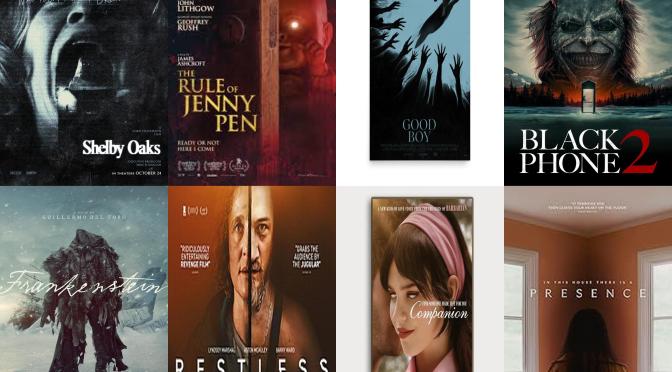
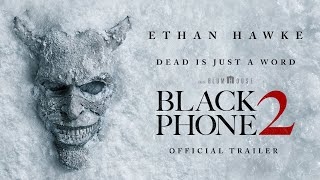
Scott Derrickson and co-writer C. Robert Cargill deliver a sequel to The Black Phone (2021) with Mason Thames, Madeleine McGraw, Jeremy Davies, and Ethan Hawke reprising their roles from the first chiller. I actually enjoyed this one more than the original, which despite the clunky set-up, finds the siblings and others trapped in a teen camp hit by a blizzard. They find themselves hunted and haunted by both The Grabber (Hawke) and other ghostly spirits haunting the area. Derrikson throws a lot of horror tropes and the characters (literally in certain scenes) at the walls, and much of it sticks. Having said that, I still don’t think The Grabber is the scariest villain ever committed to screen, despite Hawke’s presence. (Mark: 7.5 out of 11)
Companion (2025)
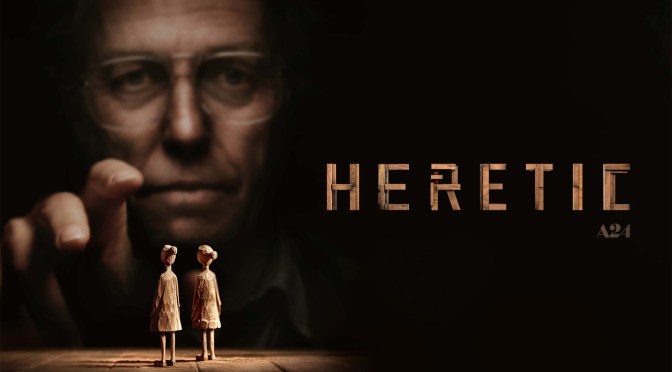
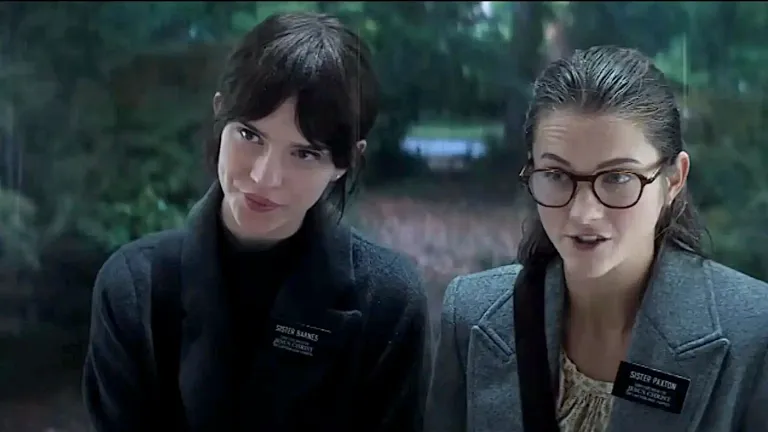
Companion (2025) feels like Garland’s Ex Machina (2014) colliding elegantly with Fargeat’s feral Revenge (2017)—a sunny day-horror fable that hides its nastiest surprises in plain sight. Its twists are sharp, its aesthetic confident, and its ideas far more ambitious than its modest surface first suggests. I would have admired it even more were it not, on occasions, completely dumb. Plus, the occasional drift into a comedic register undercuts its more incisive moments. The beautiful Sophie Thatcher once again commands the screen with the same riveting presence she brought to Heretic (2024). Mark: 8 out of 11.
Graduation Day (1981)
Thanks to Bobby Carroll’s site for reminding me about slasher film, Graduation Day (1981), as I had completely forgotten about it. High quality kills and gore mask a screenplay which has more nudity than character development. Yet, I am a sucker for these 1980’s exploitation flicks and this is a watchable one. Mark: 6 out of 11
Good Boy (2025)
An low-budget horror film triumph with Ben Leonberg directing his own dog, Indy, a Nova Scotia Duck Tolling Retriever, as the only witness to nasty spirits threatening his owner. The film emerges as a formal tour-de-force, whose meticulous composition and deliberate pacing elevate its simple premise into something unexpectedly resonant. Its visual precision and rhythmic control shape an atmosphere of dread that feels more sculpted than sensational, grounding the film in an emotionally impactful narrative about loyalty, vulnerability, and the unsettling spaces between trust and fear. For all its craft, and impressive animal direction, the film doesn’t quite sustain a relentless menace throughout. But, it remains a memorable feature debut from Leonberg and Indy the dog. Mark: 8.5 out of 11.
Presence (2025)
In Presence (2024), David Koepp and Steven Soderbergh demonstrate just how potent a one-location horror film can be when discipline and imagination converge. The entire piece unfolds like a controlled exhale: a slow-build structure that trusts the audience to lean in, and a drifting, almost contemplative camera that adopts the ghost’s POV to quietly—sometimes imperceptibly—reveal fragments of the story. Instead of overplaying its hand, the film slow-drips its plot elements with an elegance that keeps tension suspended in the air, letting unease pool in the corners of an otherwise ordinary space. By the time it reaches its finale, Presence (2024) delivers not only a surge of emotional and thematic clarity but two genuinely surprising twists—earned, unsettling, and executed with the kind of precision that affirms both writer and directors’ mastery of the form. Mark: 8.5 out of 11.
Restless (2024)
Really good independent British thriller with Lyndsey Marshal as a nurse, Nicky, who finds herself terrorized by 24-hour partying thug neighbours. Writer-director Jed Hart creates great empathy and identification with the situation and it’s a shame decent British films like this get short shrift at the multiplexes. Nicky’s spiral into insomnia-driven madness is compelling as her desperate attempts to sleep give way to vengeance. But the film’s final act tonal turn denies us a full-on descent into suburban hell, for something amenable but unfortunately less twisted. Mark: 7.5 out of 11
The Rule of Jenny Pen (2025)
The Rule of Jenny Pen is an original, weird, and powerful shock of a film — a mash-up of psychological thriller and nursing-home horror that lands far more often than it stumbles. Its greatest strength is, without question, the towering performances at its centre. Geoffrey Rush and John Lithgow, two masters of calibrated gravitas, turn the film’s cat-and-mouse mind game into a gripping acting showcase. Together, they elevate the film’s themes of aging, vulnerability, and institutional neglect into something both unsettling and strangely beautiful. The plotting, however, does get a bit sticky toward the end. The final act jars slightly, causing me confusion in an otherwise tight psychological narrative. Still, even as the story wobbles a tad, the film’s originality, eerie tone, and powerhouse acting keep it compelling. Mark: 8 out of 11
The Woman in the Yard (2025)
The Woman in the Yard (2025) rises on the strength of Danielle Deadwyler’s commanding lead performance. As a mother trying to protect her two children from a funereal spirit lingering in their backyard, Deadwyler grounds the supernatural dread with raw emotional honesty. The child actors match her with a believable, lived-in family dynamic that makes the haunting feel all the more personal. Where the film falters is in its structure. The script leans heavily on crow-barred flashbacks that interrupt rather than enrich the unfolding tension. A more linear approach could have built a stronger emotional momentum, allowing the story’s grief, guilt, and mental illness to accumulate naturally instead of stuttering backward at key moments. (Mark: 6 out of 11)
Together (2025)
Together (2025) gets an immediate boost from the casting of real-life couple Alison Brie and Dave Franco, whose natural chemistry gives the film an authentic emotional core. As a pair trying to rebuild their relationship after moving from the city to a rural small town, they convincingly inhabit the tensions, resentments, and unspoken fears that surface long before the horror does. Their incompatible expectations feel lived-in — and once they tumble into a sinkhole and the strange bodily transformations begin, that emotional groundwork makes the nightmare hit harder.
I loved the trailer for this film, which promised a truly skin-crawling descent into body-horror chaos. The final product, while atmospheric and often engrossing, doesn’t fully deliver on that promise. It pulls back when it could push further, leaving some of the more disgusting, surreal possibilities off-screen. But the ending — bold, surprising and unexpectedly poignant — is a fantastic payoff. Even if the film doesn’t always reach the extremes it teases, Together still manages to leave a memorably twisted impression. Mark: 8.5 out of 11
 The Cinema Fix presents