Tag Archives: Steven Yeun

Cinema Review: Mickey 17 (2025) – a multi-faceted sci-fi adaptation that leaves one drunk, but somehow still thirsty!

Directed by Bong Joon Ho

Screenplay by Bong Joon Ho – Based on Mickey 7 by Edward Ashton


Produced by Dede Gardner, Jeremy Kleiner, Bong Joon Ho and Dooho Choi

Main Cast: Robert Pattinson, Naomi Ackie, Steven Yeun, Toni Collette, Mark Ruffalo, Patsy Ferran, Cameron Britton, Daniel Henshall, Anamaria Vartolomei, etc.

Cinematography by Darius Khondji


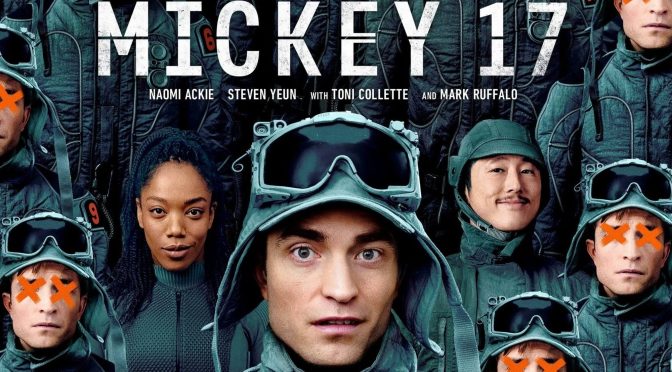
Bong Joon Ho’s adaptation of Mickey 7, the 2022 sci-fi novel by Edward Ashton, showcases a compelling convergence of the director’s distinctive thematic interests with the novel’s narrative. Known for his ability to blend genre elements with incisive social commentary, Bong’s version of Mickey 7, now titled Mickey 17 (2025) is a comedic, at-times-crazy and imaginative sci-fi film exploring human resilience, class struggles, scientific malpractice, environmental abuse, genocidal terra-forming, plus the existential impact of technology within the workplace.

Robert Pattinson is the eponymous Mickey, a “disposable” worker sent on perilous missions to terra-form a distant planet, with his life repeatedly put in danger only for him to be replaced if he dies. This directly ties into Bong’s recurring exploration of human resilience in the face of dehumanizing systems, something seen in his earlier films, such as Snowpiercer (2013) and Okja (2017). Bong’s protagonists are often ordinary people facing systems designed to strip away their individuality, and Mickey’s repeated resurrections emphasize the fragility of life within these systems.

Another prominent theme in Bong’s films is the exploration of class and social inequality. In Parasite (2019), he delved into the gap between the wealthy Park family and the impoverished Kim family, using the home as a microcosm of societal hierarchies. In Mickey 17 (2025), the corporate-driven space mission echoes the exploitation seen in these films. Mickey’s status as an expendable worker mirrors the broader economic systems that exploit individuals for labour without regard for their well-being. The fact that Mickey is repeatedly discarded without consequence is an unsettling reflection of how capitalist structures often devalue human life for the sake of profit.

Bong has always critiqued the alienation of labour, especially how working-class individuals are treated as replaceable cogs in the machine. In Mickey 17 (2025), this theme is amplified as Mickey’s life is literally expendable, offering a stark commentary on the commodification of labour within the context of futuristic colonization. The struggle for survival and dignity, against an uncaring corporate entity, will likely resonate with themes Bong has previously explored. Likewise, in Memories of Murder (2003), the search for truth is tied to the characters’ understanding of themselves and their roles in society. Such societal and existential crises fit perfectly with Bong’s broader thematic preoccupation with the fragility of the human experience in the face of overwhelming, often oppressive, external forces. The question remains: is Mickey 17 (2025) any good?
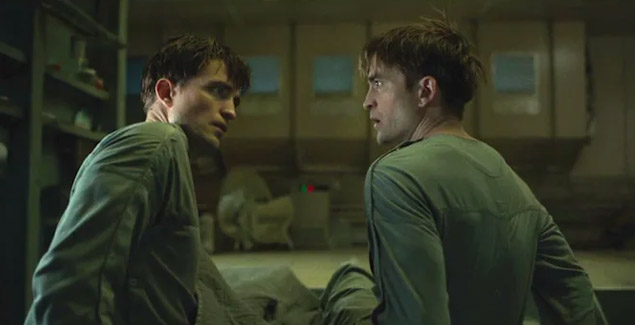


Robert Pattinson, who plays various versions of the titular character Mickey, brings his signature range of brooding intensity and offbeat charisma to the role. His performance is a key part of what makes the film such an intriguing watch. Pattinson excels in portraying Mickey’s emotional journey—a man repeatedly resurrected after dying in increasingly perilous circumstances, struggling with his own identity, and questioning the morality of the system that disposes of him so easily. However, Pattinson’s performance also contributes to the film’s unevenness. While his portrayal is captivating, the character’s arc and motivations can occasionally feel too vague or inconsistent, leading to moments where it’s unclear whether Mickey is supposed to be a tragic figure, a comic relief, or something in between.

The visual effects in Mickey 17 (2025) are nothing short of stunning. Bong Joon Ho, along with his team, creates a visually immersive universe, blending futuristic technology, the planet landscapes of Niflheim, quirky alien creatures and mind-bending visuals to evoke a sense of awe. The digital photo-copying resurrection process that Mickey undergoes is a feat of visual storytelling, with the film using cutting-edge effects to show Mickey’s multiple deaths and resurrections in creative and striking ways. The film’s alien planet, with its strange, luminous terrain and exotic creatures, also adds a surreal and fantastical quality to the narrative. Indeed, the theme of environmental and indigenous protection is vital, but does eventually clash with that of the existential worker.

Where Mickey 17 (2025) truly shines—and stumbles—is in its wacky, unpredictable storytelling. Bong Joon Ho has always been a director unafraid to blend genres and tones, and here he creates a narrative that swings wildly between dark comedy, sci-fi absurdity, and existential dread. One moment, you’re laughing at Mickey’s off-kilter interactions with his fellow colonists, and the next, the film veers into dark, serious territory as Mickey grapples with his own mortality and the ethical dilemmas of his existence. Moreover, the film’s narrative structure itself is erratic. There are moments where the plot careers off course, lost in the chaos of its high-concept premise.

As Robert Pattinson’s charismatic, multi-faceted performance anchors the film, the performances of Mark Ruffalo and Toni Collette—as the grotesque antagonists—topple the tone too far into bad theatre. Finally, Bong Joon Ho’s trademark brilliance is evident throughout, but Mickey 17 (2025) ultimately suffers from the very risk-taking that makes it unique. It’s a thrilling, uneven ride that fascinates, frustrates, makes one laugh and leaves you with a lot to think about—once the space dust has settled. Perhaps I should have had what Bong Joon Ho and his production team were drinking before I watched it. If so, I should certainly of made it a double!
Mark 7.5 out of 11


CINEMA REVIEW: NOPE (2022)

CINEMA REVIEW: NOPE (2022)

Directed by Jordan Peele

Written by Jordan Peele

Produced by: Jordan Peele and Ian Cooper


Cast: Daniel Kaluuya, Keke Palmer, Steven Yeun, Michael Wincott, Brandon Perea, Wrenn Schmidt, Barbie Ferreira, Keith David, etc.

Cinematography: Hoyte van Hoytema

*** MAY CONTAIN SPOILERS ***


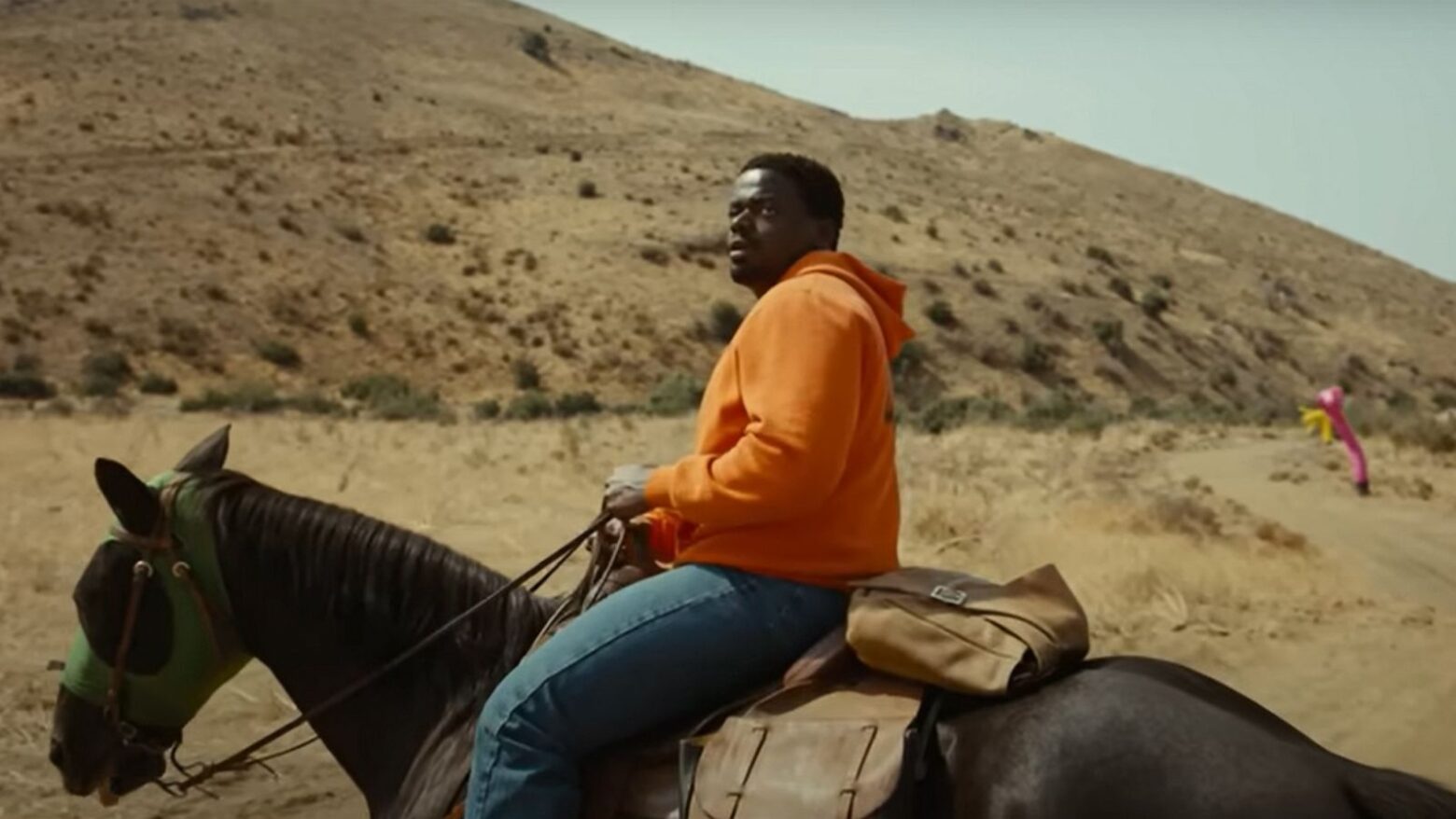
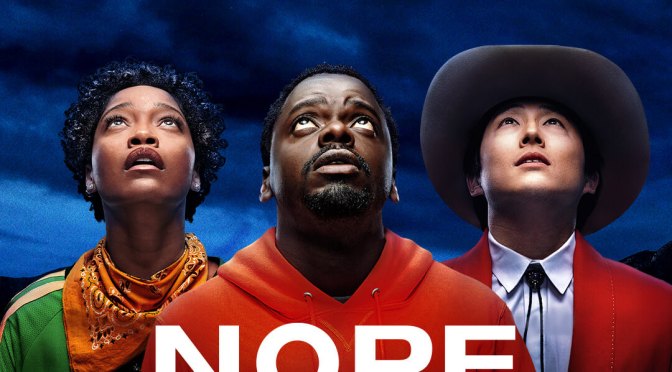
Following on from the Oscar winning, Get Out (2017), and the should-have-won-an-Oscar-for-Best-Actress-in-Lupita-Nyong’o, Us (2019), Jordan Peele is back with the enigmatically titled, and equally ambiguous sci-fi-Western-horror film, NOPE (2022). Taking on writing and directing duties again, Peele has delivered a majestic looking cinematic feast, brimming with incredibly memorable images involving horses, chimpanzees, cinema, waving inflatables, surveillance cameras, carnival shows, and something very large that comes from beyond the clouds.

So, what’s Nope (2022) actually about? Well, put simply it’s all about cowboys and girls overcoming a monster. But it is much more than that. Because, narratively speaking it is difficult to sum up in a few sentences. Peele builds his most complex film to date by delivering a series of visually powerful set-pieces throughout. He also challenges the audience with an intelligent visual system which thematically links television, cinema, cameras, Hollywood, animals and a spectacular eye in the sky. Like Tarantino’s Once Upon a Time in Hollywood (2019), Joel Coen’s The Tragedy of Macbeth (2021) and Martin Scorsese’s religious epics, Nope (2022), is what I consider to be a big-budget, arthouse blockbuster.


The film, which is divided into chapters, establishes brother, OJ (Daniel Kaluuya) and sister, Emerald (Keke Palmer), trying valiantly to keep the family ranch from going under. Once thriving under their father’s management, the ranch would supply horses to the Hollywood conveyor belt of A-list and B-movie Westerns. With such work now in short supply, OJ is forced to sell horses to local theme park owner, Ricky “Jupe” Park (Steven Yeun), however, he vows to get them back when business improves. But a bigger threat is soon looming over the ranch.

Kaluuya’s performance as OJ is laconic, invoking pure Robert Mitchum. Did I like and root for OJ? Sort of. Keke Palmer as Emerald brought the energy to the screen, but I never felt the two characters really gelled with the themes successfully. Peele’s intellectual leaps, while thought-provoking, barriered an emotional connection within Nope (2022). Likewise, Yuen’s Jupe is given a tremendously imaginative and powerful backstory which brings us into his character, but ultimately fails to pay off dramatically. In fact, these scenes felt like they were from a different film altogether. Indeed, Peele uses the sci-fi monster genre to hang his view of the world on, not always to maximum impact.

While the characterisations and themes arguably fail to gel within the screenplay, it is visually where Nope (2022) really soars. Hoyte van Hoytema should sweep the board come awards time. Further, Peele creates an optical banquet by juxtaposing the majestic vistas of the Californian landscape with modern camera and surveillance equipment, plus those colourful inflatable dummies. Then there’s the thing that is “Not Of Planet Earth”. What is it and what does it represent? Who is watching and controlling and feeding on us? Peele’s challenging concepts are to be applauded within the genre blockbuster, but I just wanted to be scared and care a bit more. On additional viewings, Nope (2022), may be considered a masterpiece, but at the moment it could be one of those great films which I kind of didn’t like. As discussed previously here.

Mark: 8 out of 11


SKY CINEMA REVIEW: MINARI (2020)

SKY CINEMA REVIEW: MINARI (2020)

Directed by Lee Isaac Chung

Written by Lee Isaac Chung

Produced by: Dede Gardner, Jeremy Kleiner, Christina Oh

Cast: Steven Yeun, Han Ye-ri, Alan Kim, Noel Kate Cho, Youn Yuh-jung, Will Patton, etc.

Cinematography: Lachlan Milne

Music by: Emile Messeri

*** MAY CONTAIN SPOILERS ***


See the source image

I missed Minari (2020) at the cinema. Which is a shame because out of all the Oscar-nominated films from earlier in the year it is now my favourite. Further, it should certainly have won the best film award. (Note: I have yet to see The Father (2020).) It has the heart and warmth and realistic hope that eventual winner, Nomadland (2020) lacked. Chloe Zhao’s powerful character study was arguably too meditative and glacially paced, without any real diversion from the plodding repetition of monotonous existence. I love slice-of-life and character-driven work, but I want some drama too. While Minari (2020) has certain meditative qualities, writer-director Lee Isaac Chung has crafted a supeb cinematic memoir of tender power and emotion.

Set in 1983, Minari (2020), centres around the Yi family. They had been working in California, but have moved to Arkansas to farm the land. The father, Jacob (Steven Yuen) dreams of growing produce to sell to fellow Korean businesses. However, the farm and static caravan he has purchased is remote with no guarantee of water to ripen the fruits and vegetables. Jacob must either pay exorbitant prices from the water company or find a natural spring underground. Alas, rain rarely threatens the Arkansas plains.

Jacob’s wife, Monica (Han Ye-ri) hates the caravan and does not share his farming dream. This marital conflict drives the much of the narrative as the two argue constantly. Monica is especially angry that her young son, David (Alan Kim) is so far from a hospital. The boy has a heart condition and like any good mother she consistently worries. Their teenage daughter, Anne (Noel Kate Cho) is too young to be a full-time caregiver to David while Jacob and Monica support themselves working at a local chicken factory. To placate Monica, Jacob brings grandmother, Soon-ja (Youn Yuh-jung) to the farm for support. Here a beautiful and funny parallel plot begins as David and his grandmother’s relationship comes to the fore.


See the source image

I watched Minari (2020) on a Sunday morning at home, relaxed and cosy, filled with breakfast and coffee. I loved experiencing the film. The music wondrously supports the beautiful photography that illuminates the green and wheats that fill the lens’ gorgeous palette. Like the masterpiece, Parasite (2019), Minari (2020) represents a working-class family striving to stay together and survive in difficult times. The main difference though is the Yi family were doing it with honest hard graft rather that grifting, ducking and diving. The Yi’s connect with nature and the land rather than skimming the city and the rich. I really rooted for the Yi’s. Jacob’s desires and battles to find water reminded me of the equally moving French classic, Jean De Florette (1986).

Minari (2020) doesn’t take the obvious route of making the Arkansas locals racists who rail against the Yi’s. While there are some scenes involving cultural clashes, much of the drama and humour derives from the families interactions with each other. Indeed, the scenes where David antagonises his unconventional grandmother are hilarious. Youn Yuh-jung as the elderly matriarch is fantastic, deservedly winning a best supporting actress role at the Oscars. Moreover, Lee Isaac Chung gets a miraculous performance from child actor, Alan Kim. Special mention for a busy, but nuanced portrayal of a troubled but helpful worker, Paul, by Will Patton. His deeply pious character could have easily been made an antagonist, but Chung ensures he is another relatable human being in a film full of them.

Mark: 9.5 out of 11