Tag Archives: Tahar Rahim

CINEMA REVIEW: NAPOLEON (2023)

CINEMA REVIEW: NAPOLEON (2023)

Directed by Ridley Scott

Written by David Scarpa

Produced by: Ridley Scott, Kevin J. Walsh, Mark Huffam, and Joaquin Phoenix.

Main Cast: Joaquin Phoenix, Vanessa Kirby, Tahar Rahim, Rupert Everett, Ben Miles, Ludivine Sagnier, and more.

Cinematography by Dariusz Wolski
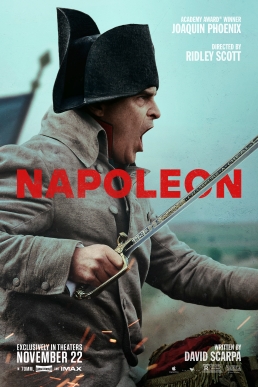


If you didn’t know, Napoleon I, was also called Napoleon Bonaparte. He was a French military general and statesman and played a key role in the French Revolution (1789–99), before serving as first consul of France (1799–1804). Napoleon was also the first emperor of France (1804–14/15) and given his many years of military campaigns in France and overseas, striving to build an empire for France, he is now widely considered one of the greatest generals in history. I don’t purport to be a history buff, but I was intrigued by the release of Ridley Scott’s latest directorial epic cinematic behemoth, Napoleon (2023). This almost-three-hour release comes to the screen courtesy of Sony and Apple TV with Joaquin Phoenix in the titular role.

Opening in 1793, a young, but up-and-coming army officer Napoleon witnesses Marie Antoinette get her head cut off at the guillotine, followed quickly by one of the many thrilling battle sequences in the film at the ‘Siege of Toulon.’ It was during this siege that young Napoleon first won fame when his strategy, forced the Anglo-Spanish fleet to withdraw. After which David Scarpa’s adaptation and Scott’s editing team rattle through the battles, romances, trials and decades of Napoleon’s life so breathlessly, as an audience member, I felt like this film was more of a “Now That’s What I Call Napoleon!” greatest hits package rather than a compellingly intense drama and study that really delves into the complex psychology of Napoleon’s character.
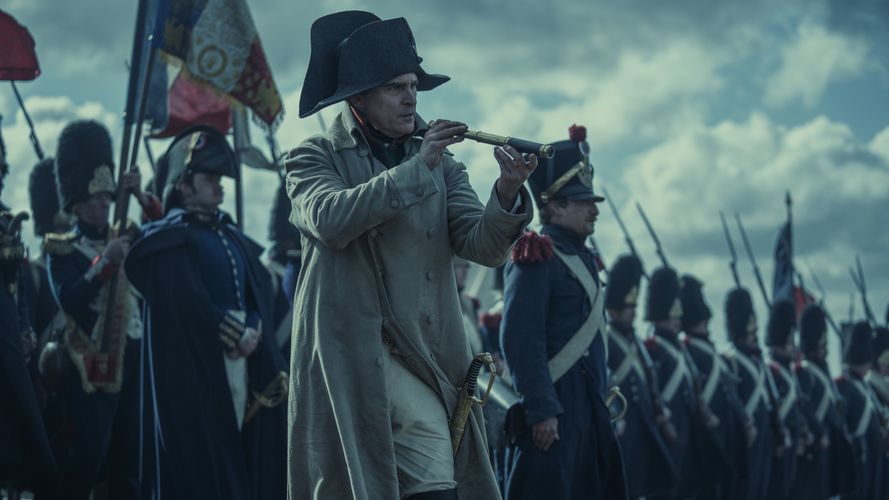


Ridley Scott, at 85 years old, brings his masterly cinematic experience to many explosive battle sequences in Egypt, Austria, France and throughout Europe. The stunning cinematography by Dariusz Wolski supports Scott’s vision and it is safe to say the production design and costumes are par excellence for this massively budgeted production. However expertly shot, edited and rendered on screen the battles are, they often feel rushed through at times, providing jarring punctuation to the central human focus of the film, the love story between Napoleon and Josephine (Vanessa Kirby). I feel like I would have preferred a deeper analysis of Napoleon’s military strategics and perhaps a more serious approach to his importance to France through his victories on the battlefield.

Vanessa Kirby, as Josephine, brought a class, elegance and intelligence to the role and gives a standout performance. Joaquin Phoenix, who is one of the finest actors around, however, gives us a misfiring characterization as Bonaparte. I just felt it was too knowing and flippant throughout. I am not averse to humour in serious dramas, but I just did not warm at all to his portrayal. Scott’s director of Phoenix plus Scarpa’s screenplay only touch the surface of Napoleon’s character. I mean here is a historical figure who has an incredible series of chapters in his life, but there is no major journey or arc in his story. At times I even felt there was ridicule for Napoleon, but if you wish to critique him, then why not make him more dangerous, a monster even. Especially given his predilection and desire for war and sending thousands of lives to their tragic end.

Like I say, Scott and his amazing creative team deliver a greatest “hits” of Napoleon’s life and some spectacular cinematic moments. But quite often I was bored and questioning why I should care about any of the characters on screen. Scott and his screenwriter have been stung by criticisms of historical inaccuracies. That doesn’t bother Scott at all and would not bother me if such changes enhanced the drama. Yet, the compression of certain scenarios seem to be more for pacing reasons. Lastly, there is apparently a four-hour directorial cut of the film so perhaps that contains more depth, emotion and psychological analysis of Napoleon, rather than the paper-thin filmic treatise delivered here.
Mark: 7 out of 11


AMAZON FILM REVIEW: THE MAURITANIAN (2021)

AMAZON FILM REVIEW: THE MAURITANIAN (2021)

Directed by: Kevin Macdonald

Produced by: Adam Ackland, Michael Bronner, Benedict Cumberbatch, Leah Clarke, Christine Holder, Mark Holder, Beatriz Levin, Lloyd Levin, Branwen Prestwood-Smith, etc.

Screenplay by: M.B. Traven, Rory Haines, Sohrab Noshirvani

Based on: Guantanamo Diary by Mohamedou Ould Slahi

Cast: Jodie Foster, Tahar Rahim, Shailene Woodley, Benedict Cumberbatch, Zachary Levi etc.

Music by: Tom Hodge

Cinematograph: Alwin H. Kuchler

***CONTAINS MASSIVE SPOILERS***


“…a writ requiring a person under arrest to be brought before a judge or into court, especially to secure the person’s release unless lawful grounds are shown for their detention.” — Basic definition of Habeus Corpus


Mohamedou Ould Slahi is a Mauritanian man who was held for fourteen years from 2002 to 2016 without charge in the Guantanamo Bay detention camp. FOURTEEN YEARS without a trial. Let that sink in.

If ever there was a living embodiment of a Kafkaesque experience then this is that. Surely, whatever crime you have or haven’t committed you should be presented to a court of law and evidence be brought to try you for the alleged crimes. Clearly, the United States have, in this singular case against Mohamedou Ould Slahi, by denying him a trial — plus torturing him for years too — committed a heinous war crime. Yes, the 9/11 atrocities were abominable acts of violence, but that does not give anyone the right to wreak revenge against other human beings without concrete evidence to justify such acts. It’s a basic tenet of existence that separates us from the beasts in the jungle, every person deserves a fair trial! To be honest the U.S. administration who were responsible for this and and many other crimes are worse than animals.

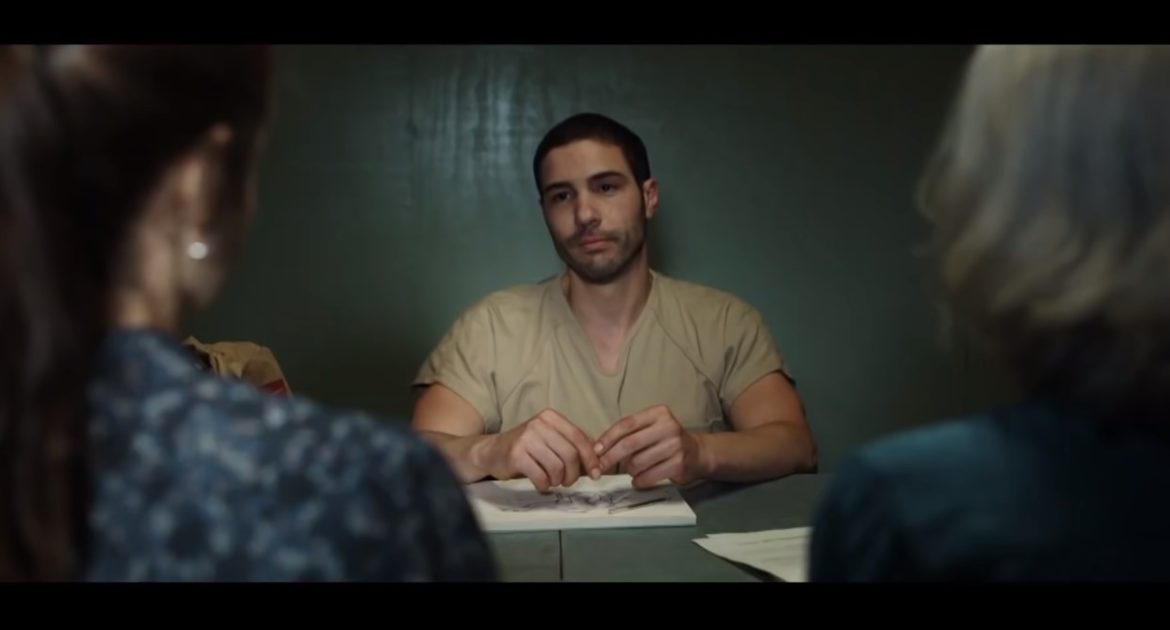
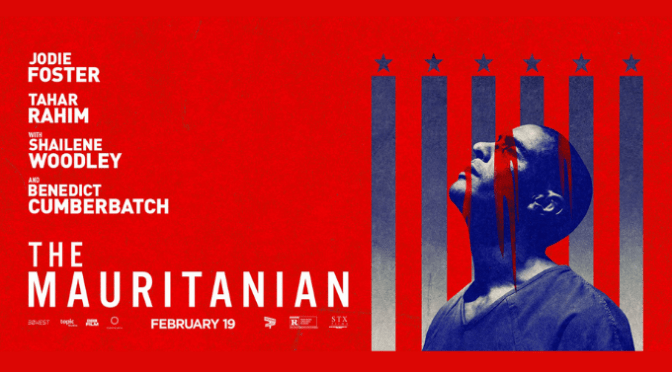
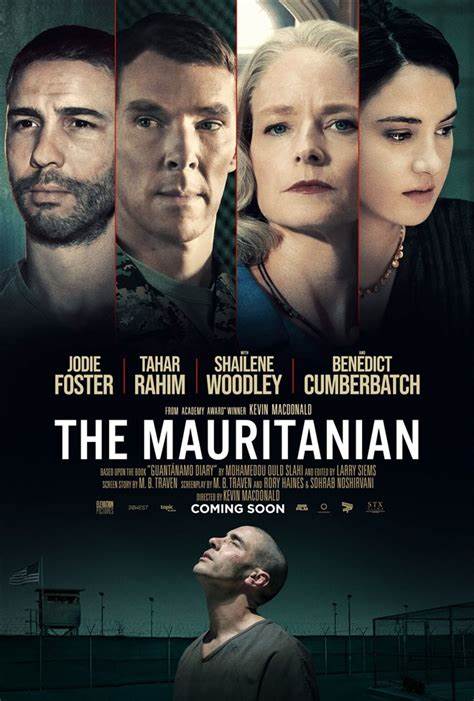
The Mauritanian (2021) is an adaptation of Mohamedou Ould Slahi’s best selling memoir, Guantanamo Diary. It opens with Ould Slahi (Tahar Rahim) attending a wedding in his place of birth. He is then picked up by local Mauritanian police and after that is imprisoned indefinitely, unknown to him, by the American military. The structure of the film compellingly builds his experiences in jail and the brutal torture he endures as the Americans attempt to gather intelligence to prove that he is a key member of the terrorist cells who organised the 9/11 attacks. As the story reveals his horrendous ordeal, lawyers represented by Nancy Hollander (Jodie Foster) and Teri Duncan (Shailene Woodley) take up his case to, at the very least, enable Ould Slahi to get a fair trial.


As well as highlighting the horrors of how Ould Slahi was treated this film is a damning indictment of American foreign policy, notably under the George Bush administration. The fact that Ould Slahi and his lawyers were successful in achieving a win against his imprisonment was not the end of his entrapment. You honestly won’t believe what occurred even after he won his case. But what about the film you may be asking? Well, I am just staggered this and many other sitautions occur in the world so this is more of an emotional review than a cinematic appraisal.

Overall, The Mauritanian (2021) is an exceptional drama which is directed effectively by seasoned filmmaker, Kevin Macdonald. As Ould Slahi, Tahar Rahim is absolutely exceptional. He brings a humanity and humour to the character’s struggle. What I absorbed most from his portrayal, and this is reflected in a moving credits sequence excerpt, is how Ould Slahi retained his humour even in the most trying times. Furthermore, while their character’s smack of white saviour personalities, the legal team — based on the real people — are expertly represented by Jodie Foster and Shailene Woodley. Foster especially shows her usual sterling gravitas in the role. Benedict Cumberbatch, arguably miscast as the military lawyer suffering a crisis of conscience, gives his usual excellent performance.

Lastly, The Mauritanian (2021), because of a slightly choppy screenplay, I felt the book deserved a longer telling via a television series. Yet, the film remains an important narrative about how bloodlust, greed and desire for revenge means humans commit horrific acts in the name of war. Mohamedou Ould Slahi was denied his freedom and human rights for crimes never proved. How he survived is an incredible feat of human endurance. Thus, whether he was innocent or guilty his freedom was earned and then some.

Mark: 9 out of 11