Tag Archives: The Cinema Fix classic film reviews

CLASSIC MOVIE SCENES #13 – BLADERUNNER (1982) – “TEARS IN THE RAIN.”

CLASSIC MOVIE SCENES #13 – BLADERUNNER (1982) – “TEARS IN THE RAIN.”

Directed by: Ridley Scott

Produced by: Michael Deeley

Screenplay by: Hampton Fancher and David Webb Peoples – based on the novel, Do Androids Dream of Electric Sheep by Philip K. Dick

Cast: Harrison Ford, Rutger Hauer, Sean Young, Daryl Hannah, James Edward Olmos etc.

Cinematography: Jordan Cronenworth

Music: Vangelis

*** CONTAINS MASSIVE SPOILERS ***
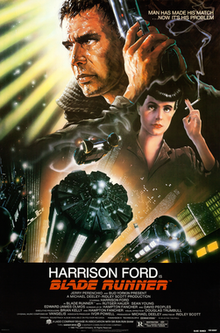


Philip K. Dick’s dense, dystopic and futuristic novel, Do Androids Dream of Electric Sheep (1968), is an ugly, beautiful, depressing, obtuse, hypnotic skip-through-treacle read full of incredible concepts relating to: Artificial Intelligence; robot technology; android simulacra; animal husbandry; apocalyptic disease; virtual reality/empathy mood tech; extinguished humanity; and ultimately, of course, mortality and death. The fact that Hampton Fancher and David Webb Peoples were able to fashion a workable screenplay for Ridley Scott to direct is a creative miracle. Moreover, it is testament to the writing and Scott’s incredible production team that, Bladerunner (1982), is held in such high esteem among cinema fans now.

The original Bladerunnerdespite bombing at the box office and subsequently going through a number of cuts, re-cuts, final cuts and re-re-re-releases, has become a bona fide science fiction cinema classic. I watched the original theatrical version recently and despite the deadpan Harrison Ford voiceover and spurious, tacked on “happy” ending, it actually has a lot going for it. Obviously the ‘Unicorn Dream’ re-edits released under the guidance of Ridley Scott are the purer versions but the film holds up notably because of Ford’s gruff, depressive and world-weary performance as Rick Deckard; the imperious psychopathy of Rutger Hauer as android assassin Roy Batty; Scott’s glorious tech noir rendition of our desecrated future; as well as the evocation of Philip K Dick’s thematic existential power.

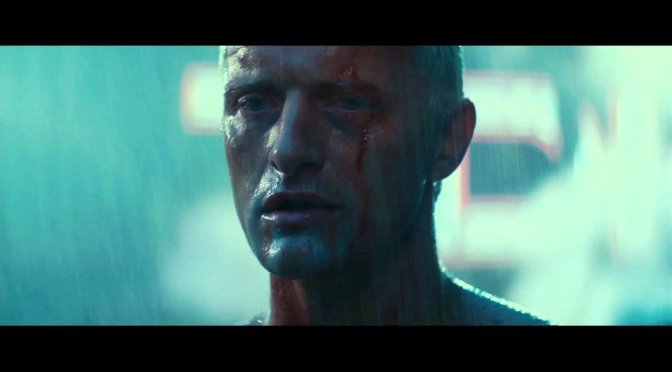
Such existential power is demonstrated in one of the final scenes where Batty has pushed Deckard to the edge of a building and death. The rain falls and the majestic soundtrack swells. A stripped down Batty, rather than let Deckard die, saves his life. It’s an ambiguous decision, but one of redemption for a replicant that is more used to delivering death. Perhaps, it proves that Batty does indeed have human qualities and Deckard will take up the cause. Delivering one final heartfound speech, Batty regales and laments the beautiful things he has seen. But they are gone – just like tears in the rain. It is a moving epitaph and amazing end to an incredible science-fiction classic. Batty closes down for good, but his demise and Hauer’s incredible performance will live long in the memory.
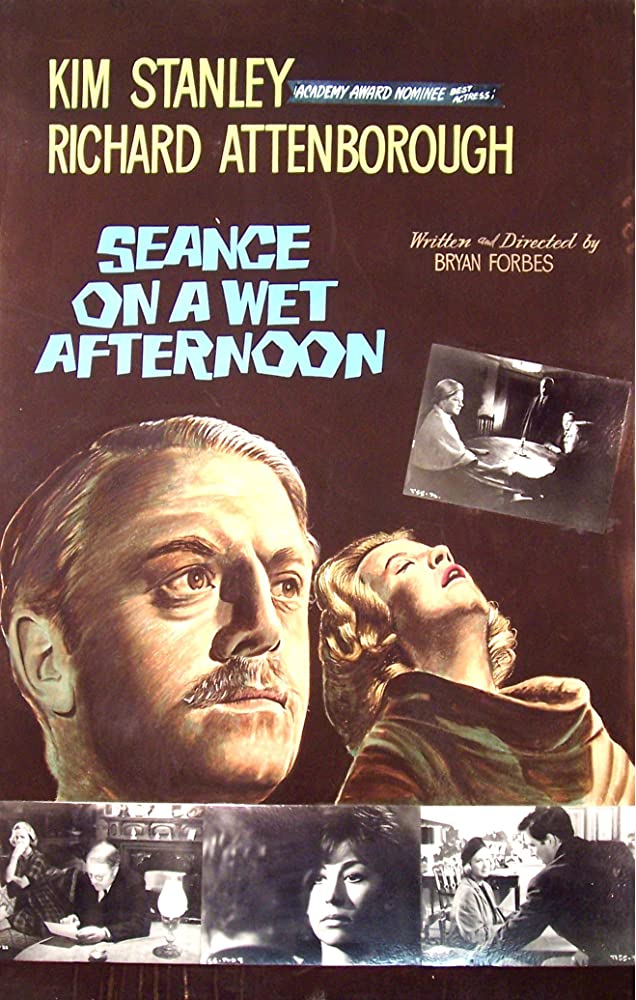
UNDER-RATED CLASSICS #6 – SEANCE ON A WET AFTERNOON (1964)

UNDER-RATED CLASSICS #6 – SEANCE ON A WET AFTERNOON (1964)

Directed by: Bryan Forbes

Produced by: Richard Attenborough, Bryan Forbes

Written by: Bryan Forbes (based on the novel by Mark McShane)

Cast: Kim Stanley, Richard Attenborough, Nanette Newman, Mark Eden, Judith Donner, Gerald Sim, Patrick Magee

Music by: John Barry

***MAY CONTAIN SPOILERS***


I started this series a while ago and posted a few times on the subject with multiple entries; however, I have now decided to make it a feature, like ‘Classic Movie Scenes’, concentrating on singular films. My rules are simple. An under-rated classic can be a film I love, plus satisfy the following criteria:

  1. Must not have won an Oscar.
  2. Must not have won a BAFTA.
  3. Must not appear in the AFI Top 100 list.
  4. Must not appear in the IMDB Top 250 list.
  5. Must not appear in the BFI 100 Great British films.
  6. Must not appear in the all-time highest grossing movies of list.

The latest film I have chosen did receive some critical acclaim when released, but it has since slid into mild obscurity. I only caught it on the cable channel Talking Pictures by chance. This channel, if you didn’t know, is like a British equivalent of TCM. However, it does have less well-known films and TV shows when compared to the American cable channel. Occasionally though, Talking Pictures will have a total gem and that is the case with Seance on a Wet Afternoon (1964).

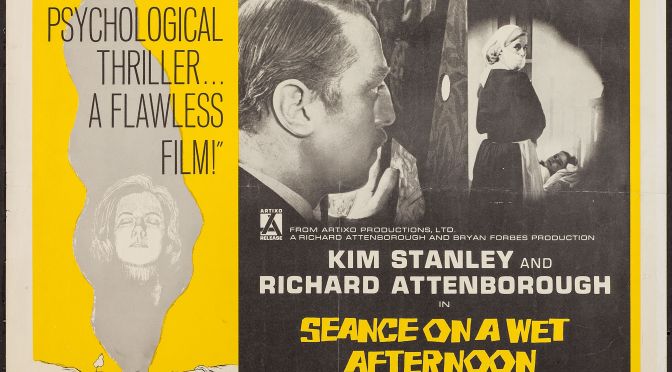
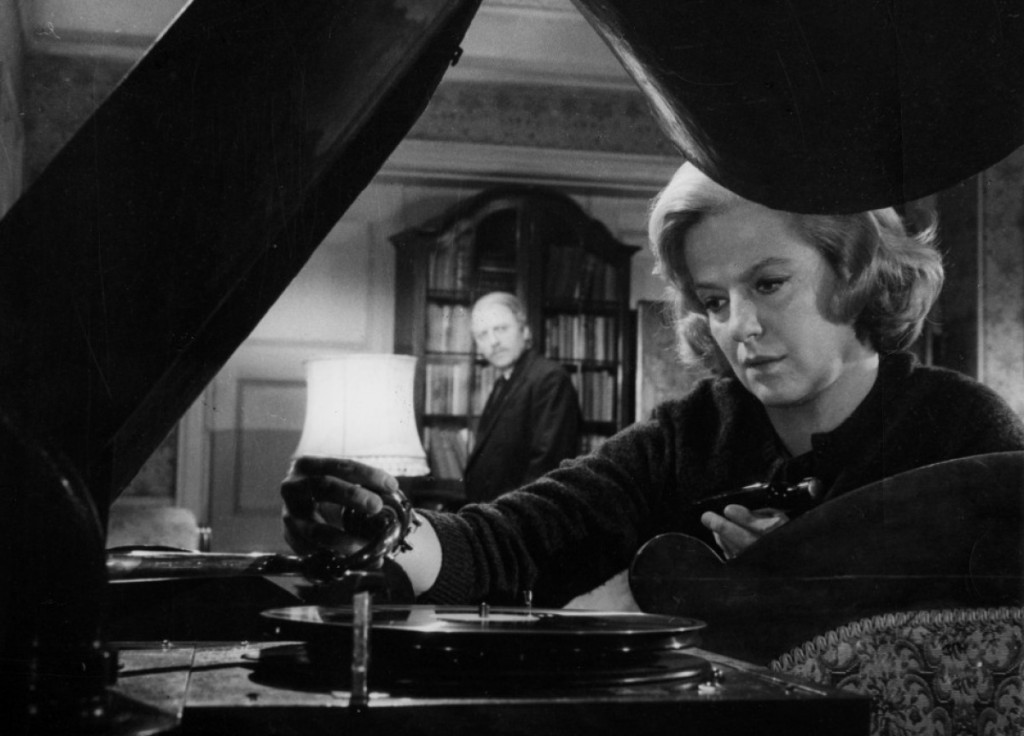
Adapted and directed by experienced British writer and director, Bryan Forbes, Seance on a Wet Afternoon (1964), casts Kim Stanley and Richard Attenborough as a married couple called the Savages. Stanley portrays Myra Savage. She is a psychic medium who hosts seances for small groups of people, while her more timid husband, Billy (Richard Attenborough), assists. They seem to have a comfortable life and live in a nice house; however, their history is blighted by the tragedy of losing a child. This leaves Myra’s personality, while dominant over Billy, somewhat neurotic and nervy. Determined to elevate her career as a psychic, she plots the kidnapping of a millionaire businessman’s young daughter. With Billy reluctantly agreeing to carry out the physical part of the crime, Myra intends to then use her psychic “skills” to help the police and family locate the missing girl. This and the ransom money will secure their financial future.


While we are all familiar with hostage plots, Seance on a Wet Afternoon (1964), is more complex than a basic crime thriller. It explores themes relating to psychic ability, grief and mental illness. Rather creepily, Myra often uses the spirit of her dead son, Arthur, as a guide to her decisions. Moreover, it also contains a series of suspenseful scenes relating to the kidnapping of the girl and the handing over the ransom money. While these are staple tropes of the kidnap genre the film does break with convention. Indeed, while revealing the kidnappers from the very start, the narrative also concentrates many scenes on the gradual breakdown of their fraught marriage. The Savages are not your everyday career criminals and their risky plan is testament to that.

Overall, Seance on a Wet Afternoon (1964) is a brilliant film which should be held in much higher regard. It contains one of the greatest acting performances I have witnessed in a while. Kim Stanley as the psychic, Myra Savage, is a haunted individual full, not only of hidden grief, but also a controlling sociopathy. One feels equally appalled by her and sympathetic at the same time. Richard Attenborough gives a quieter and unselfish performance as husband Billy, his character attempting to keep his tragic wife from going over the edge. The Savages may be kidnappers, but the skill in the writing, while not condoning their actions, makes you understand their skewed motives. In the end, Kim Stanley would be deservedly nominated for an Oscar, but lose to Julie Andrews as Mary Poppins. As we are aware, there is no justice in the world, and it doesn’t take a psychic to know which film and performance is the more memorable.


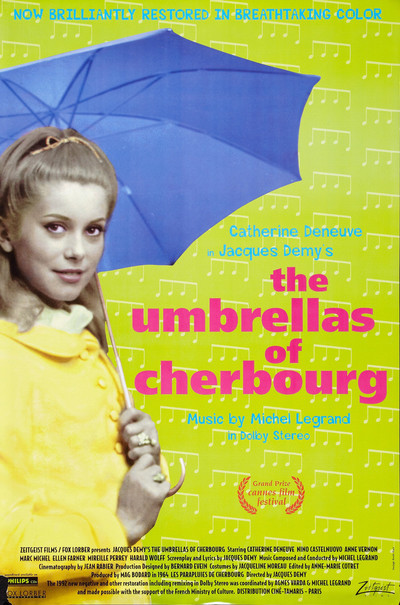
FILMS THAT GOT AWAY #6 – THE UMBRELLAS OF CHERBOURG (1964)

FILMS THAT GOT AWAY #6 – THE UMBRELLAS OF CHERBOURG (1964)

Written and Directed by: Jacques Demy

Produced by: Mag Bodard

Music by: Michel Legrand

Cast: Catherine Deneuve, Anne Vernon, Nino Castelnuovo, Marc Michel, Ellen Farmer, Mirielle Perrey etc.

**MAY CONTAIN SPOILERS**


I knew there were good reasons to get married. The obvious one is the positive nature of a caring relationship and not becoming a lonely, bitter old man. The other is that given my wife loves films too, she will introduce me to the occasional classic film I may have missed. Thus, we went to the BFI and watched the classic musical The Umbrellas of Cherbourg (1964). While she is a massive fan of the musical genre, I can take or leave it generally. Every now and then though I will really love a musical film. The Umbrellas of Cherbourg (1964) is now one of them.

Starting in 1957 and structured over three acts that end in 1963, we follow the lives and loves of two main protagonists, Genevieve (Catherine Deneuve) and Guy (Nino Castelnuovo). The ups and downs of their romance drives the narrative. The two struggle to keep their love alive amidst the obstacles of military conflict, social convention and family pressure. While the story is relatively simple, Jacques Demy’s wonderful script and direction warms you to the two young lovers. So much so, by the emotionally gut-wrenching ending, even a grizzled cynic like myself felt like crying.

The Umbrellas of Cherbourg (1964) is not your classic all-singing-all-dancing musical. It is more an opera of everyday life and love. The actors sing the dialogue all the way through and once I got used to this, the device really worked well for the story. Of course, Michel Legrand’s incredible score literally drenches the colourful sets and mise-en-scene with wonder. Moreover, Demy’s cinematographer, Jean Rabier, works miracles; his camera gliding around the actors in small spaces such as shops, garages, apartments and French cafes. Lastly, Catherine Deneuve and Nino Castelnuovo are such an attractive, but beautifully tragic screen couple. Clearly their touching story, amazing music and Jacques Demy’s cinematic brilliance had a massive influence of Damian Chazelle’s splendid La La Land (2016).

Mark: 9.5 out of 11