Tag Archives: Wunmi Mosaku

Cinema Review: Sinners (2025) – a blazing, bold and bloody blues opera!

Cinema Review: Sinners (2025)

Directed by Ryan Coogler

Written by Ryan Coogler

Produced by Zinzi Coogler, Sev Ohanian, Ryan Coogler

Main cast: Michael B. Jordan, Hailee Steinfeld, Miles Caton, Jack O’Connell, Wunmi Mosaku, Jayme Lawson, Omar Miller, Delroy Lindo, etc.

Cinematography by Autumn Durald Arkapaw
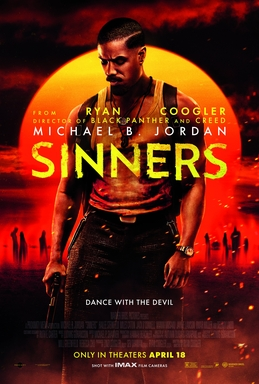


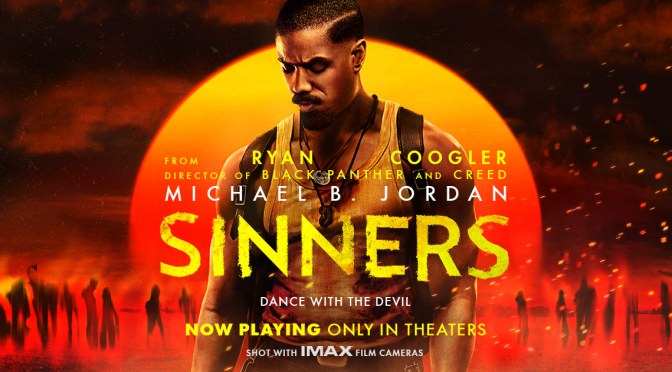
After the bleakly lustful vision of Robert Eggers’ Nosferatu (2024) — a film steeped in shadow, dread, and tragic sensuality — Ryan Coogler offers a wildly different, electrifying take on the vampire mythos: a bold, colourful, and deeply soulful experience that pulses with life even as it drinks from the dead. Where Eggers lingers in gothic majesty, with Sinners (2025), Coogler surges forward with kinetic energy, blending grind-house thrills and emotional depth with From Dusk Till Dawn-style narrative turns.

Coogler’s film is set in the richly textured American South of the 1930s, a world still nursing the scars of the Great War and on the cusp of social upheaval. Into this volatile landscape, he drops the muscular Michael B. Jordan as twin war veterans turned Chicago gangsters, Smoke and Stack — men who carry both physical and spiritual wounds from the trenches — now repurposed as businessman looking to set up a juke joint. These characters feel reminiscent of the working class anti-heroes of Peaky Blinders, their emotional trauma rendered in everything from flickering glances to bursts of brutal, operatic violence. The twins have ghosts of the past and present to battle including relationship issues with Stack’s ex-girlfriend, Mary (Hailee Steinfeld), as well as Smoke’s painful reunion with his wife, Annie (Wunmi Mosaku).

Sinners (2025) plot is muscular and sinewy, establishing the characters impressively before shifting the moody Southern gothic tale into an all-out genre-bender. The film contains a fine ensemble cast knitting a series of substantial supporting characters each with their own personalities, humour and wants. The most striking is Miles Caton as the twins’ cousin, Sammie “Preacher Boy” Moore, a young blues musician with an incredible ability, that proves to be a somewhat dangerous talent. Delroy Lindo also throws in another memorable performance as the ebullient pianist, Delta Slim. With the first night’s festivities in full swing three mysterious strangers appear from the near dark, desiring to be let in. Their leader is charismatic Remmick (Jack O’Connell) and he has more than partying in mind.
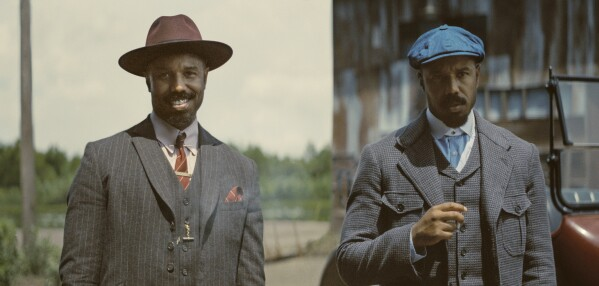


Visually, Coogler lets his imagination loose, notably in a memorable cross-generational musical montage that literally burns up the cinema screen. Gone is the shadow-heavy monochrome of Eggers; in its place is a palette of dusk reds, moonlit silvers, and deep bayou greens. The film pulses with colour, sex, motion, and sweat. Blood flows, but it never feels gratuitous — it feels earned, ritualistic, even sacramental. But what ultimately makes Coogler’s film so potent is its soul. Amid the genre thrills and gore, there’s a beating heart full of soul. These vampires are not romanticised, nor merely feared; they are hungry creatures. Coogler gives them back their humanity, and in doing so, reanimates the genre with urgency.

Music is where the film truly soars. Coogler and his production team, attuned to the cultural pulse, curate a soundtrack that fuses Delta blues, Appalachian folk, and early jazz into a feverish, ghostly soundscape. There are scenes where the music alone tells the story: a backwoods funeral scored by a bone-dry slide guitar; a juke joint confrontation where the rhythm of violence matches the stomp of the blues; a haunting lullaby sung by Remmick the migrant vampire that channels generations of sorrow. It is music as memory, as resistance, as raw emotional texture.

Sinners (2025) is not just a vampire film. It’s a blues opera. A folk horror elegy. A pulpy, poignant, and powerfully visceral story about the things that haunt us, and how we fight to keep our humanity intact. What begins as a slow-burning period drama smolders into a blood-soaked explosion of action and moral reckoning. Coogler even delivers a Klan-blasting and redemptive shoot-out final act set-piece. Lastly, in Coogler’s hands, the vampire becomes more than a monster; it’s a metaphor for trauma, addiction, religion, racism, and survival. Coogler reclaims the myth for a new generation, one shaped by history, crime, grief, music, and spiritual struggle, delivering a genre masterpiece that bites deep and lingers long after the lights come up.

Mark: 9.5 out of 11


NETFLIX FILM REVIEW: HIS HOUSE (2020)

NETFLIX FILM REVIEW: HIS HOUSE (2020)

Directed by: Remi Weekes

Produced by: Aidan Elliott, Martin Gentles, Arnon Milchan, Ed King, Roy Lee

Screenplay by: Remi Weekes

Story by: Felicity Evans, Toby Venables

Cast: Wunmi Mosaku, Sope Dirisu, Matt Smith, etc.

Cinematography: Jo Willems

***MAY CONTAIN SPOILERS***


Similar in spirit to the Jacques Audiard directed film, Dheepan (2015), the latest Netflix film release, His House (2020), takes the migrant experience as a key narrative driver, then filters it through exciting genre style. While Dheepan (2015) started as a story of survival before crossing over into thriller territory, His House (2020) superbly combines social commentary with the horror genre. Moreover, a key plot reveal later in His House (2020) is extremely similar to that found in Dheepan (2015). Nonetheless, it is a powerful film, both unnerving and thought-provoking in equal measure.

His House (2020) introduces us to Bol (Sope Dirisu) and Rial (Wunmi Mosaku), a refugee husband and wife seeking asylum in Britain from South Sudan. Having survived a treacherous journey from this war-torn part of the world, their young daughter is not so lucky. Alas, Nyagak (Malaika Agibaka) dies during a stormy boat journey. This incident and their social status immediately garners sympathy and empathy for the protagonists. Allied to this, on achieving probational asylum status their jaded case worker, Mark (Matt Smith), brings them to a rundown council estate to live in. It is to Bol and Rial’s credit that they accept their new abode with gratitude. Bol especially is keen to mix with the locals and fit into the British way of living. However, the two soon encounter indifference, racism and prejudice.

This image has an empty alt attribute; its file name is 1024px-his_house_film_poster-1.png

As the narrative continues Bol and Rial have more to contend with than ignorant locals. Rial is resistant to integration as she desperately holds onto her Sudanese clothes and customs. While Bol is clearly trying to distract himself from the tragedy, Rial’s grieving takes the form of clinging onto the memory of her daughter and their Sudanese ways. This familial division is exacerbated by disturbing supernatural phenomena, as a strange dark spirit and the ghost of Nyagak both appear. Could it be grief and guilt manifesting such spectres? Or are they suffering from post-traumatic stress following their harrowing journey to Britain? Or has a genuinely evil spirit hijacked their attempts to build a home and find peace?

Declaring himself as a director to keep tabs on, Remi Weekes, has written and directed an excellent first feature film in, His House (2020). The pacing of the story is excellent as we get flashes of Bol and Rial’s past in Sudan, juxtaposed with their attempts to acclimatise in Britain. As someone whose life is extremely privileged when compared to that of such characters, I was both moved and fearful for the protagonists. This is not only down to an excellent script full of subtext, symbolism and dread, but also due to Sope Dirisu and Wunmi Mosaku’s compelling performances. Furthermore, you really feel the pain of the couple’s loss and suspense created by that which lurks within the stained walls of their apartment. While there are many tense moments, my one reservation with His House (2020) was there arguably wasn’t enough true horror moments. Having said that, the actual reality of Bol and Rial’s situation in losing a daughter, suffering British administrative red-tape and living amidst everyday prejudice, is far scarier than ghosts and monsters can ever be.

Mark: 8.5 out of 11

ALL 4 TV REVIEW: END OF THE F***KING WORLD (2017)

ALL 4 TV REVIEW: END OF THE F***KING WORLD (2017)

Directed by: Jonathan Entwhistle, Lucy Tcherniak

Producer: Kate Ogborn

Written by: Charlie Covell (based on comic novella by Charles Forsman)

Cast: Alex Lawther, Jessica Barden, Gemma Whelan, Wunmi Mosaku, Steve Oram, Christine Bottomley, Navin Chowdhry etc.

Original Network: Channel 4

**MAY CONTAIN SPOILERS**


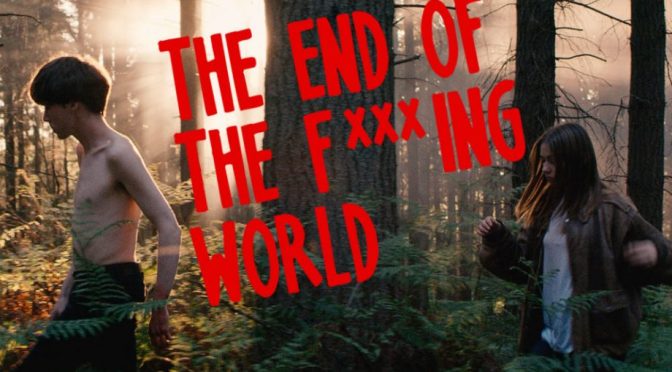
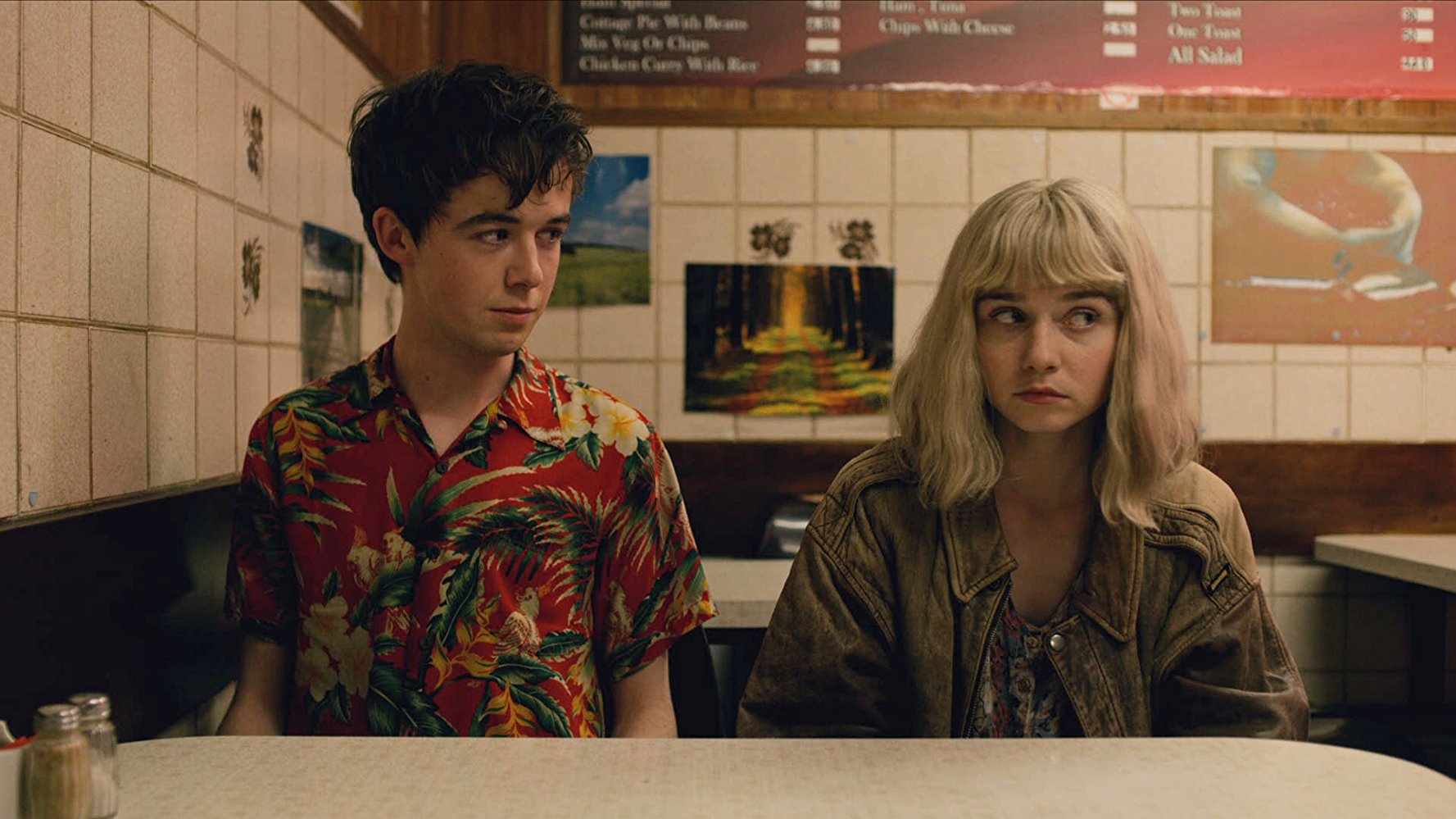
This Channel Four comedy-drama can be found on both ALL 4 and Netflix. It is certainly recommended for those who like their comedy darker than an Arctic winter’s day. It concerns a teenager called James (Alex Lawther) who believes he’s a psychopath, who decides to go from killing animals to people. Enter Jessica Barden’s equally maladjusted Alyssa, and we get eight episodes of acidic, violent, rites-of-passage and anti-romantic mischief.

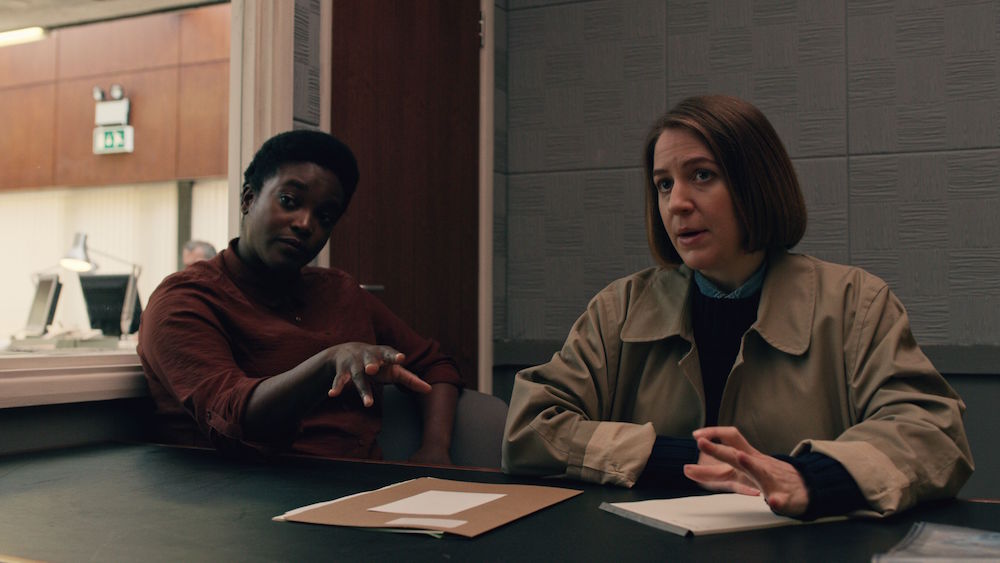
The first episode is arguably the strongest as it starts with a breakneck pace establishing James character history and how he meets Alyssa. They are both very nihilistic and unlikable but that’s the point. The series is an anathema to the conventional feel-good Hollywood sitcoms and comedy films. This is violent and nasty with lost kids ignored or endangered by the adults around them. Indeed, aside from Gemma Whelan’s likeable police officer there aren’t many characters to empathise with here.


It is a testament to the fine acting by rising stars Lawther and Barden that the show held my interest over the eight short episodes. As the two anti-heroes go on the run across country I was reminded of the Tarantino scripted films True Romance (1993) and Natural Born Killers (1994), but filmed in Surrey. Of course, End of the F***king World (2017) doesn’t benefit from Tarantino’s wicked dialogue, however, it compels with a journey into some very twisted places.

Nominated for a BAFTA for Best Drama Series, I didn’t enjoy as much as some reviewers and critics did. I think this is mainly due to the fact it doesn’t really have much to say other than life is shit. Also, the characters don’t particularly learn anything, change or have a particularly intriguing philosophy. Moreover, their story begins and ends in abject nihilism with little hope for a brighter future. Don’t get me wrong, I love dark comedies and dramas, but this was relentlessly depressing and probably would have been better as a punchier ninety-minute film rather than a series. Overall, though the smart script and malignant characters had a dark magnetism. That and the excellent performances make it worth a watching if you’re feeling in a “I-hate-the-world” kind of mood.

Mark: 8 out of 11