Screenplay by Will Tracy – Based on Save the Green Planet! (2003) by Jang Joon-hwan Produced by Ed Guiney, Andrew Lowe, Yorgos Lanthimos, Emma Stone, Ari Aster, Lars Knudsen, Miky Lee, Jerry Kyoungboum Ko
Main Cast: Emma Stone, Jesse Plemons, Aidan Delbis, Stavros Halkias, Alicia Silverstone, etc.
Cinematography by Robbie Ryan
*** MAY CONTAIN SPOILERS ***
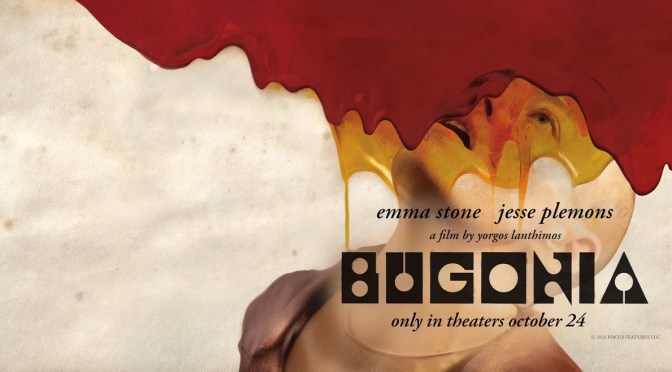
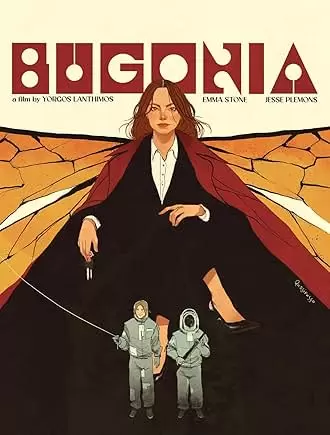
Yorgos Lanthimos has once again sneaked out of his uncanny terrarium and unleashed another piece of beautifully deranged cinema. Bugonia(2025)—a remake of Jang Joon-hwan’s cult classic Save the Green Planet!—is part sci-fi fever dream, part hostage farce, and part spiritual meltdown. It’s like Ruthless People (1986) got trapped in a socio-political, beekeeping suit and force-fed ayahuasca.
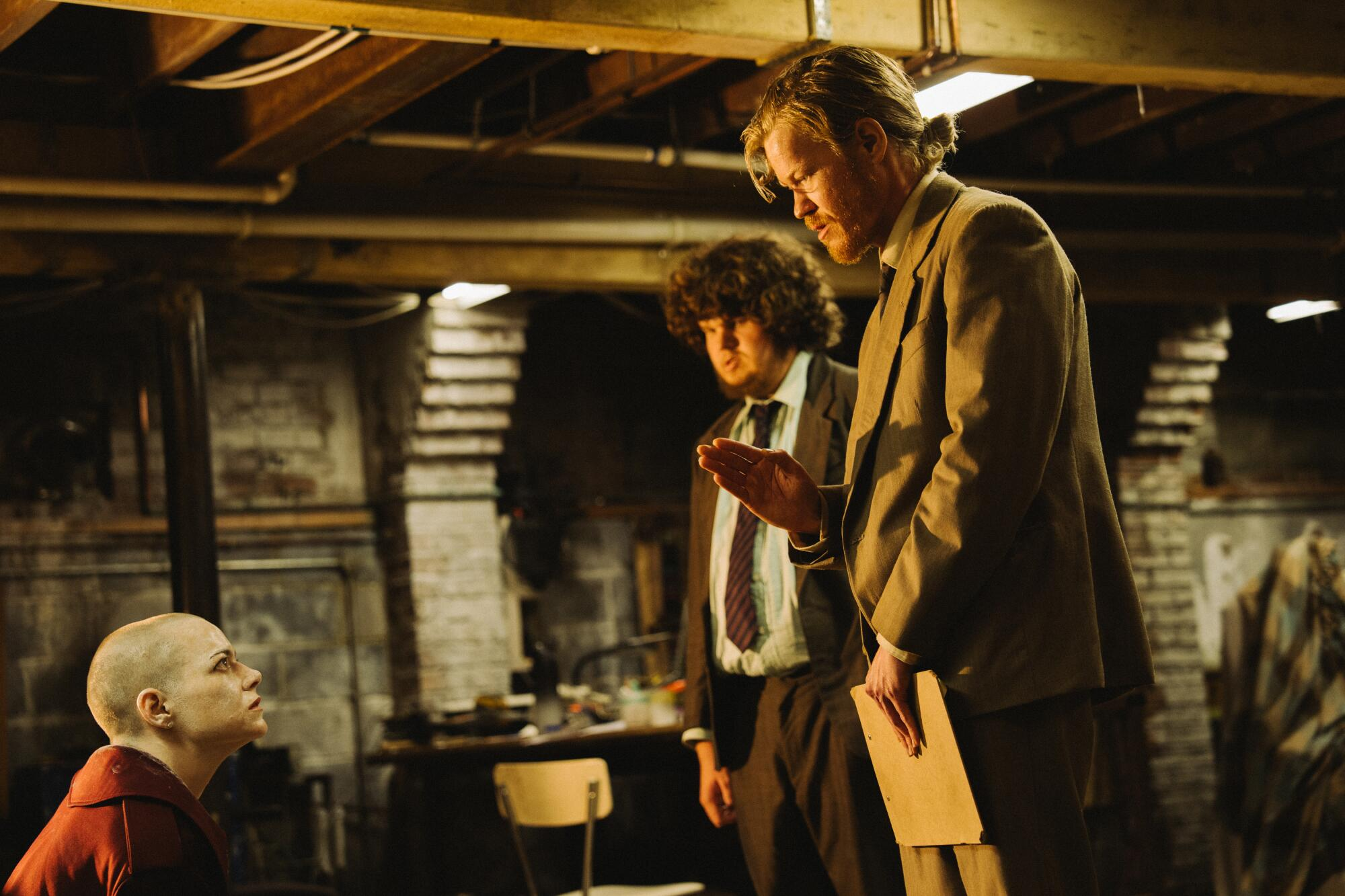
Will Tracy’s script hums with the manic energy of someone who’s read too many conspiracy subreddits and decided to turn it into Oscar bait. The film pairs Jesse Plemons (whose face seems genetically engineered for moral unease) with Alden Delbis (playing his twitchy, Kool-Aid-eyed partner in cosmic delusion) as two eco-anarchist truthers who kidnap a pharma/tech CEO, played with imperial chill by Emma Stone. Their reasoning? Well, just wait and see. It is incredibly crazy with some severe plot turns. Yet, somehow Lanthimos and his terrific cast maintain verisimilitude within the setting and just about hang onto emotional connection for the characters.
What follows is a deranged pas de trois of torture, empathy, and total philosophical collapse. Plemons and Delbis interrogate Stone with the intensity of people who’ve seen too many YouTube conspiracy documentaries, while Lanthimos and cinematographer, Robbie Ryan shoot it with the intensity of a nature documentary directed by Lucifer. There are bees. There is honey. There are monologues about pollution, pharmaceutical company threat and environmental collapse. Further, Stone, who has now fully ascended into Lanthimos’ personal pantheon of holy weirdness, plays her role like a woman being both worshipped and flayed at the same time. She’s terrifyingly serene—like she’s founded a doomsday cult and smiled through the apocalypse.
It’s all utterly ridiculous, but Bugonia (2025) thrives in that space between laughter and dread. Lanthimos once again proves that absurdism isn’t about nonsense—it’s that nonsense is the only sane response to the modern world. I enjoyed this film way more than the obtuseKinds of Kindness (2024). It has more akin, although not as devastatingly memorable, as his earlier Greek-language classics or The Killing of a Sacred Deer (2017). Moreover, ifThe Favourite (2018) was about power, and Poor Things (2024) was about rebirth, Bugonia (2025) is bleak, fatalistic morality tale about environmental apocalypse.
By the time the film’s final shots roll I was equal parts horrified, moved, and deeply amused. It’s an eco-horror-comedy that gorily plays likeSaw (2004) meets famous beekeeping philosopher, Aristotle. Overall, Bugonia (2025) proves once again that Yorgos Lanthimos is cinema’s reigning apiarist of absurdity—and his audience are all his buzzing little drones.
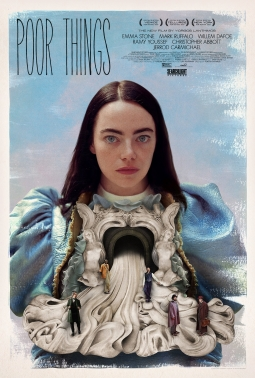
Based on Poor Things: Episodes from the Early Life of Archibald McCandless M.D., Scottish Public Health Officer by Alasdair Gray
Produced by Ed Guiney, Andrew Lowe, Yorgos Lanthimos and Emma Stone
Main cast: Emma Stone, Mark Ruffalo, Willem Dafoe, Ramy Youssef, Christopher Abbott, Kathryn Hunter and Jerrod Carmichael.
Cinematography by Robbie Ryan
*** MAY CONTAIN SPOILERS ***
I have now seen all of Greek filmmaker Yorgos Lanthimos’ most recent directorial works, namely: Dogtooth (2009), Alps (2011), The Lobster (2015), The Killing of a Sacred Deer (2017), and The Favourite (2018). Collectively they defy conventional film styles and tropes to deliver absurd, surreal, funny, disturbing, thought-provoking, erotic and imaginative visions of human behaviour. Also, let’s not forget the writers too; so kudos to his writing partner Efthymis Filippou, and latterly Tony McNamara, who have combined with Lanthimos to create such memorable cinematic offerings.
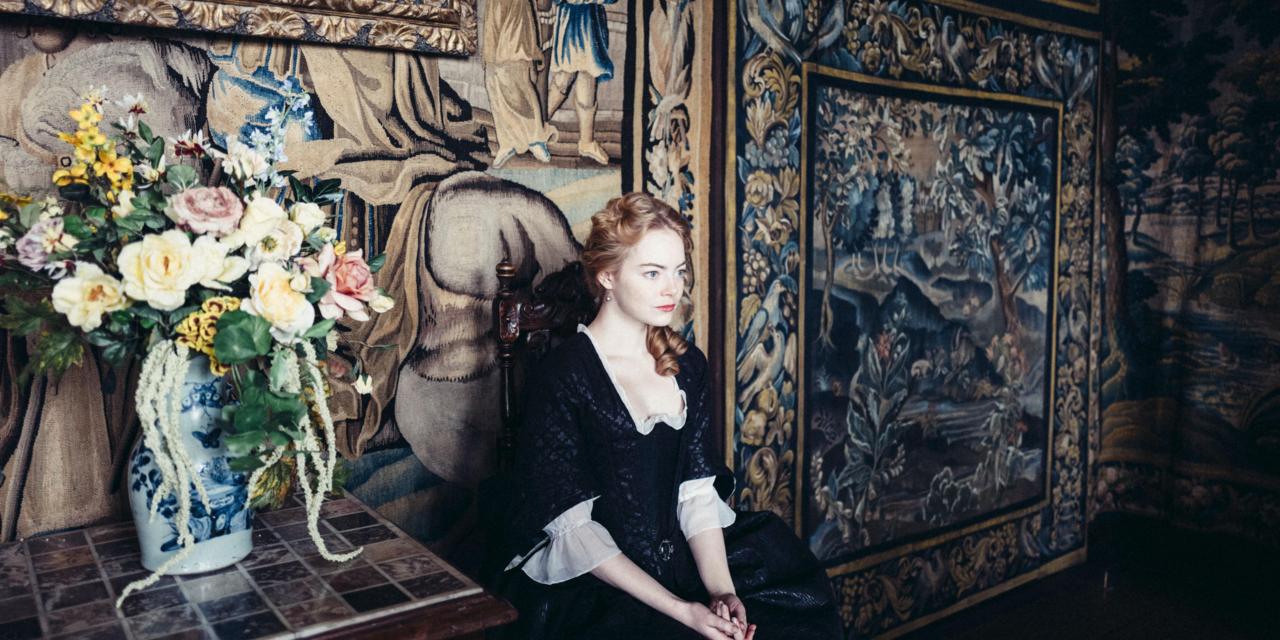
The director’s early lower-budget dysfunctional comedy-dramas such as Dogtooth (2009), andAlps (2011) are unforgettably strange films to experience. They feature uncomfortable depictions of family, sex, death and relationships. While offbeat, you sense they are from the mind of a filmmaker seeking to provoke thought rather than exploit. While equally dark and strange The Lobster (2015) is clearly more comedic, even though it probes strange love, fascism and violence within romantic relationships. Further, in The Killing of a Sacred Deer (2017), Lanthimos and Filippou, in Godardian fashion, constantly called attention to cinema form; especially with a strangely effective form of anti-acting within the arguably more conventional revenge narrative. Whereas in The Favourite (2018), Lanthimos’ delivered a unique period satire, with the language and behaviour of the characters often crude and shocking. His visual choices are always fascinating, with his use of the fish-eye lens creating a distorted effect that made the characters seem trapped by their surroundings and circumstances.
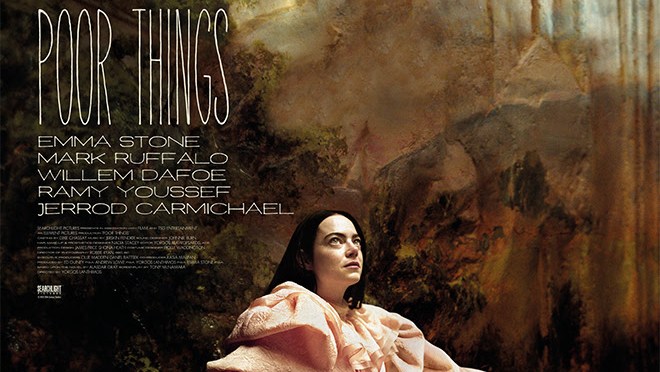
With the success of The Favourite (2018), both critically and commercially, Lanthimos has of late been given an increased budget, reported as $35 million. His bold choice, along with screenwriter Tony McNamara is to adapt award-winning novel, Poor Things: Episodes from the Early Life of Archibald McCandless M.D., Scottish Public Health Officer by Alasdair Gray has produced by far the most originally conceived and fantastic genre-bending comedy, drama, horror, rites of passage and salacious film of many a year. If there is a more bizarre, enthralling and enjoyable film of 2024, than Poor Things (2023) then this will be a most excellent year for cinema releases.
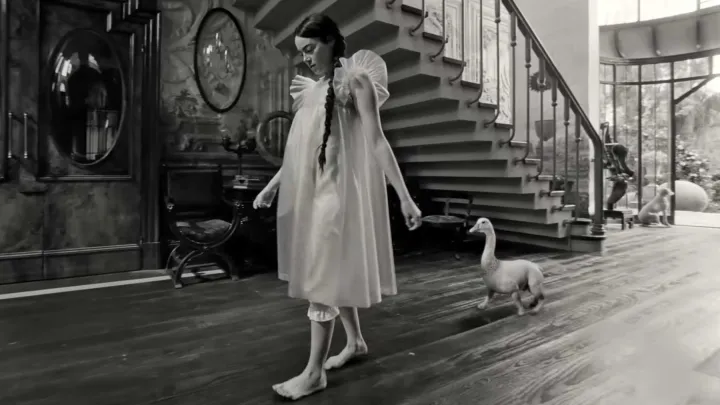
Set in Victorian London, we are introduced to the rather eccentric household of Dr Godwin “God” Baxter, an expert but secretive surgeon whose home hides bizarre animal experiments, and the beautiful but frankly odd human specimen, Bella Baxter (Emma Stone). Entering this weird abode of pig-hens and goose-dogs, comes innocent medical student, Max McCandless (Remy Youseef). “God” asks Max to assist with the childlike Bella’s development, charting her daily physical, speech and mental growth. Now, if you think the chimeric beast experiments are disturbing then brace yourself for the events of Bella’s ‘Frankensteinesque’ happenstance. I am not going to spoil it here, but it truly is a fantastic concept as invented by the author, Alasdair Gray, to contemplate. I was teetering on the fence with the film until this stunning reveal was given, but then I was committed to this medical oddity.
The first act finds Bella developing her speech, emotions and intelligence, as if a young child growing within this woman’s body. Bella also locates her libido and begins experimenting with her lust to great pleasure. Here Lanthimos continues exploring the themes of previous films with sex not only a natural expression of humans, but also an act used to control and drive people mad. Enter Mark Ruffalo’s caddish lawyer, Duncan Wedderburn who spirits a willing and rebellious Bella on a European trip. One where she truly discovers and satisfies her continual carnal desire or “furious jumping” as she hilariously calls it. Bella’s rites of passage, frankness and rapid growth threatens Duncan’s masculine insecurities and he finds it difficult to control her. Here the hilarious screenplay shows Bella and Duncan becoming more and more fraught until she craves further independence from his cloying envy. The central theme of Bella overcoming the chains of controlling masculinity dominates right up until the extremely dark final act.
While there is a lot of sex and nudity in this film, I felt that Lanthimos balances the exploitative nature of such material by contextualising it within Bella’s fascinating character arc. Emma Stone also provides a complex performance, funny and moving, as the woman-child discovering her mind, body, soul and the world. Ruffalo is particularly over-the-top as the sneaky but pathetic reprobate, Wedderburn. While Remy Youssef’s young medical student adds some compassionate balance within the ensemble, Willem Dafoe gives his customary brilliant turn as the tragic man of science. He himself had his childhood tainted by a father determined to use Godwin Baxter as a human guinea pig.
With a spectacular production design that employs a rich palette of colours, sets, lighting and immaculately furnished rooms, Lanthimos, stamps his authorial style along with genius cinematographer Robbie and his array of lens. Such creative choices evolve a spectacularly hyper-real vision of Victoriana. Indeed, the form and style coalesce with the content and themes in Poor Things (2023) to create what could already be the favourite film of my year. The screenplay dares to provoke the audience with gender political, sociological, historical and hysterical analysis as Yorgos Lanthimos again proves himself to be one of the most original filmmakers of his generation. Owing much to the imagination of Alasdair Gray’s source book, this is a shocking and explicit Frankenstein’s monster of a film. Lastly, it had me consistently thinking and laughing throughout, testifying to the power of family, however dysfunctional that Victorian household may be.
LONDON FILM FESTIVAL REVIEW – THE FAVOURITE (2018)
Directed by: Yorgos Lanthimos
Produced by: Ceci Dempsey, Ed Guiney, Lee Magiday, Yorgos Lanthimos
Written by: Deborah Davis, Tony McNamara
Cast: Olivia Colman, Emma Stone, Rachel Weisz, Nicholas Hoult, Joe Alwyn
Cinematography: Robbie Ryan
**SPOILER FREE REVIEW**
The London Film Festival organisers were very keen to impress we keep our phones off during the screening of The Favourite. Thus, I infer that the filmmakers are also keen that no spoilers are given away; something I will respect during this review. From the marketing blurb I have culled online, The Favourite: “sees Yorgos Lanthimos (The Lobster (2015), The Killing of a Sacred Deer (2017)) on rollicking, virtuoso form with Olivia Colman, Emma Stone and Rachel Weisz revelling in the wit of his 18th century royal court life.”
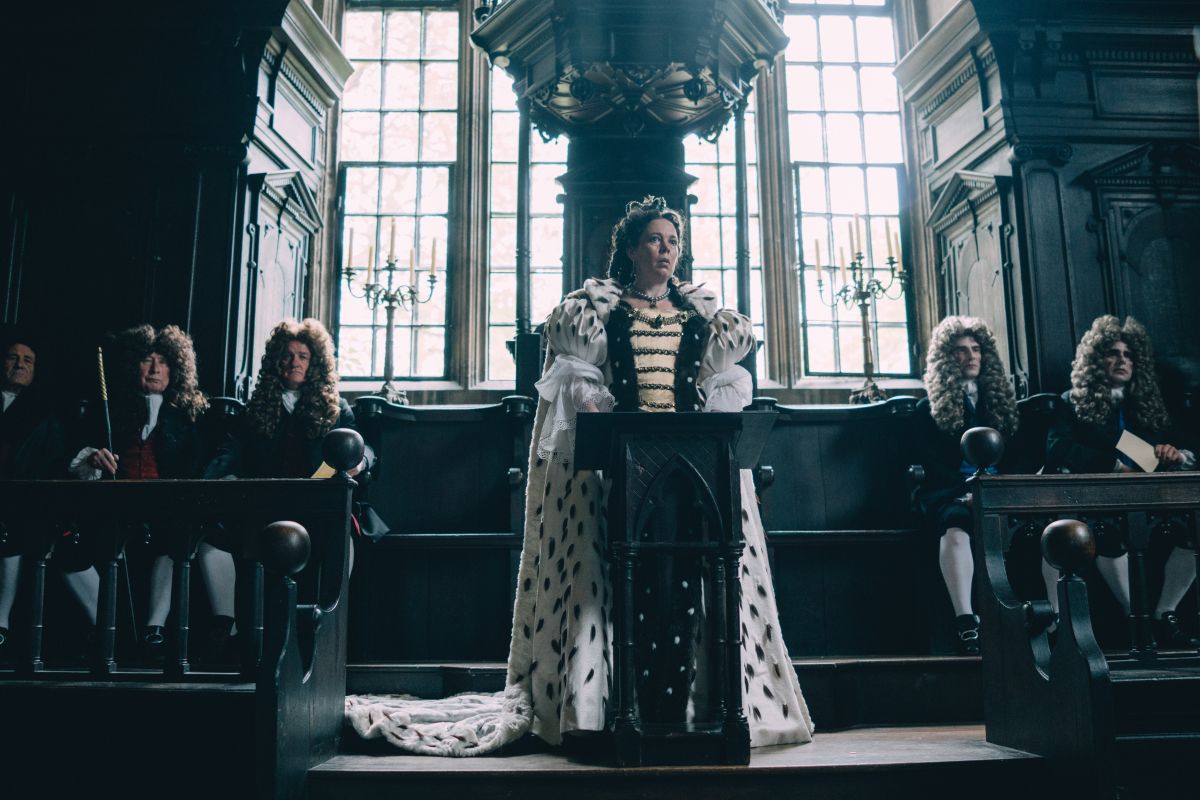
Unlike The Lobster and The Killing of a Sacred Deer, Lanthimos is not working from an original screenplay he wrote with Efthymis Filippou; instead he’s taken an adaptation by Tony McNamara and Deborah Davis. Conversely, it is not as eccentric a premise as those previous films and structurally it is actually quite conventional. The story itself sets Rachel Weisz’ Duchess of Marlborough as advisor to Olivia Colman’s Queen Anne in the early 1700s; while Emma Stone’s fallen “Lady” enters the fray and attempts to gain the Queen’s favour while usurping Weisz’ character.
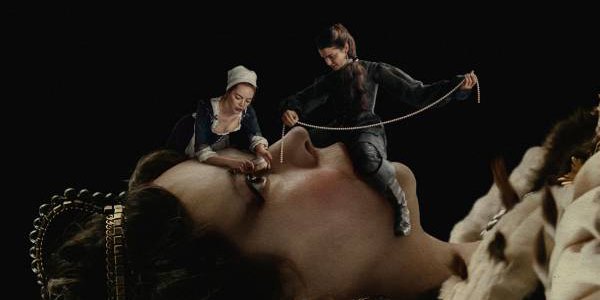
Historical films relating to Machiavellian scheming, sexual misadventure and political intrigue are legion. Dangerous Liaisons (1988), A Royal Affair (2012) and the recent Love and Friendship (2016) are but a few examples; however, none of them are as absurd, surprising, funny, moving and as crazy as The Favourite. But, this is not a parody of period dramas. Instead, Lanthimos brings his own directorial vision to the story with his often ludicrous switches in tone, while skilfully maintaining a strong emotional balance and intrigue throughout. His use of the fish-eye lens creates a distorted effect making the characters seem trapped by their surroundings and circumstances. Furthermore, the lighting is quite wonderful too with natural and candle light dominating the proceedings.
Lanthimos’ direction of his three stellar leading actors is superb; with Olivia Colman delivering one of the most memorable performances of the year. Her Queen Anne is both pathetic and empathetic at the same time. Anne is to be pitied, laughed at and laughed with throughout. While I genuinely have little sympathy for royal figures, Anne is humanized with great power by the performance. Preying and manipulating her are Weisz’ and Stone’s characters. Weisz’ is, in particular, quite brilliant as we never quite know if her decisions regarding the war against Spain and the increased taxes are to benefit her or the Queen. Moreover, I know Stone won an Oscar for La La Land (2016), but she is even better in this film. Her eyes light up at each devilish choice her character makes; revelling in the skulduggery as ambition fuels her desires. I must add that Nicholas Hoult is quite brilliant too in a supporting role.
Overall, The Favourite (2018) may not be appreciated by those who prefer their period dramas to be played straight, as it were. The language and behaviour of the characters is often foul and crude but while seeming anachronistic it is paradoxically authentic too. Lanthimos’ interpretation of the screenplay is rather complex. He seeks to humanize, satirize and ridicule life in the Royal Court but without us ever hating the characters. The narrative asks for understanding but also critiques their choices. You kind of wish Weisz and Stone would show some solidarity but ultimately they are narcissistic players craving power, much to the detriment of their sickly Queen — portrayed by the astounding Olivia Colman.
I started writing film reviews a few years ago and the main reason was because I wanted to try and understand why I liked or disliked a film. I also wanted to improve my creative writing by understanding the thought process of others. Living filmmakers whose work I have consistently enjoyed, save for the odd one here or there, are: Martin Scorsese, Quentin Tarantino, The Coen Brothers, Lynn Ramsay, Jonathan Glazer, Woody Allen (even some of the later ones), Park Chan Wook, David Fincher, Edgar Wright, Jacques Audiard, Darren Aronofsky, Kathryn Bigelow; and many others no doubt!
Such directors capture the quintessence of what cinema is for me. Not simply just in style and form but also powerful themes, imaginative concepts and sheer bloody entertainment. Filmmakers, of late, you can add to that list are: Denis Villeneuve, S. Craig ZAHLER and Greek filmmaker Yorgos Lanthimos. I have now seen three of his films, namely: Dogtooth (2009), The Lobster (2015) and his next release The Killing of a Sacred Deer (2017), and they all defy conventional film conventions to deliver absurd, surreal, funny, dark, thought-provoking and imaginative visions of human nature. Also, let’s not forget the writer too; so kudos to his writing partner Efthymis Filippou, who combines with Lanthimos to create such memorable cinematic offerings.
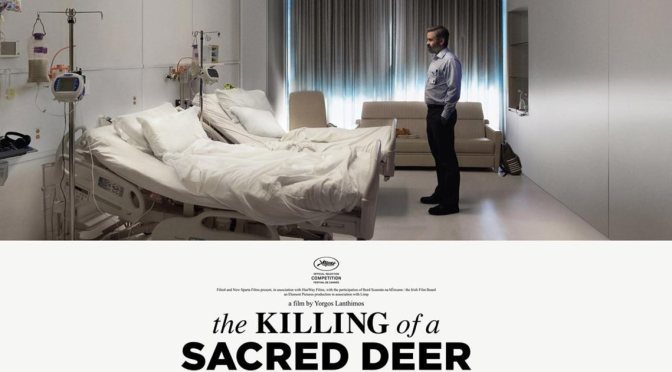
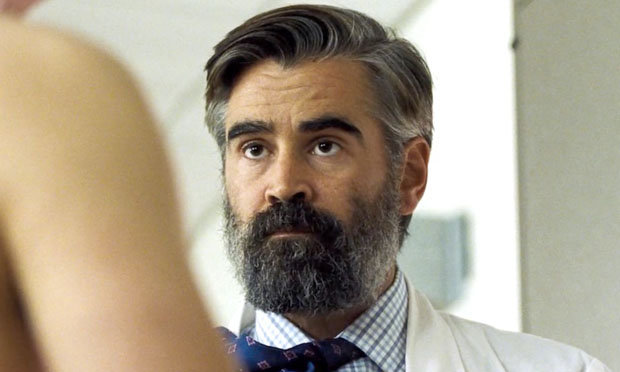
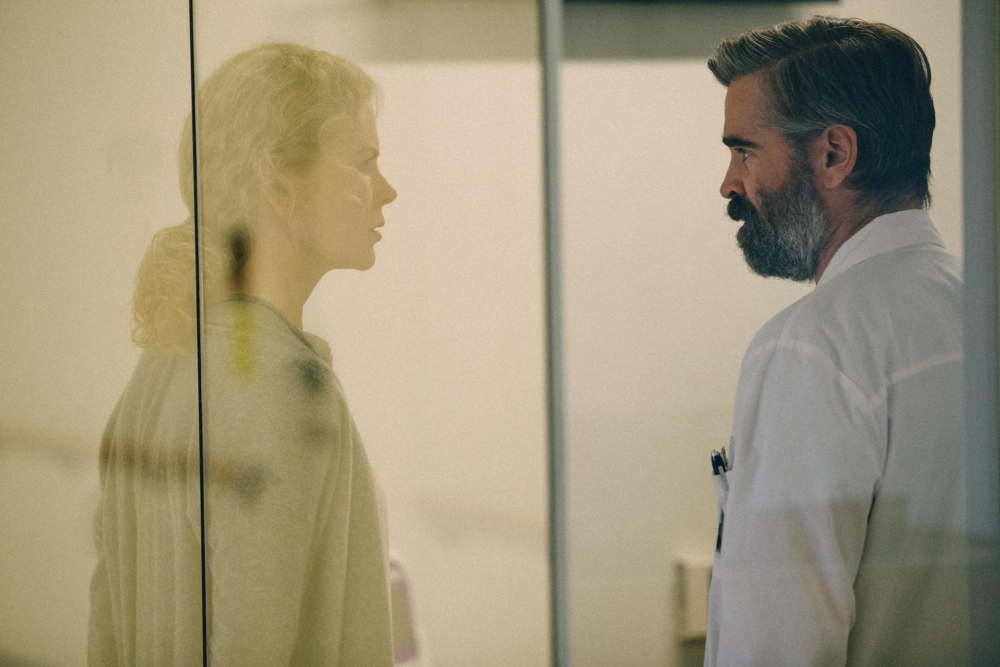
The story itself begins in a reasonably conventional fashion. Colin Farrell’s successful surgeon, Steven Murphy, is happily married to his wife, Anna, portrayed with glacial precision by Nicole Kidman. They have two healthy and intelligent children, a boy and a girl, and their lives are a picture of upper middle class contentment. Steven and Anna’s family equilibrium is skewed when a teenage boy, Martin, brilliantly portrayed by Barry Keoghan, inveigles his way into their lives through a combination of innocent charm and surreptitious pathos. Martin is a dark angel representative of the cloud of sickness and guilt and remorse and his actions force Steven and Anna to have to face up to a parents’ worst nightmares.
Lanthimos and Filippou, in Godardian fashion, constantly calls attention to cinema form; especially with a strangely effective form of anti-acting where, Farrell notably, dryly delivers dialogue as unconnected non-sequiturs. The words also constantly surprise us as the characters speak at each other with phrases that create humour and emotional disassociation. Nonetheless, such artifice only adds to the off-centre and sinister nature of the piece. The film is also beautifully shot with a wonderful symmetry to the composition of many shots. I also liked the choice of wide-angle lenses and the flowing Steadicam shots. Many were pitched at just over head-height, and provided an eerie floating sensation throughout the drama.
Colin Farrell (as he did in The Lobster (2015), Nicole Kidman and the rest of the cast buy completely into Lanthimos and Filippou’s striking vision which takes its’ influence from l Greek tragedy. But while Farrell excels in another praiseworthy under-stated deadpan performance, Barry Keoghan steals the show. The young actor follows up his impactful supporting appearance in Dunkirk (2017), with a compelling character study and eerily mature portrayal. Overall, this is a gripping, absurd thriller-turned-horror film which constantly wrong-footed me with its plot turns. It is a truly chilling, yet darkly comical and surreal genre film that manages to be somehow extremely accessible too.




 The Cinema Fix presents