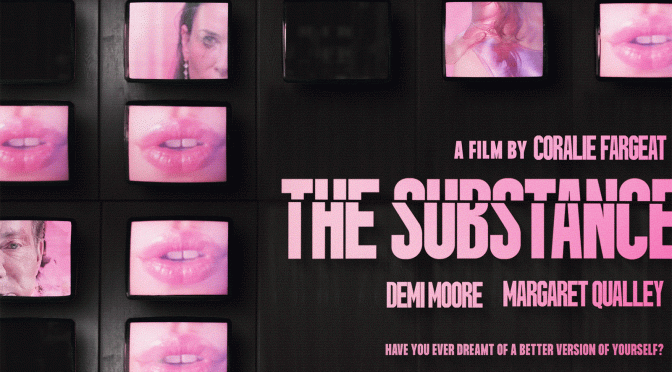
Cinema Review: The Substance (2024) – A Dark Exploration of Identity

THE SUBSTANCE (2024)

Directed by Coralie Fargeat

Written by Coralie Fargeat

Produced by: Coralie Fargeat, Tim Bevan and Eric Fellner

Main Cast: Demi Moore, Margaret Qualley and Dennis Quaid

Cinematography by Benjamin Kracun

*** MAY CONTAIN SPOILERS ***



The Substance (2024), directed by Coralie Fargeat, is a visually striking and visceral film that pushes the boundaries of body horror and psychological terror. Fargeat, known for her raw and relentless style in Revenge (2017), once again delivers an unforgettable experience by weaving references to classic literature and horror cinema into a narrative that is at once familiar and entirely original.

Demi Moore portrays a former Hollywood star, Elizabeth Sparkle, now relegated to doing a mildy successful cable TV aerobics show. However, Dennis Quaid’s oily production executive is on the lookout for younger talent. Elizabeth soon finds herself on the media scrapheap. Desperate to regain her youth and career, Elizabeth is drawn to the hypnotic promise of a new product called ‘The Substance.’

Before you can say, “Dorian Gray”, Elizabeth is lured to a strange white room full of lockers and has committed to the process. Similar to Gremlins (1984), there are rules to follow. As she follows the steps and injects the potions, Elizabeth goes through a painful and incredibly impactful transformation process. She literally gives birth to a young and beautiful alter ego called, Sue (Margaret Qualley). Elizabeth and Sue then get seven days each to live their life before they have to swap back. What could go wrong?
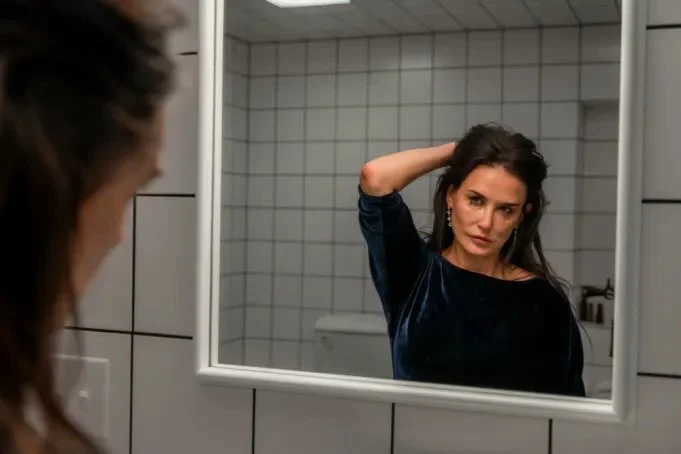


The film’s core themes draw heavily from Robert Louis Stevenson’s Dr. Jekyll and Mr. Hyde, exploring duality, identity, and the monstrous potential hidden within human nature. Like Stevenson’s tale of inner conflict, The Substance delves into the consequences of scientific ambition. It investigates moral transgression but with a modern, feminist twist. Fargeat’s use of body horror, particularly in the transformation sequences, echoes the grotesque, unsettling work of David Cronenberg. The nightmarish atmosphere and surreal visuals are reminiscent of David Lynch’s unsettling dream logic. This is notably seen in Eraserhead (1977) and Mulholland Drive (2001).

The film also pays homage to John Carpenter’s The Thing (1982), with its transmogrifying frights, sense of creeping paranoia and rising conflict. But rather than a group of men fighting each other Elizabeth and Sue turn on each other over ownership of their physical existence and Hollywood status. The final act descends into hellish and bloody satire echoing Peter Jackson’s Braindead (1992), with gore galore. Moreover, Stanley Kubrick’s influence is palpable in the film’s meticulous framing, production design and tension-building. The climactic body-morphing scenes, however, most clearly nod to Brian Yuzna’s Society (1989), with its grotesque depictions of class and conformity, fused with Fargeat’s unique vision of female empowerment, revenge and resistance.

The Substance (2024) feels like a bigger budget film in look and style, but you soon realise the minimal number of sets used and a lack of crowd scenes, finds the narrative effectively becoming a two-hander in the middle act by focusing on Sue and Elizabeth’s internal retaliatory vindictiveness. There are some amazing framing, colour design and cinematographic choices as showers become tombs to trap the protagonists. The book-ended Hollywood star montage and returning final shots are imaginative and unforgettable. Got to say that Demi Moore, as an actress taking on a role of an aging and neurotic former star is genius casting. While Qualley delivers a sexually charged and energetic performance, it is Moore who carries the weight of the complex themes as Elizabeth’s journey dives deeper into the stuff of nightmares.

Overall, The Substance (2024) is a postmodern classic and a film that honors its influences while forging its own path. Fargeat uses these references to enrich the narrative, creating a damned ugly and beautiful satire on those seeking narcissistic perfection through unnatural means, ultimately paying the price of those seeking eternal youth and fame.
Mark: 9 out of 11


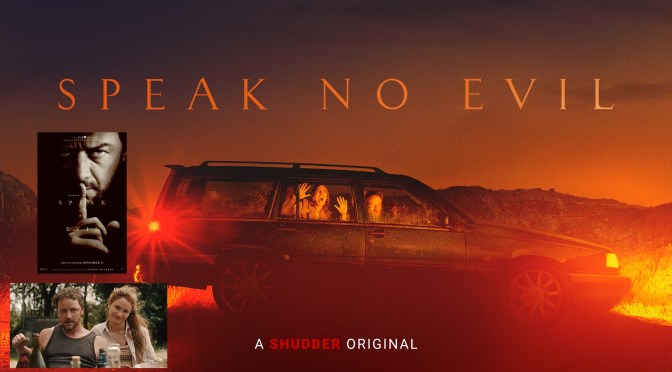
HORROR REVIEWS: SPEAK NO EVIL (2022) / SPEAK NO EVIL (2024)

SPEAK NO EVIL (2022)

Directed by Christian Tafdrup

Written by Christian Tafdrup and Mads Tafdrup

Main Cast: Morten Burian, Sidsel Siem Koch, Fedja van Huêt, Karina Smulders, Liva Forsberg and Marius Damslev.

Speak No Evil (2022), directed by Christian Tafdrup, is a chilling psychological horror that explores the perils of politeness within middle-class sensibilities, turning everyday discomfort into a waking nightmare. The film follows a Danish family with a young daughter, visiting a Dutch family unit, only to find themselves trapped in a horrifying and twisted game of cat and mouse. All smiles and charisma at first, the ‘Alpha’ Patrick, dominates his wife and young son, who unfortunately has no tongue. Tafdrup deftly dissects how the fear of offending others—deeply ingrained in bourgeois values—leads the protagonists to ignore increasingly unsettling behaviour.

Losing or not using one’s voice is inherent within the text. Further, what begins as awkward social tension escalates into something far more sinister, as the family is manipulated through their desire to maintain decorum. This dynamic plays on the anxieties of modern, polite society, where confrontation is often avoided at all costs. The film’s climax delivers a shocking, almost biblical punishment for their inability to break free from these conventions, suggesting a moral reckoning for those who allow fear of impoliteness to override survival instincts.

Subtle, creeping dread makes Speak No Evil (2022) a disturbing meditation on the dangers of middle-class complacency, and the terrifying consequences of choosing politeness over personal safety. Lastly, the film also explores the theme of toxic masculinity as the muscular ‘Alpha’ threatens the ineffective ‘Beta’ male, proving one should always stand up to bullies or face the consequences.

(Note: for those seeking out the film in the UK, it is currently screening on Shudder.)

Mark: 8.5 out of 11


SPEAK NO EVIL (2024)

Directed by James Watkins

Screenplay adaptation by James Watkins


Main cast: James McAvoy , Mackenzie Davis, Scoot McNairy, Alix West Lefler, Dan Hough, and Aisling Franciosi

The English remake of Speak No Evil (2024) delivers a faithful and unnerving adaptation of Christian Tafdrup’s original, with James McAvoy’s chilling performance at its heart. McAvoy, playing the charming yet menacing antagonist, brings a sinister edge to the character that heightens the tension and discomfort throughout the film. His portrayal effortlessly captures the unsettling power dynamics, making each of his polite gestures and subtle manipulations all the more terrifying. McEvoy relishes every moment of this characterful performance.

What truly stands out in this remake is how it retains the meticulous craftsmanship of the original. The film carefully balances tension, awkwardness, and psychological dread, maintaining the slow-burn atmosphere that made the Danish version so unsettling. Director James Watkins ensures the pacing and visual style honour Tafdrup’s vision, with each shot and interaction loaded with unease. Watkin’s adaptation also provides further exposition and fleshes out the character dynamics and motivations, notably with the children, whose actions are integral to propelling the narrative thrills.

The Cape Fear (1991)-style climax veers away from the original’s more subtle, thought-provoking and bleak ending. However, it further amplifies the anxiety, offering a nerve-shredding confrontation that feels both inevitable and brutal. The remake pays homage to the original’s themes of social etiquette, hidden danger and finding one’s voices against bullies, while delivering a climactic showdown that mirrors the power struggles found in classic thrillers. Overall, like the original Speak No Evil (2024) successfully inverts the home invasion dynamic, making it a worthy, terrifying and almost necessary remake.

Mark: 8.5 out of 11


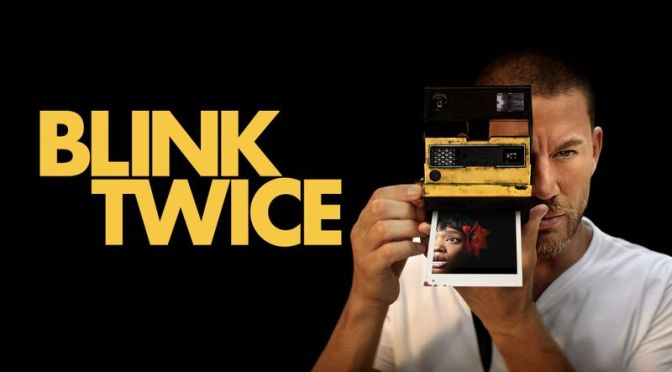
CINEMA REVIEW: BLINK TWICE (2024)

Directed by Zoë Kravitz

Written by Zoë Kravitz & E.T. Feigenbaum

Produced by Bruce Cohen, Tiffany Persons, Garret Levitz, Zoë Kravitz and Channing Tatum

Cast: Naomi Ackie, Channing Tatum, Christian Slater, Simon Rex, Adria Arjona, Kyle MacLachlan, Haley Joel Osment, Geena Davis and Alia Shawkat etc.

Cinematography by Adam Newport-Berra

*** MAY CONTAIN SPOILERS ***


The theme of toxic masculinity is almost becoming a sub-genre of itself in the wake of the #MeToo movement. Films such as The Royal Hotel (2023), How to Have Sex (2023) and Men (2022) are powerful genre films which take the manipulative, malevolent and violent aspect of men, utilizing it as both nemesis and a destructive force the main protagonists must contend with. While She Said (2022) dealt specifically with the Harvey Weinstein legal case, Zoe Kravitz’ energetic blend of genres in Blink Twice (2024), takes a more fictional and heightened route while exposing the horrors surrounding the potential happenings at the notorious Epstein Island.

Frida (Naomie Ackie) and her friend Jess (Alia Shawkat) work at an exclusive event where Frida meets Slater King (Channing Tatum), a billionaire tech mogul who recently resigned as CEO after a public scandal. Despite the scandal Frida and Jess gladly accept an invitation to his private island, where his assistant Stacy (Geena Davis) confiscates their phones. The island hosts Slater’s friends and business partners along with three glamorous guests including Sarah (Adria Arjona). The men and women are treated to lavish rooms, gift bags, gourmet meals, cocktails, and party like hedonistic rock stars drinking champagne and taking hallucinogens.


If you’ve seen the similar island-based, The Menu (2022), which I loved, plus the less than riveting 1950’s perfect suburb-set, Don’t Worry Darling (2022), one soon realises that not all is well in paradise. Amidst the sun, sea and partying the narrative slowly builds the tension until Frida and Jess begin to suspect all may not be as it seems. Kravitz carefully ratchets up the tension, with several strange discoveries heightening the paranoia and anxiety. Latterly the suspense gives way to all-out gory horror and black comedy in the thrilling final act. Naomi Ackie and Adria Arjona are impressive “final girls”, however, the script arguably throws in too many twisty reveals at the end, testing narrative credibility.

Zoe Kravitz is clearly a talented filmmaker and Blink Twice (2024), while unsubtle, is highly entertaining. But does the diversion to the horror genre dilute the power of the themes of toxic masculinity? Kravitz aims to critique the evils of men by showcasing male characters who embody arrogance, dominance, and emotional suppression. But while Kravitz may intend to address toxic masculinity, the reliance on traditional horror tropes potentially undermines this message by exaggerating characters, victimizing women, and prioritizing sensationalism over substance. Still, as a revenge fantasy, Blink Twice (2024), is both stylishly and dynamically rendered.

Mark: 7.5 out of 11