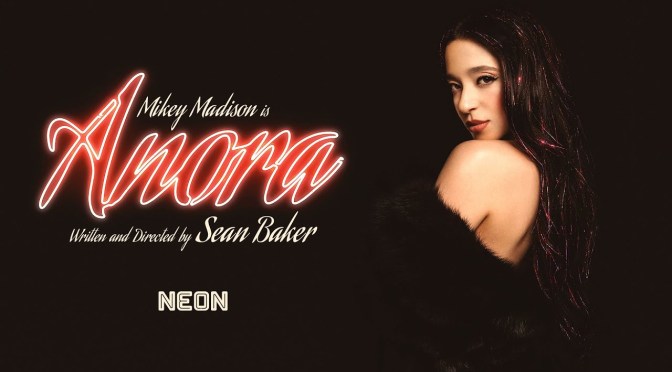
Sky Cinema review: Anora (2024) – Sean Baker’s exhilarating indie filmmaking skills deliver yet another ensemble of obnoxious characters!

Sky Cinema review: ANORA (2024)

Directed by Sean Baker

Written by Sean Baker

Produced by: Alex Coco, Samantha Quan, Sean Baker

Main cast: Mikey Madison, Mark Eydelshteyn, Yura Borisov, Karren Karagulian, Vache Tovmasyan, Darya Ekamasova, Aleksei Serebryakov, etc.

Cinematography by: Drew Daniels

** MAY CONTAIN SPOILERS **



The Sean Baker’s film I have seen — Tangerine (2015), The Florida Project (2017), Red Rocket (2021), and now Anora (2024) — form a cohesive body of work united by consistent stylistic and formal strategies. Across these films, Baker blends naturalistic storytelling with bold creative choices on low budgets, creating a cinema that is both socially conscious and viscerally alive. Moreover, Baker consistently foregrounds characters on the economic and social fringes of American life such as: Tangerine (2015) – Trans sex workers navigating Los Angeles on Christmas Eve; The Florida Project (2017) – a single mother and her daughter barely surviving in a motel near Disney World; Red Rocket (2021) – a disgraced ex-porn star returns to a struggling Texas town to rebuild his existence and Anora (2024) – featuring Mikey Maddison as a Brooklyn stripper who marries into a wealthy Russian oligarch family.

    Such films explore themes relating to sex work, informal economies, the American underclass, children as witnesses to or casualties of adult instability, doomed romances, infidelity, and moral ambiguity. Stylistically they often feature flawed protagonists, non-professional actors, episodic structures, bright color palettes, profane language, irreverent humour, pop culture references, real locations, improvised dialogue and a neo-realistic look delivered via a kinetic visual energy at the edges of that delusional idea, the American dream.

    So, I’ve long admired Sean Baker’s fiercely independent spirit and his commitment to telling stories Hollywood wouldn’t touch. Baker has carved out a singular path in American cinema — one rooted in realism, empathy, and a punk sense of creative autonomy. His work is purposeful, politically conscious, and technically impressive. He’s the kind of independent filmmaker I support. But watching Anora (2024), as with most of his earlier films, I find myself wrestling with an ongoing disconnect: I simply don’t always enjoy the experience.
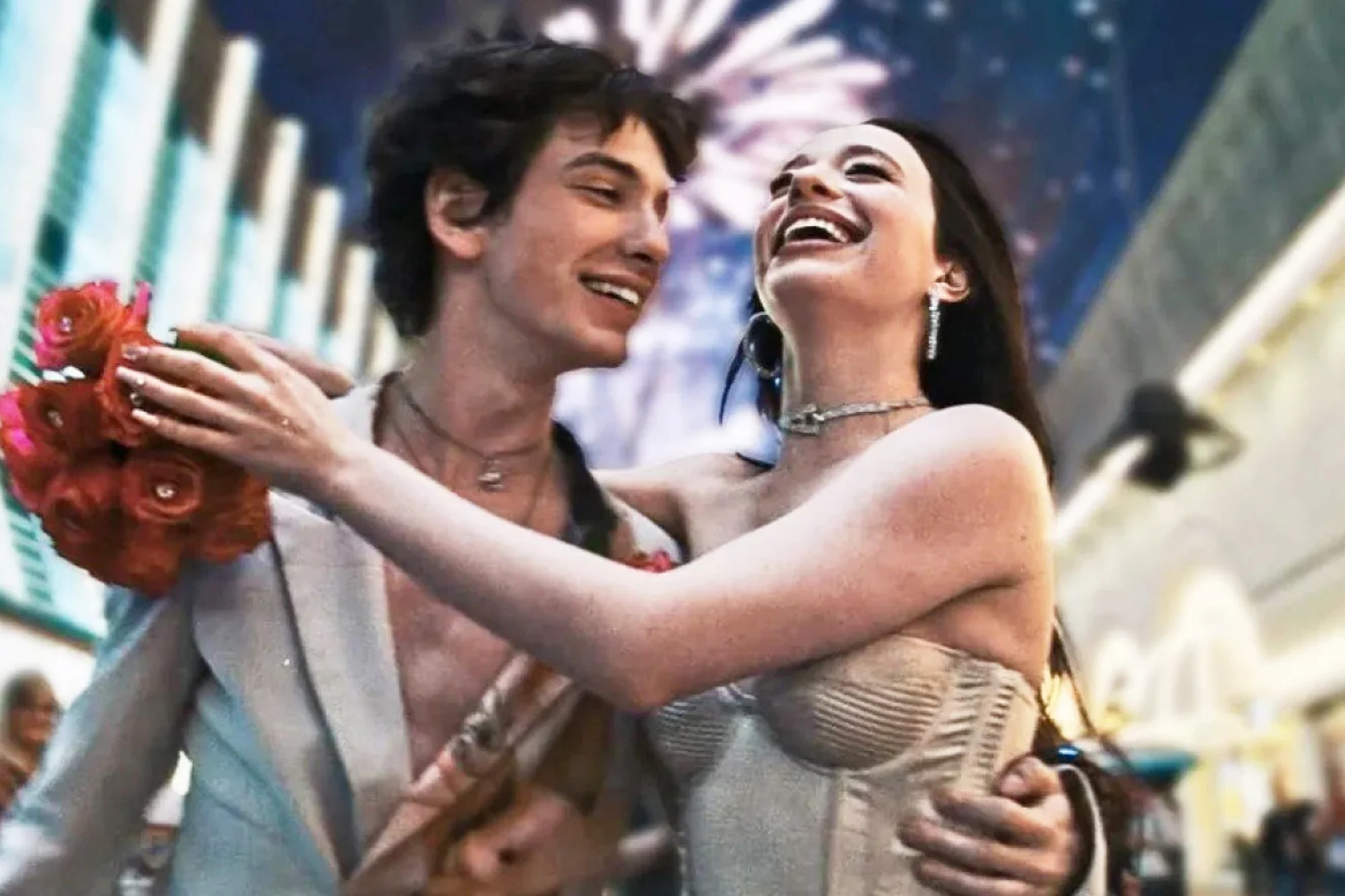


    Baker’s protagonists — whether Sin-Dee in Tangerine (2015), Mikey Saber in Red Rocket (2021), or Anora herself — are often abrasive, chaotic, and maddeningly self-destructive. Red Rocket (2021) in fact was so objectionable as a character study it put me off wanting to watch Anora (2024), hence the delay seeing it. While I understand that these are underdog characters surviving in systems rigged against them, their relentless hysteria and lack of introspective growth make them hard to root for. I feel like Baker got it most right during the ugly-beauty of The Florida Project (2017), but Anora (2024) presents another narrative uphill struggle.

    The film is overlong despite a simple ‘Pretty Woman’ premise of the tart-with-the-heart meeting a Russian rich kid who threatens to rescue her only to be a – surprise-surprise – spoilt-drug-addicted-narcissist-controlled-by-his-stupidly-wealthy-parents. A large part of the second act is spent chasing this obnoxious c*nt after he does a runner. It’s not so much excellent writing or acting as a succession of screeching and swearing and car crash human behaviour. I’m not asking for likability, but some degree of emotional access. Yes, Anora (2024), is sexy and funny in places, but I felt pushed away by the obnoxious ensemble and the sense of anxiety experienced throughout.

    Overall, I recognize Baker’s talent. The filmmaking here is sharp, confident, and often electric. Mikey Madison is indeed amazing with an instinctively smart and energetic performance, and at a stretch, I could understand the acclaim — but Oscars? And over Demi Moore’s tour-de-force, career-resurrecting performance? No – that feels like a massive glitch in the matrix and every surrounding multiverse.
    Mark: 6 out of 11


    Cult Film Review: Possession (1981)

    CULT FILM REVIEW: POSSESSION (1981)

    Directed by Andrzej Żuławski

    Screenplay by Andrzej Żuławski

    Adaptation and dialogue by Andrzej Żuławski & Frederic Tute

    Produced by Marie-Laure Reyre

    Main cast: Isabelle Adjani, Sam Neill & Heinz Bennent

    Cinematography by Bruno Nuytten

    Edited by Marie-Sophi Dubus & Suzanne Lang-Willar

    Music by Andrzej Korzyński

    *** MAY CONTAIN SPOILERS ***


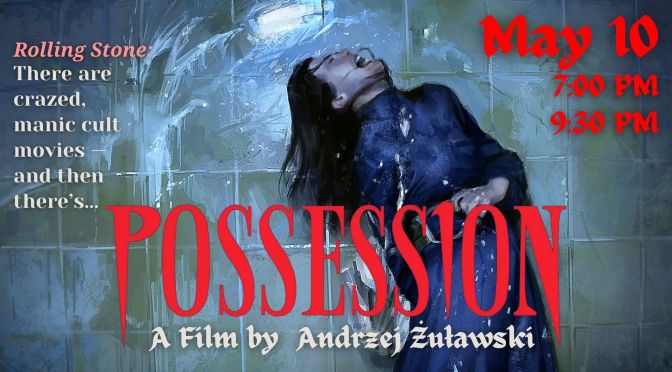
    Andrzej Żuławski’s Possession (1981) is a film that doesn’t just defy genre—it annihilates the very idea of categorization. Part spy thriller, part domestic psychodrama, part Lovecraftian horror, and part apocalyptic hallucination, the film barrels forward with such manic intensity that it becomes less a movie and more an exorcism of the soul. It resists structural and emotional compartmentalizing at every turn, choosing instead to implode in a flurry of shrieks, flailing bodies, and gooey, pulsing monstrosities.

    Set in a divided Berlin, the film ostensibly begins as a break-up story: Mark (Sam Neill), a shell-shocked spy, returns home to discover that his wife Anna (Isabelle Adjani, in a performance of pure, unrelenting hysteria) wants a divorce. But from there, the film spirals rapidly out of the realm of conventional melodrama and into something far more surreal and terrifying. Mark’s confusion curdles into obsession, Anna’s descent becomes biblical, and reality itself begins to warp and splinter.


    Is it a Cold War spy film? Yes, but only in fragments, and those are quickly consumed by the escalating emotional chaos. Is it a break-up film? Certainly—but filtered through an expressionist nightmare where the grief and rage of separation erupt as literal body horror. Horror film? Undoubtedly, though the fear is less about monsters and more about the abyss that opens when love dies. And as the narrative crumbles into bloody symbolism and metaphysical dread, Possession (1981) begins to feel like an apocalyptic drama—one where the apocalypse is internal, intimate, and unstoppable.

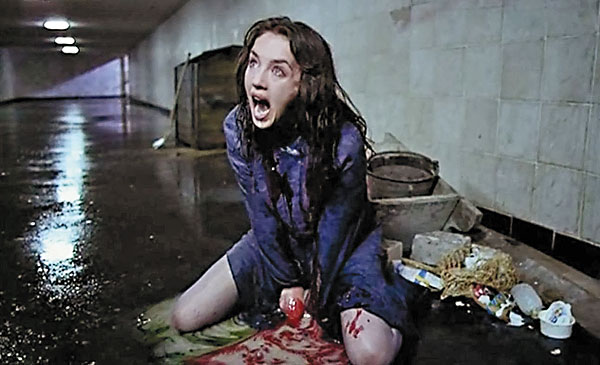
    Żuławski directs like a man possessed, matching his characters’ unhinged energy with a restless camera and wild tonal shifts. The result is a fever dream of shrieking confrontations, doppelgängers, collapsing identities, and one of the most infamous subway scenes in cinema history. Possession (1981) is not an easy film—it’s messy, abrasive, and frequently overwhelming—but it’s precisely in its refusal to conform that its power lies. Indeed, much of the dialogue is obtuse non-sequitur in delivery as the actors deliver prose-like philosophical statements that have clearly influenced the writing of Yorgos Lanthimos and Efthymis Filippou.

    To watch Possession (1981) is to witness cinema used as a weapon against coherence, comfort, and calm. I almost had a panic attack watching it. Neill, usually a calm on-screen presence looks as though he is lost in a nightmare he cannot escape. Heinz Bennent, as the lover, fully embraces Zulawski’s insane vision, while Adjani literally has a mental breakdown on screen. It is an unbelievably fearless embodiment of psychotic sexuality, arguably only matched in a commercial release by Eva Green’s Vanessa Ives from the majestic gothic TV series, Penny Dreadful (2014-2016). Ultimately, Possession (1981), is as much about the disintegration of self as it is about the end of a marriage, the failure of ideology, or the horror of being alive. One doesn’t simply watch Possession (1981)—one survives it.


    Cinema Review: 28 Years Later (2025) – an epic horror sequel; one for the (r)ages!

    Cinema Review: 28 Years Later (2025)

    Directed by Danny Boyle

    Written by Alex Garland

    Produced by Danny Boyle, Alex Garland, Andrew Macdonald, Peter Rice & Bernie Bellew

    Main Cast: Jodie Comer, Aaron Taylor-Johnson, Jack O’Connell, Alfie Williams, Edvin Ryding and Ralph Fiennes

    Cinematography by Anthony Dod Mantle

    Edited by Jon Harris

    ** MAY CONTAIN SPOILERS **


    We’re foot—slog—slog—slog—sloggin’ over Africa
    Foot—foot—foot—foot—sloggin’ over Africa —
    (Boots—boots—boots—boots—movin’ up and down again!)
    There’s no discharge in the war! —
    Rudyard Kipling

    The opening sequences of 28 Days Later (2002), directed by Danny Boyle and written by Alex Garland, are some of the most haunting and iconic introductions in cinema—transcending the horror genre to deliver something mythic, mournful, and terrifyingly real. They are masterclasses in mood-building, world-setting, and emotional manipulation, and redefined what the modern apocalypse could feel like on screen. From the terrifying raging simian attacks to the stunning silence of hollow streets and buildings of London as Jim (Cillian Murphy) awakes to an incredibly changed and empty planet. Here Boyle used guerrilla filmmaking as an artistic weapon with digital video blending with silence and dread, beauty and decay, loneliness and rage creating a grimy realism that no big budget blockbuster could replicate.

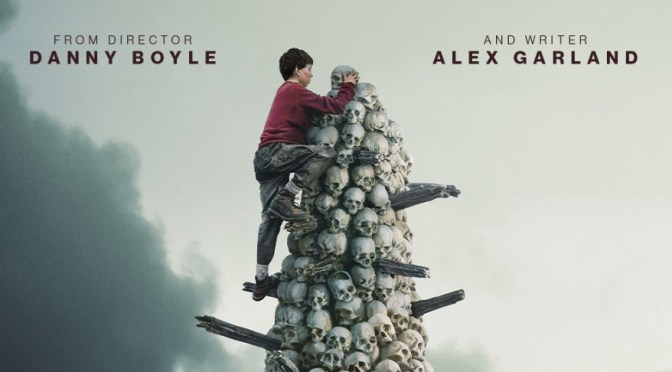
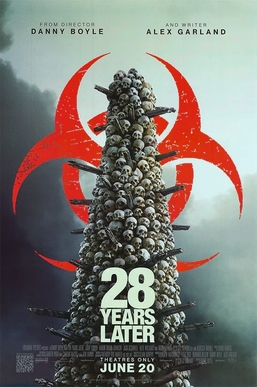
    The opening sequence of the sequel, 28 Weeks Later (2007), was damned good as well, although what followed was not as formidable as the original. If we’re honest it was more of a high-quality straight-to-video effort, especially when compared to the incredible first film. But what of 28 Years Later (2025), which finds Boyle and Garland re-teaming with a stellar cast including: Jodie Comer, Aaron Taylor-Johnson, Ralph Fiennes and newcomer, Alfie Williams. It opens with yet another impressive opening sequence in 2002, as a family of kids are attacked in their Scottish home. Escaping on frantic foot is young Jimmy who finds his father, the local minister, in his church proclaiming the ‘end of days!’ Move forward twenty-eight years to 2031 and the film joins, interestingly enough, not Jimmy, but a survivor community living in Lindisfarne, a tidal island connected by a fortified causeway.

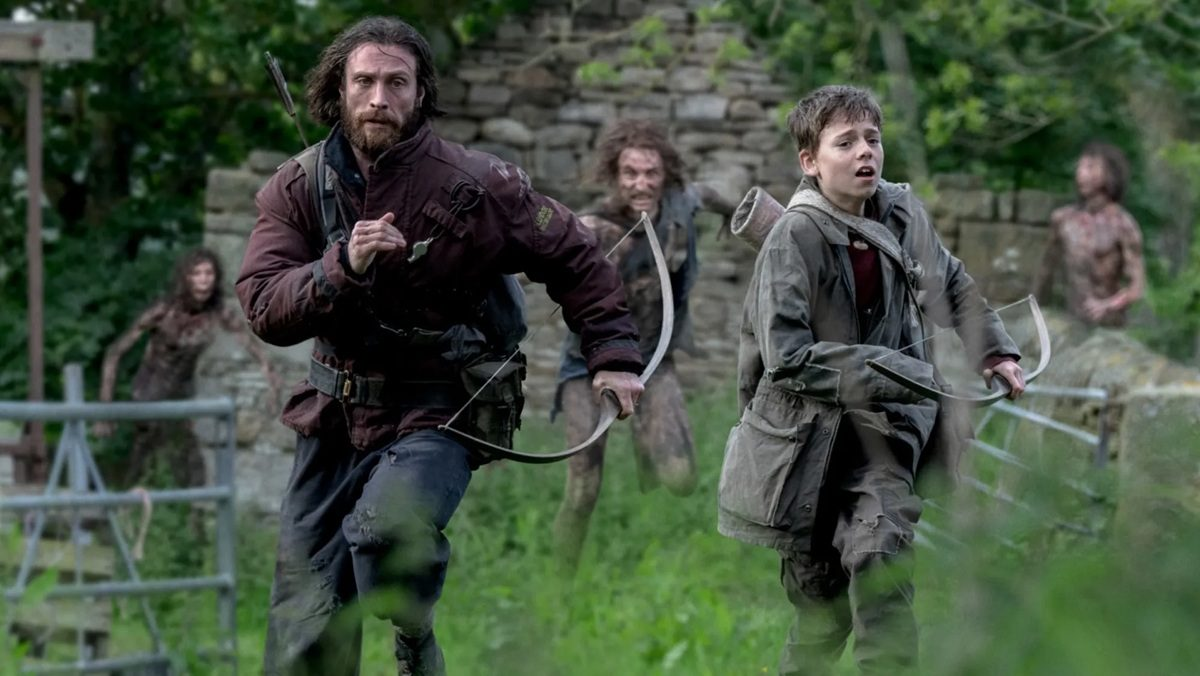
    Focusing on the family unit of twelve-year-old son, Spike (Alfie Williams), and parents, Isla (Jodie Comer) plus father, Jamie (Aaron Taylor-Johnson), 28 Years Later (2025) marks a ferocious and exhilarating return to the infected-ravaged world. It is not simply a continuation, but a full-fledged reimagining that deepens, widens, and accelerates the mythology, style, and thematic power of the series. It is not just a sequel—it’s an evolution, one that pulses with the blood of Romero’s bleak social horror and the serialized depth of The Walking Dead, while forging its own cinematic identity: brutal, urgent, and conceptually masterful.


    From its opening moments, 28 Years Later plunges viewers into a world far beyond what we’ve seen before. Civilization hasn’t recovered—it has, like the zombies, mutated. The virus is no longer an outbreak or an aftermath; it is an ecosystem. What began as a confined crisis in 28 Days Later, and widened into militarized guilt and familial betrayal in 28 Weeks Later, now becomes a reckoning. Thematically, the film touches on generational trauma, hybrid immunity, rites of passage, euthanasia and the evolution of the rage undead. Jamie trains his son in the art zombie-hunting, before the middle act finds Spike attempting to save his unwell mum. At this time he both matures and overcomes several battles with mutated inhumans.

    The visual grammar of 28 Years Later stays true to the DNA of the series: raw, immediate, and grimy. But it’s also evolved. The digital grunge of 28 Days Later is elevated with modern tools, while still embracing a handheld, documentary-style urgency. Towns and buildings aren’t just abandoned—they’re fossilized in trauma. New scenes are suffused with ash, dust, decay, blood, plasma and rusted iconography, painting a world that’s both rotting and fighting to be reborn. This is a horror film that smells like blood and diesel. It feels dirty. Every camera move, whip pan and smash cut drags you to hell and makes you feel like your life is in danger.

    28 Years Later doesn’t just revive a franchise—it transforms it into a towering trilogy of infection, collapse, and spiritual trauma. It draws from Romero’s cynicism, The Walking Dead‘s moral complexity, and its own raw, kinetic legacy to deliver something uniquely powerful: a horror film that is both visceral and cerebral, intimate and operatic. While there are some script and pacing issues toward the end of the second act, Boyle directs superbly. Plus, the film benefits from some memorable performances, notably Comer, Fiennes and young Alfie Williams. Lastly, it has one of the most startling endings to a film I have seen in a long time. It is frankly nuts. Yet, it ensures 28 Years Later (2025) is a modern horror classic, pulsing with urgency, style, and an almost unbearable truth: that the most terrifying viruses don’t infect the body—they infect the soul. Bring on the sequel!

    Mark: 9.5 out of 11