Category Archives: New Releases

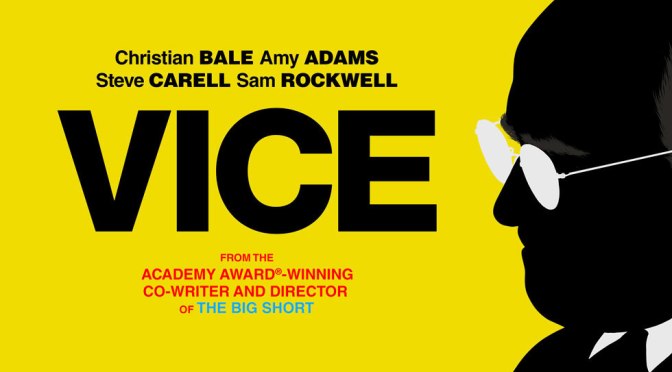
VICE (2018) – CINEMA REVIEW & OSCAR BINGO #3

VICE (2018) – CINEMA REVIEW

Directed by: Adam McKay

Produced by: Brad Pitt, Dede Gardner, Jeremy Kleiner, Kevin J. Messick, Will Ferrell, Adam Mckay

Written by: Adam McKay

Starring: Christian Bale, Amy Adams, Steve Carell, Sam Rockwell, Tyler Perry, Alison Pill, Lily Rabe, Jesse Plemons

**CONTAINS HISTORICAL SPOILERS**

Unlike the previous Oscar Bingo attempts for A Star Is Born (2018) and First Man (2018), this review has full knowledge of the nomonations. So, rather than be guess work this review of Vice (2018) is intended to be based on more constructive critiques of the Oscar nominated films I have seen.

BEST FILM CHANCES – 8/10

For starters, Vice is certainly worthy of its award nominations. I have seen some criticisms that it is cartoonish and simplistic and while I actually agree with this, it is also a brilliant and scabrous work of satire. Yes, it’s preaching to the liberal and left-winged Hollywood choir, but it definitely presents a fascinating snapshot of Dick Cheney’s rise from alcoholic wastrel to powerful political figure.

While I believe Roma (2018) will win the Best Film, I enjoyed Vice more from a stylistic, educational and emotional perspective. I was drawn into the murky world of American politics by McKay and his fantastic ensemble cast, and was compelled by the machinations of Cheney’s manipulative puppet-master to Bush’s marionette President. McKay’s film, while certainly one-tracked, powers along picking apart and satirising one of the most shadowy political figures of recent years.
BEST DIRECTOR CHANCES – 8/10

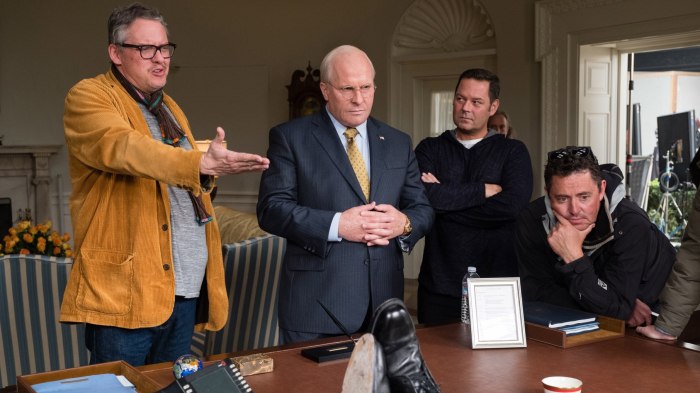
In terms of tone and narrative, McKay’s The Big Short (2015) was arguably a more cohesive film. Indeed, Vice is presented more as a non-linear monatge and sketch style recreation of key events in Cheney’s life. But I loved the style and McKay should be praised for his editing choices. He throws the veritable formalistic kitchen sink at the film using: direct address, Shakepearean monologue, cross-cutting montage, fake credits, voiceover, freeze frames, fake footage, stock footage, flashbacks, flash forwards, inter-titles, third-party narrator and many more stylised tropes. In my view his directorial bag of tricks are utilised without losing emotional impact too. While Alfonso Cuaron will probably win McKay certainly deserves kudos for enlivening his subject matter with such storytelling choices.

ACTOR IN A LEADING ROLE CHANCES – 10/10

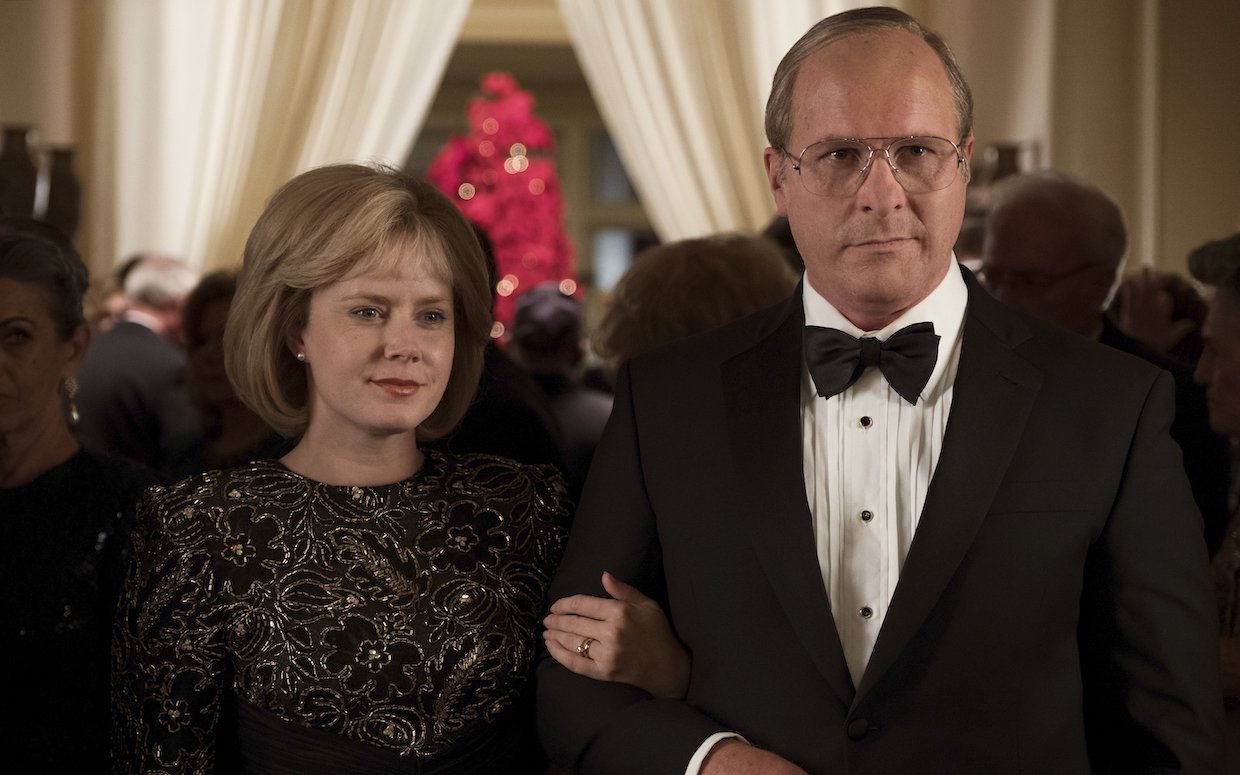
Christian Bale should win. I have not seen Rami Malek, Viggo Mortensen or Willem Dafoe’s acting in their respective roles but Christian Bale is astonishing. Fair enough, he has taken a real person and delivered an emulation performance, but he also brings to Cheney to life with formidable cinematic style. Of course, the physical transformation could take the headlines but in terms of emotion and mentality he really raises the perfomance bar. Cheney may be an enigmatic character but Bale brings quiet menace, whispers and manipulation to the role. There is also a sly humour there too which makes Bale’s Cheney another memorable acting monster he’s created.

ACTRESS IN A SUPPORTING ROLE CHANCES – 8/10

Amy Adams is one of my favourite actors. Not quite a Lady Macbeth character, her Lynn Cheney pushes Dick forward mercilessly to make a better man of himself. She is the foundation and rock of their relationship and glues his life together when he faces health issues and political setbacks. Adams nails the role, and while Rachel Weisz will probably win for The Favourite (2018), Adams may finally get the Oscar she deserves.
ACTOR IN A SUPPORTING ROLE CHANCES – 5/10

Sam Rockwell is excellent in emulating George W. Bush but he only has a few scenes. While Rockwell dumbs down with the best of them I would have nominated Steve Carell instead. His Donald Rumsfeld, was a creeping, neurotic and conniving joy and definitely deserved the nomination in this category.

ORIGINAL SCREENPLAY CHANCES – 7/10

The film benefits from a sparky screenplay which keeps a potentially dull subject spinning along in an entertaining fashion. It takes a complex set of characters and scenarios, and despite simplifying to fit a leftist agenda, still constructs intelligent analyses of Cheney and Washington at large. Ultimately, Cheney is shown to be an opportunist and dangerous person who manipulated information and policy to finagle the USA and allies into a war for profit. Even worse he did so from the position of Vice President – boo Cheney! Boo! While McKay deserves praise for his brave creative choices, I would go for Paul Schrader’s exceptional First Reformed (2018) in the original screenplay category; Schrader deserves it more.

CONCLUSION

I am a big fan of satirical works such as: Private Eye, Yes Minister, Spitting Image, The Thick Of It, Veep and South Park. They seek to undermine and take critical shots at our leaders, illustrating the danger, absurdity and stupidity of those in power. They also, in an entertaining way, carry a message that those serving their country are often serving themselves more. Conversely, a film like Vice, however cartoonish or broad, still has the power to highlight the corruption and horror of a man like Cheney. While the script and direction are tonally scatter-gun, Bale’s incredible rendition, and the marvellous supporting cast, anchor the film and ensure this satirical ship rarely hits the rocks.
Mark: 9.5 out of 11

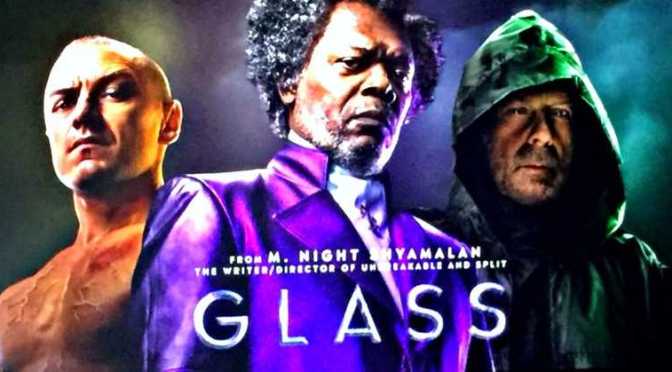
GLASS (2019) – MOVIE REVIEW

GLASS (2019) – MOVIE REVIEW

Directed by: M. Night Shyamalan

Produced by: M. Night Shyamalan, Jason Blum, Marc Bienstock, Ashwin Rajan

Written by: M. Night Shyamalan

Starring: James McAvoy, Bruce Willis, Anya Taylor-Joy, Sarah Paulson, Samuel L. Jackson

Music by: West Dylan Thordson

**CONTAINS SPOILERS FROM SHYAMALAN’S PRIOR FILMS**

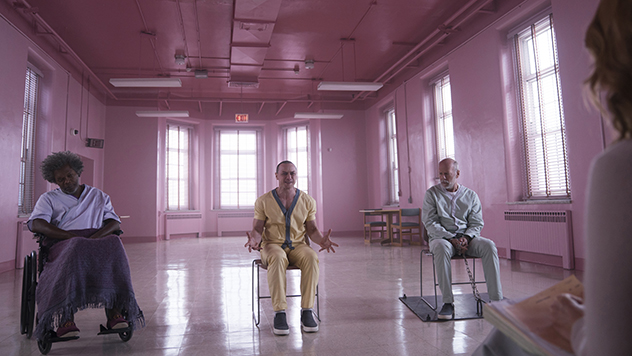
M. Night Shyamalan is arguably one of the most critically divisive directors working today. Not because his films are particularly controversial, but mainly because he is a risk-taker that tests the boundaries of genre expectations. He has so many different ideas and concepts that quite often his movies have back-fired spectacularly, however, when he gets it right his genre films are highly entertaining and compelling. Films such as: The Sixth Sense (1999), Unbreakable (2000), Signs (2002), and The Village (2004), were for me, brilliant genre films full of invention, suspense and wicked twists. Many people felt The Village stretched the limits of suspending disbelief, but it was a masterpiece compared to his filmic failures like: The Lady in the Water (2006), The Happening (2008) and The Last Airbender (2010).

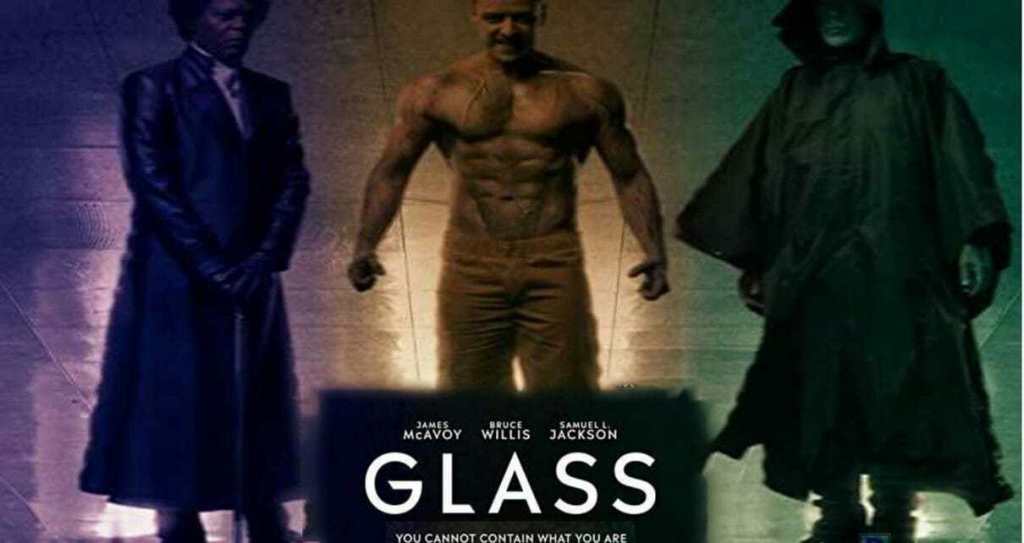
I missed seeing the apparent disaster that was After Earth (2013), yet it was opined that Shyamalan returned to some essence of form with the horror film The Visit (2015). However, I still felt there were some dodgy creative decisions in that, such as the story-filler-white-middle-class-rapping kid in amidst a creepy thriller. Yet, with Split (2016), Shyamalan was back to his best, weaving an exploitational B-movie kidnap-plot with a searing psycho-performance from James McAvoy. The ending, which found Anya Taylor-Joy’s ultra resilient Casey fighting back against McAvoy’s twenty-plus split-personality maniac, then brilliantly linked the film to Shyamalan’s Unbreakable (2000). Therefore Glass (2019), becomes the third part of an unlikely trilogy; three films where Shyamalan strives to create his own universe and mythology within a more realistic superhero and super-villain world.

Glass starts three weeks after the end of Split  and opens with a terrific and bruising encounter between McEvoy’s dominant “Beast” personality and David Dunn’s (Bruce Willis) vigilante, daubed “The Overseer” by the media. Captured by authorities, the two are locked up and analyzed by Sarah Paulson’s seemingly sympathetic psychiatrist, Dr Ellie Staple. Enter Samuel L. Jackon’s Elijah Price, who is ALSO being held at the same mental health facility. I mean what could go wrong? Does the catatonic Price have villainous plans for The Horde and The Overseer? What do you think?

What I love about Shyamalan’s screenwriting, and this is something which he could equally be criticized for, is you can hear the cogs of contrivance creaking with every plot turn. Yet his ideas really capture your imagination and you genuinely want to know what happens next. Personally, as a fan of say Agatha Christie, I love theatrical exposition and clear “rules-of-the-world” mechanics. Shyamalan gets his three big-hitters in the same place and cinematic fireworks, however unlikely and full of plot-holes it may be, ensue. Woven within the fights, monologues and narrative misdirections are very clever meta-textual references to comic-book structures. This adds a welcome context to the denouement, which contains at least two incredible revealing twists.

Ultimately, I feel, unlike certain critics, that Glass is a fun and entertaining end to the trilogy. Yes, it tests the believability grid but Shyamalan must be applauded for striving, once again, toward some form of originality within his chosen genre.  It arguably goes down a deep rabbit hole at the end which is hard to get out of; but the impressive cast keep you in the light for the most part. James McAvoy is simply, once again, outstanding. Why hasn’t he been nominated for an Oscar? Who knows! Jackson and Willis are always solid performers, although I felt that Dunn’s character was slightly thrown away at the end. Anya Taylor-Joy also stood out and she is going to be a big star if she carries on delivering wide-eyed and steely performances such as these. Thus, Shyamalan gives us another big hit and something very different from the Marvel and DC superhero universes; something altogether more human.

Mark: 8.5 out of 11

STAN AND OLLIE (2018) – CINEMA REVIEW

STAN AND OLLIE (2018) – CINEMA REVIEW

Directed by: Jon S. Baird

Produced by: Faye Ward

Written by: Jeff Pope

Cast: Steve Coogan, John C. Reilly, Shirley Henderson, Nina Arianda, Rufus Jones, Danny Huston etc.

**CONTAINS HISTORICAL SPOILERS**

There are very few things as warming and pleasant as taking a trip down memory lane, recalling the fuzzy thoughts of a bygone childhood time when everything was laughter and escape. Escape in this instance came in the form of a black and white television box; while laughter came from watching arguably the greatest comedy double act in movie history on TV every early evening after school on BBC2. To be sure, my youth would have been a lot more depressing without Laurel and Hardy’s comedies to divert my mind away from family strife, school bullies and grey council estate existence.

Watching Stan Laurel and Oliver Hardy’s comedies was a formative part of my early years and I have continued to be a fan of there work to this day. It’s incredible that, when I was a kid, films made nearly forty years before had me in uncontrollable fits of laughter. Even now classics such as: Laughing Gravy (1931), Way Out West (1937), The Music Box (1932), Sons of the Desert (1933), County Hospital (1932), Busy Bodies (1933), Our Relations (1933), The Flying Deuces (1939) etc. to name just a few of their incredible output, retain the power to have me in stitches. Laurel’s skinny dumb man-child perfectly contrasted Hardy’s larger more confident, yet deluded leader of the two. Their comedy derived from their hapless misadventures, usually involving some new business venture or fish-out-of-water situation which resulted in anarchic chaos and silliness all round. But the comedy was not simple pratfalls but carefully constructed sight-gags, complex slap-stick set-pieces and constant battles with wives, girlfriends or authority figures.

After briefly establishing the characters of Stan and Ollie in Hollywood during 1937, the Jeff Pope scripted film moves to the United Kingdom in 1953. Here Laurel and Hardy’s star is on the wane and they have taken a music hall tour to try and make a few quid, while potentially getting a Robin Hood movie off the ground. With their health suffering, especially Hardy’s, due to excessive alcohol and food intake, the two begrudgingly go on tour while bitter acrimony simmers underneath. On top of that the tour is struggling due to a lack of promotion by Bernard Delfont and the whole thing looks like it could be a disaster. I must admit the film is not really that dramatic and stands more as a nostalgic tribute to the power of Stan and Ollie’s friendship and comedic relationship. Laurel is the workaholic always cracking wise and looking for the next gag, while Hardy is the more sociable and relaxed with an eye for the ladies and horses.

Jon S. Baird directs with a deft hand, yet he has two incredible actors in the lead roles. Steve Coogan and John C. Reilly are absolutely perfect as Stan and Ollie. Their mannerisms and comic timing in capturing the comedy duo are a joy to watch. Moreover, there’s a wistful pathos in the fact a great life journey is about to come to an end. Here, Coogan and Reilly bring a real warmth to the roles and as they resolve their tensions the over-riding emotion ultimately is love. As the tour continues they are joined by their wives, portrayed by Shirley Henderson and the scene-stealing, Nina Arianda. Their relationships at times reflects the hen-pecking women Stan and Ollie would find themselves chained to in their movies, but there’s clearly a lot of love on screen too. Lastly, despite their health issues Stan and Ollie are born entertainers, fully committed to the ethos that the show must go on.

Overall, Stan and Ollie is a wonderful paean to two of the greatest comedic actors that ever lived. It’s gentle in pace and drama but anchored by two mesmerising performances by Coogan and Reilly. Despite the low budget, the period locations and costumes are brilliantly designed, and I especially enjoyed seeing many recognizable London locations. The biggest highlight though throughout is the hilarious re-enactments of many of Laurel and Hardy’s famous sketches, songs and movie moments. These took me back to my youth and days of watching Stan and Ollie on that small black and white box at home, laughing my silly head off without a care in the world.

Mark: 8.5 out of 11

COLETTE (2018) – CINEMA REVIEW

COLETTE (2018) – CINEMA REVIEW


Directed by: Wash Washmoreland

Produced by: Elizabeth Karlsen, Pamela Koffler, Michel Litvak and Christine Vachon.

Screenplay by: Richard Glatzer, Rebecca Lenkiewicz and Wash Washmoreland

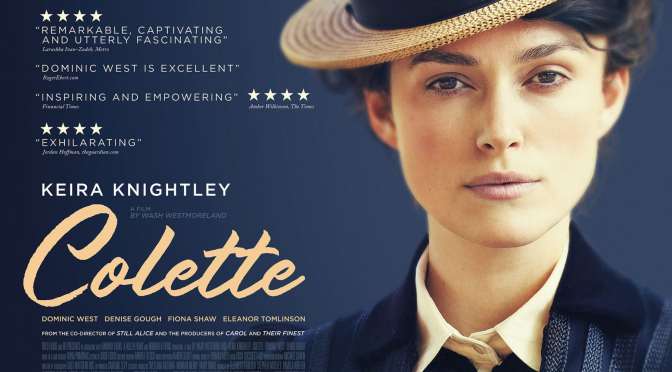
Cast: Keira Knightley, Dominic West, Eleanor Tomlinson, Denise Gough etc.

**CONTAINS HISTORICAL SPOILERS**

In a coincidental twist of cultural fate I only recently became aware of turn-of-the-century novelist, libertine, bohemian and society trailblazer that was Sidonie-Gabrielle Colette. I’d been listening to a brilliant audio-documentary by Adam Roche, which was about Audrey Hepburn’s early life prior to becoming a Hollywood star. Interestingly, it was an elderly Colette who spotted the then unknown Helpburn filming a supporting role in Monte Carlo. Furthermore, it was Colette who insisted Hepburn was, despite her lack of stage experience, the ideal person to portray her famous creation Gigi on Broadway. Thus, even in later life Colette was to the fore of the cultural aesthetic; both a major talent and celebrity ripe for respect and admiration.

From her Claudine (1900) novels, to La Vagabond (1910) to Gigi (1944), Colette was a prolific writer of many books and short stories. She was also an actor, dancer and mime, who seemingly delighted in confronting the stuffy middle and upper classes of French society. Unashamed by on-stage nudity and choice of sexual parters, Colette had love affairs with both men and women. Not only did she break down sexual taboos, she also furthered gender equality and would be nominated for the Nobel Prize for Literature in 1948.

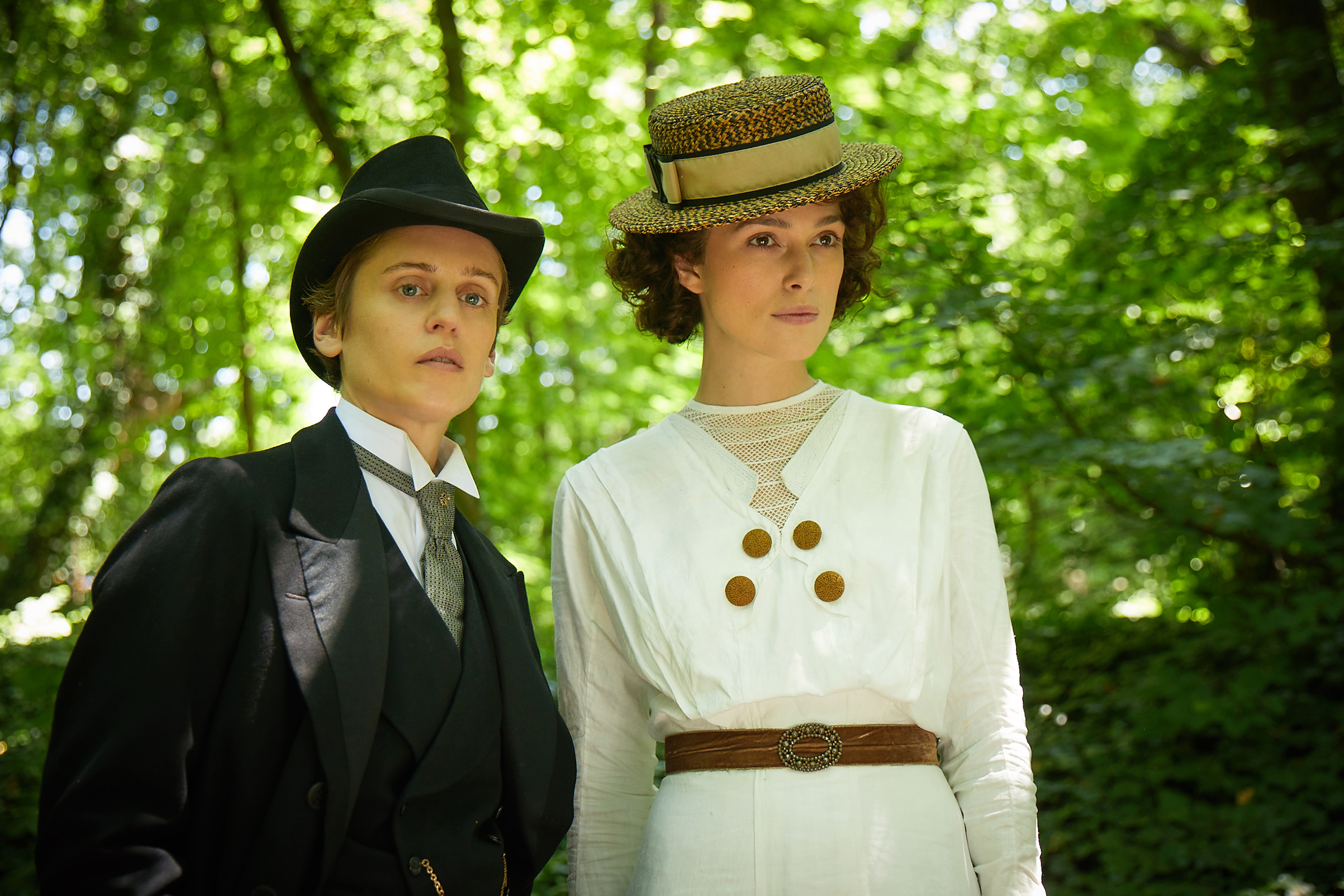
Denise Gough stars as Missy and Keira Knightley as Colette in COLETTE
Credit: Robert Viglasky/Bleecker Street

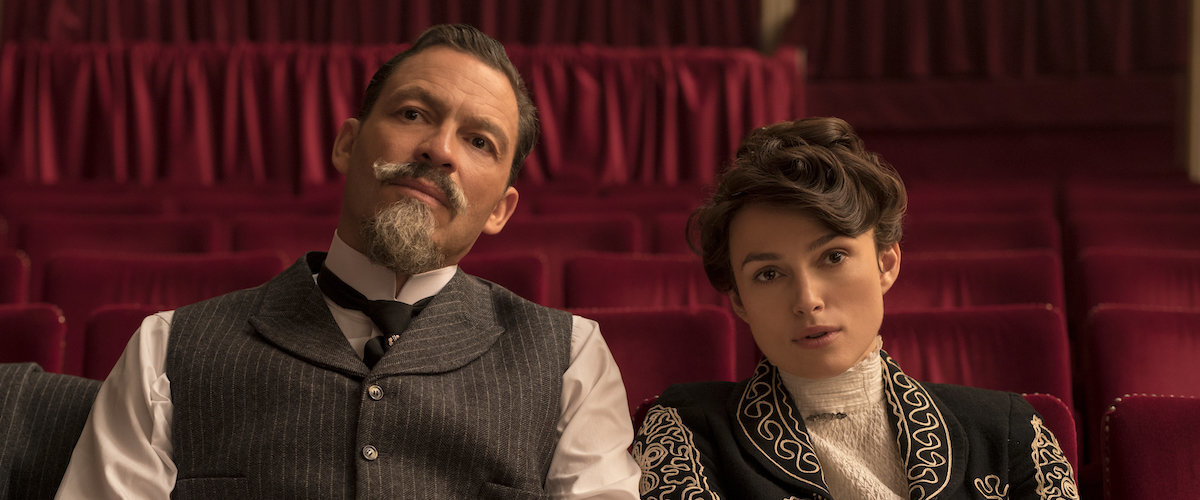
The cinematic version of her life finds Keira Knightley portraying the titular character with a committed energy, verve and magnetism. Knightley has never been the most nuanced of actors but she is a striking movie star, delivering a fine performance here. Likewise, the ever reliable Dominic West is on excellent form as Henry Gaulthier-Villars – AKA ‘Willy’ – Colette’s first husband. West represents him as a charismatic cad with an insatiable lust for women, gambling and booze. While able to wow publishers with his sales pitches he relies on others to do the writing, while happily wasting the advances and royalties.

Willy sweeps the naive country girl Colette off her feet and introduces her to the artistic and literary circles of Paris. As such it is his connections which enable Colette to gain her first publishing success. However, it is Willy who takes all the plaudits, publishing under his own name. This authorial switch inevitably creates a dramatic schism as Colette fights for her name to be on the books. Willy refuses, highlighting both his own egomania and the sexist prejudice of the day. Like the similarly plotted biopic Big Eyes (2014), this film illustrates the nefarious nature of dominant masculinity; however, it also made me consider whether the artists would have been successful if it HADN’T been for these dastardly blokes. Who can tell? One would hope the talent of said artists would shine through come what may.

Structurally, Colette is very linear representing a “greatest hits” of how Colette progresses creatively, romantically and sexually. As aforementioned Knightly gives a fearless performance and the period setting is beautifully evoked within an excellently directed production. My only criticism is a fair amount of time was spent on Colette’s sexual exploits when I would have preferred more drama relating to her authorship battles with feckless Willy. Nonetheless, as period biopics go the film stands as a stylish and admiral tribute to a trailblazing feminist and literary icon.

Mark: 8 out of 11

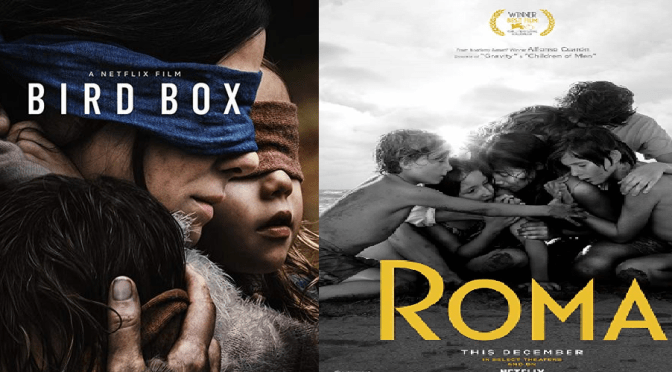
BIRD BOX (2018) and ROMA (2018) – NETFLIX “CINEMA” REVIEWS 

BIRD BOX (2018) & ROMA (2018) – NETFLIX “CINEMA” REVIEWS

Firstly, may I wish you all a happy holiday season and thank all the people who have visited and read my reviews and articles this year. There are a lot of film review sites out there so it’s great so get so many visitors in a saturated online market.

For my final reviews of the year I have decided to double-up two Netflix releases. I watched them pretty much back-to-back in the hope, on top of enjoying them for entertainment purposes; I may be able to add them to my 2018 favourites.

So, here are my quick and concise reviews of Birdbox (2018) and Roma (2018) with the usual marks out of eleven. By the way, if you’re interested my favourite films and TV show lists of 2018 will appear early in January. Happy 2019 in advance!

**MAY CONTAIN SPOILERS**

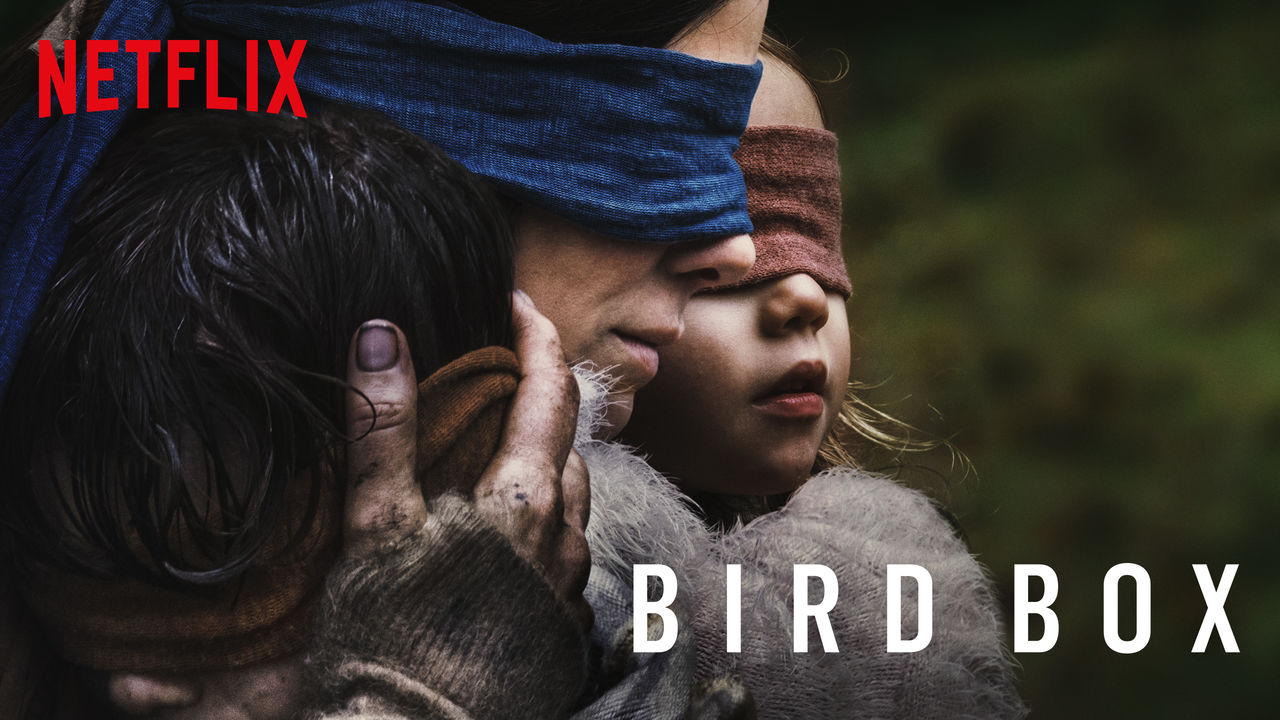
BIRD BOX (2018)

Directed by: Susanne Bier

Produced by: Chris Morgan, Scott Stuber, Dylan Clark, Clayton Townsend

Screenplay by: Eric Heisserer / Based on: Bird Box by Josh Malerman

Starring: Sandra Bullock, Trevante Rhodes, John Malkovich, Danielle Macdonald etc.

It’s the end of the world as we know it: AGAIN!  I’d say that many of us may be getting apocalypse fatigue by now. So much so that if the end of the world does happen we’ll be mentally ready. Thus, any genre film about the end of the world must fight against the tide of similar films and TV shows released in the last decade or so to gain our attention or praise. Bird Box, for me, was a very entertaining and thrilling addition to the sub-genre. It benefits from an excellent ensemble cast and sterling lead performances from Sandra Bullock and Trevante Rhodes. Moreover, John Malkovich steals every scene he’s in as a cynical and obnoxious lawyer.

The story involves an invisible alien or natural force which infects the world’s population once they look; seeing it is deadly. It grips an individuals’ mind and then forces them to do horrific acts of violence to themselves. The film establishes Bullock’s character, blindfolded, with her two children just about surviving in the wilderness. After which we flash back five years and find Bullock’s pregnant character thrown into a memorably gripping set-piece. After which anyone familiar with George A. Romero’s zombie-film template will recognise many of the twists and turns in the story. Indeed, Bird Box is not that original because the superior, A Quiet Place (2018), also had a very similar premise but used sound rather than vision as the danger. Nonetheless, as a genre film Bird box rips along compellingly and Suzanne Bier has created some intense horror moments throughout.  

Mark: 8 out of 11

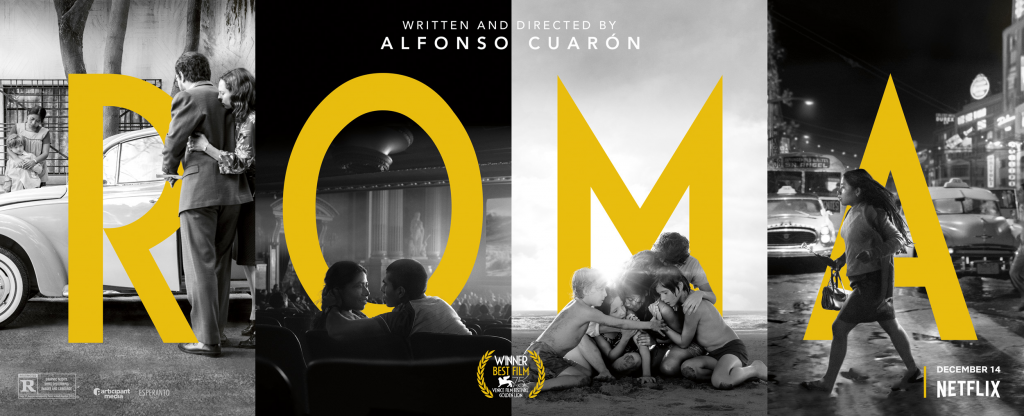
ROMA (2018)

Directed by: Alfonso Cuarón

Produced by: Alfonso Cuarón, Gabriela Rodriguez, Nicolas Celis

Written by: Alfonso Cuarón

Starring: Yalitza Aparicio, Marina de Tavira

Alfonso Cuarón writes, directs, edits and shoots a clear love and hate letter to his Mexican childhood. It contains the love he feels for his mother and the maid who helped raise him; and ire towards the men that negatively affected his young life and his country of birth. Set in the 1970s it covers around a year in the life of one middle-class family living in Mexico City; the main focus being the young help, Cleo. We follow her as she carries out her mundane tasks on a daily basis in an Upstairs Downstairs thematic structure. She is committed to her work and it is clear that she dotes and loves the children as if they are her own. As a historical film the era aesthetics are incredibly realistic and Cuaron’s cinematography, presented in crisp black and white imagery, is virtually perfect. You feel like you are there with the characters in 1970s Mexico. Historically too, the film evokes between the lines the politically charged danger of the era; however, Roma is more of a personal film than determinedly socio-political.

Cuarón is an auteur at the height of his powers. His direction on both Children of Men (2006) and Gravity (2013) was phenomenal; utilising technological brilliance with fierce storytelling acumen. Likewise, in Roma his stylistic choices are fascinating, although I think it actually works against the themes and content at times. The long take pans and tracking shots, while expertly done, slow the pace of the story and in my humble opinion are repetitive and overdone. Moreover, Cuaron the editor has fallen in love with own work and to me would have been a masterpiece if trimmed to two hours. There are at least four incredible standout cinematic scenes – that I won’t spoil – which all linger long in the memory. Furthermore, the characters, led by the humble Cleo are empathetic and at times tragically formed against the backdrop of political unrest. Yet, despite evoking the Italian neo-realist era of post-war filmmaking, Cuaron’s film feels padded at times, lacking the economy of Rossellini’s and De Sica’s work. Overall, it’s a touching work of cinema about birth, life and death, which arguably did not need the stylistic flourishes to tell such a simple, slice-of-life story.                                           

Mark: 8.5 out of 11

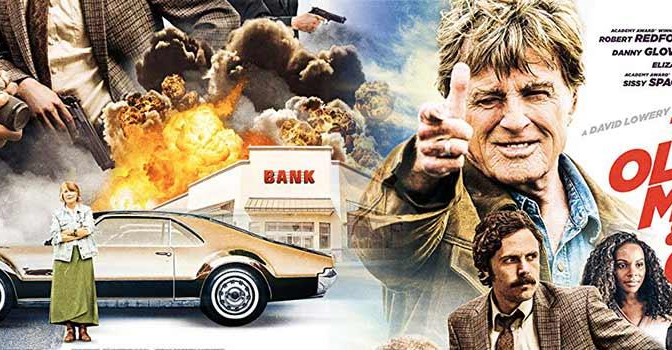
THE OLD MAN AND THE GUN (2018) – CINEMA REVIEW

THE OLD MAN AND THE GUN (2018)

Written and Directed by: David Lowery

Produced by: James D. Stern, Dawn Ostroff, Jeremy Steckler, Anthony Mastromauro, Bill Holderman, Toby Halbrooks, James M. Johnston, Robert Redford

Based on: The Old Man and the Gun (article) by David Grann

Starring: Robert Redford, Casey Affleck, Danny Glover, Tika Sumpter, Tom Waits, Sissy Spacek

Music by: Daniel Hart

Cinematography: Joe Anderson

**CONTAINS SPOILERS**


Forrest Tucker was a career criminal destined to die in jail. His life in between was one of many bank robberies, incarcerations and successful and unsuccessful prison breakouts. The morality of his actions must be condemned as the man was a recidivist addicted to the thrill of crime, making money and also the chase. While I’m not a fan of banks, who themselves are bigger criminals than the robbers, I rarely find myself rooting for such characters, unless there are mitigating circumstances for their actions.

Indeed, Tucker’s illegal acts would have left the authorities drained chasing him across America, and prevent them from protecting other people. Moreover, by holding a gun in people’s faces and demanding money Tucker would have most likely scared a good number too.  Tucker would go on to rob banks well into his late seventies but he never fired his gun; and was often described as a gentleman by his victims. Yet, despite his wrong-doings, the film of his life in the hands of acting legend Robert Redford and director David Lowery is well worth a watch.


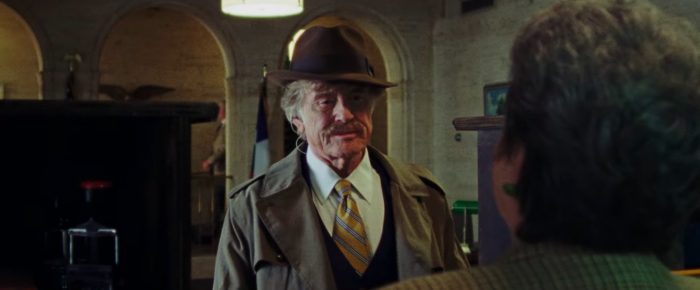
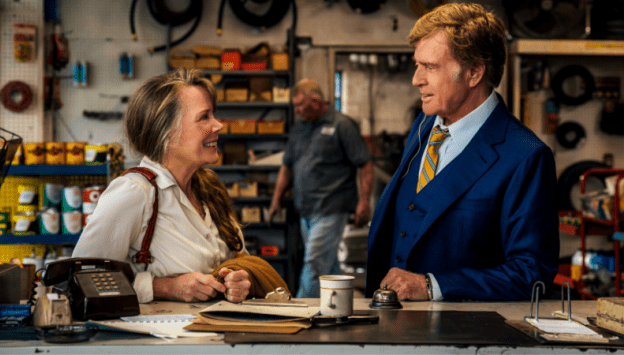
It’s a pretty simple story based on a New Yorker article by David Grann and Lowery adapts with warmth and empathy towards Tucker’s aging bank robber. The casting of Redford is also a masterstroke. As he has throughout his career he exudes a mercurial class and poise.  There’s some wonderful usage of stock photos of Redford from earlier in his career, supplanted to the character of Tucker. This nostalgic trip down memory lane both serves the story and reminds us what a great movie star Redford has always been. It’s a shame that Redford has decided to retire from acting, as reported in August 2018, but this is a fine film to bow out on.

Lowery, whose last film was the amazing A Ghost Story (2017), changes tack with a more conventional character study here; however, he invests lots of imaginative touches in the presentation. He also gets a memorable performance from Sissy Spacek who sparkles as Redford’s romantic interest. It’s beautifully and hazily shot by Joe Anderson on Super 16mm and contains a misty-eyed halcyonic feel to it. I felt like I was watching a film from the 1970s even though it was set in or around the 1990s. So, despite my inherent dislike of the man and the crimes he committed, I very much enjoyed this excellent drama about a fascinating, if misguided, character.                                        

Mark: 8 out of 11

VANITY FAIR (2018) – ITV DRAMA REVIEW

VANITY FAIR (2018) – ITV DRAMA REVIEW

Created and written by: Gwyneth Hughes

Based on: Vanity Fair by William Makepeace Thackeray

Executive producer(s): Damien Timmer, Tom Mullens, Gwyneth Hughes, James Strong

Directed by: James Strong

Starring: Olivia Cooke, Claudia Jessie, Tom Bateman, Johnny Flynn, Charlie Rowe, Simon Russell Beale, Anthony Head, Martin Clunes, Frances de la Tour, Michael Palin

Composer(s): Isobel Waller-Bridge

Distributor: ITV, Amazon Studios

**MAY CONTAIN SPOILERS**

It’s an interesting anomaly in my later years that having previously boycotted period dramas which illustrate the lives of the wealthy and privileged, I now find myself being less partisan and actually watching more. This change doesn’t derive from a mellowing of my socialist working class roots but more an intelligent inquisitiveness as ignorant dismissal of the genre, be they on television or film, means one is possibly missing out on some fine drama or comedy. Indeed, many historical periods’ works of literature or theatre are in fact satirising or damning the upper classes.

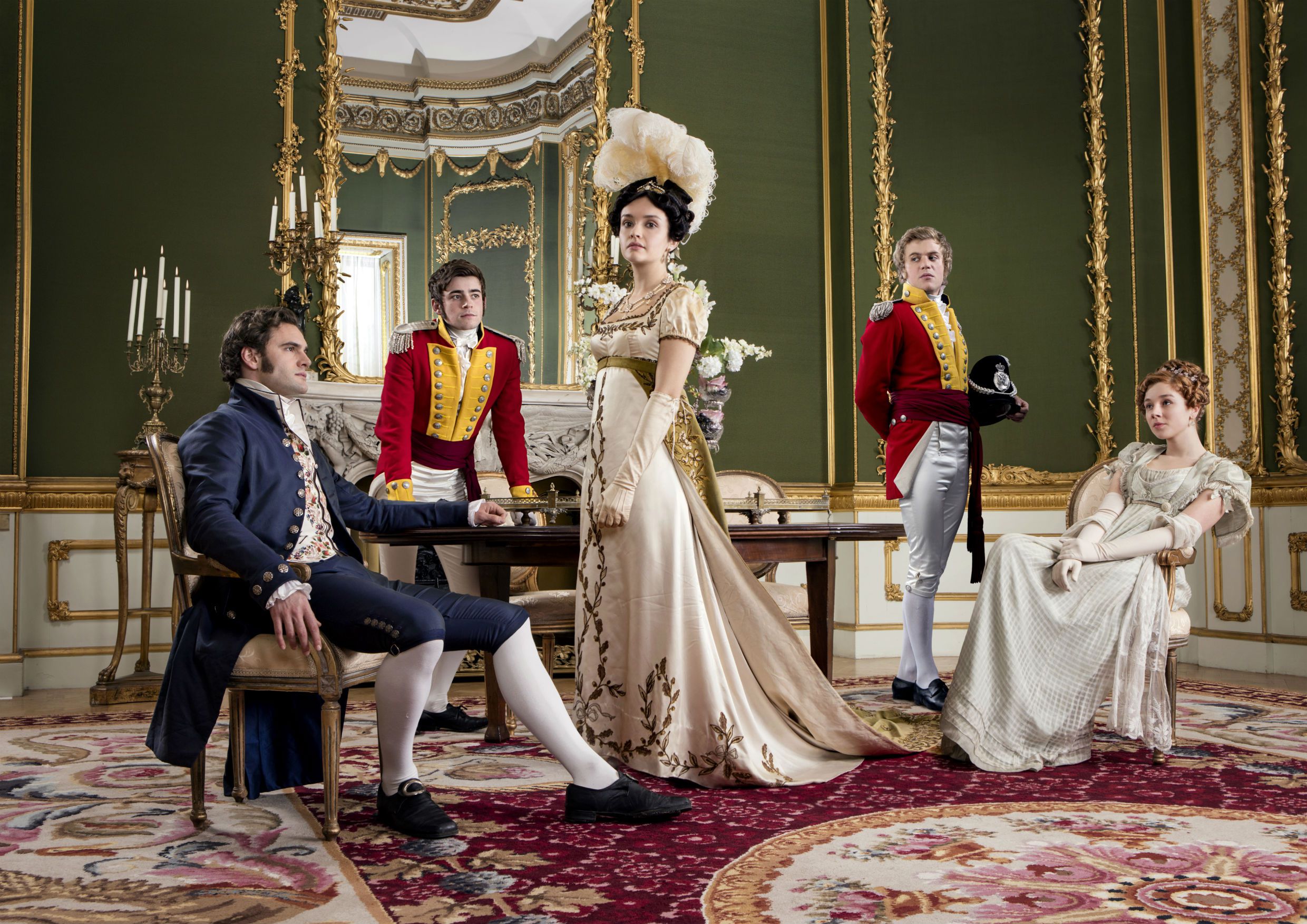
Dickens for example dealt with the lower, middle and upper classes, shining a critical light at the many degradations of the era. Likewise, William Makepeace Thackeray also critiqued the folly of war, greed and narcissistic pursuits of the privileged. Stanley Kubrick demonstrated this brilliantly in his classic adaptation of Barry Lyndon (1975); while in ITV’s most recent adaptation Vanity Fair (2018), Thackeray’s adroit study of ambition and upward mobility shows the strengths, weaknesses and foibles of the women and men at the time of the Napoleonic wars.

Vanity Fair is widely considered a classic and considered the founder of the Victorian domestic drama. Originally serialised between 1847 and 1848 it was at the time a massive hit and one could argue the equivalent of what we would call a soap opera today. There have been, since the novel’s release, a plethora of screen, radio and television adaptations. Did we need another one? Probably not; but over seven compelling episodes Gwyneth Hughes’ screenplay does great justice to bring to life an army of: well-to-dos, country lords and ladies, soldiers, clergy, businessmen, plus the sparkling scheming of anti-heroine Rebecca or Becky Sharp.

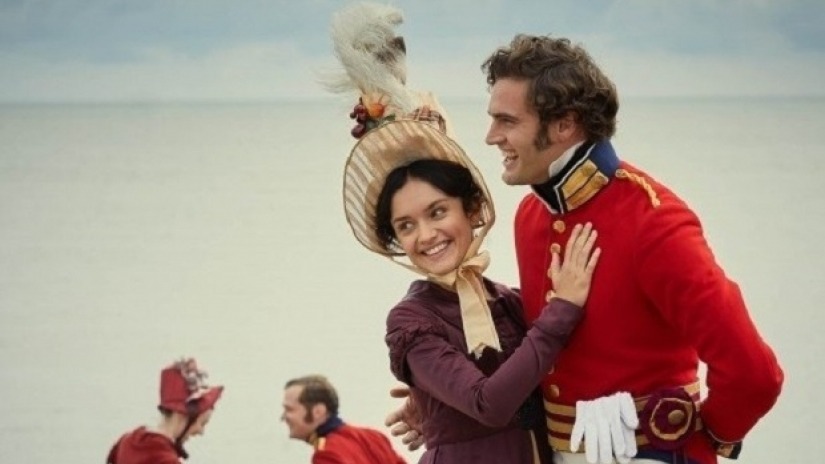
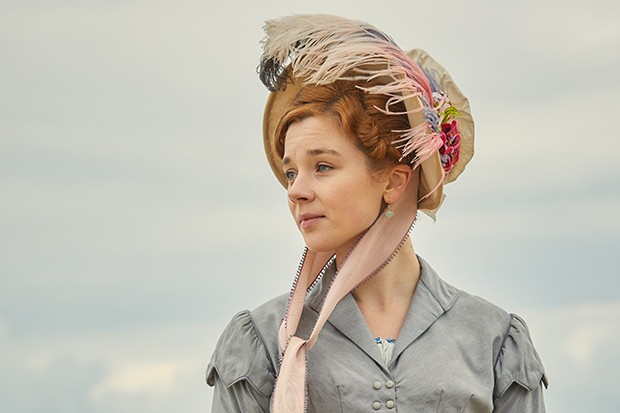
Indeed, the effervescent, nuanced and outstanding performance of Olivia Cooke as Becky drives the narrative forward with absolute purpose. Cooke owns every scene as Becky attempts, from lowly beginnings, to rise through the ranks of society. It is both her strength of character and confidence which is her biggest asset and greatest enemy, because, always pushing for more, she doesn’t quit when she’s ahead. In stark reflection to Becky, Claudia Jessie as Amelia, is characterised as a romantic and desirous not of wealth or position, but rather love and romance. She is a pure spirit and her personality contrasts perfectly with Becky’s. While we admire Becky’s ambitious drive we remain suspicious of her motives, yet Amelia we warm to due to her big and gracious heart.

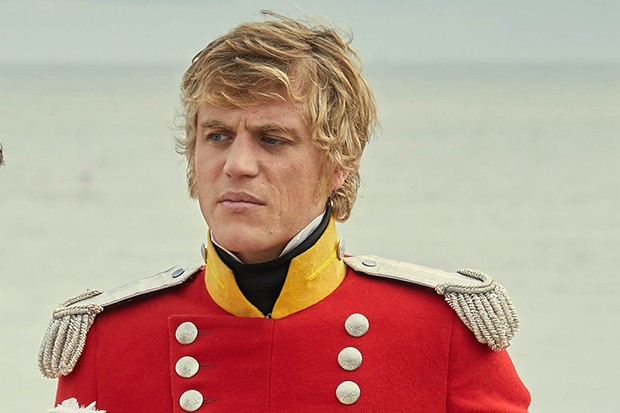
The men in the piece are a mixture of romantics, noble soldiers, treacherous or haphazard patriarchs, foppish fools, gamblers or all of the above. Tom Bateman gives a solid performance as Rawdon Crawley, Becky’s gambling military husband, as does Charlie Rowe as the more conflicted romantic, George Osborne. Furthermore, the adaptation contains sterling support from the cream of English character acting royalty including: Martin Clunes, Frances De La Tour, Claire Skinner, Anthony Head and Simon Russell Beale to name a few. However, the standout performance for me was Johnny Flynn as William Dobbin. This is such an empathetic and selfless character that, while holding a torch for Amelia, was prepared to sacrifice his love to make everyone happy. Potentially seen as a weakness, this for me was a real strength in a story which was full of selfish narcissists out for what they could get.

Aside from slightly dodgy green-screen CGI for the later scenes in India this was beautifully shot and lit, with the vistas of the English and French countryside wonderfully rendered. The interiors were eloquently designed as the stately and city homes of the characters, likewise the colourful costumes, were expertly brought to life.  James Strong is a prolific television director and he gets brilliant performances and marshals the pace and machinations of the narrative precisely. With Olivia Cooke and Johnny Flynn delivering star turns in their roles I was consistently surprised by this adaptation of Thackeray’s masterpiece. Ultimately, I’ve learned that whether something is a period drama or not one must give it a chance as it could have qualities which continue to stand the test of time.

Mark: 8.5 out of 11

SORRY TO BOTHER YOU (2018) – CINEMA REVIEW

SORRY TO BOTHER YOU (2018) – CINEMA REVIEW

Directed by: Boots Riley

Produced by: Nina Yang Bongiovi, Kelly Williams, Jonathan Duffy, Charles D. King, George Rush, Forest Whitaker

Written by: Boots Riley

Starring: Lakeith Stanfield, Tessa Thompson, Jermaine Fowler, Omari Hardwick, Terry Crews, Danny Glover, Steven Yeun, Armie Hammer

**SPOILER FREE REVIEW**

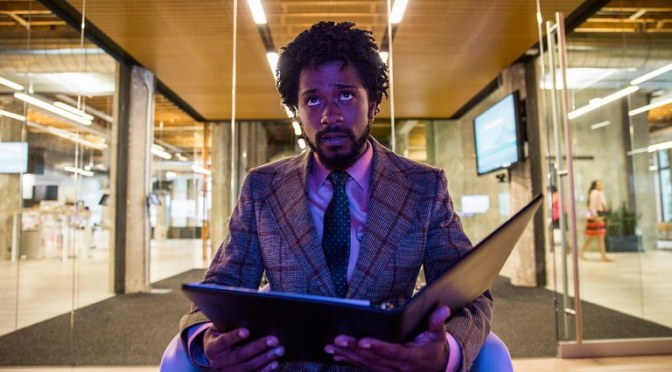
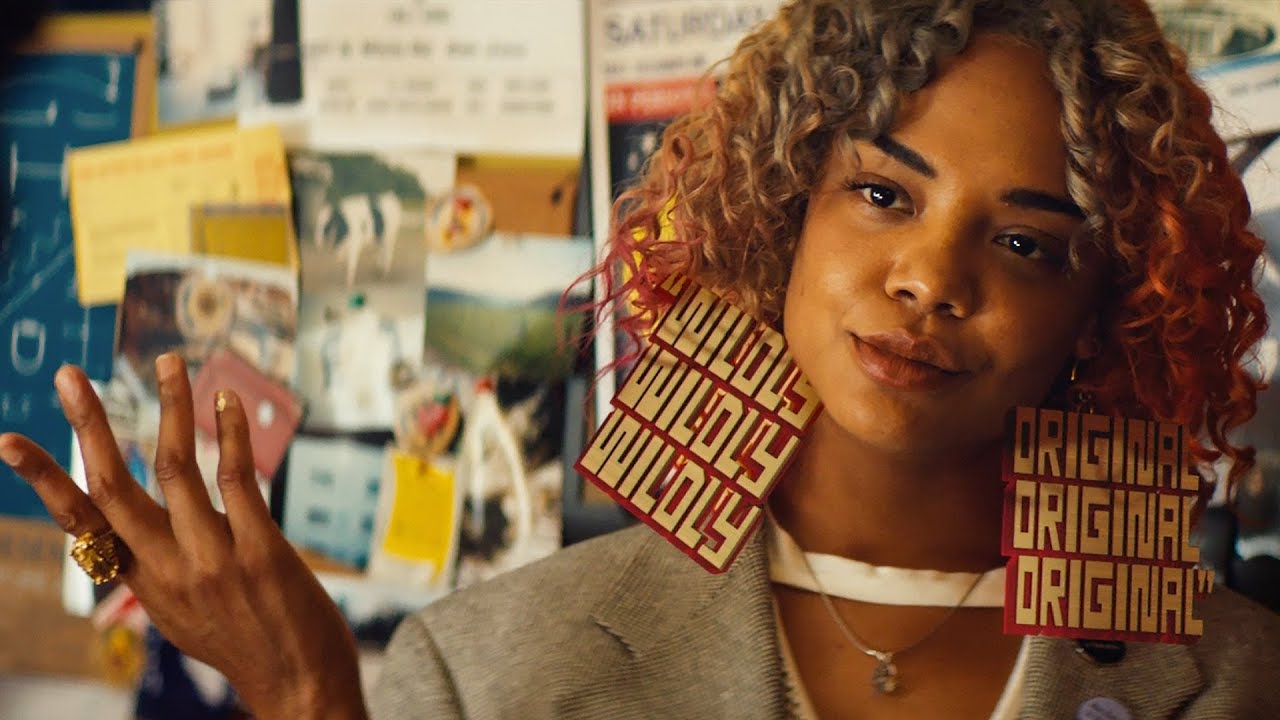
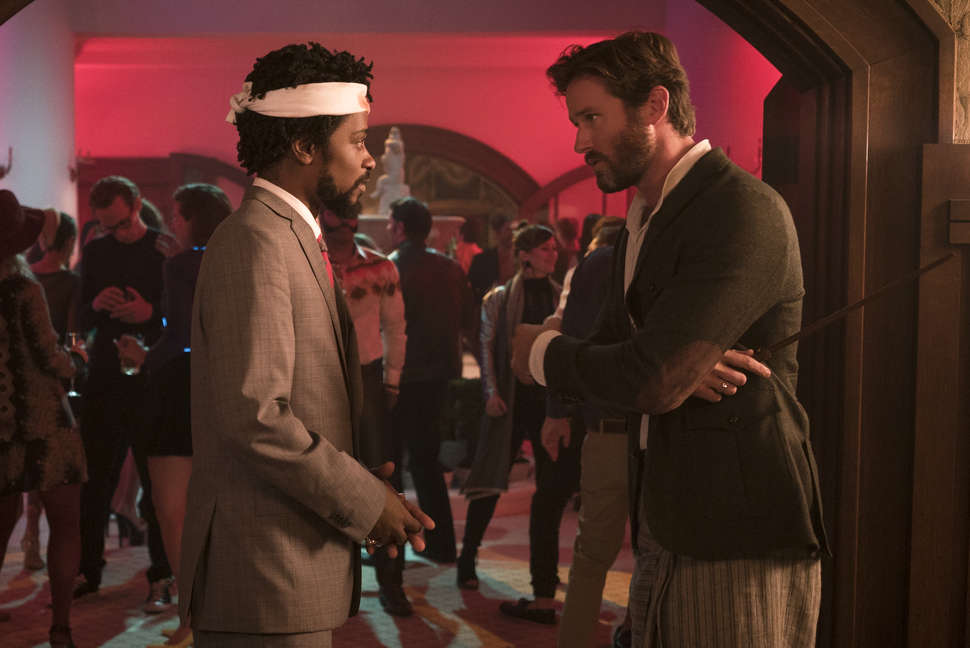
Just when you think the well was drying up somewhat in regard to favourite films of the year, Sorry To Bother You (2018) comes along and jumps straight into my top twelve. Written and directed by activist and musician Boots Riley, this really is a humdinger of an absurdist comedy and must surely be a contender for best original screenplay of the year.

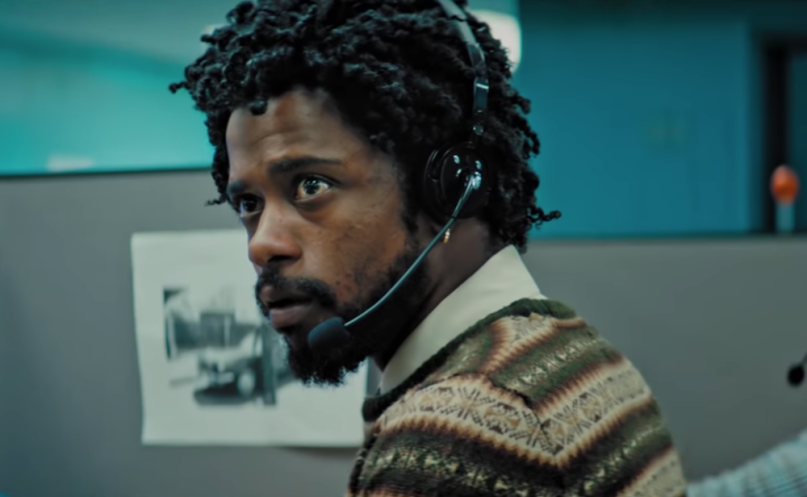
Centring on Oakland-based Lakeith Stanfield’s downtrodden everyman, Cassius Green, we find him unemployed and desperate to find work. So much so he takes a soulless commission paid job at RegalView selling encyclopaedias. So far so normal but very quickly events take many left field turns and Cassius is catapulted into a world of corporate greed, worker rebellion, romantic difficulties and some very weird science.

I do not want to give too much away but I had a blast with this film. Indeed, it’s best watched when you know as little as possible about the story. All throughout writer and director Riley has managed a great balance between believable situations and ridiculously surreal humour. His screenplay manages to satirise both the greed of corporate America and racial profiling, while at the same time never preaching or getting heavy. The tone of the film reminded me of so many films and TV shows I love, including: Being John Malkovich (1999), Atlanta, TheMighty Boosh and Monty Python’s Flying Circus. It’s also a thematic sibling to Jordan Peele’s massive horror hit Get Out (2017); which found white people exploiting Afro-Americans to nefarious ends.

The cast jump on board the many hyper-real and absurd concepts with abandon. Lakieth Stanfield, who is brilliantly deadpan in the show Atlanta, shows what a gifted actor he is. Again, Tessa Thompson proves what a brilliant actress she is as Cassius’ energetic artist and activist girlfriend; while Jermaine Fowler, Danny Glover and Steven Yeun provide really solid support. Special mention for Armie Hammer who really amps up the comedy with his representation of avaricious corporate megalomaniacs who care more for profits than they do for human life.

Incredibly, this is Boots Riley’s debut feature film and what a fantastic job he has done.  Sorry to Bother You is brimming with hilarious comedic scenes, on-point parody, textured style and credible social commentary. Cassius’ journey throughout is believable too as he is tempted by the promise of money but at severe and Faustian cost. Riley, within the hyper-reality of the world he presents, never strays far from the idea that the collective must join forces to overcome the paymasters. Ultimately, the film may be messy and chaotic at times but this project-mayhem-gonzo-style, along with the colourful design and moody cinematography combine to deliver one of the most memorable films of the year.               

Mark: 9 out of 11

CREED II (2018) – MOVIE REVIEW

CREED II (2018) – MOVIE REVIEW

Directed by: Steven Caple Jr.

Produced by: Sylvester Stallone, Kevin King-Templeton, Charles Winkler, William Chartoff, David Winkler, Irwin Winkler

Screenplay by: Juel Taylor, Sylvester Stallone

Starring: Michael B. Jordan, Sylvester Stallone, Tessa Thompson, Wood Harris, Phylicia Rashad, Dolph Lundgren etc.

**MAY CONTAIN SPOILERS**

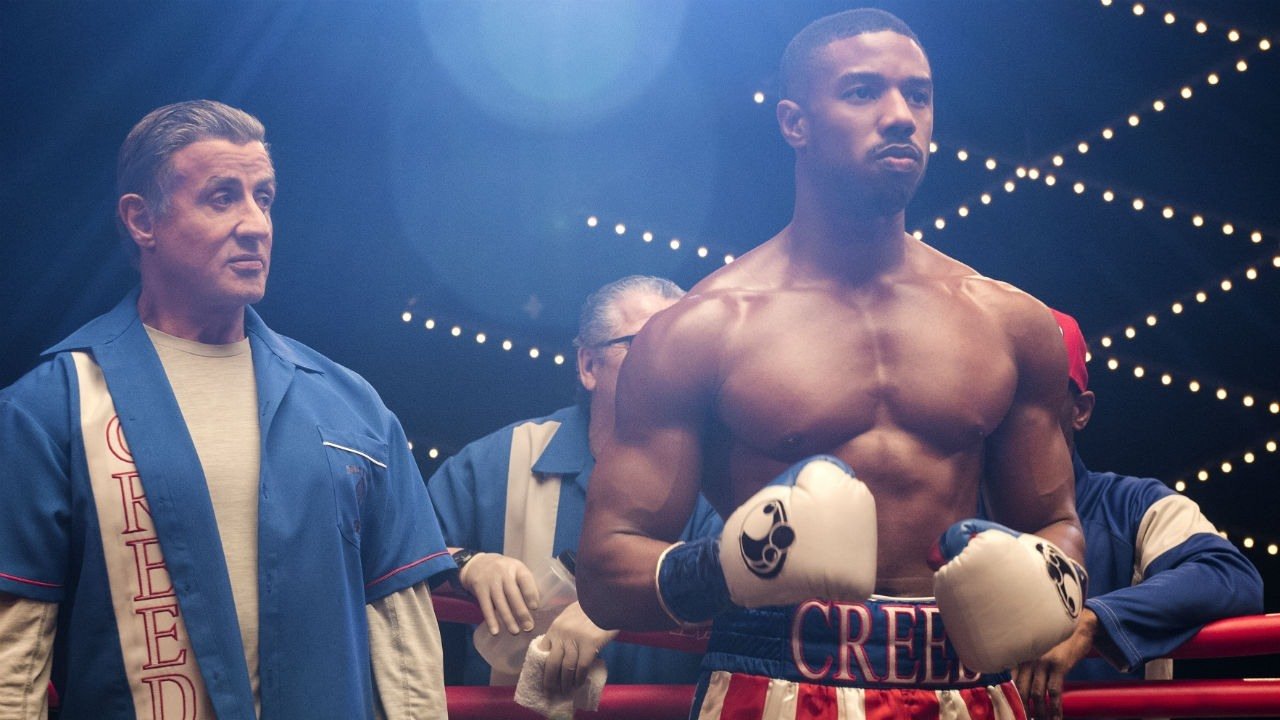
The boxing rags-to-riches story of Rocky (1976) was one of the film classics I grew up watching as a kid. With several successful subsequent sequels the franchise would come to a reasonably decent end with Rocky Balboa in 2006. But, you cannot keep a good man down and Rocky was back in 2015 acting as a boxing coach and life guide to Apollo Creed’s illegitimate son, Donny. Subsequently, Creed (2015), in the deft directorial hands of Ryan Coogler and with a bona fide star turn by Michael B. Jordan, became a big sleeper hit, ensuring a sequel was very much on the cards.

We all know the beats of the story; it’s a sub-genre formula that works very well. Our boxing hero must overcome insurmountable odds inside and outside the ring in order to become or sustain his place at the top. Donny Creed’s story in the first film was that of an angry “orphan” knocked from pillar to post in foster homes before being adopted by his father’s wife into a lap of luxury. However, he desires a ring career to make his mark and succeeds with Rocky’s help. The sequel finds Donny settling down with Tessa Thompson’s Bianca and continuing his successful fight career.

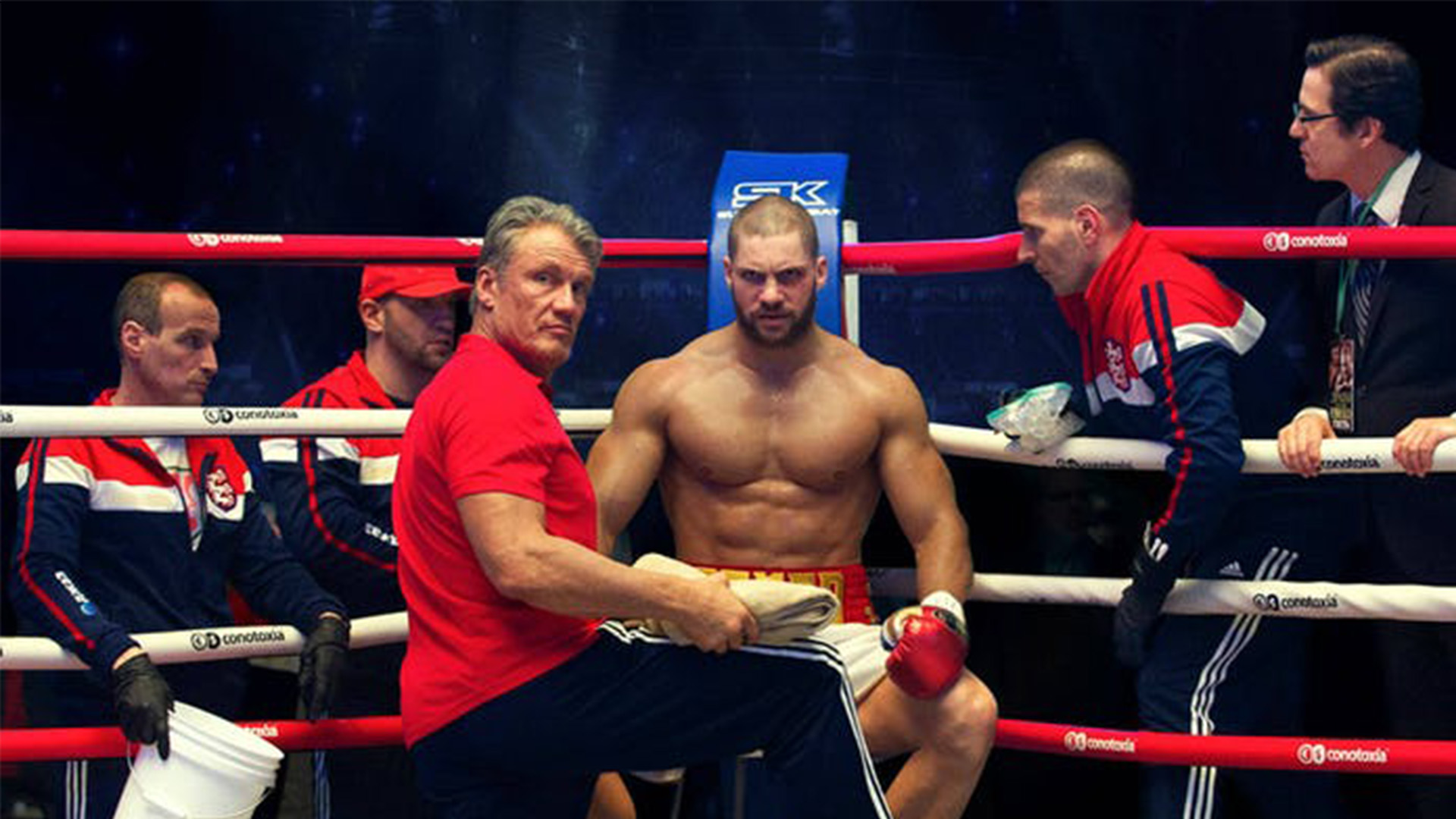
With our hero on terra firma what the narrative demands is a nemesis. Enter a blast from the past and beast from the east in the guise of the Ivan Drago and his son Viktor. Virtually exiled to the Ukraine, Dolph Lundgren’s Drago is a bitter and broken man who lost everything after to his defeat by Rocky in the fourth instalment. Living vicariously through his son he craves revenge. Similarly, Donny is prepared to take the fight in order to gain revenge for Drago killing his father. While Lundgren doesn’t have much dialogue his chiselled and lined face aches with desolate pain, rendering him a key antagonist within the film. Indeed, the moment the older Drago and Rocky meet is pure filmic dynamite.

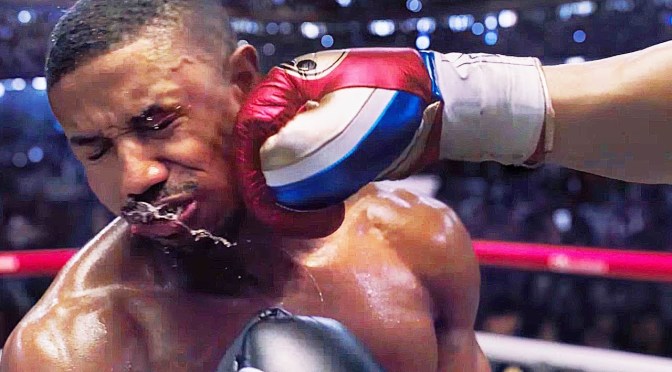
Sylvester Stallone, who also co-wrote the screenplay, once again brings his sage-like experience and star quality to a role he was born to play. The script is full of thematic power with a trio of father and son relationships at the heart of the drama. In fact, the family dramas almost shade the fight scenes for impact. However, the final ring battle and the preceding desert training montage do not disappoint for explosive style and action. Overall, while very familiar, Creed 2, is a well-crafted film that will not disappoint Rocky and boxing movie fans.

(Mark: 7.5 out of 11)

WIDOWS (2018) – CINEMA REVIEW

WIDOWS (2018) – CINEMA REVIEW

Directed by: Steve McQueen

Produced by: Steve McQueen, Iain Canning, Emile Sherman, Arnon Milchan

Screenplay by: Gillian Flynn & Steve McQueen

Based on: Widows by Lynda La Plante

Starring: Viola Davis, Michelle Rodriguez, Elizabeth Debicki, Cynthia Erivo, Colin Farrell, Brian Tyree Henry, Daniel Kaluuya, Jacki Weaver, Robert Duvall, Liam Neeson

**MAY CONTAIN SPOILERS**

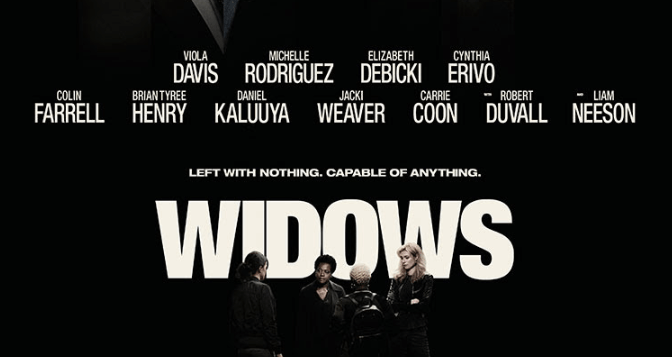
Widows Film Poster

I was really looking forward to this new film from acclaimed and highly talented filmmaker Steve McQueen. Firstly, his previous directorial releases including 12 Years a Slave (2013), Shame (2011) and Hunger (2008) were all fierce works of drama. Secondly, the story is based on Lynda La Plante’s excellent British television series from the 1980s; plus it has a fantastic ensemble cast led by Viola Davis, Liam Neeson, Colin Farrell, Daniel Kaluuya and many more. So, why was I slightly underwhelmed by the end of the film? I mean all the cinematic elements were of the highest quality, yet, for me, it just did not catch fire.


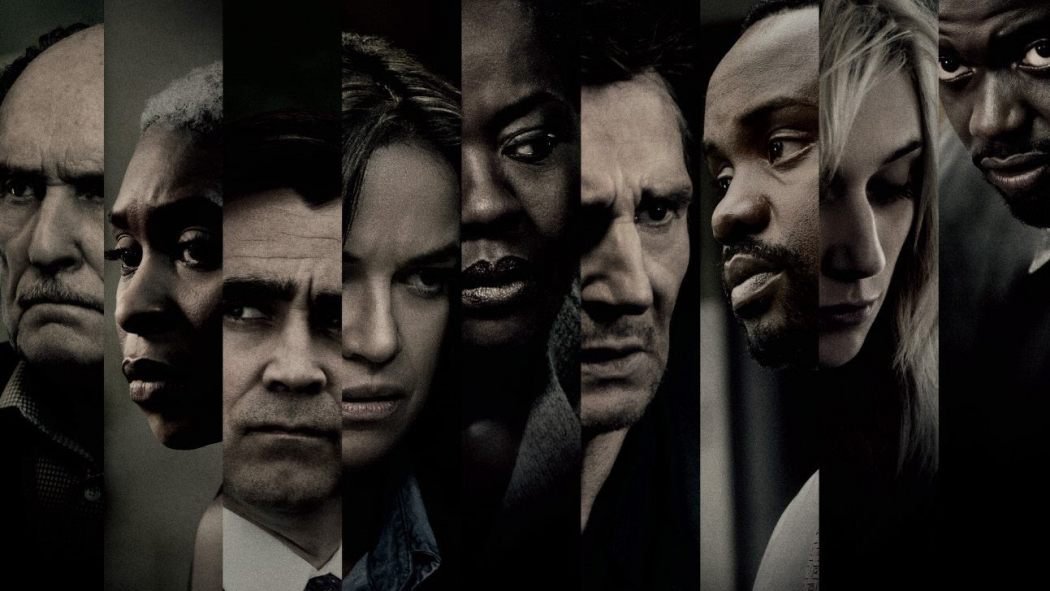
Liam Neeson and Viola Davis

After the death of her husband, Harry Rawlins (Neeson), Viola Davis’ Veronica, decides to use his plans to attempt a daring robbery enlisting the help of the other crime widows. The stakes are high as Harry’s last job pissed off some dangerous people and they want their money back. Transplanting the action from the La Plante’s tough London setting to contemporary Chicago retains the gritty backdrop of the original. Indeed, Gillian Flynn and Steve McQueen’s script keep the beats of the heist plot and structurally the film is very sound. However, the addition of political subplots involving a district Alderman Election between Colin Farrell’s Jack Mulligan and Brian Tyree Henry’s Jamal Manning, while adding extra flavour to the mix, at times, slow down the pace of the heist narrative. Even a subplot flashback involving Viola Davis’ son, while adding important empathy for her character, felt like it was from another film. Thus, a movie can be about many things; however, I just felt that a lot of the themes were at a surface level of emotion.


Daniel Kaluuya and Brian Tyree Henry
Daniel Kaluuya and Brian Tyree Henry in Twentieth Century Fox’s WIDOWS. Photo Credit: Courtesy Twentieth Century Fox.

The acting and direction in the film is excellent. Viola Davis, Michelle Rodriguez, Elizabeth Debicki and Cynthia Erivo are all brilliant; although, Erivo’s character seemed to be introduced slightly late for me. Yet, I wanted the film to be even more about the women’s struggle in this traditionally masculine world. Maybe I’m being harsh as the filmmaking is really good, but it got bogged down by too many sub-plots. Moreover, where suspense could have been gained when Debicki’s character goes to buy guns we get a throwaway scene played for humour. The male characters are generally portrayed as corrupt, psychopathic or simply evil; especially where Daniel Kaluuya’s psycho turn is concerned. Brian Tyree Henry is a very interesting actor too and I have watched a lot of him in the TV show Atlanta. However, his impact on the story is slowly dissipated throughout.


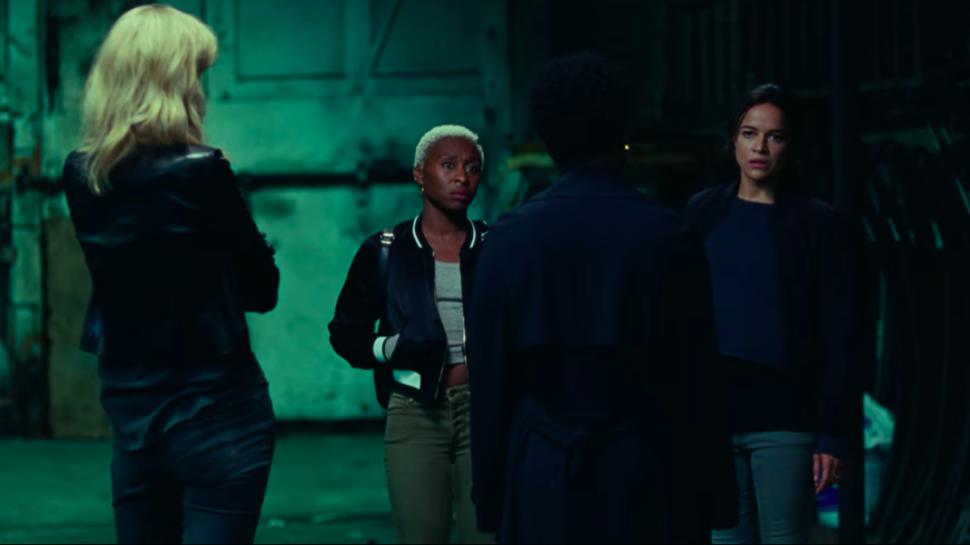
Cynthia Erivo, Michelle Rodriguez, Viola Davis, Elizabeth Debicki

Overall, Widows is a very solid genre offering from Steve McQueen and his team. All the elements are there for a barnstorming crime thriller with racial and political elements as texture. Plus, while I knew of a couple of decent twists from the original the script delivers them very well. However, there were also several plot-holes within the story which could not be reconciled. I guess with my expectations high I was expecting the doors to be totally blown off due to the incredible talent involved. However, they remained firmly on their hinges by the time the credits rolled.

Mark: 7 out of 11