Tag Archives: Aaron Taylor-Johnson

Cinema Review: 28 Years Later (2025) – an epic horror sequel; one for the (r)ages!

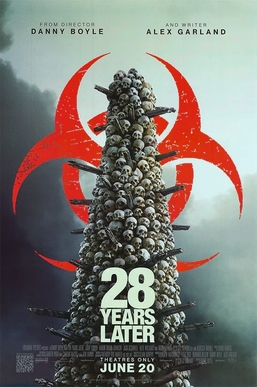
Cinema Review: 28 Years Later (2025)

Directed by Danny Boyle

Written by Alex Garland

Produced by Danny Boyle, Alex Garland, Andrew Macdonald, Peter Rice & Bernie Bellew

Main Cast: Jodie Comer, Aaron Taylor-Johnson, Jack O’Connell, Alfie Williams, Edvin Ryding and Ralph Fiennes

Cinematography by Anthony Dod Mantle

Edited by Jon Harris

** MAY CONTAIN SPOILERS **


We’re foot—slog—slog—slog—sloggin’ over Africa
Foot—foot—foot—foot—sloggin’ over Africa —
(Boots—boots—boots—boots—movin’ up and down again!)
There’s no discharge in the war! —
Rudyard Kipling

The opening sequences of 28 Days Later (2002), directed by Danny Boyle and written by Alex Garland, are some of the most haunting and iconic introductions in cinema—transcending the horror genre to deliver something mythic, mournful, and terrifyingly real. They are masterclasses in mood-building, world-setting, and emotional manipulation, and redefined what the modern apocalypse could feel like on screen. From the terrifying raging simian attacks to the stunning silence of hollow streets and buildings of London as Jim (Cillian Murphy) awakes to an incredibly changed and empty planet. Here Boyle used guerrilla filmmaking as an artistic weapon with digital video blending with silence and dread, beauty and decay, loneliness and rage creating a grimy realism that no big budget blockbuster could replicate.

The opening sequence of the sequel, 28 Weeks Later (2007), was damned good as well, although what followed was not as formidable as the original. If we’re honest it was more of a high-quality straight-to-video effort, especially when compared to the incredible first film. But what of 28 Years Later (2025), which finds Boyle and Garland re-teaming with a stellar cast including: Jodie Comer, Aaron Taylor-Johnson, Ralph Fiennes and newcomer, Alfie Williams. It opens with yet another impressive opening sequence in 2002, as a family of kids are attacked in their Scottish home. Escaping on frantic foot is young Jimmy who finds his father, the local minister, in his church proclaiming the ‘end of days!’ Move forward twenty-eight years to 2031 and the film joins, interestingly enough, not Jimmy, but a survivor community living in Lindisfarne, a tidal island connected by a fortified causeway.

Focusing on the family unit of twelve-year-old son, Spike (Alfie Williams), and parents, Isla (Jodie Comer) plus father, Jamie (Aaron Taylor-Johnson), 28 Years Later (2025) marks a ferocious and exhilarating return to the infected-ravaged world. It is not simply a continuation, but a full-fledged reimagining that deepens, widens, and accelerates the mythology, style, and thematic power of the series. It is not just a sequel—it’s an evolution, one that pulses with the blood of Romero’s bleak social horror and the serialized depth of The Walking Dead, while forging its own cinematic identity: brutal, urgent, and conceptually masterful.
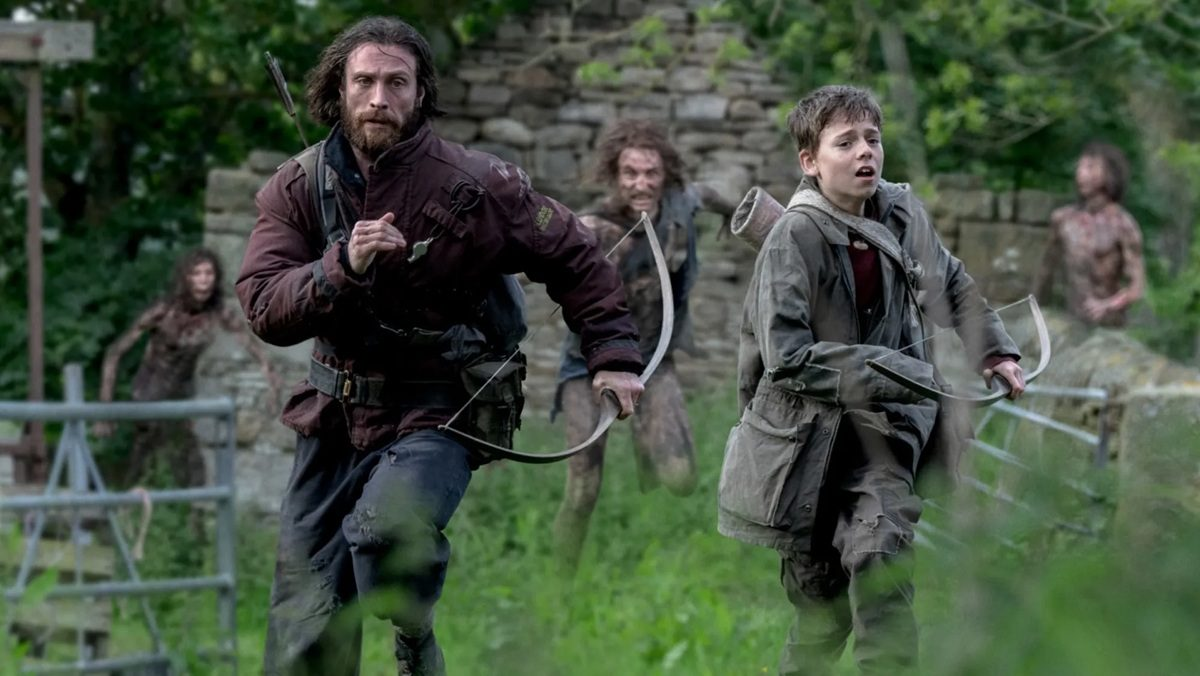


From its opening moments, 28 Years Later plunges viewers into a world far beyond what we’ve seen before. Civilization hasn’t recovered—it has, like the zombies, mutated. The virus is no longer an outbreak or an aftermath; it is an ecosystem. What began as a confined crisis in 28 Days Later, and widened into militarized guilt and familial betrayal in 28 Weeks Later, now becomes a reckoning. Thematically, the film touches on generational trauma, hybrid immunity, rites of passage, euthanasia and the evolution of the rage undead. Jamie trains his son in the art zombie-hunting, before the middle act finds Spike attempting to save his unwell mum. At this time he both matures and overcomes several battles with mutated inhumans.

The visual grammar of 28 Years Later stays true to the DNA of the series: raw, immediate, and grimy. But it’s also evolved. The digital grunge of 28 Days Later is elevated with modern tools, while still embracing a handheld, documentary-style urgency. Towns and buildings aren’t just abandoned—they’re fossilized in trauma. New scenes are suffused with ash, dust, decay, blood, plasma and rusted iconography, painting a world that’s both rotting and fighting to be reborn. This is a horror film that smells like blood and diesel. It feels dirty. Every camera move, whip pan and smash cut drags you to hell and makes you feel like your life is in danger.

28 Years Later doesn’t just revive a franchise—it transforms it into a towering trilogy of infection, collapse, and spiritual trauma. It draws from Romero’s cynicism, The Walking Dead‘s moral complexity, and its own raw, kinetic legacy to deliver something uniquely powerful: a horror film that is both visceral and cerebral, intimate and operatic. While there are some script and pacing issues toward the end of the second act, Boyle directs superbly. Plus, the film benefits from some memorable performances, notably Comer, Fiennes and young Alfie Williams. Lastly, it has one of the most startling endings to a film I have seen in a long time. It is frankly nuts. Yet, it ensures 28 Years Later (2025) is a modern horror classic, pulsing with urgency, style, and an almost unbearable truth: that the most terrifying viruses don’t infect the body—they infect the soul. Bring on the sequel!
Mark: 9.5 out of 11


Cinema Review: Nosferatu (2024) – At the Intersection of Horror and Eroticism!

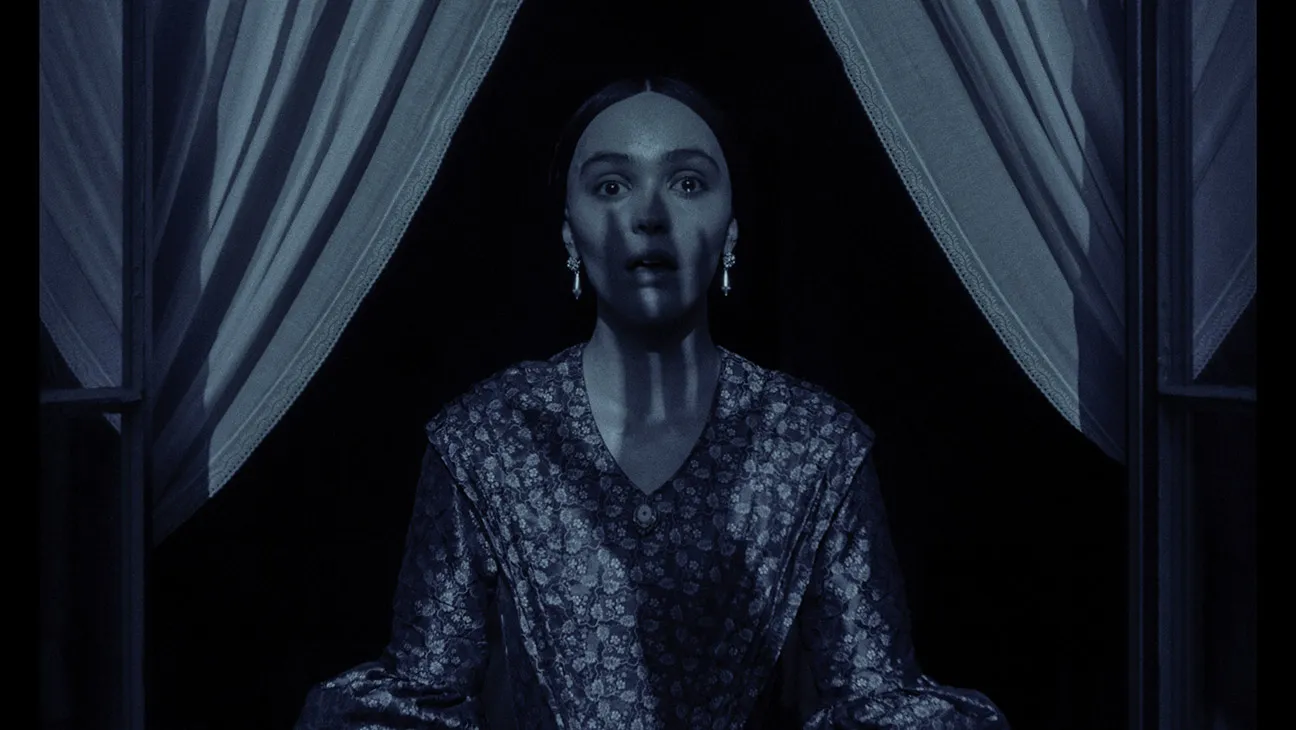
Cinema Review: Nosferatu (2024)

Directed by Robert Eggers

Screenplay by Robert Eggers

Based on Nosferatu by Henrik Galeen and Dracula by Bram Stoker

Produced by Jeff Robinov, John Graham, Chris Columbus, Eleanor Columbus, Robert Eggers, etc.

Main Cast: Bill Skarsgård, Nicholas Hoult, Lily-Rose Depp, Aaron Taylor-Johnson, Emma Corrin, Willem Dafoe, Simon McBurney, etc.

Cinematography by Jarin Blaschke

Music by Robin Carolan

*** MAY CONTAIN SPOILERS ***


Firstly, Nosferatu: A Symphony of Horror, the 1922 silent German Expressionist vampire film directed by F. W. Murnau remains one of the greatest and most iconic horror films of all time. It is arguably the greatest adaptation of Bram Stoker’s, seminal gothic classic, Dracula, too. Of which there have been many. So, who would be brave enough to attempt to master another version of this often-told monstrous tale. Step forward the acclaimed and relatively young American auteur, Robert Eggers.

Robert Eggers has built a reputation for crafting films that blend mythical and fantastical elements with folk horror and psychological thriller sensibilities. His works often transport audiences to meticulously recreated period settings, which serve as the foundation for his exploration of human fears, desires, and the supernatural. His debut feature film. The Witch (2015) exemplified folk horror rooted in Puritanical fears of the supernatural. Set in 1630s New England, it drew heavily from folklore, historical accounts, and period-authentic dialogue. The film explored themes of isolation, religious paranoia, and the breakdown of a family due to their belief in the presence of witches.

Similarly, The Lighthouse (2019), a psychological thriller merged maritime folklore with hallucinatory horror. Set in the late 19th century, the film delved into isolation-induced madness as two lighthouse keepers grappled with mythological themes such as mermaids, sea gods, and Promethean punishment. Moreover, as with his short films Hansel and Gretel (2007) and The Tell-Tale Heart (2008) he is drawn towards established texts, with the bruising, battering ram of The Northman (2022) covering the original myth on which Hamlet was based. Eggers vision immersed the viewer in violence, Viking culture, shamanic ritual and mysticism. Unsurprising therefore, he has now delivered the German Expressionist classic, Nosferatu (2024) with his signature period aesthetic and focus on the macabre.


With a stellar cast, production design and incredibly stylish vision, Eggers has produced a praiseworthy example of fantastical cinema. As usual there appears to be meticulous historical research, including accurate costumes, set design, and period-specific dialogue. This attention to detail in Nosferatu (2024) grounds the supernatural elements in a believable world, enhancing their impact. Furthermore, Eggers creates a sense of dread through his use of sound design, stark cinematography, and claustrophobic settings. His restrained pacing allows for the gradual unraveling of characters’ psyches, making the supernatural elements more impactful.

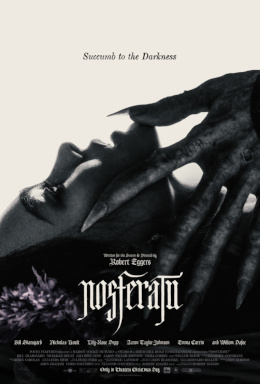
Yet, while steeped in folklore, Nosferatu (2024) centres on human struggles—family disintegration, fate, guilt, madness, lust and sex. Indeed, Nicholas Hoult’s Thomas Hutter (née Harker) does not stand a chance. From the opening scene his sensual wife, Ellen, is inextricably linked via a lustful fever dream to a mysterious figure, who, if you couldn’t guess, is Count Orlok (an unrecognizable Bill Skarsgård). It is Ellen’s orgasmic connection across oceans of time which drives Orlok to lure Thomas away and commit blood-draining murder as he creeps cross-country and sails the seas from Transylvania to Germany. Ellen’s surreal and orgiastic desire unfortunately brings the plague and causes the death of extraneous supporting characters portrayed by the likes Aaron Taylor-Johnson and Emma Corrin. A note to say Willem Dafoe is as usual a joy as the ‘Van Helsing’ substitute.

Nosferatu (2024) is undeniably a sumptuous adaptation, brimming with signature attention to period detail, atmospheric dread, and a striking visual palette. However, for those seeking a viscerally terrifying Dracula film, the movie might fall short, leaning heavily into the realm of erotic horror and psychological tension rather than outright scares. While the stunning cinematography, the film’s shadow-drenched landscapes, intricate set design, and haunting score evoke the satanic allure of the original silent film this focus, however, shifts the film away from raw horror and toward a more introspective exploration of vulnerability and eroticism. Ultimately, the film’s reinterpretation of Count Orlok and its restrained approach to gore might alienate viewers expecting a more terrifying vampire film. This left me impressed but more disturbed by the overlong runtime than by the nightmarish allure of the bloodthirsty undead.

Mark: 8 out of 11


GODZILLA (2014) – FILM REVIEW

godzilla

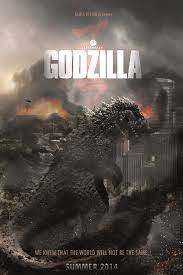
GODZILLA (2014)

**CONTAINS MASSIVE SPOILERS**

This massive budget reboot of Tohu’s iconic monster GODZILLA is not a terrible movie. It is a technical triumph in fact and has some memorable moments; however, for a MONSTER movie and cinematic experience it was a bitter, bitter disappointment. Plus, at times – dare I say it – it was pretty boring.

If I pay ten quid to see a film called GODZILLA I expect and demand ultimate carnage with the lives of thousands destroyed – eaten and crushed and fire-balled to death –  while cities and oceans are awash with blood, rubble and the tears of survivors.  Because Godzilla is a metaphor for nuclear attacks don’t you know so surely this should be your first priority:  show annihilation and destruction of cities and humans?  That’s what I want for my money!

Gareth Edwards and his massive team of filmmakers offer some destruction over its 120 minutes but ultimately Godzilla fails as a monster movie; it fails as a disaster film and fails most importantly as a piece of drama driven by believable and empathetic characters.  It’s not a great surprise to be honest as the sophomore director got the gig on the back of his independent film MONSTERS (2010)  which was filmed on Prosumer cameras with special effects and editing also done very cheaply. Much kudos goes to Edwards’ for creating Monsters on such a low budget and he is certainly a filmmaker who deserved a big break.

Monsters, like Godzilla was slow-moving, solemn and very serious in tone and in both films their monsters are hidden from view only appearing in full way too late in the narrative for my liking. I enjoyed Monsters because it gave us the brilliant actor Scoot McNairy who has gone onto to feature in some fine films notably Argo (2012) and Killing Them Softly (2012).  But it was essentially a love-story-come-travelogue with the creatures having little direct impact or threat on the characters.

Sadly, this also happens somewhat in Godzilla. It begins promisingly enough in 1999 with a nuclear explosion caused by the hatching of an egg which releases an unknown creature into the sea. So far, so intrigued.  Flash forward 15 years and Joe Brody (Bryan Cranston) is devastated by the loss of his wife (Juliette Binoche) during said nuclear disaster and obsessively attempts to find out what happened that fateful day.  Throw Brody’s son portrayed by Aaron Taylor-Johnson – quite handily a bomb disposal expert – into the mix and you get a promising character axis on the go.  Simultaneously, scientists Sally Hawkins and Ken Watanabe enter the fray to investigate but they are dull cardboard cut-outs there to serve us mundane expositional ramblings with no character momentum whatsoever. But Cranston’s character disappears from the narrative quite quickly and moreover, having to wait an hour before the first main bit of monster action really tested my patience.

I realise Edwards chose to go down the less-is-more route of Jaws (1975) but the reason the shark could not be seen in that was because the mechanical beast was beset with troubles and didn’t work so Spielberg and his team had to think creatively around this issue. Consequently, they created so many great set-pieces – something severely lacking in Godzilla. For example the scene with the two fishermen trying to catch the shark with a lump of meat is an especially brilliant sequence where the camera and music act as the shark. It’s a quality and economical piece of filmmaking with a fantastic punchline at the end to lift the mood.

When they do appear the Monsters are amazing to look at but there was not enough in the screenplay for me to actually give a damn by that time. The ensemble cast are pretty much wasted in my view and the less said about the screenplay the better. I feel it would have been better to have done a Towering Inferno (1974) or Poseidon Adventure (1972) style disaster movie with an ensemble star cast battling against the impact of Godzilla on their lives. In fact, Godzilla, however impressive he may look is pretty benign as a threat to humans; a decision which dumbfounded me. Overall, I felt the film needed a bigger name director like Steven Spielberg or Peter Jackson or a James Cameron figure to give us that WOW factor. The screenplay also had a humour bypass too and I failed to get value for my entrance fee. Sad to say this film was a gigantic disappointment.