Tag Archives: Adrien Brody

Cinema Review: The Brutalist (2024) – There will be Concrete!

CINEMA REVIEW: THE BRUTALIST (2024)

Directed by Brady Corbet

Written by: Brady Corbet & Mona Fastvold

Produced by Trevor Matthews, Nick Gordon, Brian Young, Andrew Morrison, Andrew Lauren, D.J. Gugenheim and Brady Corbet
.

Cast: Adrien Brody, Felicity Jones, Guy Pearce, Joe Alwyn, Raffey Cassidy, Stacy Martin, Emma Laird, Isaach de Bankolé and Alessandro Nivola.

Cinematography Lol Crawley

Edited by Dávid Jancsó

*** MAY CONTAIN SPOILERS ***



A new wave of American filmmakers—directors like Todd Field, Robert Eggers, and Brady Corbet—have emerged as some of the most technically proficient and ambitious voices in contemporary cinema. Their work is marked by rigorous formal control, deep thematic ambition, and an almost obsessive dedication to craft. These filmmakers, arguably influenced by auteurs like Sofia Coppola and Paul Thomas Anderson, demonstrate an understanding of film language that is both deeply referential and boldly experimental. Whether it’s Eggers’ meticulous historical recreations, Field’s austere and cerebral storytelling, or Corbet’s overtly intellectualized narratives, they all exhibit an undeniable mastery of their medium. Their films, often dense with literary and philosophical allusions, cater to cinephiles who relish formal precision and narrative audacity.

Yet, for all their brilliance, there’s an argument to be made that their work veers into self-indulgence, if not outright pretension. Their films sometimes feel like exercises in artistic superiority, catering to an audience that appreciates the challenge but perhaps not the emotional accessibility that cinema can offer at its best. Whether it’s the cold remove of TÁR (2022), the self-serious mythologizing of The Lighthouse (2019), or the arch, affect-laden approach of Vox Lux (2018), these works often feel encased in a layer of knowing detachment. There’s a fine line between intellectual rigor and a kind of smug, insular artistry, and some critics argue that these filmmakers, however talented, sometimes tip too far in the latter direction—prioritizing aesthetic and conceptual ambition over genuine human connection. I mean, I love a lot of these filmmakers’ work, but I was raised on the American films of Coppola, Scorsese, DePalma, Spielberg, Lucas and Friedkin; auteurs who knew their art, but also how to entertain the audience too.
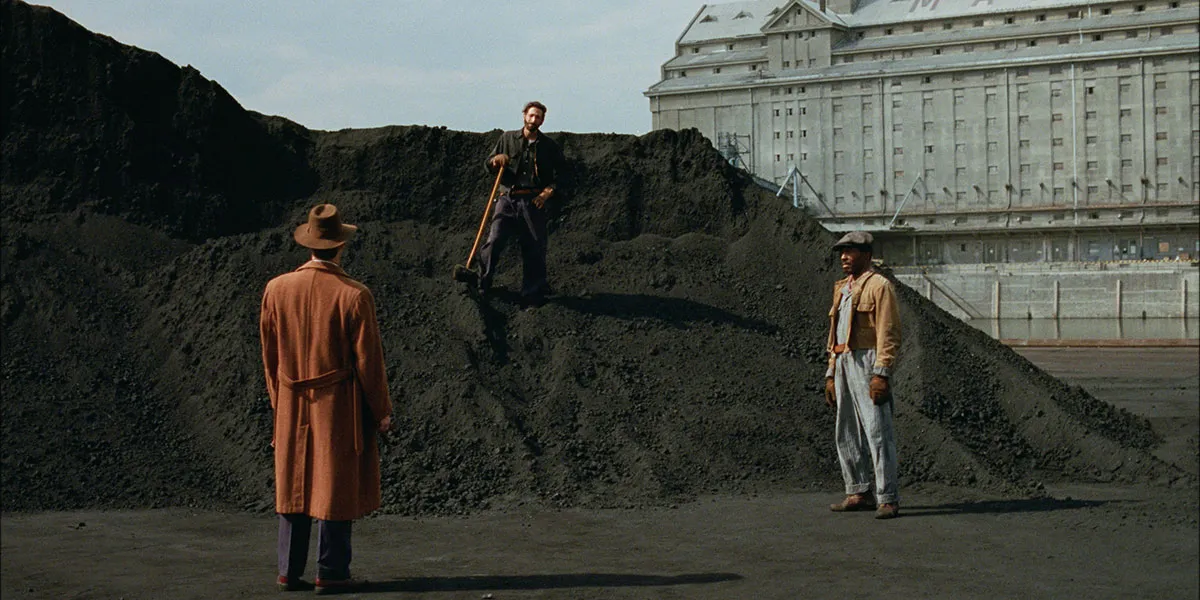


In Corbet’s, and film partner’s Mona Fastvold’s, phenomenally designed and constructed film, The Brutalist (2024), Adrien Brody portrays fictional László Tóth, a Hungarian-Jewish architect and Holocaust survivor. Brody’s is an incredibly memorable piece of work, acting as a spiritual performance sequel to his Oscar-winning role in The Pianist (2002). But rather than focus on an individual attempting to escape the Nazis during the war, the narrative concentrates on Tóth, who arrives in post-war America with nothing but his talent and ambition, only to find himself trapped in a system that celebrates his work while rejecting him as a person. In America, racism is delivered with a smile, and generosity is a means of control. High society rewards Tóth but also suffocates him with subtle condescension, as he is paraded around as an artistic trophy but never fully embraced as an equal.

As an epic character study of the life of an immigrant and exploitation of the financially stricken Jew in America, The Brutalist (2024), is a powerful work. Such themes compel us to think of today and the fact that America continues to struggle with the integration of people travelling there, even though it was built with the hands of migrant families. Here the screenplay exerts true power in critiquing the United States’ treatment of those travelling to America with hope. As the narrative unfolds across the decades, Corbet, Fastfold and Brody illustrate the slow erosion of Laslo’s dreams in an America that welcomes his work but not his humanity. As the key antagonist, Harrison Lee Van Buren, Guy Pearce delivers another chilling and precise character study. Van Buren is a spoilt, rich and brattish man whose charm and refinement mask a deeply exploitative nature.

Photographically, The Brutalist (2024) is indeed a work of art. Lol Crawley and the production team immerse viewers in a stark, architectural visual language—monolithic structures, rigid compositions, and a muted, desaturated color palette mirroring the emotional and physical isolation Tóth experiences. Yet, for for all its incredible craftsmanship and bold cinematic ambition, the film is a test of endurance—an unrelenting, patience-draining experience that stretches well beyond three hours. Even the inclusion of chapters, and a self-consciously “prestigious” intermission only serve to amplify the film’s pretensions, prolonging the agony of watching layer upon layer of misery unfold like a slow-moving roller-coaster that induces motion sickness with no escape. It’s a brilliant film that demands submission rather than engagement, wielding its bleakness like a weapon against the audience’s stamina. It will probably win the Academy Award for Best Film. That or Wicked (2024).

Mark: 8 out of 11


CINEMA REVIEW: ASTEROID CITY (2023)

CINEMA REVIEW: ASTEROID CITY (2023)

Directed by Wes Anderson

Screenplay by Wes Anderson

Story by: Wes Anderson and Roman Coppola

Produced by: Wes Anderson, Steven Rales, Jeremy Dawson

Ensemble Cast: Jason Schwartzman, Scarlett Johansson, Tom Hanks, Jeffrey Wright, Tilda Swinton, Bryan Cranston, Edward Norton, Adrien Brody, Liev Schreiber, Hope Davis, Stephen Park, Rupert Friend, Maya Hawke, Steve Carell, Matt Dillon, Hong Chau, Willem Dafoe etc.

Cinematography Robert Yeoman

*** MAY CONTAIN SPOILERS ***


Wes Anderson is a phenomenal filmmaker with an imaginative set of style and narrative conceits. Everyone one of his releases is a rich tapestry containing memorable ensemble casts, adjacent framing, effervescent use of colour, geographical pertinence, intellectual humour and subjects situated in the far-left field of genre cinema. Yet, I do not enjoy ALL his films. Often, they veer too far into eccentric pretentiousness. Indeed, I found The French Dispatch (2021), frustrating and, other than the tremendous story set in the asylum with the mad artist (Benicio Del Toro), disconnected with it overall. While it was another admirable work of cinema, I did not enjoy it as a paying punter.

Asteroid City (2023), however, is a film I enjoyed greatly. The famous actors immersed within the ensemble, the cinematic artifice, the clever meta-narrative structure, symmetrical shot composition, beautiful use of colour, offbeat characters, specific era and geographical setting, imaginative props and costume design, and witty humour are all present as per Anderson’s impressive body of work. But Asteroid City (2023) had a larger emotional heart than his recent films, and is my favourite since the superb, The Grand Budapest Hotel (2014).


A heady combination of genres, one could describe, Asteroid City (2023), as a hyper-sci-fi-Western-retro-romantic-futuristic-comedy and study of grief set in 1950s, America. Despite filming taking place in Spain. Anyway, Anderson establishes the characters through the structure of a film within a play. Bryan Cranston’s narrator introduces us to the various middle-class, working class, military and scientific personalities who become trapped in the town of Asteroid City by a series of unlikely but hilarious misfortunes. Throughout the chapter inter-titles the scenes return us to our narrator as Anderson cleverly comments on the process of creating a story while delivering the narrative events.

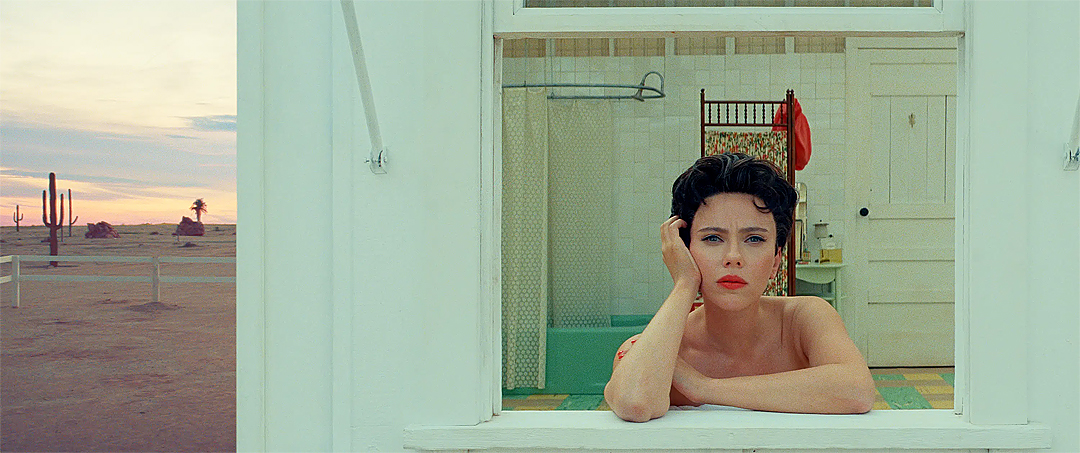
Anderson delves into familiar themes of grief via the story of war photographer, Augie Steenbeck (Jason Schwartzmann) and his four kids, one of whom is a genius, Woodrow (Jake Ryan). He is there for a Junior Stargazer competition amidst the setting of the gigantic meteorite bunker. Again, the theme of prodigious children is mined for great humour and intellectual wit by Anderson. The futuristic inventions created by the children are especially fantastic. The plot strand of the science geniuses being exploited by the military and corporate sharks is deftly done. Yet, the main emotional heft is delivered within Augie and Hollywood actress, Midge Palmer’s (Scarlett Johansson) budding relationship. Johansson is especially compelling in the role, anchoring the film in welcome pathos, amidst the flurry of idiosyncratic absurdities Anderson throws at us. His framing of Augie and Midge between the their chalets is aesthetically memorable, visually augmenting their growing human connection.

Asteroid City (2023) proves once again Wes Anderson is one of the most original filmmakers of this generation. Will he gain some more converts to his particular set of cinematic bag of tricks? Who knows. What I do know is that I was completely immersed in the colour, movement, pace, humour, aesthetics, performances and themes with the film. I must say though, while it was necessary, the “Area 51” style — and I don’t want to give it away — absurd plot-turn halfway through was not my favourite aspect of the piece. But I realise it was narratively integral to the story. The meta-framing also seemed to get in the way at times of the main action effecting the occupants of Asteroid City. But these are minor gripes at a thoroughly artistic, beautifully immersive, and technically impressive cinematic achievement.

Mark: 9 out of 11


NETFLIX FILM REVIEW: BLONDE (2022)

NETFLIX FILM REVIEW: BLONDE (2022)

Directed and written by: Andrew Dominik

Based on: Blonde by Joyce Carol Oates

Produced by: Brad Pitt, Dede Gardner, Jeremy Kleiner, Tracey Landon, Scott Robertson

Main cast: Ana de Armas, Adrien Brody, Bobby Cannavale, Xavier Samuel, Julianne Nicholson, Evan Williams, Toby Huss, David Warshofsky, Caspar Phillipson, etc.

Cinematography: Chayse Irvin

*** CONTAINS HISTORICAL SPOILERS ***


Aside from expertly directing episodes of the Netflix drama, Mindhunter and the documentary One More Time with Feeling (2016), filmmaker Andrew Dominik’s directorial output has been sparse of late. Indeed, he hasn’t released a feature film since quirky gangster drama, Killing Them Softly (2012). I imagine this is due to many reasons including: slow-gestating methodology, several unrealized projects failing to see a greenlight, and the dreaded COVID-19. It’s a shame as I believe he is one of the most compelling filmmakers around at present. Chopper (2000) remains one of my favourite cult stories about a charismatic, larger-than-life criminal anti-hero. Similarly, The Assassination of Jesse James by the Coward Robert Ford (2007) is one of the best films I have seen from the last twenty years.  It was pretty much a box-office flop but everything about it screamed greatness to me: stunning cinematography; brilliant cast; and resonating themes regarding celebrity and legend in the Wild West.

After Chopper Read and Jesse James, once again Dominik explores the iconic life of a real person in Blonde (2022). You may have heard of her, Norma Jean Mortenson/Baker, or as she was more famously known: Marilyn Monroe. Using Joyce Carol Oates’ book as a springboard, plus no doubt many other written, visual and media sources available, Dominik has crafted a stylish and singular vision of the peroxide icon’s life and career. In no doubt should a viewer believe this to be a “true” story in the documentary-drama style, but rather an impressionistic, poetic and compelling imagining of Marilyn’s short, yet tumultuous, existence on this planet.

For me, Marilyn Monroe was one of the most stunning movie stars who ever existed. She lit up the screen and was a mightily under-rated actor also. In her heyday she was the biggest star in the world. Her role as Sugar in Some Like it Hot (1959), is one of the most gorgeously funny, beautiful and vulnerable performances ever committed to celluloid. Enter Ana De Armas as Marilyn in Blonde (2022). De Armas is a revelation on-screen in terms of her looks, movement, body language and the nuanced depth she brings to the screen siren. It’s a brave role too as the script demands much of her. Throughout many exquisitely filmed and edited scenes lies the ugly degradation of Marilyn’s body and soul. De Armas gives her all in these vignettes of domestic abuse, sexual assault, rape, abortions, overdoses, miscarriages, mental breakdowns and further sexual gaslighting at the hands of people she believed were friends.


So, why should you want to watch Blonde (2022), you may ask yourself. Well, De Armas’s performance alone is worth enduring much of the emotionally draining misery. Moreover, Dominik again proves himself to be a director of the highest quality. He’s a maverick and iconoclast who has an impressive and intelligent cinematic eye. The opening sequence where Norma, as a young child, is driven by her unwell mother through Los Angeles forest fires is a frightening and imperious interpretation of mental health, full of fear, heat, and portentous symbolism. Such fire and trauma foreshadows the distress and torment that is to come to young Norma throughout her life. A schizophrenic Mother also echoes the schism of persona that impacts Norma the individual, and Marilyn the movie star. The division of personalities is a theme which the screenplay sensitively explores, despite being buried in the more lurid and shocking events of Marilyn’s sad life.

Overall, Blonde (2022) is a startling and shocking rendition of Marilyn Monroe. Of course, hers was an existence full of drama, intensity, darkness and tragedy. But you have to think there was some light in there, some happiness, humour and joy. On some fleeting occasions during Blonde (2022), Dominik presents this, but ultimately this is a beautifully filmed yet ugly-hearted cinematic tragedy. On the surface the film genre is biopic, but it really is a horror film, as Marilyn’s exploitation by the men in her life is laid bare on the screen. I’ve read some critics describe the film as exploitational, however, this is a film ABOUT exploitation. Marilyn was exploited by agents, photographers, directors, producers, the press, the Hollywood system, the audience, her doctors, her lovers, her husbands and a President of the United States.

Dominik is perhaps suggesting Monroe did not kill herself, but was disintegrated by those who should have loved and cared for her. The ultimate tragedy is that Norma/Marilyn could not find the love and mental strength inside herself to survive those who perpetually sought to profit from this beautiful shining star. If the events realised in Blonde (2022) are to be believed, what person could?

Mark: 8 out of 11