Tag Archives: Anita Overland

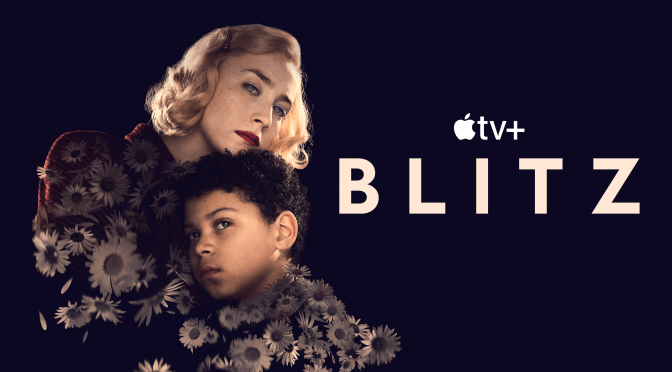
Apple TV+ Film Review: Blitz (2024) – A fine testament to the Human Spirit during Wartime!

Apple TV+ Review: Blitz (2024)

Directed by Steve McQueen

Written by Steve McQueen

Produced by Tim Bevan, Eric Fellner, Steve McQueen, Anita Overland, Adam Somner, Arnon Milchan, Yariv Milchan, Michael Schaefer

Main Cast: Saoirse Ronan, Elliott Heffernan, Harris Dickinson, Benjamin Clementine, Kathy Burke, Paul Weller, Stephen Graham etc.

Cinematography by Yorick Le Saux

*** MAY CONTAIN SPOILERS ***
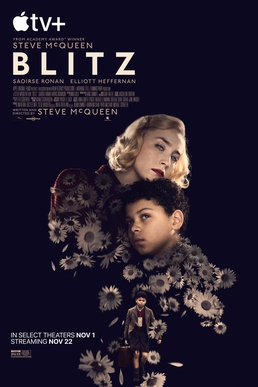


Officially classed as acclaimed filmmaker Steve McQueen’s first feature since the release of Widows (2018), Blitz (2024) is a WW2 drama of extremely high quality. But before I get into the review, lest we forget the series of films Steve McQueen delivered to the BBC a few years. The ‘Small Axe’ anthology should and shall be revisited as one of the most important documents of British history, such is its searing power, dramatic drive and the stunning rich tapestry of characterful moments. So, I urge you to watch, if you haven’t, what I consider to be Steve McQueen’s masterworks. I have reviewed the first one Mangrove (2020) here and the remaining of the collection here:


Blitz (2024) is a bigger budgeted production when compared to the ‘Small Axe’ anthology. But, similarly, it is a period piece, focusing on the working class and Black experience, this time set during the brutal bombing of London in 1940. McQueen shoots very much from the perspective of George (Elliot Heffernan), his mother, Rita (Saoirse Ronan) and grandfather, Gerald (Paul Weller). George, like many war children, is packed on a train to the relative safety of the countryside, while parents live in the hope of surviving the incessant German bombs.

After establishing the close family bond between the Hanways, and the wrenching emotion of sending her son away, Rita continues working in a munitions factory and sings beautifully on a national radio show. At the same time, George, finds trouble with a gang of child bullies on the train, before fighting back and jumping off. A tough and resourceful boy, George, makes the perilous choice to return to battered and burning London to reunite with his mother. The city, scarred by the relentless ‘Blitzkrieg’, is a treacherous labyrinth of collapsing buildings and choking smoke, but George’s determination burns brighter than the fires raging across the skyline.
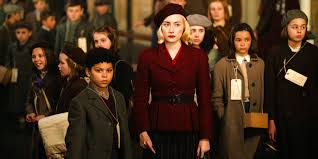


Like a modern Oliver Twist, Blitz (2024) George’s journey through the devastated capital is both a physical and moral odyssey, with each encounter shaping his understanding of loyalty, survival, and the fragile threads that bind people together in times of crisis. George becomes trapped by his own choices, the bombs, bricks, buildings and characters he meets on the way. Some are friendly, but others exploit George preventing his return home. McQueen’s script also finds time to flashback to show Rita meeting George’s father, providing significant context to his mixed race background. Indeed, through George, McQueen explores themes relating to race and his emotional journey to find his place in the world as a person of colour.

Blitz (2024) is a superbly shot and designed film, with Yorick Le Saux’s cinematography rendering war torn London with an almost mythical beauty. However, Hans Zimmer’s overblown soundtrack is too much for me. Further, Steve McQueen’s hagiographic and episodic approach does somewhat diminish the raw drama and bloody horror of war. Notably, the under-use of Kathy Burke and Stephen Graham’s gutter snipe thieves. Plus a thrilling action set-piece during a flooded tube station that cuts away from George’s almost-demise, denying us suspense and dramatic catharsis. Thus, at times, the film sacrifices potential complexity during George’s journey, making his survival seem almost predestined rather than hard-fought. Still, Steve McQueen remains one of the country’s most important cinematic artists and Blitz (2024) is yet another fine testament to the strength and resilience of the human spirit.

Mark: 8 out of 11


BBC FILM REVIEW: MANGROVE (2020)

BBC FILM REVIEW: MANGROVE (2020)

Directed by: Steve McQueen

Produced by: Anita Overland, Michael Elliot

Screenplay by: Steve McQueen, Alastair Siddons

Cast: Letitia Wright, Shaun Parkes, Malachi Kirby, Rochenda Sandall, Nathaniel Martello-White, Richie Campbell, Alex Jennings, Jack Lowden, Darren Braithwaite, Sam Spruell, Samuel West, Llewella Gideon, Jodhi May, Gary Beadle, Jumayn Hunter, Duane Facey-Pearson, etc.

Music by: Mica Levi

Cinematography: Shabier Kirchner

Original Network: shown on the BBC as part of the Small Axe anthology

***CONTAINS HISTORICAL SPOILERS***


“So, if you are the big tree… We are the small axe… Ready to cut you down… To cut you down…” — Bob Marley song, Small Axe


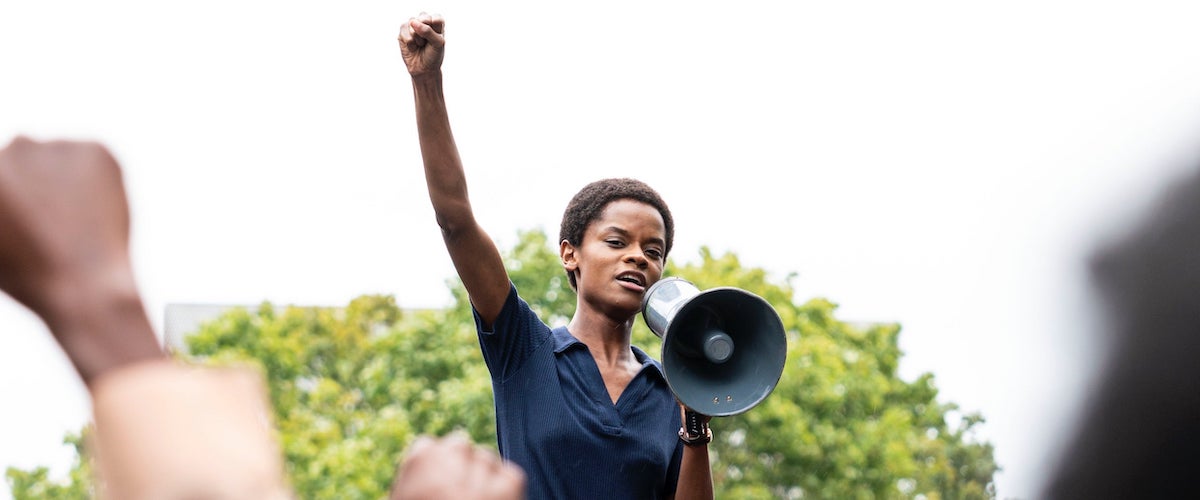
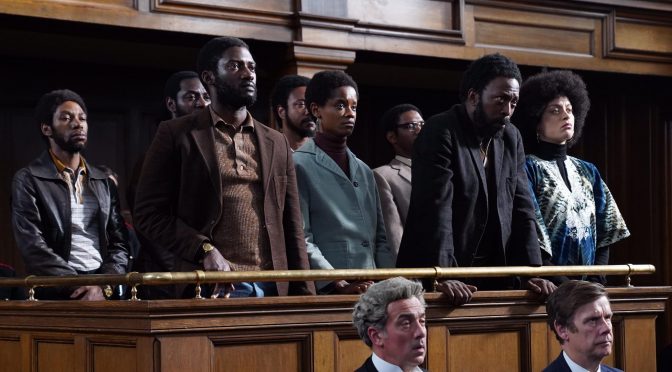
You wait for a thought-provoking courtroom drama about individuals battling an oppressive legal system and end up watching two in two days. It wasn’t a specific plan to follow up my viewing of The Trial of the Chicago Seven (2020), by watching Steve McQueen’s majestic adaptation of the ‘Mangrove Nine’ narrative, but it was most certainly historically and culturally serendipitous. However, while Aaron Sorkin’s entertaining distillation of the 1968-1969 events, which occurred at the Democratic National Convention and subsequently in the U.S. courts, were delivered in an irreverent and satirical style, Steve McQueen’s approach to the systematic racism and brutality of the police force and legal battle which followed in Mangrove (2020), is treated with far more intensity and power.

Mangrove (2020) is the first in a set of five films curated, written and directed by Steve McQueen, in what has become known as the ‘Small Axe’ anthology. It premiered at the London Film Festival in 2020, before being released on the BBC television network. The aim of the ultra-talented McQueen, and his writers, cast and crew is to reflect important historical figures and events from West Indian culture in the 1960s, 1970s and 1980s. Mangrove (2020) centres on the trial of the ‘Mangrove 9’, namely Frank Crichlow, Darcus Howe, Althea Jones-Lecointe, Barbara Beese, Rupert Boyce, Rhodan Gordon, Anthony Innis, Rothwell Kentish; and Godfrey Millett. They were seen as leaders of protests which occurred in August 1970, that resulted in battles with police on the Notting Hill streets. While original charges were thrown out by a magistrate, the then Director of Public Prosecutions decided the case should go to court in 1971.


The excellent screenplay by McQueen and his co-writer Alastair Siddons expertly establishes the era and setting of the story. Similarly, the production design perfectly captures the look of late 1960’s West London. Shaun Parkes’ portrayal of Frank Critchlow is both moving and influential in drawing the viewer into the character’s desires and culture. Critchlow opens the Mangrove Restaurant in 1968 with a longing to establish a place that serves West Indian food; and provide a meeting place within the community. Alas, due to the heavy-handed approach by the police in the area, led mercilessly by Sam Spruell’s P. C. Frank Pulley, Critchlow’s dream is left in tatters by constant raids and arrests. It is the Metropolitan Police’s belief that the Mangrove Restaurant is a hive of criminal activity and drug use. No drugs were found during these raids, thus Critchlow filed charges himself of unlawful arrest. Eventually, Critchlow, Howe, Jones-Lecointe and others became involved in marching and protesting at what they saw as clear racial prejudice by the police.

My emotions while watching the events unfold, from the clashes with police to the subsequence court case, was that it is tragic that there was such violence and division between people of the Commonwealth and the authorities. After all, West Indians were invited by the British Government to come to here in the 1950’s, to help rebuild post-war Britain. Obviously, not all British people rejected them, however, clearly there was an incredible amount of racism and abuse, here illustrated by the police’s horrific attitude in Mangrove (2020). Thus, Steve McQueen and his exceptional cast deserve all the plaudits coming their way in bringing such a vital legal case to the screens. The Mangrove 9’s case is emblematic of the horror of ignorance that has occurred in British history and that we must continue to stamp out vitriolic actions based purely on cultural difference and the colour of an individual’s skin. In representing such important events and individuals moreover, Steve McQueen has delivered one of the most powerful films of 2020.

Mark: 10 out of 11