Tag Archives: artists

Sky Cinema Review: A Different Man (2024) – a multi-faceted character study on inner and outer identity.

SKY CINEMA REVIEW: A DIFFERENT MAN (2024)

Directed by Aaron Schimberg

Written by Aaron Schimberg

Produced by Christine Vachon, Vanessa McDonnell & Gabriel Mayers

Main cast: Sebastian Stan, Renate Reinsve, and Adam Pearson.

Cinematography by Wyatt Garfield

*** MAY CONTAIN SPOILERS ***
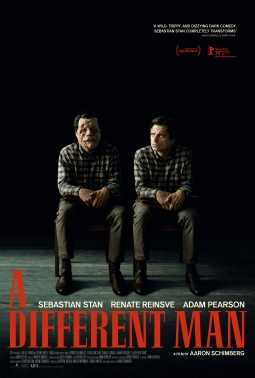


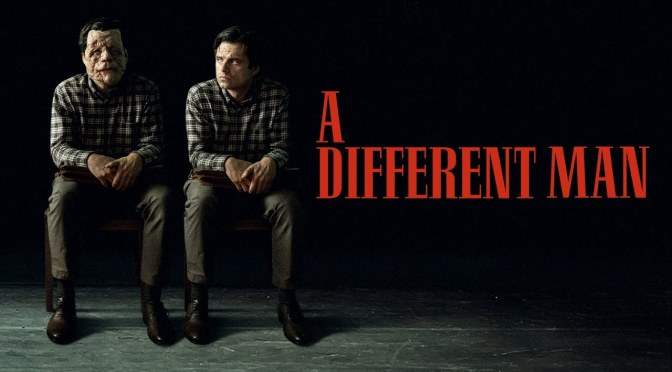
Few films in recent years feel as startlingly original as A Different Man (2024) —and yet, paradoxically, it’s a film made almost entirely from borrowed pieces. Aaron Schimberg’s latest begins as a bracing character study, anchored by Sebastian Stan’s Edward Lemuel, a socially awkward, struggling actor whose neurofibromatosis manifests in a disfiguring facial condition. These early passages are its strongest: Edward’s halting existence, his quiet desperation, disintegrating ceiling and the unnerving, tactile authenticity of his world call to mind the seedy New York grit of Abel Ferrara and Frank Henenlotter.

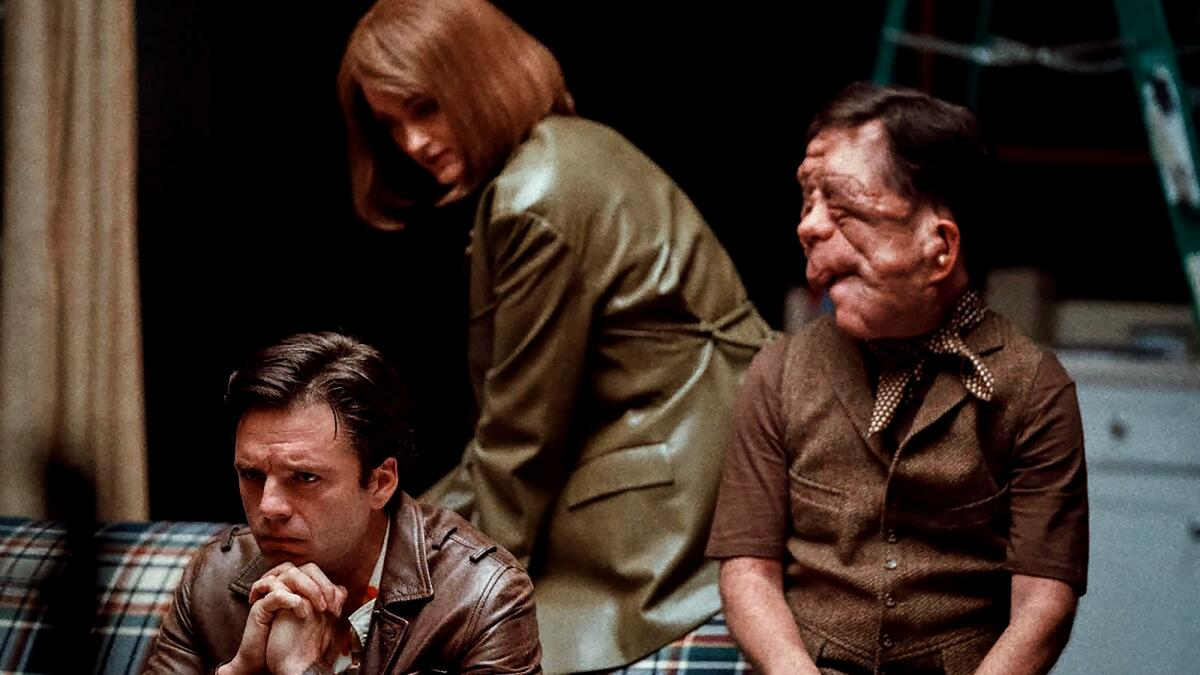
But just as the viewer settles into this world, the film veers via a sci-fi twist. An experimental procedure transforms Edward’s face, and with it, the narrative mutates. Suddenly we’re in a Woody Allenesque romantic entanglement—wry, neurotic, and tinged with irony—as Edward’s new identity draws him into a triangular relationship with Renate Reinsve as Ingrid and Adam Pearson as Oswald. Oswald also has neurofibromatosis, but has a confidence and popularity that Edward envies. As Oswald usurps Edward’s place in the off-Broadway play Ingrid is directing the film’s tone teeters between comedy and cruelty.


From there, A Different Man (2024) shape-shifts yet again. The third act discards linearity for a fragmented, Charlie Kaufmanesque unraveling: episodic bursts, narrative cul-de-sacs, and surreal detours that question not just Edward’s identity but the film’s own. It’s at once exhilarating and frustrating. Schimberg seems intent on deconstructing his own story midstream, leaving us with shards of multiple films rather than one fully integrated work. The ending works artistically but could, for me, have been way more dramatic with Edward confronting Oswald for, in his neurotic mind, stealing his life and identity.

That tension—between raw originality and homage—defines A Different Man (2024). It begins with remarkable clarity and empathy, only to succumb to a kind of cinematic identity crisis. Nonetheless, the film is very funny and moving and the themes are also very thought-provoking. Further, the script, direction and performances, especially from Sebastian Stan and Adam Pearson, make the film consistently compelling. Indeed, even in its unevenness, it remains one of the most daring and distinctive works of the past few years: a film that refuses to be just one thing, even if that refusal undermines certain dramatic potential.

Mark: 8.5 out of 11


FILMS THAT GOT AWAY #16: OFFICIAL COMPETITION (2021)

FILMS THAT GOT AWAY #16: OFFICIAL COMPETITION (2021)

Directed by Gastón Duprat and Mariano Cohn

Written by: Mariano Cohn, Andrés Duprat and Gastón Duprat

Produced by: Jaume Roures

Main cast: Penélope Cruz, Antonio Banderas, Oscar Martínez, José Luis Gómez, Irene Escolar, Manolo Solo, Nagore Aranburu, Pilar Castro
Koldo Olabarri, etc.

Cinematography Arnau Valls Colomer

**MAY CONTAIN SPOILERS**


It’s no surprise there are an abundance of films about the actual process of filmmaking. The film industry is full of rich possibilities in terms of drama, action, tragedy, romance and comedy. Moreover, cinema down the years is replete with imaginative, tough, evil, spoilt, egotistical, eccentric, pretentious and frankly insane individuals working in the film industry. 8 1/2 (1963), Dolemite is My Name (2019), Shadow of the Vampire (2000), Sullivan’s Travels (1941), Barton Fink (1991), State and Main (2000), Once Upon A Time In Hollywood (2019), Hugo (2011)Living In Oblivion (1995), Boogie Nights (1997), The Disaster Artist (2017), Ed Wood (1994), The Player (1992), and Tropic Thunder (2008) are just a few brilliant films about filmmaking. Now you can add the hilarious Argentinian-Spanish co-production, Official Competition (2021) to that list.

With stunningly funny performances from Penelope Cruz, Antonio Banderas and Oscar Martinez, Official Competition (2021), centres on a film-within-a-film production, as Cruz’s ostentatious director, Lola Cuevas, helms a billionaire-backed-big-budget adaptation of a critically acclaimed book. Banderas is Felix Rivero, a famous movie star, while Martinez is a method-driven actor, and with the wildly unpredictable Cuevas between them, a rivalry soon develops between their different acting styles and personalities. As the production progresses any respect they had evaporates and descends into hilarious acrimony amidst a series of expertly staged comedic set-pieces.

I find it incredibly irritating that so many films get critical praise and win awards and you watch them and, while technically brilliant, they are ultimately boring and pretentious. Then we get Official Competition (2021), with a perpetually inventive screenplay by Mariano Cohn, Andrés Duprat and Gastón Duprat, that has not received nearly enough critical praise or awards. In fact, it mocks those artistically inflated directors and actors whom often get over-praised by fawning film critics and journalists. So, if you love films about filmmaking and funny ones at that, please do check this film out streaming on Netflix. It is certainly a cut above the pretentious films, actors and directors it is cleverly satirising.


COLETTE (2018) – CINEMA REVIEW

COLETTE (2018) – CINEMA REVIEW


Directed by: Wash Washmoreland

Produced by: Elizabeth Karlsen, Pamela Koffler, Michel Litvak and Christine Vachon.

Screenplay by: Richard Glatzer, Rebecca Lenkiewicz and Wash Washmoreland

Cast: Keira Knightley, Dominic West, Eleanor Tomlinson, Denise Gough etc.

**CONTAINS HISTORICAL SPOILERS**

In a coincidental twist of cultural fate I only recently became aware of turn-of-the-century novelist, libertine, bohemian and society trailblazer that was Sidonie-Gabrielle Colette. I’d been listening to a brilliant audio-documentary by Adam Roche, which was about Audrey Hepburn’s early life prior to becoming a Hollywood star. Interestingly, it was an elderly Colette who spotted the then unknown Helpburn filming a supporting role in Monte Carlo. Furthermore, it was Colette who insisted Hepburn was, despite her lack of stage experience, the ideal person to portray her famous creation Gigi on Broadway. Thus, even in later life Colette was to the fore of the cultural aesthetic; both a major talent and celebrity ripe for respect and admiration.

From her Claudine (1900) novels, to La Vagabond (1910) to Gigi (1944), Colette was a prolific writer of many books and short stories. She was also an actor, dancer and mime, who seemingly delighted in confronting the stuffy middle and upper classes of French society. Unashamed by on-stage nudity and choice of sexual parters, Colette had love affairs with both men and women. Not only did she break down sexual taboos, she also furthered gender equality and would be nominated for the Nobel Prize for Literature in 1948.

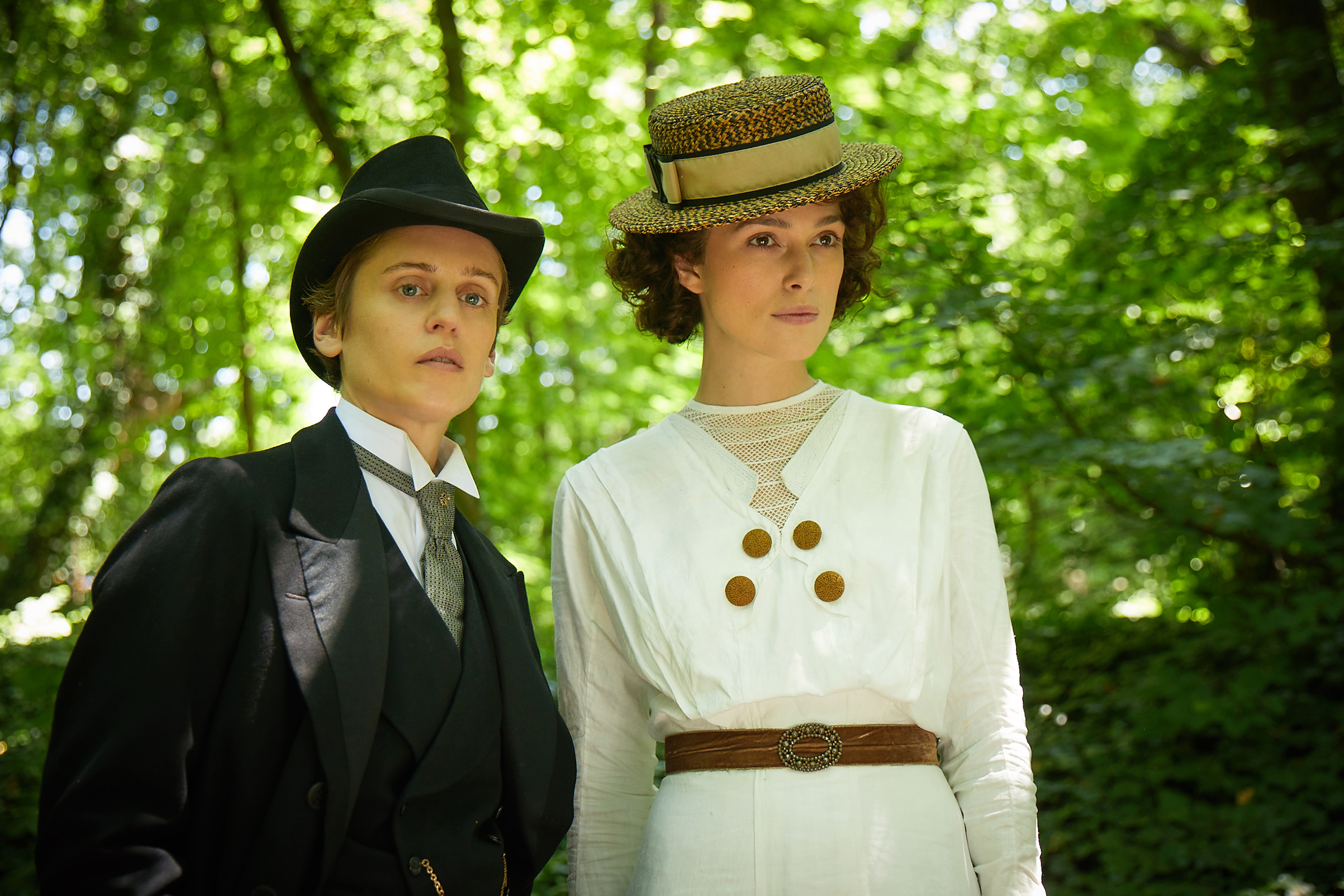
Denise Gough stars as Missy and Keira Knightley as Colette in COLETTE
Credit: Robert Viglasky/Bleecker Street

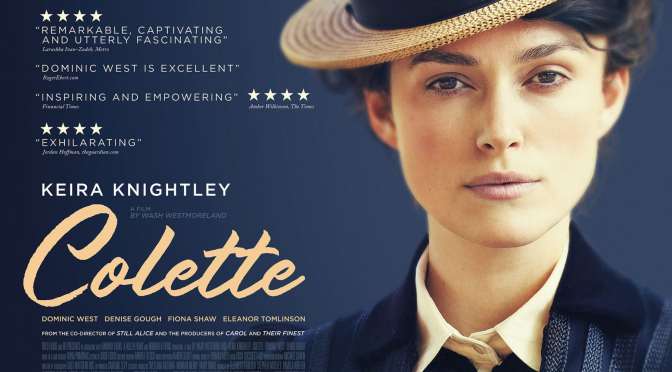
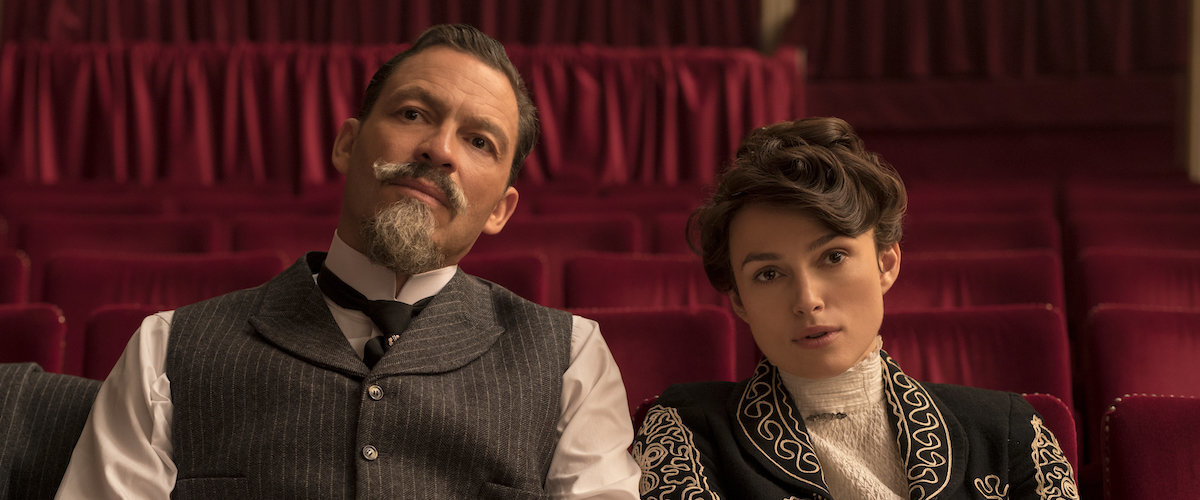
The cinematic version of her life finds Keira Knightley portraying the titular character with a committed energy, verve and magnetism. Knightley has never been the most nuanced of actors but she is a striking movie star, delivering a fine performance here. Likewise, the ever reliable Dominic West is on excellent form as Henry Gaulthier-Villars – AKA ‘Willy’ – Colette’s first husband. West represents him as a charismatic cad with an insatiable lust for women, gambling and booze. While able to wow publishers with his sales pitches he relies on others to do the writing, while happily wasting the advances and royalties.

Willy sweeps the naive country girl Colette off her feet and introduces her to the artistic and literary circles of Paris. As such it is his connections which enable Colette to gain her first publishing success. However, it is Willy who takes all the plaudits, publishing under his own name. This authorial switch inevitably creates a dramatic schism as Colette fights for her name to be on the books. Willy refuses, highlighting both his own egomania and the sexist prejudice of the day. Like the similarly plotted biopic Big Eyes (2014), this film illustrates the nefarious nature of dominant masculinity; however, it also made me consider whether the artists would have been successful if it HADN’T been for these dastardly blokes. Who can tell? One would hope the talent of said artists would shine through come what may.

Structurally, Colette is very linear representing a “greatest hits” of how Colette progresses creatively, romantically and sexually. As aforementioned Knightly gives a fearless performance and the period setting is beautifully evoked within an excellently directed production. My only criticism is a fair amount of time was spent on Colette’s sexual exploits when I would have preferred more drama relating to her authorship battles with feckless Willy. Nonetheless, as period biopics go the film stands as a stylish and admiral tribute to a trailblazing feminist and literary icon.

Mark: 8 out of 11