
Tag Archives: Chiwetel Ejiofor

Cinema review: Backrooms (2026) – an eerily impressive adaptation of the YouTube viral sensation!

Cinema review: Backrooms (2026)

Directed by Kane Parsons

Written by Will Soodik

Based on Backrooms by Kane Parsons

Produced by James Wan, Michael Clear, Roberto Patino, Shawn Levy, Dan Cohen, Dan Levine, Osgood Perkins, Chris Ferguson, Peter Chernin, Jenno Topping, Kori Adelson, etc.


Main cast: Chiwetel Ejiofor, Renate Reinsve, Mark Duplass, Finn Bennett, Lukita Maxwell, etc.

Cinematography by Jeremy Cox

*** MAY CONTAIN SPOILERS ***



Following hot-on-the-heels of Curry Barker’s recent low-budget horror film hit, Obsession (2025), comes another YouTube filmmaking sensation, the even younger, Kane Parsons. His found footage, YouTube series, Backrooms, films can be viewed here. It’s heavy on atmosphere, mystery, point-of-view terror suspense, themes relating to technology gone wrong, interdimensional space and time, mental breakdown, plus incredible eye-for-detail in terms of architecture and sound design. While there is a narrative thrust, each episode stands alone, drip feeding into the other as a scientific experiment gone awry, has somehow created a never-ending liminal space for bodies and minds to get lost in.

While I am not a fan of the found footage subgenre, Parsons is clearly an ultra-talented creative with an intriguing and imaginative vision. Using a mix of online 3D software, Blender, library sounds, live actor’s performance and voices, the Backrooms YouTube series is an enthralling visual, aural and psychological experience. I especially enjoyed piecing together the short episodes to create my own understanding of what is unfolding. I could also see influences from videogames such as Portal and Shane Carruth’s bamboozling time-travel cult film classic, Primer (2004). But what of A24’s big screen adaptation of Backrooms (2026)? Does it retain the power of the no-budget viral sensation essentially built by a teenager on his bedroom laptop?

Directed by Kane Parsons himself, and supported by many more experienced filmmaker as producers, Backrooms (2026), stars Chiwetel Ejiofor, Renate Reinsve, and Lukita Maxwell. The film follows Clark (Ejiofor), a flailing furniture shop owner, recovering from a recent bitter divorce. After finding a spatial fissure in the shop he begins slipping between reality and a vast labyrinth of impossible rooms. After some time passes, Clark, has vanished to the rooms and his therapist, Mary (Reinsve) tries to find him in the ‘Backrooms.’ Here distorted memories, unresolved trauma, and an unknowable force lurk beyond every fluorescent-lit corridor. As the boundaries between the physical and psychological collapse, these characters must navigate an ever-shifting maze that seems determined to consume their identities.
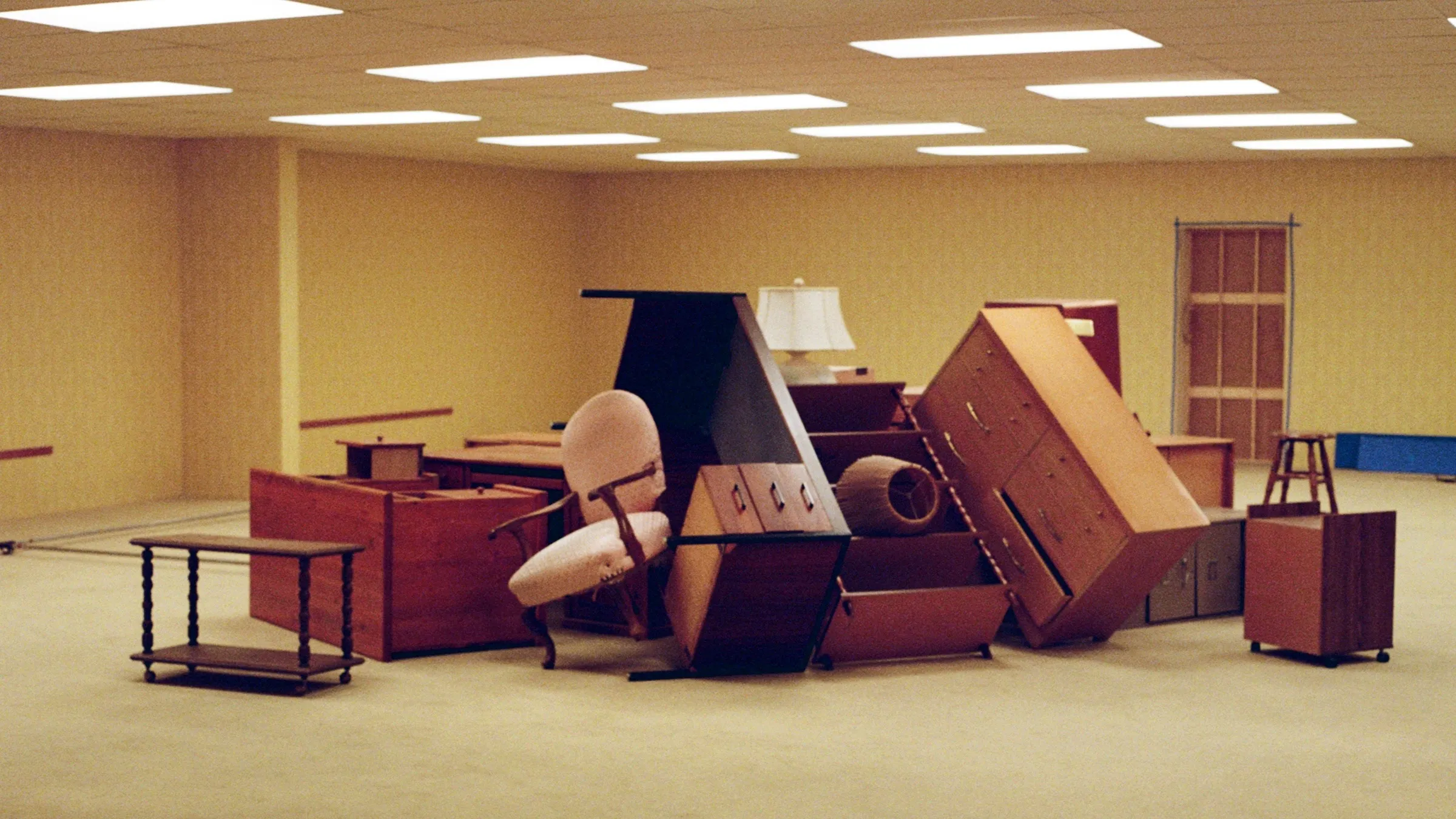


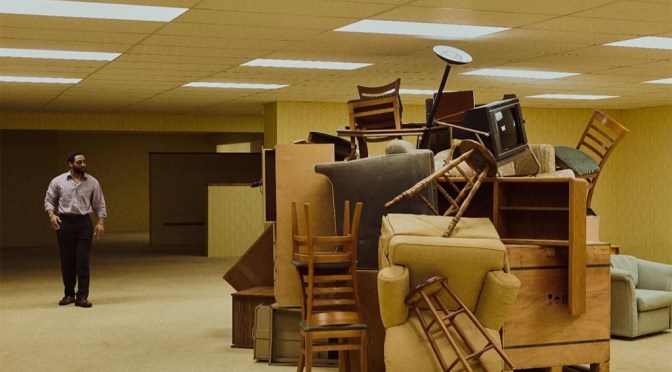
Parsons demonstrates remarkable visual ambition, translating his found-footage origins into a striking cinematic experience. The film’s warped architecture, unsettling spatial logic, eerie soundscape, and dreamlike production design create an atmosphere unlike anything else in contemporary studio horror. Oversized furniture, impossible room dimensions, and bizarre wall angles transform mundane office spaces into haunting liminal nightmares, showcasing a filmmaker with a singular visual imagination.

One of the film’s most interesting choices is its decision to graft a more traditional psychological-journey narrative onto the inherently abstract mythology. By focusing on character development and emotional trauma, the film adds a welcome layer of human depth that many adaptations of internet horror would lack. The performances, particularly from Renate Reinsve, ground the increasingly surreal proceedings with genuine emotional weight. Yet this approach comes with a paradoxical cost. The original Backrooms concept derives its terror from uncertainty, emptiness, and the sense that nothing can ever truly be understood. By providing emotional context and narrative explanations, the film inevitably diminishes some of that primal fear. What is gained in characterisation is, to some extent, lost in dread.

The issue becomes more apparent in the final act, where the film leans heavily into conventional monster horror. While technically accomplished, these sequences feel at odds with the uncanny atmosphere that makes the earlier sections so effective. The introduction of more explicit threats undercuts the terrifying ambiguity of the environment itself. Quite frankly, the creature-focused climax trips up what is otherwise an extraordinary visual achievement. Overall, the screenplay by Will Soodik has many strengths, yet Parsons’ vision remains the film’s greatest strength. Backrooms (2026) succeeds most when it trusts those images to do the frightening. It’s a fascinating, visually breath taking horror film that occasionally explains too much of what was once terrifying precisely because it could never be explained.

Mark: 8 out of 11 (Feature film) / 9 out of 11 (YouTube series)
CINEMA REVIEW: DOCTOR STRANGE IN THE MULTIVERSE OF MADNESS (2022)

CINEMA REVIEW: DOCTOR STRANGE IN THE MULTIVERSE OF MADNESS (2022)

Directed by Sam Raimi

Written by Michael Waldron – Based on the Marvel Comics

Produced by Kevin Feige

Cast: Benedict Cumberbatch, Elizabeth Olsen, Chiwetel Ejiofor, Benedict Wong, Xochitl Gomez, Michael Stuhlbarg, Rachel McAdams, etc.

Cinematography John Mathieson

***MAY CONTAIN SPOILERS ***


I have to admit, and fully conceding my opinion counts for zero, that Disney’s Marvel and Star Wars bandwagons have reached a zenith of saturation. Too much of a good thing is definitely not a good thing. The Disney cinema and streaming products released over the last year or so, since the Avengers hit their endgame has been, just obscene. So much so I now have a powerful fatigue when it comes to watching said releases. They may be of excellent quality, but I’m not really sure I give a damn, darling.

While I am yet to see Shang-Chi and the Legend of the Ten Rings (2021) or Spider-Man: No Way Home (2021), I did have the misfortune to slog through the stodgy and nonsensical Eternals (2021) on Disney+. Having said that I did enjoy the meta-textual invention of Wandavision (2021). Aside from the conventional ending it tried to do something different with the character of Wanda Maximoff, dealing powerfully with the theme of grief in an imaginative and thoughtful way.

But it would take a hell of a hook to drag me to the cinema again to watch a Marvel film. I’m happy squeezing the value out of my Disney+ subscription thank you very much. But, what was this? Sam Raimi has directed Doctor Strange in the Multiverse of Madness (2022)? One of my favourite directors entered the Marvel creative team. A bona fide horror and fantasy auteur returned to the superhero genre he inhabited so tremendously in his millennial Spiderman trilogy. Okay Disney – you’ve pulled me back in. I’m tired of your high quality entertainment but here’s my cinema cash.


Elizabeth Olsen as Wanda Maximoff in Marvel Studios’ DOCTOR STRANGE IN THE MULTIVERSE OF MADNESS. Photo courtesy of Marvel Studios. ©Marvel Studios 2022. All Rights Reserved.

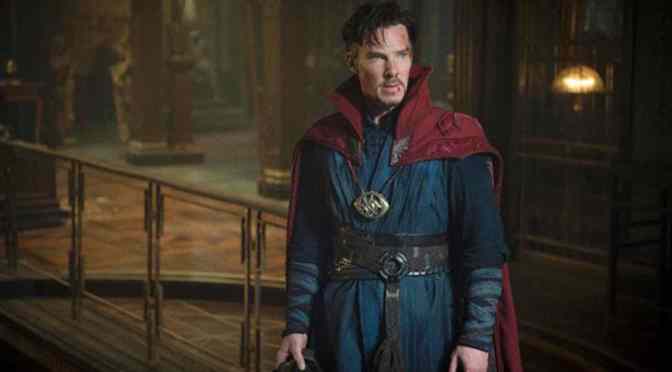
Doctor Strange in the Multiverse of Madness (2022) is a big, dumb, fast-paced, scary, fantastic, mystical, surprising and funny chunk of visually stunning fantasy cinema. After unluckily being denied the Oscar for his subtle, yet brilliant performance in The Power of the Dog (2021), Benedict Cumberbatch is on superb hand-waving, cape-throwing, shape-shifting, death-defying, hair-flicking, multiverse-jumping, father-figuring form as Dr Stephen Strange. His hypnotic character finds himself haunted by weird dreams. But are they dreams? Are they instead visions of other worlds? Other lives. Other deaths.

Enter Xochitl Gomez as America Chavez a dimension jumping teenager who, as a “human” plot device, drags Strange into devilish conflict with another powerful magician from the Avengers team. Namely, Wanda Maximoff (Elizabeth Olsen). Wanda is still struggling with her losses before and during the crazy events that occurred in the small town of Westview. Anyway, multiverse films are like buses it would seem. You wait ages and three or more come along at the same time. Indeed, with the time-travel narrative arguably becoming exhausted or rested, multiverse plots provide the writers the ability to introduce and reinvent characters and rules of the world within the Marvel canon.

So you’ve got to see the middle act of Doctor Strange in the Multiverse of Madness (2022), where America and Doctor crash into an alternative-Earth that contains some startlingly fun casting and unexpected character reveals. Add to that the dark arts delivered by Wanda’s continued obsession with getting America’s dimension-jumping powers light up and darken the screen. This allows Raimi to splatter the walls with a dazzling array of colour amidst the spellbinding set-pieces.

The end battle isn’t half bad either with Strange confronting Maximoff’s sorcery via a deathly conduit and ghoulish switching of identity. While I would have preferred Wanda not to have been cast as the nemesis, Olsen gives a fine performance of some depth amidst the mercurial madness. Overall though, this is Raimi’s film. He pulls out all the stops and magic tricks from his cinematic repertoire making Doctor Strange in the Multiverse of Madness (2022) more his film than just another generic release in whatever-phase-of-Disney’s plot to take over the universe this may be.

Mark: 8.5 out of 11


12 YEARS A SLAVE (2013) – Film Review by Paul Laight

12 YEARS A SLAVE (2013) – Film Review by Paul Laight

**THIS REVIEW CONTAINS SPOILERS + CLIPS**

The artist/director Steve McQueen is a very important filmmaker and his films to date include the searing character study of Bobby Sands in Hunger (2008) and the pulverising sex-addict study of Shame (2011).  His latest epic is another intense offering based on the 1853 memoir by Solomon Northup, a New York State-born free man who was kidnapped in Washington, D.C. in 1841 and sold into slavery.  Indeed, in just 3 feature films McQueen has proven himself a genuine cinematic artist and a beacon of real quality and must-see drama.

Whereas Sands in Hunger was driven by political motives and Sullivan in Shame unable to control his animal instincts then Northup’s character is a family man, a proud and free individual living with his wife and child in Washington.  It is there that the story cross-cuts with later events and Solomon’s unjust capture into slavery. He is a dedicated family man and his character is epitomised at the beginning when he turns down the sexual advances of a female captive; my understanding being he could not compromise his fidelity despite being imprisoned in this Louisiana hell.

From the start you’re really rooting for Northup as he is shown to be intelligent, musical and scholarly gentlemen both proud and faithful.  His kidnapping is a press-ganging of the most heinous kind as he led away from Washington with the promise of lucrative work then tricked when seemingly at his most content. The subsequent journey through the plantations of New Orleans is a most despicable crime against humanity and McQueen shows this is many scenes of physical, verbal and mental abuse perpetrated against Northup and other characters.  Here pain and suffering has never looked so beautiful with stunning cinematography by Sean Bobbitt. It’s a story of sunshine and pain with McQueen utilizing Northup’s life microcosmically in regard to the slave movement as a whole.

The cast are incredible from Chiwetel Ejiofor, in the leading role of Northup to evil slave-zealot Michael Fassbender, benign yet complicit Benedict Cumberbatch and many more including Paul Dano, Lupita Nyong’o, Sarah Paulson, standing out in supporting roles. It has received nine Academy Award nominations including Best Picture, Best Director for McQueen, and Best Actor for Ejiofor, and Best Supporting Actor for Fassbender, and Best Supporting Actress for Nyong’o and I would be shocked if it doesn’t win something.

McQueen treats the subject matter with the reverence and power it deserves and literally paints a brutal, inhumane and devastating set of images with which to tell the story. He often favours long takes notably the scene where Solomon hangs clinging by his toenails to life. This is a stand-out iconic scene and it is too much to bear because we have so much invested in Solomon’s character by this stage and really want his suffering to end.  But that’s where Fassbender’s Epps enters the play and the intensity is ratcheted up and then some.

For well over an hour 12 Years a Slave is majestic filmmaking of the highest quality. Northup’s characterisation is incredible, however, this is to the detriment of the other characters who dip in and out of the narrative notably Benedict Cumberbatch’s Ford, who to me was the most interesting of the white slavers as he appeared to be a compassionate man trapped within a vicious societal circle of hate.  Fassbender’s maniacal Epps I feel deserved a better introduction because even though the actor is once again breath-taking I felt the performance MORE than the actual character.  The two wives of the slavers were one-dimensional and interchangeably evil, plus, I was disappointed Paul Dano’s character left the narrative too early.  The major casting disappointment is the glory-hunting role Brad Pitt gave himself as the kind Canadian carpenter who assists Northup in his quest to escape.  Pitt is a great movie star and I love his work but he’s too big in my opinion to appear so late in such a story as this.  I was deeply involved only to suddenly be reminded I was watching a Hollywood movie.

Steve McQueen is a master craftsmen and has made a near-flawless work of cinema even though I must admit the ending left me very frustrated.  There is power and emotion for all to see but I wanted more satisfaction for Northup’s character and some kind of retribution to be dealt to his captors. McQueen had cooked up such an intense soup of pain and suffering I wanted more of a release. Indeed, it seemed quite a passive denouement to me especially when compared to a film such as Glory (1989) and the Roman Slave action epic Spartacus (1960). However, this is a more personal epic and the filmmakers have clearly stayed true to the honour of the original book so my personal desire for cinematic revenge on the slavers will just have to be met by Tarantino’s dancing-horse-bad-ass-Blaxploitation-Western Django Unchained (2012) I suppose.