
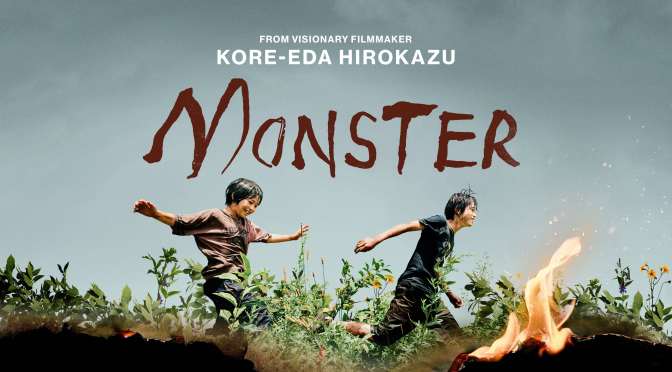
MUBI FILM REVIEW: MONSTER (2023)
Directed and edited by Hirokazu Kore-eda
Written by Yuji Sakamoto
Produced by: Hirokazu Kore-eda, Minami Ichikawa, Kenji Yamada, Megumi Banse, Taichi Itō and Hijiri Taguchi
Main cast: Sakura Andō, Eita Nagayama, Sōya Kurokawa, Hinata Hiiragi and Yūko Tanaka
Cinematography by Ryuto Kondo
Music by Ryuichi Sakamoto
*** MAY CONTAIN SPOILERS ***
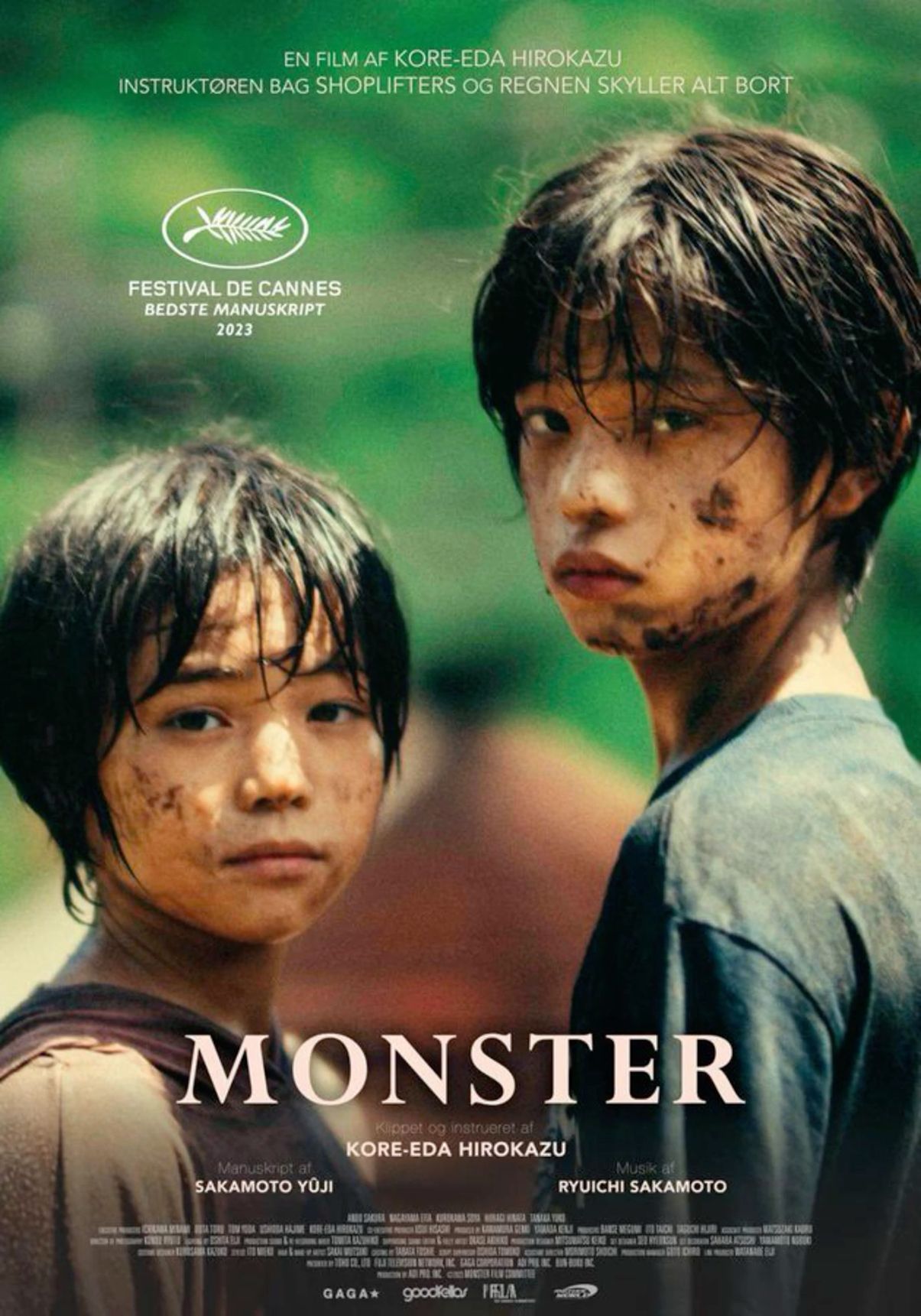
Hirokazu Kore-eda’s Monster (2023) exemplifies his continued mastery of humanist storytelling, a hallmark of his career. As with prior works such as the classic Afterlife (1998), critically acclaimed Shoplifters (2018), and the recent, arguably more commercial comedy-drama, Broker (2022), Kore-eda demonstrates a keen ability to explore the quiet complexities of human relationships, here through themes of bullying, young love, and the tender, taboo nature of queer affection. Monster (2023) delves deeply into the fragility of human connections, revealing the pain and misunderstandings that arise when societal expectations collide with individual identities.
The story focuses on shifting narrative perspectives of two young boys, Minato (Sōya Kurokawa) and Yori (Hinata Hiragi), Mugino’s mother, Saori (Sakura Andō) and the boy’s teacher, Michitoshi Hori (Eita Nagayama). Initially, Minato begins displaying slightly disturbing behavious such as cutting his own hair and throwing tantrums in class. His mother then believes the teacher is bullying him and begins to campaign for Mr Hori’s punishment. What then unfolds is something altogether more complex and powerfully ambiguous.
With Monster (2023), crafted via a Rashomon-style structure by screenwriter Yuji Sakamoto, the narrative approach provides a formidable layer to the film’s emotional resonance. It allow the audience to revisit pivotal events from multiple perspectives. By shifting viewpoints the script highlights how perception shapes reality, illustrating the subjectivity of truth in deeply personal and often painful ways. The multifaceted storytelling reveals how moments of cruelty, compassion, and misunderstanding ripple across different lives, underscoring Kore-eda’s central humanist message: no person is simply a villain or a hero, but a complex amalgam of motives and vulnerabilities.
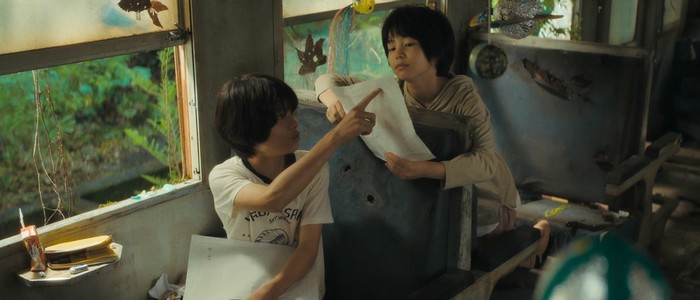
The script’s structural ingenuity enhances the film’s exploration of societal issues, such as the alienation of queer youth and the lasting scars of bullying. Each retelling reframes the characters’ actions, fostering empathy for even the most seemingly antagonistic figures. This interplay of perspectives elevates Monster (2023) beyond a straightforward tale of adolescent struggle, transforming it into a profound meditation on the intersection of memory, identity, and the pursuit of love and acceptance.
By marrying Kore-eda’s subtle directorial touch with Sakamoto’s intricate script, Monster (2023) achieves a rare cinematic feat: a story that is as intellectually engaging as it is emotionally devastating. Moreover, it reaffirms Kore-eda’s place as a preeminent chronicler of the human condition. Safe to say that it is beautifully filmed, cast and acted. To elicit such incredible performances from these boys is wondrous direction. It also features a fragmented but beautifully poetic final film score of the recently departed Ryuichi Sakamoto. Overall, it’s cinema that breathes pathos and humanity into each and every character, and provides no easy solutions. Monster (2023) is a film that burns, like the fiery tower block featured throughout, long in the heart and memory.

 The Cinema Fix presents