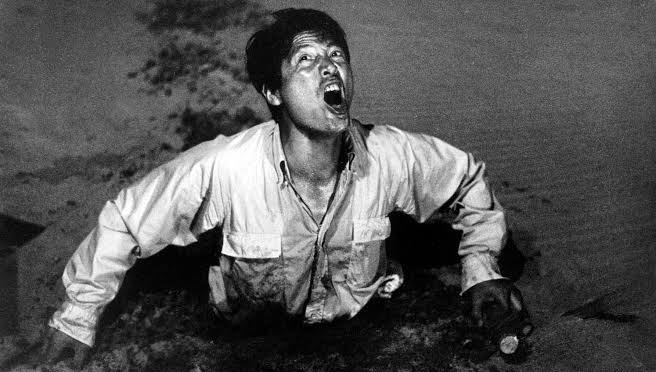
Tag Archives: Japanese cinema

The psychology of revenge cinema: incorporating Six of the Best #38 Revenge Films!

Six of the Best #38 Revenge Films

Revenge is one of the oldest narrative engines in storytelling. Long before cinema, it powered myths and literature—from the blood-soaked cycles of Greek tragedy to the meticulous retribution of The Count of Monte Cristo. These stories hinge on a simple but potent question: what happens when justice fails, and an individual takes it upon themselves to restore balance? Cinema inherited this question and, over time, fractured it into multiple forms—some cathartic, others corrosive, and many deeply ambiguous.


A Brief History of Revenge on Screen

Early revenge narratives in cinema often mirrored their literary roots: structured, morally legible, and driven by transformation. A Woman Branded (1931) is sometimes cited as an early precursor of a woman seeking revenge. Films like Kind Hearts and Coronets (1949) or adaptations of The Count of Monte Cristo framed revenge as an almost intellectual exercise—precise, controlled, and, in the case of the Ealing classic, even darkly humorous.

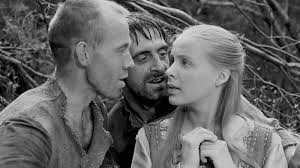
While revenge is a foundational narrative theme dating back to early cinema, Ingmar Bergman’s The Virgin Spring (1960) is widely considered the earliest major film establishing the “rape-revenge” subgenre. It follows a father seeking brutal vengeance for his daughter’s murder, influenced by a 13th-century Swedish ballad and Japanese cinema.


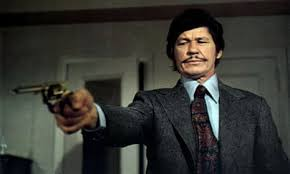
During the late 1960s and 1970s, something shifted. Disillusionment seeped into cinema, and revenge stories grew harsher, more grounded. Neo-noir works like Point Blank (1967), Get Carter (1971), and the classic Western, Once Upon a Time in the West (1968), reframed revenge as something mythic yet emotionally compelling. Sergio Leone’s film in particular bridges classical and modern revenge—turning personal vengeance into operatic inevitability while still rooted in grief and loss. Further, the 1960 / 1970s “Spaghetti” and Clint Eastwood westerns were also heavily driven by vengeful characters, as well as brutal bounty hunters and mercenaries. Overall, the 1970s marked a surge in mainstream vigilante revenge films, with Last House on the Left (1972) and Death Wish (1974), to name a couple, are widely seen as cementing the genre’s popularity.


At the same time, exploitation cinema erupted with raw, confrontational narratives—I Spit on Your Grave (1978), Coffy (1973), Ms. 45 (1981), and Thriller: A Cruel Picture (1973)—often centring female vengeance in ways that were both provocative and controversial. Japanese cinema contributed key films like Lady Snowblood (1973), which would later echo through global cinema. Asian cinema embraced the brutality of the subgenre with revenge films like Vengeance is Mine (1979), Park Chan Wook’s The Vengeance Trilogy and the visceral I Saw the Devil (2010) which interrogated obsession and extreme violence in equal measures.

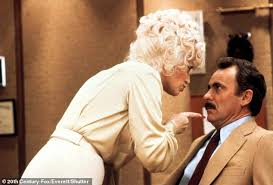
Thus, there are many faces to the revenge including: stage plays, classic literature, gangster, Western, arthouse, war, horror and even comedic ones such as 9 to 5 (1980). Each mode reflects a different cultural anxiety. Some seek catharsis; others deny it entirely. Some empower; others dismantle the very idea of empowerment. What remains is that revenge is a primal drive and offers clear motivation as to a characters’ wants. Above all else a good vengeance narrative offers high stakes satisfaction and entertainment when done right. Here are six filmic examples of this.


Six of the Best Revenge films

What unites the six chosen films is not just quality, but how distinctly each approaches revenge. The six films selected here demonstrate the breadth of what revenge can mean on screen: spectacle, despair, inevitability, and even self-annihilation.

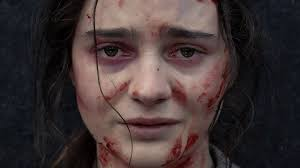
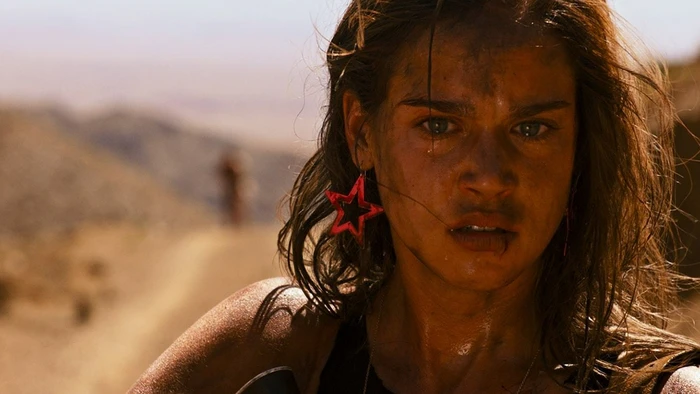
I really wanted to include Revenge (2017), a film which revisits the roots of exploitation film but reclaims them with precision. Coralie Fargeat transforms the genre’s historically exploitative gaze into something confrontational, self-aware and sexual. Violence is stylised and glamorous, but never empty—it becomes a language through which the protagonist reasserts control over her own narrative. Alas, it does not make the list.


*** MAY CONTAIN SPOILERS ***


Dead Man’s Shoes (2004)

I’ve written about Dead Man’s Shoes (2004) before but for me it is one of the best British films ever. Shane Meadows classic low-budget revenger evolves a brother’s vengeance into something more intimate and tragic. Meadows reframes revenge as grief and guilt, culminating in a devastating reversal that questions whether vengeance can ever truly be directed outward. It is revenge turned inward, a psychological reckoning masquerading as retribution. Paddy Considine delivers one of the rawest and most angry performances ever put on screen.


Get Carter (1971)

Get Carter (1971) is cold, methodical, and stripped of glamour, like a Northern neo-noir. Michael Caine’s Jack Carter moves through a decaying Newcastle like an agent of inevitability. There is no triumph here—only the suggestion that violence begets nothing but itself. Caine’s performance delivers the dialogue with razor-sharp timing and dark wit. A violent gangster but relentless detective hunting down the thugs who killed his brother. The clever screenplay (based on a novel) ensures those Carter is after are even worse than him as ultimately Northern decay meets moral collapse.


Kill Bill: The Whole Bloody Affair (2025)

As revenge epics and Asian cinema homages go, Kill Bill: The Whole Bloody Affair (2025) is a staggering piece of synthesis from Quentin Tarantino. Beatrice Kiddo’s (Uma Thurman) quest isn’t just a trail of vengeance—it’s ritualised, almost sacred, each confrontation unfolding like a chapter in a blood-soaked myth. Tarantino fuses global influences—from Anime, samurai cinema like Lady Snowblood (1973) to grindhouse exploitation—into something heightened and unmistakably his own: a world of colour, blood, incredible choreography, and cutting precision. Violence here isn’t merely destructive; it becomes a form of expression, even purification. In this universe, revenge is not corrosive or self-defeating but clarifying, elevating Beatrice’s journey from victim to legend.


Mermaid Legend (1984)

Mermaid Legend (1984) stands as a startlingly powerful vengeance film, elevated by Mari Shirato’s ethereal, magnetic performance as Migiwa—at once woman, avenging angel, and elemental force. Her transformation drives the film into increasingly confrontational territory, where extreme violence and explicit sexuality feel less gratuitous than weaponised, forcing the viewer into a state of unease. What makes the revenge so compelling is its inevitability: this is not a quest but a metamorphosis, as Migiwa becomes something beyond human, guided as much by the sea and spirit as by rage. The film’s brilliance lies in how it fuses beauty and brutality into a singular vision. Lyrical underwater imagery and sacred, mournful music elevate the violence into something ritualistic, culminating in a final pier rampage that feels less like action than ceremony—hypnotic, relentless, and mythic. By the end, revenge is no longer just an act but a form of transcendence, pushing the film beyond exploitation into legend.


Old Boy (2003)

Oldboy (2003) is a film I can watch over and over and it still shocks me. The narrative feels like a perverse inversion of The Count of Monte Cristo. But, where Dumas offers revenge as a calculated, almost righteous act, Park Chan-wook and the source material it is based on presents it as something recursive and inescapable. The brilliance of Oldboy (2003) lies in its dual revenge structure: what begins as Oh Dae-su’s pursuit of answers gradually reveals itself to be the final movement in someone else’s long-orchestrated vengeance. Both protagonist and antagonist are locked into mirrored roles, each defined—and ultimately destroyed—by the same impulse. The film’s infamous twists don’t just shock; they reframe the entire narrative as a closed system of suffering, where revenge ceases to be cathartic and instead becomes a mechanism of obscene chaos. The antagonist’s revenge is meticulous, psychological, and total, while Dae-su’s reactive violence only tightens the trap. Both men are ultimately consumed, their identities hollowed out by the nihilistic revenge that defines them.


Once Upon a Time in the West (1968)

Once Upon a Time in the West (1968) is a great revenge film and classic Western. It precisely because it strips vengeance down to something elemental, patient, and almost mythic. Charles Bronson’s ‘Harmonica’ is not a conventional protagonist but a force moving through the landscape with quiet, relentless purpose. He speaks little, explains nothing, and yet every gesture feels loaded with intent. His pursuit of Henry Fonda’s Frank—a brutal mercenary introduced through shocking, child-murdering violence—is not driven by impulse but by memory, by something buried so deep it can only be expressed through action. What elevates the film is its methodical pacing and Leone’s operatic control. Violence is withheld, stretched out across long silences, close-ups, and Ennio Morricone’s mournful score, turning each encounter into ritual. When ‘Harmonica’ finally unleashes havoc, it is not chaotic but precise—measured, almost ceremonial. The eventual revelation of his motive reframes everything: this is not just revenge, but the completion of a trauma that has defined his entire existence.


Conclusion

To distil revenge cinema into six films is, inevitably, an incomplete task. The genre is too vast, too varied spanning everything from canonical works to obscure, difficult films that remain unseen or underexplored. There are countless other entries, including many lesser-known or unseen works, that could reshape or challenge this selection.

And yet, that is precisely why revenge endures. It is a universal impulse, endlessly adaptable to tone, culture, and form. Whether stylised, brutal, philosophical, or deeply personal, revenge remains one of cinema’s most powerful motivations—for characters and filmmakers alike.


Mubi Film Review: Hirokazu Kore-eda’s exquisite tale of love, loss and rebirth – Monster (2023)

MUBI FILM REVIEW: MONSTER (2023)

Directed and edited by Hirokazu Kore-eda

Written by Yuji Sakamoto

Produced by: Hirokazu Kore-eda, Minami Ichikawa, Kenji Yamada, Megumi Banse, Taichi Itō and Hijiri Taguchi

Main cast: Sakura Andō, Eita Nagayama, Sōya Kurokawa, Hinata Hiiragi and Yūko Tanaka

Cinematography by Ryuto Kondo

Music by Ryuichi Sakamoto

*** MAY CONTAIN SPOILERS ***


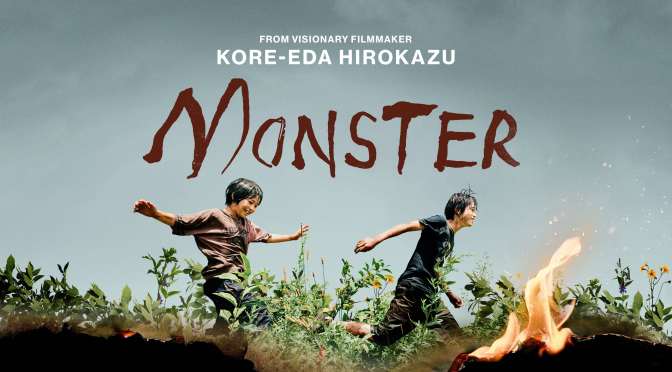
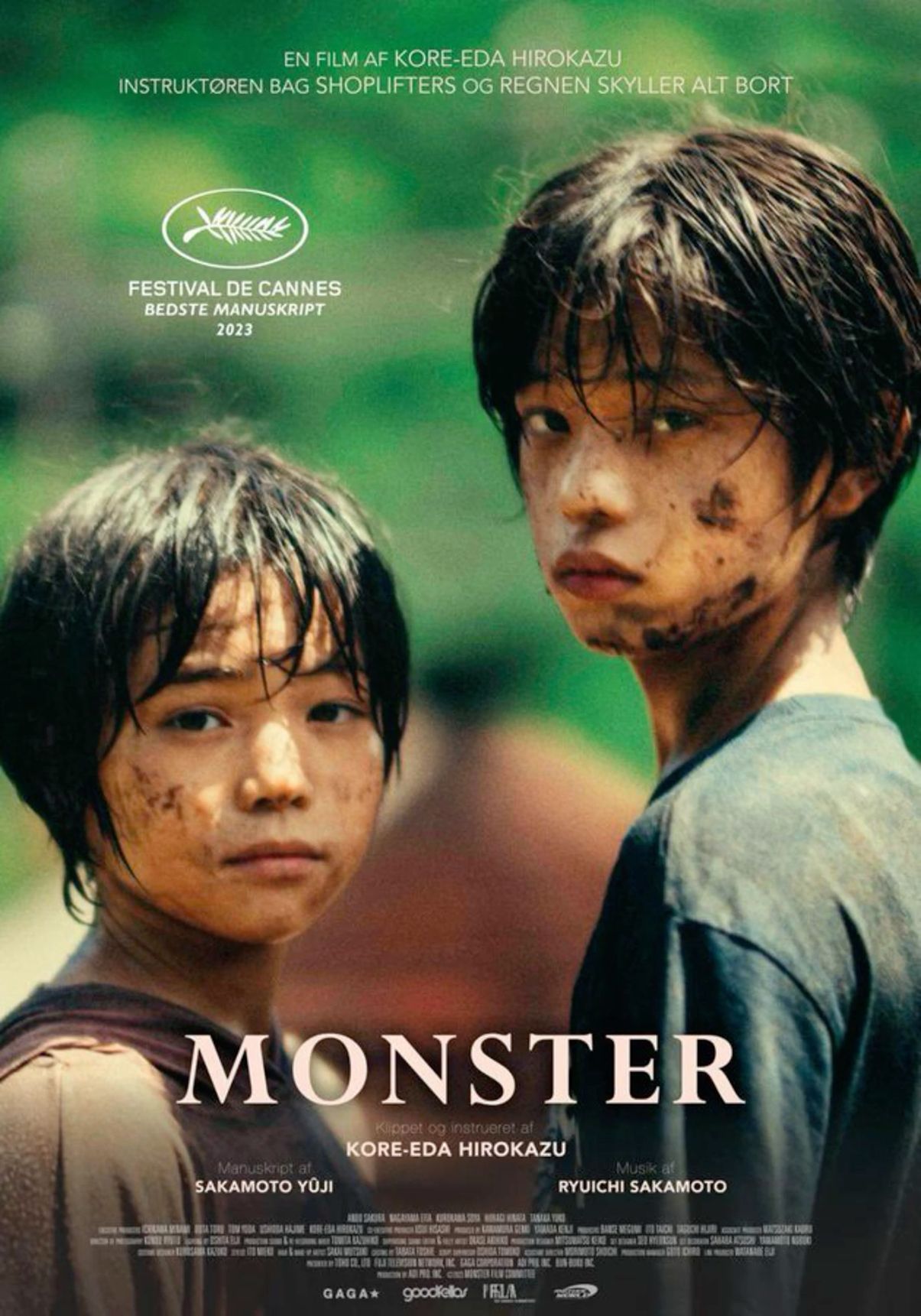
Hirokazu Kore-eda’s Monster (2023) exemplifies his continued mastery of humanist storytelling, a hallmark of his career. As with prior works such as the classic Afterlife (1998), critically acclaimed Shoplifters (2018), and the recent, arguably more commercial comedy-drama, Broker (2022), Kore-eda demonstrates a keen ability to explore the quiet complexities of human relationships, here through themes of bullying, young love, and the tender, taboo nature of queer affection. Monster (2023) delves deeply into the fragility of human connections, revealing the pain and misunderstandings that arise when societal expectations collide with individual identities.

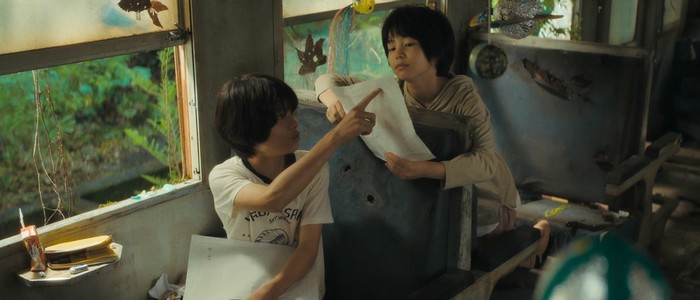
The story focuses on shifting narrative perspectives of two young boys, Minato (Sōya Kurokawa) and Yori (Hinata Hiragi), Mugino’s mother, Saori (Sakura Andō) and the boy’s teacher, Michitoshi Hori (Eita Nagayama). Initially, Minato begins displaying slightly disturbing behavious such as cutting his own hair and throwing tantrums in class. His mother then believes the teacher is bullying him and begins to campaign for Mr Hori’s punishment. What then unfolds is something altogether more complex and powerfully ambiguous.

With Monster (2023), crafted via a Rashomon-style structure by screenwriter Yuji Sakamoto, the narrative approach provides a formidable layer to the film’s emotional resonance. It allow the audience to revisit pivotal events from multiple perspectives. By shifting viewpoints the script highlights how perception shapes reality, illustrating the subjectivity of truth in deeply personal and often painful ways. The multifaceted storytelling reveals how moments of cruelty, compassion, and misunderstanding ripple across different lives, underscoring Kore-eda’s central humanist message: no person is simply a villain or a hero, but a complex amalgam of motives and vulnerabilities.


The script’s structural ingenuity enhances the film’s exploration of societal issues, such as the alienation of queer youth and the lasting scars of bullying. Each retelling reframes the characters’ actions, fostering empathy for even the most seemingly antagonistic figures. This interplay of perspectives elevates Monster (2023) beyond a straightforward tale of adolescent struggle, transforming it into a profound meditation on the intersection of memory, identity, and the pursuit of love and acceptance.

By marrying Kore-eda’s subtle directorial touch with Sakamoto’s intricate script, Monster (2023) achieves a rare cinematic feat: a story that is as intellectually engaging as it is emotionally devastating. Moreover, it reaffirms Kore-eda’s place as a preeminent chronicler of the human condition. Safe to say that it is beautifully filmed, cast and acted. To elicit such incredible performances from these boys is wondrous direction. It also features a fragmented but beautifully poetic final film score of the recently departed Ryuichi Sakamoto. Overall, it’s cinema that breathes pathos and humanity into each and every character, and provides no easy solutions. Monster (2023) is a film that burns, like the fiery tower block featured throughout, long in the heart and memory.

Mark: 9.5 out of 11


CULT FILM REVIEW: HOUSE/ハウス – (1977)

CULT FILM REVIEW: HOUSE (1977)

Directed by: Nobuhiko Obayashi

Produced by: Nobuhiko Obayashi, Yorihiko Yamada

Screenplay by: Chiho Katsura

Story by: Chigumi Obayashi

Cast: Kimiko Ikegami, Miki Jinbo, Ai Matubara, Kumiko Oba, Mieko Sato, Eriko Tanaka, Masayo Miyako, Yōko Minamida

Music by: Asei Kobayashi, Mickie Yoshino

***MAY CONTAIN SPOILERS***


This Japanese film from the late 1970s is absolutely nuts, but a riotous genre mash-up of rites-of-passage, horror, musical, martial arts, romance, fantasy, comedy and anti-war genre movie styles. If you are a fan of the work of Takashi Miike’s both energetic and often insane genre films, you can definitely see how, House (1977), may have had a major influence on his and many other Asian filmmaker’s cinematic works.

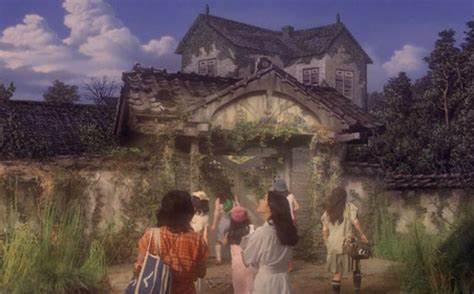
Initially receiving negative reviews, but big box office in Japan on release, House (1977), opens by introducing a set of seven teenage girls called, Gorgeous, King Fu, Prof, Melody, Fantasy, Mac and Sweet. The names give them their major characteristics too. Kung Fu for example loves martial arts, Fantasy is a daydreamer and Melody loves music etc. You get the idea. As each character is introduced in a basic fashion, the energetic performances of the actors and the quirky screenplay develops their characters beyond the initial stereotypes. Gorgeous is especially well developed as she is suffering the loss of her mother and has rejected her father’s choice of stepmother. Eschewing her kindly father’s protestations, she decides to visit her aged Aunt in the countryside.


When Gorgeous’ friend’s school trip is cancelled due to several bizarre plot turns, and a couple of crazy musical numbers later, the girls join her on the visit to the creepy house. When they finally arrive Gorgeous’ aunt behaves extremely oddly. She rarely gets visitors and only has a white cat for company. When the girls begin to disappear one-by-one and Fantasy’s daydreams begin to turn to nightmares, the true horror of the situation takes shape. The house itself is a malevolent force and has trapped the girls. What appeared to be a lovely summer vacation is now the total opposite.

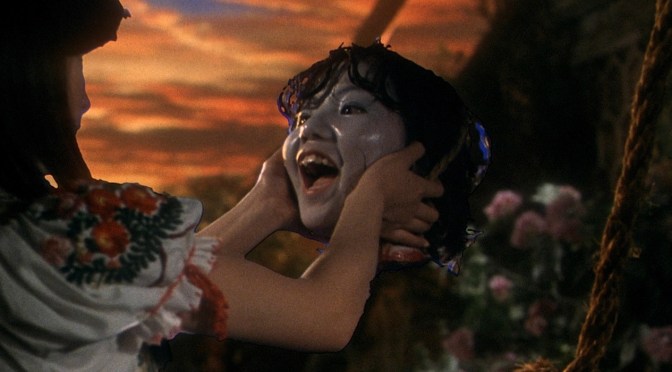
Now, what I have described actually seems quite normal in terms of the narrative content. It’s a standard horror plot of characters imprisoned by supernatural forces and trying desperately to stay alive. However, director, Nobuhiko Obayashi, who devised the story with his daughter, presents a series of images and sounds David Lynch would have been proud to have devised. These include: a mirror attacking the viewer, a watermelon being pulled out of a well appearing like a human head, a pile of futons falling on and attacking a character, a carnivorous piano with biting keys and all manner of surreal fights and deaths. Allied to this the eccentric and jolly music works against the horror and suspense, so one is both laughing and disturbed simultaneously.

Ultimately, House (1977) is one wacky viewing experience, but it also taps into themes of friendship, romance, grief, as well as drawing on the horror of destruction Japan suffered when the atomic bombs hit Nagasaki and Hiroshima. It is fast paced with an abundance of imaginative ideas, film styles and practical effects throughout. Thus, if you love the work of aforementioned Miike, Lynch and Sam Raimi, you are bound to want to stay in House (1977) for the rapid eighty-eight minutes duration.