Tag Archives: Joe Alwyn

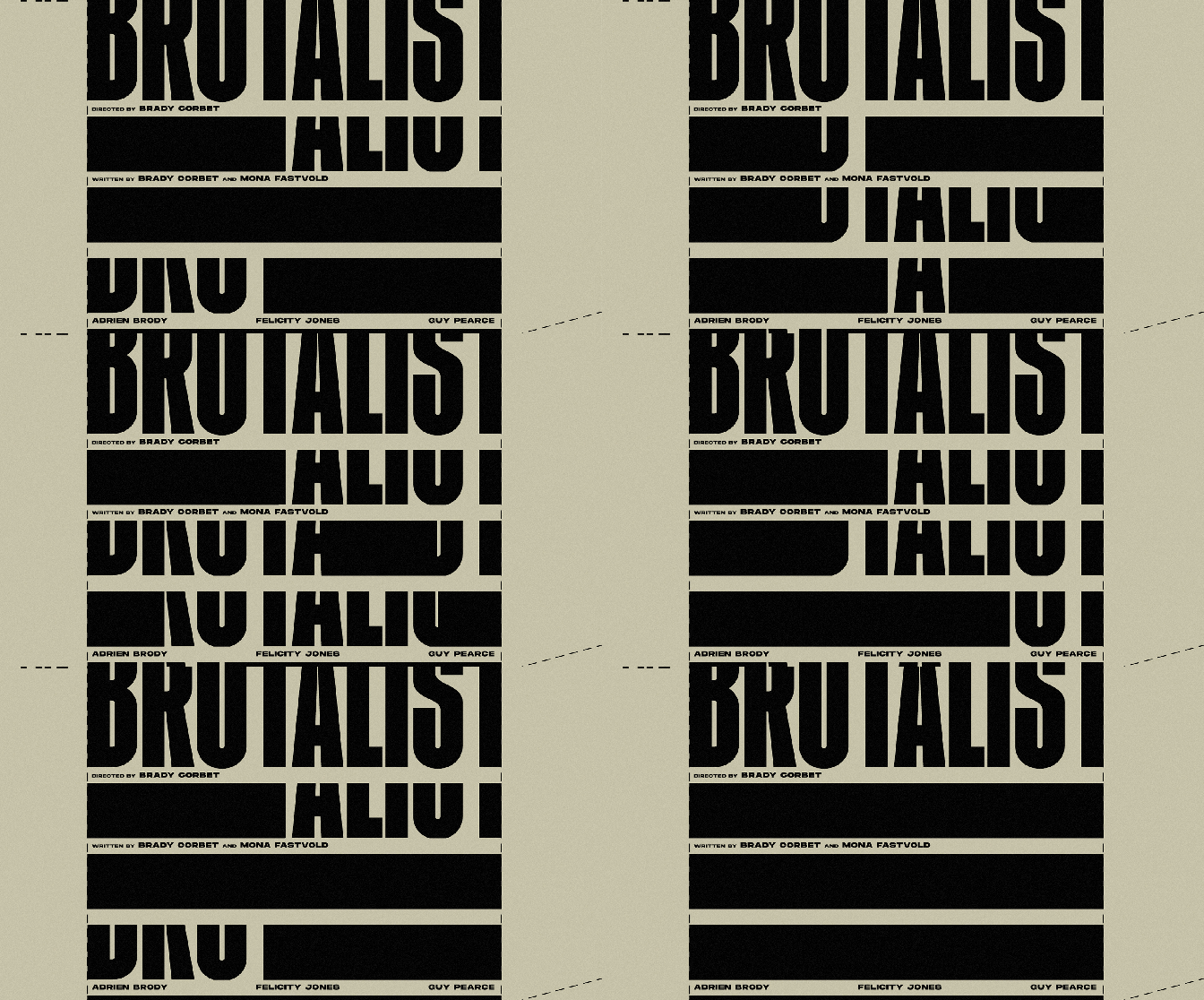
Cinema Review: The Brutalist (2024) – There will be Concrete!

CINEMA REVIEW: THE BRUTALIST (2024)

Directed by Brady Corbet

Written by: Brady Corbet & Mona Fastvold

Produced by Trevor Matthews, Nick Gordon, Brian Young, Andrew Morrison, Andrew Lauren, D.J. Gugenheim and Brady Corbet
.

Cast: Adrien Brody, Felicity Jones, Guy Pearce, Joe Alwyn, Raffey Cassidy, Stacy Martin, Emma Laird, Isaach de Bankolé and Alessandro Nivola.

Cinematography Lol Crawley

Edited by Dávid Jancsó

*** MAY CONTAIN SPOILERS ***


A new wave of American filmmakers—directors like Todd Field, Robert Eggers, and Brady Corbet—have emerged as some of the most technically proficient and ambitious voices in contemporary cinema. Their work is marked by rigorous formal control, deep thematic ambition, and an almost obsessive dedication to craft. These filmmakers, arguably influenced by auteurs like Sofia Coppola and Paul Thomas Anderson, demonstrate an understanding of film language that is both deeply referential and boldly experimental. Whether it’s Eggers’ meticulous historical recreations, Field’s austere and cerebral storytelling, or Corbet’s overtly intellectualized narratives, they all exhibit an undeniable mastery of their medium. Their films, often dense with literary and philosophical allusions, cater to cinephiles who relish formal precision and narrative audacity.

Yet, for all their brilliance, there’s an argument to be made that their work veers into self-indulgence, if not outright pretension. Their films sometimes feel like exercises in artistic superiority, catering to an audience that appreciates the challenge but perhaps not the emotional accessibility that cinema can offer at its best. Whether it’s the cold remove of TÁR (2022), the self-serious mythologizing of The Lighthouse (2019), or the arch, affect-laden approach of Vox Lux (2018), these works often feel encased in a layer of knowing detachment. There’s a fine line between intellectual rigor and a kind of smug, insular artistry, and some critics argue that these filmmakers, however talented, sometimes tip too far in the latter direction—prioritizing aesthetic and conceptual ambition over genuine human connection. I mean, I love a lot of these filmmakers’ work, but I was raised on the American films of Coppola, Scorsese, DePalma, Spielberg, Lucas and Friedkin; auteurs who knew their art, but also how to entertain the audience too.


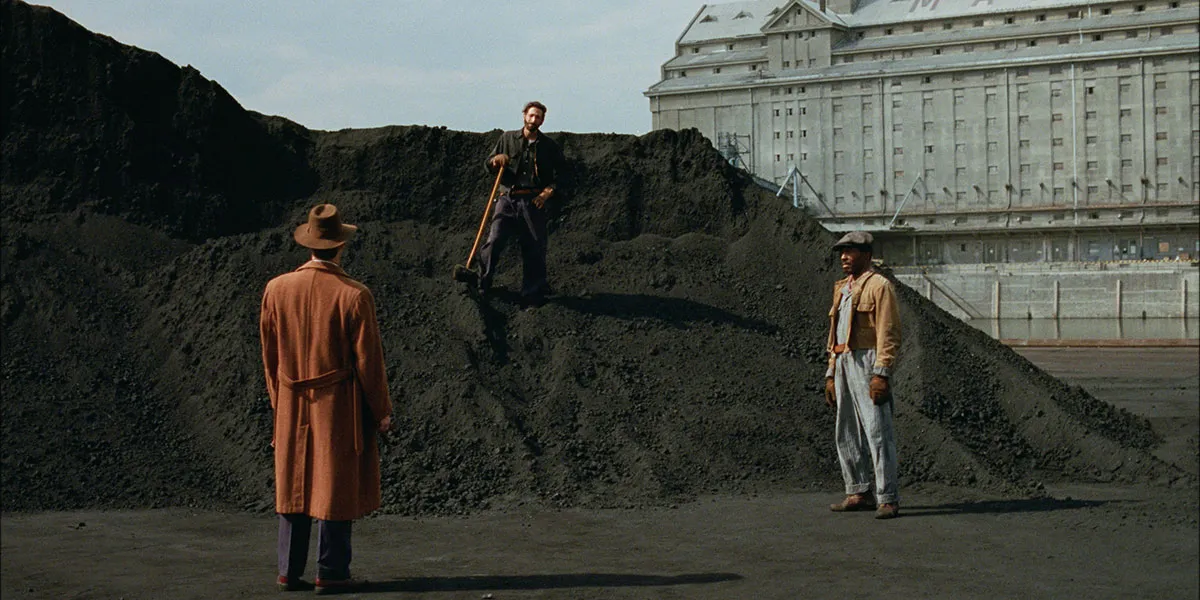
In Corbet’s, and film partner’s Mona Fastvold’s, phenomenally designed and constructed film, The Brutalist (2024), Adrien Brody portrays fictional László Tóth, a Hungarian-Jewish architect and Holocaust survivor. Brody’s is an incredibly memorable piece of work, acting as a spiritual performance sequel to his Oscar-winning role in The Pianist (2002). But rather than focus on an individual attempting to escape the Nazis during the war, the narrative concentrates on Tóth, who arrives in post-war America with nothing but his talent and ambition, only to find himself trapped in a system that celebrates his work while rejecting him as a person. In America, racism is delivered with a smile, and generosity is a means of control. High society rewards Tóth but also suffocates him with subtle condescension, as he is paraded around as an artistic trophy but never fully embraced as an equal.

As an epic character study of the life of an immigrant and exploitation of the financially stricken Jew in America, The Brutalist (2024), is a powerful work. Such themes compel us to think of today and the fact that America continues to struggle with the integration of people travelling there, even though it was built with the hands of migrant families. Here the screenplay exerts true power in critiquing the United States’ treatment of those travelling to America with hope. As the narrative unfolds across the decades, Corbet, Fastfold and Brody illustrate the slow erosion of Laslo’s dreams in an America that welcomes his work but not his humanity. As the key antagonist, Harrison Lee Van Buren, Guy Pearce delivers another chilling and precise character study. Van Buren is a spoilt, rich and brattish man whose charm and refinement mask a deeply exploitative nature.

Photographically, The Brutalist (2024) is indeed a work of art. Lol Crawley and the production team immerse viewers in a stark, architectural visual language—monolithic structures, rigid compositions, and a muted, desaturated color palette mirroring the emotional and physical isolation Tóth experiences. Yet, for for all its incredible craftsmanship and bold cinematic ambition, the film is a test of endurance—an unrelenting, patience-draining experience that stretches well beyond three hours. Even the inclusion of chapters, and a self-consciously “prestigious” intermission only serve to amplify the film’s pretensions, prolonging the agony of watching layer upon layer of misery unfold like a slow-moving roller-coaster that induces motion sickness with no escape. It’s a brilliant film that demands submission rather than engagement, wielding its bleakness like a weapon against the audience’s stamina. It will probably win the Academy Award for Best Film. That or Wicked (2024).

Mark: 8 out of 11


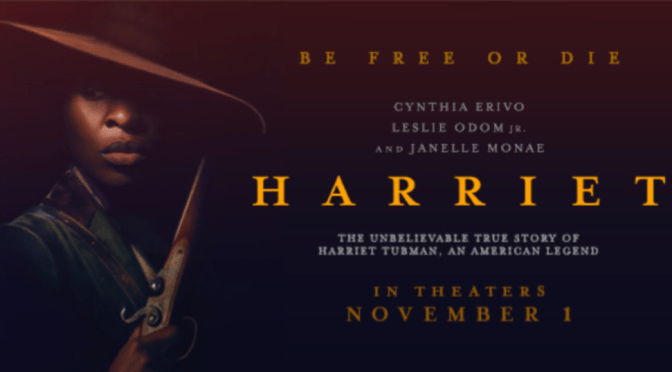
HARRIET (2019) – CINEMA REVIEW

HARRIET (2019) – CINEMA REVIEW

Directed by: Kasi Lemmons

Produced by: Debra Martin Chase, Daniela Taplin Lundberg, Gregory Allen Howard

Screenplay: Kasi Lemmons, Gregory Allen Howard

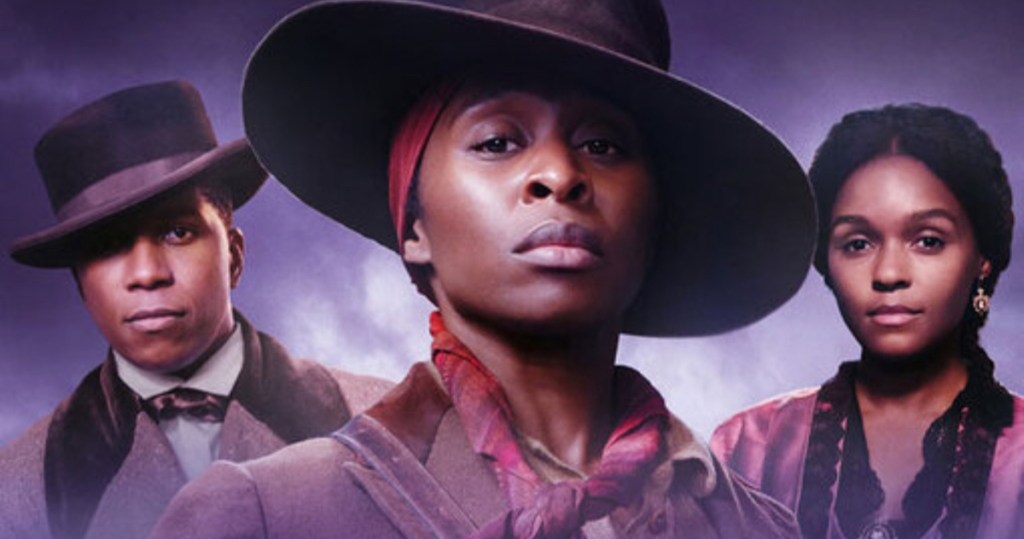
Cast: Cynthia Erivo, Leslie Odom Jr., Joe Alwyn, Janelle Monae, Clarke Peters, Zackary Momoh, Vondie Curtis-Hall etc.

**CONTAINS HISTORICAL SPOILERS**


With $100 million being spent on the film Midway (2019), which I haven’t seen, and $160 million being spent on The Irishman (2019), which I have, it’s kind of shame that a way bigger story like that of Harriet Tubman is only afforded a mid-budget tribute adaptation. Because, even if this story is only 10% true, Harriet Tubman’s character deserves so much more. In fact, I am shocked that it has taken this long for her achievements to reach the cinema screen. Especially because we had to endure another rendition of Lincoln (2012), in Spielberg’s recent ponderous epic.

That isn’t to say that old Abraham isn’t deserving of praise. I’m just an ignorant Englander, but Harriet Tubman, as represented by Cynthia Erivo’s sterling performance and Kasi Lemmon’s and Gregory Allen Howard’s fizzing screenplay, is a tour-de-force encapsulation of empowerment. That isn’t to say that the film isn’t without flaws. Indeed, this is an amazing story which is professionally told. However, it seems to have been short-changed on budget and marketing possibilities here in the U.K. I mean Frozen 2 (2019) is on about a million screens, whereas I struggled to find one for this film.


Araminta “Minty” Ross was born in 1820 and into the slavery that blighted the “United” States. Eventually this humanitarian stain would lead to civil war in the U.S.A and the film charts Minty’s legacy from slavery to escape to freedom fighter, during the build up to this fierce conflict. Her character is one of guts, determination, fight and she also has the gift for second sight. Indeed, if the period setting wasn’t so well evoked, you could be mistaken for feeling like the film was using the beats of a superhero origins film.

But that is what Harriet Tubman becomes; a superhero and saviour to her family, friends, slaves and the abolitionist movement as a whole. A superhero needs a nemesis though and white slavers have now become the new Nazis. They are the bad guys and villains we boo and hiss and hate. Here they are represented by Joe Alwyn’s Gideon Brodess. While not as charismatically dastardly as Tarantino’s Calvin Candie (Leonardo DiCaprio), he remains a benign, matter-of-fact vision of evil. Perhaps, the brutality could have been heightened, but this is more of an inspirational and empowering tale, rather than one that wallows in the misery and genius of Steve McQueen’s 12 Years A Slave (2013).

Overall, the film is a fine tribute to an incredible human being. There are some issues in the telling of the story. It feels rushed like a “greatest hits” package. I mean I just wish they could have developed a longer television series for this character or given it the running time Harriet’s plaudits deserved. Plus, some of the direction is a little flat in places. Where suspense and fear could have been ratcheted up a bit, in certain scenes Lemmons rushes through them. Nevertheless, I was thoroughly absorbed by the subject matter, themes and character throughout. Special praise goes to star-in-the-making Cynthia Erivo too. Via Harriet Tubman’s incredible actions Erivo has broken out in more ways than one.

Mark: 8.5 out of 11


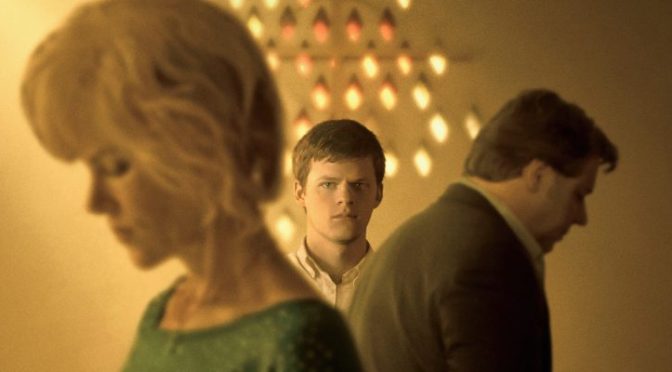
BOY ERASED (2018) – CINEMA REVIEW

BOY ERASED (2018) – CINEMA REVIEW

Directed by: Joel Edgerton

Screenplay by: Joel Edgerton – Based on: Boy Erased: A Memoir by Garrad Conley

Produced by: Joel Edgerton, Steve Golin, Kerry Kochansky Roberts

Cast: Lucas Hedges, Nicole Kidman, Russell Crowe, Joel Edgerton, Joe Alwyn, Xavier Dolan, Cherry Jones, Flea etc.

**MAY CONTAIN SPOILERS**

It never fails to sadden me the horror that other human beings inflict on each other out of ignorance, intolerance and misguided indoctrination. Boy Erased (2018), is a film that highlights such negative practices committed by parents on their actual children because they are perceived to be abnormal in their eyes and the rules of their faith. I’m not religious but respect those who have different beliefs to me, unless of course those beliefs are used to castigate and punish other human beings. Surely, the basic tenet of any religion, including Christianity, should be kindness, understanding and forgiveness. When such integral ideals are broken then such doctrine should be shunned and held up for criticism.

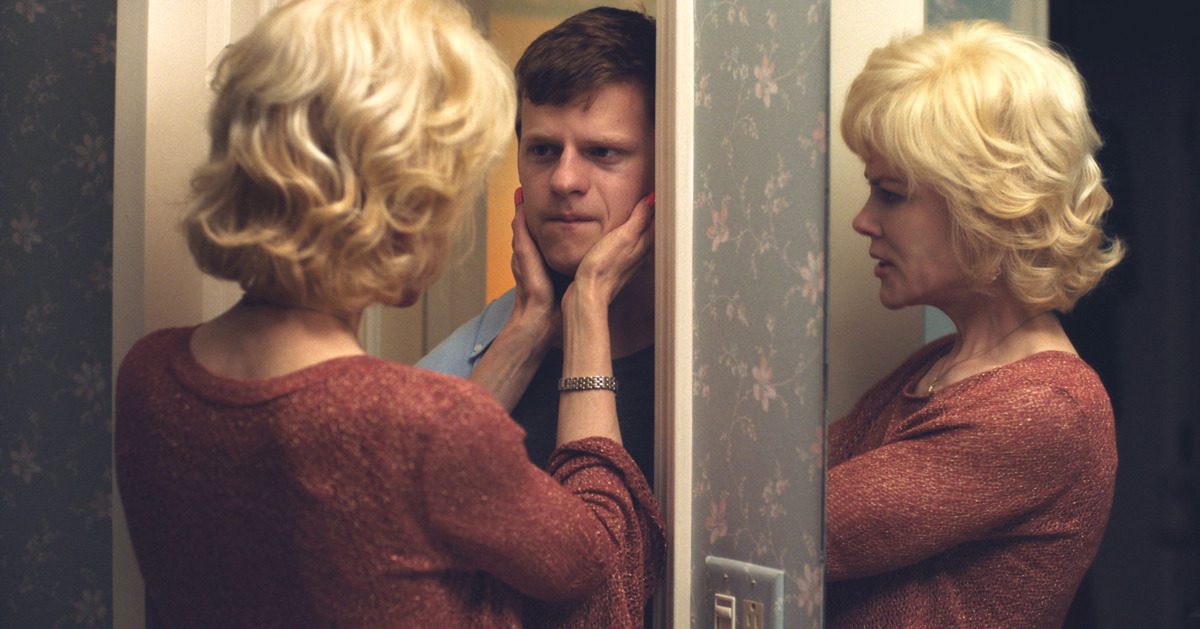
Boy Erased is based on Garrad Conley’s memoir of how his religious parents send him for gay conversion therapy, and the film is structured around the sad events which occurred to Garrad. Conley’s persona and emotional strife is evoked brilliantly in the character of Jared Eamons. Portrayed with sensitivity by the talented Lucas Hedges, the humanity and empathy he delivers is highly impactful. Jared is an innocent who is undeservedly thrust into an unnatural and bullying environment, forcing him to change his sexual identity through shame and persecution.

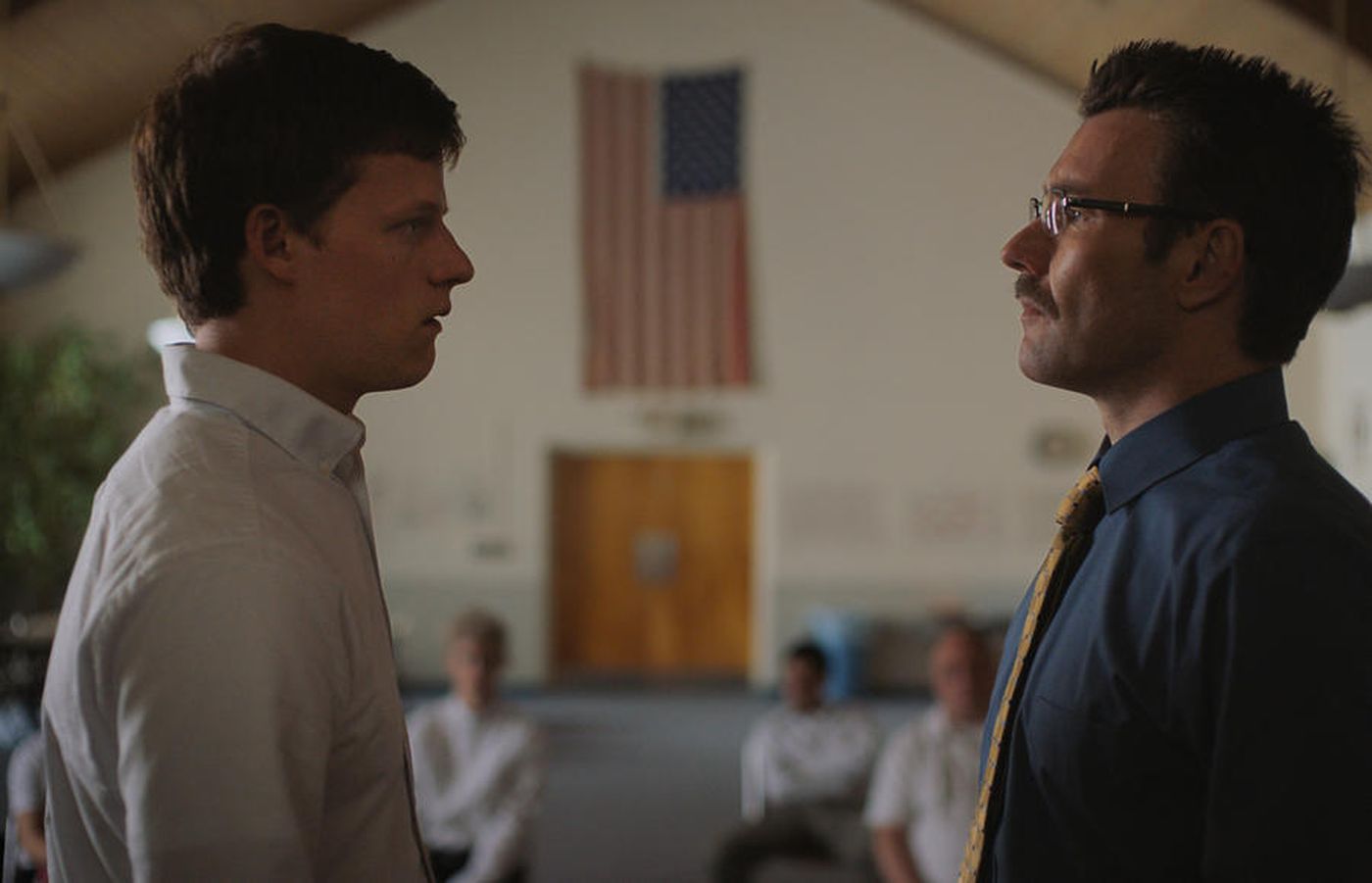
The main thrust of the film finds Jared at the assessment centre and this brings about some harrowing scenes where young men and women are effectivelly imprisoned and vilified in the name of God. While certain scenes are emotionally charged and disturbing the film could have gone even further, however, director Joel Edgerton wisely opts for more subtlety rather than “fire and brimstone” tabloid filmmaking. Indeed, Edgerton and his cinematographer opt for a drained colour scheme and natural lighting style to evoke realism within the action.

Edgerton not only directs and writes with purpose, but also casts himself as the main antagonist and lead “therapist”, Victor Sykes. Sykes is seen as dominating but ultimately weak-willed, deflective and controlling. As Jared’s parents, Nicole Kidman gives a solid performance in the role of his conflicted Mother, while Russell Crowe imbues his preacher with both religious fervour and a sense of torn loyalty. Jared’s parents, in the end, are not bad people. They have just been faced with a difficult situation and are advised badly by their faith and Church.

Ultimately, this is a quietly compelling character drama which highlights very important issues in regard to faith, sexuality and family. I’m not sure why it wasn’t acknowledged more by the Academy Awards, notably in Lucas Hedges fine performace. Nonetheless, it is an important story which is constructed with care. Rather than demonize families and religion, it seeks to highlight and campaign for education, tolerance and love. These things, for me, are what true faith should be about.

Mark: 8.5 out of 11

LONDON FILM FESTIVAL REVIEW – THE FAVOURITE (2018)

LONDON FILM FESTIVAL REVIEW – THE FAVOURITE (2018)

Directed by: Yorgos Lanthimos

Produced by: Ceci Dempsey, Ed Guiney, Lee Magiday, Yorgos Lanthimos

Written by: Deborah Davis, Tony McNamara

Cast: Olivia Colman, Emma Stone, Rachel Weisz, Nicholas Hoult, Joe Alwyn

Cinematography: Robbie Ryan

**SPOILER FREE REVIEW**

tf_02857_rgb.jpg

The London Film Festival organisers were very keen to impress we keep our phones off during the screening of The Favourite. Thus, I infer that the filmmakers are also keen that no spoilers are given away; something I will respect during this review. From the marketing blurb I have culled online, The Favourite:  “sees Yorgos Lanthimos (The Lobster (2015), The Killing of a Sacred Deer (2017)) on rollicking, virtuoso form with Olivia Colman, Emma Stone and Rachel Weisz revelling in the wit of his 18th century royal court life.”

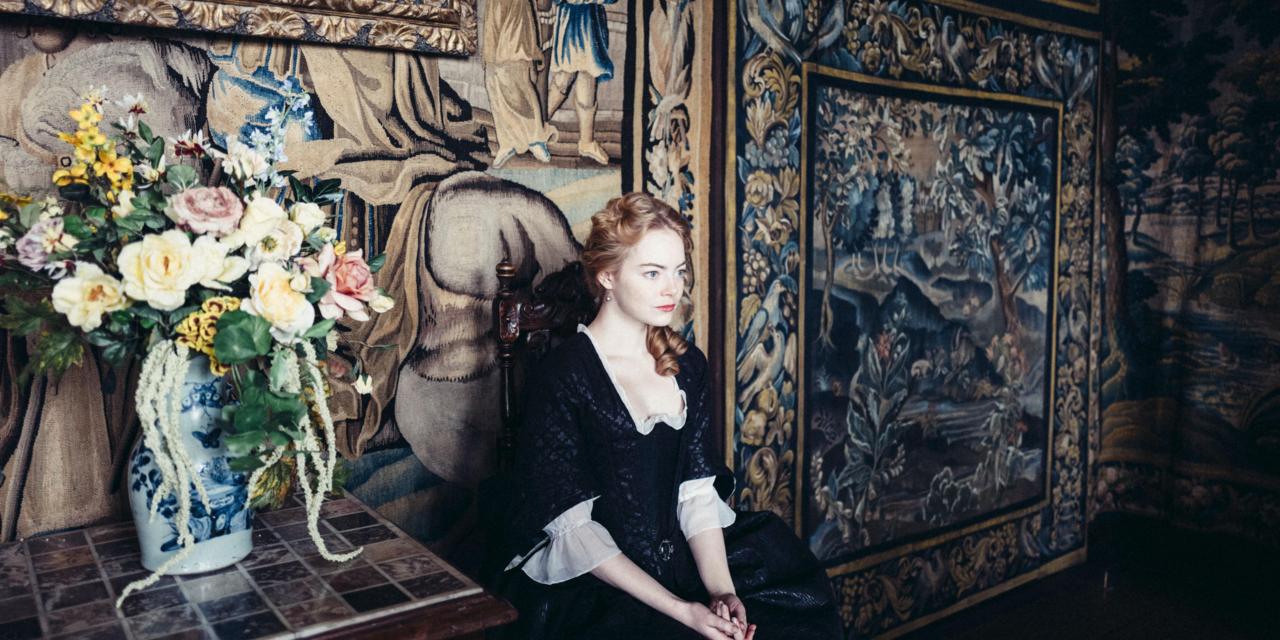
Unlike The Lobster and The Killing of a Sacred Deer, Lanthimos is not working from an original screenplay he wrote with Efthymis Filippou; instead he’s taken an adaptation by Tony McNamara and Deborah Davis. Conversely, it is not as eccentric a premise as those previous films and structurally it is actually quite conventional. The story itself sets Rachel Weisz’ Duchess of Marlborough as advisor to Olivia Colman’s Queen Anne in the early 1700s; while Emma Stone’s fallen “Lady” enters the fray and attempts to gain the Queen’s favour while usurping Weisz’ character.

The-Favourite

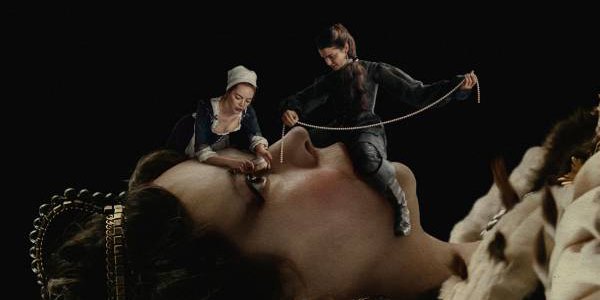
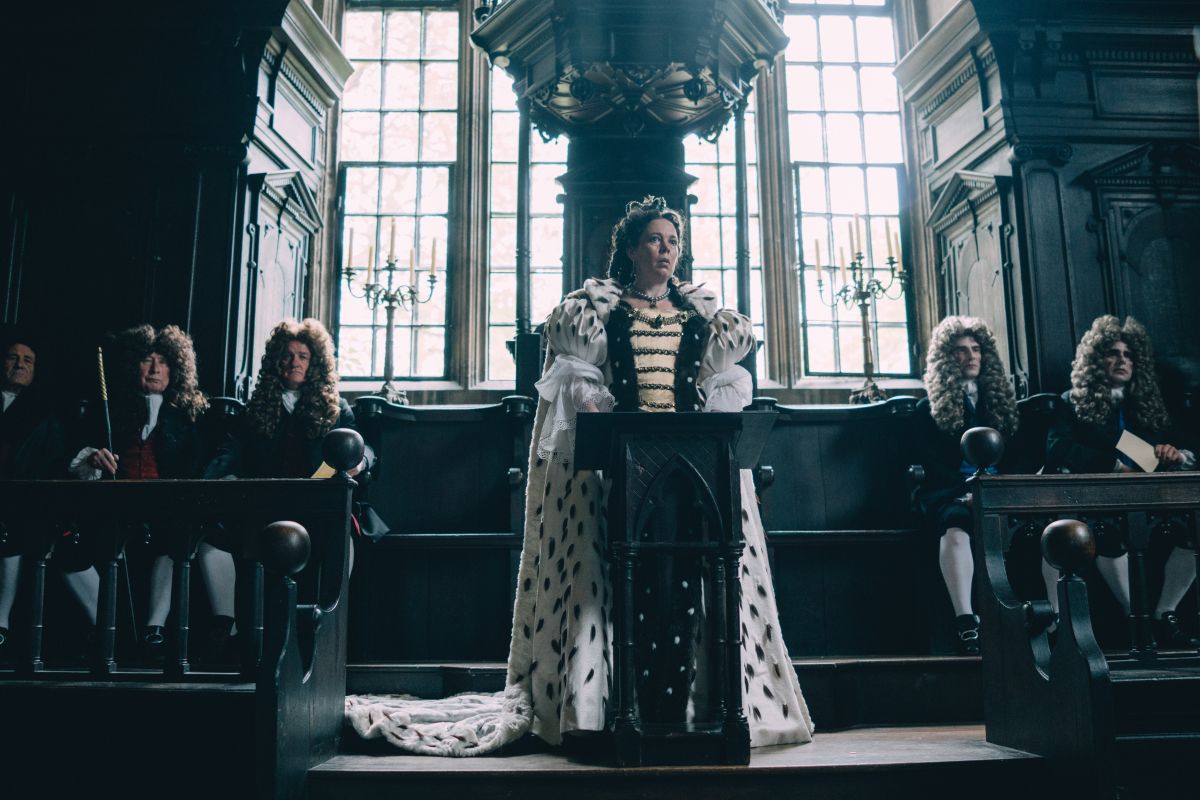
Historical films relating to Machiavellian scheming, sexual misadventure and political intrigue are legion. Dangerous Liaisons (1988), A Royal Affair (2012) and the recent Love and Friendship (2016) are but a few examples; however, none of them are as absurd, surprising, funny, moving and as crazy as The Favourite. But, this is not a parody of period dramas. Instead, Lanthimos brings his own directorial vision to the story with his often ludicrous switches in tone, while skilfully maintaining a strong emotional balance and intrigue throughout. His use of the fish-eye lens creates a distorted effect making the characters seem trapped by their surroundings and circumstances. Furthermore, the lighting is quite wonderful too with natural and candle light dominating the proceedings.

Lanthimos’ direction of his three stellar leading actors is superb; with Olivia Colman delivering one of the most memorable performances of the year. Her Queen Anne is both pathetic and empathetic at the same time. Anne is to be pitied, laughed at and laughed with throughout. While I genuinely have little sympathy for royal figures, Anne is humanized with great power by the performance. Preying and manipulating her are Weisz’ and Stone’s characters. Weisz’ is, in particular, quite brilliant as we never quite know if her decisions regarding the war against Spain and the increased taxes are to benefit her or the Queen. Moreover, I know Stone won an Oscar for La La Land (2016), but she is even better in this film. Her eyes light up at each devilish choice her character makes; revelling in the skulduggery as ambition fuels her desires. I must add that Nicholas Hoult is quite brilliant too in a supporting role.

p06jydwp

Overall, The Favourite (2018) may not be appreciated by those who prefer their period dramas to be played straight, as it were. The language and behaviour of the characters is often foul and crude but while seeming anachronistic it is paradoxically authentic too. Lanthimos’ interpretation of the screenplay is rather complex. He seeks to humanize, satirize and ridicule life in the Royal Court but without us ever hating the characters. The narrative asks for understanding but also critiques their choices. You kind of wish Weisz and Stone would show some solidarity but ultimately they are narcissistic players craving power, much to the detriment of their sickly Queen — portrayed by the astounding Olivia Colman.

Mark 9.5 out of 11