Tag Archives: Linus Sandgren

CINEMA REVIEW: SALTBURN (2023)

CINEMA REVIEW: SALTBURN (2023)

Directed by Emerald Fennell

Written by Emerald Fennell

Produced by Emerald Fennell, Josey McNamara and Margot Robbie

Cast: Barry Keoghan, Jacob Elordi, Rosamund Pike, Richard E. Grant, Alison Oliver, Archie Madekwe, Carey Mulligan, Paul Rhys, etc.

Cinematography by Linus Sandgren

*** MAY CONTAIN SPOILERS ***


As the awards garnered upon Emerald Fennell’s brilliant Promising Young Woman (2020) will testify, she is clearly a major talent. Fennell has also acted in TV shows such as Call the Midwife and The Crown, as well as writing and producing the second series of Killing Eve. Not only is Fennell an excellent actress, writer, director and producer, but is also now an Oscar and BAFTA winner. Thus, Fennell’s “difficult second film” arrives in the guise of the pitch black comedy, Saltburn (2023). Although to describe this hilarious, bleak, sexy, and often twisted exploration of the British class system as such evidently tests the very definition of comedy.

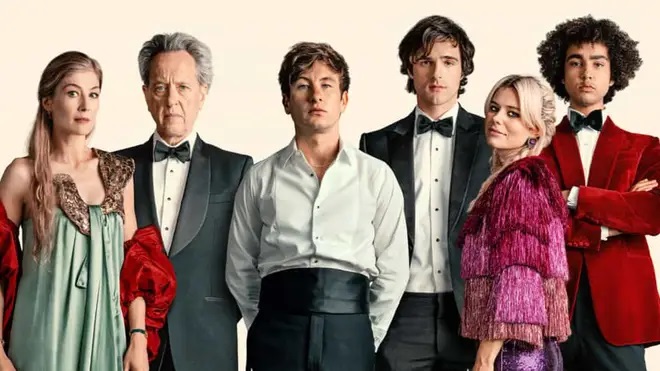
Saltburn (2023) is set in 2006. Oliver Quick (Barry Keoghan) attends Oxford University as a naive fresher with an inferiority complex and desire for company. While he is incredibly intelligent, coming from a lower class background places bookish Oliver as a very small fish in big water. Especially when compared to the so-called Oxford elite including handsome and wealthy, Felix Catton (Jacob Elordi) and his cousin, the handsome and not-as-wealthy, Farleigh Start (Archie Madekwe). While Farleigh is suspicious of Oliver, Jacob soon befriends him and takes the Northerner under his wing. The two connect and form an “odd couple” bromance, with Felix even going so far as to invite Oliver to his stately home, Saltburn, for the summer. There we meet the rest of Felix’s family including his flaky sister, Venetia (Alison Oliver), eccentric father, Sir James (Richard E. Grant) and effervescent mother, Lady Elspeth (Rosamund Pike).



After building Oliver and Felix’s characters carefully during their time at Oxford, Fennell’s savage and satirical screenplay gathers pace in the second act at Saltburn. Here Oliver tries to fit in and ingratiate himself into the Catton family, but it soon becomes clear that however friendly they may be, he will only ever be an outsider to them. Simultaneously, Farleigh sees Oliver as a rival for the Cattons’ emotional and financial affections and the two begin a retaliatory personal war amidst the balmy summer days, breakfasts, dinner parties and social gatherings. Oliver’s main journey is to connect as much with Felix as possible, so much so his passion veers toward obsession. But Felix is a roaming spirit and a hedonist and does not quite requite Oliver’s feelings. Yet, Felix does show compassion for Oliver, as illustrated when he drives him on a mercy mission to visit Oliver’s family. This is where the story takes an intriguing and ever deadly turn.

I cannot recommend Saltburn (2023) enough for its fantastically witty script, devastatingly brilliant cast and some quite disgustingly explicit, but contextually justifiable, character moments and scenes. Fennell takes the setting and structure of Evelyn Waugh’s Brideshead Revisited and turns it upside down, spinning a devious tale of infatuation, love, privilege and social climbing. Through the character Oliver Quick, and I really don’t want to give anything away, there is a powerful and jaw-dropping character arc of upward mobility. Rosamund Pike’s and Keoghan’s performances are both amazing and award-worthy. While the final act twists certainly do shock and surprise they arguably are rushed when compared with the more effective pacing of the opening and middle acts. Moreover, I am also unsure why the exquisite cinematography and stunning locations were presented in the 4:3 (1:33:1) aspect ratio. Why squeeze in Linus Sandgren’s light and framing and not expand them to the widescreen format?

Ultimately, Emerald Fennell proves herself an important voice in British cinema. Unafraid to test the boundaries of taste, genre, and audience expectations, she has crafted one of the most consistently challenging films of the year with Saltburn (2023). One could easily describe the themes presented here as a critique of the upper classes and how the uber-rich are bad people to be brought down to their knees. However, Fennell’s script is not that simplistic. It cleverly careers between love/hate for the characters and irony-bombing the class system, before becoming a damning indictment on the darkest flaws of humanity. Lest one forget the indelible one-liners throughout and THAT final dance sequence, which are both to die for!

Mark: 9.5 out of 11


CINEMA REVIEW: NO TIME TO DIE (2021)

CINEMA REVIEW: NO TIME TO DIE (2021)

Directed by: Cary Joji Fukunaga

Screenplay by: Neal Purvis, Robert Wade, Cary Joji Fukunaga, Phoebe Waller-Bridge

Story by: Neal Purvis, Robert Wade, Cary Joji Fukunaga

Based on: James Bond by Ian Fleming

Produced by Michael G. Wilson, Barbara Broccoli

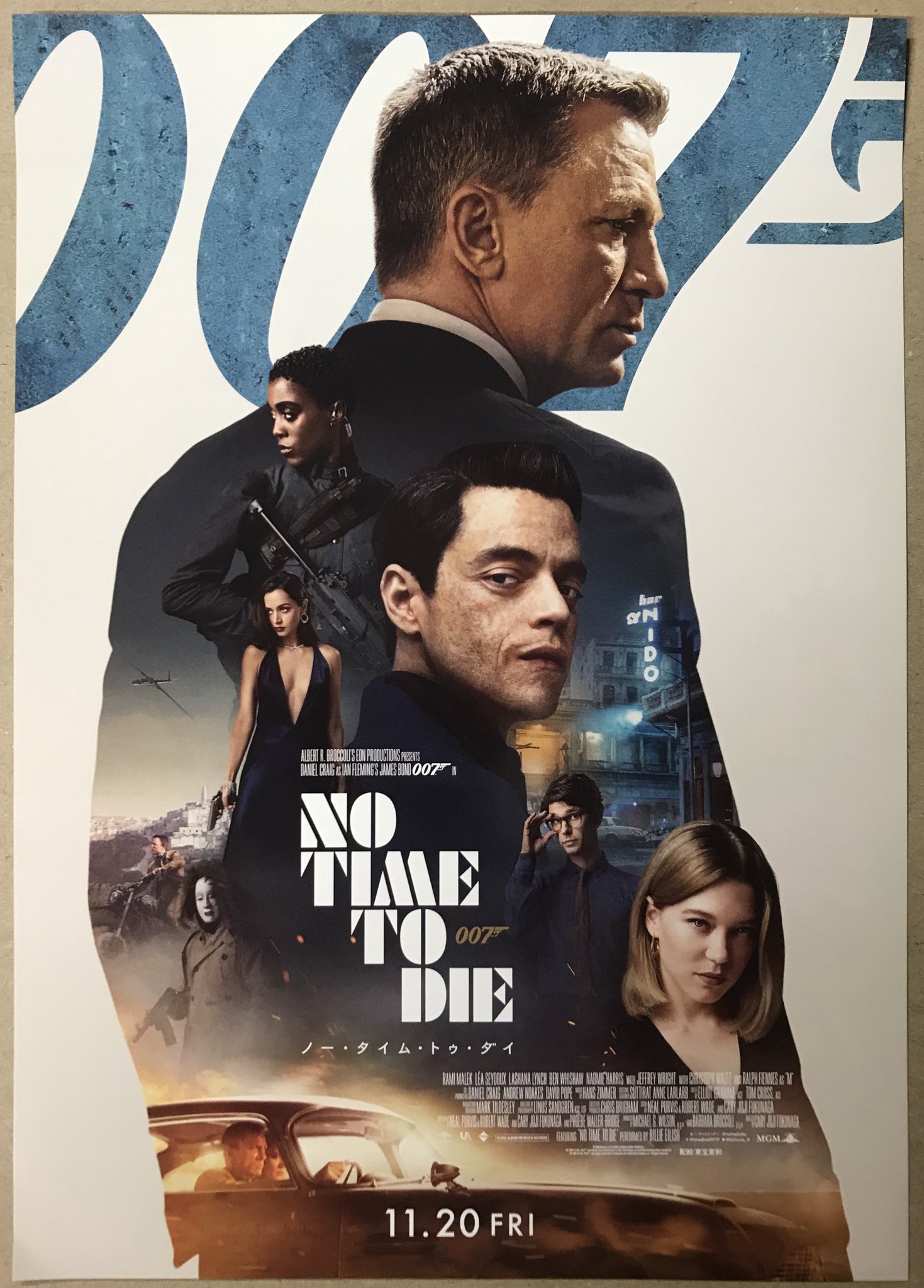
Cast: Daniel Craig, Rami Malek, Léa Seydoux, Lashana Lynch, Ben Whishaw, Naomie Harris, Jeffrey Wright, Christoph Waltz, Ralph Fiennes, Billy Magnusson, Ana De Armas etc.

Cinematography: Linus Sandgren

Edited by: Elliot Graham, Tom Cross,

Music by: Hans Zimmer

Production companies: Metro-Goldwyn-Mayer, Eon Productions

*** NO MAJOR SPOILERS ***


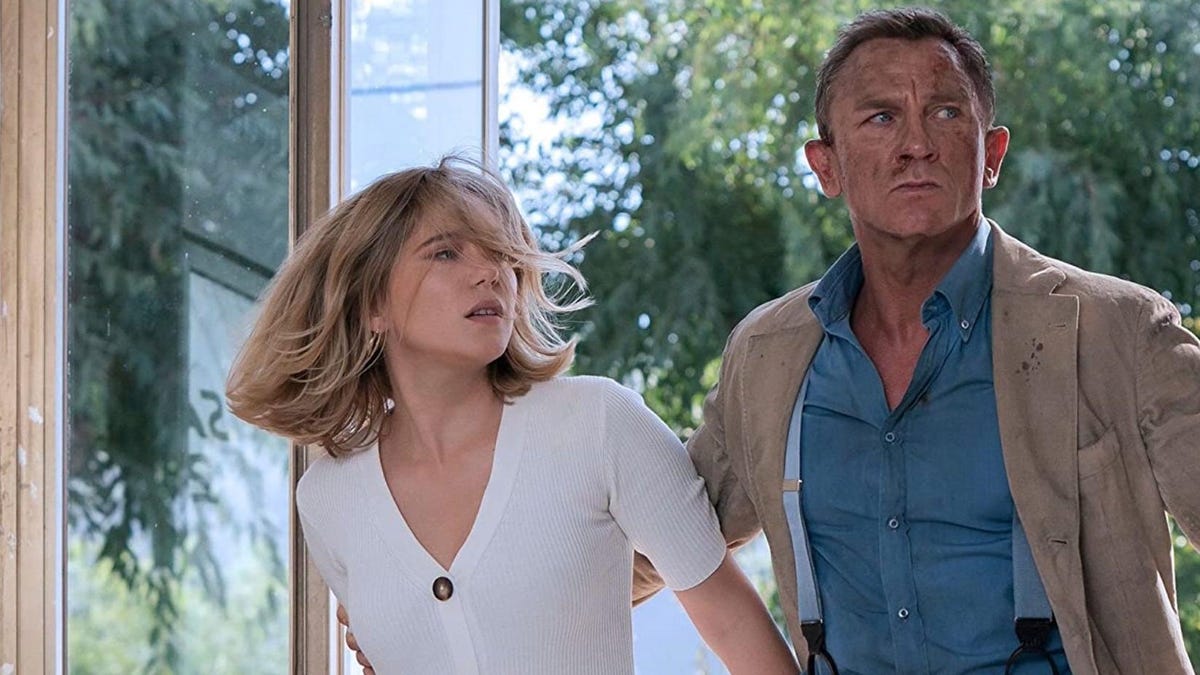
As a Bond swansong, No Time To Die (2021) gives Daniel Craig’s earthy and human characterisation of the famous spy a tremendous finale. Indeed, it was a powerfully entertaining work of cinema, but was it a great Bond film? Not for me. Don’t get me wrong, all the creatives here from the director, art department, cinematographer, location scouts, costume design, scintillating cast, stunt team, production crew, the army of screenwriters and so on, have all worked prodigiously to create a wonderful example of blockbuster genre cinema. But it has many story and legacy issues that stop it from being a memorably pure Bond film in my opinion. However, I am not going to be critical in this review, but rather celebrate what is great about No Time To Die (2021). Thus, it’s time to revel in the fact Fleming’s fictional formula continues providing sensational diversion from everyday existence.

The choice to make No Time To Die (2021) a direct sequel to Spectre (2015), would not have been my preferred route for this narrative. Spectre (2015) is entertaining. It was fine. Was it a good Bond film though?  Not particularly.  I should qualify this by saying I thought Skyfall (2012) was a cracking film; a fantastic action thriller with fine characterisation and a formidably nasty, yet playful, villain in Javier Bardem. Thematically, it was strong with Bond’s orphan background and relationship with M (other) providing depth and subtext. Skyfall (2012) was also lusciously shot by Roger Deakins with fantastic direction from Sam Mendes. But neither Spectre (2015) or Skyfall (2012) are great Bond espionage adventures like From Russia With Love (1963) or The Living Daylights (1987), or a devastatingly plotted, romantic action adventure like Casino Royale (2006). Skyfall (2012) was an Oedipal soap opera with bells on, as ghosts of the past avenge the present. Spectre (2015) and No Time To Die (2021) continue the theme of vengeful and dysfunctional family ties bringing strife to Bond. But, nowhere near as successfully as Craig’s first outing, Casino Royale (2006). That remains one of the best Bond films ever.

Like Quantum of Solace (2008), No Time To Die (2021) is, as aforementioned a sequel, but the main difference is No Time To Die (2021) is way longer than Quantum of Solace (2008). The pace rarely dips in No Time To Die (2021), but it could certainly have been trimmed in places because at times I felt the screen was stuffed with too many characters and subplots. I must point out I’m aware that Quantum of Solace (2008) is not rated highly in the Bond canon, but I like it. I feel there are some incredibly filmed sequences in it. Notably, the opening car and foot chase, the opera shootout, a spectacular air conflict and the fiery desert lair denouement. While the villain was weak and it failed in terms of narrative, Quantum of Solace (2008) succeeded for me as a fast-paced and exquisite, if choppy, spectacle that tied up the loose ends from the far superior, Casino Royale (2006). Quantum of Solace (2008) infamously had no writers re-working it due to the ongoing strike, No Time To Die (2021), arguably has too many cooks and ingredients occurring simultaneously. Having said that Cary Joji Fukunaga brings a confident energy to the film throughout, connecting the emotions of the script and explosive box of tricks together in a neatly packaged presentation.


Daniel Craig is phenomenal in No Time To Die (2021). While he is always a strong actor, he has also grown into a bona fide movie star too. Even when going through the motions in Spectre (2015) he was good, but in No Time To Die (2021), he blows the doors off. While he does look too old for the role now, from getting blown up in Italy, to almost drowning in Cuba and facing off against Rami Malek’s malevolent poisoner on an island near Russia, nobody does almost-dying better than Craig. Moreover, as well as the constant threats on his life, crazy new technology that delivers instant death, and a litany of evil henchmen trying to take him down, Bond must contend retirement and having his place usurped at MI6 by the confident Nomi (Lashana Lynch). Having been set-up as a major story player, Nomi and this spy-versus-spy story pivot ultimately peters out for more melodramatic plotlines which I will not divulge. In fact, Nomi’s thunder is ultimately stolen by the CIA agent, Paloma, with Ana De Armas absolute dynamite in the smashing Cuban section of the film.

As with Spectre (2015), where there wasn’t nearly enough of Christoph Waltz, Rami Malek’s villain Safin is not utilised enough. Malek gives a haunting performance in a few creepy scenes, yet I felt cheated. I would have loved more exchanges between him and David Dencik’s eccentrically dangerous scientist. More scenes in the imaginatively designed island lair where all manner of deadly poisons were being concocted would have been brilliant, and further developed Safin’s intriguing backstory and fiendish plotting.

No Time To Die (2021) belongs to Bond and Daniel Craig of course, and they get into some barnstorming scrapes. The opening action involving motorcycle stunts and the iconic Aston Martin blasting the Spectre goons is an early highlight. The Cuban nightclub murders and subsequent gunplay really raise the pulse too. After the explosive boat sequence where Bond has a moving parting of the ways from an old friend, the action arguably becomes more generic and not as memorable. That is, THAT IS, until the unforgettable end set-piece where Craig’s 007 faces an insurmountable set of physical and emotional challenges. Lastly, some might say Daniel Craig goes out on an all time high, and no doubt No Time To Die (2021) is destined to knock the living daylights out of all prior Bond box office records.

Mark: 009 out of 11