Last year I wrote and produced seven monologues inspired by the deadly sins. With careful planning, myself and a quality cast and crew shot them all in one day at Raindance Film School. I’m now releasing them online via YouTube. They are in essence a proof of concept project with an aim for myself to develop them into a feature film screenplay. Below are episodes 4 to 7!
PITCH
“Let those without sin cast the first stone.”
An anthology of 7 monologues based around the seven deadly sins. Moments, drama, humour, character studies and themes exploring the darker side of human nature. Influenced by: Alan Bennett’s Talking Heads, Inside No. 9, Tales of the Unexpected and Amicus/Hammer horror film anthologies.
PRIDE starring Myles Horgan
Bishop, a retired spy with a gun in his face, delivers a powerful monologue as he attempts to deduce the identity of the assassin that faces him.
LUST starring Tom Cavendish
Danny, a police officer racked with guilt, confesses as to why he thinks he cheated on his beloved fiancé with her sister.
ENVY starring Malcolm Jeffries
Len, a covert photographer, reveals how his obsession with a client’s wife brings back haunting memories from his past.
WRATH starring Julia Florimo
Sadie describes in detail how and why she plotted revenge by poisoning her cheating ex-boyfriend, Stephen.
CREDITS
Writer and Producer: Paul Laight Camera and Post-Production: Gary O’Brien Sound: Ali Kivanc Camera Assistant: Maka Natsvlishvili Music by: Epic Violin Music NO Copyright royalty free music Special thanks: Raindance Film School and Universal Video
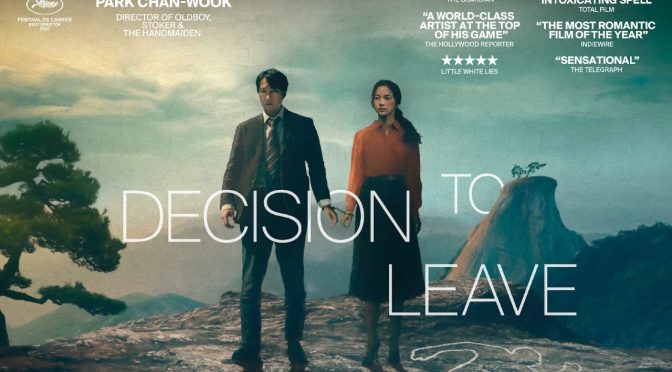
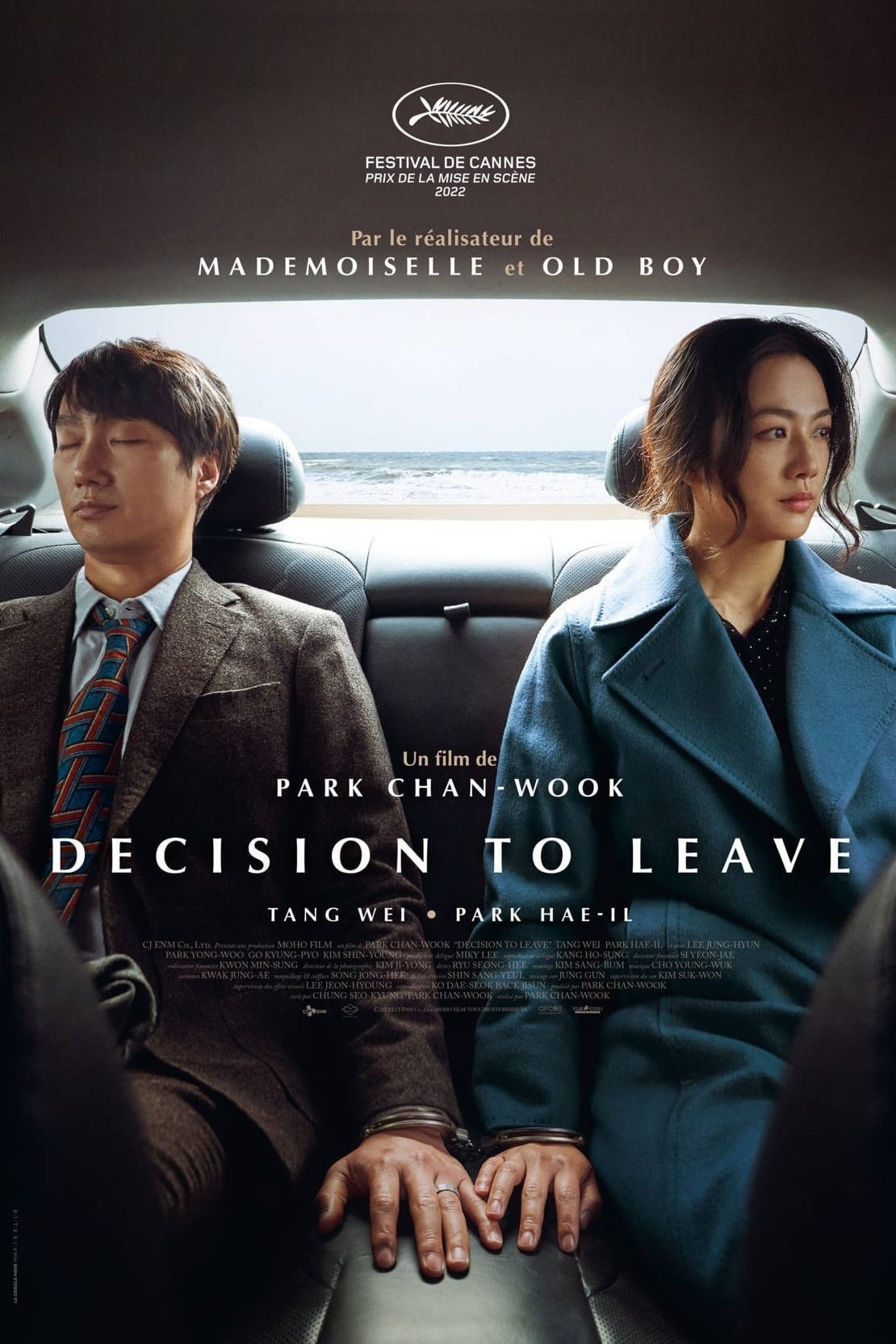
Main cast: Tang Wei, Park Hae-il, Lee Jung-hyun, Go Kyung-pyo, etc.
Cinematography Kim Ji-yong
Edited by Kim Sang-bum
*** MAY CONTAIN SPOILERS ***
Park Chan-wook is a proper filmmaker. Like Quentin Tarantino and Martin Scorsese, he embraces the artifice of the visual and aural medium crafting intelligent, thematically surprising and stylistically dazzling works of cinema. While watching his work one can see the clockwork precision of his filmic mind devising every frame, sound, camera move, cut, character action, acting nuance, being thought out expertly. In short: Park Chan-wook’s films are always an event for me and demand attention.
Chan-wook’s only Hollywood directed film was an under-rated gem of a noir thriller called Stoker (2013), after which he returned home to direct erotically charged period thriller, The Handmaiden (2016). This was a bigger-budgeted and thematically richer affair, taking a complex con-artist-twisting-plot and interweaving an explicit feminist love story. Of course, lest we forget Chan-wook’s classic early work, notably the gonzo revenger, Old Boy (2003). I re-watched it recently at the Raindance Film Festival and the furiously inventive exploitation film retains its beautifully transgressive power.
Like The Handmaiden (2016), Decision to Leave (2022) is a romance story set within a complex genre plot. While the former was a period crime film, Decision to Leave (2022) is a contemporary set police procedural with a central premise highly reminiscent of Basic Instinct (1992). Tang Wei as Song Seo-rae is suspected of killing her husband and as investigating cop, Park Hae-il as Det. Jang Hae-jun, delves deeper he finds himself more and more attracted to her. Where The Handmaiden (2016) and Basic Instinct (1992) used nudity and sexual imagery liberally, Decision to Leave (2022) is far more subtle and cerebral. The compelling romance is built on two fine lead performances, the cunning twists in the crime plot and Chan-wook’s masterful visuals with mountain, coastal and city landscapes being employed to powerful impact.
Now I must admit after watching Decision to Leave (2022) I was left slightly underwhelmed at the end from an emotional perspective. The visuals and storytelling were phenomenal, with Chan-wook and his writing partner crafting a devious series of inventive cat-and-mouse set-pieces. The suspense and doubt instilled as to whether Song Seo-rae is a murderer, despite her cast-iron alibi, is palpable. Simultaneously, the arc of the married mid-life crisis-detective, drawn to the suspect, flirting with disaster through flawed choices, creates much tension also. However, I didn’t immediately warm to the detective’s persona and wasn’t sure if I really cared. But I suspect, due to the complexity of the passion on show, a further watch will cement Chan-wook’s specific and symbolic vision.
Beneath the melding of romance, crime, mystery and action genres, I also considered the potential subtext in the screenplay. I wondered if Decision to Leave (2022) sought to explore the socio-political relationship between the nations of South Korea and China via the characters? Song Seo-rae is a Chinese migrant who came to Korea and via marriage was able to remain. An enigmatic soul she uses her wiles to survive, serenely attracting a series of men. But death follows her as closely as the male. Detective Hae-jun is drawn to her both professionally and romantically, no doubt thrilled by the danger. Yet, Chan-wook denies displaying physical consummation, and this makes the film more erotic than endless sex scenes do.
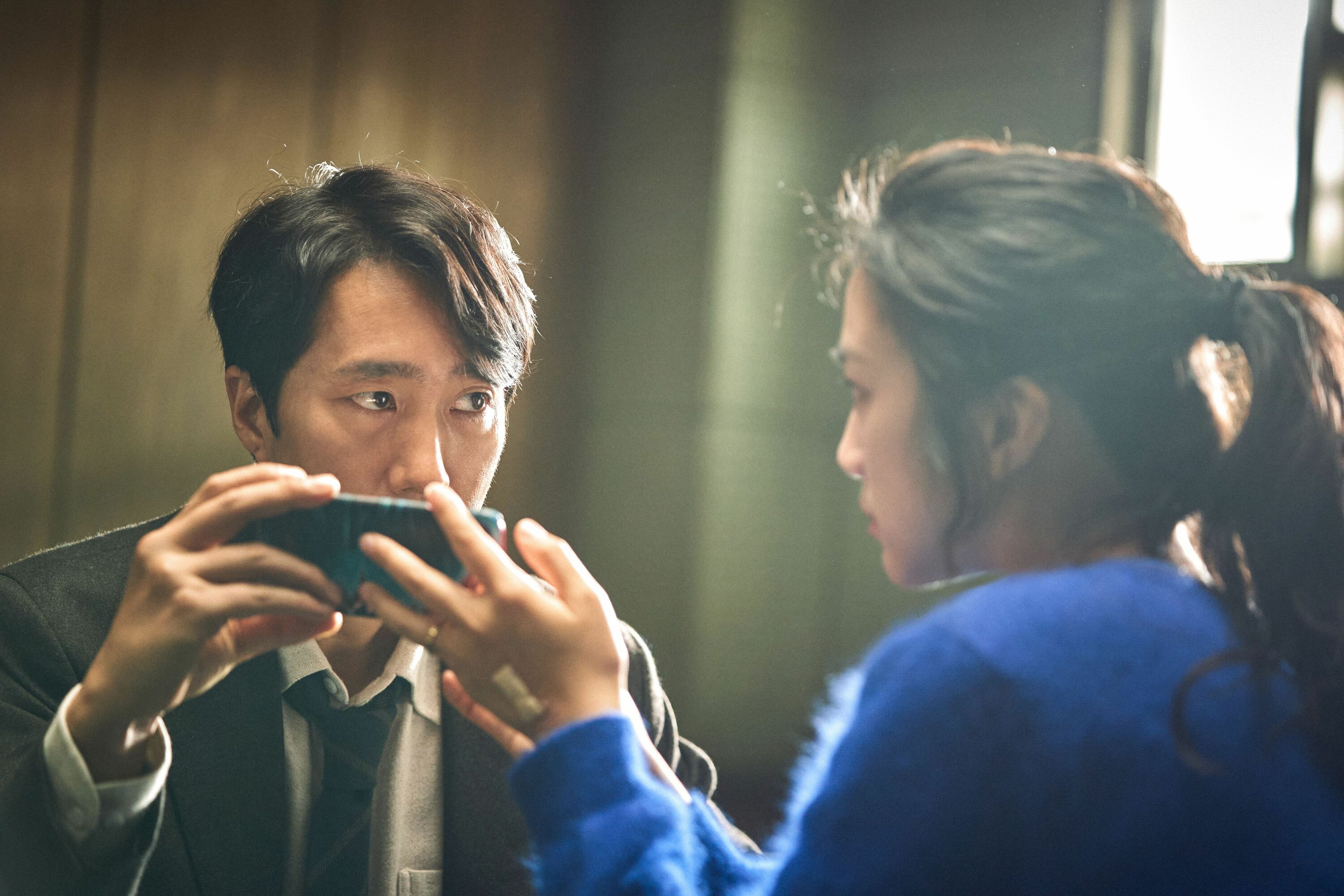
Lastly, Decision to Leave’s (2022) examination of language, both bodily and verbal, is deftly presented as a theme within the romance. The central crime of murder creates suspicion between the Korean and Chinese characters, but there’s a mutual and irresistible pull that cannot be denied. Song Seo-rae’s use of her phone translation application during her exchanges with the Detective create both a barrier and paradoxical intimacy. It’s just one of the fascinating bits of business, as well as the chainmail gauntlet used by the Detective, which elevate an already impressive script. But did Decision to Leave (2022) need to be so evasively complex and full of radiant ambiguity? The ending especially is both poetically exquisite and frustratingly cryptic. With a Park Chan-wook film, would I have it any other way?



 The Cinema Fix presents