Tag Archives: Pippa Harris

Cinema Review: Hamnet (2025) – spectacularly emotional with Jessie Buckley delivering a spiritually transcendent performance!

Cinema Review: Hamnet (2025)

Directed by Chloé Zhao

Screenplay by Chloé Zhao & Maggie O’Farrell – Based on Hamnet
by Maggie O’Farrell


Produced by Liza Marshall, Pippa Harris, Nicolas Gonda, Steven Spielberg & Sam Mendes


Main cast: Jessie Buckley, Paul Mescal, Emily Watson, Joe Alwyn
, David Wilmot, Jacobi Jupe, Olivia Lynes, etc.

Cinematography by Łukasz Żal
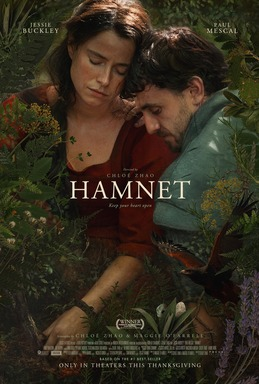


There are actors who impress, and then there is Jessie Buckley, who seems to detonate the screen every time she appears. From the feral menace and vulnerability of Beast (2017) to the raw, soul-baring musical grit of Wild Rose (2018), Buckley has proven herself fearless; from the existential unravelling of I’m Thinking of Ending Things (2020) to her razor-sharp, unclassifiable turn in Fargo (2020) – Season 4, and the aching restraint of Fingernails (2023), her work consistently redefines what emotional truth on screen can look like. Now, with an earth-shattering rendition of Agnes Shakespeare in Hamnet (2025), Buckley doesn’t just command attention—she claims her place as one of the most electrifying actors of her generation.

Hamnet (2025) is an adaptation of Maggie O’Farrell’s critically acclaimed novel is a quietly thunderous piece of cinema—one that chooses intimacy over spectacle and emotion over mythology. At its core is the relationship between Agnes and William Shakespeare, charted from their first, tentative connection through marriage, parenthood, and the fractures that emerge when love collides with loss and ambition.

The film is less concerned with the legend of Shakespeare than with the human beings behind it: a scholar and poet struggling to find his literary voice, set against Agnes, a woman of the land and forest, spiritually attuned to nature, instinct, and ritual. Their romance blooms in the space between these worlds, with Agnes’s chanting communion with the natural world acting as an unspoken counterpoint to Will’s search for language and form.
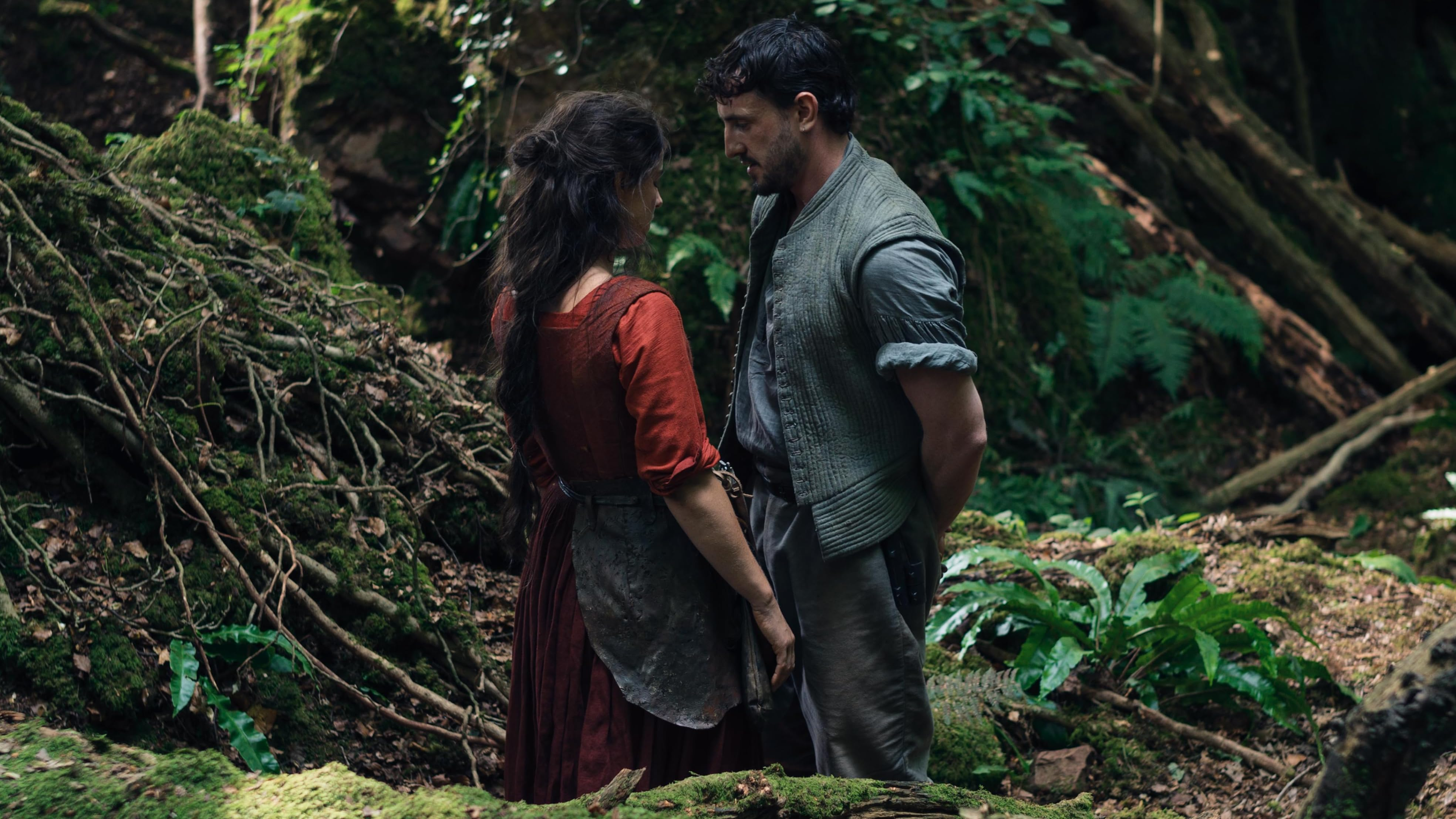


Director Chloé Zhao brings her signature elegance and patience to the material, allowing moments to breathe and emotions to surface organically. Her collaboration with cinematographer Łukasz Żal results in imagery that feels almost painterly—soft, natural light spilling across interiors and fields, rendering the English countryside as something tactile and alive. Every frame seems steeped in earth, wind, and time, reinforcing the film’s grounding in the physical and the elemental.

At the centre of it all is Jessie Buckley, delivering a stunningly embodied performance as Agnes. Her work is raw, intuitive, and deeply moving—she plays grief not as a single rupture but as a living force that reshapes the body and spirit. Paul Mescal brings a quiet intelligence and aching restraint to William, capturing the tension between domestic devotion and creative restlessness, while the incredible, Jacobi Jupe, as the young son, Hamnet, adds genuine emotional resonance, grounding the family dynamic with heart-breaking sincerity.

Hamnet (2025) is ultimately a powerhouse drama about family, grief, and the curative—often painful—power of the creative process. It understands art not as triumph but as transformation, something born from love and loss in equal measure. My one reservation is a personal one: I found myself wanting more of Shakespeare’s journey in London and his struggle toward theatrical success and subsequent writing on the classic, Hamlet. But this absence is deliberate and understandable. The film is weighted toward the emotional interiority of Agnes’s experience, and in centring her perspective—so exquisitely rendered by Buckley—Hamnet (2025) finds its true, devastating strength.
Mark: 9 out of 11


1917 (2019) – CINEMA REVIEW

1917 (2020) – CINEMA REVIEW

Directed by: Sam Mendes

Produced by: Sam Mendes, Pippa Harris, Jaybe-Ann Tenggren, Callum McDougall, Brian Oliver

Written by: Sam Mendes, Krysty Wilson-Cairns

Cast: George McKay, Dean Charles-Chapman, Mark Strong, Andrew Scott, Colin Firth, Claire Duburcq, Benedict Cumberbatch etc.

Cinematography: Roger Deakins

Music by: Thomas Newman

**CONTAINS HISTORICAL SPOILERS**


Image result for 1917 film

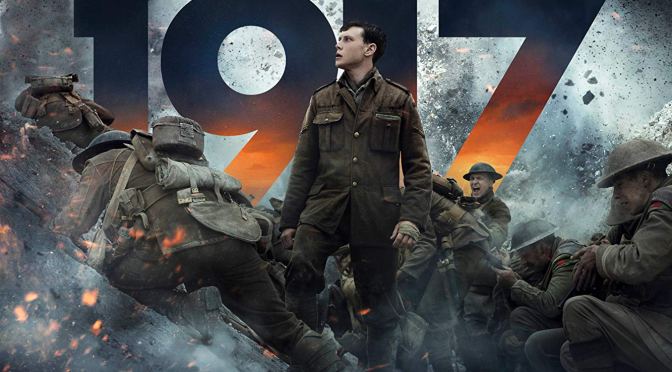
If Roger Deakins doesn’t win every single award for best cinematography in the world, I will be completely shocked! Together with Sam Mendes’ and their respective creative and production teams they have delivered a barnstorming, aggressive and beautiful work of pulsating cinema with 1917 (2019). In fact, the whole project is such a feat of technical brilliance, I think Sam Mendes will probably win best direction and the film will most likely win best film at the 2020 Academy Awards.

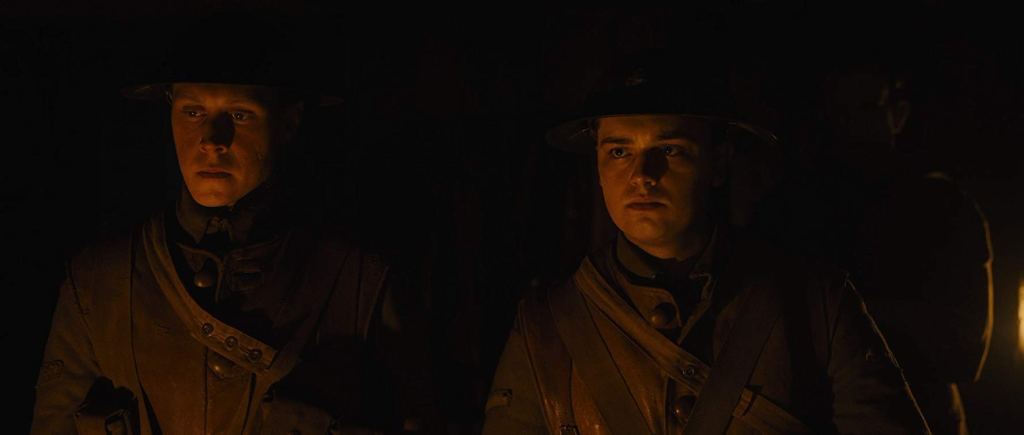
The form and style of the film are dictated by Mendes and Deakins audacious decision to film in one long continuous take. Set, as the title states in 1917 during World War I, we open with a long tracking shot and from there the shot never ends. Establishing the main protagonists Lance Corporal Will Schofield (George MacKay) and Lance Corporal Tom Blake (Dean-Charles Chapman), the camera glides along as they make small-talk, creating humour, warmth and calm before the storm to come. That storm derives from their mission to carry a message through perilous territory and prevent 1,600 British soldiers falling into a German trap. Immediately the stakes are high and these two brave men set out to achieve this dangerous task.


The choice to film in one continuous shot is a fascinating one and here it is executed brilliantly. Of course, there are occasions where a cut has occurred, but this is masked by darkness, water, camera movement or CGI. I personally am not a massive fan of longer takes though. They can be seen as a stylish, but empty process and usually work best in opening scenes. Moreover, by not cutting or using montage techniques I feel you can lose suspense, impact and pace from a film. However, that is certainly not the case with 1917 (2019). Here it works perfectly with the camera following, tracking, running, falling and stalking the characters, so much so, the audience becomes the camera. We are right in this war with them!

As we track Blake and Schofield through bunkers, trenches, fields, farmhouses, derelict buildings and villages, the stench of death and destruction surrounds them. Mendes and his writing partner, Krysty Wilson-Cairns, also create some heart-sweating and explosive set-pieces for the soldiers to overcome. Indeed, the pace with which they regularly find themselves under attack, married with the filmmaking style, puts you in the heart of the action and fight. The final battle where Schofield valiantly strives to reach his final destination and relay the message is utterly exhilarating and spellbinding cinema.


As the two everyman soldiers, George MacKay and Dean-Charles Chapman give convincing performances. MacKay is especially memorable as his tall frame, hollowed cheekbones and haunted eyes dominate the screen. Furthermore, the two leads are supported ably by a “who’s-who” of British actors. The likes of: Mark Strong, Colin Firth, Benedict Cumberbatch and Andrew Scott puncture the action throughout with their quality. Scott is especially excellent as a cynical officer, drunk and bereft of hope. The two heroes ignore his jaded battle worn persona, but soon find themselves surrounded by corpses, quickly coming to understand this character’s despairing heart.

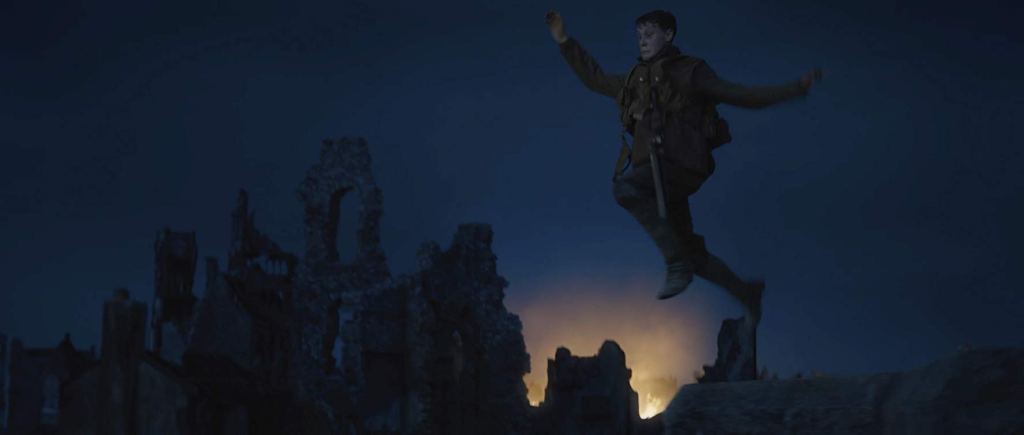
Like Dunkirk (2017), the film is arguably thin on characterisation and character development, but stylistically impressive in it’s rendition of the horrors of war. Indeed, when the events switch to night, Deakin’s lighting skills dominate as he paints images with darkness, moonlight and fire with majestic results. Thus, overall, one could argue this is just one long chase film; an extended version of the climax of another World War I classic, Gallipoli (1981). However, the cinematic marvel that is, 1917 (2019), overcomes it’s narrative and thematic familiarity with an amazing technical achievement in both form and style. Awards glory beckons for all involved; and more importantly the film pays fine tribute to the gallant soldiers who served in an ultimately senseless war.

Mark: 9.5 out of 11