

THE SUBSTANCE (2024)
Directed by Coralie Fargeat
Written by Coralie Fargeat
Produced by: Coralie Fargeat, Tim Bevan and Eric Fellner
Main Cast: Demi Moore, Margaret Qualley and Dennis Quaid
Cinematography by Benjamin Kracun
*** MAY CONTAIN SPOILERS ***
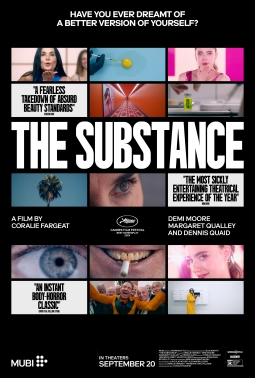
The Substance (2024), directed by Coralie Fargeat, is a visually striking and visceral film that pushes the boundaries of body horror and psychological terror. Fargeat, known for her raw and relentless style in Revenge (2017), once again delivers an unforgettable experience by weaving references to classic literature and horror cinema into a narrative that is at once familiar and entirely original.
Demi Moore portrays a former Hollywood star, Elizabeth Sparkle, now relegated to doing a mildy successful cable TV aerobics show. However, Dennis Quaid’s oily production executive is on the lookout for younger talent. Elizabeth soon finds herself on the media scrapheap. Desperate to regain her youth and career, Elizabeth is drawn to the hypnotic promise of a new product called ‘The Substance.’
Before you can say, “Dorian Gray”, Elizabeth is lured to a strange white room full of lockers and has committed to the process. Similar to Gremlins (1984), there are rules to follow. As she follows the steps and injects the potions, Elizabeth goes through a painful and incredibly impactful transformation process. She literally gives birth to a young and beautiful alter ego called, Sue (Margaret Qualley). Elizabeth and Sue then get seven days each to live their life before they have to swap back. What could go wrong?

The film’s core themes draw heavily from Robert Louis Stevenson’s Dr. Jekyll and Mr. Hyde, exploring duality, identity, and the monstrous potential hidden within human nature. Like Stevenson’s tale of inner conflict, The Substance delves into the consequences of scientific ambition. It investigates moral transgression but with a modern, feminist twist. Fargeat’s use of body horror, particularly in the transformation sequences, echoes the grotesque, unsettling work of David Cronenberg. The nightmarish atmosphere and surreal visuals are reminiscent of David Lynch’s unsettling dream logic. This is notably seen in Eraserhead (1977) and Mulholland Drive (2001).
The film also pays homage to John Carpenter’s The Thing (1982), with its transmogrifying frights, sense of creeping paranoia and rising conflict. But rather than a group of men fighting each other Elizabeth and Sue turn on each other over ownership of their physical existence and Hollywood status. The final act descends into hellish and bloody satire echoing Peter Jackson’s Braindead (1992), with gore galore. Moreover, Stanley Kubrick’s influence is palpable in the film’s meticulous framing, production design and tension-building. The climactic body-morphing scenes, however, most clearly nod to Brian Yuzna’s Society (1989), with its grotesque depictions of class and conformity, fused with Fargeat’s unique vision of female empowerment, revenge and resistance.
The Substance (2024) feels like a bigger budget film in look and style, but you soon realise the minimal number of sets used and a lack of crowd scenes, finds the narrative effectively becoming a two-hander in the middle act by focusing on Sue and Elizabeth’s internal retaliatory vindictiveness. There are some amazing framing, colour design and cinematographic choices as showers become tombs to trap the protagonists. The book-ended Hollywood star montage and returning final shots are imaginative and unforgettable. Got to say that Demi Moore, as an actress taking on a role of an aging and neurotic former star is genius casting. While Qualley delivers a sexually charged and energetic performance, it is Moore who carries the weight of the complex themes as Elizabeth’s journey dives deeper into the stuff of nightmares.
Overall, The Substance (2024) is a postmodern classic and a film that honors its influences while forging its own path. Fargeat uses these references to enrich the narrative, creating a damned ugly and beautiful satire on those seeking narcissistic perfection through unnatural means, ultimately paying the price of those seeking eternal youth and fame.

 The Cinema Fix presents