Tag Archives: sexual

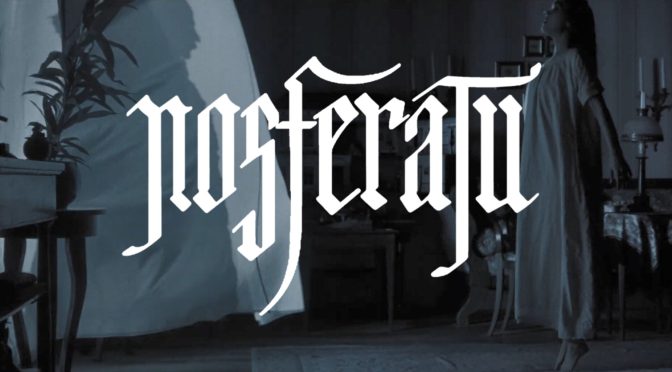
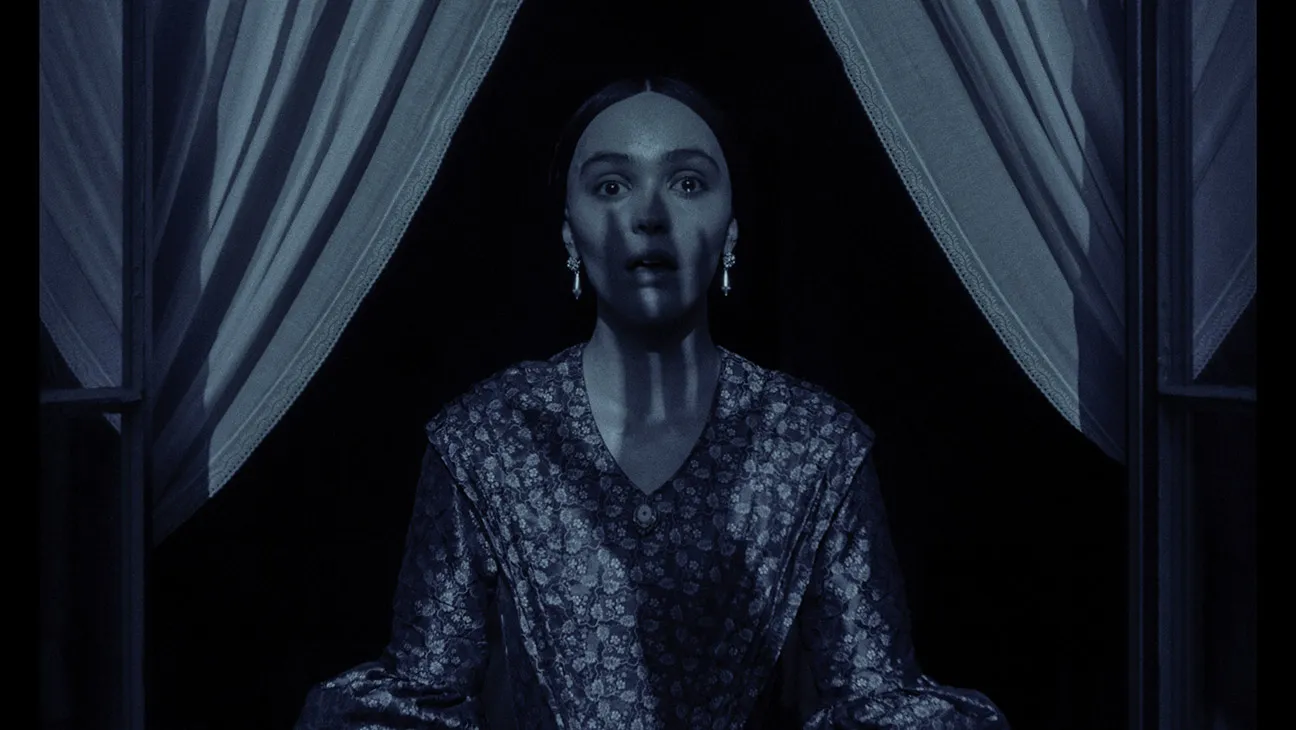
Cinema Review: Nosferatu (2024) – At the Intersection of Horror and Eroticism!

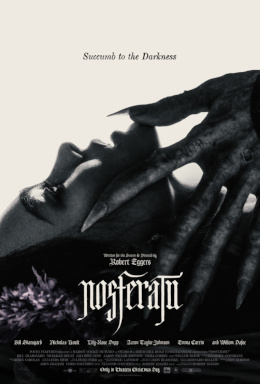
Cinema Review: Nosferatu (2024)

Directed by Robert Eggers

Screenplay by Robert Eggers

Based on Nosferatu by Henrik Galeen and Dracula by Bram Stoker

Produced by Jeff Robinov, John Graham, Chris Columbus, Eleanor Columbus, Robert Eggers, etc.

Main Cast: Bill Skarsgård, Nicholas Hoult, Lily-Rose Depp, Aaron Taylor-Johnson, Emma Corrin, Willem Dafoe, Simon McBurney, etc.

Cinematography by Jarin Blaschke

Music by Robin Carolan

*** MAY CONTAIN SPOILERS ***


Firstly, Nosferatu: A Symphony of Horror, the 1922 silent German Expressionist vampire film directed by F. W. Murnau remains one of the greatest and most iconic horror films of all time. It is arguably the greatest adaptation of Bram Stoker’s, seminal gothic classic, Dracula, too. Of which there have been many. So, who would be brave enough to attempt to master another version of this often-told monstrous tale. Step forward the acclaimed and relatively young American auteur, Robert Eggers.

Robert Eggers has built a reputation for crafting films that blend mythical and fantastical elements with folk horror and psychological thriller sensibilities. His works often transport audiences to meticulously recreated period settings, which serve as the foundation for his exploration of human fears, desires, and the supernatural. His debut feature film. The Witch (2015) exemplified folk horror rooted in Puritanical fears of the supernatural. Set in 1630s New England, it drew heavily from folklore, historical accounts, and period-authentic dialogue. The film explored themes of isolation, religious paranoia, and the breakdown of a family due to their belief in the presence of witches.

Similarly, The Lighthouse (2019), a psychological thriller merged maritime folklore with hallucinatory horror. Set in the late 19th century, the film delved into isolation-induced madness as two lighthouse keepers grappled with mythological themes such as mermaids, sea gods, and Promethean punishment. Moreover, as with his short films Hansel and Gretel (2007) and The Tell-Tale Heart (2008) he is drawn towards established texts, with the bruising, battering ram of The Northman (2022) covering the original myth on which Hamlet was based. Eggers vision immersed the viewer in violence, Viking culture, shamanic ritual and mysticism. Unsurprising therefore, he has now delivered the German Expressionist classic, Nosferatu (2024) with his signature period aesthetic and focus on the macabre.


With a stellar cast, production design and incredibly stylish vision, Eggers has produced a praiseworthy example of fantastical cinema. As usual there appears to be meticulous historical research, including accurate costumes, set design, and period-specific dialogue. This attention to detail in Nosferatu (2024) grounds the supernatural elements in a believable world, enhancing their impact. Furthermore, Eggers creates a sense of dread through his use of sound design, stark cinematography, and claustrophobic settings. His restrained pacing allows for the gradual unraveling of characters’ psyches, making the supernatural elements more impactful.

Yet, while steeped in folklore, Nosferatu (2024) centres on human struggles—family disintegration, fate, guilt, madness, lust and sex. Indeed, Nicholas Hoult’s Thomas Hutter (née Harker) does not stand a chance. From the opening scene his sensual wife, Ellen, is inextricably linked via a lustful fever dream to a mysterious figure, who, if you couldn’t guess, is Count Orlok (an unrecognizable Bill Skarsgård). It is Ellen’s orgasmic connection across oceans of time which drives Orlok to lure Thomas away and commit blood-draining murder as he creeps cross-country and sails the seas from Transylvania to Germany. Ellen’s surreal and orgiastic desire unfortunately brings the plague and causes the death of extraneous supporting characters portrayed by the likes Aaron Taylor-Johnson and Emma Corrin. A note to say Willem Dafoe is as usual a joy as the ‘Van Helsing’ substitute.

Nosferatu (2024) is undeniably a sumptuous adaptation, brimming with signature attention to period detail, atmospheric dread, and a striking visual palette. However, for those seeking a viscerally terrifying Dracula film, the movie might fall short, leaning heavily into the realm of erotic horror and psychological tension rather than outright scares. While the stunning cinematography, the film’s shadow-drenched landscapes, intricate set design, and haunting score evoke the satanic allure of the original silent film this focus, however, shifts the film away from raw horror and toward a more introspective exploration of vulnerability and eroticism. Ultimately, the film’s reinterpretation of Count Orlok and its restrained approach to gore might alienate viewers expecting a more terrifying vampire film. This left me impressed but more disturbed by the overlong runtime than by the nightmarish allure of the bloodthirsty undead.

Mark: 8 out of 11


SHUDDER HORROR FILM REVIEWS – EXTREME!

SHUDDER HORROR FILM REVIEWS – EXTREME!

I’m continuing the Shudder film review residency here on my site with this post. However, as I watched so many horror films on the channel recently, I have decided to break them down into categories. This one is called Extreme!

Essentially the films reviewed here are — because of their content, style or both — prime examples of nasty, violent, sickening and in some cases extremely depraved horror movies. So, be warned do not watch these films, unless you have a strong emotional constitution and actually enjoy witnessing graphic scenes of gore, sex and bloody mayhem.

For your information, the films are reviewed in order of my rating, which as usual is out of eleven.


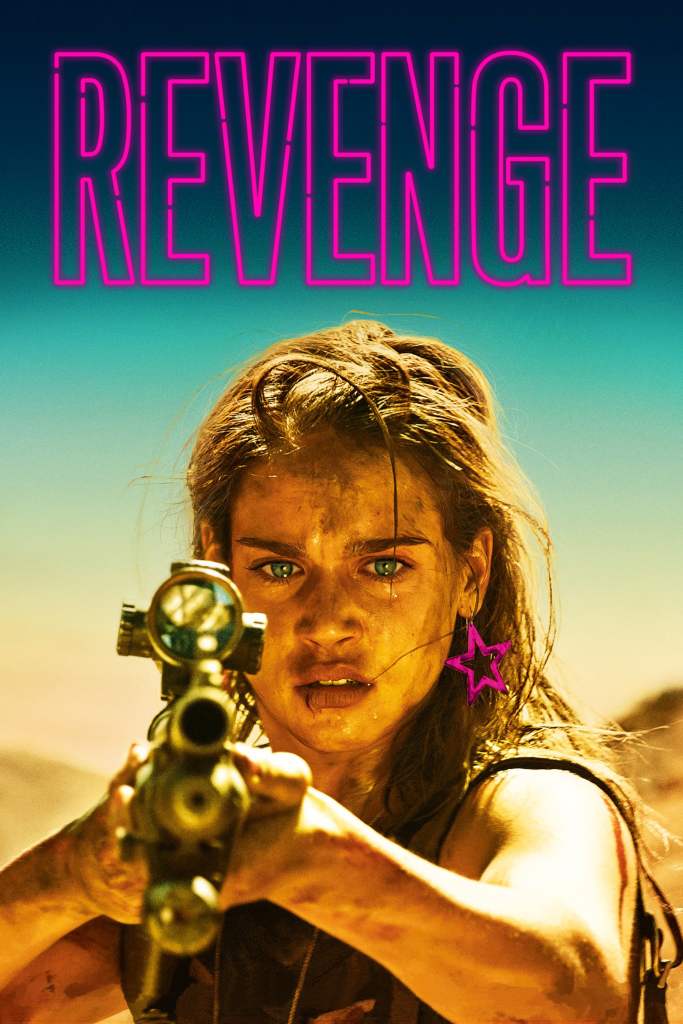
REVENGE (2017) – DIRECTED BY CORALIE FARGEAT

Featuring a B-movie rape and revenge plot, this exploitation story is raised way above its subject matter due to ultra-stylish direction, gorgeous cinematography and a compelling lead performance by Matilda Lutz. She portrays Jen, an aspiring actress, who is on a weekend getaway with handsome boyfriend (cheating husband), Richard (Kevin Janssens). He seems very well off as their break takes place at a stunning isolated villa location. However, things go awry when two of his hunting buddies turn up, and one, Stan (Vincent Colombe) attacks Jen while Richard is out. From then on events twist from incredibly bad to worse for Jen, and she finds herself being hunted down in the blazing heat of the desert. The film looks absolutely incredible with amazing photography and colour design. Overall, what it lacks in story and characterisation though, it more than makes up for in stunning action, searing violence and a powerful critique of toxic masculinity.

Mark: 8 out of 11


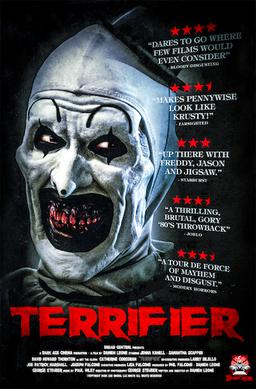
TERRIFIER (2016) – DIRECTED BY DAMIEN LEONE

I saw this horror film appear in a post on the YouTube channel What Culture Horror. So, the story of a demented clown who never speaks and slashes people to death on Halloween definitely piqued my interest. It’s both extremely violent and low-budget, having been made for around $100,000. However, it is in fact impressively shot and edited for such a small amount of money. The gory effects are amazingly effective too, summoning up memories of 1980’s prosthetic film effects. There is no real subtext or thematic strength, but I was pretty tense and sickened throughout. Moreover, the clown called Art is a memorably monstrous creation. He kills without reason and purely for his own entertainment. Nihilistic in tone, the director sure knows his horror and delights in presenting many sick ways of murdering his characters. Thus, if you like disembowelling, strangulation, burning, beheading and other gruesome movie deaths then, Terrifier (2016), is worth watching from behind the safety of the sofa.

Mark: 7.5 out of 11


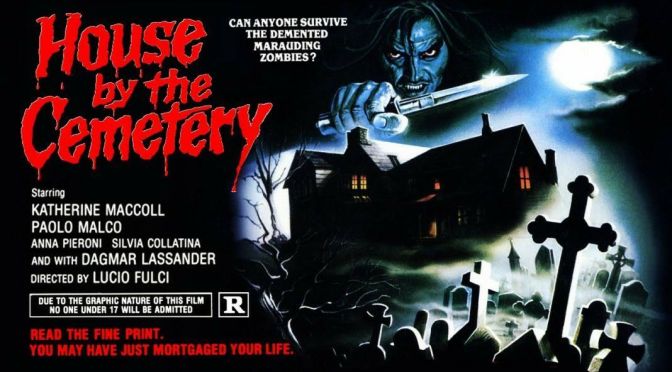
CITY OF THE LIVING DEAD (1980) / THE HOUSE BY THE CEMETERY (1981) – DIRECTED BY LUCIO FULCI

Filmmaker, Lucio Fulci, is often found lurking in the shadow of Italian horror filmmakers such as Mario Bava and Dario Argento, however, he truly knows how to frighten and sicken the life out of an audience. So much so he has been given the nickname, ‘Godfather of Gore’. As well as directing many films, notably, Zombie Flesh Eaters (1979) and The New York Ripper (1982), he is infamous for his “Gates of Hell” trilogy which included: City of the Living Dead (1980), The House By the Cemetery (1981) and The Beyond (1981). I re-watched the first two recently and while not as terrifying as when I saw them in the past, they still have the power to shock. While lacking coherent plots, containing pretty bad acting and some chronically dreadful dubbing in places, paradoxically Fulci’s films can arguably be considered surreal horror classics. They may not make any narrative sense, but his ability to create stunningly violent set-pieces is legendary. Memorable scenes include: the spewing of intestines, crawling maggots, hanging priests, drilled brains, chopped heads and monsters rising from basements and graves. Such imagery and dreaded moments — all set to a creepy synth soundtrack — make Fulci’s movies unsettling viewing experiences.

Mark: 7 out of 11


ISLAND OF DEATH (1976) – DIRECTED BY NICO MASTORAKIS

Not only is this one of the sickest films I have seen, it is also one of the most appalling I have sat through. Having said that, that is in fact what Greek director Mastorakis, based on what I’ve read, set out to do. The story, if you can call it that, focusses on a couple called Christopher (Robert Behling) and Celia (Jane Lyle) who go on a sex-driven-kill-crazy-honeymoon-rampage on the Greek island of Mykonos. If you can get past the couple having sex in a phone booth while telephoning his mother, and stomach Christopher raping a goat before killing it, then do watch the rest of this conveyor belt of pornographic sex and violence. By the end, I was stunned to silence at how sick the film was.

Mark: 1 out of 11


TETSUO – THE IRON MAN (1989) – DIRECTED BY SHINYA TSUKAMOTO

Lauded as a low-budget Japanese extreme body horror cult classic, Tetsuo: The Iron Man (1989), is either the work of a genius or a complete madman. Filmmaker, Shinya Tsukamoto, deserves so much praise for literally making most of the film in his own house and paying for it out of his own pocket. Yet, the thumping industrial soundtrack, jump-cutting-stop-motion style and story of metal invading the body, soul and mind of various characters was too f*cked-up, even for me. I know it gets mentioned as a work of genius, but it was frankly unwatchable. Thankfully, it’s only sixty-seven minutes of hell to get through.

Unmarked!

BBC TV REVIEW – NORMAL PEOPLE (2020)

BBC TV REVIEW – NORMAL PEOPLE (2020)

Directed by: Lenny Abrahamson, Hettie Macdonald

Written by: Sally Rooney, Alice Birch, Mark O’Rowe

Based on: Normal People by Sally Rooney

Executive producer(s): Ed Guiney, Andrew Lowe, Emma Norton, Anna Ferguson, Sally Rooney, Lenny Abrahamson

Producer: Catherine Magee

Cast: Daisy Edgar-Jones, Paul Mescal, Sarah Greene, Aislin McGuckin, India Mullen, Fionn O’Shea, Eanna Hardwicke, Leah McNamara, Frank Blake, Niamh Lynch, Kwaku Fortune, Desmond Eastwood, etc.

Cinematography: Suzie Lavelle, Kate McCullough

Original Network: BBC Studios, Hulu

***MAY CONTAIN SPOILERS***


“The course of true love never did run smooth. . .” –
William Shakespeare

Love is a multi-faceted concept open to a myriad of philosophical, medical, emotional and intellectual interpretations. Conversely, an eternal question in our society still remains: what is love? Is it the joining together of two people forever committed to a relationship built on respect and trust?  Or is it the emotion you feel for a family member or person you have bonded with over time?  Is it nature’s way of tricking us into the act of pro-creation?  Perhaps it’s an abstract and emotional concept created by a higher power to ensure we act positively? For some it could be a dark force which enlivens obsession and stalking and violence or maybe it’s a marketing delusion forced upon us by greedy advertisers, florists and chocolate vendors?  Is it all of the above?

Studies by Helen Fisher of Rutgers University propose that we fall in love in three stages involving a different set of chemicals. They are: lust, attraction and attachment. Indeed, the events occurring in our mind when we fall in love are akin to mental illness. Chemicals such as: testosterone, oestrogen, dopamine, serotonin all conflict and combine to change our emotions when we’re attracted to someone. Further studies show that when choosing a partner we are at the mercy of our subconscious and inner sexual desires as proffered in psychoanalytical studies.

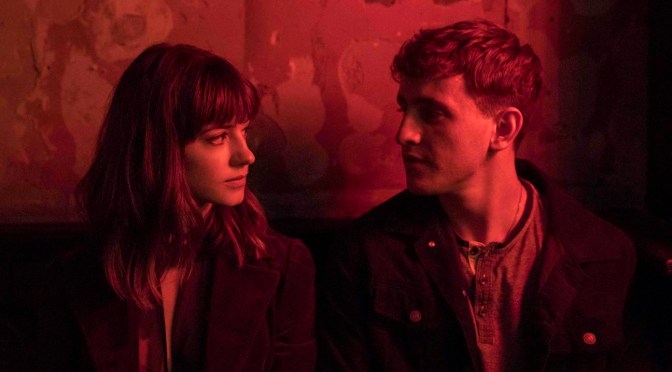
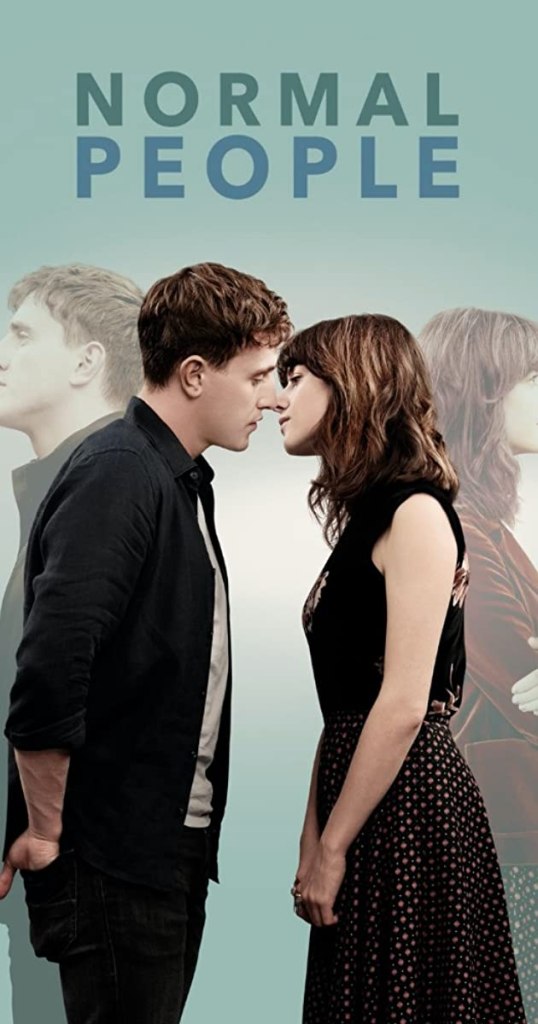
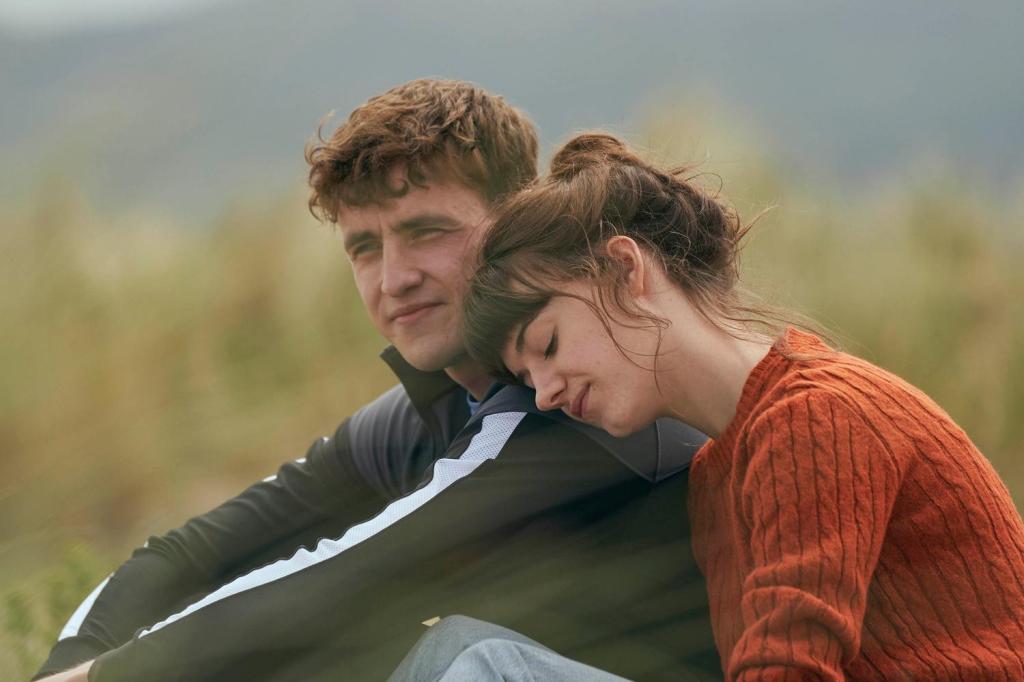
Love, lust and sexual desire are a big part of everybody’s lives whether they are positive or negative; indeed, the continuance of the species is very much reliant on them. Moreover, love or the lack of love has provided the springboard for millions of stories, films, plays, songs, poems, slogans, TV shows, comedies and adverts! The latest excellent love story I watched was the BBC/Hulu production called Normal People (2020). Over twelve episodes we were introduced and lured into the sweet and dark hearts of two Irish teenagers called Connell (Paul Mescal) and Marianne (Daisy Edgar-Jones). They meet, fall in lust, have loads of sex, fall in love, generally fall out with each, fight further, go to University, go abroad, grow up, fall down and then fall back in love with each with other, and so on.


Based on Sally Rooney’s extremely successful novel of the same name, the story events begin at a Sligo Secondary school. Connell is quietly spoken and from a single parent upbringing. But he is very popular with his peers, close to the top of his class and exhibits much sporting prowess. Marianne’s family is wealthier than Connell’s. In fact, the latter’s mum, Lorraine (Sarah Greene) cleans house for Marianne’s mother. The Sheridan household is not a happy one though due to a tragedy which occurred to the father. This causes Marianne to be very angry, self-loathing and outspoken. Because of this she is somewhat of an outsider at home and school. For some unknown reason Marianne’s brother and mother are very cold toward her. Yet, despite the turmoil and class difference, Connell and Marianne share a mutual attraction, which soon becomes a sexual relationship.

As aforementioned, the path of love is not smooth as the first obstacle to the relationship comes from Connell’s paralysing fear of what his school friends think. He is a complex soul and does not have the bravery to share his true feelings to the world. Marianne becomes a secret, and this angers her, causing a major rift between the two young lovers. I won’t give any further plot details away, but it is safe to say that this is not your average romantic comedy or drama. The story beats of the romance genre are present, yet delivered in a sombre, delicate and under-the-surface style. This is not surprising given the first six episodes are subtly directed by Lenny Abrahamson, a filmmaker who has a number of wonderful character-driven films to his credit.

With confident direction, acting and a serene soundtrack, Normal People (2020) is a consistently absorbing and emotional rollercoaster. What I would say it though it often feels as if you’re watching events unfold in extreme slow motion. This isn’t a criticism though, because in the stillness of the performances, the dwelling of the camera on the character’s faces and length of shots, we’re allowed the time to breathe in the joy and pain of this complicated romance. The two lead actors Phil Mescal and Daisy Edgar-Jones are both incredibly well cast. They have exquisite chemistry together in both their passionate sex scenes and when they just simply exist and talk and look and love and hurt together. One may gripe that the drama could have been achieved with a tad more pace and just a few less episodes. However, if you are looking for a truthful representation of young love, with all its angst, kinks, self-loathing, insecurities and exasperating undulations, then Normal People (2020) is definitely a worthwhile experience.

Mark: 9 out of 11