
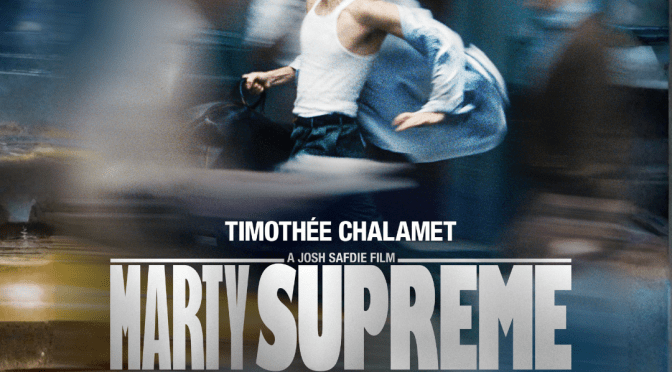
Cinema Review: Marty Supreme (2025)
Directed by Josh Safdie
Written by Ronald Bronstein and Josh Safdie
Produced by Josh Safdie, Ronald Bronstein, Eli Bush, Anthony Katagas
and Timothée Chalamet
Main cast: Timothée Chalamet, Gwyneth Paltrow, Odessa A’zion, Kevin O’Leary, Tyler Okonma, Abel Ferrara, Fran Drescher, Sandra Bernhard, etc.
Cinematography Darius Khondji
Music by: Daniel Lopatin

Anxiety cinema, though always a part of film history, has seen a surge in prominence in recent years, with directors like Gaspar Noé, the Safdie brothers, Sean Baker and Ari Aster leading the charge. These filmmakers specialize in creating films that push audiences to their emotional limits, heightening tension and discomfort without offering the cathartic release often found in more traditional thrillers or suspense films by the likes of DePalma, Hitchcock, and Spielberg. Rather than resolving the anxiety with a tidy ending or a moment of relief, these films leave viewers on edge, their blood pressure elevated, and their minds unsettled, reflecting the growing cultural sense of unease and existential dread.
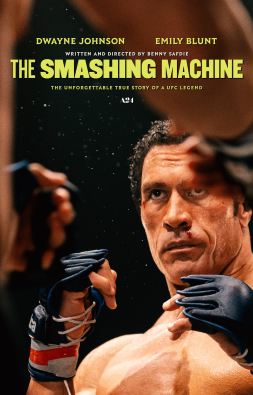
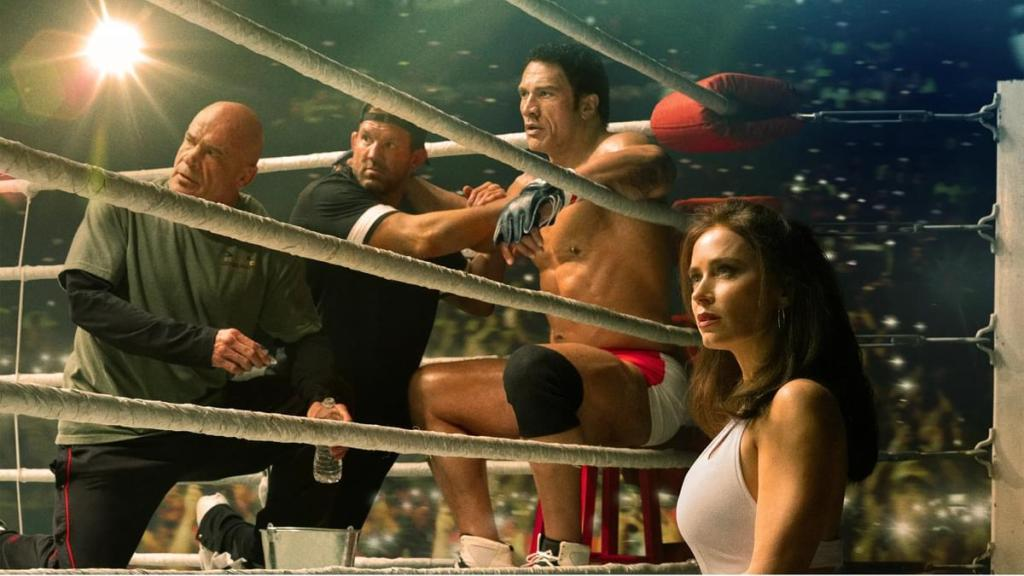
It’s important to note that it would appear, with the release of the frantic Marty Supreme (2025), it is Josh Safdie and Ronald Bronstein, not Benny Safdie, who could be seen to be the driving forces behind the anxiety-driven films like Good Time (2017) and Uncut Gems (2019). Their collaborative work has come to define the frantic, high-pressure style of modern anxiety cinema. In contrast, Benny Safdie’s more recent work, The Smashing Machine (2025), highlights a shift toward more authentic and subtle character development, offering a quieter, more understated take on human drama. While Josh and Bronstein continue to escalate tension to dizzying heights, Benny’s approach focuses on exploring deeper, more introspective emotional journeys.
So, Marty Supreme (2025), is it any good? Let’s just say that this isn’t a Christmas or feelgood film, so I can only think the marketing team are being ironic with the poster tagline ‘Dream Big – Christmas!’ This is a 1952 period set anti-heroic-rites-of-passage rollercoaster journey profiling Marty Mauser (Timothée Chalamet), a New York shoe salesman with dreams of hitting the big time as a world champion table-tennis player. But rather than being characterised as a Rocky-style underdog sporting personality who the audience can root for, Marty (loosely based on real-life Marty Reisman), is in fact a fast-talking-arrogant-crisis-addicted-confidence-trickster and womaniser who is not averse to “friendly” armed robbery to get what he wants. Oh, by the way, Marty is also a phenomenal table-tennis player.
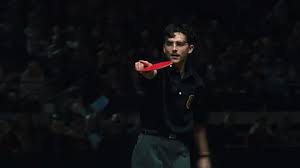
Having previously cast Robert Pattinson in Good Time (2017) and Adam Sandler in Uncut Gems (2019) as their disaster-prone, masculine leads, Josh Safdie and Ronald Bronstein took a new direction in Marty Supreme (2025) by casting Timothée Chalamet. Known for his charisma and commitment, as showcased most recently in Wonka (2023) and A Complete Unknown (2024), Chalamet brings an entirely new energy to the table. As Marty, he is nothing short of a force of nature—physically commanding as a table tennis player, yet intellectually and verbally dominating the screen. His performance captivates with a magnetic presence, delivering lines with such intensity and precision that he becomes impossible to look away from. Chalamet’s portrayal of Marty is both memorable and transformative, showcasing his versatility as an actor who can take on the manic, chaotic energy required by a character in a Safdie-Bronstein film while adding a unique layer of depth and intrigue.
Marty’s journey represents a fascinating emotional dialectic, one that leaves the audience both drawn to and repelled by his behaviour. While I didn’t necessarily enjoy his character arc, that’s exactly what makes Chalamet’s portrayal so compelling. Marty is, in many ways, his own worst enemy—he can’t follow rules, he’s a liar, and he cheats to get ahead. Yet, his raw talent and unwavering sense of purpose give him an undeniable charisma, pulling the audience in even as his decisions spiral into reckless, life-threatening situations. The character’s hustle, constant scheming, and pursuit of personal gain lead him into a series of humiliating, violent confrontations that highlight his self-destructive tendencies.
Marty’s a deeply flawed person desperately trying to make something of himself. But he also makes his own bad luck through poor decision-making. Whether it’s falling through a hotel ceiling in a bath; retrieving a missing dog for a psychopathic gangster; locking horns with the table tennis authorities and the uber-businessman he’s seeking patronship from; fighting a cuckolded neighbour whose wife, Rachel Mizler (Odessa A’zion) he possibly loves – not forgetting the scintillating table tennis games – the film is a litany of combative and panic-attack inducing set-pieces. The emotional tension lies in watching Marty repeatedly sabotage his own potential, a cycle of ups and downs that plays out as a cautionary tale. Marty’s journey doesn’t just depict failure; it explores the emotional complexity of someone trapped in their own worst impulses.
Marty Supreme (2025) stands as a masterpiece of filmmaking, with creative choices that not only subvert expectations but elevate the entire storytelling experience. From its striking cinematography to the anachronistic 1980s soundtrack, every visual and auditory detail feels meticulously crafted to immerse the audience in the world of Marty Mauser. The gritty, authentic production design brings a raw realism that grounds the film, while the ensemble cast—many of whom are quirky non-actors—brings an undeniable energy and authenticity to the narrative. In conclusion, the collaboration between Chalamet, Josh Safdie and Ronald Bronstein, and the entire cast and crew gave me both a nervous breakdown and an unforgettable cinematic experience.

 The Cinema Fix presents