Tag Archives: toxic masculinity

Cinema Review: Him (2025) – find blood, sweat, and meltdowns galore in this visceral NFL thriller!

Cinema Review: Him (2025)

Directed by Justin Tipping

Written by Skip Bronkie, Zack Akers & Justin Tipping

Produced by Jordan Peele, Win Rosenfeld, Ian Cooper & Jamal Watson

Main cast: Marlon Wayans, Tyriq Withers, Julia Fox, Tim Heidecker, Jim Jeffries, Maurice Greene etc.

Cinematography by Kira Kelly

** MAY CONTAIN SPOILERS **


“In modern slang, “Him” is used to signify a person who is considered a standout or a “star” in their field, often in sports or entertainment.” — Google search result.


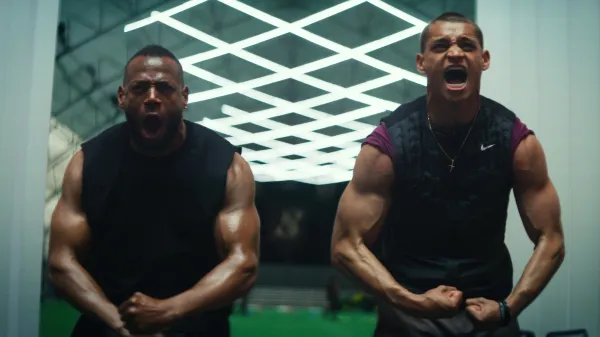
Him (2025) is a visually arresting and thematically potent descent into the underbelly of American athletic obsession — a pitch-black thriller that trades stadium lights for the strobe of psychological torment. Centered on Cameron “Cam” Cade, a young quarterback hungry to dethrone San Antonio Saviors’ reigning legend Isaiah White (a commanding Marlon Wayans), the film begins as a standard sports drama and swiftly morphs into something far darker. Director Justin Tipping captures the suffocating intensity of modern competition with a painter’s eye — sweat, blood, and neon collide in every frame, turning locker rooms and training fields into cathedrals of self-destruction.

As Cam endures Isaiah’s brutal “boot camp,” the film exposes the rot beneath the rhetoric of greatness. Fear, humiliation, and violence dominate the regimen, transforming mentorship into a form of ritualized hazing. Themes of steroid abuse, distorted masculinity, and father-son guilt weave through the story like poison veins. The omnipresence of social media — the constant surveillance, the demand for curated perfection — amplifies the claustrophobia. In its best moments, Him (2025) feels like a nightmarish hallucination of ambition, where performance and identity blur until nothing human remains.


Yet for all its kinetic power and aesthetic daring, Him (2025) stumbles when it comes to coherence. The screenplay rushes through emotional beats, failing to give its characters space to breathe or evolve. Key relationships and motivations are truncated by editing that favours rapid cuts over logic — the film’s pulse races, but its heart falters. The result is an experience that dazzles visually but feels narratively hollow, more like a hypnotic music video than a fully realized character study. Indeed, the ending drops the ball most of all. The nightmarish satire culminates in a bloodbath which, while visually powerful, feels like something more twisted and subtle would have served Cam’s character arc better.

Overall, there’s no denying Him (2025) and its impact as a cinematic spectacle, with Wayans and Withers delivering standout performances. Its imagery lingers — bodies breaking under fluorescent light, cheers warping into screams — as does its commentary on the performative nature of modern masculinity, crazy fan worship, monetization of athletes and sporting sacrifice. If only the script matched its visuals, Him (2025), might have stood shoulder to shoulder with the psychological thrillers it so clearly reveres.

Mark: 6.5 out of 11


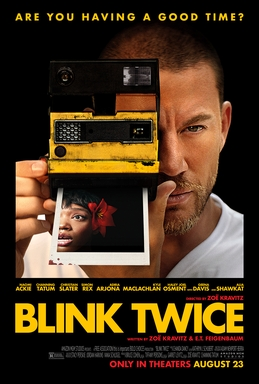
CINEMA REVIEW: BLINK TWICE (2024)

Directed by Zoë Kravitz

Written by Zoë Kravitz & E.T. Feigenbaum

Produced by Bruce Cohen, Tiffany Persons, Garret Levitz, Zoë Kravitz and Channing Tatum

Cast: Naomi Ackie, Channing Tatum, Christian Slater, Simon Rex, Adria Arjona, Kyle MacLachlan, Haley Joel Osment, Geena Davis and Alia Shawkat etc.

Cinematography by Adam Newport-Berra

*** MAY CONTAIN SPOILERS ***


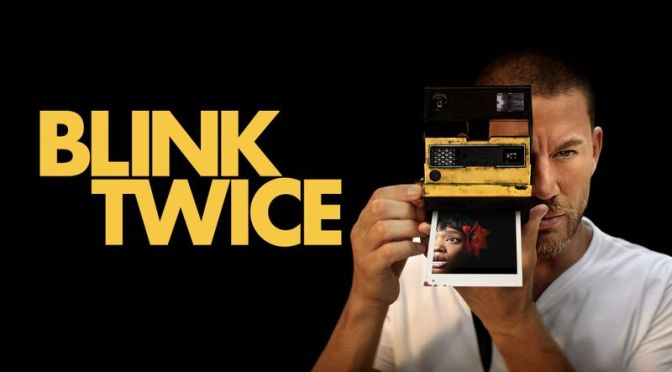
The theme of toxic masculinity is almost becoming a sub-genre of itself in the wake of the #MeToo movement. Films such as The Royal Hotel (2023), How to Have Sex (2023) and Men (2022) are powerful genre films which take the manipulative, malevolent and violent aspect of men, utilizing it as both nemesis and a destructive force the main protagonists must contend with. While She Said (2022) dealt specifically with the Harvey Weinstein legal case, Zoe Kravitz’ energetic blend of genres in Blink Twice (2024), takes a more fictional and heightened route while exposing the horrors surrounding the potential happenings at the notorious Epstein Island.

Frida (Naomie Ackie) and her friend Jess (Alia Shawkat) work at an exclusive event where Frida meets Slater King (Channing Tatum), a billionaire tech mogul who recently resigned as CEO after a public scandal. Despite the scandal Frida and Jess gladly accept an invitation to his private island, where his assistant Stacy (Geena Davis) confiscates their phones. The island hosts Slater’s friends and business partners along with three glamorous guests including Sarah (Adria Arjona). The men and women are treated to lavish rooms, gift bags, gourmet meals, cocktails, and party like hedonistic rock stars drinking champagne and taking hallucinogens.


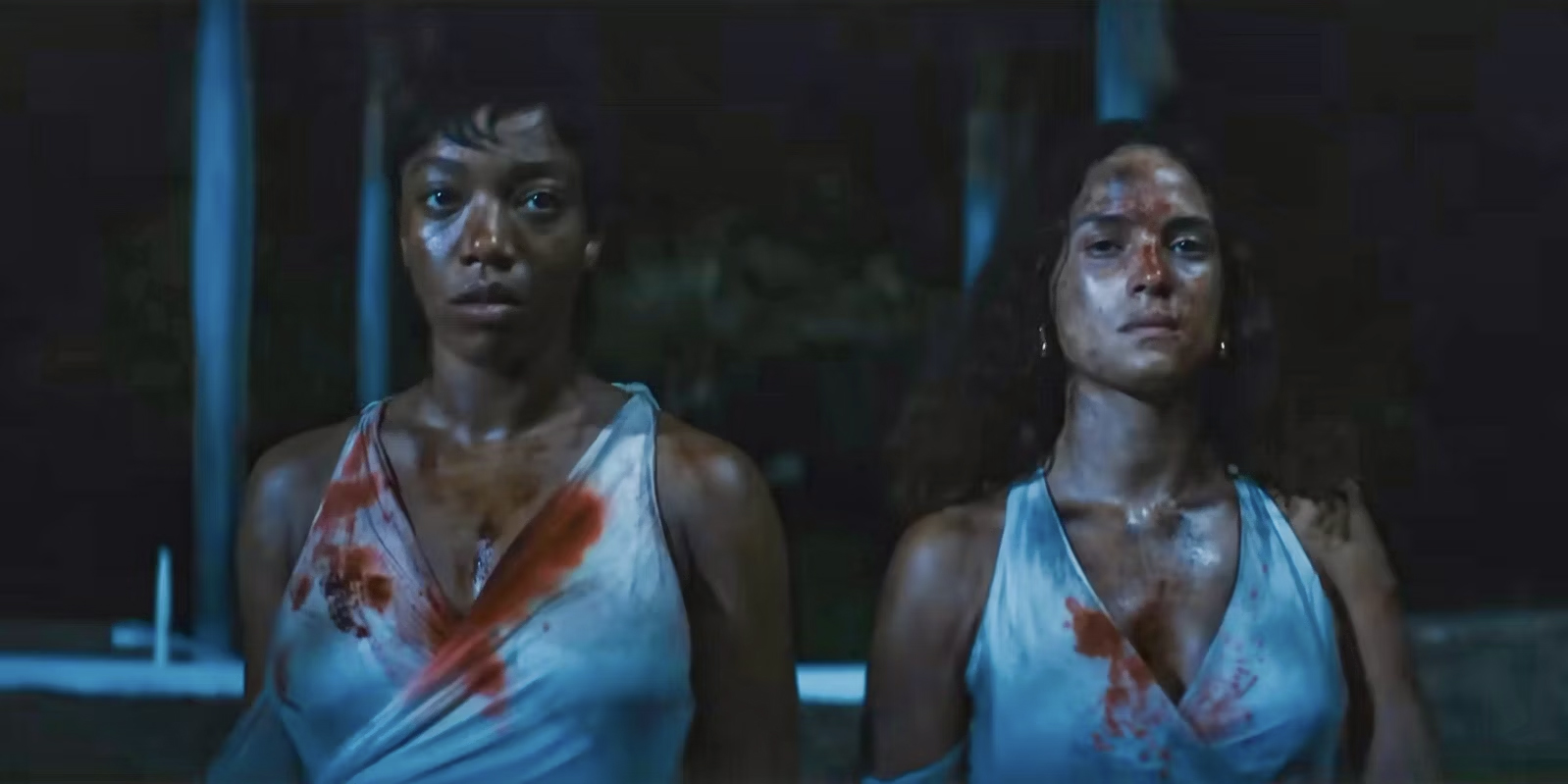
If you’ve seen the similar island-based, The Menu (2022), which I loved, plus the less than riveting 1950’s perfect suburb-set, Don’t Worry Darling (2022), one soon realises that not all is well in paradise. Amidst the sun, sea and partying the narrative slowly builds the tension until Frida and Jess begin to suspect all may not be as it seems. Kravitz carefully ratchets up the tension, with several strange discoveries heightening the paranoia and anxiety. Latterly the suspense gives way to all-out gory horror and black comedy in the thrilling final act. Naomi Ackie and Adria Arjona are impressive “final girls”, however, the script arguably throws in too many twisty reveals at the end, testing narrative credibility.

Zoe Kravitz is clearly a talented filmmaker and Blink Twice (2024), while unsubtle, is highly entertaining. But does the diversion to the horror genre dilute the power of the themes of toxic masculinity? Kravitz aims to critique the evils of men by showcasing male characters who embody arrogance, dominance, and emotional suppression. But while Kravitz may intend to address toxic masculinity, the reliance on traditional horror tropes potentially undermines this message by exaggerating characters, victimizing women, and prioritizing sensationalism over substance. Still, as a revenge fantasy, Blink Twice (2024), is both stylishly and dynamically rendered.

Mark: 7.5 out of 11


FILMS THAT GOT AWAY #11 – HOUNDS OF LOVE (2016)

FILMS THAT GOT AWAY #11 – HOUNDS OF LOVE (2016)

Written and Directed by: Ben Young

Produced by: Melissa Kelly

Cast: Emma Booth, Ashleigh Cummings, Stephen Curry, Harris Gilbertson, Susie Porter, Damian De Montemas, etc.

Music by: Dan Luscombe

Cinematography: Michael McDermott

Edited by: Merlin Eden

*** MAY CONTAIN SPOILERS ***


Where narratives relating to rape, abduction, and serial killers are concerned, a filmmaker can tread a fine line between lurid exploitation and absorbing suspense and drama. Low budget B-movies are replete with stories of death, sexual assault and crazed murderers. Some overstep the mark becoming notorious beacons of bad taste. Many horror fans love the exploitational nature of “video nasties”, seeking out films like: Cannibal Holocaust (1980), A Serbian Film (2010), I Spit on Your Grave (1978), Driller Killer (1979), Texas Chainsaw Massacre (1974) and The Last House on the Left (1972), to name but a few. The latter two films directed by horror maestros Tobe Hooper and Wes Craven are arguably exceptional visions of terror which transcend their horror genre subject matter. Similarly, Ben Young’s The Hounds of Love (2016), in my view, represents the evil of human beings without exploiting the actors or audience.

While it may not be as gory on-screen as the films mentioned above, The Hounds of Love (2016), does offer a shattering and sickening set of images and sounds within these savage set of events. Set in Perth, Australia during 1987, this is a disturbing and all too realistic horror story. It opens with a majestic set of slow-motion shots from the point-of-view of suburban couple, Evelyn White (Emma Booth) and John White (Stephen Curry). They sit in their vehicle as the sun hazes and watch teenage girls playing netball in the school yard. They are stalking their next victim; patiently waiting to lure another unsuspecting soul into their nefariously sadistic crimes. Stylistically impressive, but at the same time incredibly unnerving, Ben Young skilfully establishes the canvas on which he will paint further horrors.


Having fed their violent and sexual lust with the opening victim, we are then introduced to their next. Vicki Moloney (Ashleigh Cummings) is a rebellious teenager who is smarting from her parents recent split. Acting with both charisma and defiance, Vicki is slightly annoying, yet empathetic. Obviously, she does not deserve the ordeal she is about to experience at the hands of the Whites. The sequence which finds them cajoling her into their clutches is so tense and had me screaming at the screen, “No!!!! Get out!!!” What follows then, as Vicki becomes a prisoner, is a series of heart-pounding and distressing scenes which raise the stakes to unbearable tension. Ashleigh Cummings performance is absolutely compelling as “final girl”, Vicki. She takes a potentially one-dimensional casualty and imbues her with fight, guile, pain, distress, intelligence and determination. No surprise therefore that she won a Best acting debut award at the Venice Film Festival.

Cummings performance is not the only one which impacts the story greatly. Emma Booth’s complex portrayal of Evelyn is quite startling. This is a character who is permanently on-the-edge and desperate to please her evil partner, John. Systematically controlled and bullied, there is no excuse for Evelyn’s part in the kidnappings and torture of these young girls. But, it is clear to see that toxic masculinity has, over the years contributed to her mental and emotional collapse. Booth’s persistently fraught acting is all bag-of-bones and shredded nerves. It is via Evelyn’s imploding emotional state that Vicki is able to attempt to turn her against John’s venal influence.

Ultimately, one could say this is an exploitation film in terms of theme and story. However, it feels different than the many B-movie serial killer films I have seen. I felt like I was in the hands of a filmmaker who was determined to explore the nature of sadistic relationships in a risky, but intelligent manner. The acting, cinematography, direction and haunting soundtrack all contribute to make this a highly effective psychological thriller. Of course, there are many which may feel differently and that the film has its cake and eats it in term of violence and sexual perversion. Yet, we never actually see much of the cake. Unlike many of the films I mention in the opening paragraph, the audience only see the build-up and aftermath of the crimes. Indeed, what we don’t see on screen is more frightening than what we do. That, overall, is what sets The Hounds of Love (2016) apart from many other films dealing with these unpalatable themes and subjects.

Mark: 9 out of 11


JUDY AND PUNCH (2019) – CINEMA REVIEW

JUDY AND PUNCH (2019) – CINEMA REVIEW

Written and Directed by Mirrah Foulkes

Produced by: Michele Bennett, nash Edgerton, Danny Gabai

Cast: Mia Wasikowska, Damon Herriman, Benedict Hardie, Gillian Jones, Virginia Gay etc.

**MAY CONTAIN SPOILERS**


If you’re not aware of the good, old-fashioned Punch and Judy puppet show, then it was basically a seaside attraction that has its origins in 16th century Italian commedia dell’arte. Over the decades it thrived and would move from marionette stylings to a mobile glove puppet show. Punch would batter various characters including his wife, Judy, a crocodile, a police officer, a dog, a blind man and the Devil. He would be a very bad parent; often drunk and violent in charge of his own baby. Incredibly, this rather unsavoury character would become very popular with children, appearing at carnivals, fairs and coastal shows.

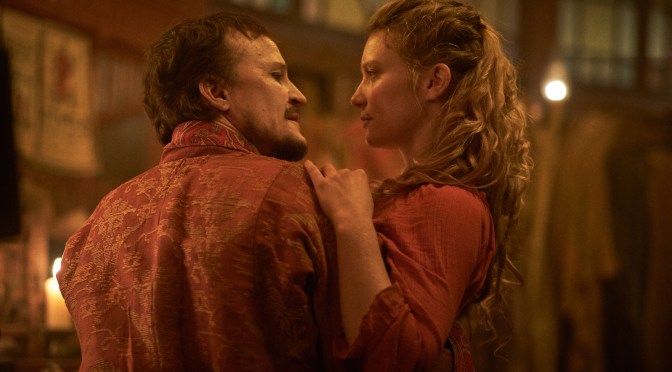
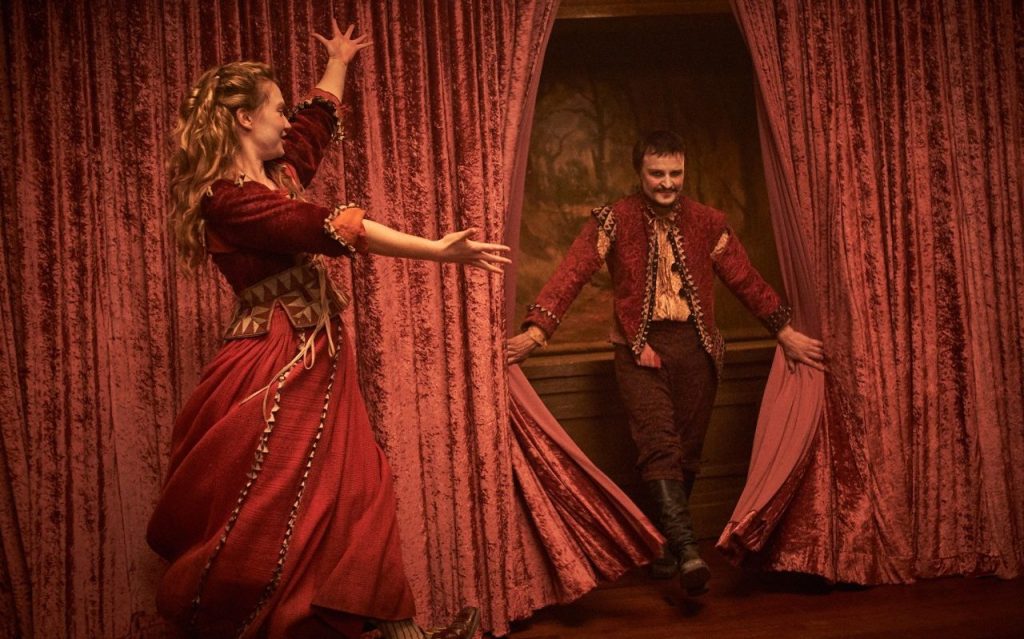
With Disney cornering the market adapting myths, fairy tales and Theme Park rides over the years, I’m surprised they did not have a go at Punch and Judy. How they would reconcile this brightly coloured, but despicable character would have been fascinating. Yet, it is Australian filmmaker Mirrah Foulkes, who has written and directed this arthouse drama starring Mia Wasikowska as the harassed Judy, and Damon Herriman as the drunken puppeteer. Set during the Dark Ages in the town of Seaside, the plot follows the traditional narrative of the original puppet show. Except, this time Judy is very pissed off and about to go medieval on Punch’s arse!


Part revenge thriller, part-black comedy and part mythical origins drama, Judy and Punch (2019) is full of fantastic and gritty detail. The reconstruction of the theatrical puppet shows are brilliant, and evocation of the era is very realistic. The film performs well as a savage denouncement of toxic masculinity in the #MeToo era. But, despite the excellent performances from Wasikowska and Herriman, the characters were a bit too one-dimensional to really grip me. Yet, Wasikowska is especially memorable as Judy, eliciting an inner strength to overcome the cruelty of her husband and the town she lives in.

Lastly, the story also felt a little flat and lacked surprise in places, but that may be because the trailer gave a lot of the narrative away. It’s also because I am very familiar with the original Punch and Judy show, as I watched loads of them as a kid. Having said that, Mirrah Foulkes has delivered a stylish film curiosity which is destined for cult status. Moreover, she deserves much praise for attempting to give a children’s puppet show story depth. The visual iconography is powerful, as is the exploration of themes relating to domestic violence, child neglect, witch hunts; and the exclusion of the outsider or other by petty townsfolk mentality.

Mark: 8 out of 11