Tag Archives: Willem Dafoe

Cinema Review: Nosferatu (2024) – At the Intersection of Horror and Eroticism!

Cinema Review: Nosferatu (2024)

Directed by Robert Eggers

Screenplay by Robert Eggers

Based on Nosferatu by Henrik Galeen and Dracula by Bram Stoker

Produced by Jeff Robinov, John Graham, Chris Columbus, Eleanor Columbus, Robert Eggers, etc.

Main Cast: Bill Skarsgård, Nicholas Hoult, Lily-Rose Depp, Aaron Taylor-Johnson, Emma Corrin, Willem Dafoe, Simon McBurney, etc.

Cinematography by Jarin Blaschke

Music by Robin Carolan

*** MAY CONTAIN SPOILERS ***
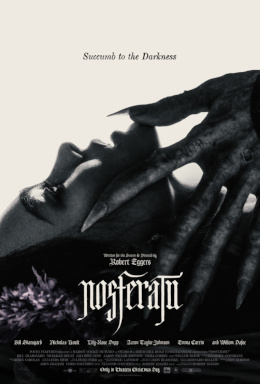


Firstly, Nosferatu: A Symphony of Horror, the 1922 silent German Expressionist vampire film directed by F. W. Murnau remains one of the greatest and most iconic horror films of all time. It is arguably the greatest adaptation of Bram Stoker’s, seminal gothic classic, Dracula, too. Of which there have been many. So, who would be brave enough to attempt to master another version of this often-told monstrous tale. Step forward the acclaimed and relatively young American auteur, Robert Eggers.

Robert Eggers has built a reputation for crafting films that blend mythical and fantastical elements with folk horror and psychological thriller sensibilities. His works often transport audiences to meticulously recreated period settings, which serve as the foundation for his exploration of human fears, desires, and the supernatural. His debut feature film. The Witch (2015) exemplified folk horror rooted in Puritanical fears of the supernatural. Set in 1630s New England, it drew heavily from folklore, historical accounts, and period-authentic dialogue. The film explored themes of isolation, religious paranoia, and the breakdown of a family due to their belief in the presence of witches.

Similarly, The Lighthouse (2019), a psychological thriller merged maritime folklore with hallucinatory horror. Set in the late 19th century, the film delved into isolation-induced madness as two lighthouse keepers grappled with mythological themes such as mermaids, sea gods, and Promethean punishment. Moreover, as with his short films Hansel and Gretel (2007) and The Tell-Tale Heart (2008) he is drawn towards established texts, with the bruising, battering ram of The Northman (2022) covering the original myth on which Hamlet was based. Eggers vision immersed the viewer in violence, Viking culture, shamanic ritual and mysticism. Unsurprising therefore, he has now delivered the German Expressionist classic, Nosferatu (2024) with his signature period aesthetic and focus on the macabre.
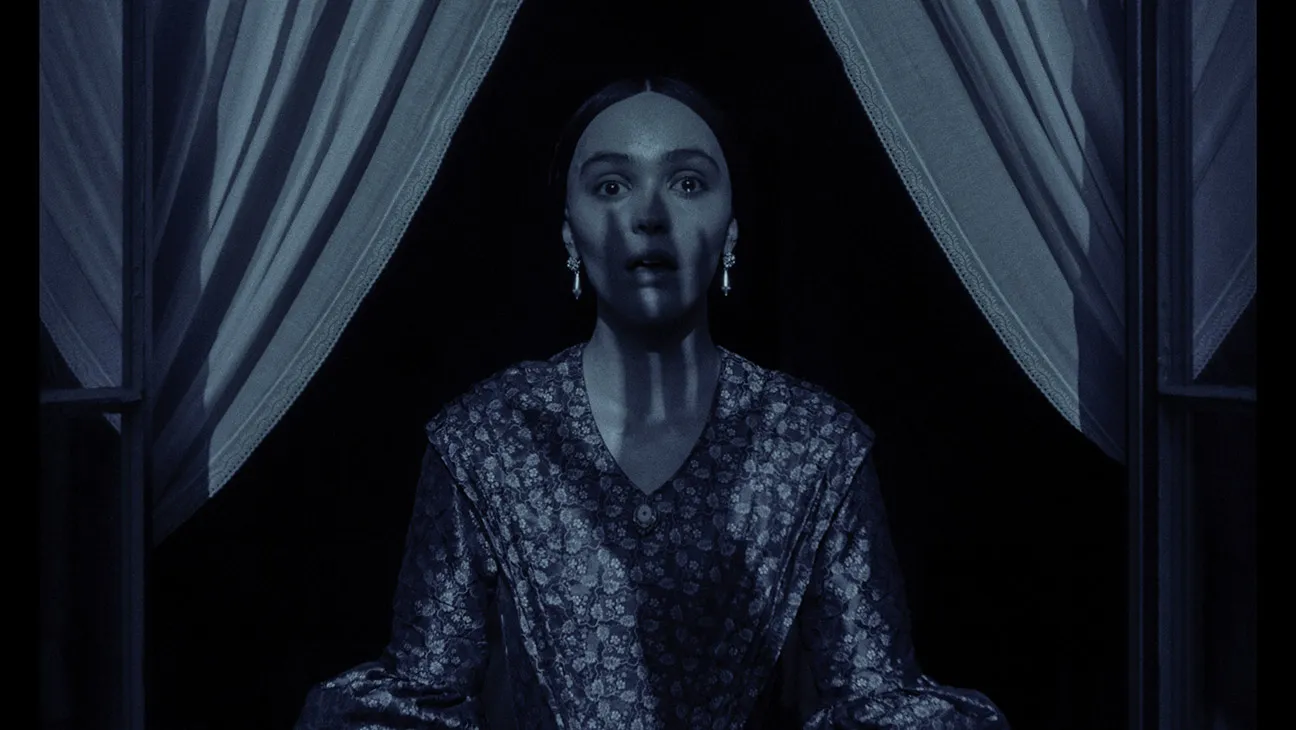


With a stellar cast, production design and incredibly stylish vision, Eggers has produced a praiseworthy example of fantastical cinema. As usual there appears to be meticulous historical research, including accurate costumes, set design, and period-specific dialogue. This attention to detail in Nosferatu (2024) grounds the supernatural elements in a believable world, enhancing their impact. Furthermore, Eggers creates a sense of dread through his use of sound design, stark cinematography, and claustrophobic settings. His restrained pacing allows for the gradual unraveling of characters’ psyches, making the supernatural elements more impactful.

Yet, while steeped in folklore, Nosferatu (2024) centres on human struggles—family disintegration, fate, guilt, madness, lust and sex. Indeed, Nicholas Hoult’s Thomas Hutter (née Harker) does not stand a chance. From the opening scene his sensual wife, Ellen, is inextricably linked via a lustful fever dream to a mysterious figure, who, if you couldn’t guess, is Count Orlok (an unrecognizable Bill Skarsgård). It is Ellen’s orgasmic connection across oceans of time which drives Orlok to lure Thomas away and commit blood-draining murder as he creeps cross-country and sails the seas from Transylvania to Germany. Ellen’s surreal and orgiastic desire unfortunately brings the plague and causes the death of extraneous supporting characters portrayed by the likes Aaron Taylor-Johnson and Emma Corrin. A note to say Willem Dafoe is as usual a joy as the ‘Van Helsing’ substitute.

Nosferatu (2024) is undeniably a sumptuous adaptation, brimming with signature attention to period detail, atmospheric dread, and a striking visual palette. However, for those seeking a viscerally terrifying Dracula film, the movie might fall short, leaning heavily into the realm of erotic horror and psychological tension rather than outright scares. While the stunning cinematography, the film’s shadow-drenched landscapes, intricate set design, and haunting score evoke the satanic allure of the original silent film this focus, however, shifts the film away from raw horror and toward a more introspective exploration of vulnerability and eroticism. Ultimately, the film’s reinterpretation of Count Orlok and its restrained approach to gore might alienate viewers expecting a more terrifying vampire film. This left me impressed but more disturbed by the overlong runtime than by the nightmarish allure of the bloodthirsty undead.

Mark: 8 out of 11


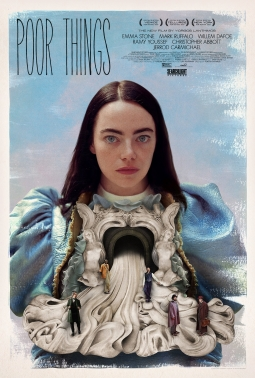
CINEMA REVIEW: POOR THINGS (2023)

CINEMA REVIEW: POOR THINGS (2023)

Directed by Yorgos Lanthimos

Screenplay by Tony McNamara


Based on Poor Things: Episodes from the Early Life of Archibald McCandless M.D., Scottish Public Health Officer by Alasdair Gray

Produced by Ed Guiney, Andrew Lowe, Yorgos Lanthimos and Emma Stone

Main cast: Emma Stone, Mark Ruffalo, Willem Dafoe, Ramy Youssef, Christopher Abbott, Kathryn Hunter and Jerrod Carmichael.

Cinematography by Robbie Ryan


*** MAY CONTAIN SPOILERS ***


I have now seen all of Greek filmmaker Yorgos Lanthimos’ most recent directorial works, namely: Dogtooth (2009), Alps (2011), The Lobster (2015), The Killing of a Sacred Deer (2017), and The Favourite (2018). Collectively they defy conventional film styles and tropes to deliver absurd, surreal, funny, disturbing, thought-provoking, erotic and imaginative visions of human behaviour. Also, let’s not forget the writers too; so kudos to his writing partner Efthymis Filippou, and latterly Tony McNamara, who have combined with Lanthimos to create such memorable cinematic offerings.

The director’s early lower-budget dysfunctional comedy-dramas such as Dogtooth (2009), and Alps (2011) are unforgettably strange films to experience. They feature uncomfortable depictions of family, sex, death and relationships. While offbeat, you sense they are from the mind of a filmmaker seeking to provoke thought rather than exploit. While equally dark and strange The Lobster (2015) is clearly more comedic, even though it probes strange love, fascism and violence within romantic relationships. Further, in The Killing of a Sacred Deer (2017), Lanthimos and Filippou, in Godardian fashion, constantly called attention to cinema form; especially with a strangely effective form of anti-acting within the arguably more conventional revenge narrative. Whereas in The Favourite (2018), Lanthimos’ delivered a unique period satire, with the language and behaviour of the characters often crude and shocking. His visual choices are always fascinating, with his use of the fish-eye lens creating a distorted effect that made the characters seem trapped by their surroundings and circumstances.


With the success of The Favourite (2018), both critically and commercially, Lanthimos has of late been given an increased budget, reported as $35 million. His bold choice, along with screenwriter Tony McNamara is to adapt award-winning novel, Poor Things: Episodes from the Early Life of Archibald McCandless M.D., Scottish Public Health Officer by Alasdair Gray has produced by far the most originally conceived and fantastic genre-bending comedy, drama, horror, rites of passage and salacious film of many a year. If there is a more bizarre, enthralling and enjoyable film of 2024, than Poor Things (2023) then this will be a most excellent year for cinema releases.

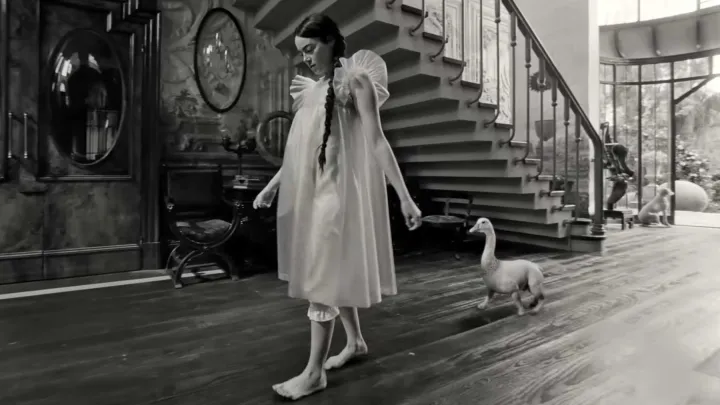
Set in Victorian London, we are introduced to the rather eccentric household of Dr Godwin “God” Baxter, an expert but secretive surgeon whose home hides bizarre animal experiments, and the beautiful but frankly odd human specimen, Bella Baxter (Emma Stone). Entering this weird abode of pig-hens and goose-dogs, comes innocent medical student, Max McCandless (Remy Youseef). “God” asks Max to assist with the childlike Bella’s development, charting her daily physical, speech and mental growth. Now, if you think the chimeric beast experiments are disturbing then brace yourself for the events of Bella’s ‘Frankensteinesque’ happenstance. I am not going to spoil it here, but it truly is a fantastic concept as invented by the author, Alasdair Gray, to contemplate. I was teetering on the fence with the film until this stunning reveal was given, but then I was committed to this medical oddity.


The first act finds Bella developing her speech, emotions and intelligence, as if a young child growing within this woman’s body. Bella also locates her libido and begins experimenting with her lust to great pleasure. Here Lanthimos continues exploring the themes of previous films with sex not only a natural expression of humans, but also an act used to control and drive people mad. Enter Mark Ruffalo’s caddish lawyer, Duncan Wedderburn who spirits a willing and rebellious Bella on a European trip. One where she truly discovers and satisfies her continual carnal desire or “furious jumping” as she hilariously calls it. Bella’s rites of passage, frankness and rapid growth threatens Duncan’s masculine insecurities and he finds it difficult to control her. Here the hilarious screenplay shows Bella and Duncan becoming more and more fraught until she craves further independence from his cloying envy. The central theme of Bella overcoming the chains of controlling masculinity dominates right up until the extremely dark final act.

While there is a lot of sex and nudity in this film, I felt that Lanthimos balances the exploitative nature of such material by contextualising it within Bella’s fascinating character arc. Emma Stone also provides a complex performance, funny and moving, as the woman-child discovering her mind, body, soul and the world. Ruffalo is particularly over-the-top as the sneaky but pathetic reprobate, Wedderburn. While Remy Youssef’s young medical student adds some compassionate balance within the ensemble, Willem Dafoe gives his customary brilliant turn as the tragic man of science. He himself had his childhood tainted by a father determined to use Godwin Baxter as a human guinea pig.

With a spectacular production design that employs a rich palette of colours, sets, lighting and immaculately furnished rooms, Lanthimos, stamps his authorial style along with genius cinematographer Robbie and his array of lens. Such creative choices evolve a spectacularly hyper-real vision of Victoriana. Indeed, the form and style coalesce with the content and themes in Poor Things (2023) to create what could already be the favourite film of my year. The screenplay dares to provoke the audience with gender political, sociological, historical and hysterical analysis as Yorgos Lanthimos again proves himself to be one of the most original filmmakers of his generation. Owing much to the imagination of Alasdair Gray’s source book, this is a shocking and explicit Frankenstein’s monster of a film. Lastly, it had me consistently thinking and laughing throughout, testifying to the power of family, however dysfunctional that Victorian household may be.

Mark: 10 out of 11


CINEMA REVIEW: ASTEROID CITY (2023)

CINEMA REVIEW: ASTEROID CITY (2023)

Directed by Wes Anderson

Screenplay by Wes Anderson

Story by: Wes Anderson and Roman Coppola

Produced by: Wes Anderson, Steven Rales, Jeremy Dawson

Ensemble Cast: Jason Schwartzman, Scarlett Johansson, Tom Hanks, Jeffrey Wright, Tilda Swinton, Bryan Cranston, Edward Norton, Adrien Brody, Liev Schreiber, Hope Davis, Stephen Park, Rupert Friend, Maya Hawke, Steve Carell, Matt Dillon, Hong Chau, Willem Dafoe etc.

Cinematography Robert Yeoman

*** MAY CONTAIN SPOILERS ***


Wes Anderson is a phenomenal filmmaker with an imaginative set of style and narrative conceits. Everyone one of his releases is a rich tapestry containing memorable ensemble casts, adjacent framing, effervescent use of colour, geographical pertinence, intellectual humour and subjects situated in the far-left field of genre cinema. Yet, I do not enjoy ALL his films. Often, they veer too far into eccentric pretentiousness. Indeed, I found The French Dispatch (2021), frustrating and, other than the tremendous story set in the asylum with the mad artist (Benicio Del Toro), disconnected with it overall. While it was another admirable work of cinema, I did not enjoy it as a paying punter.

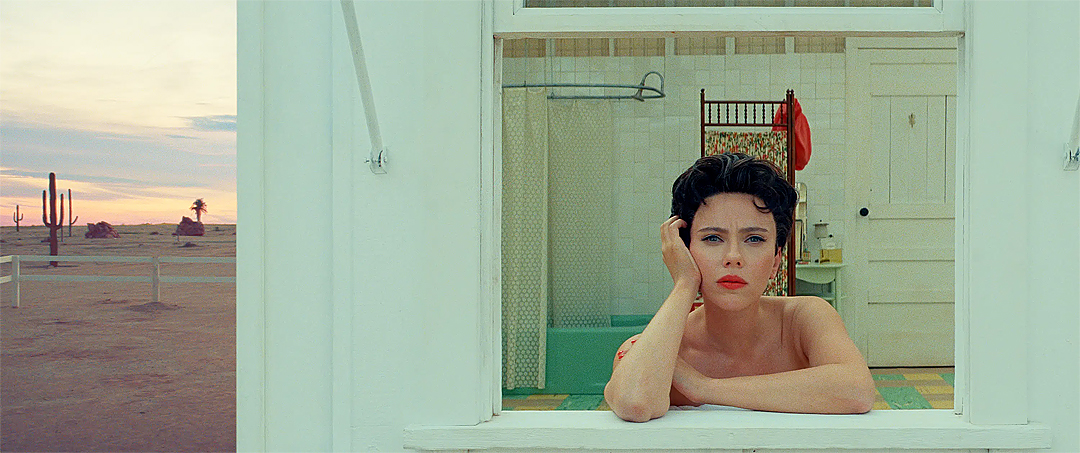
Asteroid City (2023), however, is a film I enjoyed greatly. The famous actors immersed within the ensemble, the cinematic artifice, the clever meta-narrative structure, symmetrical shot composition, beautiful use of colour, offbeat characters, specific era and geographical setting, imaginative props and costume design, and witty humour are all present as per Anderson’s impressive body of work. But Asteroid City (2023) had a larger emotional heart than his recent films, and is my favourite since the superb, The Grand Budapest Hotel (2014).


A heady combination of genres, one could describe, Asteroid City (2023), as a hyper-sci-fi-Western-retro-romantic-futuristic-comedy and study of grief set in 1950s, America. Despite filming taking place in Spain. Anyway, Anderson establishes the characters through the structure of a film within a play. Bryan Cranston’s narrator introduces us to the various middle-class, working class, military and scientific personalities who become trapped in the town of Asteroid City by a series of unlikely but hilarious misfortunes. Throughout the chapter inter-titles the scenes return us to our narrator as Anderson cleverly comments on the process of creating a story while delivering the narrative events.

Anderson delves into familiar themes of grief via the story of war photographer, Augie Steenbeck (Jason Schwartzmann) and his four kids, one of whom is a genius, Woodrow (Jake Ryan). He is there for a Junior Stargazer competition amidst the setting of the gigantic meteorite bunker. Again, the theme of prodigious children is mined for great humour and intellectual wit by Anderson. The futuristic inventions created by the children are especially fantastic. The plot strand of the science geniuses being exploited by the military and corporate sharks is deftly done. Yet, the main emotional heft is delivered within Augie and Hollywood actress, Midge Palmer’s (Scarlett Johansson) budding relationship. Johansson is especially compelling in the role, anchoring the film in welcome pathos, amidst the flurry of idiosyncratic absurdities Anderson throws at us. His framing of Augie and Midge between the their chalets is aesthetically memorable, visually augmenting their growing human connection.

Asteroid City (2023) proves once again Wes Anderson is one of the most original filmmakers of this generation. Will he gain some more converts to his particular set of cinematic bag of tricks? Who knows. What I do know is that I was completely immersed in the colour, movement, pace, humour, aesthetics, performances and themes with the film. I must say though, while it was necessary, the “Area 51” style — and I don’t want to give it away — absurd plot-turn halfway through was not my favourite aspect of the piece. But I realise it was narratively integral to the story. The meta-framing also seemed to get in the way at times of the main action effecting the occupants of Asteroid City. But these are minor gripes at a thoroughly artistic, beautifully immersive, and technically impressive cinematic achievement.

Mark: 9 out of 11


CINEMA REVIEW: THE NORTHMAN (2022)

CINEMA REVIEW: THE NORTHMAN (2022)

Directed by  Robert Eggers

Written by: Sjón Eggers & Robert Eggers

Based on: The Legend of Amleth by Saxo Grammaticus

Produced by: Mark Huffam, Lars Knudsen, Robert Eggers, Alexander Skarsgård, Arnon Milchan

Cast: Alexander Skarsgård, Nicole Kidman, Claes Bang, Anya Taylor-Joy, Ethan Hawke, Björk, Willem Dafoe, etc.

Cinematography    Jarin Blaschke

*** MAY CONTAIN SPOILERS ***


Robert Eggers is a formidable cinematic talent. His dark visions of folklore and historical fable are steeped in impressive research and a striking attention to detail within his work. Artistically and thematically speaking, Eggers is a major talent, however, one could argue his narratives deny clarity preferring hazy ambiguity. His debut film The Witch (2015) is an arthouse classic, but I just did not connect with the characters, despite the filthy realistic strangeness. His follow-up, The Lighthouse (2019), is a claustrophobic, black-hearted and dirty descent into a watery hell. Both are bravura low-budget films which created two distinct periods. In both films you can almost feel the plague and scurvy in your mouth, presented as they are with such earthy authenticity.

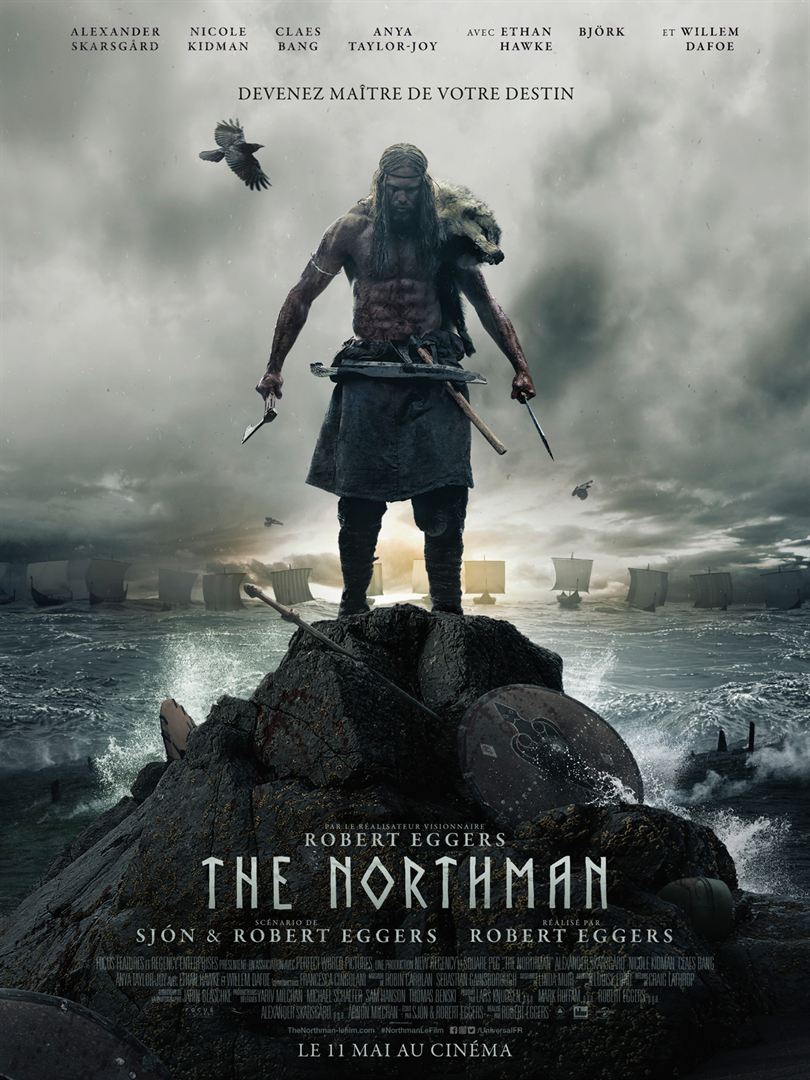
Thus, unsurprisingly, Robert Eggers latest film is NOT a romantic comedy. The Northman (2022) is another obsessively researched and realised historical drama. But because of the reported $70 million budget, his vision of Vikings and blood and revenge and muscle and familial treason and murder screams epic, more epic and even more EPIC! Eggers script and story is inspired by the historical myth, The Legend of Amleth, a narrative which in turn is said to have influenced none other than the quite well known play, Hamlet. Here Eggers has a solid structure for the thunderous battles and mystical manifestations on show. Our hero, Amleth (Alexander Skarsgård), finds his father, the King (Ethan Hawke) murdered by his uncle (Claes Bang), while he is a boy. Fleeing his village he grows into a scary, ripped and roaring Viking warrior who has never even seen a carbohydrate. A hunger for bread and a desire for revenge on his uncle propels the story powerfully. Intense Amleth must locate his kidnapped mother (Nicole Kidman) and smash the man who did his family wrong.


Eggers is a brilliant film director. In Alexander Skarsgård he also has a battering ram of a physical specimen leading the charge from deathly pillage to bloody battle to fiery hand-to-combat with impressive purpose and power. Amidst the vengeance-fuelled fight sequences and Amleth’s confrontations with the seers and magicians of the land, his journey also encompasses love and marriage to Olga of the Birch Forest, a Slavic sorceress (Anya Taylor-Joy). While Skarsgård’s character is more muscle than charisma, Taylor-Joy breathes ethereal and sensual life into the middle act. Their collaboration battling against enforced slavery gives us something to root for above the familiar revenge plot. Having said that, Amleth is not the easiest of characters to warm to. Despite Eggers genius and Skarsgård’s brutalism I wondered if I really cared about his quest.

I would argue that this story was done far more successfully from an emotional perspective by Ridley Scott’s awesome Roman epic, Gladiator (2000). Russell Crowe was just phenomenal as Maximus and his performance was one of magnetic emotion and charismatic depth. That film had amazing action married to integral character development. However, there is a violent momentum to The Northman (2022), with Amleth’s quest charging like a juggernaut toward the jugular of his foes. Eggers’ image and colour system of Viking costumes, iconography, weaponry, plus human, godly and ungodly beings provide the depth when the characterisation feels thin. And wow, does he know how to stage a battle. Bones crunch, teeth crack, blood bursts and weapons sever, scorch and devastate. As the fire burns in Amleth’s heart and across the landscape, The Northman (2022) rages from the cinema screen with dominant visual ascendancy.

Mark: 8 out of 11


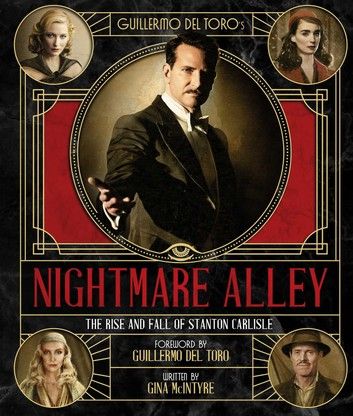
CINEMA REVIEW: NIGHTMARE ALLEY (2021)

CINEMA REVIEW: NIGHTMARE ALLEY (2021)

Directed by: Guillermo del Toro

Screenplay by: Guillermo del Toro, Kim Morgan

Based on: Nightmare Alley by William Lindsay Gresham

Produced by: J. Miles Dale, Guillermo del Toro, Bradley Cooper

Cast: Bradley Cooper, Cate Blanchett, Toni Collette, Willem Dafoe, Richard Jenkins, Rooney Mara, Ron Perlman, Mary Steenburgen, David Strathairn, etc.

Cinematography: Dan Laustsen

*** MAY CONTAIN SPOILERS ***


Guillermo Del Toro could probably have had his pick of film stories to choose from after the monumental box office and critical success of the majestic alternative love story, The Shape of Water (2017). But rather than build on the message of love and hope in that creature feature he has chosen to adapt the noir novel, Nightmare Alley by William Lindsay Gresham. In the process Del Toro has also remade the classic 1947 film of the same name, starring Tyrone Power.

Essentially a $60 million dollar B-movie, the film is one of the most opulently dark and beautifully designed films I have witnessed in some time. Light, shadow, wood, gold, blood, fire, sweat, skin, snow, and night all collide and collude in a stunningly presented palette from Del Toro and lead production designer, Tamara Deverell. This film is a moving painting with inspiration from geniuses such as Picasso, Dali, Matisse and Edward Hopper. While the look of the Nightmare Alley (2021) and cast are a constant wonder, I had a nagging thought while watching the film which made me question who the audience was for this film. Also, there were many story elements which did not gel for me.


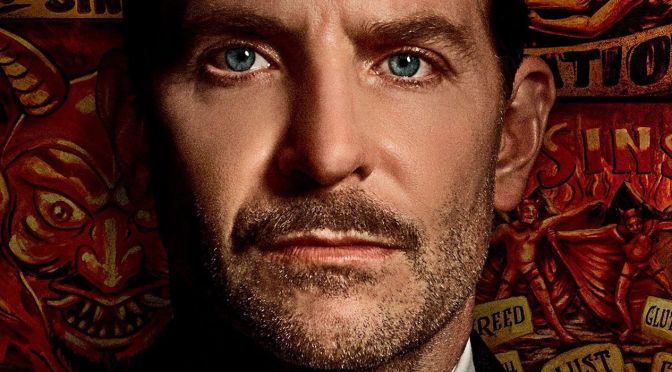
Nightmare Alley (2021) opens with fire and death. Drifter Stanton Carlisle (Bradley Cooper) then finds himself drawn to the carnival arena. It is full of shadowy characters, oddballs and tricksters, portrayed with dirty glamour by the likes of Toni Collette, Willem Dafoe, David Strathairn, plus the more innocent, Rooney Mara. Stanton fits right in and is soon making a name for himself as a mentalist, fooling audiences with carefully rehearsed cues and memory tricks. The first half of the film is its narrative strength. Only after Stanton’s story leaves the carnival his journey twists into something more sinister, but less satisfying.

I enjoyed Del Toro’s stunning visual magic employed in Nightmare Alley (2021). However, while Bradley Cooper has terrific star quality I did not care for his anti-heroic Stanton Carlisle. Cate Blanchett is also alluring as the latter second act enchanter, but ultimately the film lacks real depth. Themes relating to masculinity in crisis, war, psychoanalysis, crime, grief, the afterlife and what it means to be a freak or outsider are there, but only skimmed. I mean the plot has some decent twists, but I did not entirely commit to the downward trajectory of Carlisle’s tale. Overall, as a morality tale Nightmare Alley (2021) is not as frighteningly tragic as it could have been. Carlisle gets what he deserves, and I felt little pity or horror for his end. Unlike another classic noir from some years back, Angel Heart (1987).

Mark: 8 out of 11