Tag Archives: WW2

Apple TV+ Film Review: Blitz (2024) – A fine testament to the Human Spirit during Wartime!

Apple TV+ Review: Blitz (2024)

Directed by Steve McQueen

Written by Steve McQueen

Produced by Tim Bevan, Eric Fellner, Steve McQueen, Anita Overland, Adam Somner, Arnon Milchan, Yariv Milchan, Michael Schaefer

Main Cast: Saoirse Ronan, Elliott Heffernan, Harris Dickinson, Benjamin Clementine, Kathy Burke, Paul Weller, Stephen Graham etc.

Cinematography by Yorick Le Saux

*** MAY CONTAIN SPOILERS ***
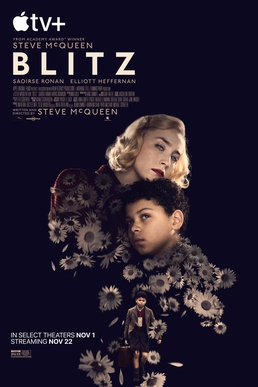


Officially classed as acclaimed filmmaker Steve McQueen’s first feature since the release of Widows (2018), Blitz (2024) is a WW2 drama of extremely high quality. But before I get into the review, lest we forget the series of films Steve McQueen delivered to the BBC a few years. The ‘Small Axe’ anthology should and shall be revisited as one of the most important documents of British history, such is its searing power, dramatic drive and the stunning rich tapestry of characterful moments. So, I urge you to watch, if you haven’t, what I consider to be Steve McQueen’s masterworks. I have reviewed the first one Mangrove (2020) here and the remaining of the collection here:


Blitz (2024) is a bigger budgeted production when compared to the ‘Small Axe’ anthology. But, similarly, it is a period piece, focusing on the working class and Black experience, this time set during the brutal bombing of London in 1940. McQueen shoots very much from the perspective of George (Elliot Heffernan), his mother, Rita (Saoirse Ronan) and grandfather, Gerald (Paul Weller). George, like many war children, is packed on a train to the relative safety of the countryside, while parents live in the hope of surviving the incessant German bombs.

After establishing the close family bond between the Hanways, and the wrenching emotion of sending her son away, Rita continues working in a munitions factory and sings beautifully on a national radio show. At the same time, George, finds trouble with a gang of child bullies on the train, before fighting back and jumping off. A tough and resourceful boy, George, makes the perilous choice to return to battered and burning London to reunite with his mother. The city, scarred by the relentless ‘Blitzkrieg’, is a treacherous labyrinth of collapsing buildings and choking smoke, but George’s determination burns brighter than the fires raging across the skyline.
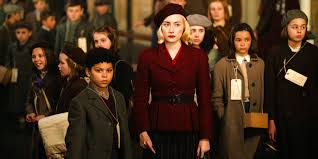


Like a modern Oliver Twist, Blitz (2024) George’s journey through the devastated capital is both a physical and moral odyssey, with each encounter shaping his understanding of loyalty, survival, and the fragile threads that bind people together in times of crisis. George becomes trapped by his own choices, the bombs, bricks, buildings and characters he meets on the way. Some are friendly, but others exploit George preventing his return home. McQueen’s script also finds time to flashback to show Rita meeting George’s father, providing significant context to his mixed race background. Indeed, through George, McQueen explores themes relating to race and his emotional journey to find his place in the world as a person of colour.

Blitz (2024) is a superbly shot and designed film, with Yorick Le Saux’s cinematography rendering war torn London with an almost mythical beauty. However, Hans Zimmer’s overblown soundtrack is too much for me. Further, Steve McQueen’s hagiographic and episodic approach does somewhat diminish the raw drama and bloody horror of war. Notably, the under-use of Kathy Burke and Stephen Graham’s gutter snipe thieves. Plus a thrilling action set-piece during a flooded tube station that cuts away from George’s almost-demise, denying us suspense and dramatic catharsis. Thus, at times, the film sacrifices potential complexity during George’s journey, making his survival seem almost predestined rather than hard-fought. Still, Steve McQueen remains one of the country’s most important cinematic artists and Blitz (2024) is yet another fine testament to the strength and resilience of the human spirit.

Mark: 8 out of 11


LFF REVIEW – JOJO RABBIT (2019) – SPOILER FREE

LFF REVIEW – JOJO RABBIT (2019)

Written and Directed by: Taika Waititi

Based on: Caging Skies by Christine Leunens

Produced by: Carthew Neal, Taika Waititi, Chelsea Winstanley

Cast: Roman Griffin Davis, Thomasin McKenzie, Taika Waititi, Sam Rockwell, Scarlett Johansson, Rebel Wilson, Alfie Allen etc.

***SPOILER FREE***


After watching the astounding Joker (2019) earlier in the day, and having my psyche shook by that descent into hell, I needed something lighter to watch afterwards. A comedy about the Nazis, World War II and Hitler himself, therefore, probably wasn’t the ideal choice. Nonetheless, I really enjoyed Taika Waititi’s furiously funny war satire.

Essentially, JoJo Rabbit (2019), is a rites-of-passage comedy with a heavy dose of pathos, tragedy and combat thrown in. The story concerns JoJo Betzler (Roman Griffin Davis), a young German boy who has a staunch commitment to the Hitler Youth and the Nazi Party. So much so he conjures up a vision of Hitler (Taika Waititi), to act as a kind of spirit guide through his everyday life. Safe to say, Hitler isn’t the best teacher, especially with Waititi’s mischievous and ridiculous representation.

JoJo Rabbit (2019) has a wonderful character arc for the lead protagonist, who benefits from an empathetic performance by sterling young actor, Roman Griffin Davis. JoJo, through his wartime experiences slowly learns the horrors of Nazi propaganda and the real truth about the Jewish people. It’s a heartwarming and touching story which advocates love over hate, even in the face of such dark terror.


This image has an empty alt attribute; its file name is jojo-rabbit-trailer.jpg

While Waititi’s comedic turn as Hitler threatens to plunge the film into tonal chaos, Scarlet Johansson and Thomasin McKenzie ground the film in emotional depth with moving acting portrayals. Sam Rockwell also contributes brilliantly as a German Captain, charged with training JoJo and other Hitler Youth members. Stephen Merchant is also ideally cast as a fastidious Gestapo Officer. The scene where he and his Nazi cohorts search JoJo’s house is one of many memorable scenes throughout the film.

Overall, Jojo Rabbit (2019), takes an incredible risk creating humour out of such tragic events as war and the Holocaust. But, by ridiculing Hitler and the Nazis, there is a sense that Waititi is taking back power through rapid humour. Conversely, the jokes come thick and fast. There are sight gags, physical humour, puns, cartoon violence, illustrations, slapstick and so many zinging one-liners in the irreverent screenplay.

At times it was like ‘Monty Python’s Flying Germans’, such was fast pace, sketchy and surreal nature of the jokes. One could argue that the jokes undermine the more tragic elements of the story. It’s a tough thing to do, to make you laugh AND cry; as the bombs fall and bullets fly. Nevertheless, by the end, Waititi manages to just about retain the balance between parody and pathos.

Mark: 9 out of 11


Gary Oldman shines in DARKEST HOUR (2017) – Cinema Review

DARKEST HOUR (2017) – CINEMA REVIEW

Directed by: Joe Wright

Produced by: Tim Bevan, Lisa Bruce, Eric Fellner, Anthony McCarten, Douglas

Written by: Anthony McCarten

Starring: Gary Oldman, Kristin Scott Thomas, Lily James, Stephen Dillane, Ben Mendelsohn

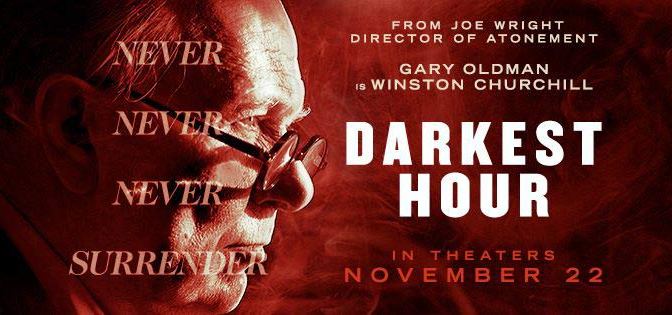
171130_MOV_WinstonChurchill.jpg.CROP.promovar-mediumlarge

What makes human beings want to go to war?  What is it that determines thoughts and actions which will lead to the death of another human being? Is it: a genetic trait; a tribal desire; a psychological defect; financial gain; jealousy; boredom; passion; political chicanery; religion; greed; anger; revenge; or quite simply madness. Taking a life is something I have never understood. I mean, unless you are forced to defend yourself against a foe hell-bent on your destruction why would you wish to harm anyone else?

So, Adolf Hitler has a lot to answer for because, even accepting the political and social reasons for the rise of the Nazi party and his desire to repair national pride after the first World War, what the hell gives a nation the right to invade and conquer other countries. If you choose to go down that road you are signing the death certificate of a generation men and women and children. It’s not just Germany either. The British Empire, Roman Empire, Vikings, Mongols, United States of America, France and many more have waged war against humanity down the years. Will it ever stop? Sadly, I doubt it.

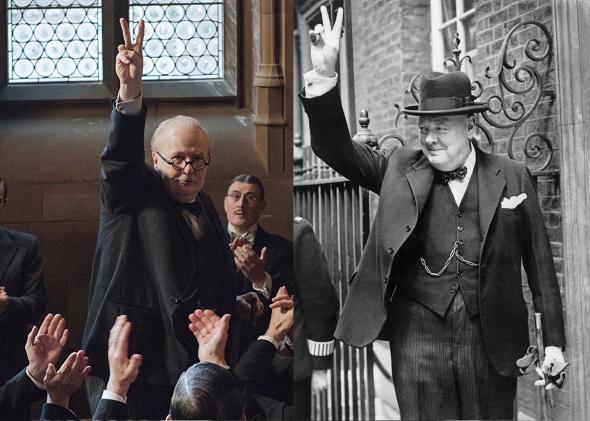
darkest_4

In times of war what is needed is obviously bravery, steel, fight, intelligence and more than a little luck. You need hearty human beings to stand and be counted and to die on the battlefields and in the air and in the sea. You also need leaders; figureheads who can rally the troops and galvanise that last ounce of fight in order to repel the enemy. During World War II, with the country on its knees and backs to the walls we had many leaders, but Winston Churchill, above all else, became synonymous with victory.

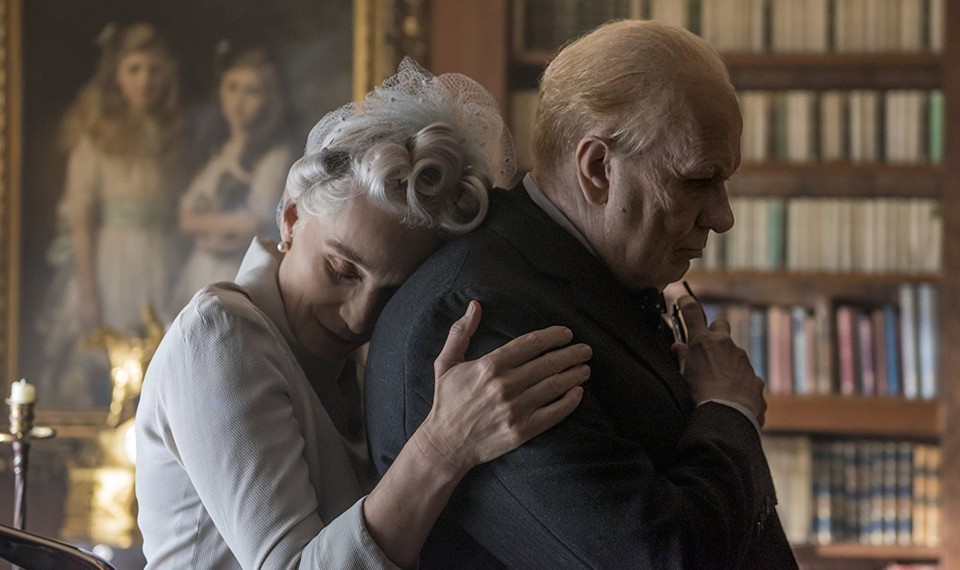
darkest_2

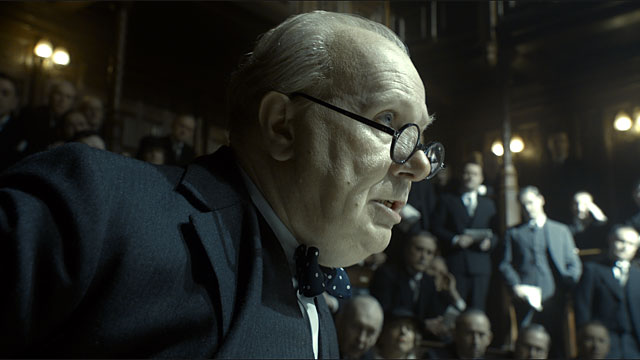
As portrayed in Joe Wright’s beautifully shot microcosmic epic, Darkest Hour, Churchill is presented as a flawed-pink-pyjama’d-cigar-chuffing-blustering-iconoclastic-functioning-alcholic prone to fits of rage, melancholy and depression. He also happens to be devilishly intelligent, full of energy, with a wicked tongue and talent for brilliant oration. Much of the plaudits must go to Gary Oldman, and his make-up team, for creating such a wonderfully human portrait. Indeed, Oldman owns the screen with his damned-near perfect impression.

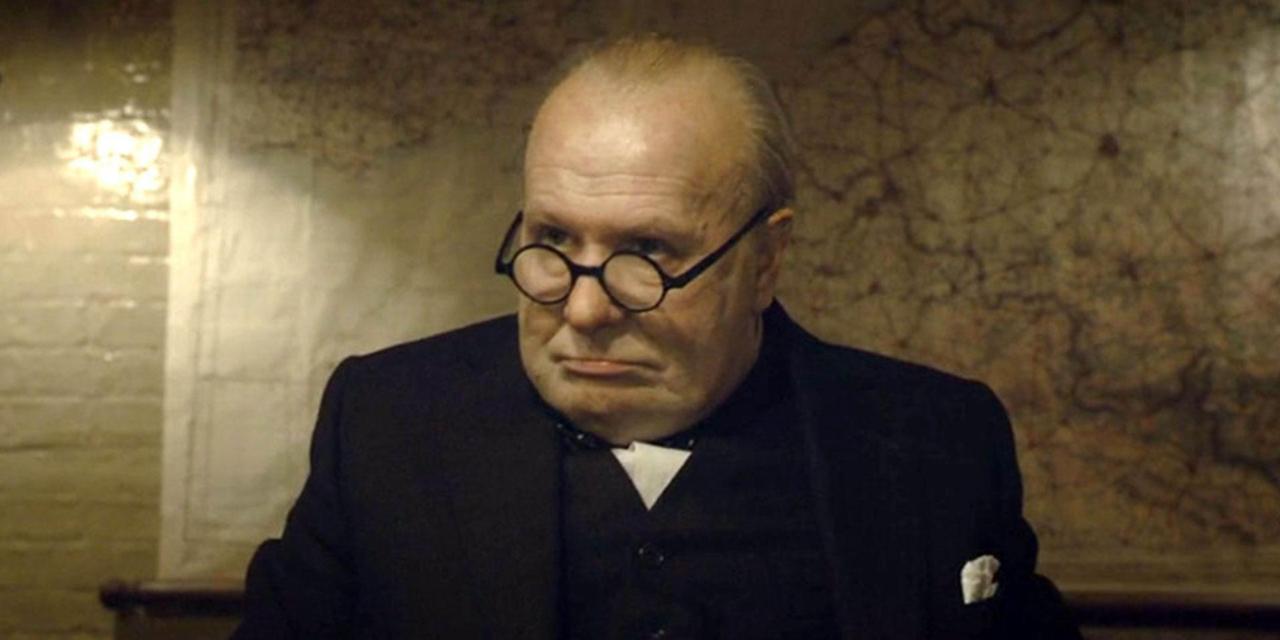
darkest_3

Anthony McCarten’s fine script centres on a finite number of days during World War II when Churchill became Prime Minister. Aside from one emotionally effective yet historically grating symbolic scene on the London underground, is it well written with fantastic one-liners and Churchill’s greatest verbal ‘hits’. Joe Wright is a talented director (the mis-guided Pan (2015) aside) and he evocatively conveys the shadow of looming defeat. Wright traps Churchill and ensemble in cars, lifts and in underground chambers. Shafts of light also pin the characters to the corners of the screen; pushing them toward the darkness. But through the spirit of Churchill’s never-say-die attitude we fought back against the Nazis and eventually stole victory from the jaws of defeat. War is hell. War is madness. But sometimes it is unfortunately a necessity to prevent the bullies from winning.

Mark: 8.5 out of 11

WAR AS HEAVEN AND HELL! HACKSAW RIDGE (2016) REVIEW

WAR AS HEAVEN AND HELL! HACKSAW RIDGE (2016) REVIEW

**CONTAINS SPOILERS**

What is it with Andrew Garfield and his battles with the Japanese, armed only with his faith?  In a thematic replica of the compelling drama, Silence (2016), Garfield leads the cast of Hacksaw Ridge (2016) by portraying 7th Day Adventist, Desmond Doss, who while compelled to serve his country during World War II, declines, on principle to pick up a rifle and kill. He wants to save lives not end them. Now, I, as a screenwriter feel this is a fantastic base for drama and suspense; and so it turns out to be, in a rip-roaring, inspirational, bloody and heroic war film.

hacksaw_bible

Hacksaw Ridge is classic Hollywood filmmaking par excellence. Andrew Garfield’s Doss is a humble everyman we can all root for as he contends with a drunken father, and then with army training as colleagues and superiors fail to recognise his religious stance. In the final lengthy battle scenes he then faces the Japanese, along with his unit, as they clamber the eponymous Hacksaw Ridge in an attempt to gain control of Okinawa. This is where the action really takes off as the gruesome war scenes create an astounding flurry of bombs, shots, bullets-on-tin-and-bone and whooshing flame-throwers searing the skin of men. All produced by both sides apart from Doss who, incredibly without a rifle, saves many, many lives.

hacksaw-ridge1-photo-credit-mark-rogers.jpg

Mel Gibson the storyteller doesn’t do grey areas in his narratives. Black is black; white is white; good is good and the Japanese are just plain bad. Indeed, this film reminded me of the good old-fashioned war epics of yesteryear such as Howard Hawks’ Sergeant York (1941) starring Gary Cooper. Moreover, the brilliant constructed action sequences echoed the kinetic majesty and orgiastic bloodbaths of Saving Private Ryan (1998); as well as the director’s own work in Braveheart (1995).

mel-gibson-hacksaw-ridge

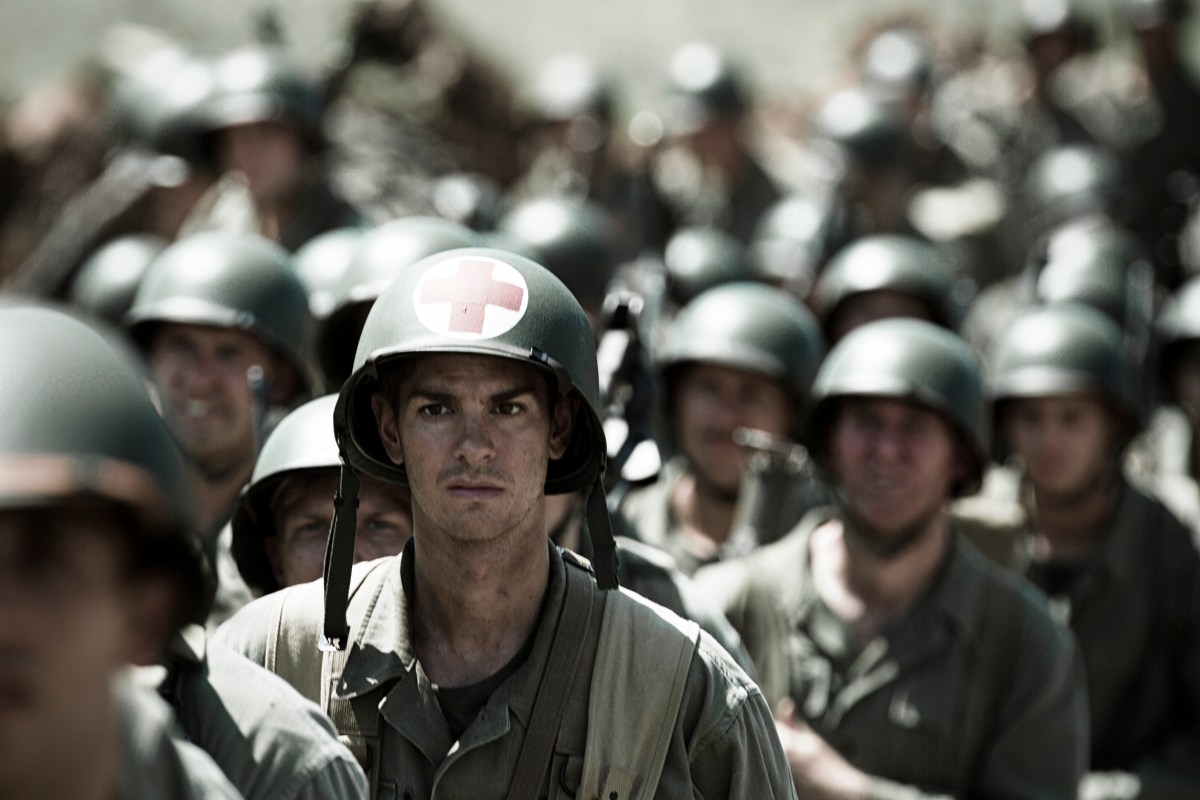
Andrew Garfield inhabits the character of Doss perfectly exuding a homespun goodness and religious core which at no time feels sappy. He is ably supported by an excellent cast including: Hugo Weaving, Sam Worthington, Rachel Griffiths, Luke Bracey and scene-stealer Vince Vaughan. While the characters are essentially binary archetypes, the film stands ultimately as a formidable war film with suspense elements. Because we care so much about Doss, the tension is incredible during many nerve-jangling moments; and especially when he’s in the rat-infested Japanese tunnels.

hacksaw1

Given Mel Gibson’s controversial history especially when it comes to alcohol-related domestic fights, rants and convictions, he is no doubt looked at suspiciously by the public and filmmaking community. Thus, it meant he would have to produce something special to redeem his reputation in Hollywood; so a Best Oscar Director nomination aids his comeback. Yet, while this film does not represent total redemption for Gibson personally, he once again proves his value as a worthy movie-maker. Overall, via Doss’ heroics, Gibson, his writers, cast and crew demonstrate that war is hell but with such acts of compassion for humanity, Doss showed, it can represent a fragment of heaven too.